Inspiration
to enhanced knowledge
What it does
How we built it
Challenges we ran into
Accomplishments that we're proud of
What we learned
What's next for theory of machine
The Theory of Machines: A Comprehensive Overview
Welcome to this presentation on the theory of machines. We will delve into the core concepts, underlying principles, and practical applications that define this fascinating field. Whether you're a student exploring the basics or a professional seeking to deepen your understanding, this overview aims to provide valuable insights into the world of machines.
This presentation will cover key topics, including kinematics, dynamics, mechanisms, and control systems. We will explore how these elements interact to create functional and efficient machines that drive modern technology and industry. Our goal is to equip you with the knowledge and appreciation for the complex yet elegant theory behind machines.
Kinematics: The Geometry of Motion
Kinematics is the study of motion without considering the forces that cause it. It focuses on the geometry of motion, describing the position, velocity, and acceleration of machine parts. It's a fundamental aspect of machine theory.
Understanding kinematics involves analyzing the relationships between different components in a mechanism. This includes determining how the motion of one part affects the motion of others, which is crucial for designing efficient and reliable machines. Kinematics provides the framework for understanding how machines move and function.
Key concepts in kinematics include displacement, velocity, acceleration, and the relationships between them. These concepts are used to analyze the motion of machine parts and to design mechanisms that perform specific tasks with precision and accuracy. This analysis forms the basis for creating dynamic and functional machines.
Displacement
The change in position of a point or object.
Velocity
The rate of change of displacement with respect to time.
Acceleration
The rate of change of velocity with respect to time.
Dynamics: Forces and Motion
Dynamics is the study of forces and their effects on motion. Unlike kinematics, dynamics considers the forces that cause motion, such as gravity, friction, and applied forces. It's an essential aspect of machine theory.
Understanding dynamics involves analyzing the forces acting on machine parts and how these forces affect their motion. This includes determining the forces required to achieve a desired motion and designing machine parts that can withstand these forces. It is a critical stage to machine creation.
Key concepts in dynamics include force, mass, acceleration, and Newton's laws of motion. These concepts are used to analyze the forces acting on machine parts and to design machines that can operate safely and efficiently under various conditions. A robust dynamics analysis ensures a durable and well-performing machine.
Newton's First Law
An object remains in rest or uniform motion unless acted upon by a force.
Newton's Second Law
Force is equal to mass times acceleration (F = ma).
Newton's Third Law
For every action, there is an equal and opposite reaction.
Mechanisms: Building Blocks of Machines
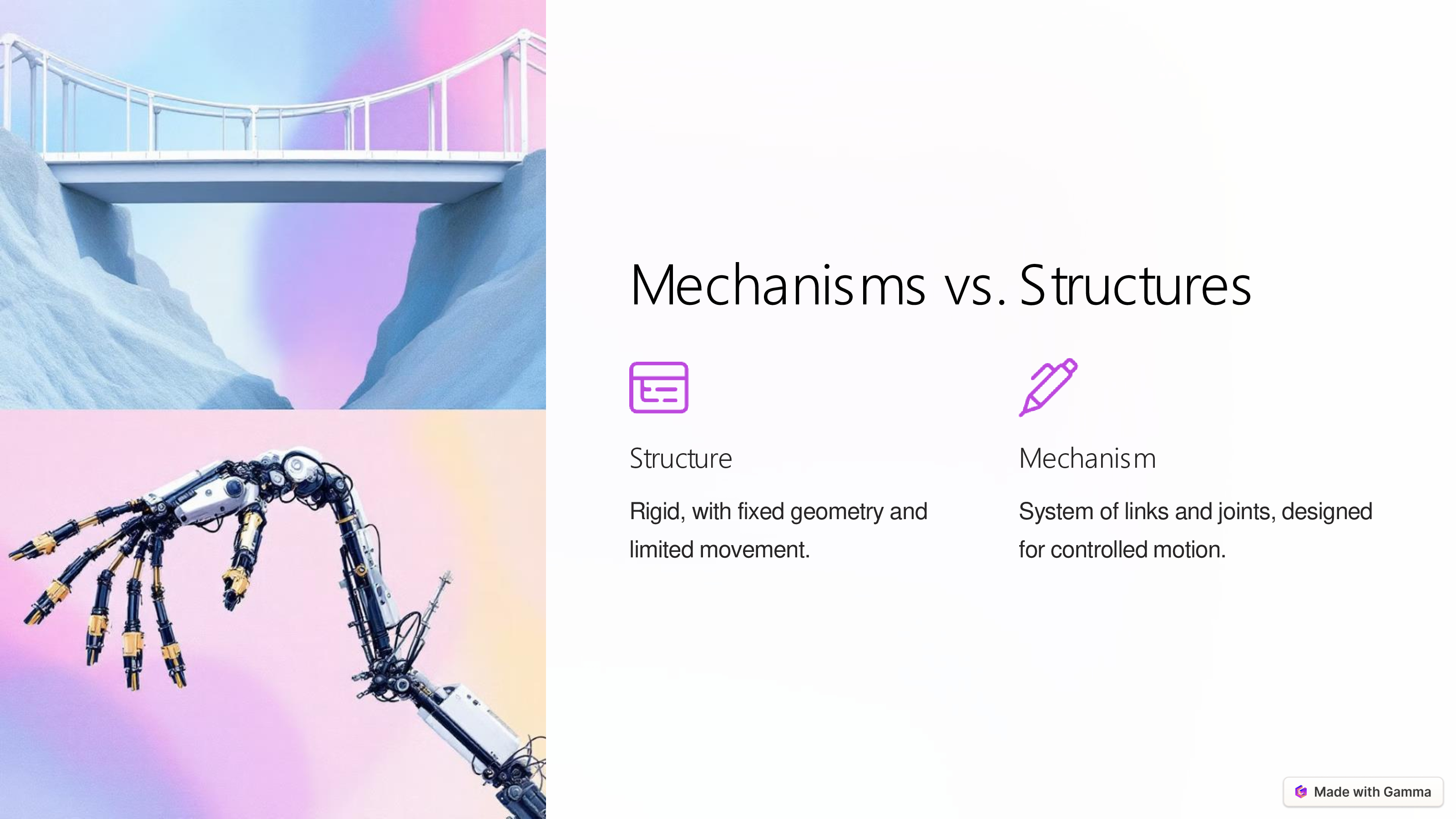
Mechanisms are the fundamental building blocks of machines. They are mechanical systems that transmit and transform motion and force from one point to another. Understanding mechanisms is essential for designing effective machines.
Mechanisms are composed of various elements, such as gears, levers, linkages, and cams. Each element plays a specific role in transmitting and transforming motion. Analyzing these elements and their interactions is crucial for designing efficient and reliable mechanisms.
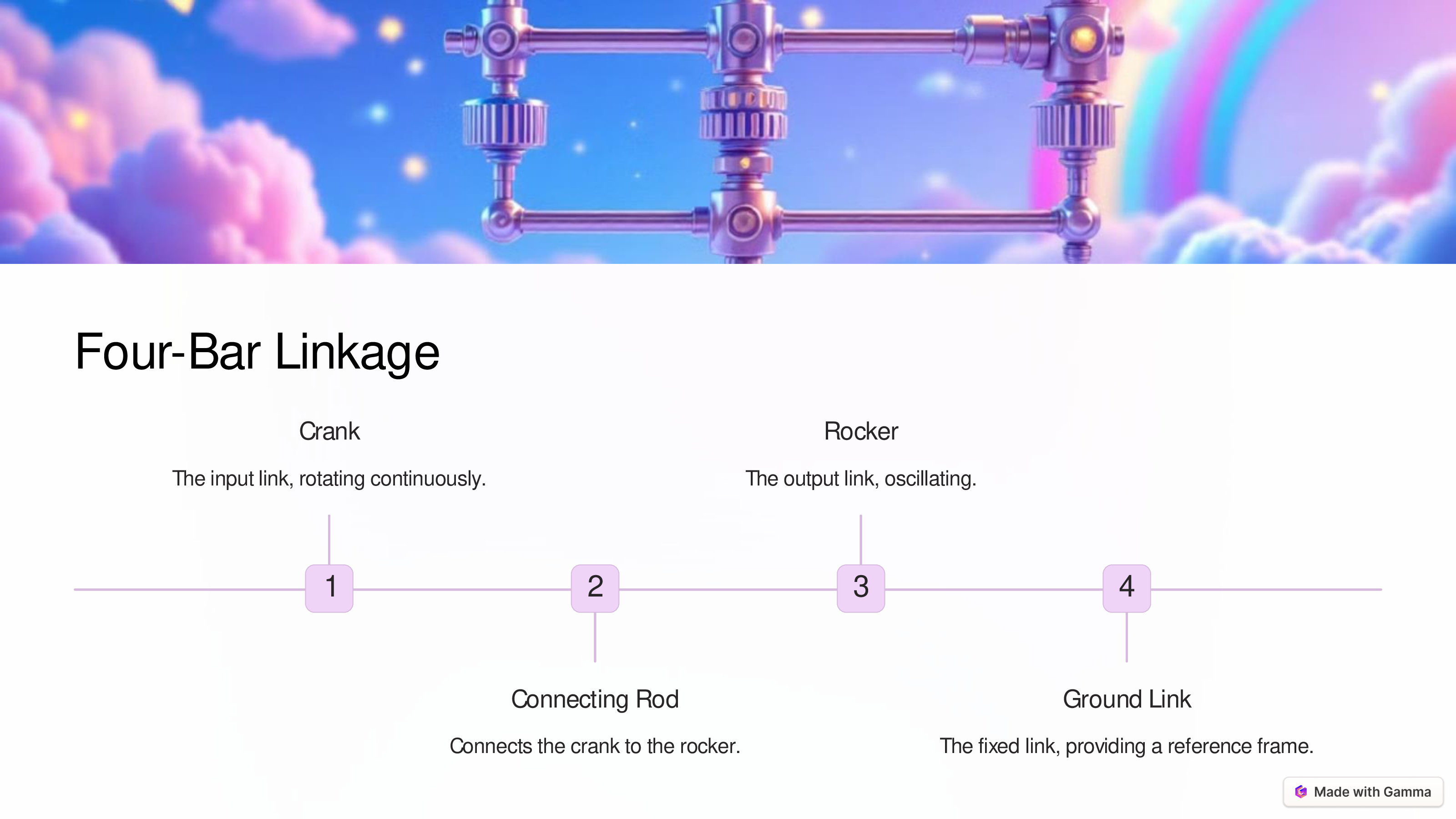
Common types of mechanisms include gear trains, four-bar linkages, and cam-follower systems. These mechanisms are used in a wide range of applications, from simple hand tools to complex industrial machinery. A proper mechanism ensures the machine can handle intended tasks.
Gear Trains
Transmit rotational motion and torque.
Four-Bar Linkages
Convert rotary motion into reciprocating motion.
Cam-Follower Systems
Produce complex motion profiles.
Control Systems: The Brain of the Machine
Control systems are the brains of machines, regulating and coordinating their operation. They ensure that machines perform their tasks accurately and efficiently. Control systems are integral to modern machines.
A control system typically consists of sensors, controllers, and actuators. Sensors measure the state of the machine, controllers process the sensor data and generate control signals, and actuators execute the control signals to adjust the machine's operation. Integrating these allows for robust and automated control.
Types of control systems include open-loop and closed-loop systems. Open-loop systems operate without feedback, while closed-loop systems use feedback to adjust their operation based on the actual output. Closed-loop systems provide better accuracy and stability.
Sensors
Measure the state of the machine.
Controllers
Process sensor data and generate control signals.
Actuators
Execute control signals to adjust machine operation.
Applications of Machine Theory
Machine theory finds applications in diverse fields, including manufacturing, robotics, and transportation. It's a cornerstone of modern engineering. The applications are vast.
In manufacturing, machine theory is used to design and optimize production processes. This includes designing automated assembly lines, robotic systems, and precision machining equipment. Optimization of production leads to efficiency.
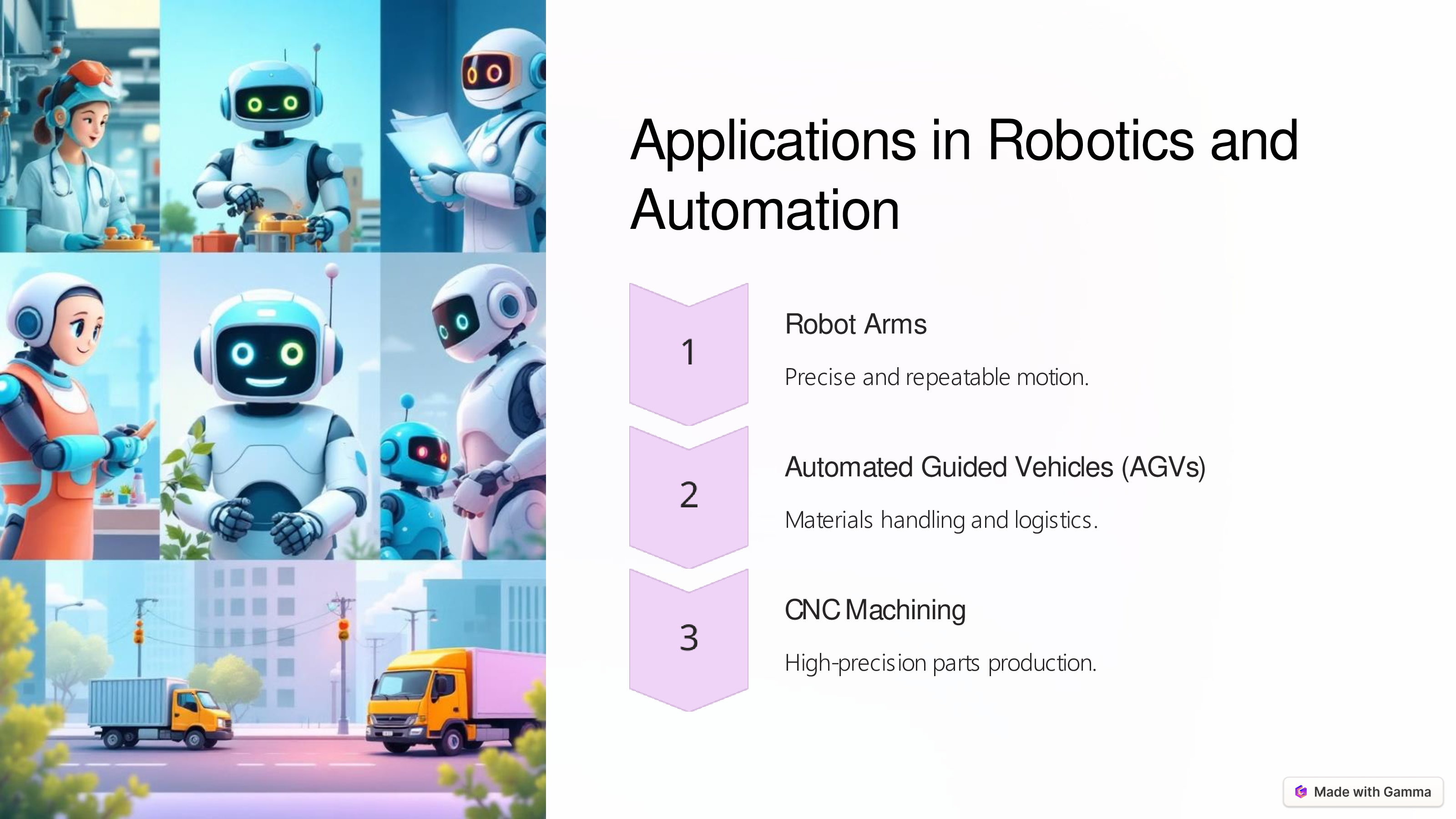
Robotics relies heavily on machine theory for designing robots that can perform complex tasks with precision and dexterity. This includes developing robots for manufacturing, healthcare, and exploration. The development of robotics is constantly growing.
Manufacturing
Automated assembly lines and robotic systems.
Robotics
Robots for manufacturing, healthcare, and exploration.
Transportation
Automated vehicles and aircraft control systems.
Future Trends in Machine Theory
The future of machine theory is driven by advances in artificial intelligence, machine learning, and nanotechnology. These technologies are pushing the boundaries of what machines can do.
AI and machine learning are enabling the development of intelligent machines that can learn and adapt to changing conditions. This includes developing self-optimizing control systems, predictive maintenance systems, and autonomous robots. AI integration allows the machine to adapt to its environment.
Nanotechnology is enabling the creation of machines at the nanoscale, opening up new possibilities in fields such as medicine and materials science. Nanoscale machines could revolutionize healthcare and manufacturing.
Artificial Intelligence
Enabling intelligent machines.
Machine Learning
Developing self-optimizing systems.
Nanotechnology
Creating nanoscale machines.
Key Takeaways and Next Steps
In summary, machine theory is a fundamental field that encompasses kinematics, dynamics, mechanisms, and control systems. These elements work together to create functional and efficient machines that drive modern technology.
Key takeaways include the importance of understanding the geometry of motion, the effects of forces on motion, the role of mechanisms in transmitting motion, and the function of control systems in regulating machine operation. Each function works cohesively to complete the machine.
Next steps involve delving deeper into specific areas of machine theory, such as advanced control systems, robotics, or nanotechnology. Additionally, hands-on experience through projects and internships can provide valuable practical skills. This will set you on the path to becoming an expert in the theory of machines.
Built With
- gamaai
- onedrive

Log in or sign up for Devpost to join the conversation.