-
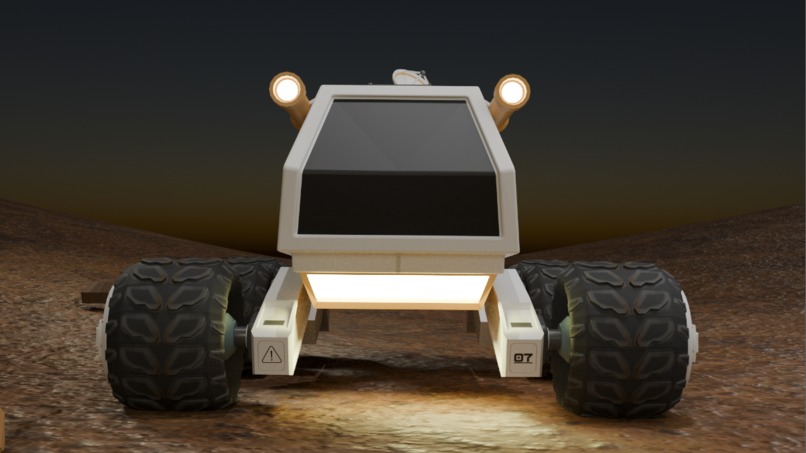
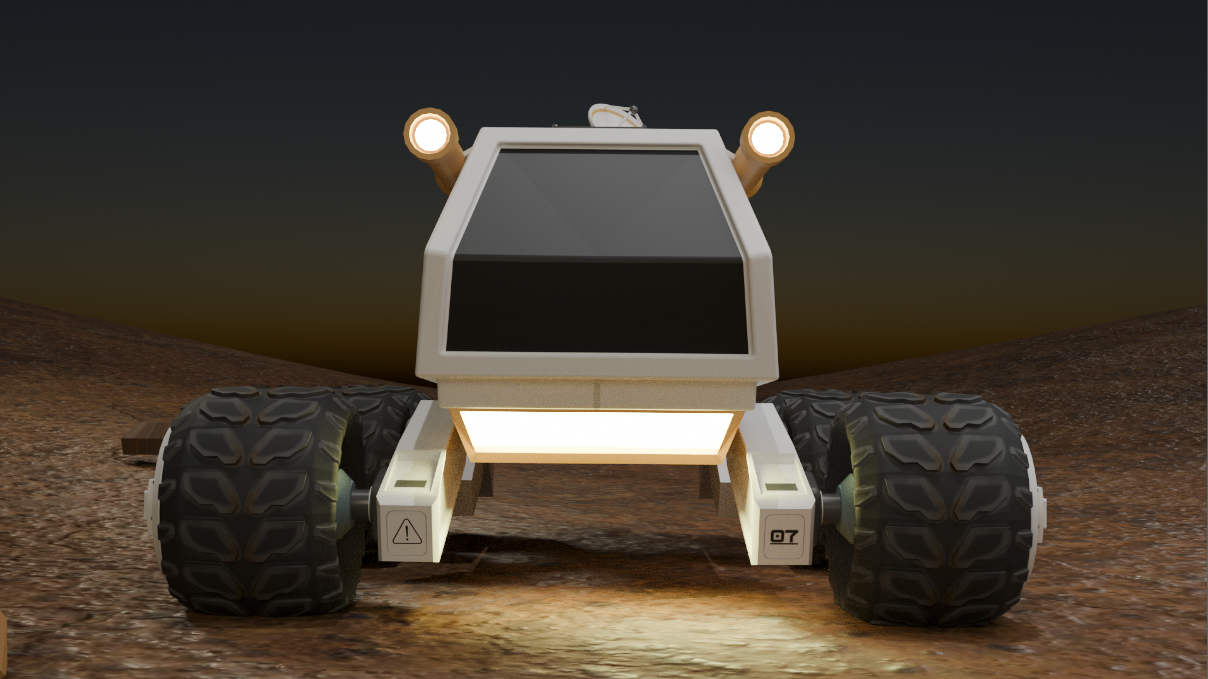
Front-view
-
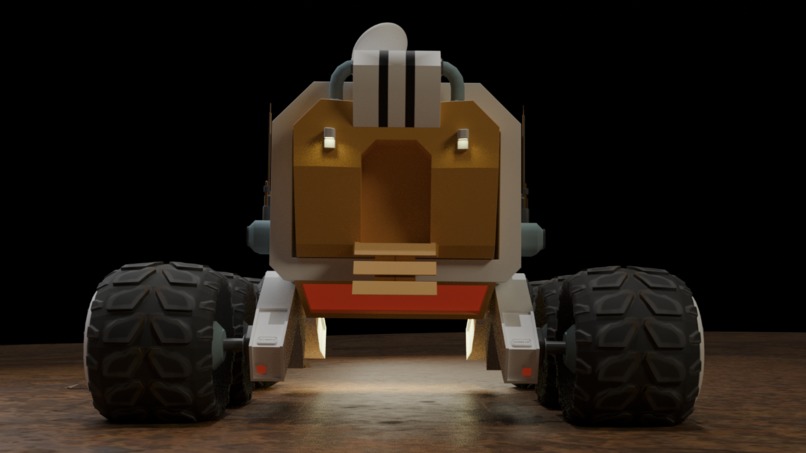
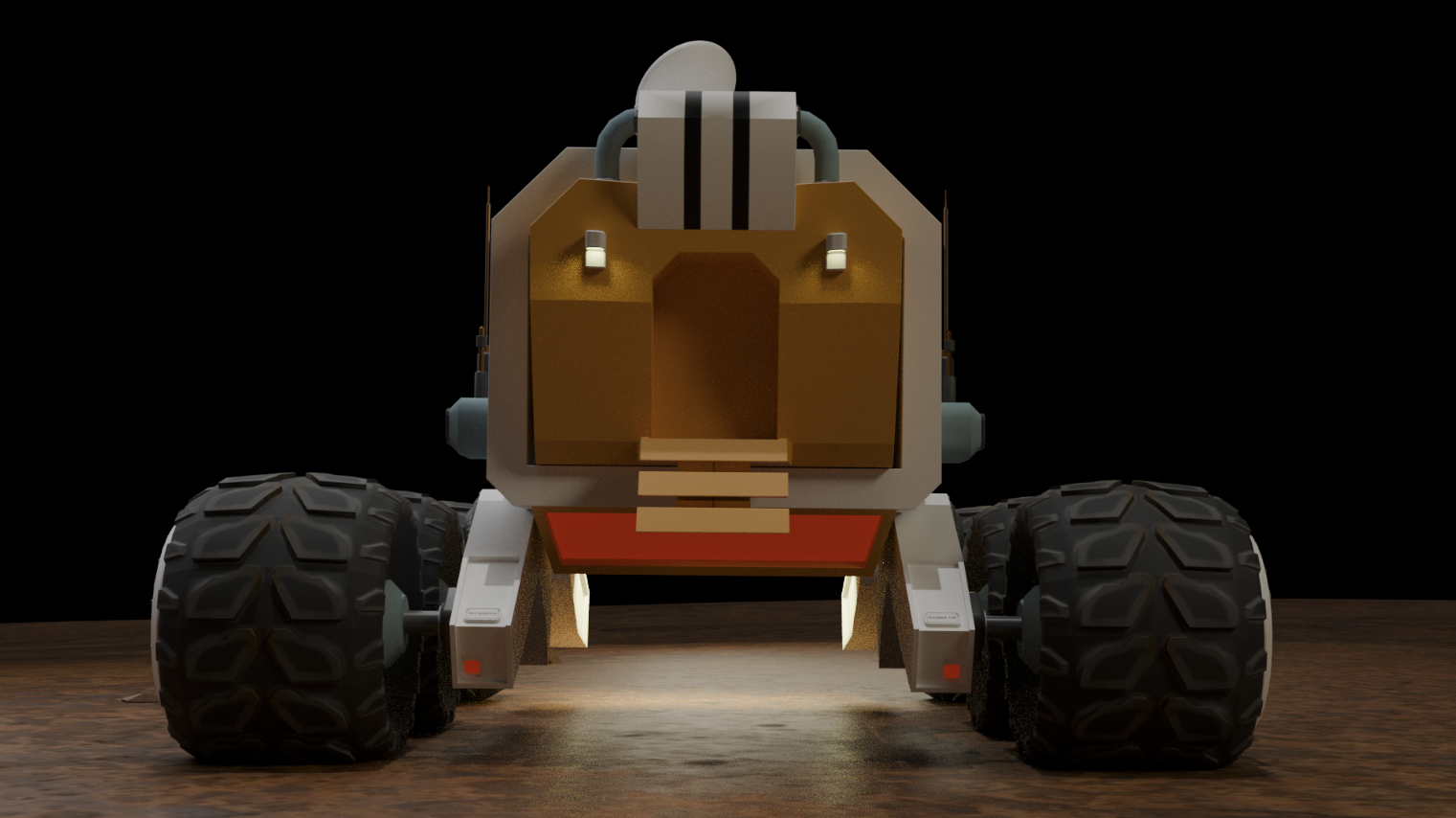
Rear-view
-
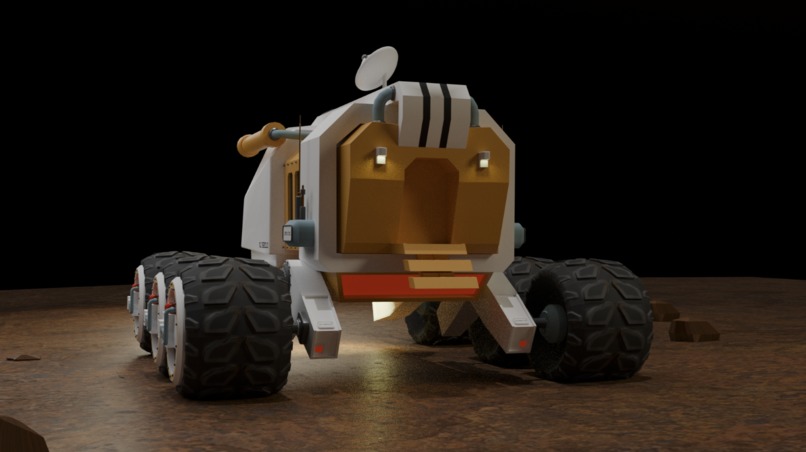
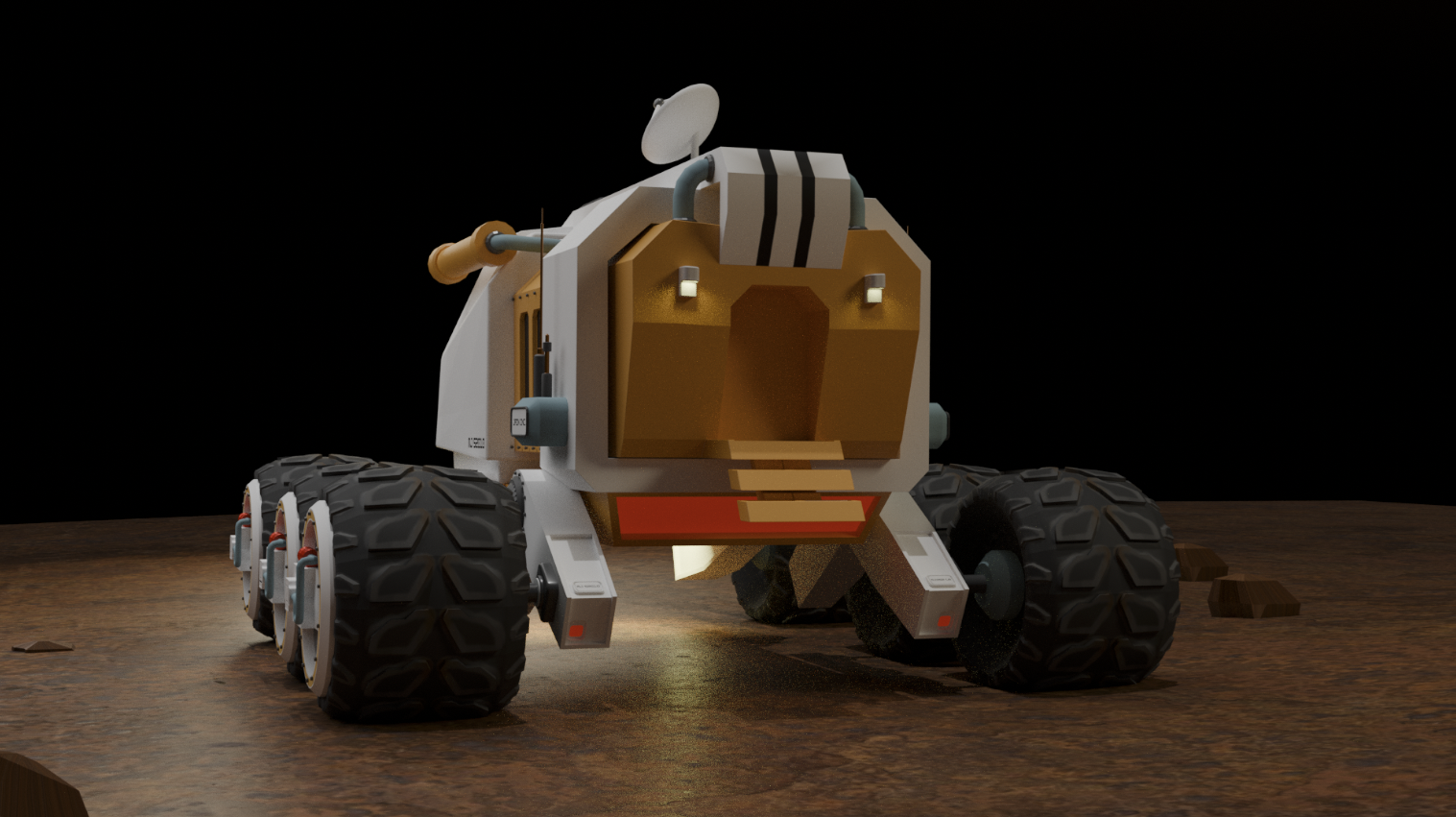
Rear-view 2
-
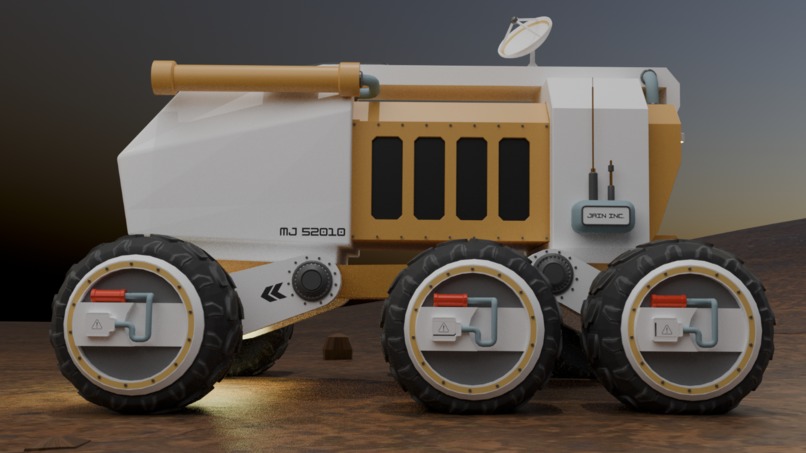
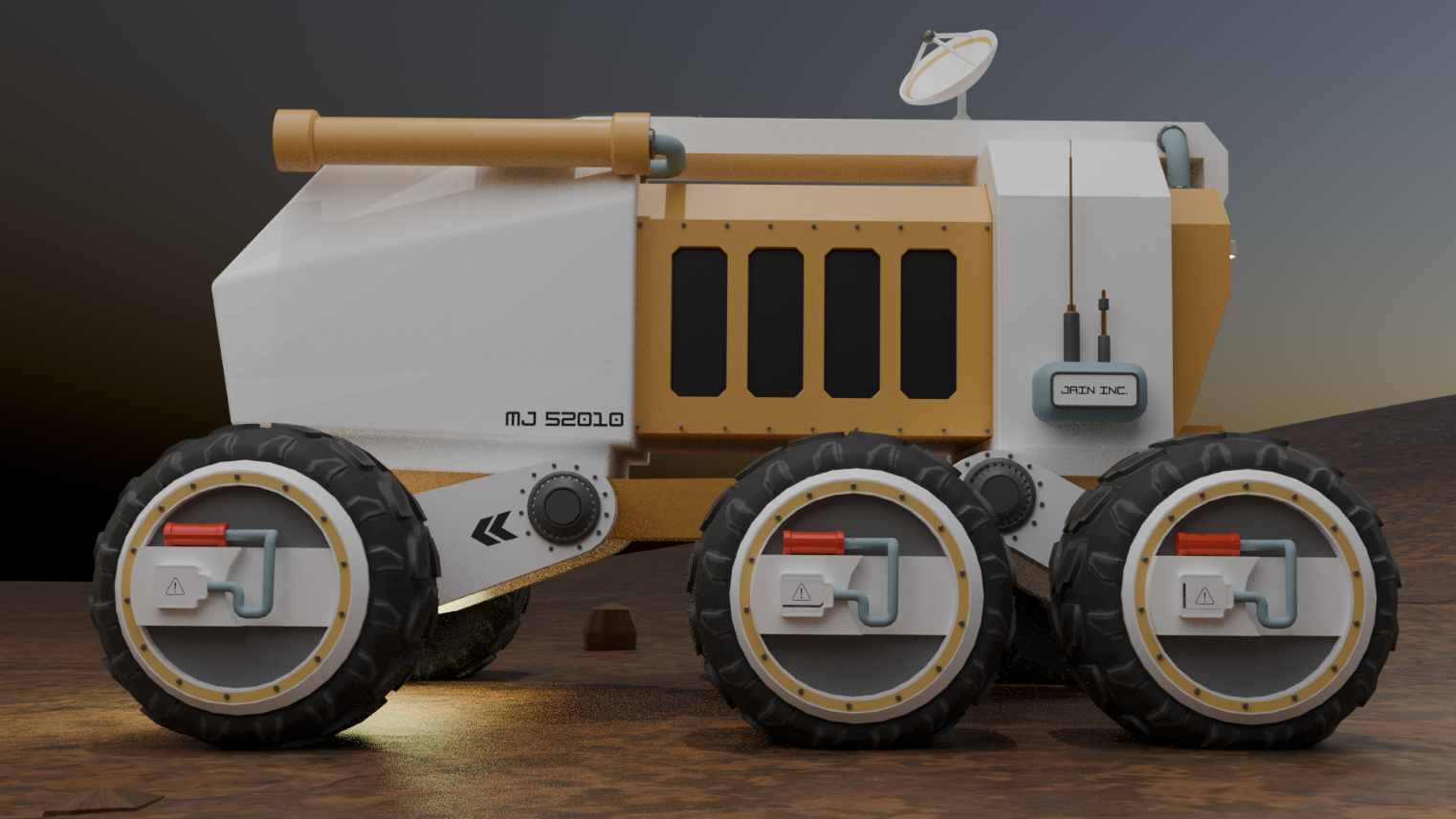
Side-view
-
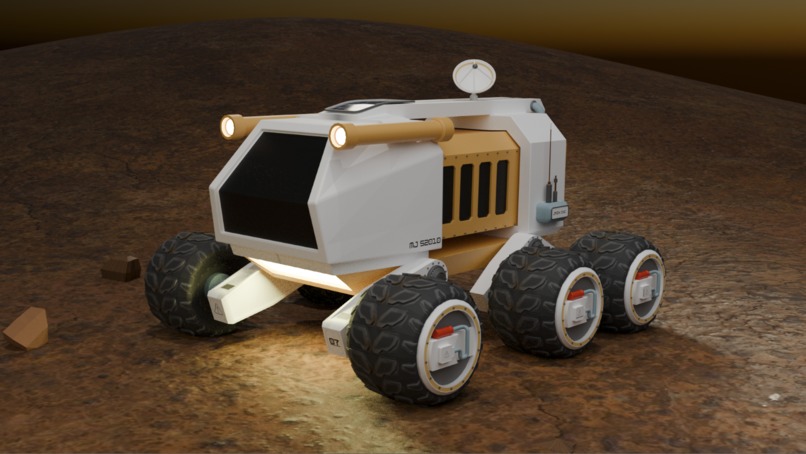
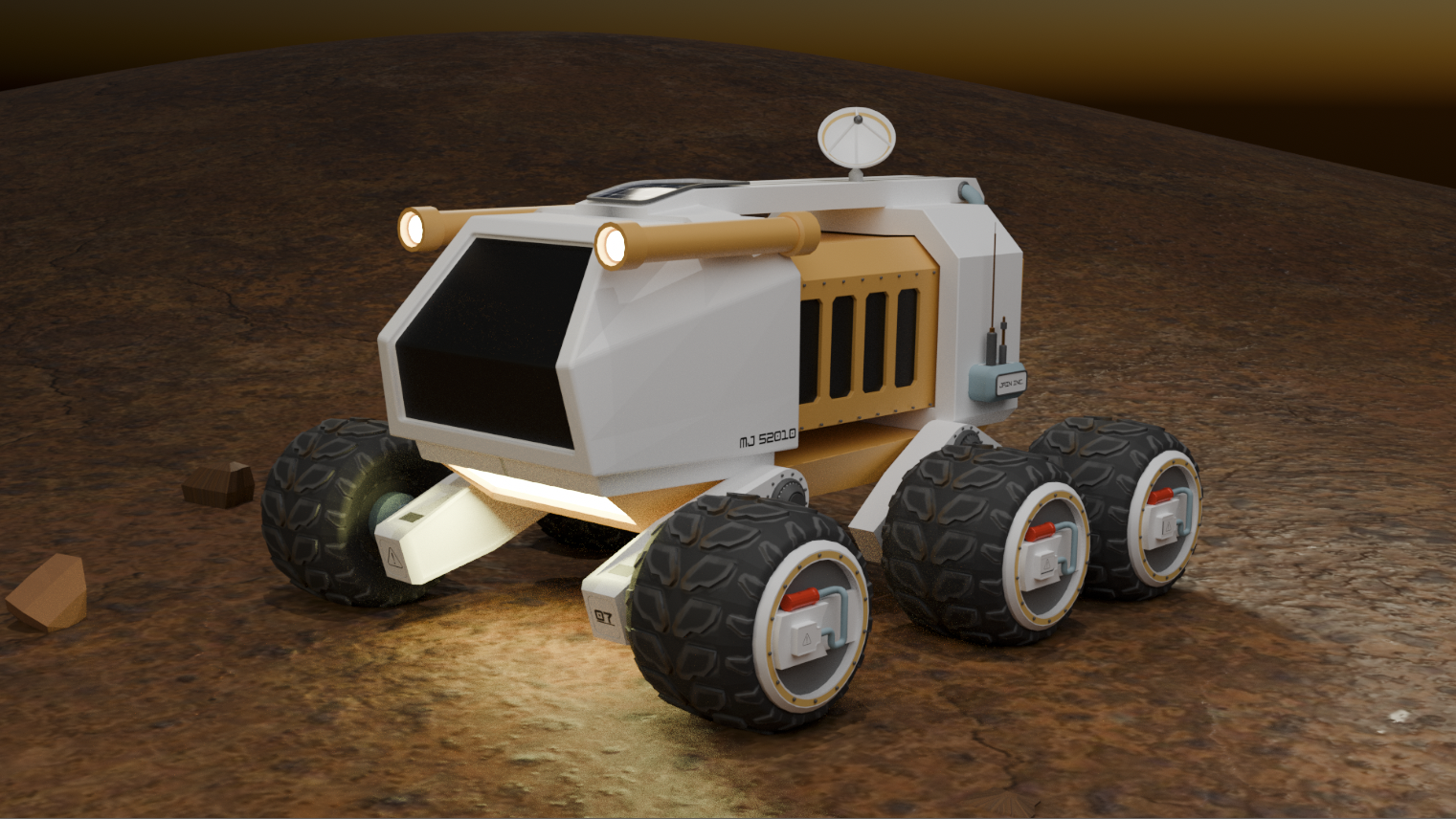
Perspective-view
Inspiration
My project is basically an artistic representation of what a Mars rover could look like in the future. After seeing SpaceX's renders and visualizations of what a colony on Mars could look like, I wanted to add to it and design a mode of transportation for the inhabitants.
How we built it
I built my project fully in Blender 3D, utilizing methods such as texture painting, UV editing, Sculpting, and shading to create a visually appealing design that somewhat resembled a Sci-Fi rover. First, I created the base model of the rover using simple meshes such as cubes, planes, spheres, cylinders, etc. To create the actual surface of Mars, I used a scaled plane and then sculpted it so that it resembled the complex terrain of Mars as we know it. After my basic model was done, I wanted it to actually look good. I did this by using a combination of UV editing to apply various graphics that I made in CANVA to certain parts of the rover so that there were shapes and text on it. Similarly, for the rough texture on the tires, I used texture painting to indirectly paint on the surface of the tires so that it would appear rough/realistic. After the visual elements were done, I applied emission to the surface of the rover and environmental lighting to make the final rendered image polished.
Challenges we ran into
Some challenges I ran into were that, at first, when trying to apply textures imported from Canva, they were not visible in the 3D render even though they were applied to the material. To combat this issue, I had to browse through various YouTube videos and troubleshoot it until eventually it worked.
Accomplishments that we're proud of
One accomplishment I am proud of is being able to take an idea that I had in my head and turn it into a complete 3D environment. I am also proud of the level of detail I was able to achieve through Blender, especially with the textures, graphics, terrain, and lighting. Overall, I think the final render successfully captures the futuristic and sci-fi aesthetic that I originally hoped for the project.
What we learned
Through this project, I learned how many different techniques can be combined to create a convincing 3D environment. I gained experience with UV editing, texture painting, sculpting, materials, lighting, and rendering in Blender. I also learned how important troubleshooting and mistakes are, since many of the effects I wanted required me to research different techniques and figure out what worked through trial and error.
What's next for Theoretical Mars Rover
If I continued developing Theoretical Mars Rover, I would expand the project beyond a single rover and create a larger visualization of a future Martian settlement. I could design more vehicles, housing, infrastructure, and equipment that would allow the rover to feel like part of an actual transportation system on Mars. I would also like to improve the rover's small details and potentially create an animation showing it traveling across the Martian terrain, as I was originally planning to do that if time permitted.
Built With
- 3d
- ambientcg
- blender3d
- canva
- css
- html
- javascript
- mars
- webgl
