-
-
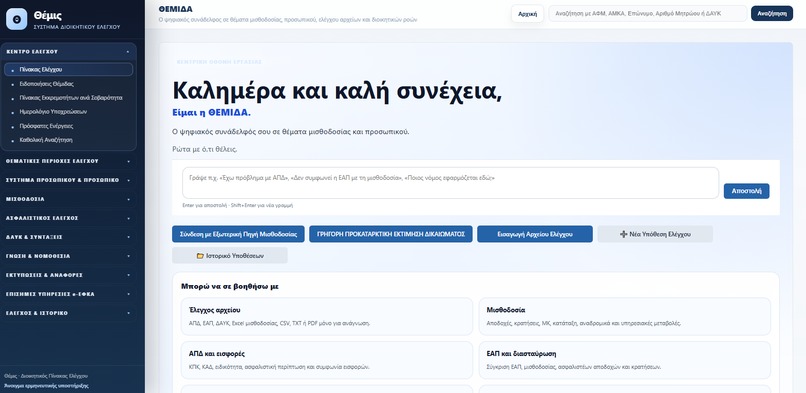
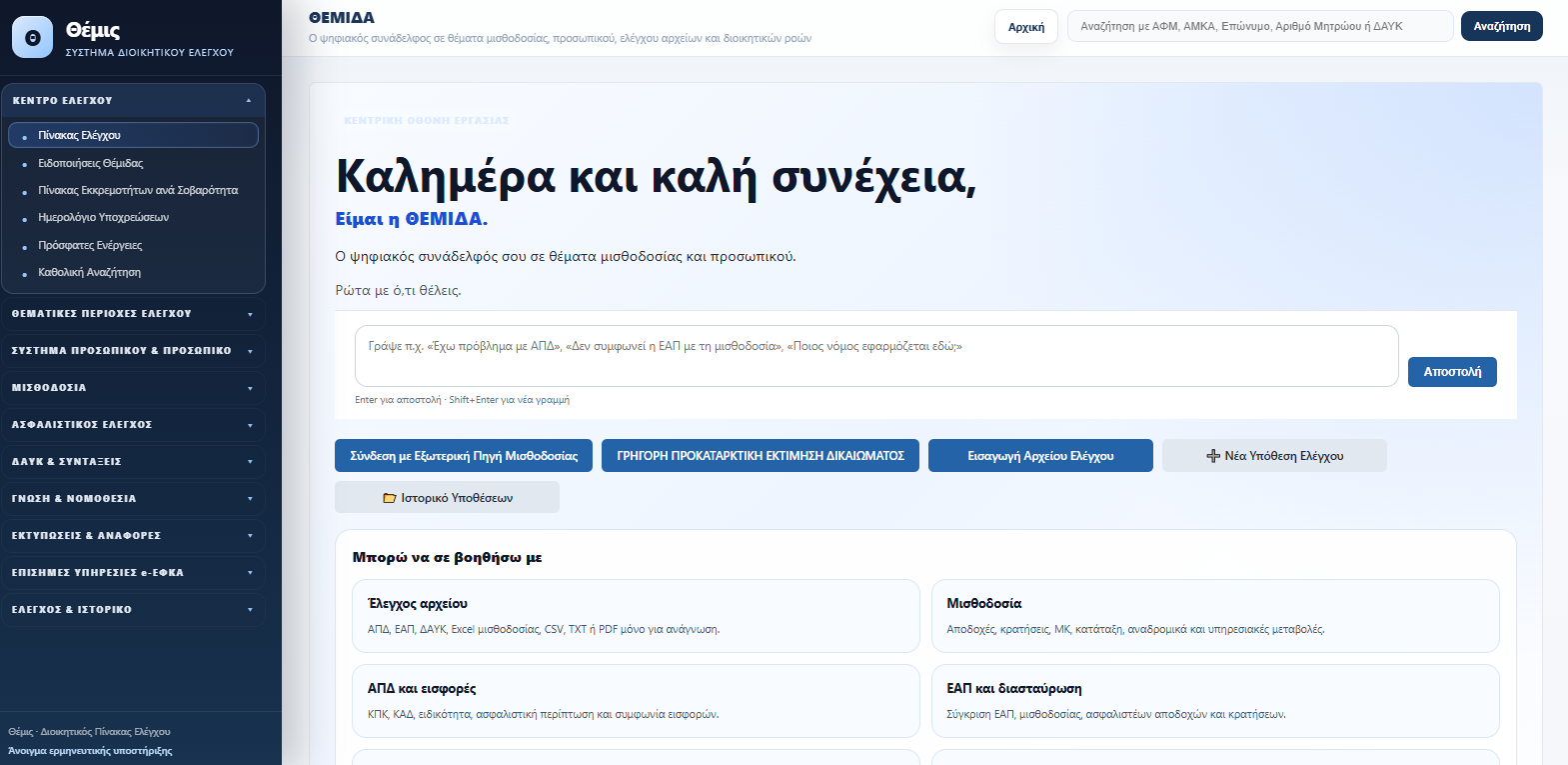
THEMIS administrative control center for payroll, personnel, audits, document intelligence and human-supervised workflows.
-
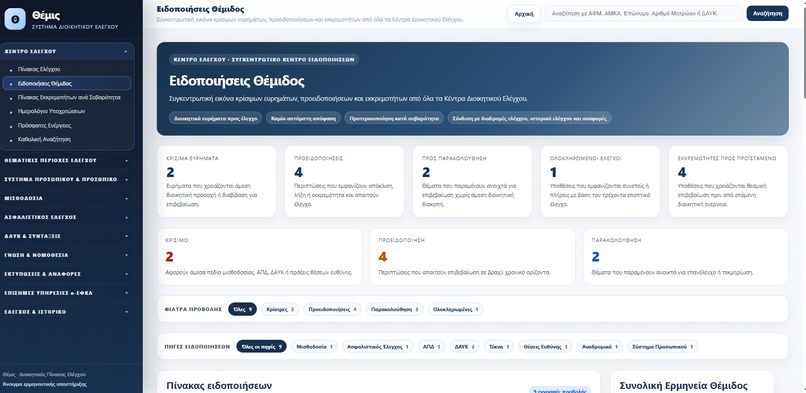
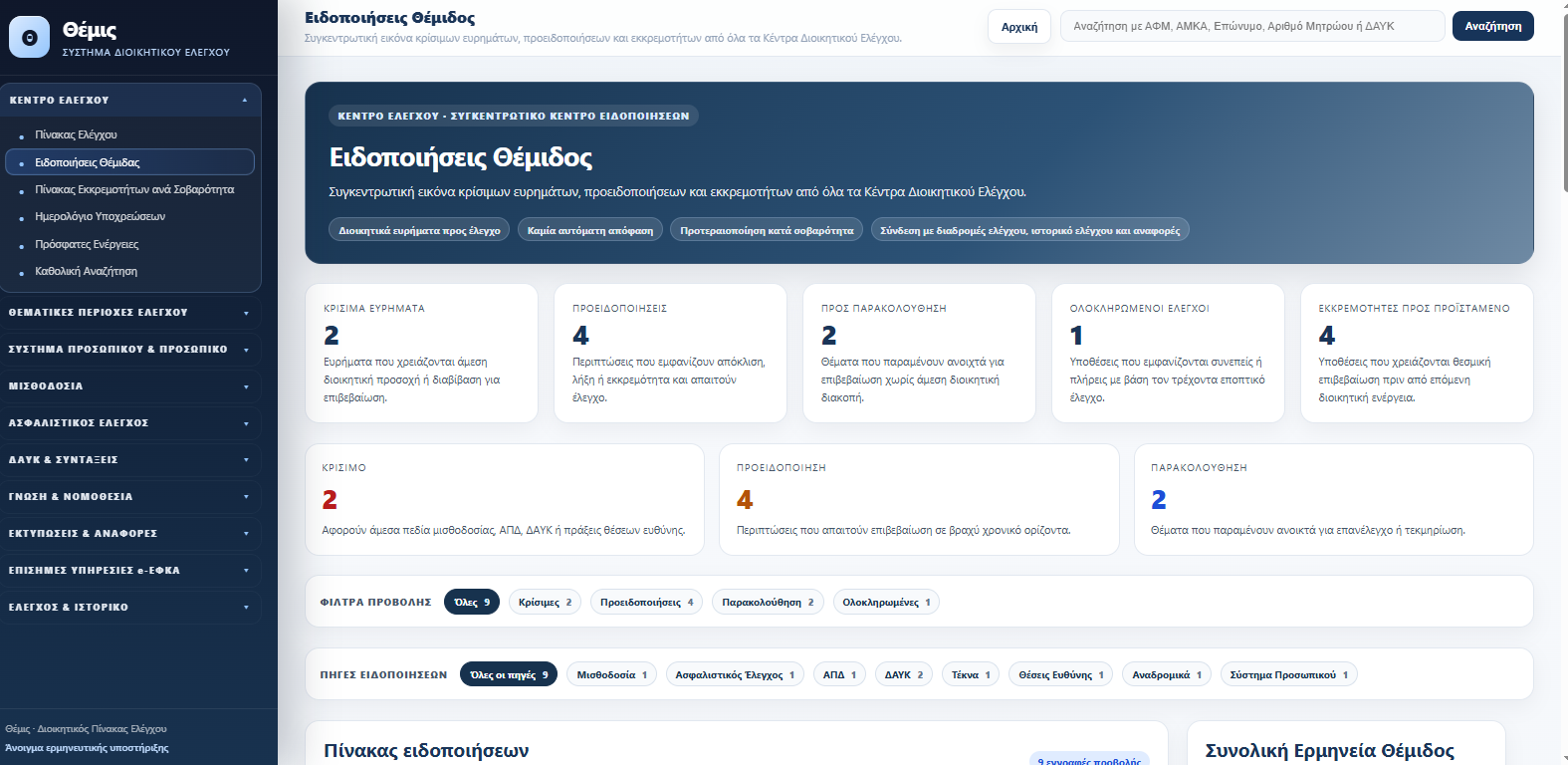
Administrative alerts grouped by severity, status and audit domain, with no autonomous decisions.
-
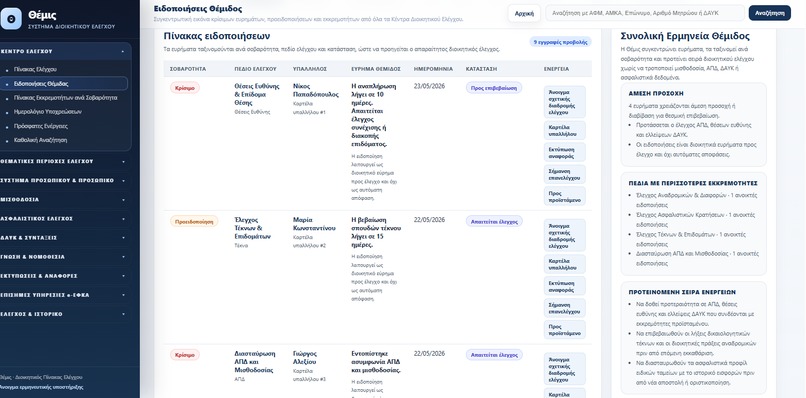
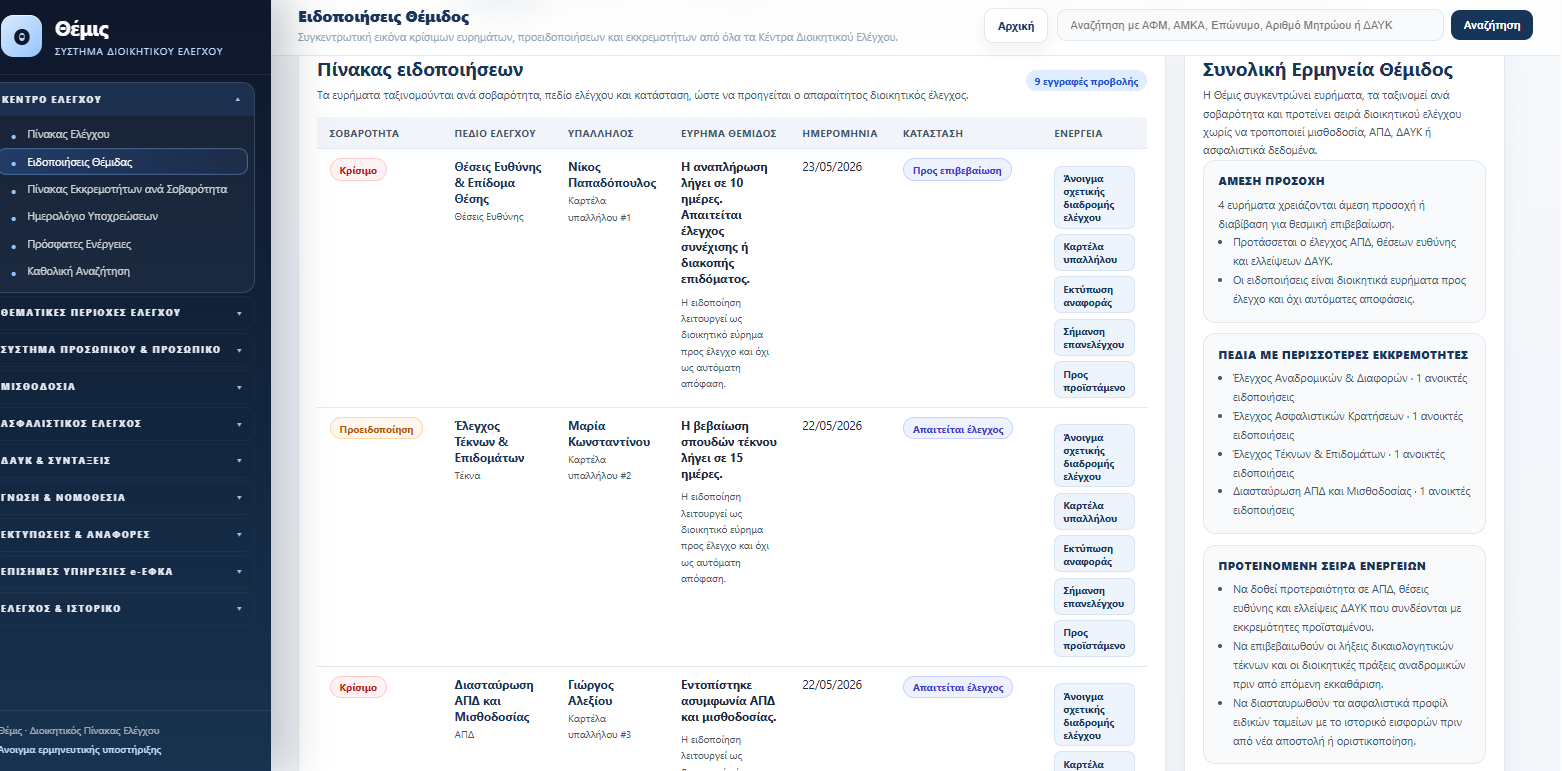
Explainable findings with evidence context, recommended review paths, escalation controls and human-owned actions.
-
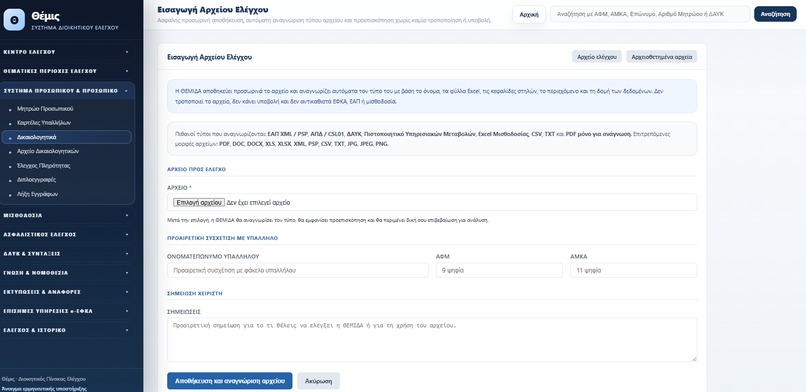
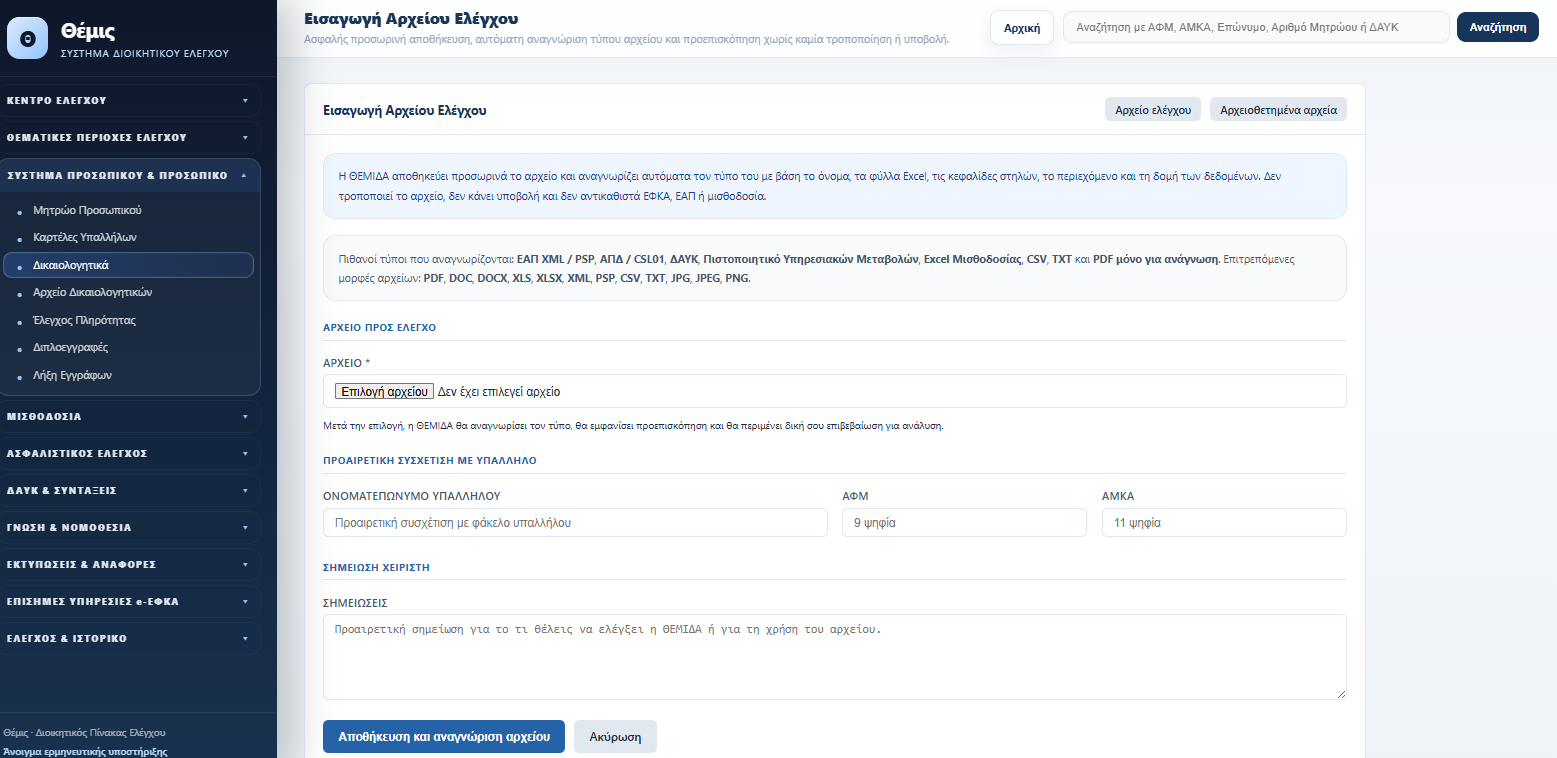
Secure local-first file intake with automatic document recognition, read-only processing and human confirmation before analysis.
-
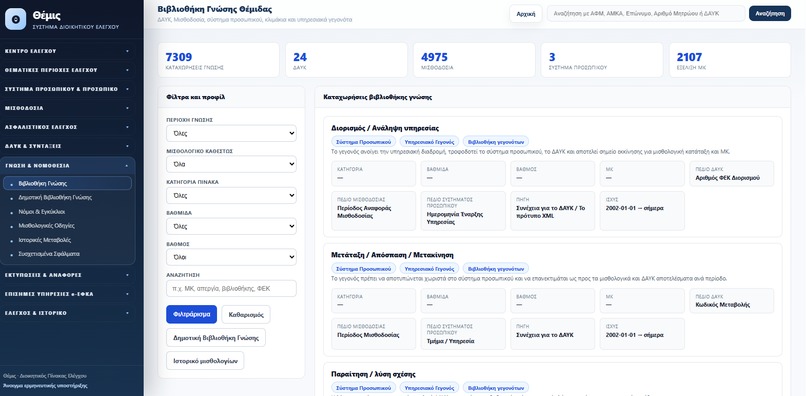
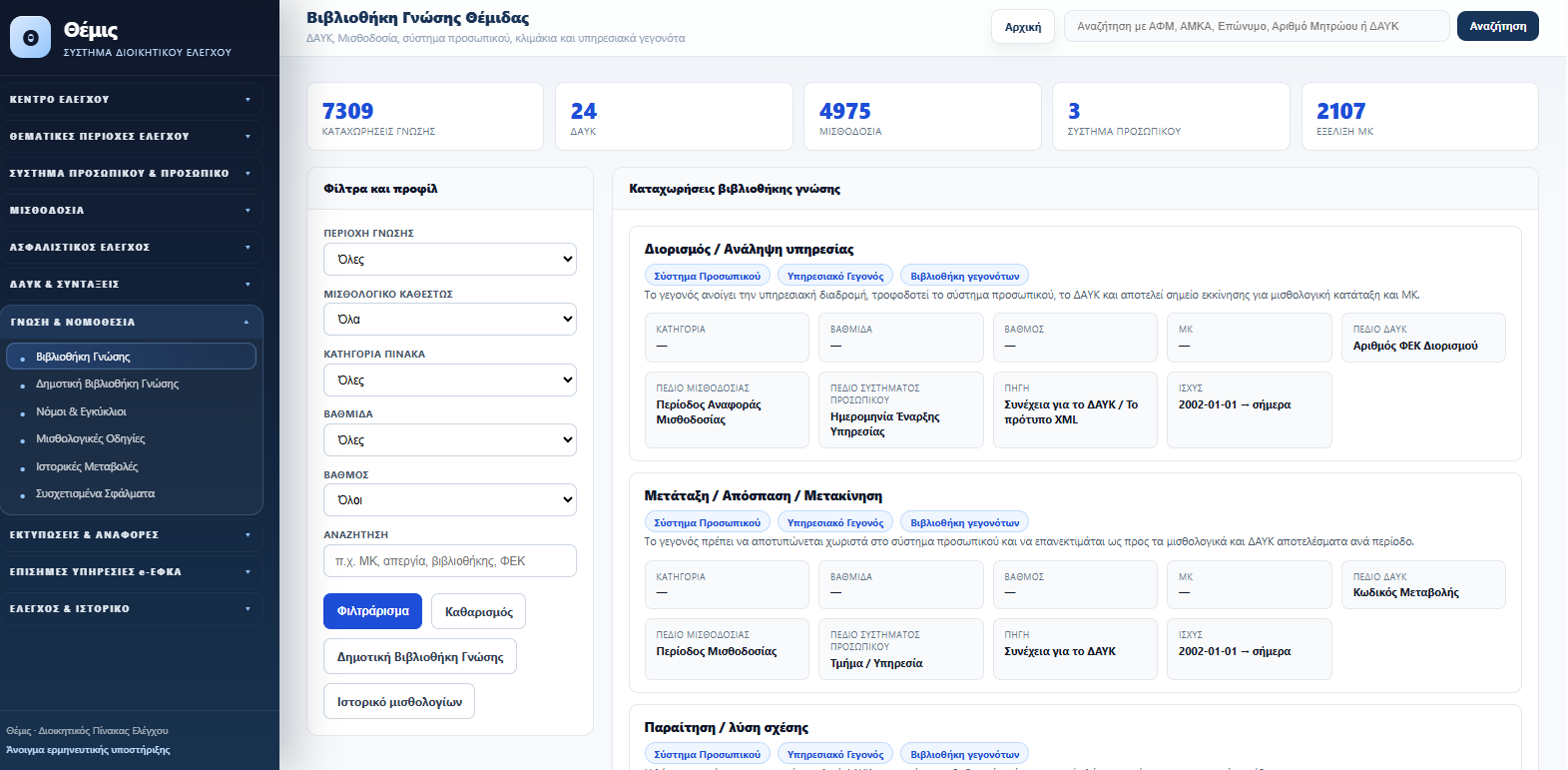
Structured institutional knowledge connecting personnel events, payroll rules, document evidence and administrative history.
Inspiration
Public and private organizations manage critical administrative processes through fragmented documents, spreadsheets, payroll files, personnel records and disconnected information systems.
Employees often have to manually identify missing information, reconcile conflicting records and understand which document supports each administrative conclusion. This creates delays, repeated work and decisions that can be difficult to explain or audit.
THEMIS was created to transform this fragmented environment into a structured, evidence-based and human-controlled administrative intelligence platform.
What it does
THEMIS is a modular AI-assisted platform for administrative intelligence, auditing, document mapping, regulatory compliance and decision support.
Its architecture is designed to support dedicated vertical editions for:
- municipalities and municipal organizations,
- ecclesiastical organizations,
- universities and educational institutions,
- hospitals and healthcare organizations,
- smart-city environments,
- public-law entities,
- private-law entities,
- central and wider public-sector organizations,
- and, through dedicated editions, private-sector organizations.
THEMIS is designed to support multiple administrative functions, including:
- payroll and HRMS auditing,
- personnel-record reconciliation,
- employee-file completeness checks,
- identification of missing or inconsistent information,
- document mapping and classification,
- connection of findings to their supporting evidence,
- regulatory and procedural workflows,
- retirement-readiness processes,
- explainable decision support,
- human approval before critical actions,
- audit trails and institutional memory.
The THEMIS Evidence Navigator focuses on making every administrative finding traceable. It connects detected gaps or inconsistencies to the relevant source documents, explains why they require attention and routes critical conclusions to a human reviewer.
How we built it
THEMIS was developed through a human-led workflow using ChatGPT and GPT-5.6 for architecture, research synthesis, product design, governance and structured decision-making.
OpenAI Codex is used for repository-level implementation, code review, testing, validation and controlled changes to the software.
Development is coordinated through NEXUS, our custom governance, orchestration and institutional-memory layer. NEXUS preserves project rules, scope restrictions, architectural decisions, checkpoints, evidence and implementation history across the different THEMIS editions.
The platform currently operates in a secure local-first development environment using synthetic and non-production data.
Critical functions are designed around human review. THEMIS performs no uncontrolled production actions and no autonomous database writes.
Challenges we ran into
The greatest challenge was not simply detecting inconsistencies. It was creating a system that could explain where every finding came from and connect it to supporting evidence.
A second major challenge was designing one modular platform for very different organizations. Municipalities, universities, hospitals and ecclesiastical organizations do not operate under identical rules, terminology or responsibilities.
We therefore designed isolated vertical editions that share a common intelligence and governance foundation while preserving the specific requirements of each sector.
Another challenge was maintaining strict boundaries between AI-assisted analysis and human administrative authority. The platform had to support decisions without replacing the responsible employee or institutional body.
Accomplishments that we're proud of
We created a modular administrative-intelligence foundation that can support multiple organizational sectors without turning them into one generic workflow.
We developed core mechanisms for document intelligence, evidence binding, administrative auditing, completeness checks, human approval and traceable audit results.
We also created NEXUS as a governance and institutional-memory layer that preserves project decisions, controls development scope and prevents changes in one edition from silently affecting another.
The current local-first architecture allows the platform to be developed and validated safely before controlled pilot deployment.
Most importantly, THEMIS is no longer only an idea. It has a functional core, defined vertical editions, tested administrative workflows and a structured roadmap toward real organizational use.
What we learned
We learned that trustworthy administrative AI requires much more than generating an answer.
It requires evidence binding, explainability, institutional context, controlled workflows, auditability and a clear boundary between automated analysis and human authority.
We also learned that different sectors can share a common intelligence layer, but each sector must retain its own rules, vocabulary and decision-making responsibilities.
Finally, local-first development with synthetic data provides a strong foundation for safely validating sensitive administrative workflows before any connection to real organizational systems.
What's next for THEMIS Evidence Navigator
The next stage is to complete and validate the Evidence Navigator workflow across representative synthetic administrative cases.
We will expand document mapping, strengthen evidence tracing, add further evaluation and regression tests and improve the presentation of findings for human reviewers.
We will also continue developing the dedicated editions of THEMIS for municipalities, ecclesiastical organizations, universities, hospitals, smart-city environments and other public and private organizations.
The longer-term goal is to prepare controlled pilot deployments with interested organizations and establish THEMIS as a reusable administrative-intelligence and governance layer that supports, rather than replaces, responsible human decision-making.

Log in or sign up for Devpost to join the conversation.