-
-
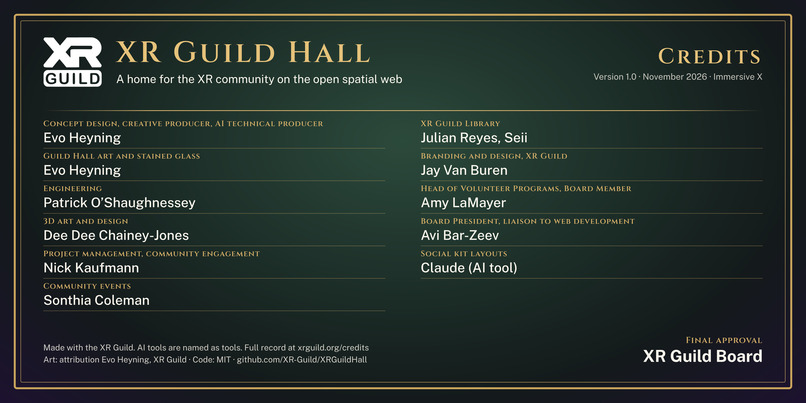
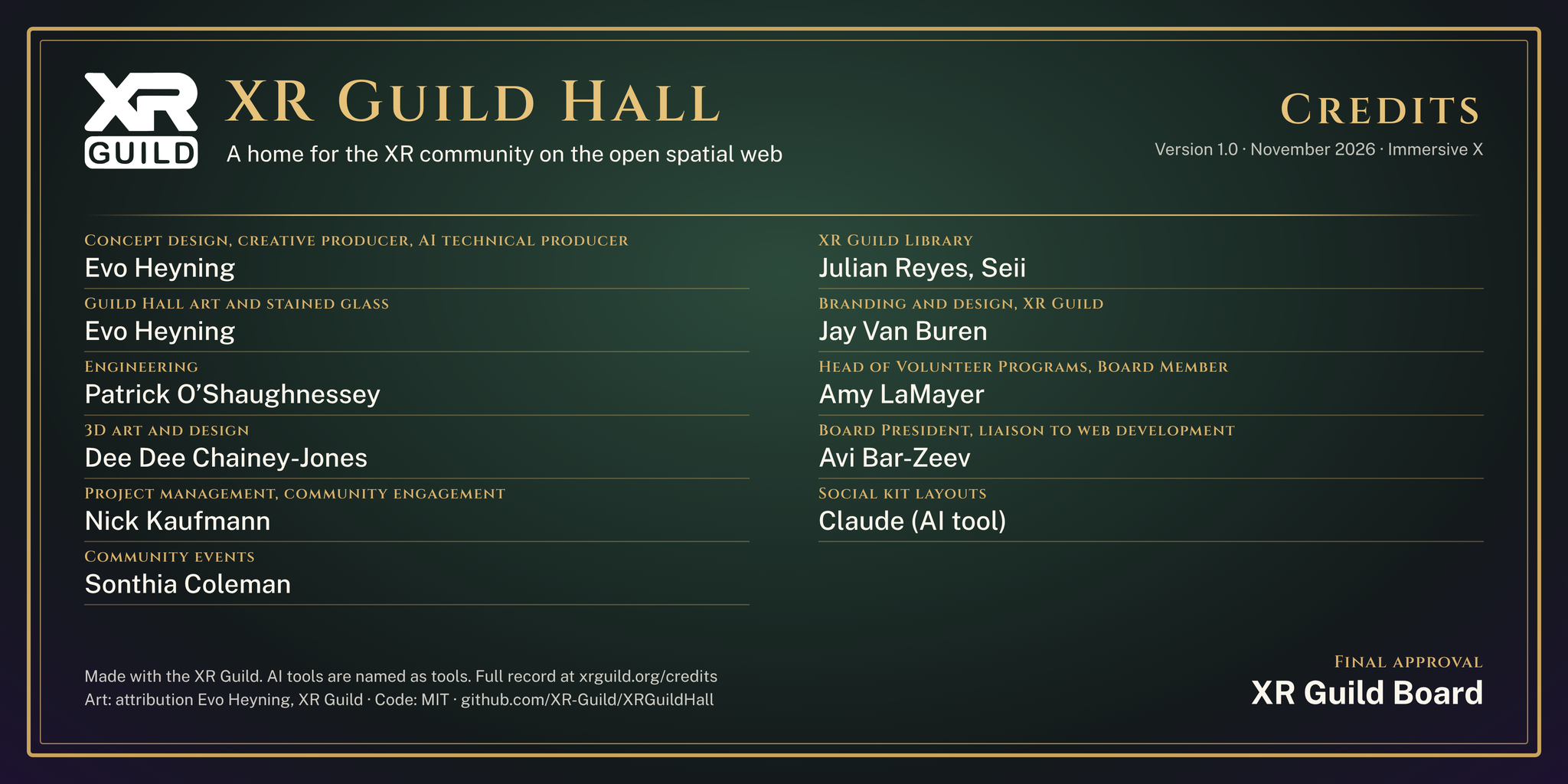
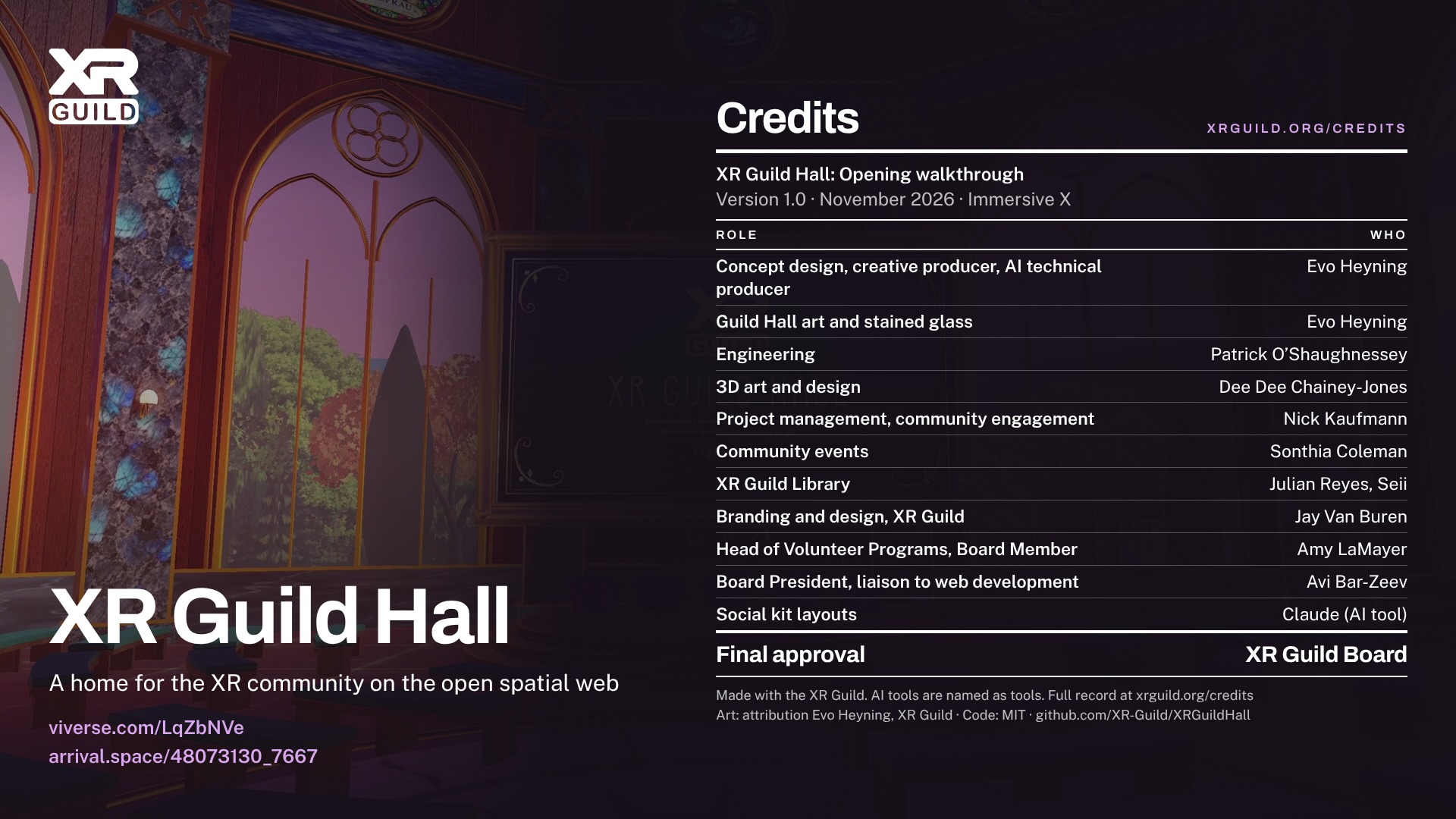
XR Guild Credits
-
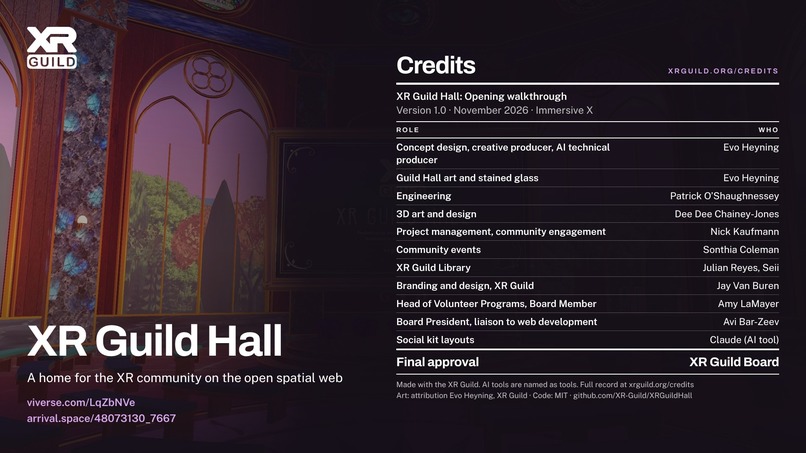
XR Guild Credits
-
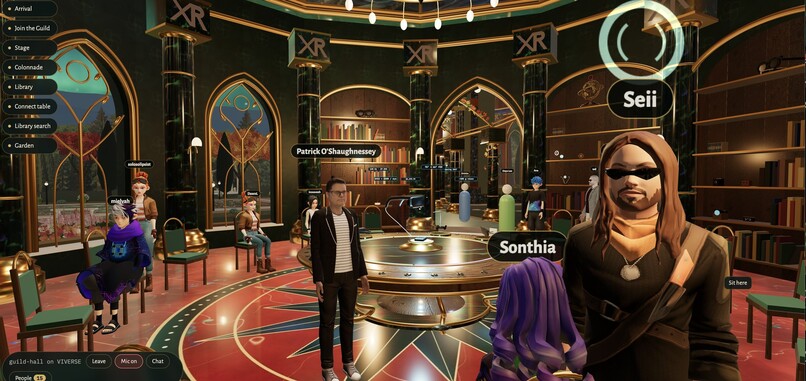
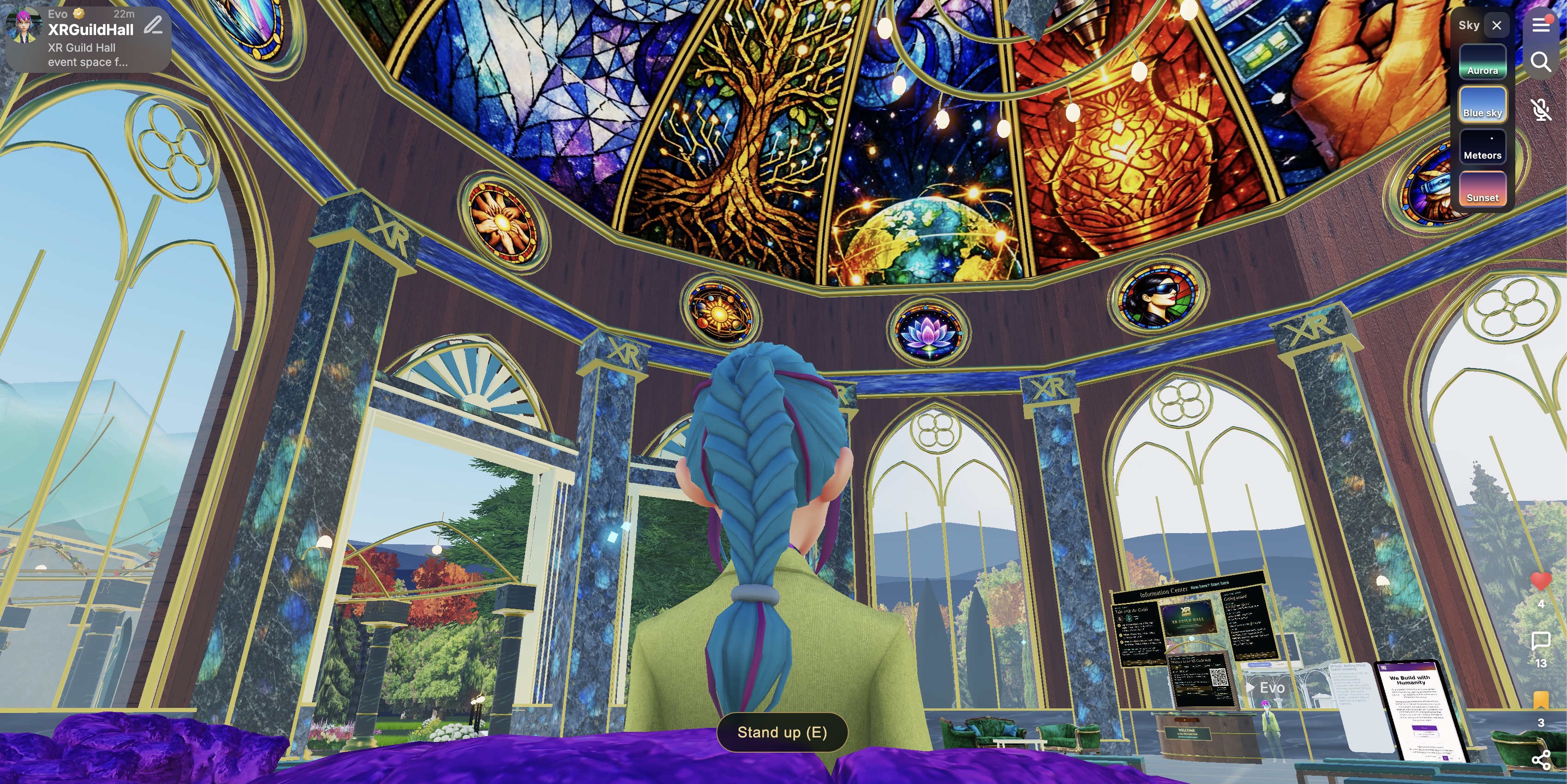
XR Guild Hall
-
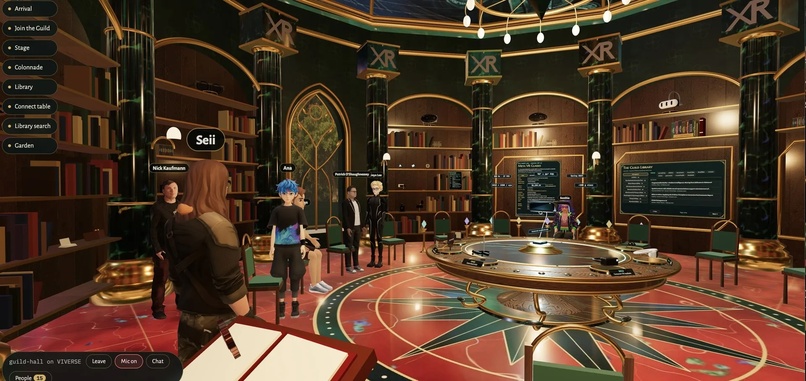
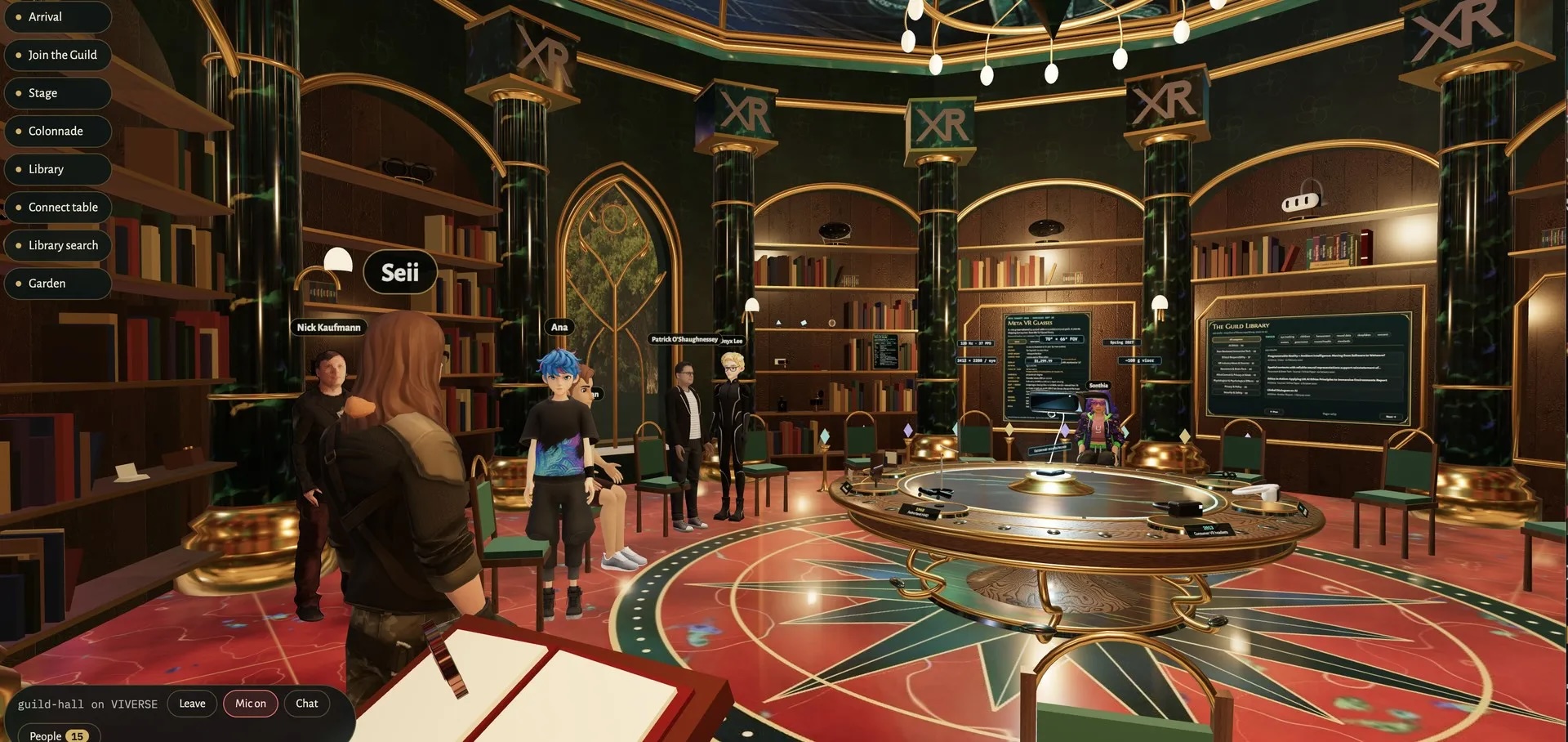
XR Guild Hall Library
-
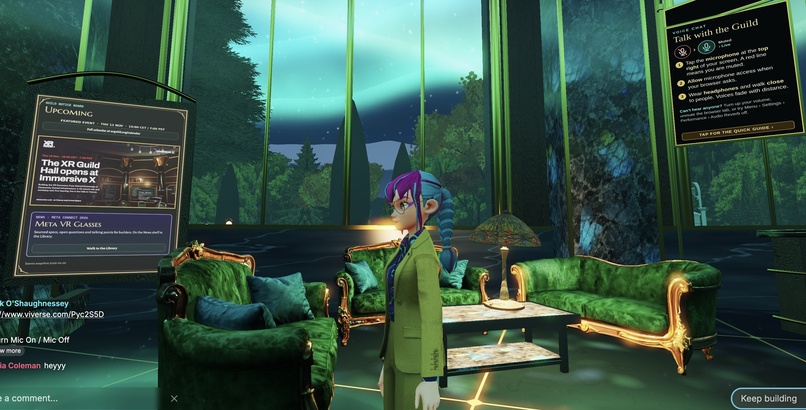
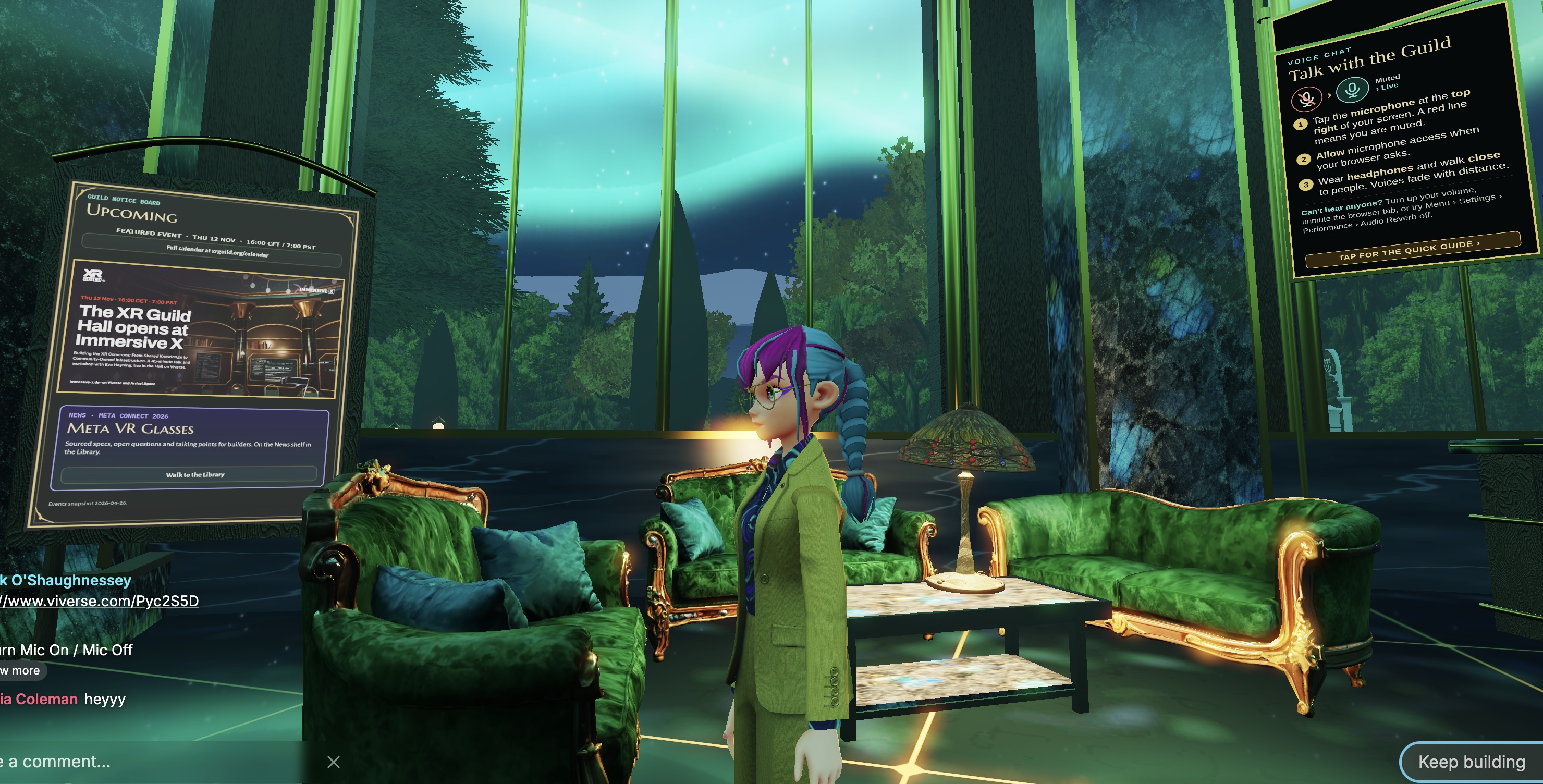
XR Guild Common Area
-
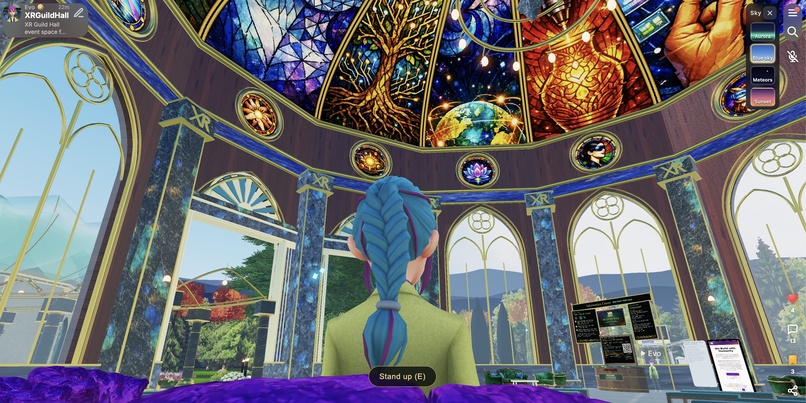
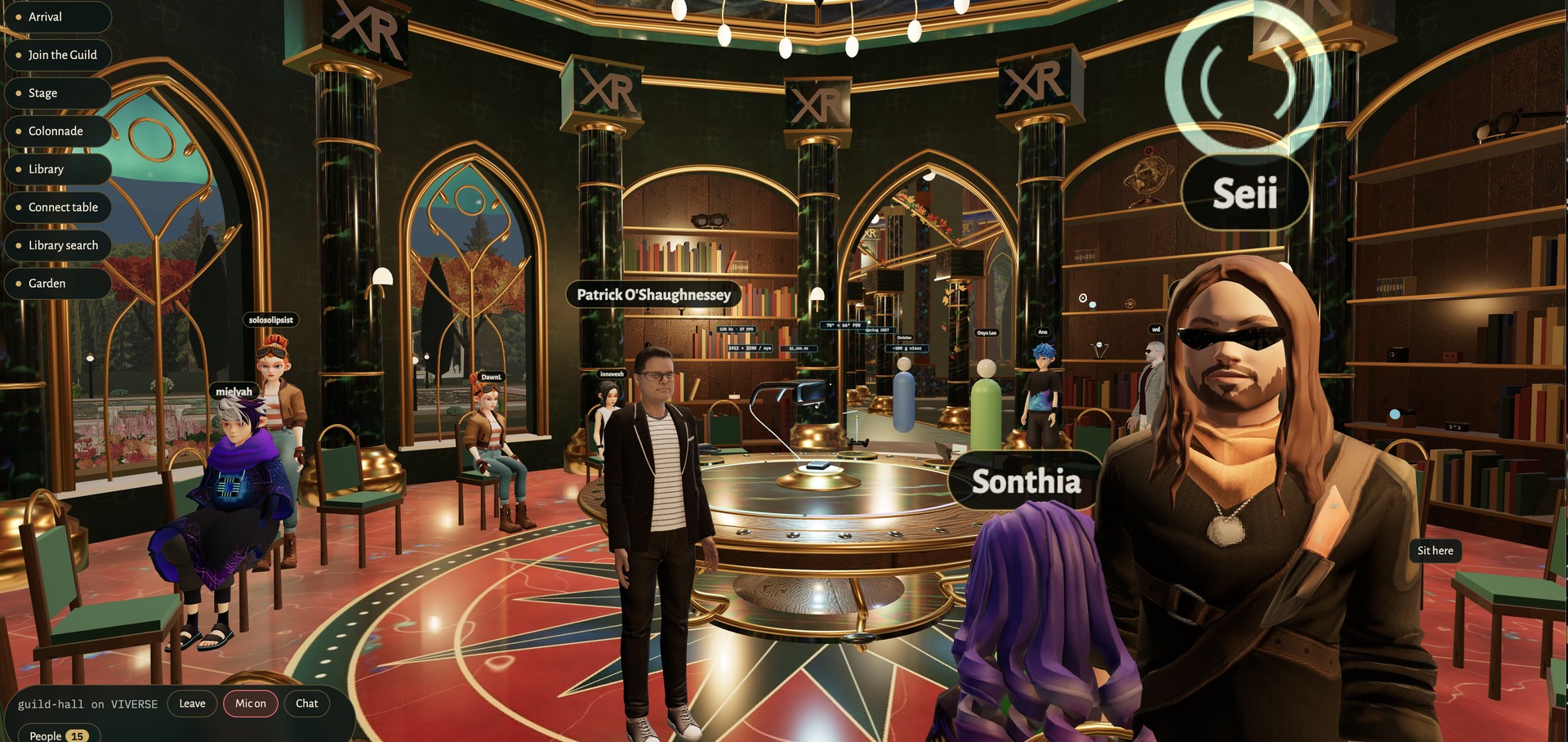
XR Guild Main Hall
Inspiration
The XR Guild is a nonprofit community of spatial computing professionals who build immersive technology responsibly. Our members work across time zones, devices and platforms, and most of our collaboration happened in video calls and chat threads. We wanted a place where the work itself could happen in XR: weekly co-working, mentorship, research and planning, in a space anyone can enter from a link.
That meant no app store, no install and no single vendor's walled garden. Schools and libraries often block one platform but allow another, and some countries do the same. So we set out to build the XR Guild Hall: a browser-first, hands-first workspace that opens on a Meta Quest, a laptop or a phone from the same URL.
What it does
The Guild Hall is a shared WebXR workspace for a global professional community.
- Hands first, end to end. Visitors move through the Hall, open panels and explore the Library with their hands alone, using pinch and poke. Controllers are optional and do exactly the same things.
- Twelve-doorway navigation rail. Pinch or poke a doorway to move between rooms, with no precise gestures and no walking required, so it works seated or standing.
- Spatial UI panels for wayfinding, event schedules and Guild resources. They respond to direct touch and to pinching from a distance.
- The XR Guild Library. Visitors explore the research and work of today's immersive leaders and pick up historic XR devices to look at up close.
- Three render modes: fully immersive VR, AR passthrough, and an additive mode tuned for see-through glasses.
- One link, every device. The same URL runs on Quest, desktop and mobile, so a member on a phone can join a teammate in a headset.
Today the Guild Hall hosts our weekly co-working drop-ins, mentorship sessions, research meetups and community events.
How we built it
We built the Hall on Meta's Immersive Web SDK (IWSDK) with three.js, TypeScript and Vite. We mapped IWSDK's component patterns directly to the Hall's building blocks: doorways, panels, rooms and the navigation rail.
Comfort-first sizing. We size UI by visual angle instead of fixed units, so text and buttons stay readable and easy to hit at any distance. For a target that should fill a visual angle $\theta$ at viewing distance $d$, its physical size $s$ is:
$$ s = 2d \tan\left(\frac{\theta}{2}\right) $$
Every panel and doorway uses this, so nothing is too small to read or too far to reach.
A shared design system. Oak, gold and labradorite materials with a single warm gold emissive (#EEC96B) give the Hall the feel of a crafted guild space while keeping materials and draw calls low.
Performance budgets based on the VIVERSE optimization guidelines: a fast first frame, 72+ FPS in XR, low input latency, and lighter defaults on mobile and standalone headsets.
Multiplayer audio runs on Photon for our Viverse build and web experiences.
Testing in Meta's IWER Quest 3 emulator and on device, covering hand input, controllers and desktop, plus live group sessions inside Viverse.
Challenges we ran into
- One interaction model for every input. Designing pinch, poke, controller, mouse and touch so none of them feels second-class took many rounds of iteration.
- Readable text in three render modes. VR, passthrough and additive glasses treat light and contrast very differently.
- Frame rate on standalone hardware while keeping the Hall warm and detailed.
- Spatial audio across devices. Getting group conversations to sound consistent from browser to mobile to headset took the most time, and led us to Photon.
Accomplishments that we're proud of
- The Hall opened to the public as XR Guild Hall V3 on November 12, 2026, at the Immersive X festival, with Guild volunteers hosting the tour.
- One link works across Quest, desktop and mobile.
- Accessibility and comfort were designed in from the start, not added later.
What we learned
IWSDK's component approach made it fast to turn a design system into reusable spatial pieces. Sizing by visual angle changed how we think about UI in XR. Most of all, we learned that an open, link-based space lowers the barrier for a community more than any single feature. Regular drop-in co-working brings people back more reliably than one-off events, and when entry takes one tap, students, mentors and industry leaders actually show up to work together.
What's next
- More rooms behind the doorways: exhibits, an expanded Library and member workshops.
- Scheduled Guild events and a community calendar inside the Hall, across devices. The Hall is already live in Viverse and Arrival.space, and we plan to bring it to the Meta Quest store in 2027.
- Releasing the Hall's spatial UI components as open patterns other community builders can reuse.
Built With
- hand-tracking
- html5
- iwer
- iwsdk
- javascript
- meta-quest
- mixed-reality
- passthrough
- spatial-ui
- three.js
- typescript
- vite
- viverse
- webxr


