-
-
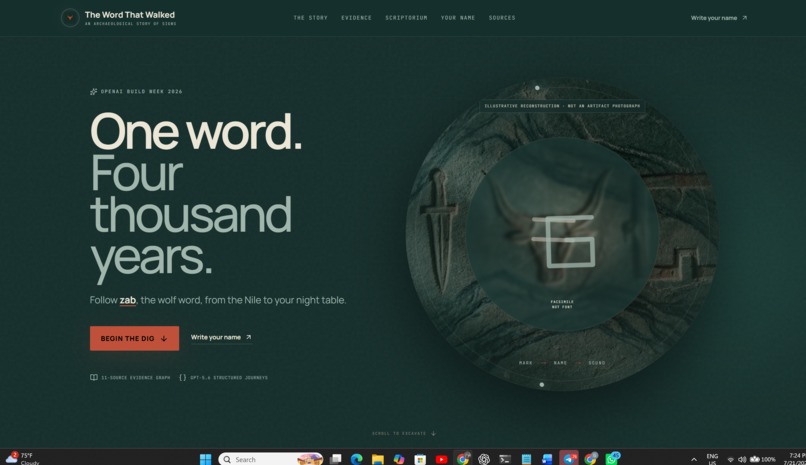
Landing Page
-
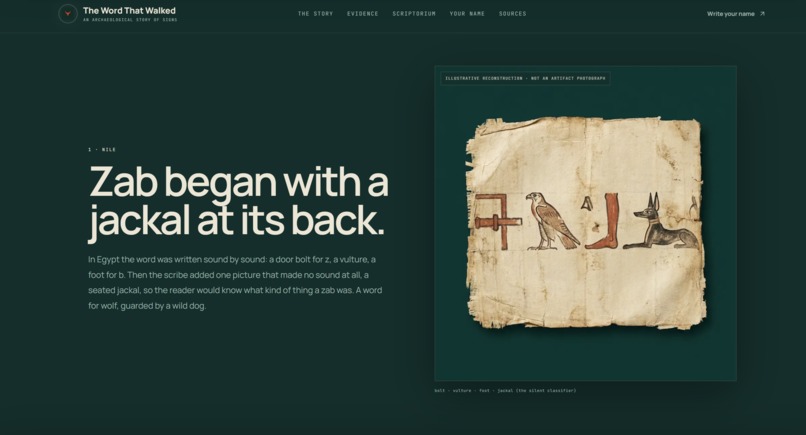
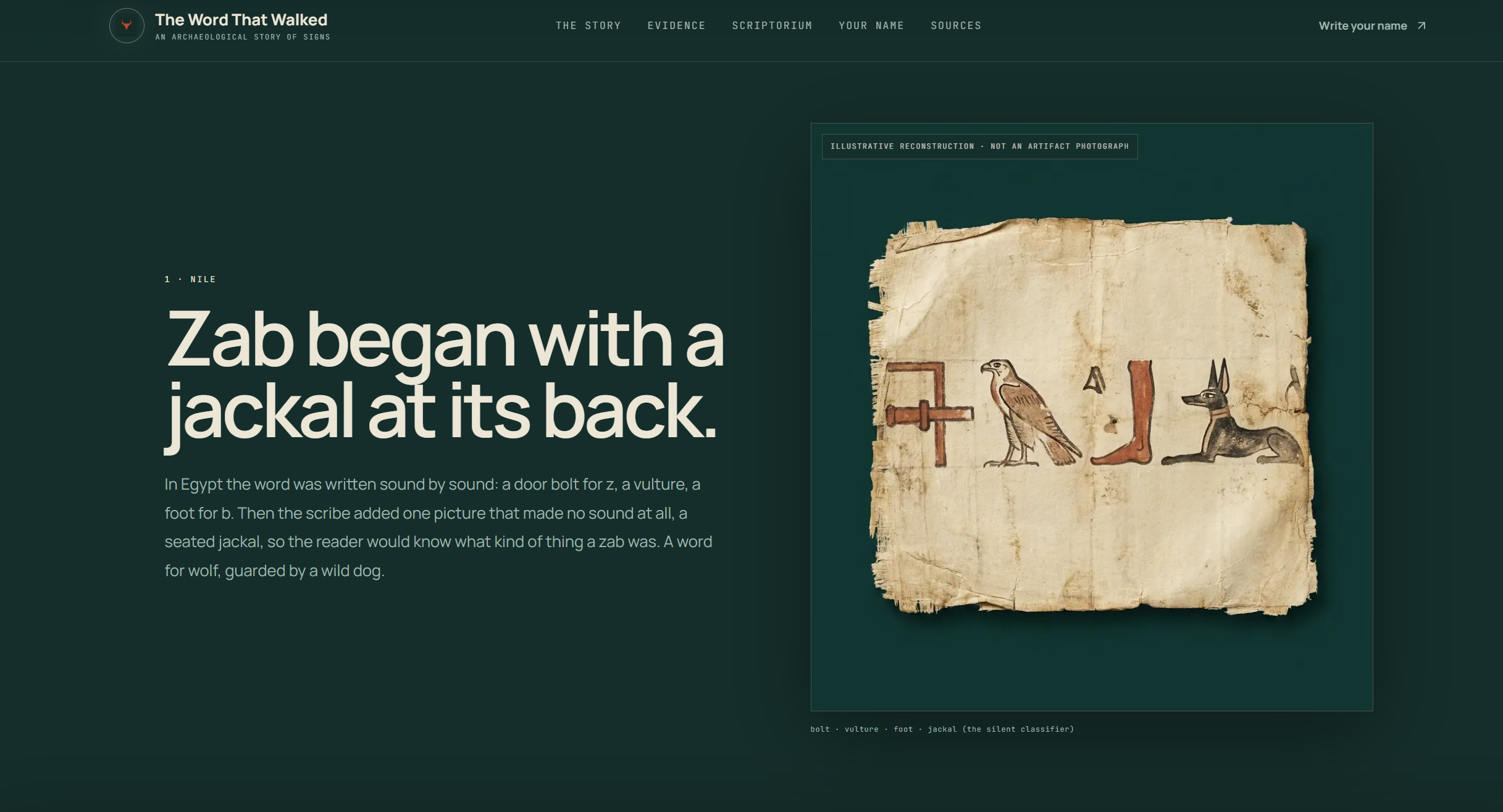
Ancient Egyptian Zab Wolf-Jackal
-
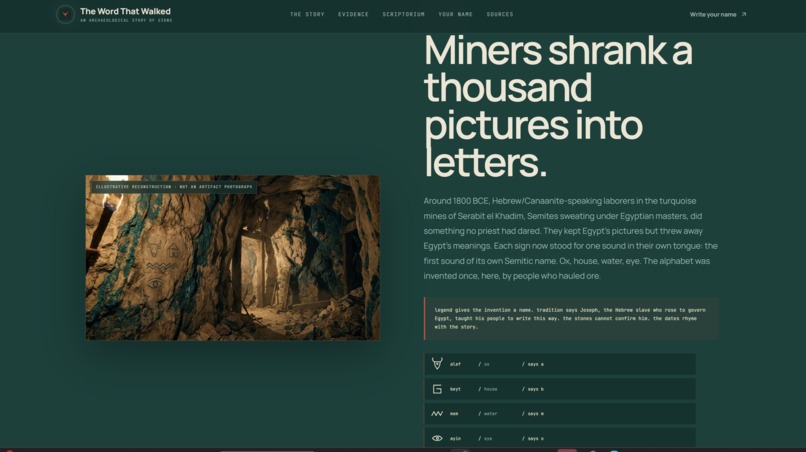
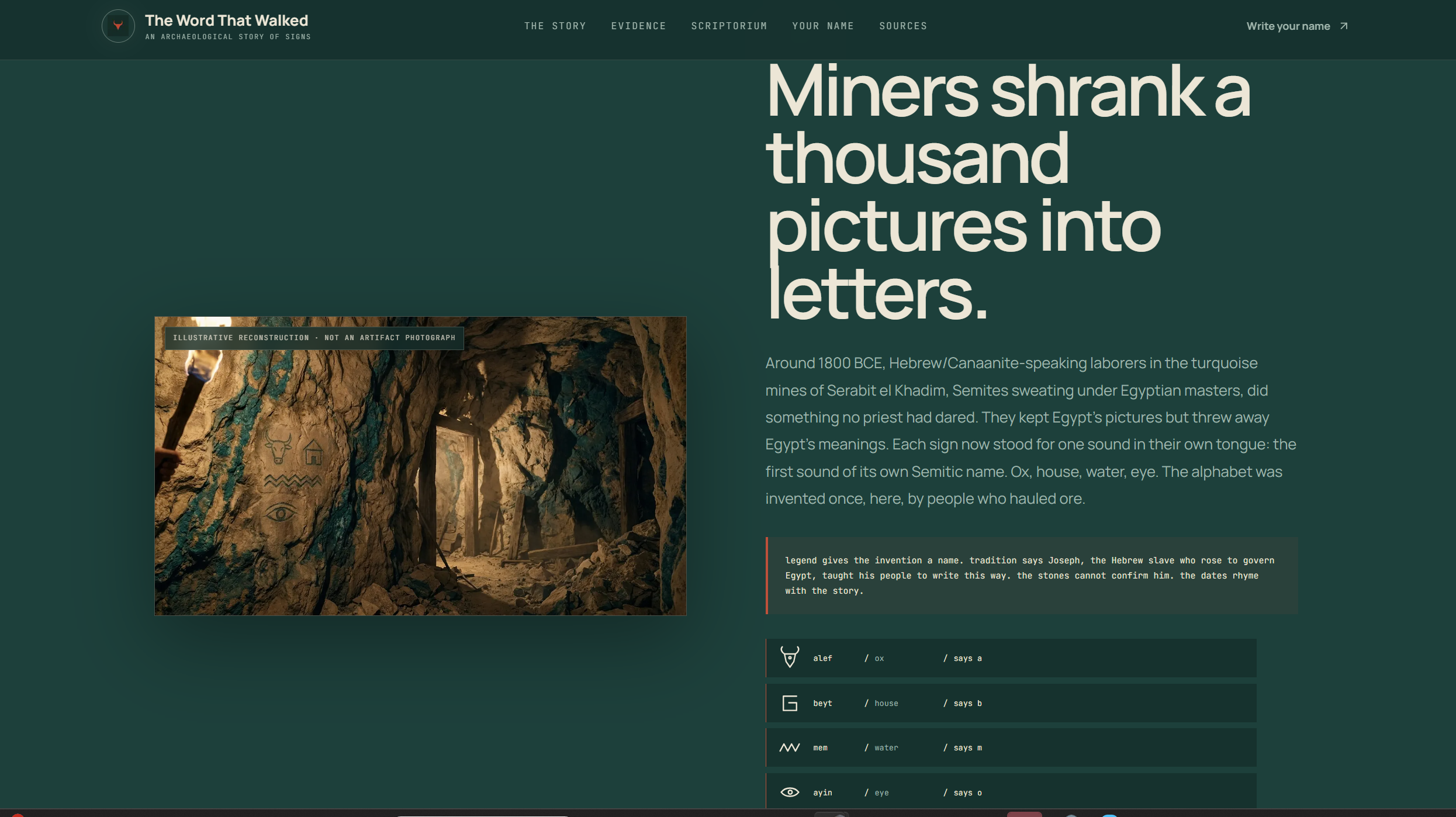
Semitic Miners
-
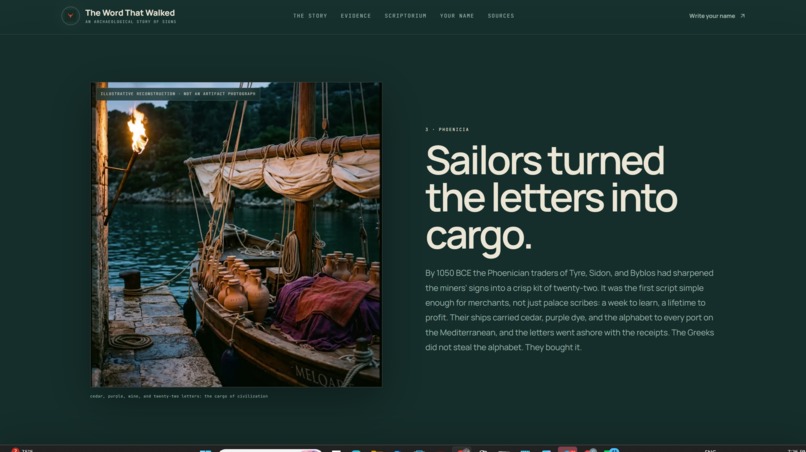
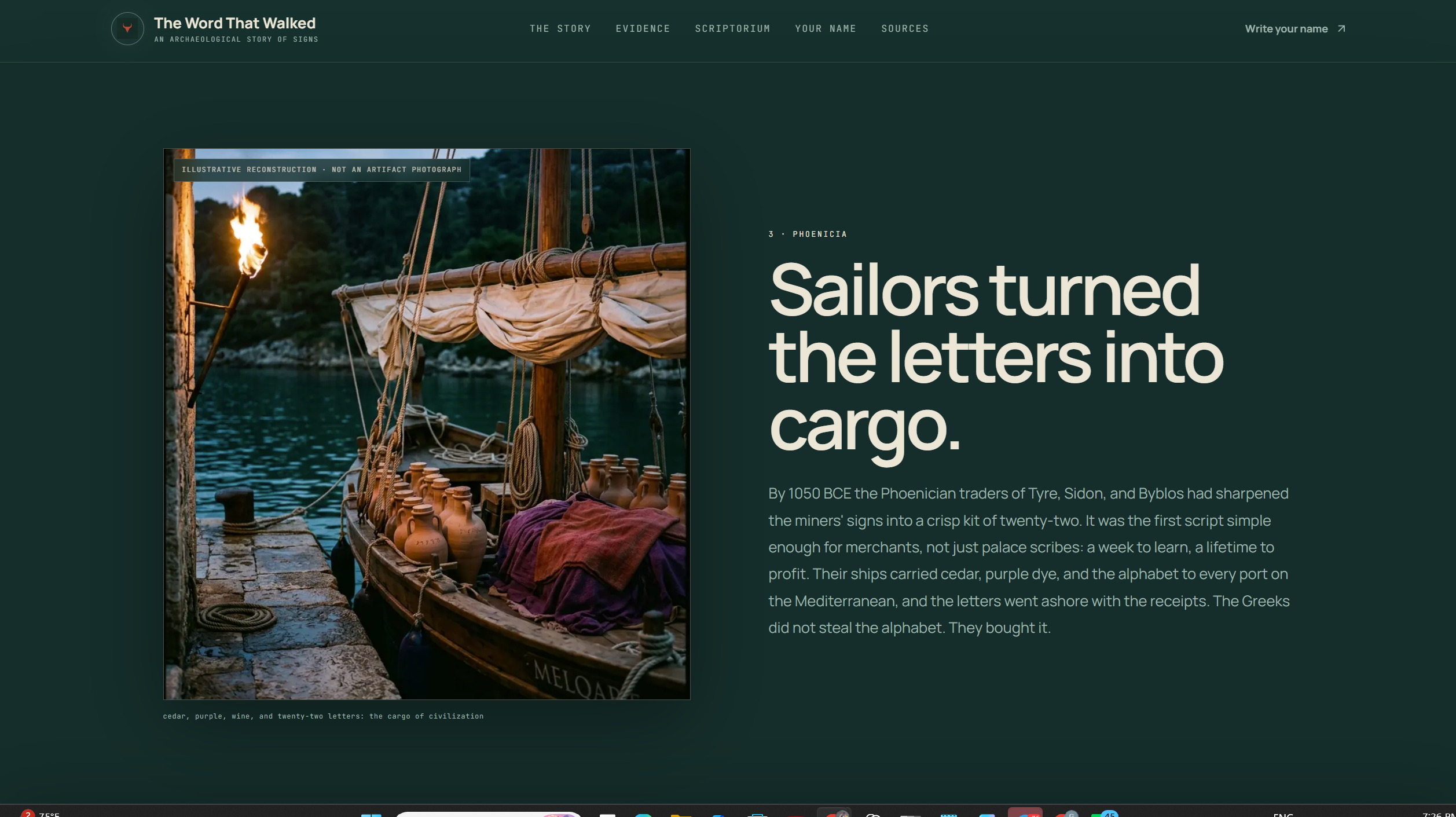
Phoenician sailors
-
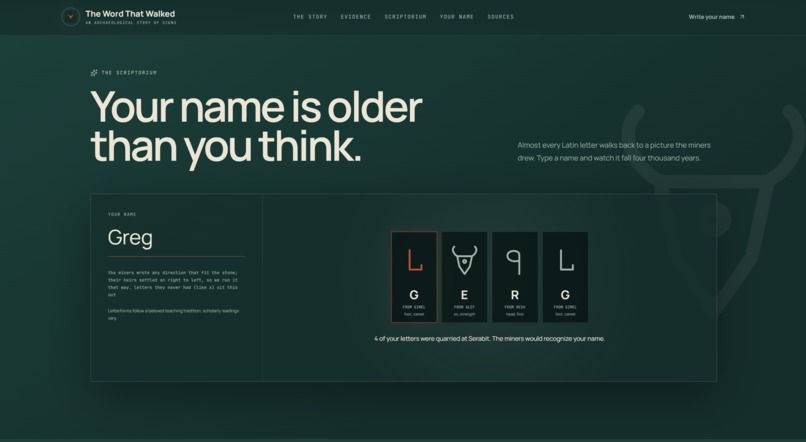
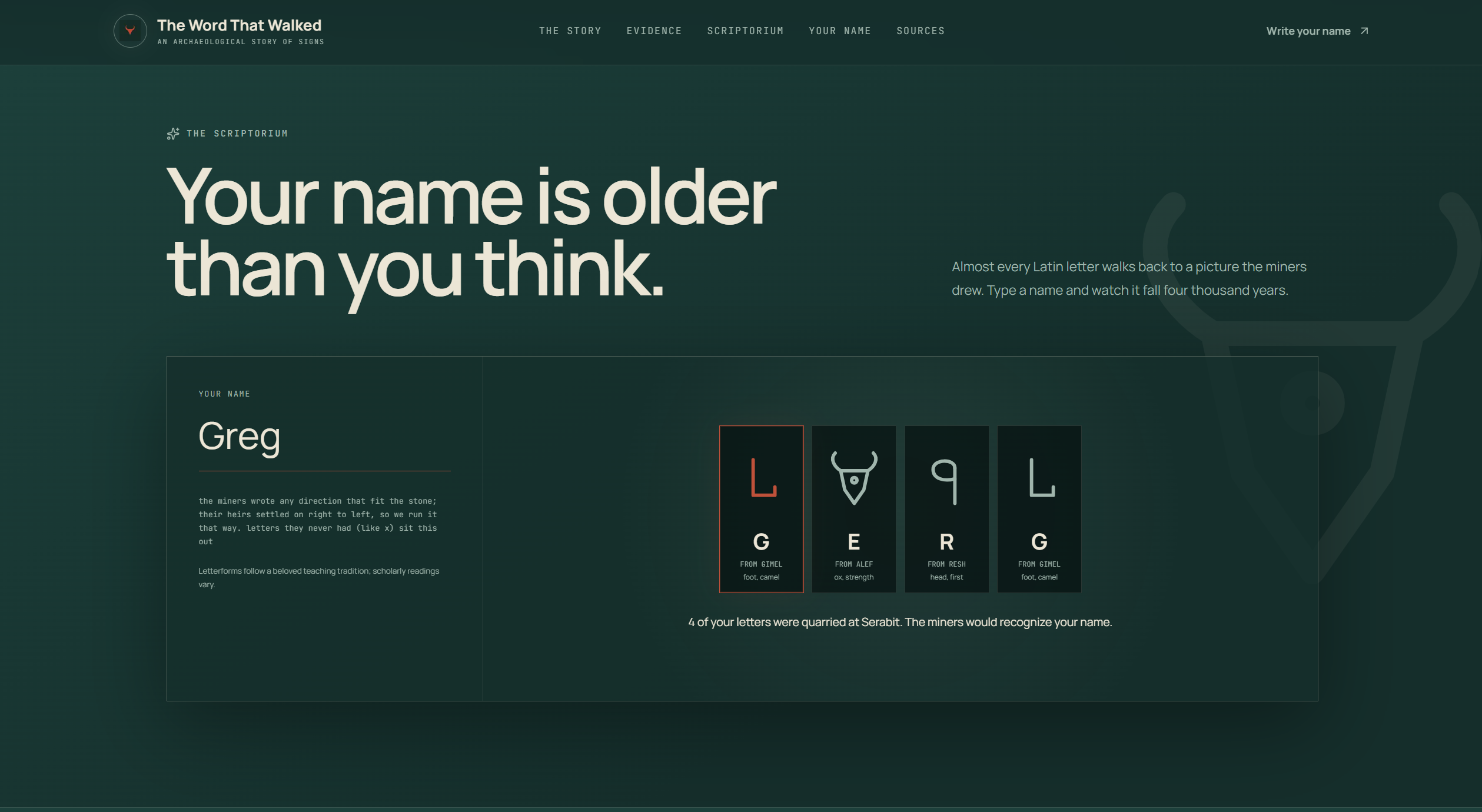
Latin Letter to Proto Siniatic Script
-
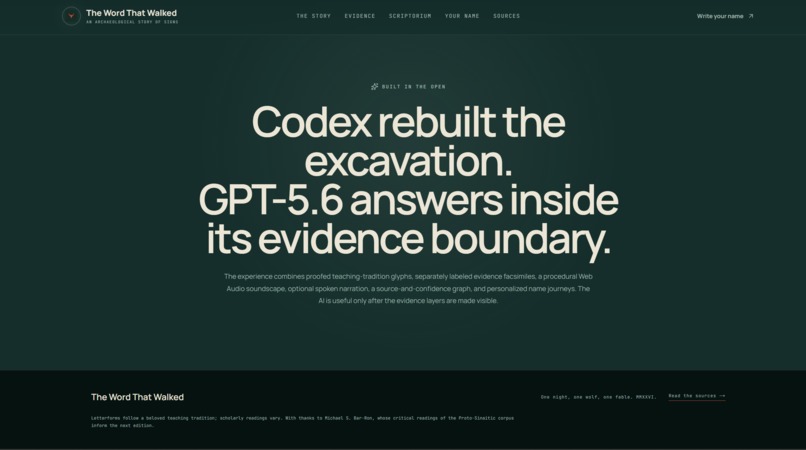
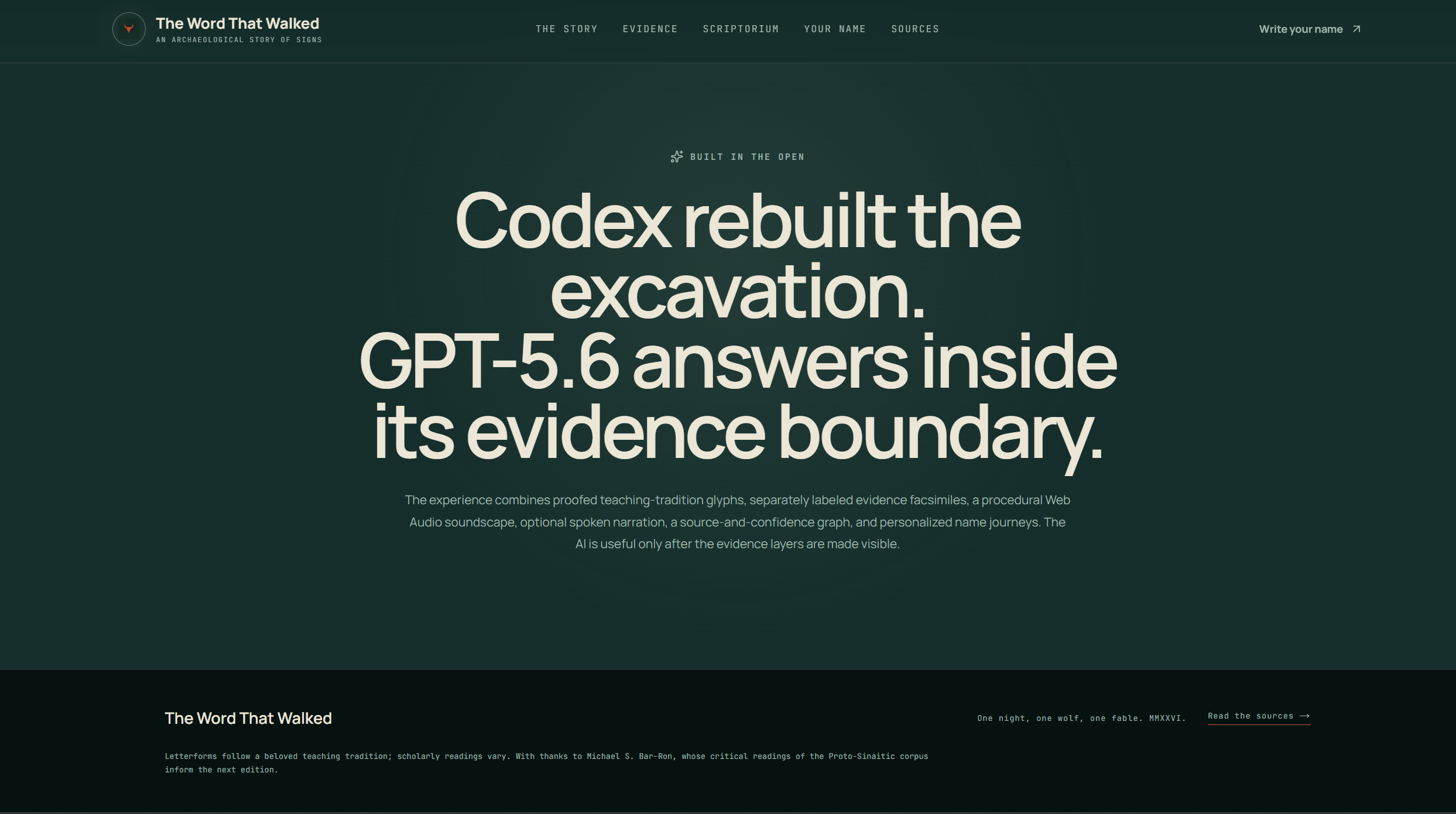
Codex GPT 5.6
Inspiration
My dog's name is Zev. It means wolf in Hebrew. I wanted to know how old that word actually was. The answer is about 4,000 years. I've always been fascinated by archaeology, linguistics, and the history of the alphabet. There are Paleo Hebrew converters out there but nothing for Proto-Sinaitic, the mother of all alphabets. So I built one.
What it does
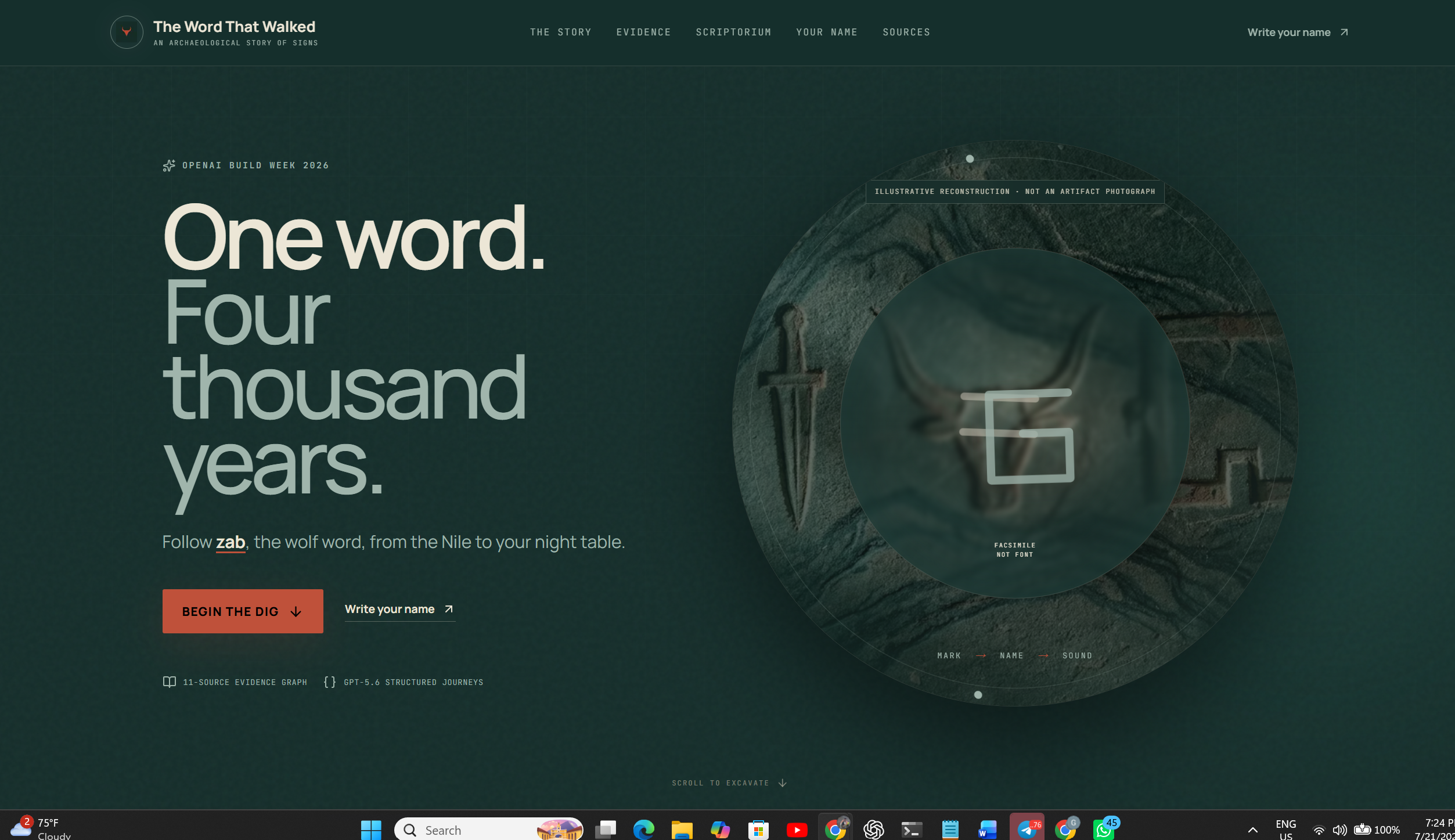
The Word That Walked is an interactive museum that follows one word, zab, the wolf word, from ancient Egypt to your keyboard. Eight chapters trace the journey from hieroglyphics through Sinai where laborers invented the alphabet, to Phoenician trade ships, the Temple era, a modern Torah scribe, and a 2026 coda connecting ancient sign-making to code. The Scriptorium lets you type any name in Latin letters and converts it into Proto-Sinaitic script, the oldest alphabet on earth, drawn right to left in 22 hand-drawn glyphs. Each letter maps back to its original pictograph: A from alef, the ox. B from beyt, the house. Your name rendered in letters that are 4,000 years old. Type the wolf word and you get a surprise.
How we built it
I used Codex to build a fresh Next.js application during the Build Week window. I directed the product decisions, the narrative, and the historical accuracy. Codex wrote the code. GPT 5.6 powers two runtime features. Name Journey traces your name's letters through history with cited sources and structured outputs. Ask the Scribe answers questions about any period and shows where each claim comes from. Every historical claim is tagged by certainty: observed, consensus, proposal, legend, or convention.
Challenges we ran into
Getting the historical narrative right was the hardest part. The original prototype's story was rewritten during the rebuild and I had to restore it to match the canonical version. Making sure GPT 5.6 never contradicts the on-page narrative required structured outputs and server-side validation so the AI cites its sources instead of making things up.
What we learned
Building an educational AI experience is different from building a chatbot. The AI needs boundaries. It needs to know what it doesn't know and say so. The selector-only architecture, where GPT 5.6 picks from a curated source graph instead of generating free text, is what makes the history trustworthy.
What's next for The Word That Walked
Better readability and typography across all sections. More interactive glyph exploration. Expanding the source graph with additional archaeological evidence. Making the experience more accessible on mobile. And eventually connecting it to classroom tools so teachers can use it to teach both alphabet history and evidence literacy.
Built With
- api
- audio
- codex
- gpt-5.6
- next.js
- openai
- react
- responses
- svg
- typescript
- vercel
- web
- zod

Log in or sign up for Devpost to join the conversation.