-
-
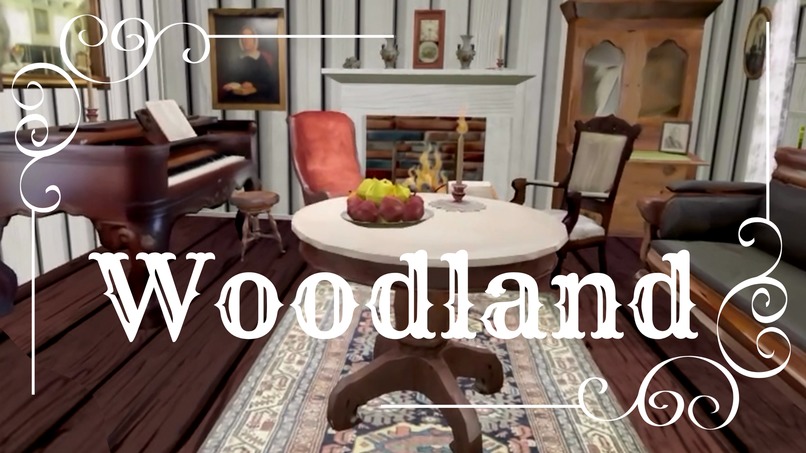
The Woodland Home (Game)
Inspiration
This project was inspired by the life and legacy of General Sam Houston, a central figure in Texas’s fight for independence in 1836. He served two terms as President of the Republic of Texas and played a pivotal role in shaping its early governance. Following Texas’s annexation by the United States in 1845, Houston represented the state as a U.S. Senator and later served as its Governor. A committed Unionist, he firmly opposed Texas’s decision to join the Confederacy in 1861. Due to his refusal to support secession, he was removed from the governorship that same year.
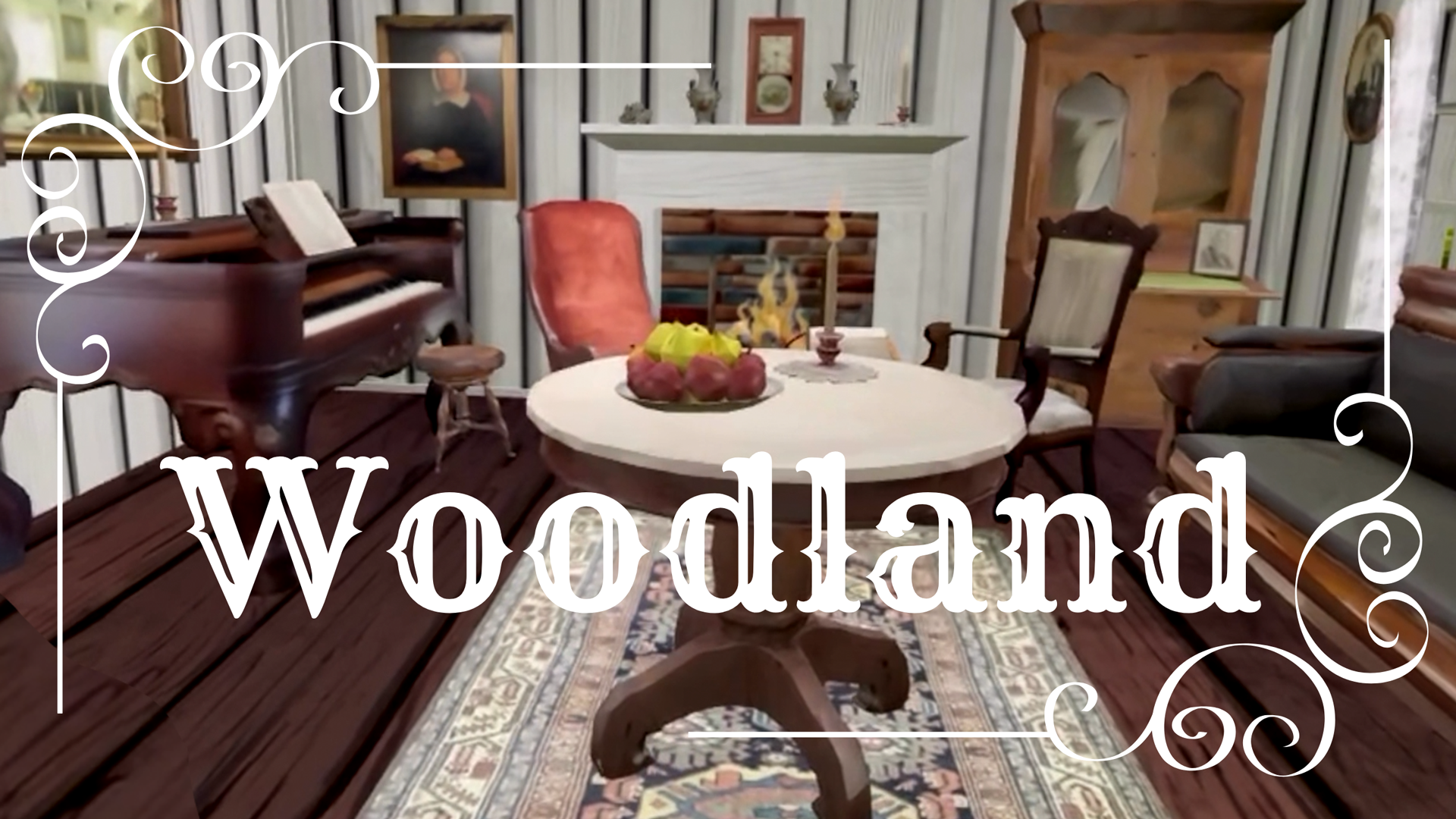
In collaboration with the Sam Houston Memorial Museum and the Republic of Texas Presidential Library, we developed a virtual replica of the Woodland Home - Houston’s residence during his tenure as U.S. Senator. From the outset, this project was envisioned as an educational experience aimed at bringing history to life through immersive digital storytelling.
This competition challenged us to go beyond simple exploration and think critically about how to implement a meaningful progression system within an educational context. We realized that allowing players to merely walk through the house was not enough. Our goal became to design a progression framework that engages players, entertains them, and conveys important historical lessons in an interactive and memorable way.
What it does
| FEATURE | Original Experience | "Mobile Game" Update |
|---|---|---|
| Experience is mobile-compatible. | ✅ | ✅ |
| It is a mobile-first experience. | ❌ | ✅ |
| Programmed with TypeScript. | ❌ | ✅ |
| A mobile heads-up display (hud) deployed. | ❌ | ✅ |
| PROGRESSION | ||
| PROGRESSION: The house has 8 locked doors. Players need to complete various challenges to be rewarded with keys. Once they unlock the door to a room, a new set of trivia, and a new challenge awaits. The main objective is to unlock every single door of the house. | ❌ | ✅ |
| PROGRESSION: The mobile heads-up display (HUD) is designed to emphasize key collection. The eight keys (or their empty placeholders) are centrally positioned, encouraging players to complete the collection task. | ❌ | ✅ |
| PROGRESSION: Players earn xp by learning about Sam Houston's life and the house where he lived. They learn by exploring the space, observing the photographs, listening to audio clips of voice over narration and reading short info cards. | ❌ | ✅ |
| PROGRESSION: Younger players will enjoy earning xp by completing the puzzle of Sam Houston's portrait. The pieces are scattered around the house and players must assemble the puzzle in the shortest time possible. | ❌ | ✅ |
| PROGRESSION: Older players will enjoy earning xp by completing historical trivia challenges. Examples include arranging events of Sam Houston's life in order, filling the blanks of phrases with appropriate words, multiple choice quiz trivia, etc. | ❌ | ✅ |
| PROGRESSION: There are several different quests for players to complete. They have to do with unlocking doors, and completing the puzzle under a certain time threshold. | ❌ | ✅ |
| PROGRESSION: There are three unique leaderboards in the game. | ❌ | ✅ |
| SHARING | ||
| SHARING: Players are encouraged to share the pictures and videos of their mobile hud which includes all 8 collected keys by tagging the museum's Instagram account. (The drive for status is a powerful incentive for sharing) | ❌ | ✅ |
| SHARING: Players are encouraged to share the pictures and videos of their completed puzzles by tagging the museum's Instagram account. (The drive for status is a powerful incentive for sharing) | ❌ | ✅ |
| SHARING: Players are encouraged to share the pictures and videos of their completed puzzles on the media board. | ❌ | ✅ |
How we built it
Our development pipeline incorporated a range of industry-standard tools, including VS Code (with Github Copilot), TypeScript, Horizon Worlds’ Desktop Editor, Blender, Adobe Photoshop, Substance Painter, and Procreate. AI-powered tools also proved to be a valuable addition to our toolkit
Challenges we ran into
The main challenge was conceptualizing a game that is both fun and educational, while also identifying effective ways to incentivize player progression. The idea of unlocking doors within the house, though simple, serves as a powerful progression system—one that taps into player curiosity and encourages continued exploration.
Accomplishments that we're proud of
We’re proud to have created an experience that appeals to players of all ages. Younger players are likely to be drawn to the simpler puzzle challenges, such as a scavenger hunt where they search for hidden puzzle pieces throughout the house. Older players, on the other hand, will be engaged by more complex tasks—such as arranging key events from Sam Houston’s life in chronological order or completing historical trivia by selecting the correct words to fill in missing phrases.
What we learned
We were impressed by Horizon Worlds’ ability to support a large number of unique assets, allowing us to recreate an eight-room house in detail. Because this project is not merely a game but a historical reconstruction, asset reuse for the sake of performance optimization was not an option. Each room was faithfully reproduced to reflect its current state, requiring the design of custom furniture and props for every space. Horizon Worlds handled this challenge remarkably well. While we did push the platform to its memory limits, we were pleased to see that this level of detail was not only possible but fully achievable.
What's next for The Woodland Home (Mobile Game)
We plan to add more interactive challenges to the game. In our ideal scenario, future API integrations would allow the game to be embedded in or linked to a learning management system (LMS), enabling student scores to be recorded as part of their coursework in high school or university settings. We believe this level of integration is possible in the near future. Horizon Worlds holds tremendous potential for shaping the future of education, and we are excited to be at the forefront of exploring these possibilities.
Built With
- adobe
- blender
- horizonworlds
- meta
- quest
- substancepainter
- typescript


Log in or sign up for Devpost to join the conversation.