-
Wildlife Hotline poster
-
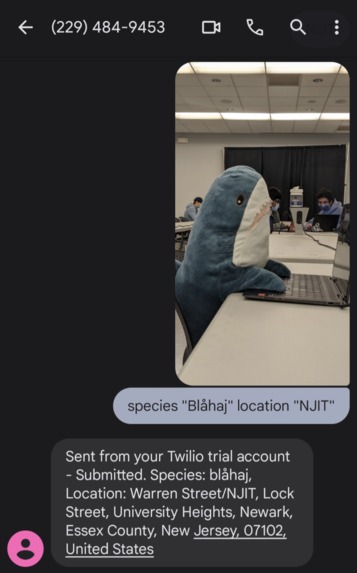
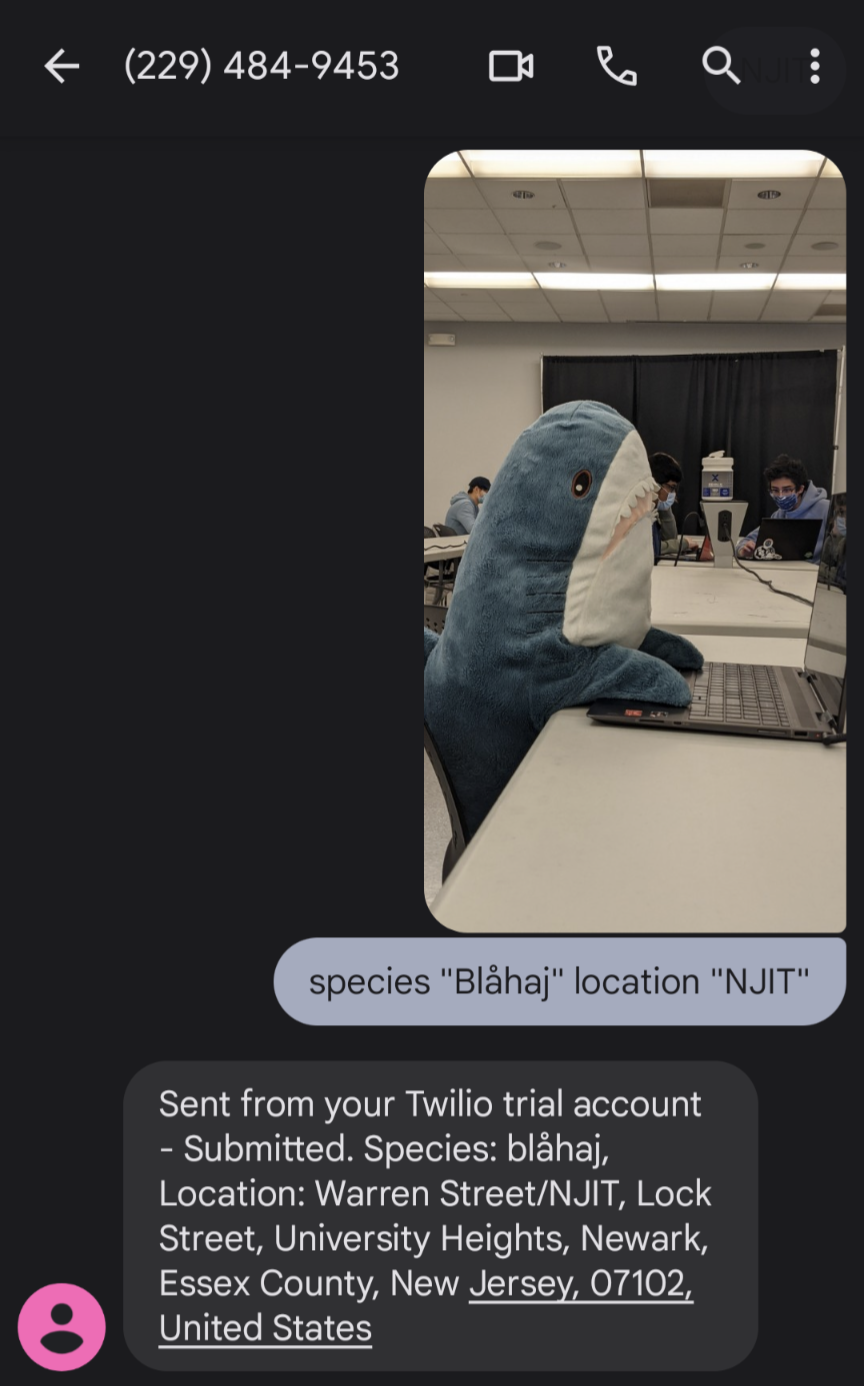
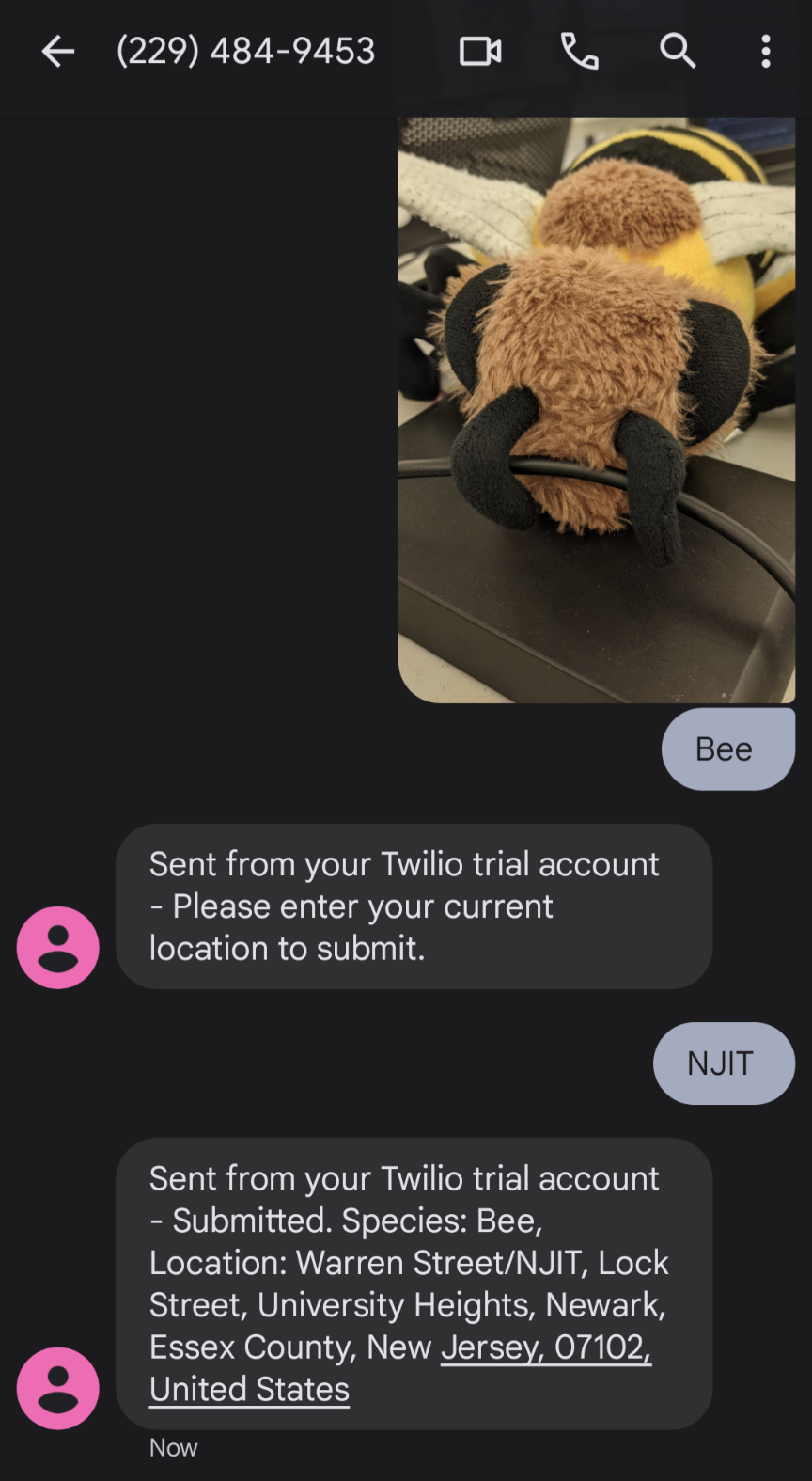
An example of a typical sighting submission, featuring a friendly Blåhaj deep into programming.
-
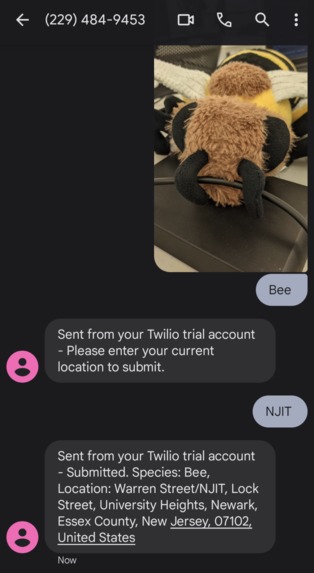
An example of a sighting of a particularly fuzzy bee, using an alternate submission syntax.
-
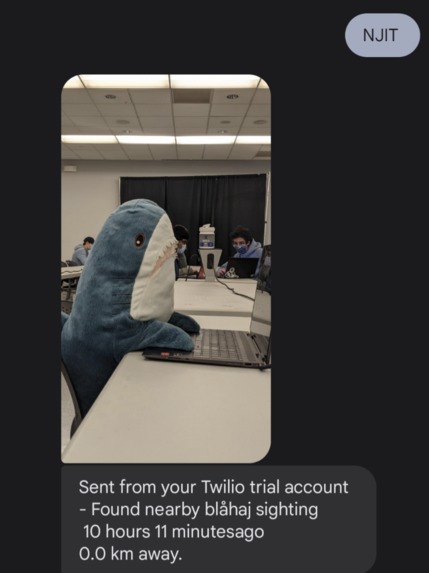
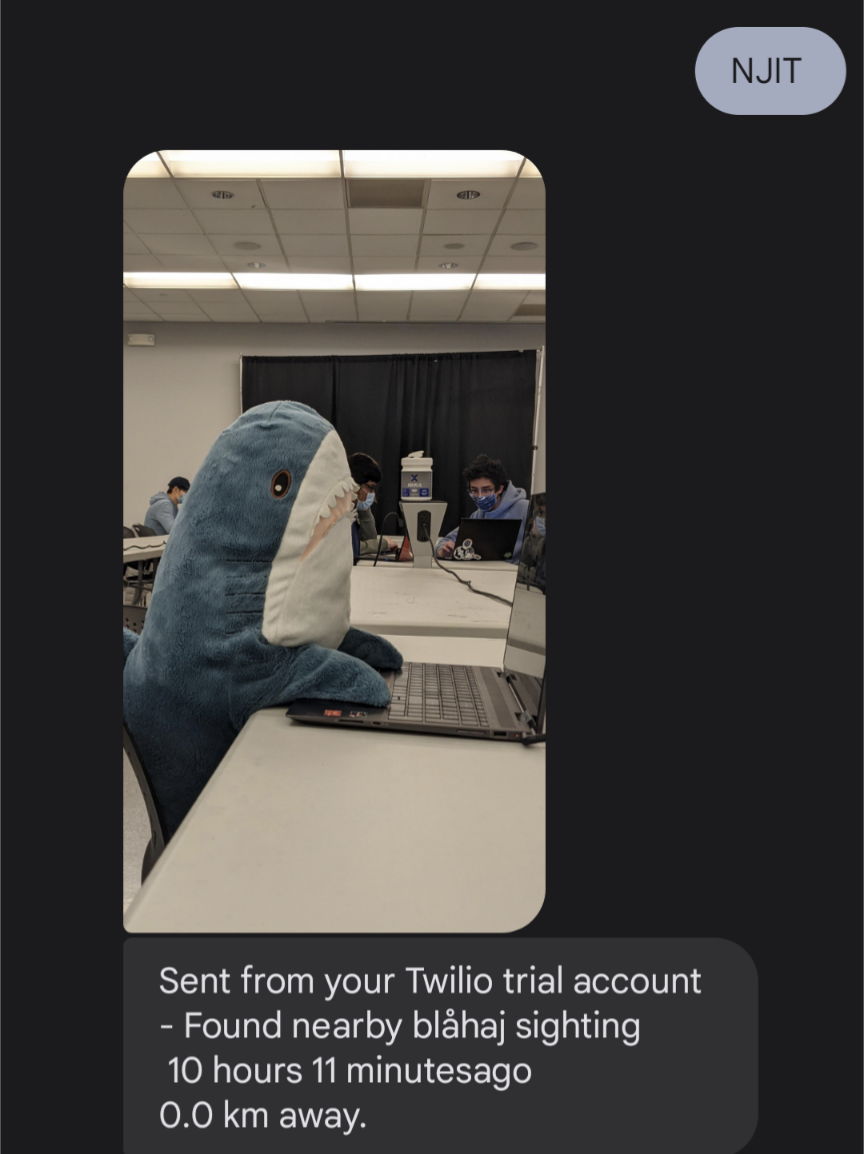
An example of a database search request, with our friend from earlier.
-
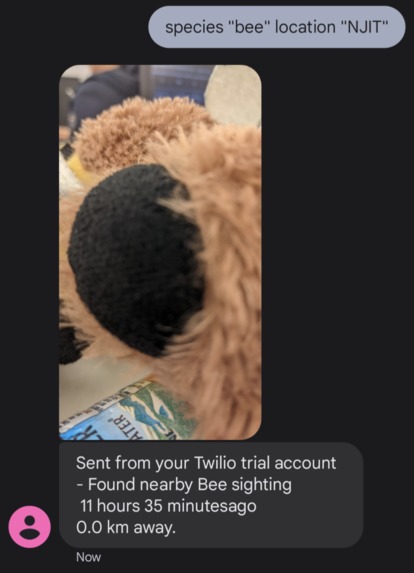
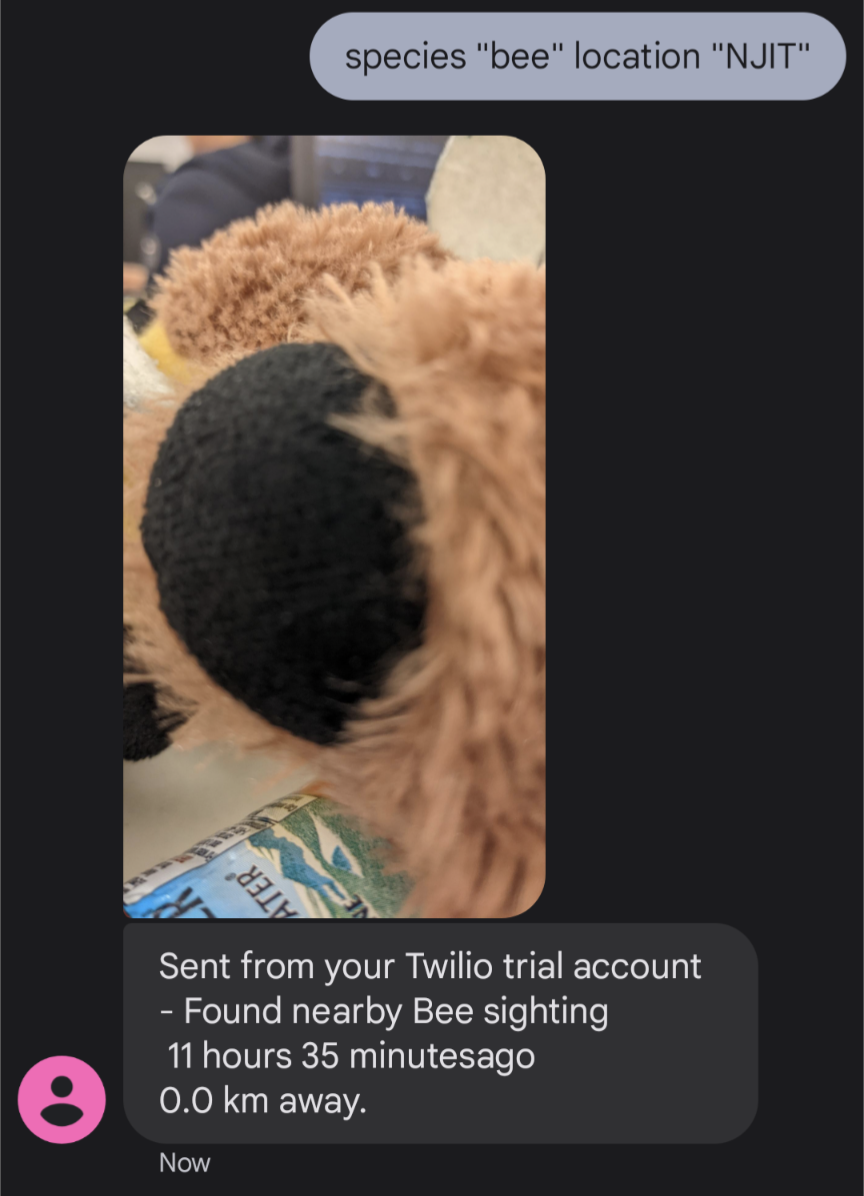
An example of searching the database for a specific species. That bee gets around!
-
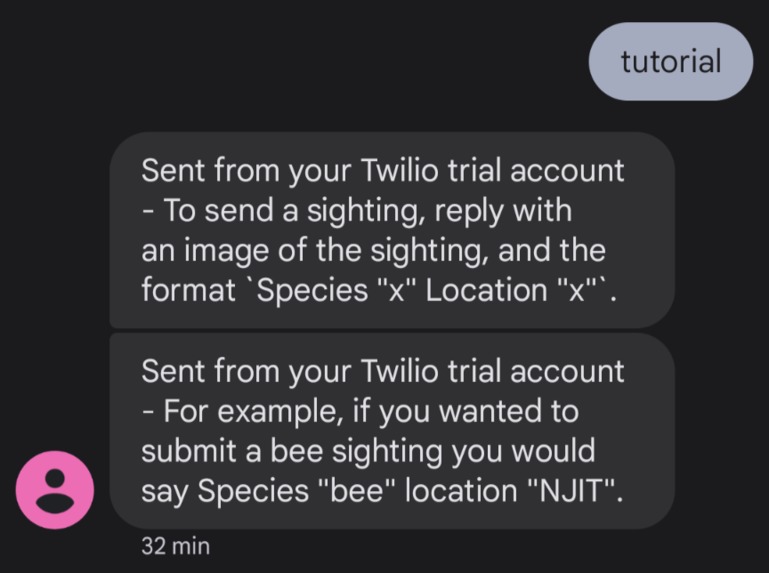
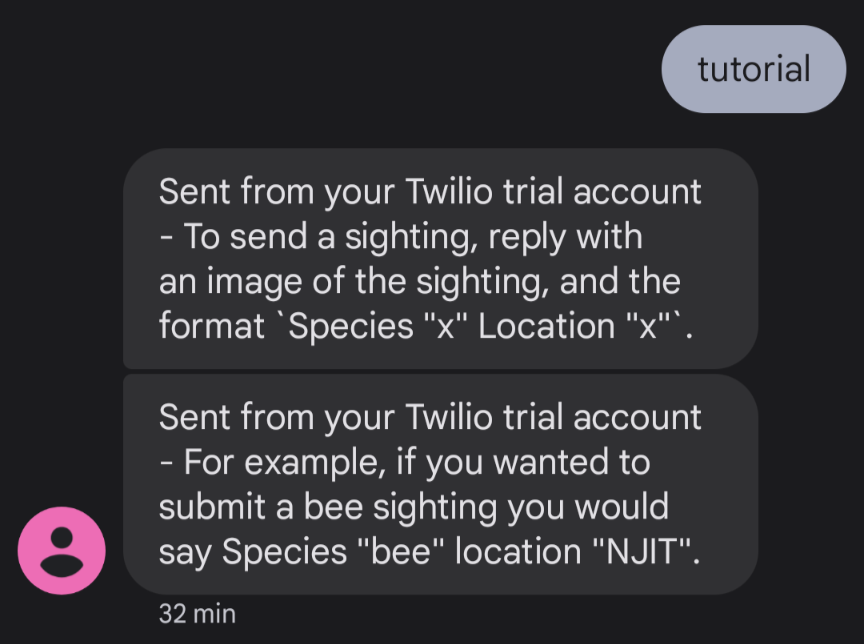
The tutorial function.
Inspiration
College campuses love to keep track of all the critters that show up on their campus. After we heard of a fellow Jersey college having an entire unofficial Instagram page dedicated exclusively to deer sightings on its campus, an idea struck us.
What it does
The Wildlife Hotline takes the form of a phone number connected to a database. Text the phone number with a photo of a wildlife sighting of any kind, provide a species name and a general location, and the sighting will be added into the database. To use it, text an image and the species name to (229)-484-WILD [(229)-484-9453] to report a wildlife sighting. Or, text a location to the same number to see the most recent sightings near that area.
How we built it
We used the Twilio API, in a Python script on a Google Cloud virtual machine, to handle the direct phone conversations and general user-to-user interactions. From there, CockroachDB stores the actual sightings and associated images, and GeoPy gets the coordinates of the location that a user puts in.
Challenges we ran into
Our original plan was to use the EXIF data attached to the image that the user submits to pinpoint their location automatically (if the user had the relevant settings to add their location to their phone camera's EXIF images set to on). Unfortunately, deep into the coding of this feature, we discovered that sending images over MMS strips the media of most EXIF data, including geolocation features. Having to essentially cut this feature as a result, and try to make up for lost time later, was a unique challenge. On the subject of unique challenges, having to become familiar enough with all of the APIs we were using in such a short span of time was a challenge that you can really only find in the pressures that a Hackathon brings.
Accomplishments that we're proud of
We got the thing working! We were really happy with how relatively early we had a minimum viable product going, allowing us a ton of time to chase down edge cases, make the user experience a bit smoother, and to even try to add new features, like the ability to search the database for a specific species.
What we learned
A lot of these APIs were totally new to all of us, so we as a whole came away with a much more comprehensive understanding of a lot of different services. Specifically, we learned a lot about using the Twilio API to handle all kinds of texts, using CockroachDB to store and retrieve various kinds of data, and running code off of a Google Cloud virtual machine.
What's next for The Wildlife Hotline
We want to take this project bigger! There were a lot of ideas we didn't have the time to implement in this Hackathon version -- we want to make the database more searchable, and to create a website to make the number more accessible. Maybe we can even interface with an existing neural network API to try to figure out what species are in the user's image without the user even having to give their guess!
Built With
- cockroachdb
- geopy
- google-cloud
- python
- twilio


Log in or sign up for Devpost to join the conversation.