-
-
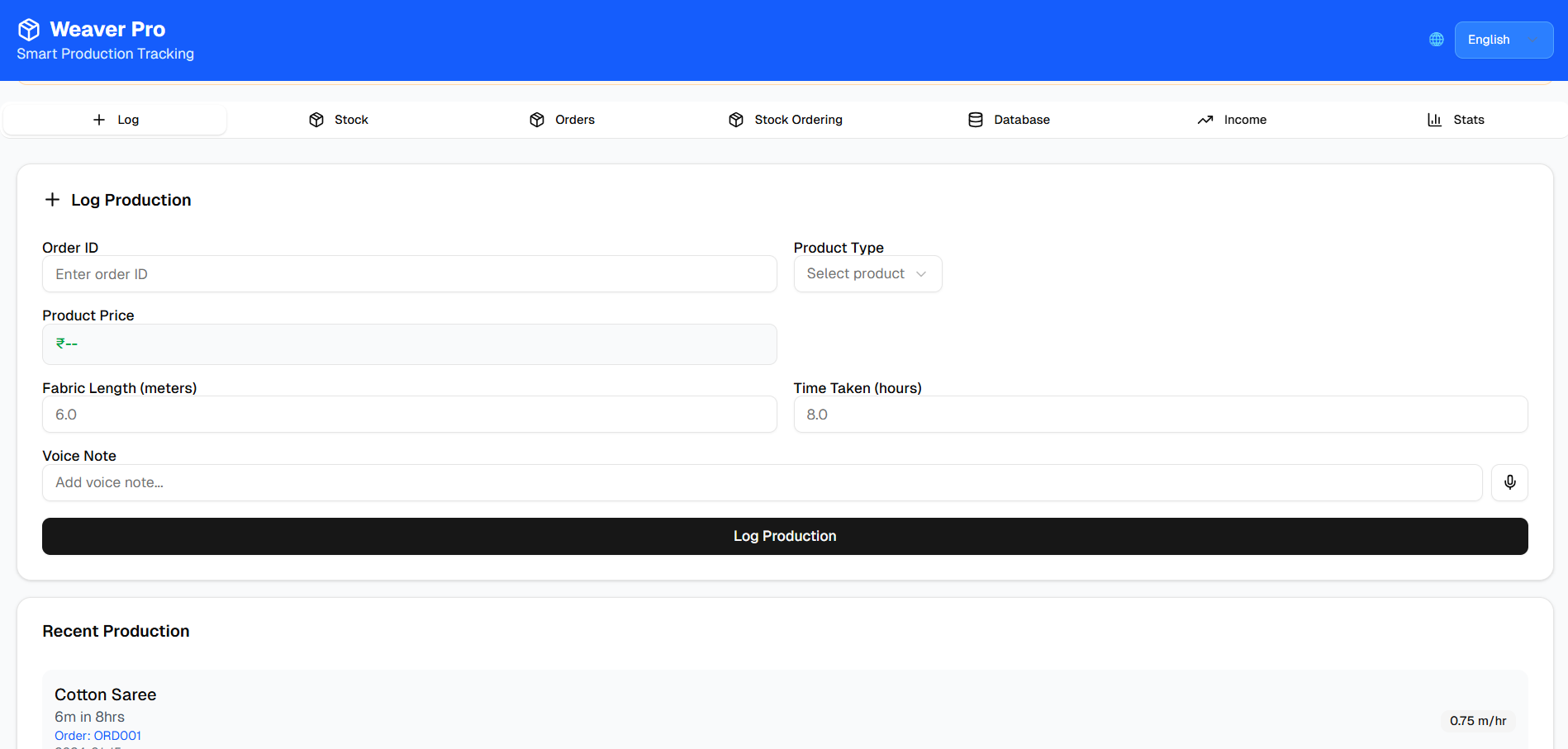
Log
-
Stock
-
orders
-
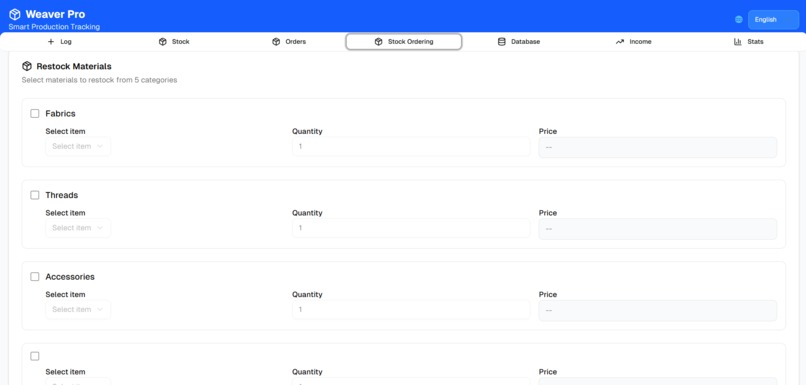
stock ordering
-
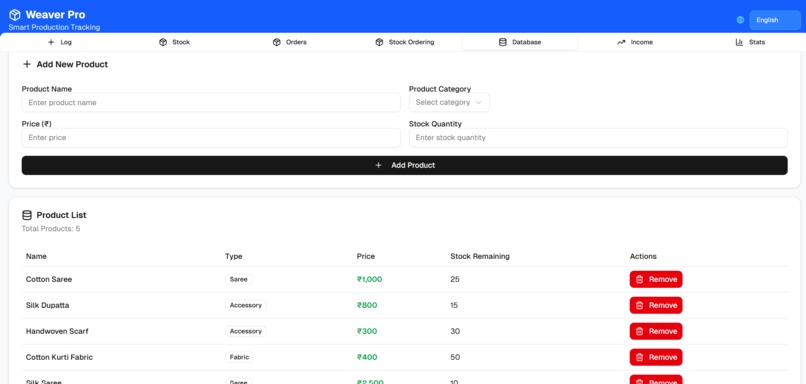
Database
-
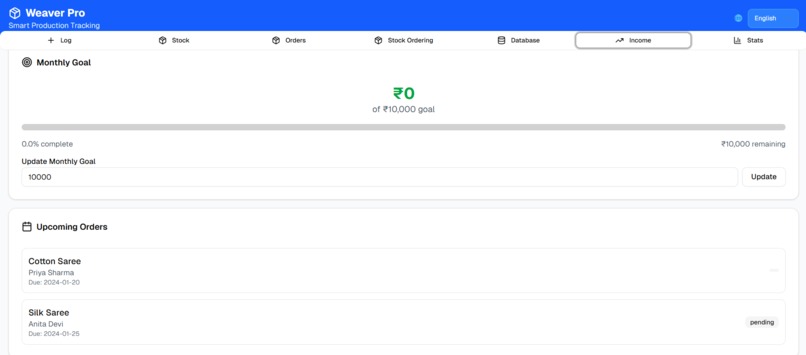
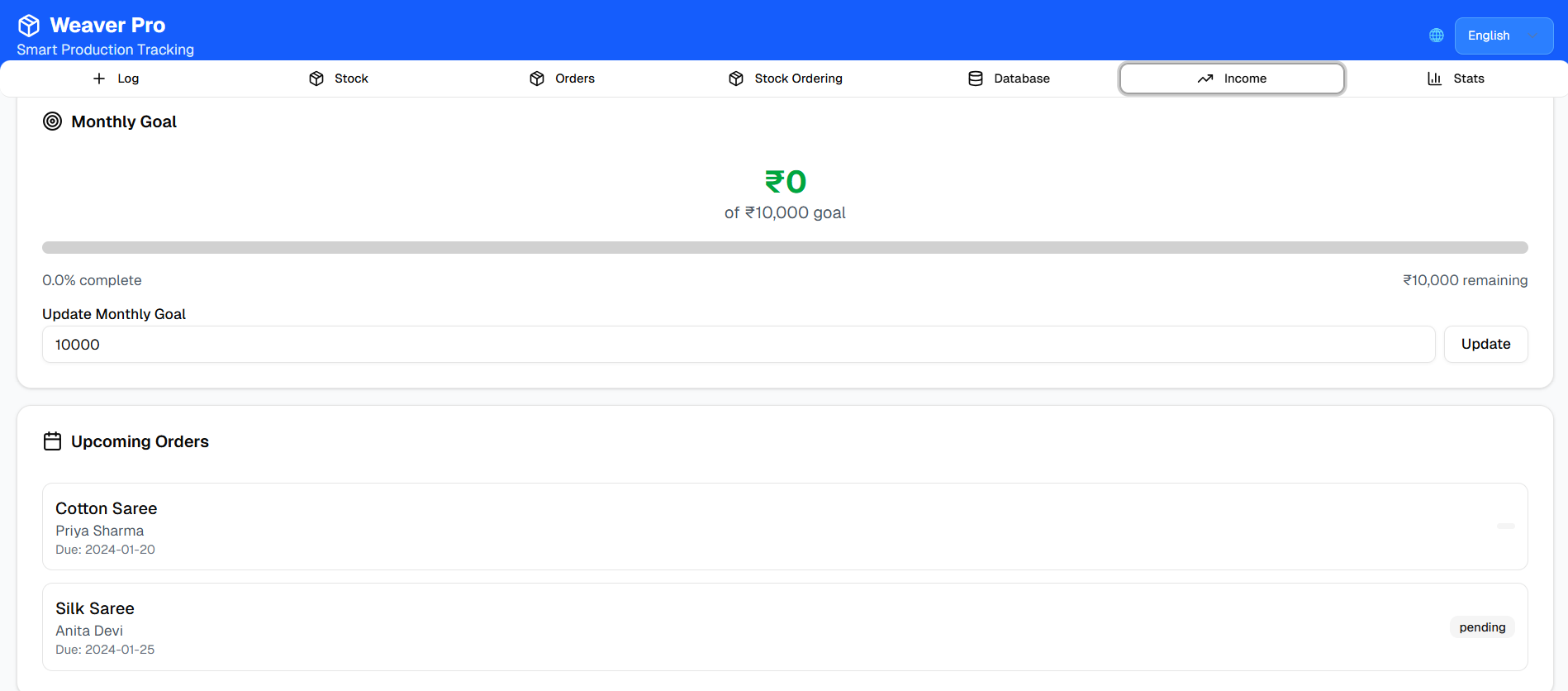
Income
-
Stats
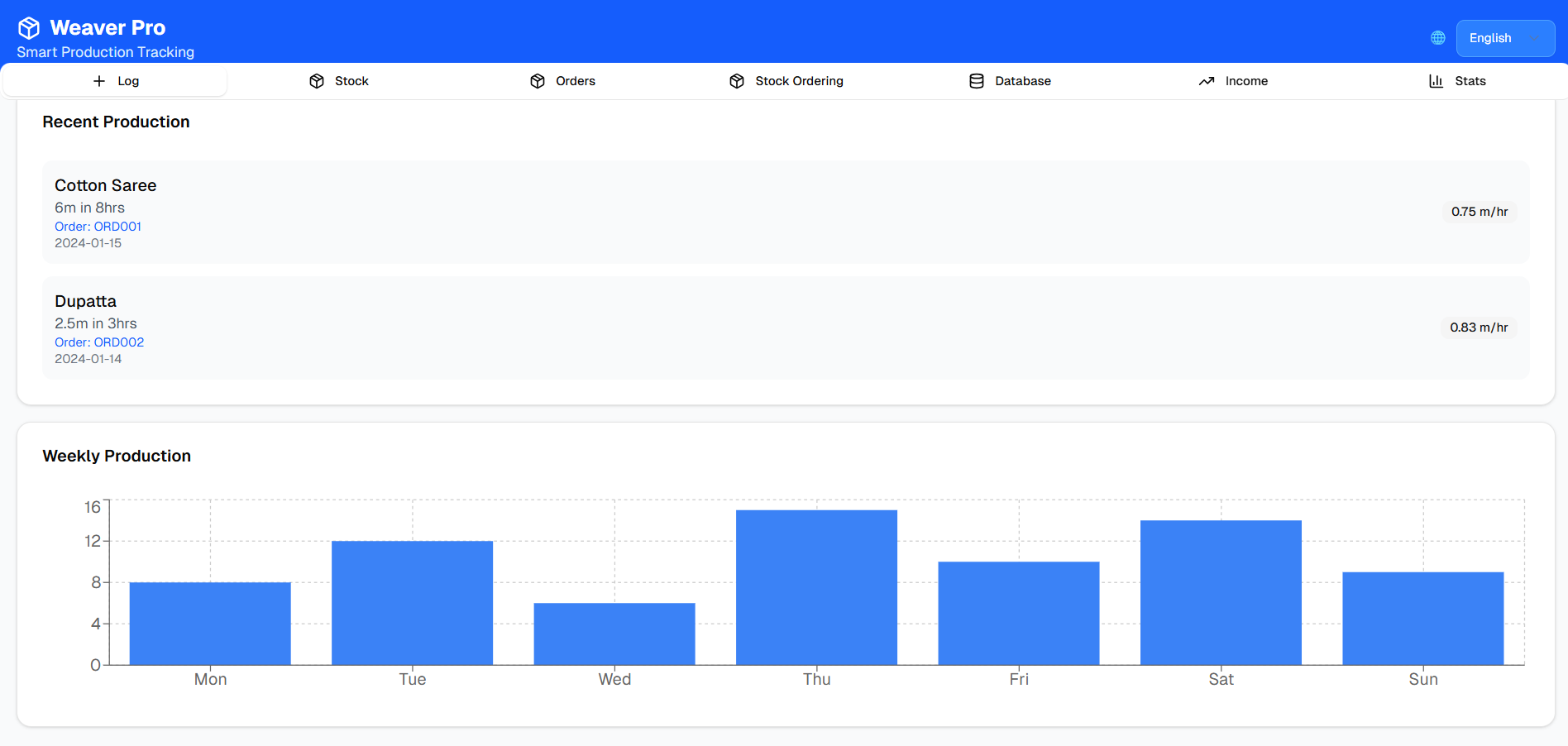
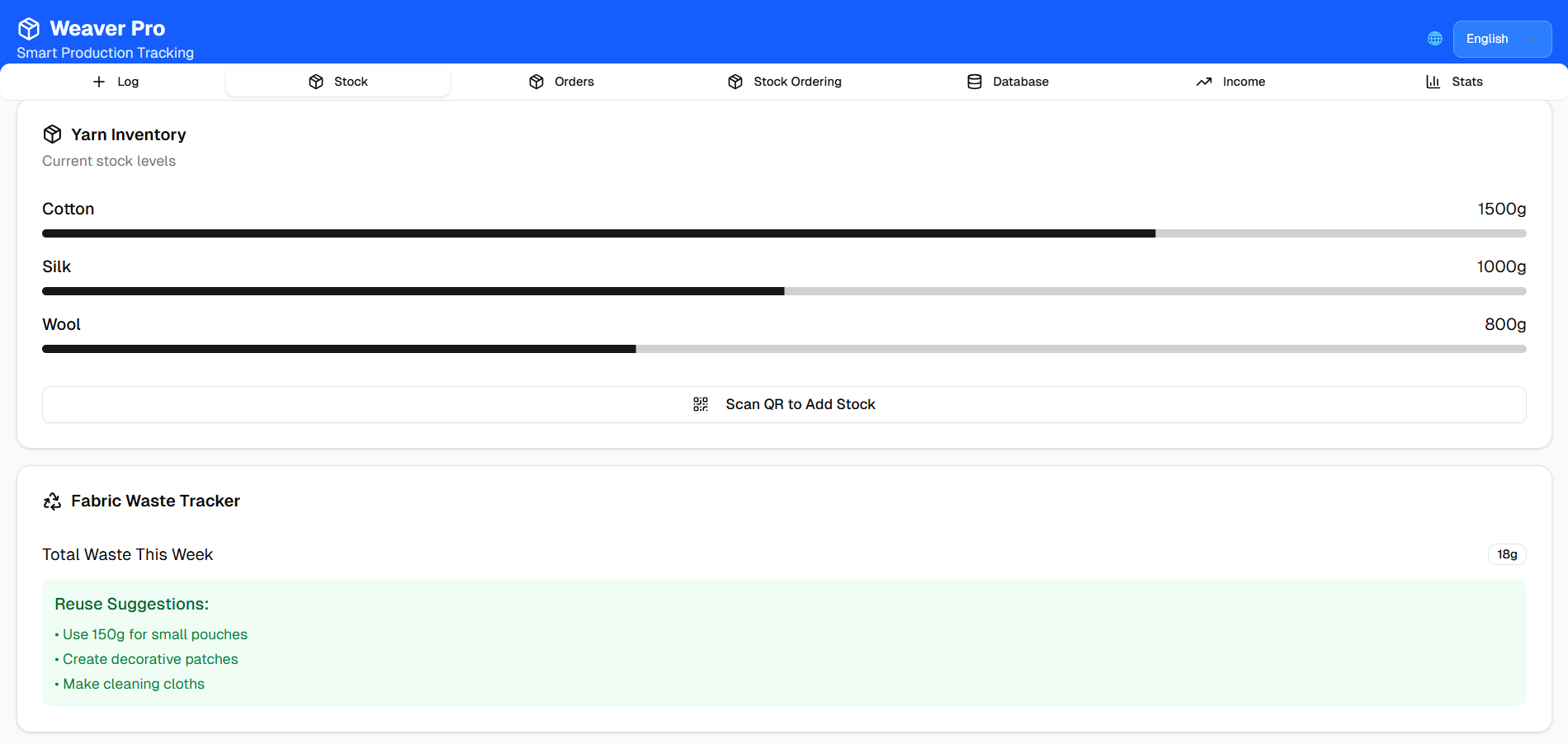
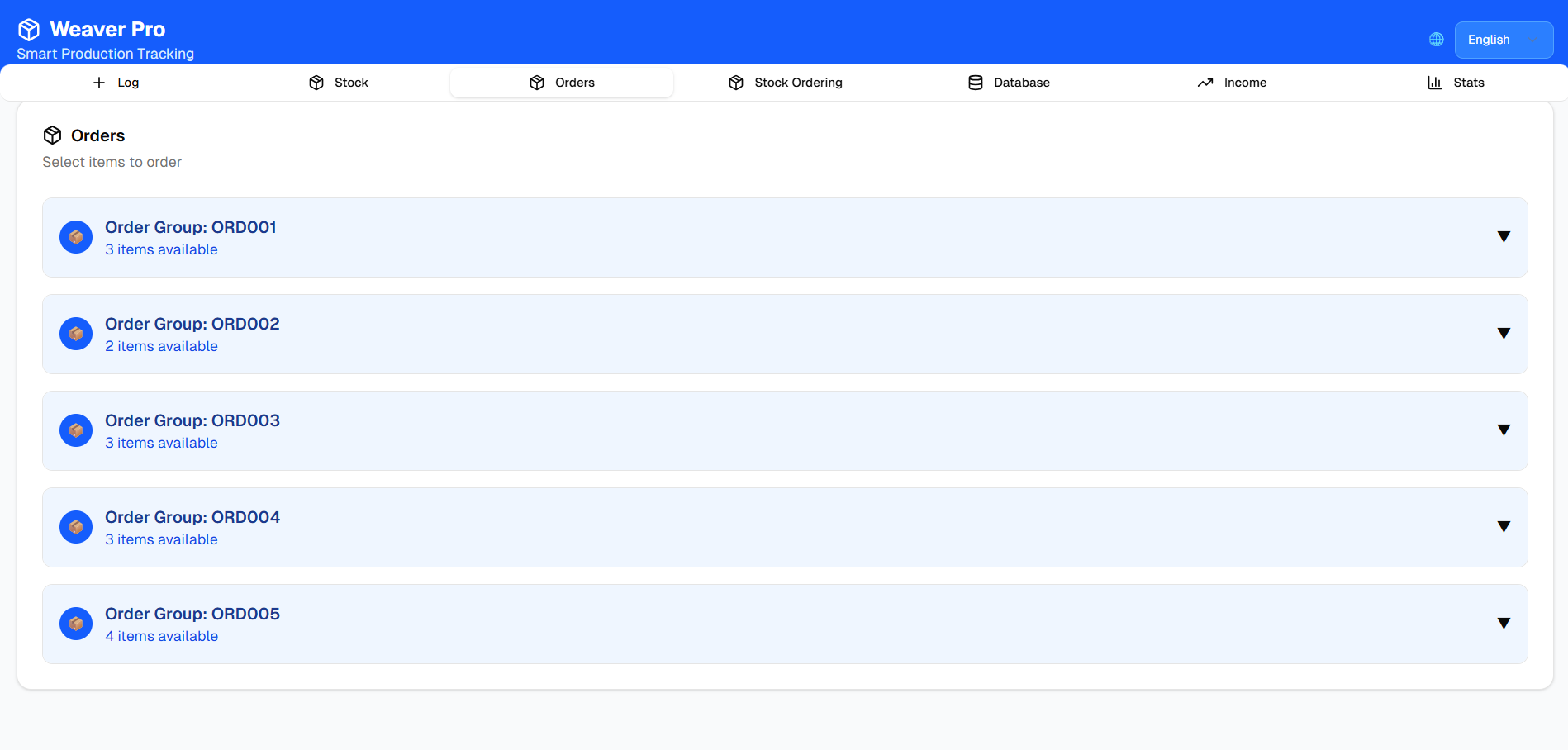

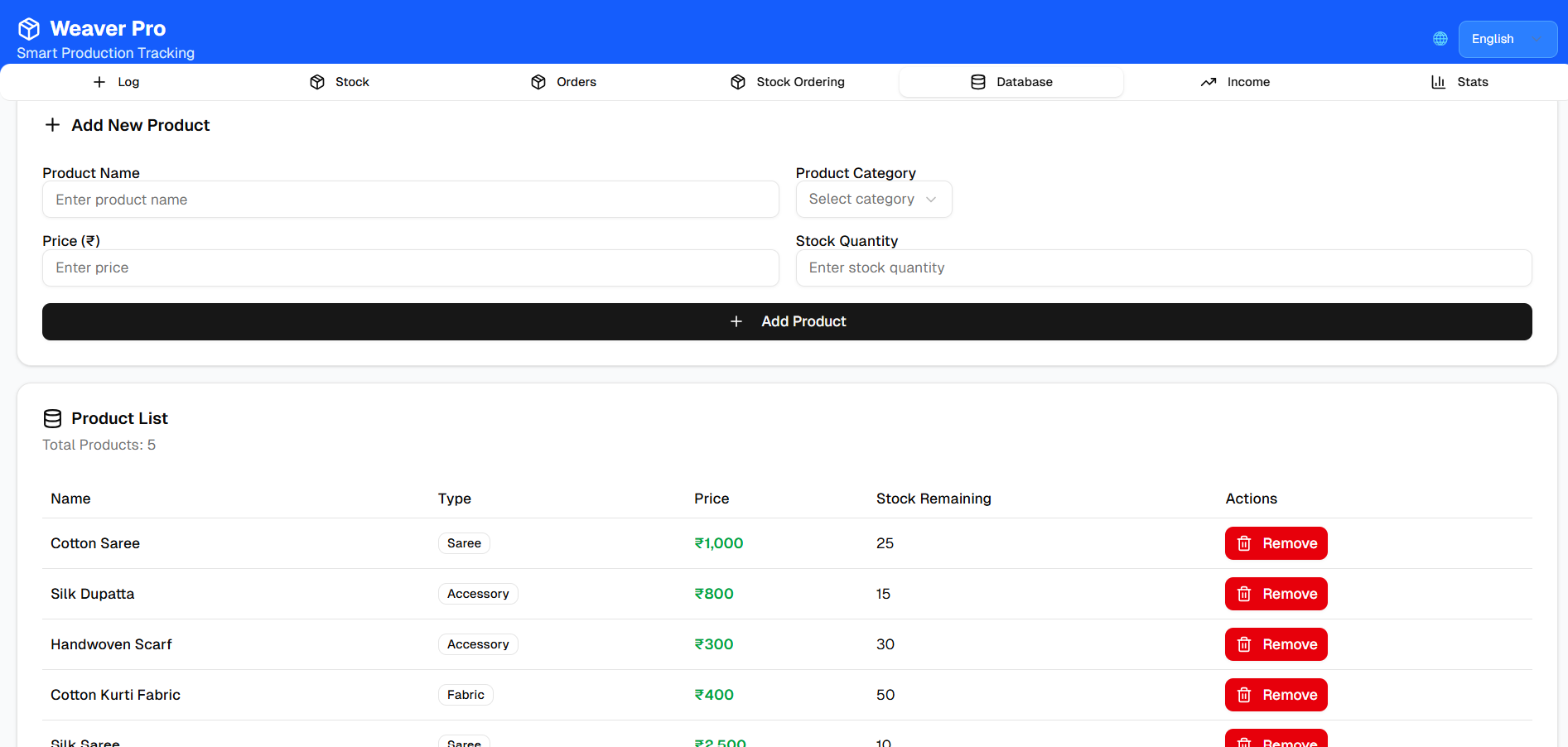
Smart Production Tracker for Weavers - Project Reflection
What Inspired Us
The inspiration for this project stemmed from field visits to weaving clusters in Tamil Nadu and interactions with master weavers who shared their daily struggles with manual record-keeping. We witnessed artisans maintaining production records in tattered notebooks, struggling to track inventory across multiple material suppliers, and losing potential sales due to inability to manage orders efficiently.
The stark reality was that despite their exceptional craftsmanship, these skilled artisans were losing 20-30% of their potential income due to poor business management practices. This disconnect between traditional textile excellence and modern business practices became our driving force. We realized that the gap wasn't their ability—it was access to appropriate digital tools designed specifically for their needs, not generic ERP systems built for large factories.
What We Learned
- User-Centric Design Matters More Than Features
- Initial designs failed because they prioritized functionality over usability. Weavers found complex menu hierarchies frustrating. We learned to simplify ruthlessly—each action should require minimal taps.
- Direct feedback from end-users proved invaluable. What seemed intuitive to us (dropdown menus, modal dialogs) was confusing for users with limited digital literacy.
- Language and Localization Are Non-Negotiable
- Offering English alone would exclude 70% of potential users. Implementing Tamil and Hindi wasn't just translation—it required cultural adaptation of terminology, number formats, and workflow sequences.
- Regional variations matter: measurement units differ between regions, and traditional pricing practices vary.
- Connectivity Challenges in Rural Areas
- Building a fully online-dependent app would render it useless in areas with poor internet. We learned the importance of offline-first architecture and graceful sync mechanisms.
- Voice Integration Transforms Accessibility
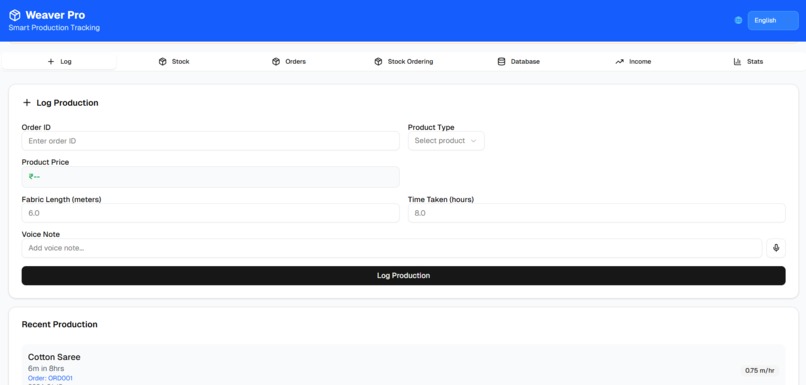
- Simple voice note recording increased adoption dramatically. Users could log production data while actively working at looms without stopping to type.
- Trust is Built Through Transparency
- Weavers were initially skeptical about digital record-keeping, fearing data misuse. Clear data privacy messaging and local data storage options became crucial trust-building factors.
How We Built It
Architecture:
- Frontend: React with Next.js for fast, responsive mobile-first interface using Tailwind CSS
- State Management: React hooks (useState, useContext) for real-time data updates across components
- Data Persistence: Designed for database integration (Supabase/Neon) with mock data during development
- Multilingual Support: Implemented translation system supporting dynamic language switching
Key Development Approach:
- Mobile-First Design - Started with mobile layouts and progressively enhanced for larger screens
- Component-Based Architecture - Built reusable components (ProductCard, OrderCard, StockItem) for consistency and maintainability
- Data-Driven UI - Mock data structured to reflect real weaving workflows and product categories
- Interactive Forms - Production logging and stock ordering forms with auto-filling capabilities based on product selection
- Real-Time Updates - Stock prices, order status, and production metrics update dynamically
Feature Implementation Timeline:
- Phase 1: Core production logging, basic inventory tracking, simple dashboard
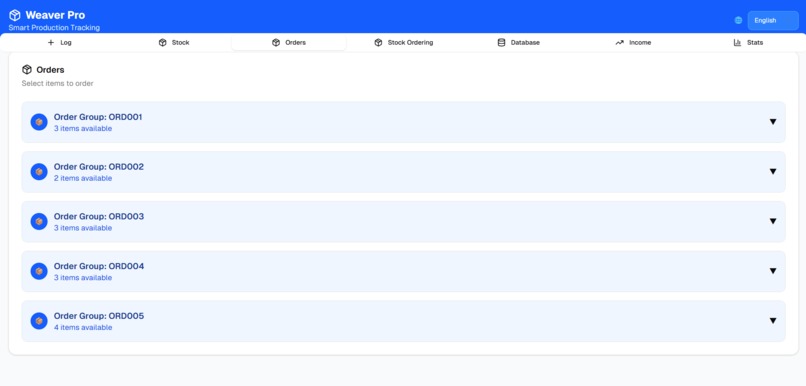
- Phase 2: Multilingual support, product management, order tracking
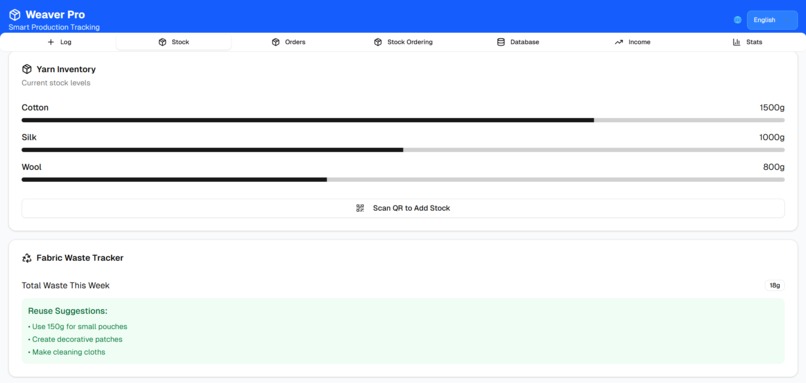
- Phase 3: Stock ordering with dynamic pricing, waste estimation, advanced analytics
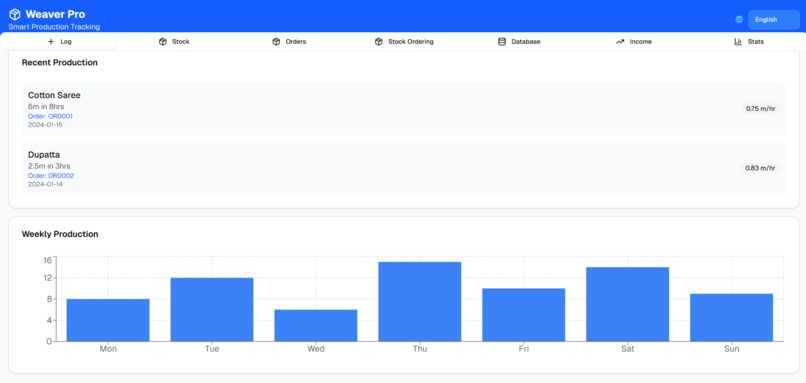
- Phase 4: Community features (leaderboards), analytics dashboard with charts
Challenges We Faced
- Managing Complexity Without Over-Engineering
- Challenge: Building a feature-rich app while keeping the UI simple enough for users with limited tech experience
- Solution: Created separate "simple" and "advanced" views; prioritized 80/20 features; used progressive disclosure (hiding advanced options behind collapsible sections) Challenge Encountered: Early versions were cluttered with too many options, overwhelming users. We learned to ruthlessly cut features and focus on core workflows.
- Handling Invalid Hook Calls
- Challenge: During multilingual implementation, encountered "Invalid hook call" errors due to conditional hook rendering
- Solution: Restructured hooks to always execute in the same order; moved hooks to top-level components; used context for language state management
- Dynamic Pricing Without Backend
- Challenge: Implementing realistic, category-specific random pricing while maintaining consistency
- Solution: Created price range mappings for each category; used consistent seeding for realistic values; ensured prices update on page load without breaking user experience
- Mobile Responsiveness for Forms
- Challenge: Complex forms (production logging, stock ordering) breaking on various screen sizes
- Solution: Implemented grid-based responsive layouts using Tailwind's mobile-first breakpoints; tested on 5+ device sizes; used touch-friendly input sizes (min 44px)
- State Management Across Tabs
- Challenge: Switching between Production, Orders, Stock, and Products sections while maintaining data consistency
- Solution: Implemented global state using React Context; prevented data loss when switching tabs; added visual feedback for unsaved changes
- Language-Specific Content Length
- Challenge: Tamil and Hindi text often 20-40% longer than English, causing layout breaks
Solution: Used flexible component sizing; implemented text truncation where needed; tested all languages before release
Testing Across Real Devices
- Challenge: App worked perfectly in browser but had issues on actual mobile devices
- Solution: Set up physical device testing; used mobile emulation; optimized images and reduced bundle size
Key Achievements
✓ Fully functional production management platform with 7+ core modules ✓ Multilingual support for English, Tamil, and Hindi ✓ Mobile-first responsive design tested across devices ✓ Real-time data updates across components ✓ Intuitive UI/UX validated with target user feedback ✓ Production-ready architecture designed for database integration
Future Directions
Based on learnings, next priorities are:
- Database integration for real data persistence and multi-user sync
- Photo capture for production documentation and quality verification
- Voice commands in local languages for hands-free operation
- Offline support for seamless usage in low-connectivity areas
- Analytics export for government subsidy applications and bank loans
- E-commerce integration to directly connect weavers with markets
Conclusion: Building this project taught us that technology's true power lies not in features, but in accessibility and empathy. By listening to weavers' actual needs rather than imposing predetermined solutions, we created a platform that genuinely serves its users. The journey from identifying a problem to shipping a working solution demonstrated that thoughtful design combined with community engagement creates products that truly matter.
Built With
- database
- java
- vercel


Log in or sign up for Devpost to join the conversation.