-
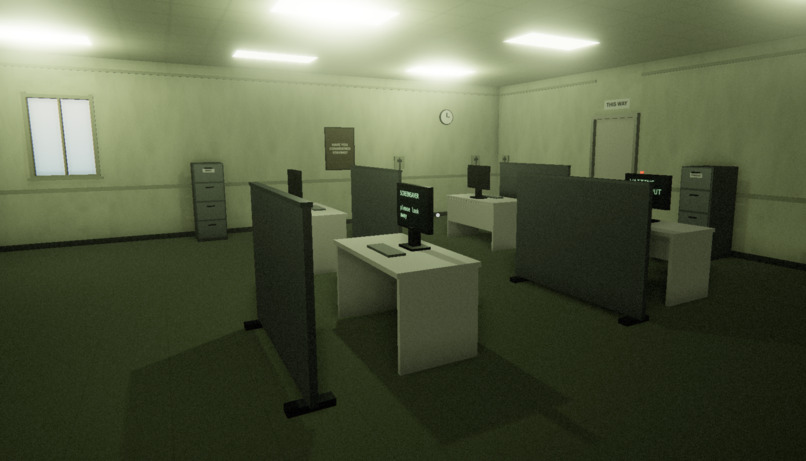
Office room
-
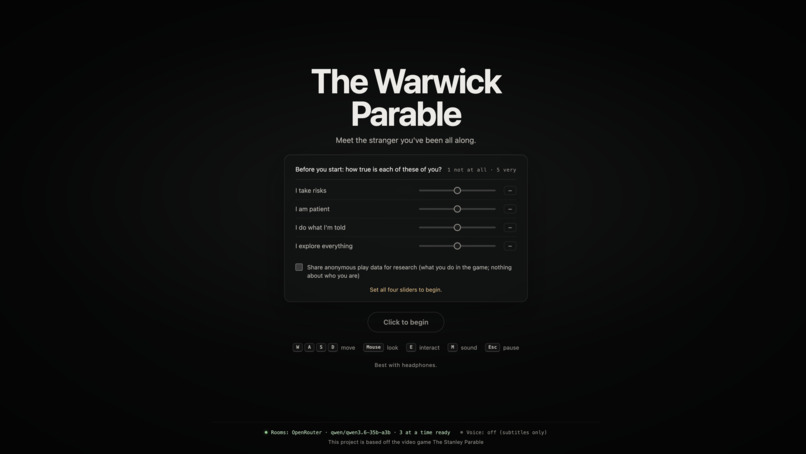
Landing Page
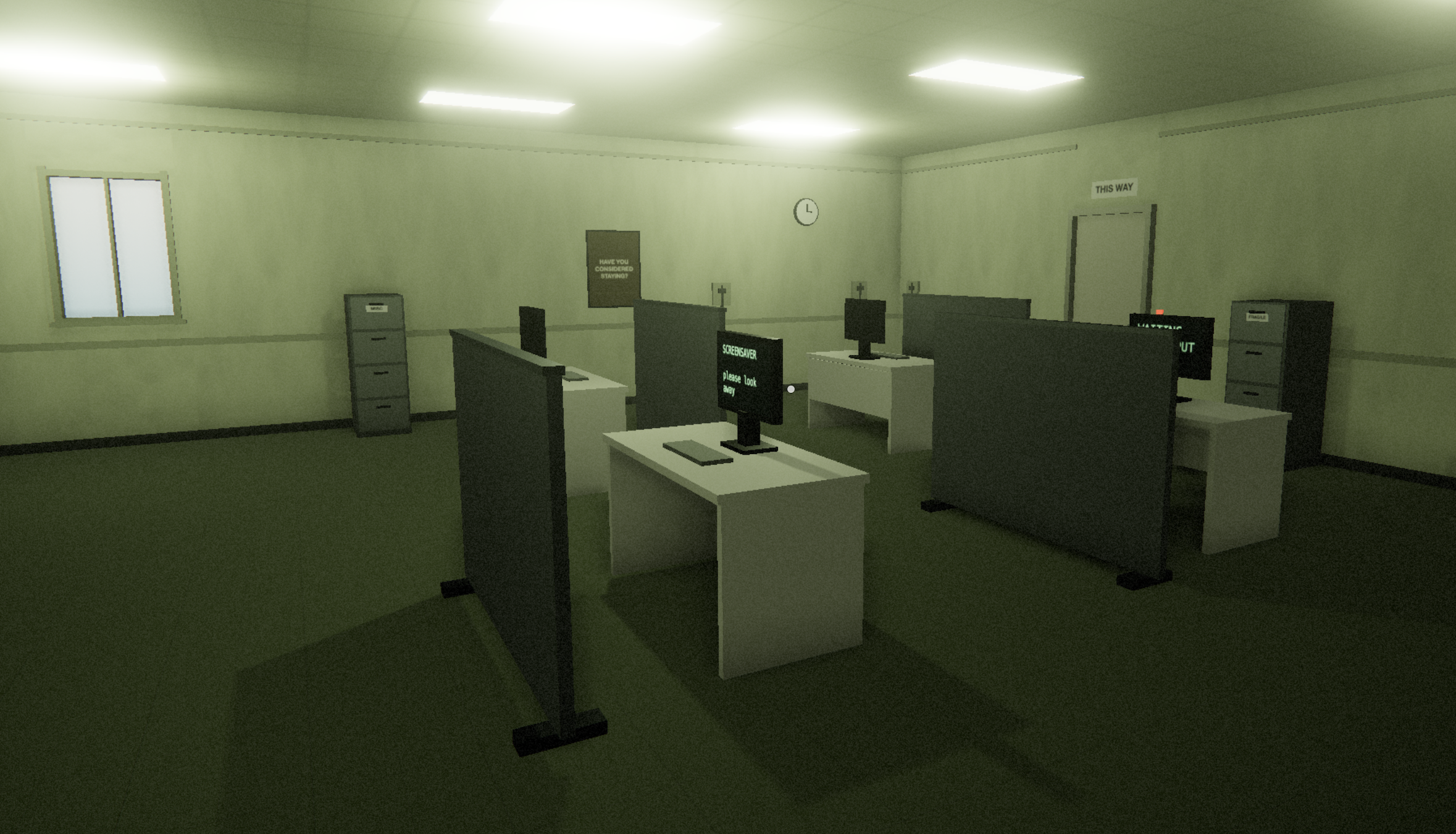
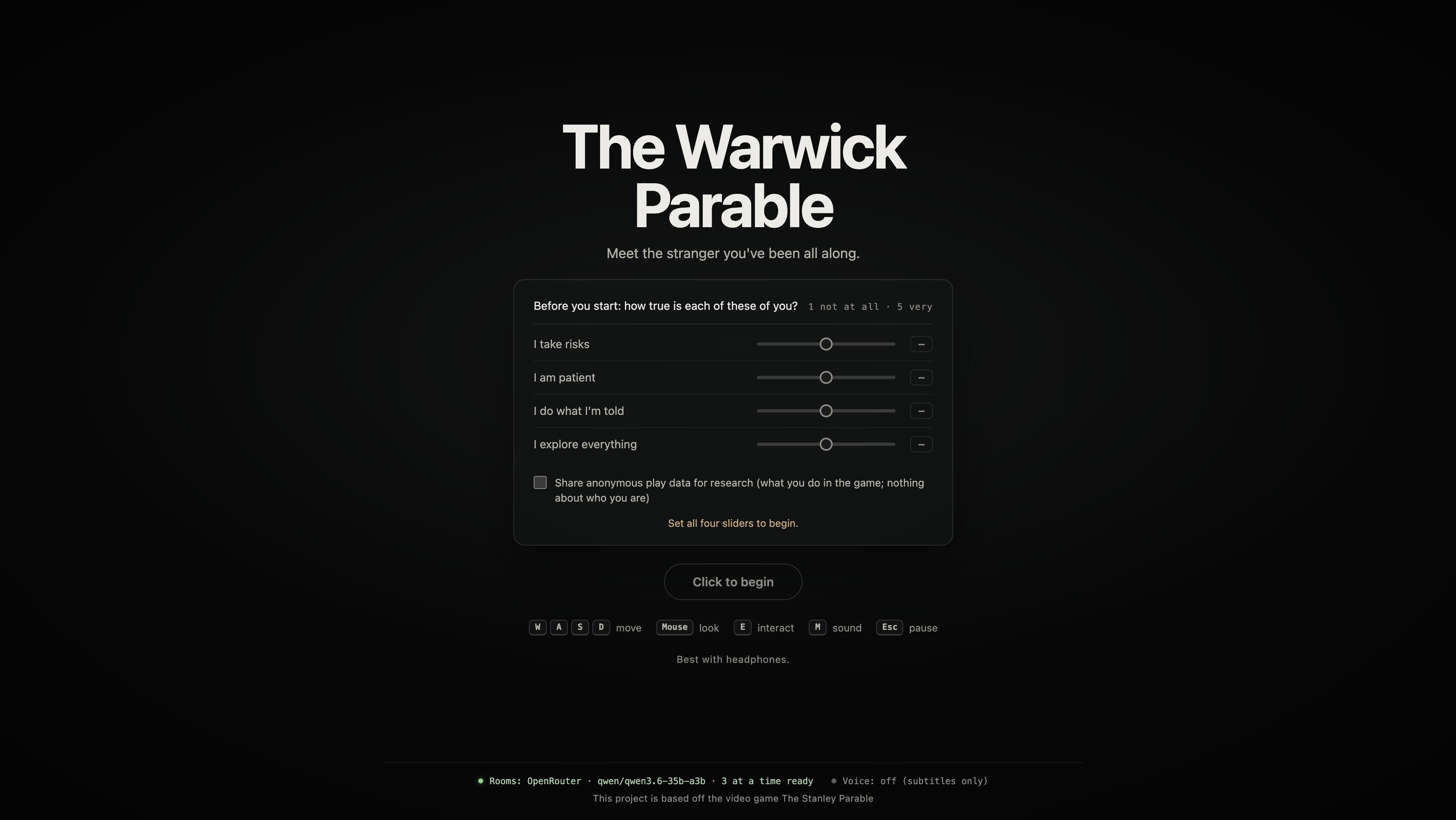
Inspiration
The video game "The Stanley Parable", especially the narrator, and the TV show "Alice in Borderland"
What it does
The Warwick Parable is a first-person browser game set in an office building that doesn’t exist until you reach it: each room is generated as you go and written local / cloud AI from how you behave, while hidden tests quietly measure your traits. At the end it hands you a personnel file that compares what you said about yourself with what you actually did.
How we built it
Starting from Alice in Borderland, we leant into interpreting the idea of New Worlds as psychological and being reborn as a person, with new data or ideas about themselves. The generate-as-you-go approach we took forced us to think of Byte-sized levels, and The Stanley Parable, an already deeply psychological game, was a great starting point. Through parodying it with our own version of the Narrator, a voice that narrates your every move and sometimes decides it before you do, we created a game where every door leads somewhere new yet quietly leads back to you, much like Stanley’s original “Illusion of Choice”.
Under the hood, the building doesn’t exist until you reach it. Seeded code lays out each room the moment you approach its door, and a local language model fills it with signs, notes and the Narrator’s lines, all written from what you’ve just done. Every pause, glance and turn back from a door feeds a Bayesian profile, which picks the test that will reveal the most about you next, until the building knows you well enough to hand over your file.
Challenges we ran into
- Building a game for the first time (for all of us)
- Maintaining version control with 4 concurrent contributors
Accomplishments that we're proud of
- Balancing the slowness of "generating as you go", with clever game development logic.
- Movement read in real time. Precomputed walking-distance maps take about 60 µs per room and make reading each movement sample about 90× faster. That lets us detect hesitation, like walking up to a door and turning back.
What we learned
- Every gain has a cost. Picking the most informative test makes runs more alike, so we added a focus setting to trade accuracy against variety.
- AI works best as a writer inside strict rules: code decides the shape of a room, and the model decides what it says.
- Latency is a design problem, not just an engineering one.
What's next for The Warwick Parable
Exploring multiple levels and worlds, signifying multiple levels of one's unconscious
- The core engine is built to port, it is engine-free and checked automatically, so the game could move to another engine by rewriting only the renderer for future improvements.
Built With
- bayesian-inference
- claude
- css3
- dijkstra?s-algorithm
- elevenlabs
- html5
- item-response-theory
- json-schema
- large-language-models
- node.js
- ollama
- playwright
- postgresql
- procedural-generation
- psychometrics
- qwen
- supabase
- three.js
- typescript
- vite
- vitest
- web-audio-api
- webgl
