Inspiration
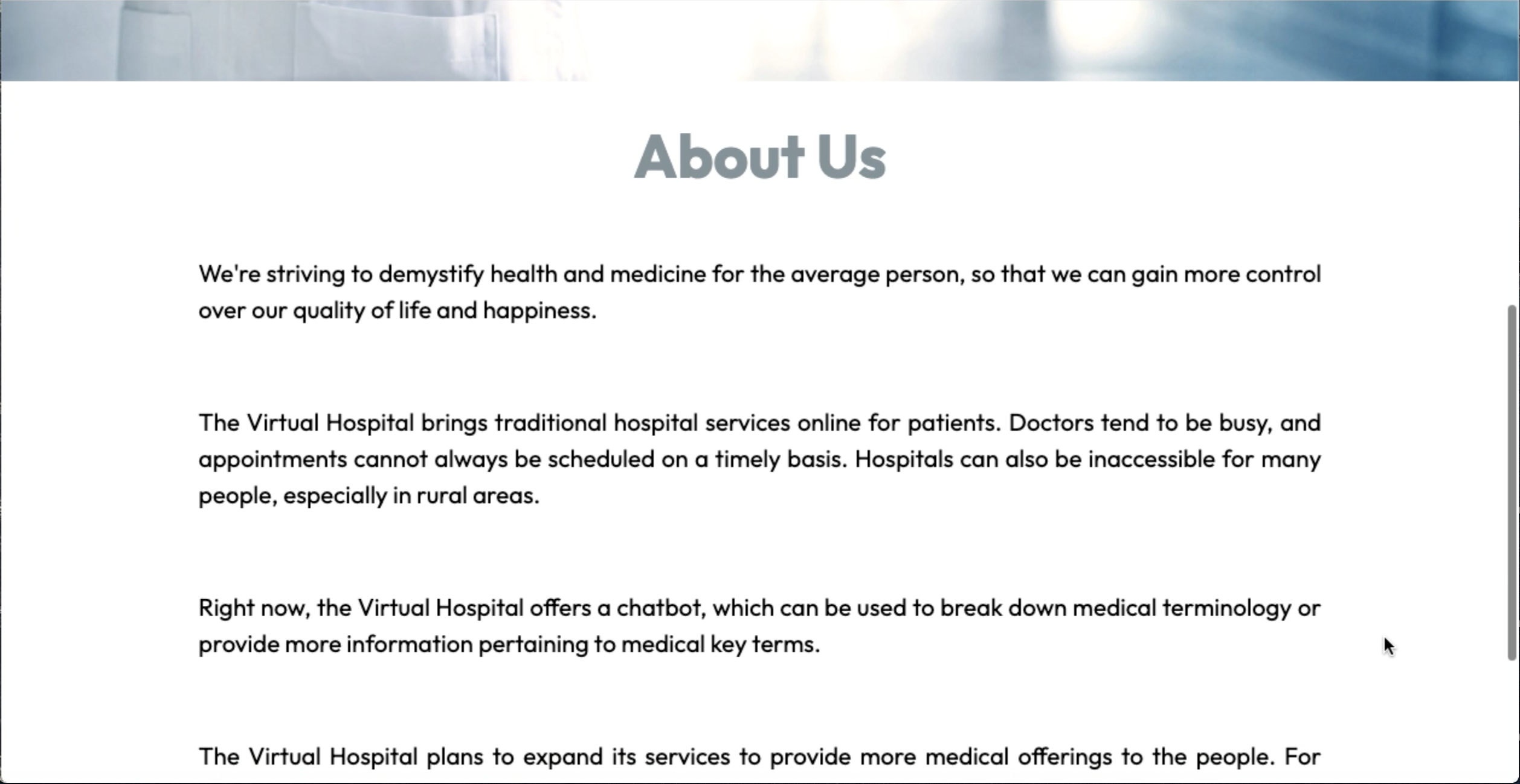
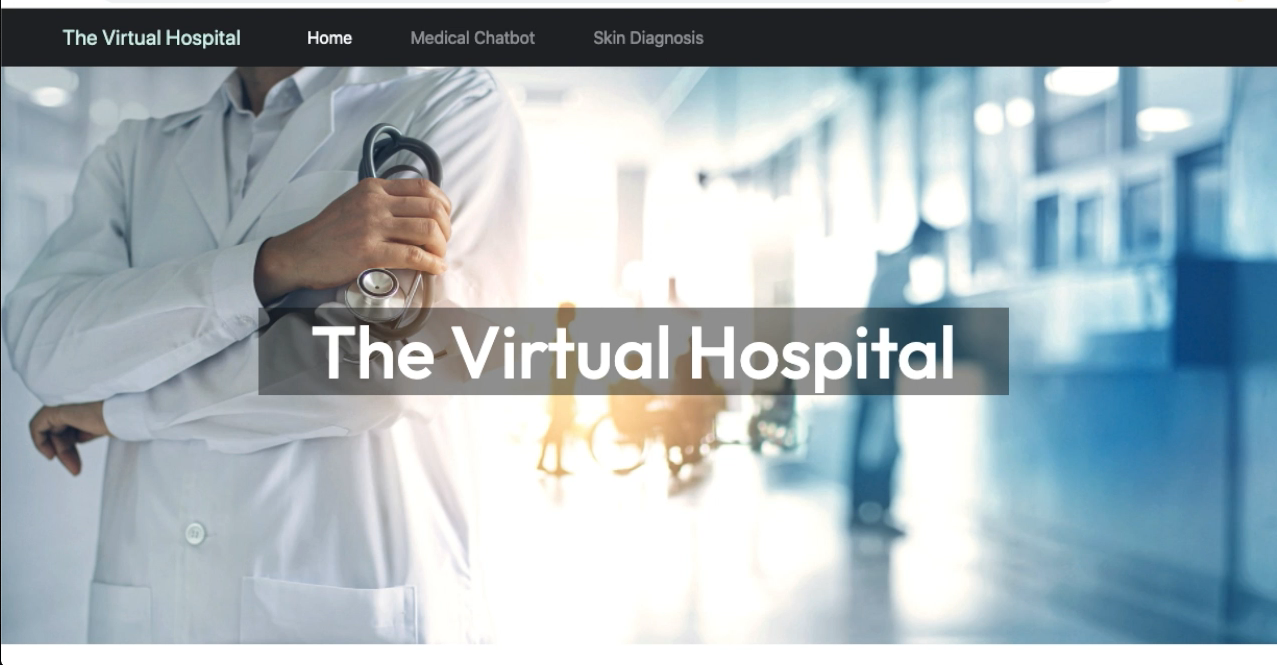
The Virtual Hospital is a web app intended to be a one-stop shop for patients to access medical services and assistance online. Doctors tend to be busy, and appointments cannot always be scheduled on a timely basis. Additionally, hospitals and other medical institutions can be inaccessible for many people, such as those residing in rural areas.
What it does
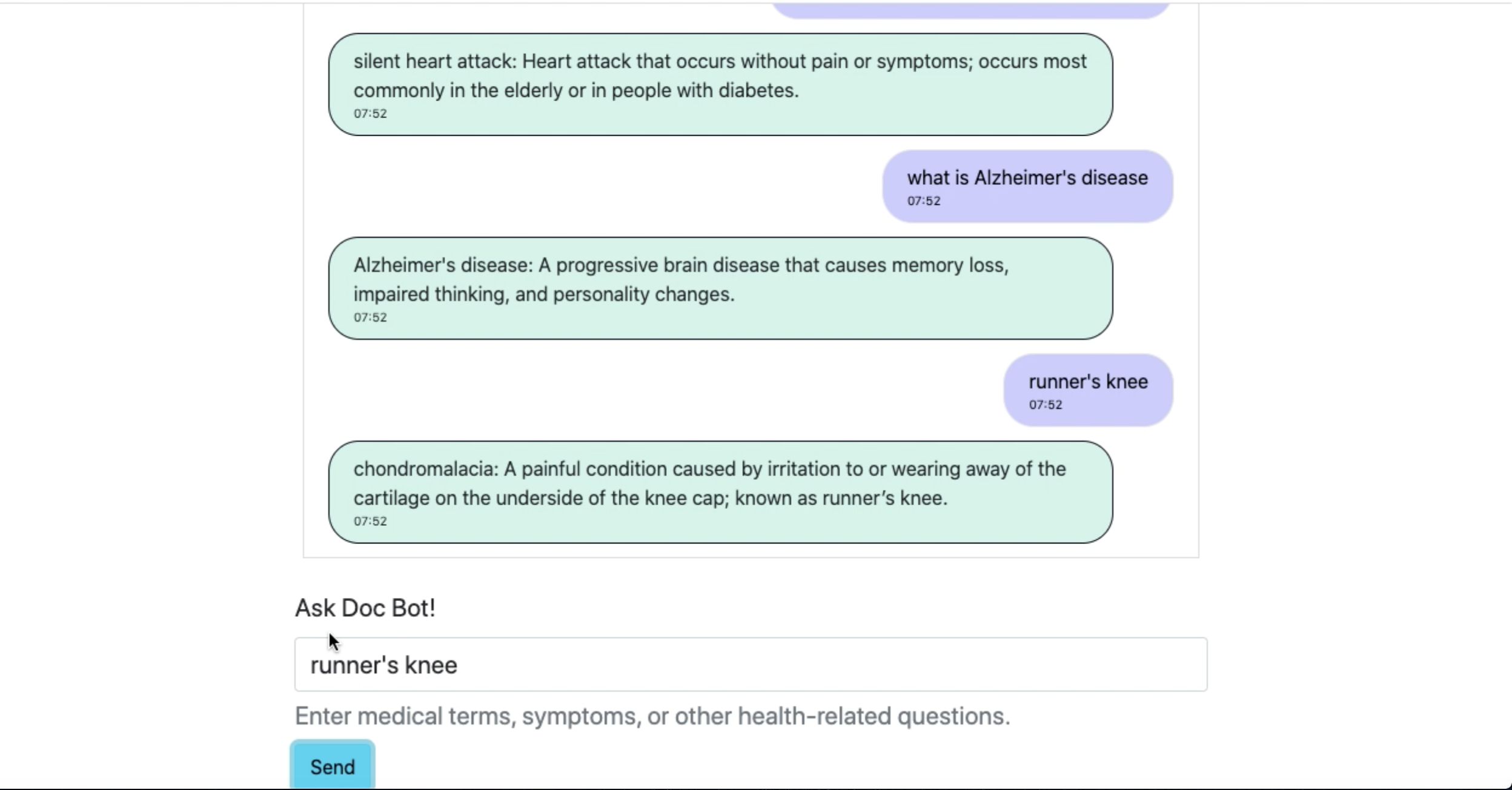
The Virtual Hospital is a website. The principal feature that it offers is a chatbot. The user inputs a question or medical term, and the virtual chatbot responds by defining the term or providing other essential information.
How we built it
I built the backend of the chatbot by using Python and several dependencies to scrape the health.harvard.edu webpage to establish my medical terminology corpus. I then used nltk and tfidf vectorizer to return responses to the user from the corpus.
I built the front end of my website using html, css, and javascript. There are several input features, and most of the time was spent on sending the query from javascript to the python file.
Challenges we ran into
One main challenge was debugging the chat bot and improving its performance. For example, I tried switching from using count vectorizer on the entire corpus to only applying count vectorizer on specific medical terminology. While this reduced the amount of random responses, it also meant the chatbot was unable to pick up on a lot of key words. After more tinkering, I settled on using tfidf vectorizer for the entire corpus, which significantly improved my results.
Another challenge was learning how to connect the python code to the website.
Accomplishments that we're proud of
I really like the design of the website, especially the appearance of the chatbot. I'm also happy that I was able to figure out how to bring all the pieces of my website together and combine backend and frontend.
What we learned
I learned how to use Flask to connect python/backend code to the frontend of a website. I also learned new techniques in CSS styling, especially through designing the chatbot.
What's next for The Virtual Hospital
The next move is to debug and ensure that there are minimal issues with the virtual chatbot by improving its training and expanding its corpus.
I also want to add an option for people to email themselves a transcript of their conversation if they wish. It could also be published as a mobile app with speech-to-text, so people can just say their questions instead of having to type it out.
The Virtual Hospital could also provide more medical offerings to people. For example, I plan on adding a machine learning powered 'virtual dermatologist'. You can upload an image of any skin lesions you are concerned about, and it will inform you whether you need to seek medical attention for it. There is also potential for creating services directly available to hospitals and doctors, such as machine-learning powered algorithms to assess CT or MRI scans.

Log in or sign up for Devpost to join the conversation.