-
-
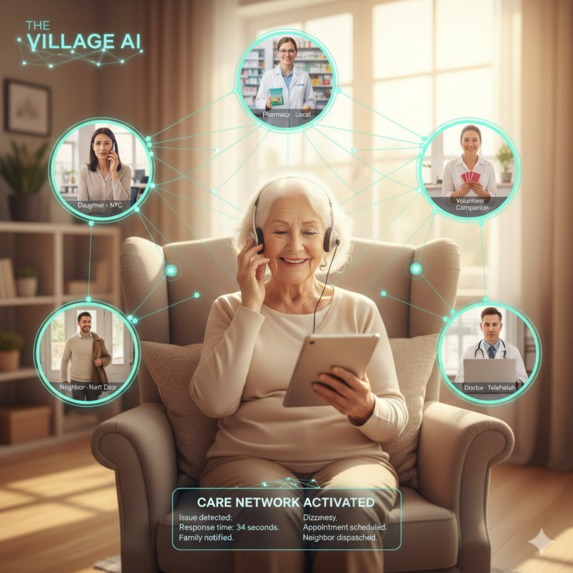
Village AI concept
-
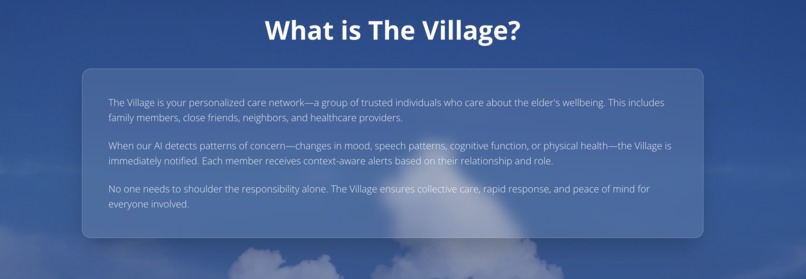
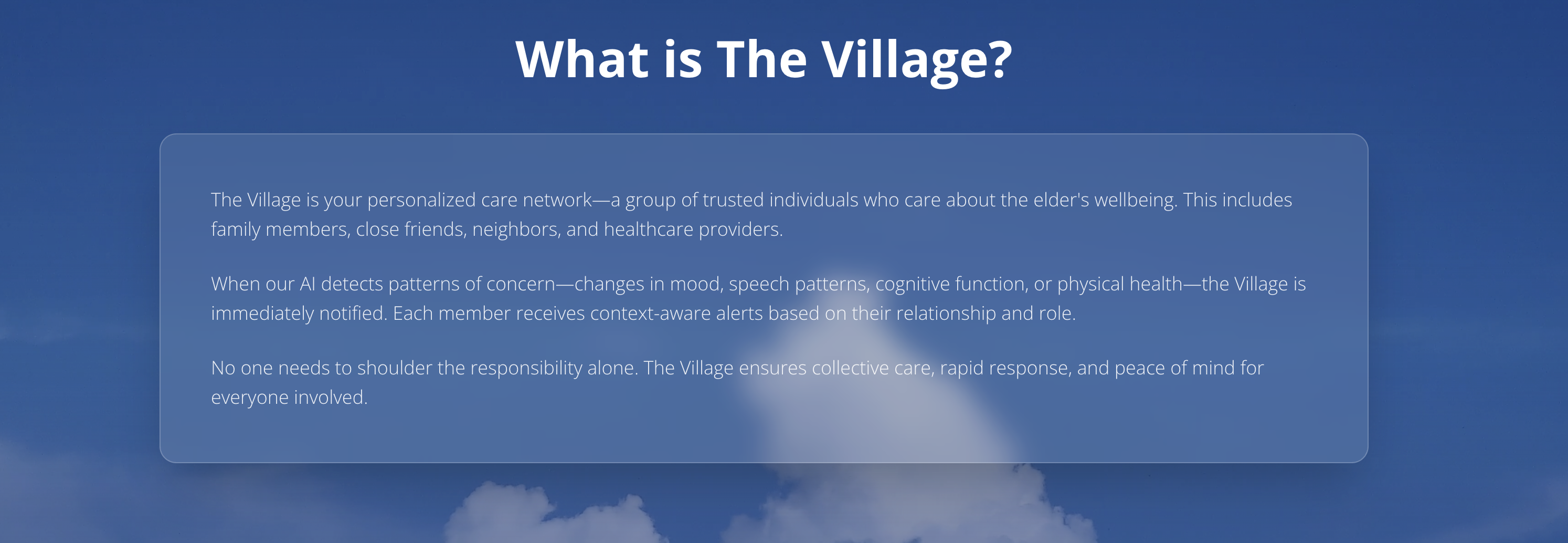
What is the village ai
-
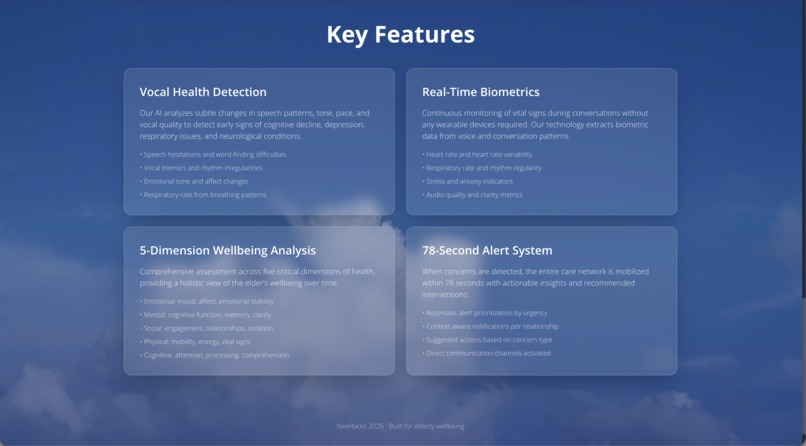
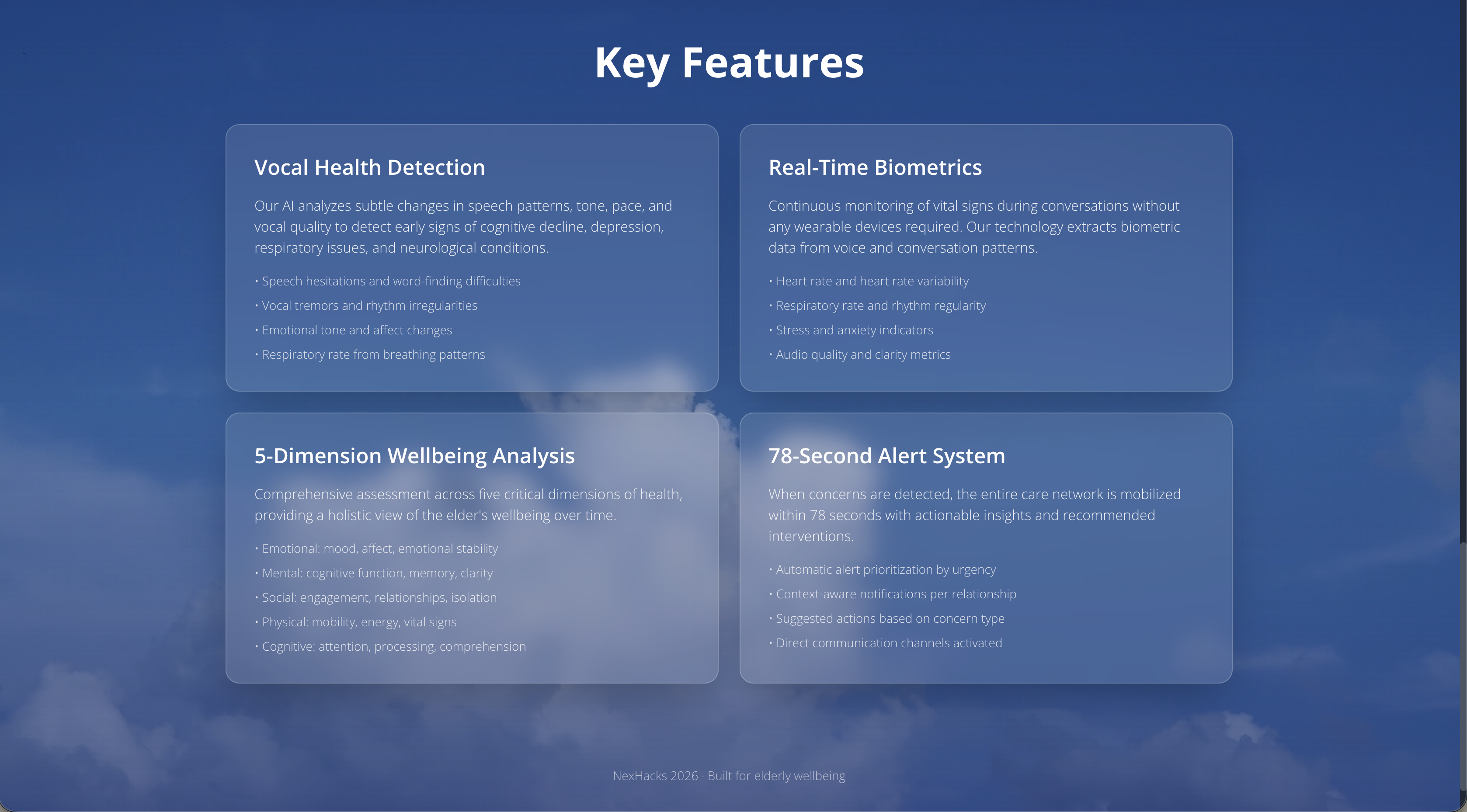
Key Features
-
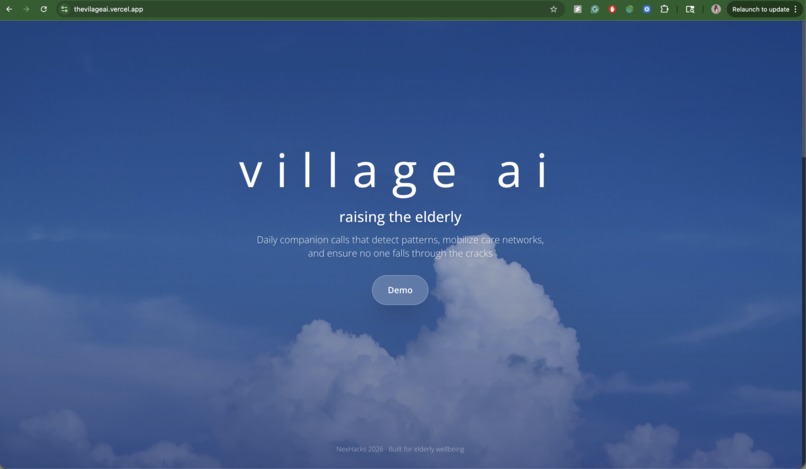
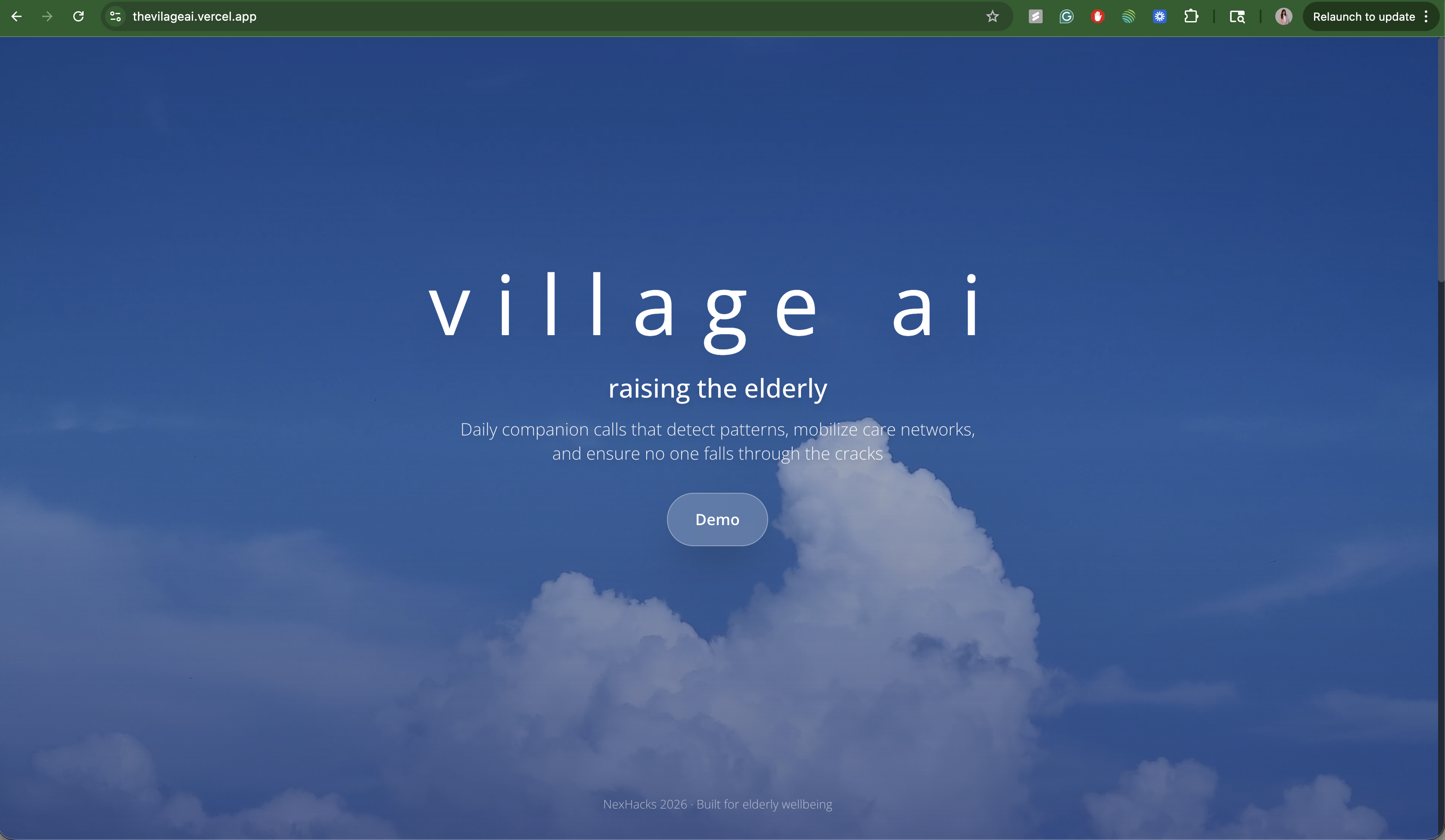
Village AI homepage
-
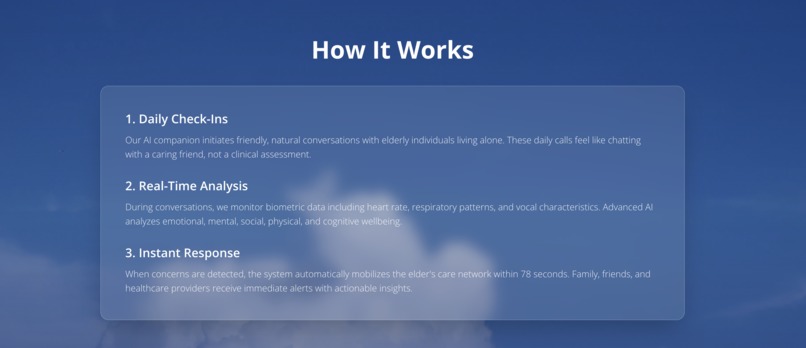
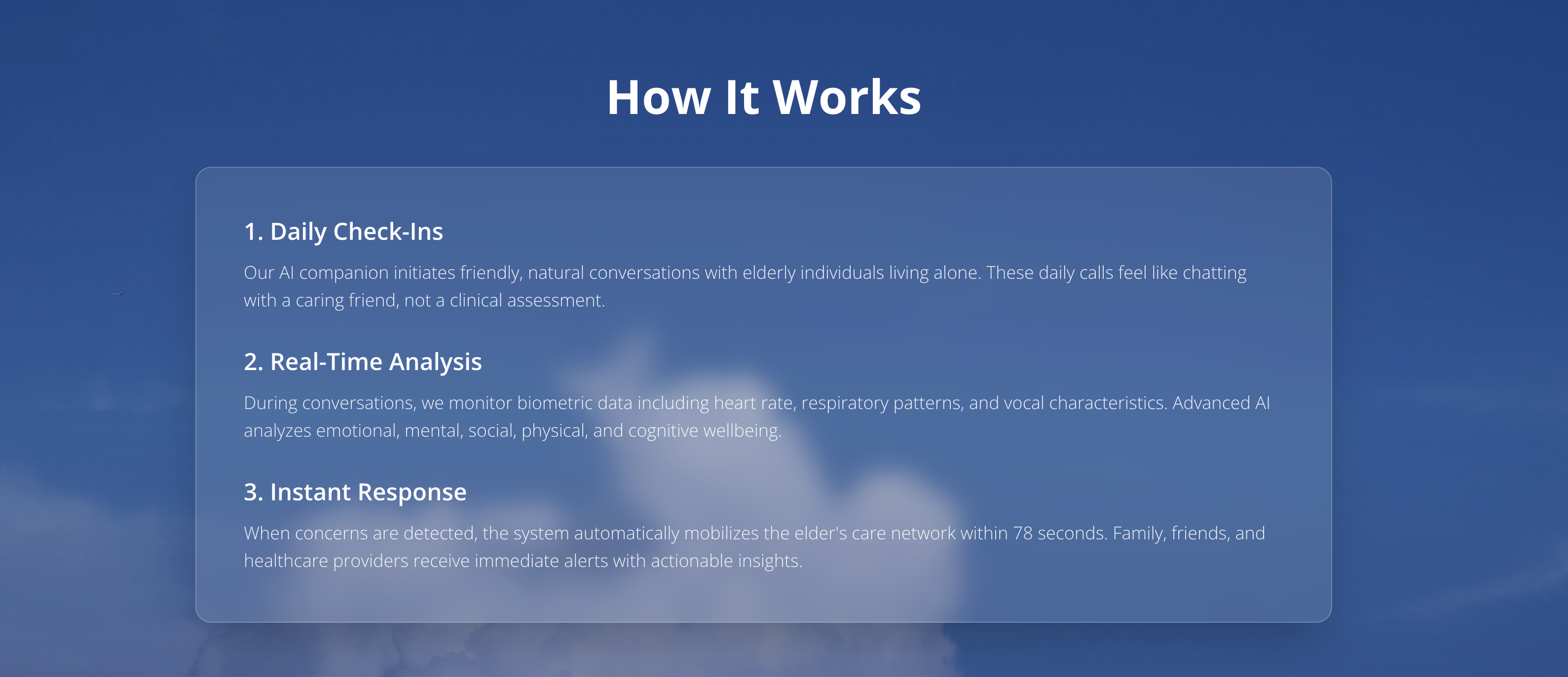
How village ai works
The Village AI
An agentic safety net that coordinates daily elderly check-ins and monitors vocal biomarkers for health shifts, autonomously synchronizing parallel responses across family and clinicians.
Inspiration
The "village" is disappearing. Today, one in four seniors (over 14 million Americans) lives alone, and social isolation is now recognized as a health crisis as lethal as smoking 15 cigarettes a day. Every 11 seconds, a senior is treated in an ER for a fall—costing the healthcare system over $80 billion annually.
Most medical alerts are reactive: they require the senior to press a button after a crisis. We built The Village AI to be proactive. We realized that the human voice is a rich diagnostic tool; by capturing subtle shifts in speech before a fall or health episode occurs, we can recreate the watchful eye of a community through agentic orchestration.
What it does
The Village AI transforms a friendly 30-second daily wellness check into a multi-point, autonomous care response.
Vocal Biomarker Monitoring: During natural conversation, our engine analyzes acoustic features to detect early signs of respiratory distress (phonation time) and neurodegenerative shifts (speech tremors).
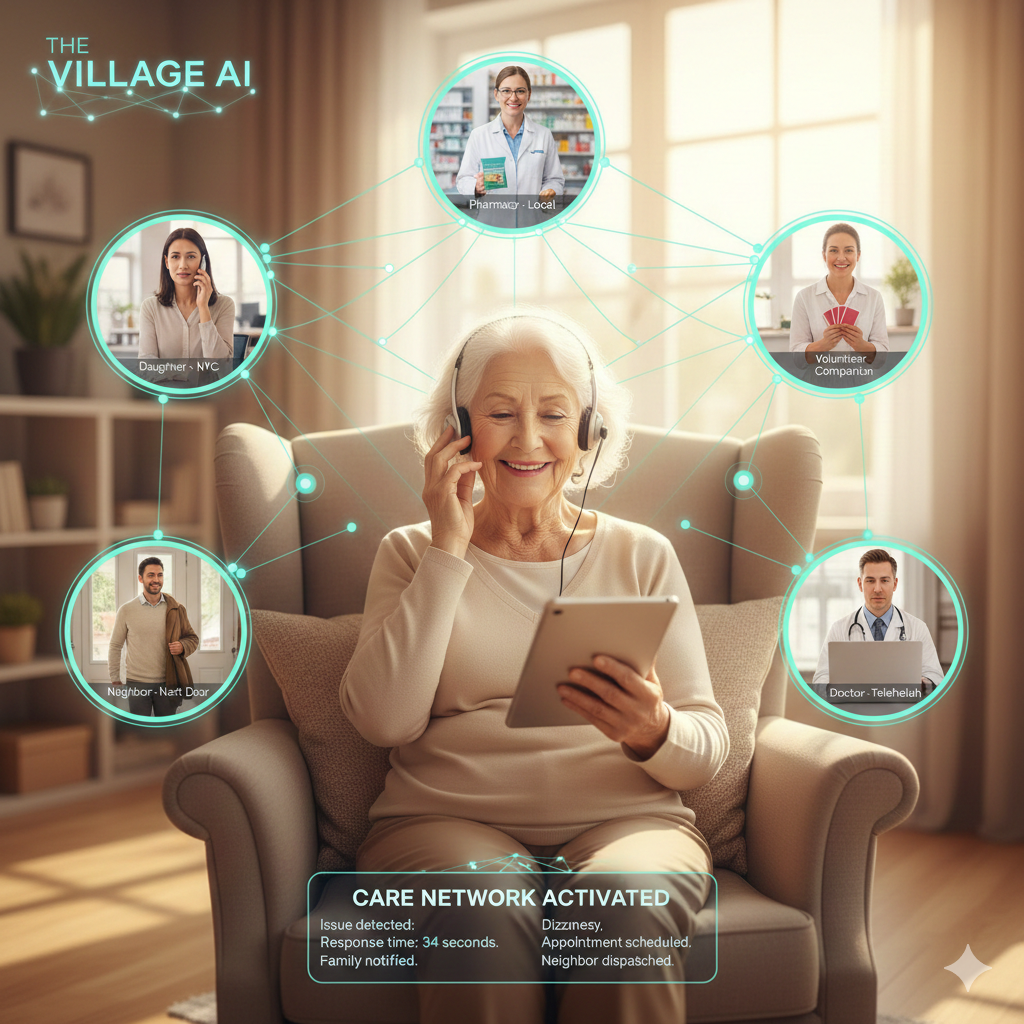
Parallel Coordination: If a health anomaly—like dizziness—is detected, the AI activates a "Village" of parallel agents simultaneously:
- Family Agent: Calls children with a detailed status report.
- Clinical Agent: Flags a physician and queries telehealth availability.
- Local Agent: Dispatches a designated neighbor for a physical wellness check.
- Logistics Agent: Notes the issue in the care file and checks pharmacy status.
How we built it
We engineered a high-concurrency architecture designed for sub-second latency and clinical-grade data extraction.
- Voice & Orchestration: We used LiveKit to manage complex agentic conversation states and real-time audio streams, bridged with Twilio SIP to allow the AI to call any standard landline or mobile device.
- The Brain: Gemini serves as our core reasoning engine, utilizing its massive context window to track long-term health trends and maintain empathetic, human-like dialogue.
- Backend: A FastAPI mission control manages the Twilio SIP trunking and hosts diagnostic endpoints to extract vitals: Heart Rate, HRV, and Respiratory Rate.
- Specialized ML: We integrated a custom Parkinson’s Detection ML Model that analyzes vocal frequency fluctuations (jitter/shimmer) for early-stage neurodegenerative screening.
- Frontend & Data: Built with React + Vite for a high-performance dashboard, powered by Supabase for real-time data synchronization across the care network.
Challenges we ran into
- SIP/WebRTC Integration: Synchronizing LiveKit’s WebRTC streams with Twilio’s SIP protocol was a major hurdle. We had to minimize transcoding latency to ensure the AI interaction felt natural and "real-time."
- Audio Compression vs. Diagnostics: Standard phone lines (PSTN) compress audio heavily. Extracting high-fidelity biomarkers for Parkinson’s detection from an 8kHz mono stream required advanced spectral denoising and feature-enhancement algorithms.
- Asynchronous Parallelism: Managing multiple "Action Agents" (Family, Pharmacy, Doctor) in parallel without blocking the main conversation thread required complex asynchronous task handling in our FastAPI backend.
Accomplishments we're proud of
- Sub-30 Second Activation: We achieved a "Village Activation" time where family, neighbors, and clinicians are notified in one synchronized burst less than 30 seconds after a health flag is raised.
- The Digital Bridge: Successfully created a system that works on a 1990s landline just as well as a smartphone, ensuring no senior is left behind due to tech literacy.
- Clinical Inference: Successfully extracting sub-perceptual respiratory and neurological markers through a simple, low-bandwidth voice call.
What we learned
- Latency is Empathy: In elder care, a delay in AI response feels like the AI isn't "listening." Lowering latency was a technical challenge that resulted in a massive boost in user trust.
- Agentic Shift: We learned that the true value isn't in an AI that suggests an action, but an AI that has the agency to act—autonomously mobilizing a support system when every second counts.
What's next for The Village
- Wearable Data Fusion: Integrating Apple Watch and Oura Ring data into our Supabase backend to cross-reference vocal biomarkers with physical activity.
- Predictive Fall Modeling: Moving from "Response" to "Prevention" by using long-term vocal trends to predict fall risks days before they happen.
- B2B Healthcare Integration: Partnering with Medicare Advantage plans to provide this as a standard-of-care tool to reduce hospital readmission rates.
Built With
- fastapi
- livekit
- railway
- supabase
- twilio
- vercel
- vite


Log in or sign up for Devpost to join the conversation.