👁️ The Vestibular Eye
Using Snap Spectacles to Make Eye Exercises Fun, Trackable, and Effective
💡 Inspiration
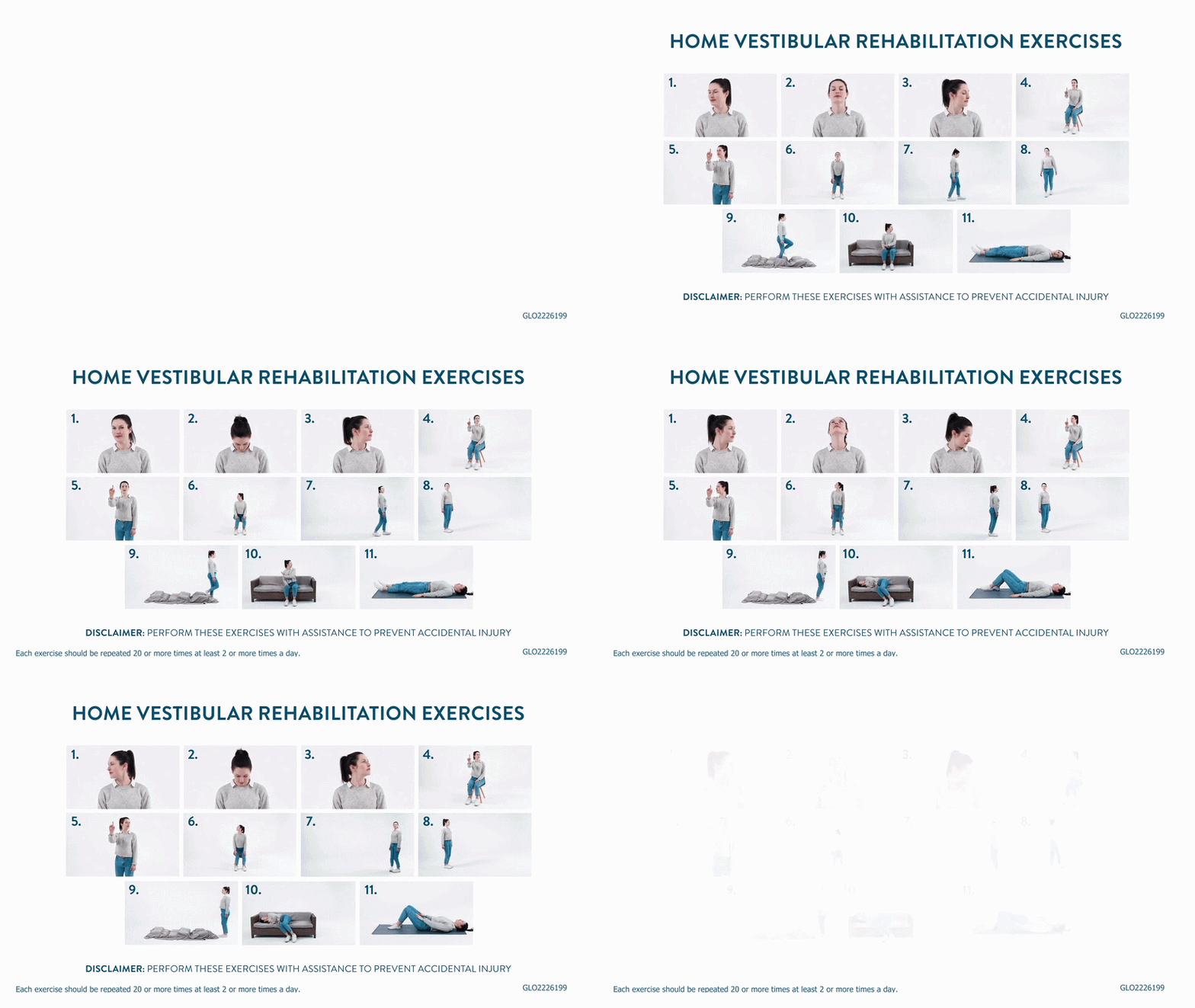
The idea for The Vestibular Eye was born from a frustrating reality in healthcare: Low patient compliance. Vestibular Rehabilitation Therapy (VRT) is critical for recovery from balance and vestibular disorders, yet the exercises are notoriously repetitive, boring, and lonely.
Currently, doctors hand patients a sheet of paper and hope for the best. There is no feedback loop, no accountability, and no way to verify if a patient is performing the movements in the correct physiological range. We wanted to transform this passive clinical routine into an engaging, data-driven AR experience that patients actually look forward to.
🚀 What it does
The Vestibular Eye turns boring, unmonitored rehab exercises into a simple and engaging AR game on Snap Spectacles.
- Your Eye is the Cursor: We use the Spectacles' eye-tracking to make your gaze the controller.
- The Gameplay Loop: You guide a flying bird by keeping your gaze locked on it while moving your head through a specific path of targets (food).
- Medical Verification: To progress through levels, you must perform the movements correctly. This ensures the patient is hitting the necessary head-eye coordination benchmarks required for effective therapy.
- Immediate Feedback: It provides clear visual and audio cues, giving patients and doctors confidence that the rehab is being done the right way.
🛠️ How we built it
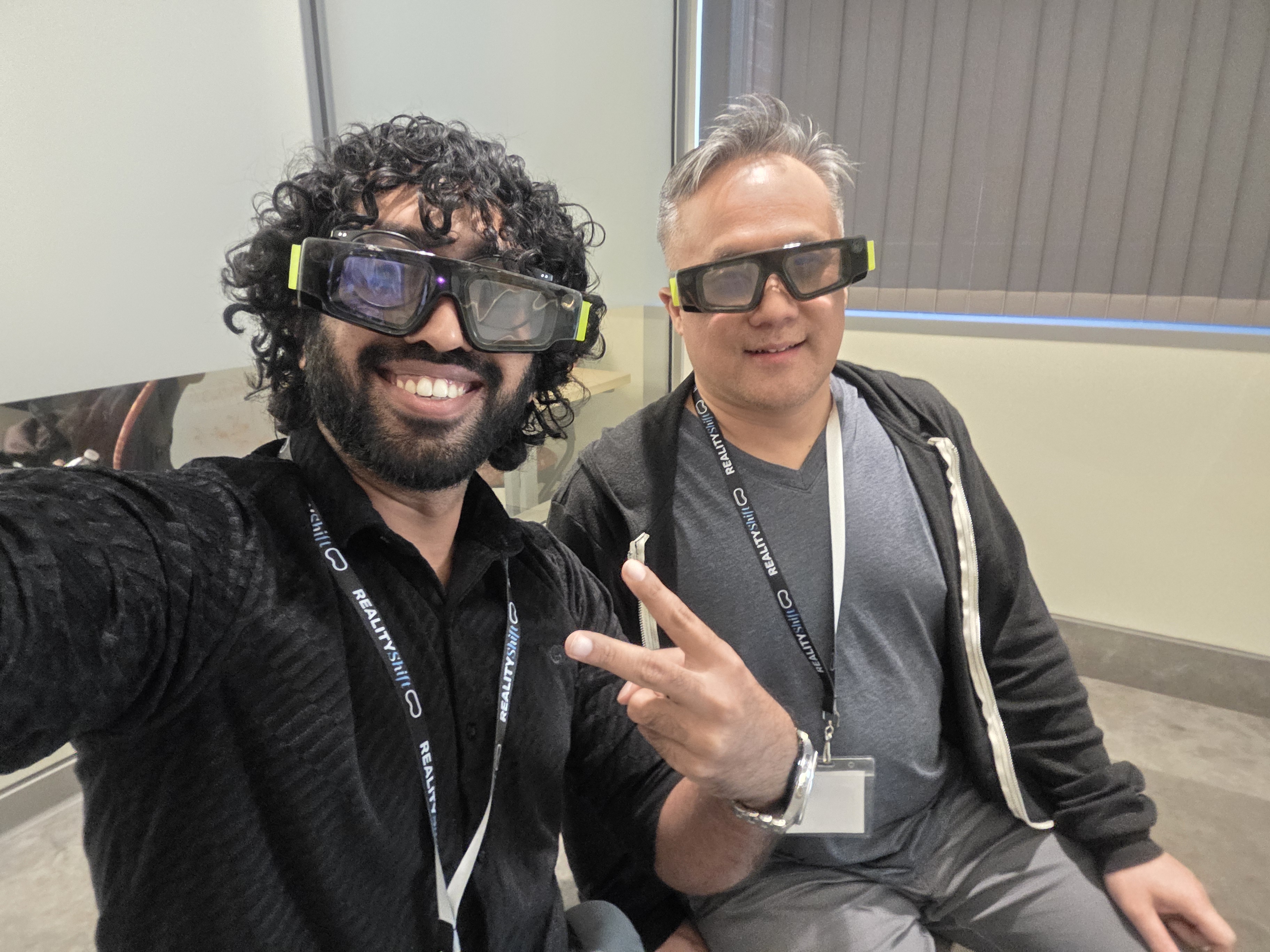
We utilized Lens Studio and the Spectacles (Gen 5) Dev Kit. We started with the Essentials sample and heavily refactored the logic to support eye-tracking and head-pose data as primary input modalities.
To meet our 6-hour deadline, we leveraged a powerful suite of AI tools:
- Audio: We used ElevenLabs to generate high-quality voiceover guidance, making the experience feel like a polished, professional medical assistant.
- Development: Gemini, Claude, and Cursor assisted in bridging the gap between our Unity/C# background and TypeScript.
- Design & Logic: Manus AI and Lens Studio’s built-in AI tools helped us rapidly iterate on assets and scene architecture.
🚩 Challenges we ran into
- The Unity-to-Lens Leap: Transitioning from Unity/C# to Lens Studio/TypeScript in a matter of hours was a major hurdle. We had to quickly adapt to Lens Studio’s specific component architecture.
- The "Autosave" Incident: We lost a significant chunk of progress early on because autosave was disabled by default. It was a high-stakes lesson in manual version control!
- Workflow Friction: Coming from Unity, we found the lack of certain QoL features (like scrollable numeric transform inputs) slowed us down, but we developed workarounds to maintain our velocity.
- Merging & Integration Hurdles: We had several polished UI elements ready including a Main Menu, Logo, and a Tutorial video but unfortunately, due to complex merging issues and the tight 6-hour window, we couldn't integrate them into the final build in time.
🏆 Accomplishments that we're proud of
We built a functional medical MVP in just 6 hours. Successfully mapping complex clinical movements to a fun, "bird-flight" gameplay loop that actually feels responsive is a major milestone for us. We proved that AR can turn a medical chore into a "game" while maintaining real clinical utility.
🧠 What we learned
We mastered "Rapid Adaptation." Beyond just learning TypeScript on the fly, we learned the nuances of designing for Wearable AR, where the head and eyes are the primary controllers. We also gained experience in prioritizing a "Minimum Viable Product" under extreme time pressure.
⏩ What's next for The Vestibular Eye
- Doctor Dashboard: Implementing data logging so clinicians can remotely monitor patient accuracy and frequency.
- Expanded Exercise Library: Adding new levels specifically designed for BPPV and other distinct vestibular conditions.
- Enhanced "Juice": Adding more immersive environments and particle effects to increase the dopamine hit of a successful session, further boosting long-term compliance.
Built With
- javascript
- lens-studio
- snap
- spectacles
- typescript


Log in or sign up for Devpost to join the conversation.