Inspiration
Traditional evaluation processes for pitch competitions, hackathons, and early-stage startup ideas are broken. Submissions are judged by fatigued human panels balancing subjective "vibes," rushed reviews, and surface-level pitches. Great technical ideas often fail due to poor presentations, while flashy pitches hide unfeasible technology or non-existent business models. We built The Verdict to eliminate this noise—creating an objective AI evaluator that stress-tests both technical codebases and business viability simultaneously.
What it does
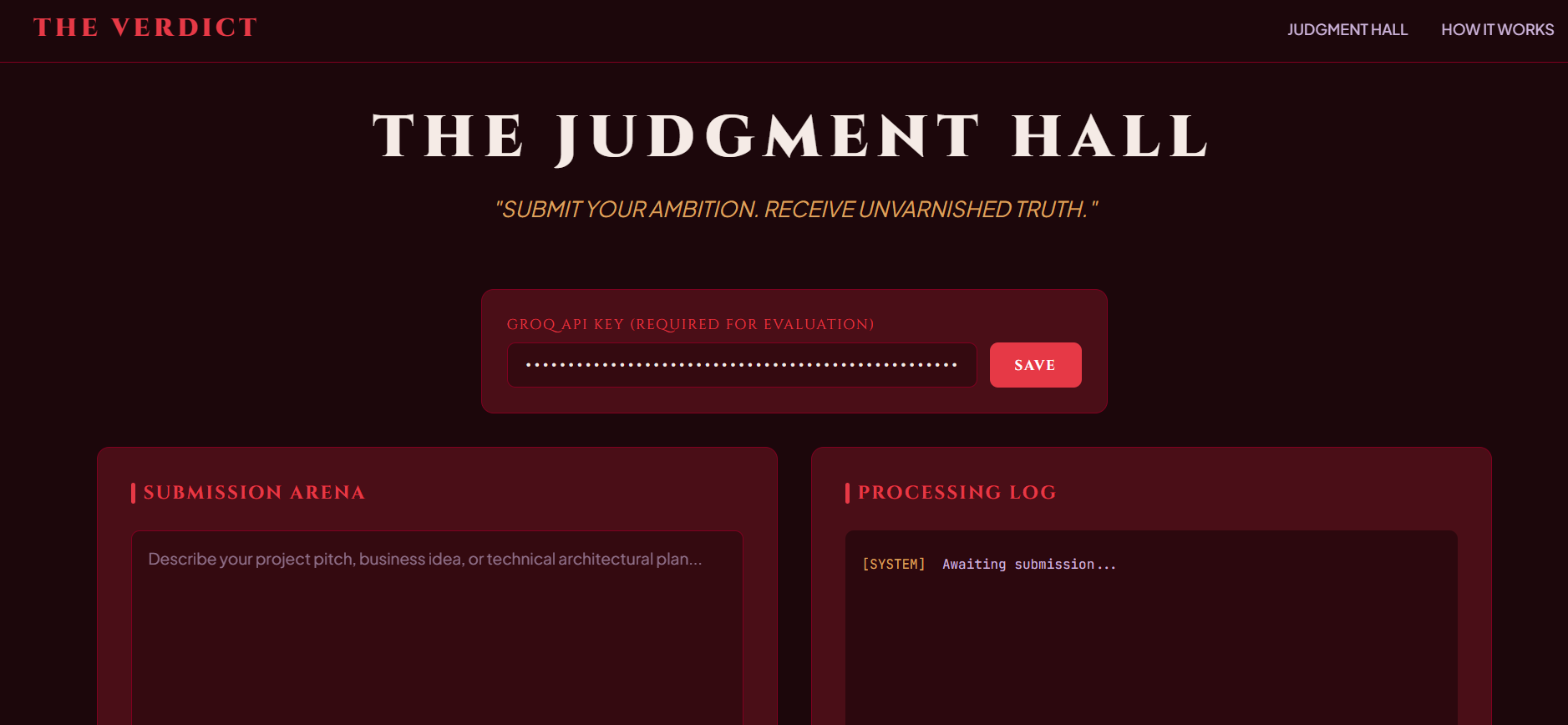
What it does The Verdict is an AI-powered intelligence platform that performs multidimensional due diligence on any project or business concept in minutes.
Code & Architecture Analysis: Ingests GitHub repositories to audit code quality, technical depth, and actual feature implementation.
Business Model Stress-Testing: Evaluates market size, value proposition, competitive advantages, and unit economics.
Risk & Flaw Identification: Detects unaddressed edge cases, security risks, unrealistic financial claims, and operational blindspots.
Comprehensive Scoring & Reports: Produces a standardized evaluation score alongside actionable feedback for builders, organizers, and investors.
How we built it
Frontend: Built with a modern, responsive Web UI using Next.js and Tailwind CSS for real-time score visualization and diagnostic dashboards.
Backend Engine: Powered by Python (FastAPI) handling automated repository ingestions, markdown parsing, and data extractions.
AI & Evaluation Pipeline: Integrated Large Language Models (LLMs) with specialized prompt-engineering chains for static code auditing, business model verification, and structured JSON score outputs.
Challenges we ran into
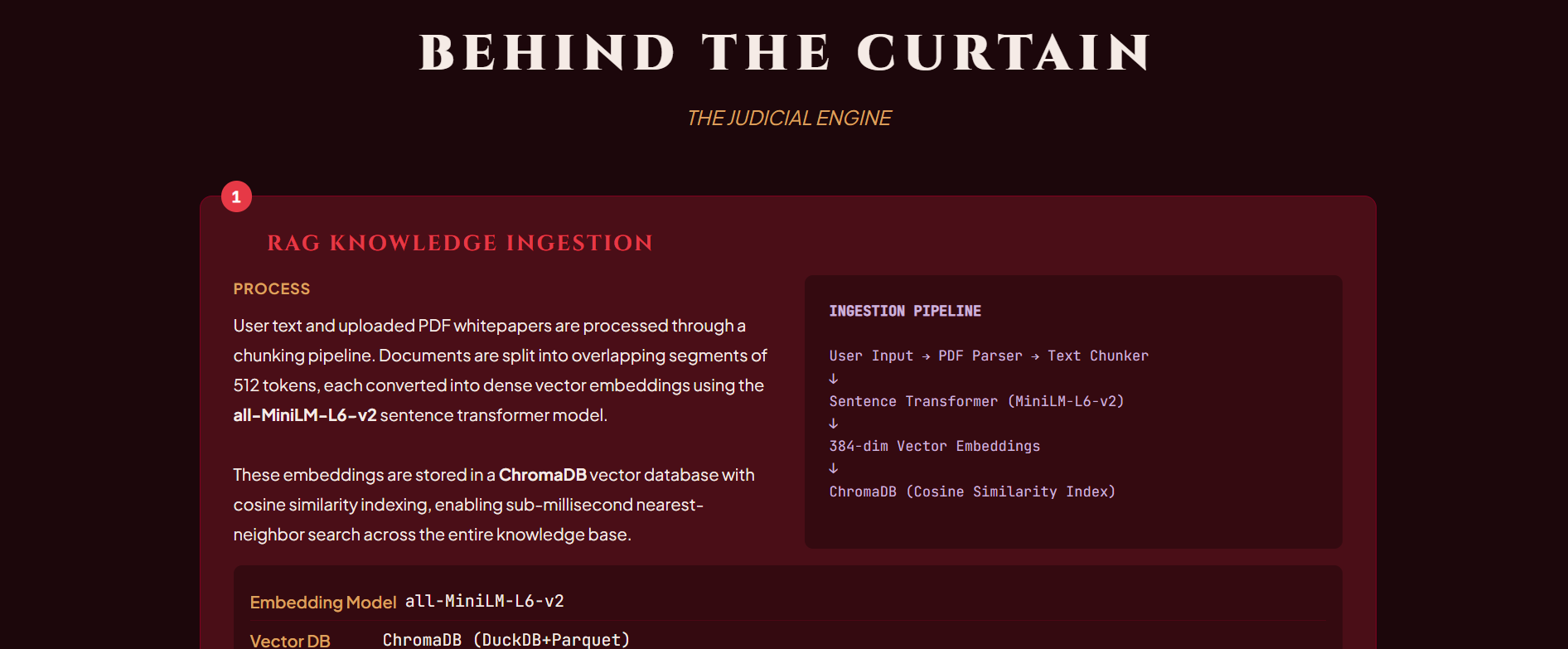
Hallucination vs. Fact-Checking: Ensuring the AI didn't invent missing code features or hallucinate market metrics required strict output constraints and retrieval-augmented analysis.
Standardizing Unstructured Inputs: Normalizing radically different inputs—ranging from raw Python code to bulleted pitch decks—into a single coherent scoring metric.
Balancing Nuance and Speed: Deep code analysis can be slow; optimizing parallel prompt processing was necessary to deliver verdicts in seconds rather than minutes.
Accomplishments that we're proud of
360° Alignment Engine: Successfully bridging the gap between raw developer output and high-level business strategy in a single evaluation tool.
Zero-Bias Benchmarking: Achieving consistent scoring across test projects regardless of flashy design or marketing buzzwords.
Actionable Feedback Loop: Delivering diagnostic reports that don't just assign a score, but show founders exactly what to fix next.
What we learned
Technical execution isn't enough: Great code needs market alignment to succeed, and strong AI evaluation must look at both simultaneously.
Prompt engineering requires strict Guardrails: For deterministic scoring, schema enforcement and structured JSON outputs are critical when dealing with AI models.
What's next for The Verdict
Multi-Modal Deck Auditing: Adding direct PDF pitch deck parsing to cross-reference visual slide claims against actual backend code repositories.
Custom Evaluator Rubrics: Enabling VCs, accelerators, and hackathon organizers to define custom weighting parameters (e.g., heavily weighting security for FinTech vs. UI for Consumer apps).
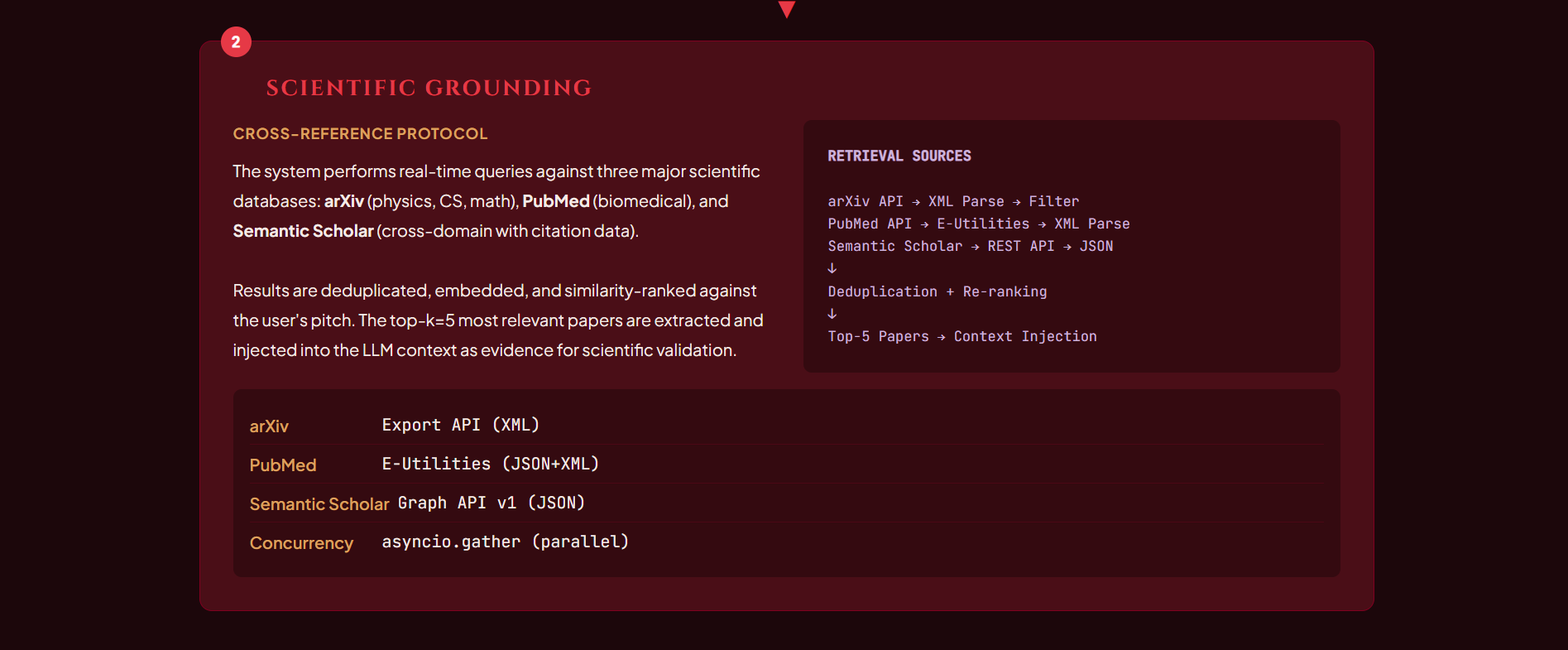
Automated Competitor Mapping: Integrating real-time market search to automatically check if a submitted "novel" business idea already exists in the market.

Log in or sign up for Devpost to join the conversation.