-
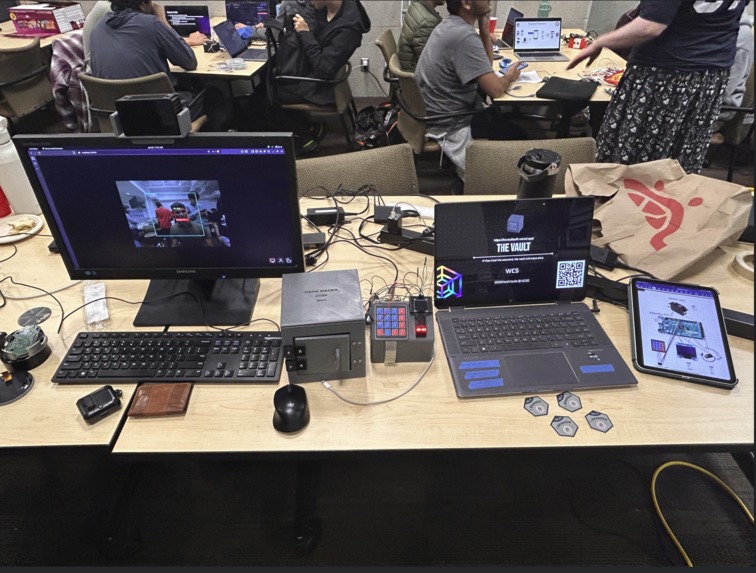
Assembly
-
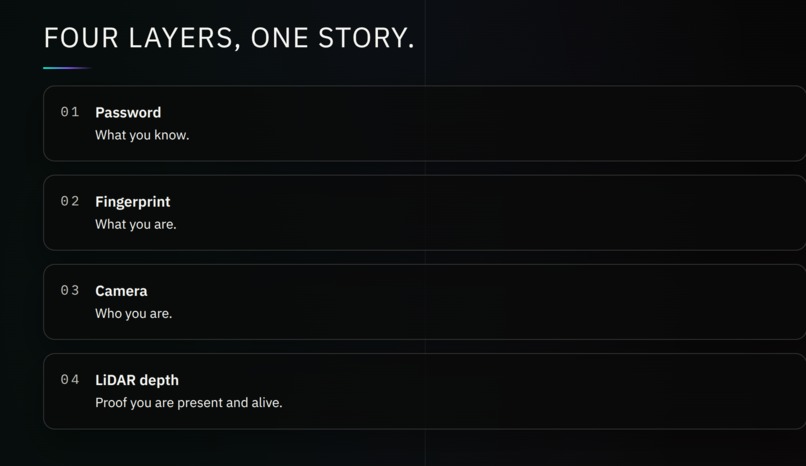
Landing Page
-
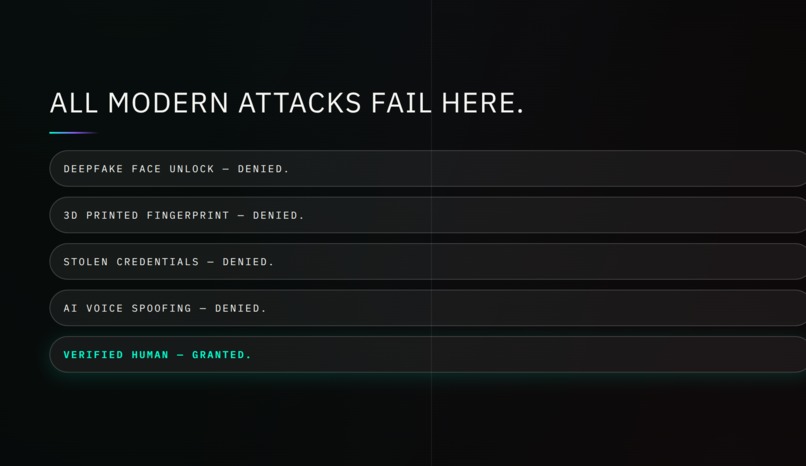
Values
-
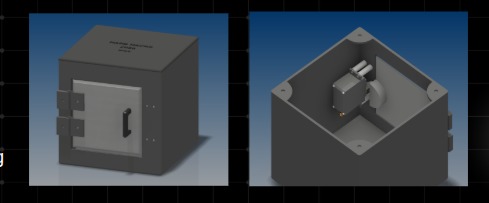
CAD
-
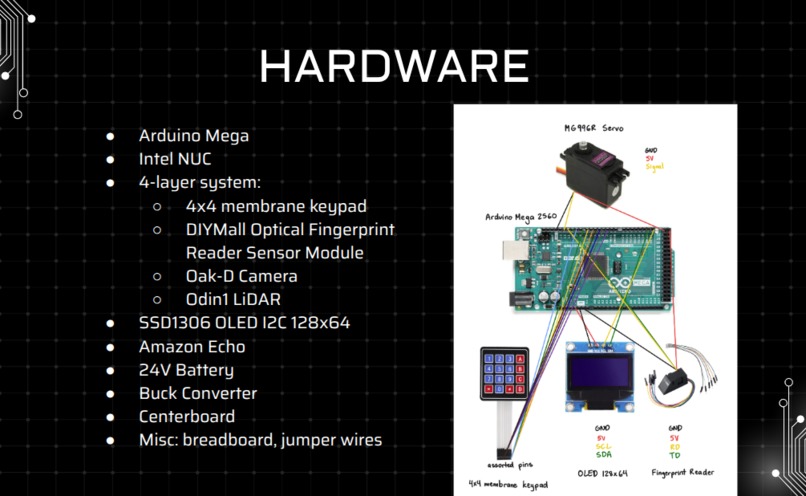
Hardware Stack
-
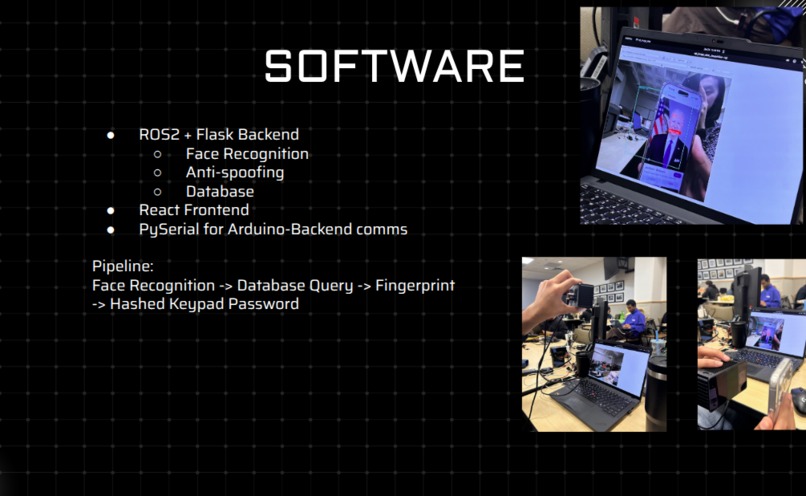
Software Stack
Inspiration
Homes are getting smarter. Locks are getting smarter.
But safes and vaults are still fooled by photos, copied fingerprints, and stolen passwords.
In the age of AI, deepfakes, and identity theft, we realized something scary:
Most home security verifies data.
Almost none verifies a real, living human.
So we asked:
What if a vault could know it’s actually you?
That idea became The Vault.
How this fits the Home Improvement Theme
When people think about home improvement, they think about smart lights, smart thermostats, and smart locks.
But one of the most overlooked parts of a home is how we protect the things that matter most:
- Passports
- Jewelry
- Important documents
- Hard drives
- Family valuables
Ironically, while homes are getting smarter, safes and vaults are still protected by outdated methods that can be bypassed with:
- Photos
- Copied fingerprints
- Stolen passwords
- Deepfakes
The Vault reimagines what a modern home safe should be in the age of AI.
Instead of verifying credentials, it verifies a real, living human being physically present.
This turns a traditional vault into an identity-aware home security system — not just for safes, but for doors, cabinets, server rooms, and any access point inside a home where identity truly matters.
That is a direct improvement to home security infrastructure — not just adding a lock, but redefining how access is granted throughout the home.
What it does
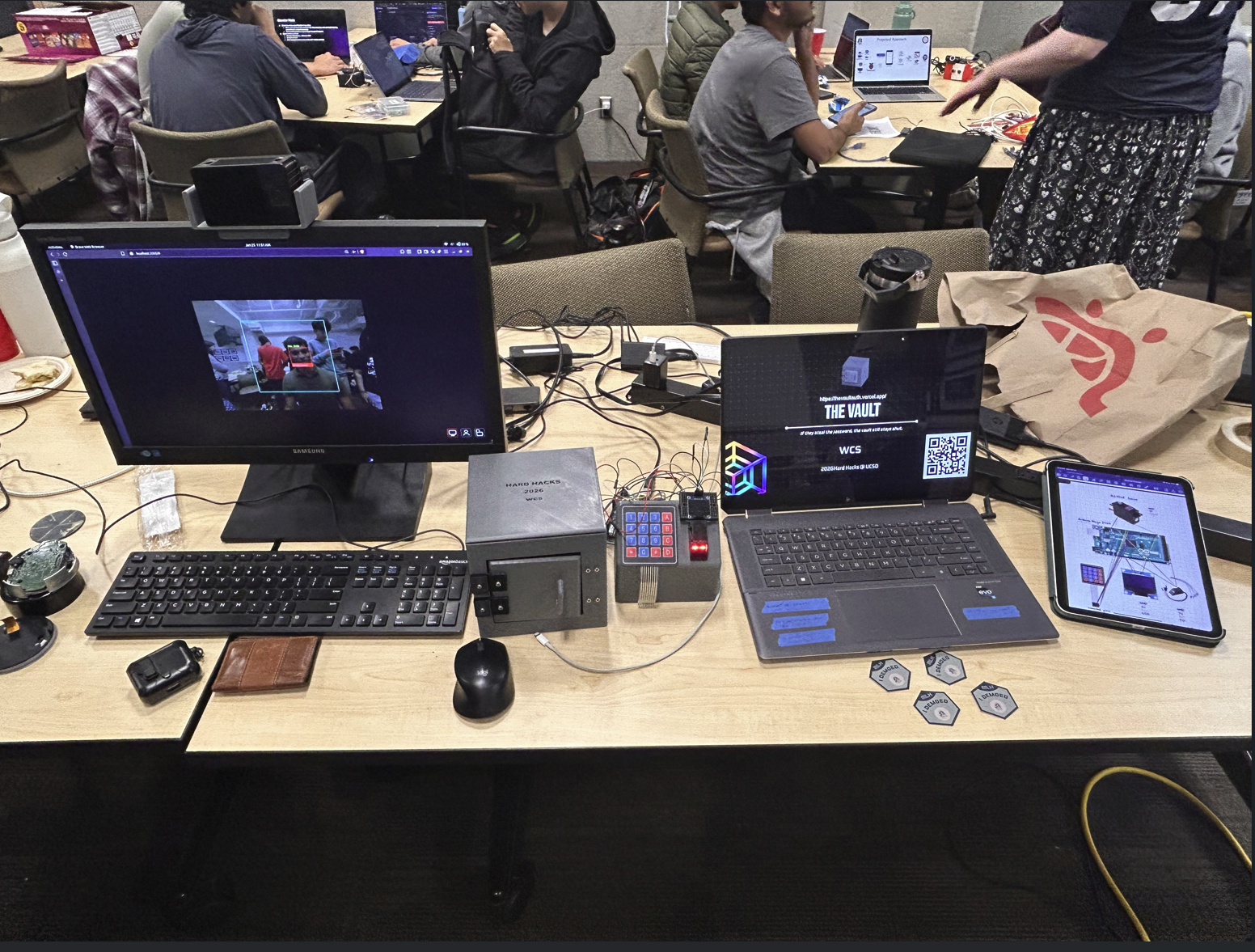
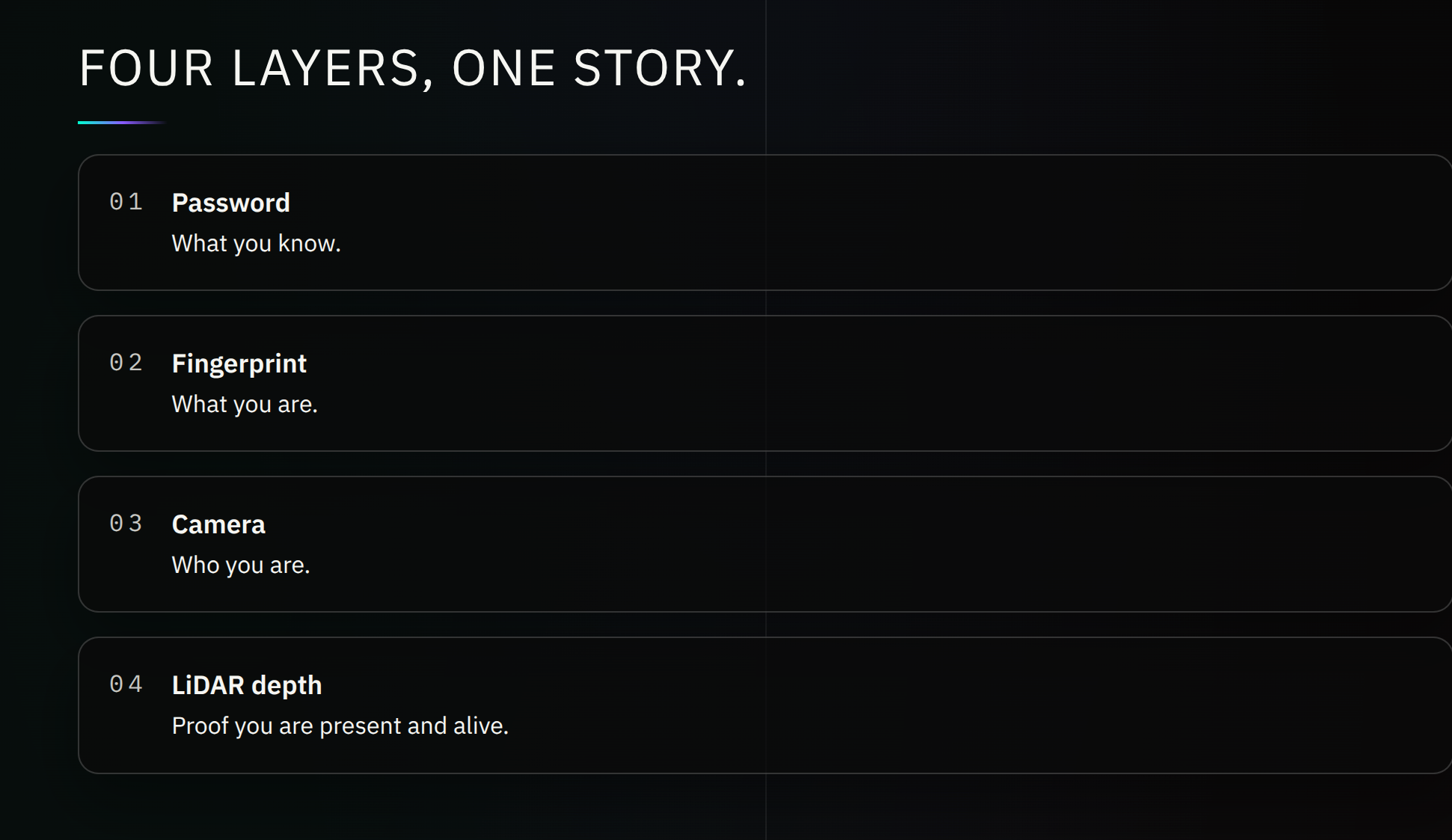
The Vault is a 4-layer biometric home security system that authenticates biological presence, not just credentials.
It requires:
- Face recognition
- Anti-spoof liveness detection (LiDAR / depth)
- Fingerprint verification
- Hashed keypad password
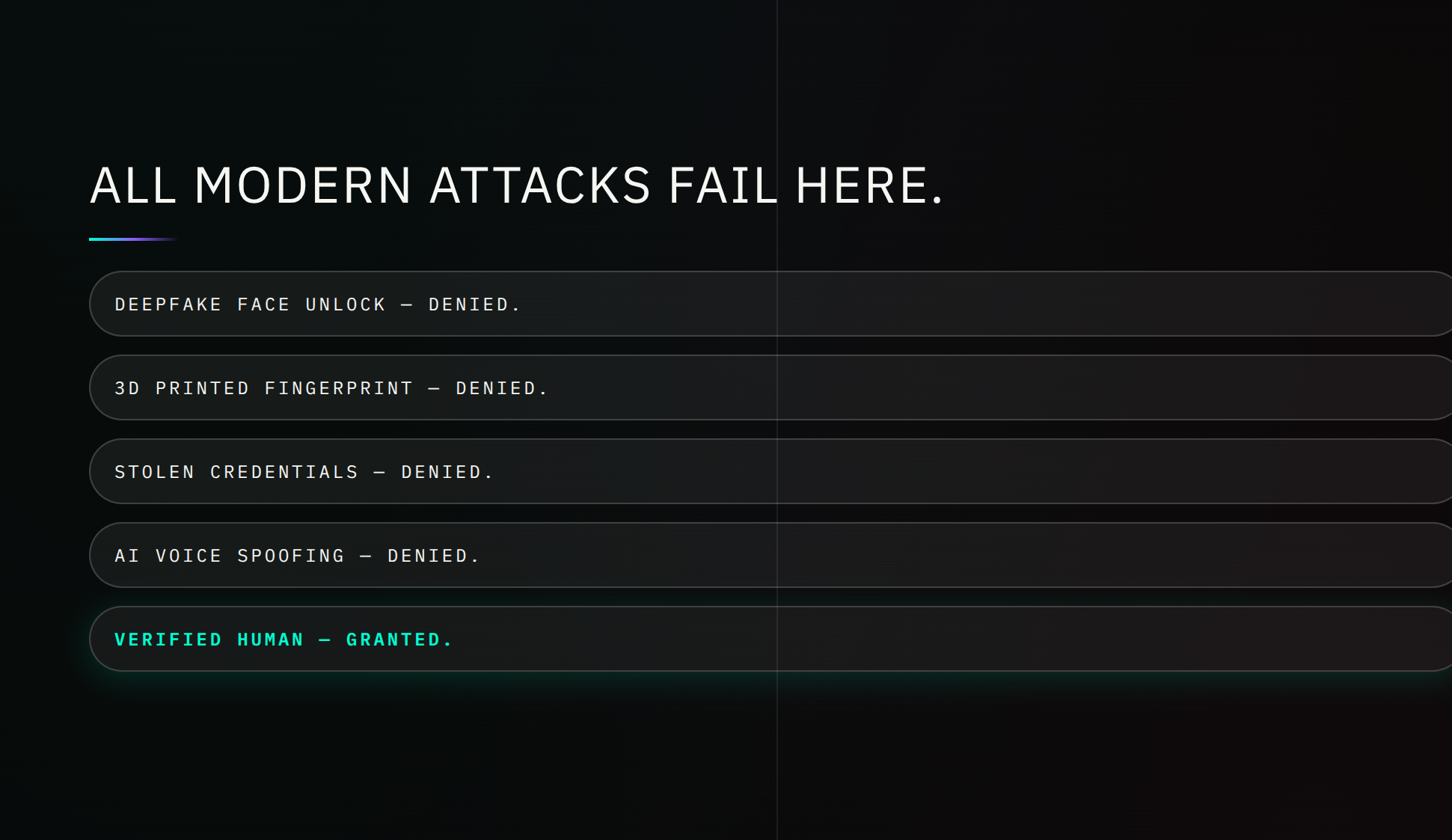
Even if someone has your password, a copied fingerprint, or a deepfake of your face — the vault will not open.
Because it doesn’t check what you have.
It checks who is physically standing there.
How we built it
We built a full hardware-software authentication pipeline:
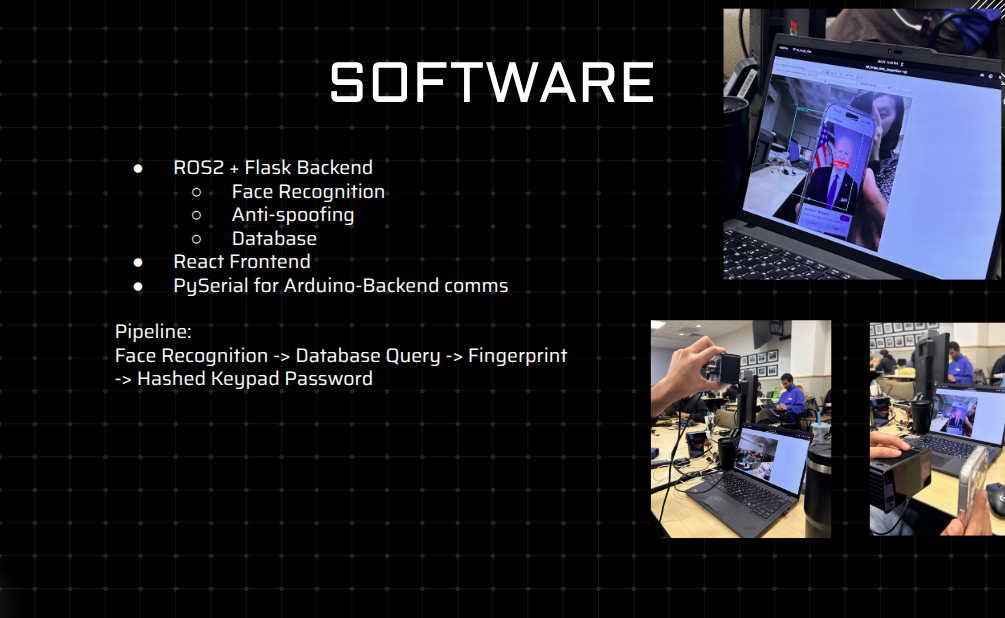
- React Frontend for the user interface
- Flask backend as the authentication server
- ROS2 to coordinate sensor and hardware modules
- Face recognition + anti-spoofing for liveness detection
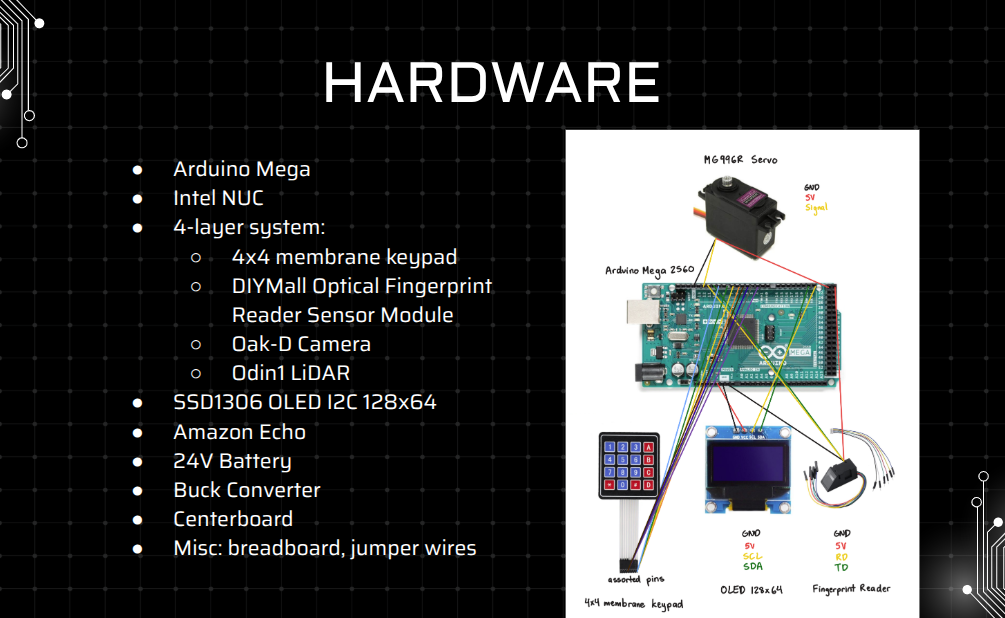
- Fingerprint sensor + keypad connected via Arduino
- PySerial for Arduino ↔ backend communication
- Database for biometric templates and hashed credentials
System Architecture Overview
The Vault is built as a distributed hardware–software system using ROS2 for coordination.
Nodes
face_recognition_node (C++)
- Face detection and recognition using dlib
- Depth-based spoof detection using camera data
- Publishes authentication and spoof status to ROS topics
web_interface_node (Python / Flask)
- User management interface
- REST API for frontend
- Bridges authentication flow between sensors and UI
Frontend
- React web interface for registering users and managing authentication
Hardware Integration
- Arduino connected fingerprint sensor and keypad
- PySerial communication between Arduino and backend
- ROS2 orchestrates all modules into a single authentication pipeline
Challenges we ran into
- Synchronizing Arduino hardware with backend logic in real time
- Managing reliable serial communication between sensors and the server
Accomplishments that we're proud of
- Built a working multi-biometric vault prototype end-to-end
- Successfully integrated hardware, backend, and frontend into one cohesive system
- Implemented anti-spoofing liveness detection, not just face matching
- Designed a true biometric fusion authentication flow
- Created a system that feels like a real product, not just a demo
What we learned
- Read what we're running first
What's next for The Vault
- Turning this into a modular system for homes, banks, labs, and data centers
- Improving the speed and UX of multi-layer authentication
- Packaging The Vault as a deployable identity-aware security system


Log in or sign up for Devpost to join the conversation.