-
-
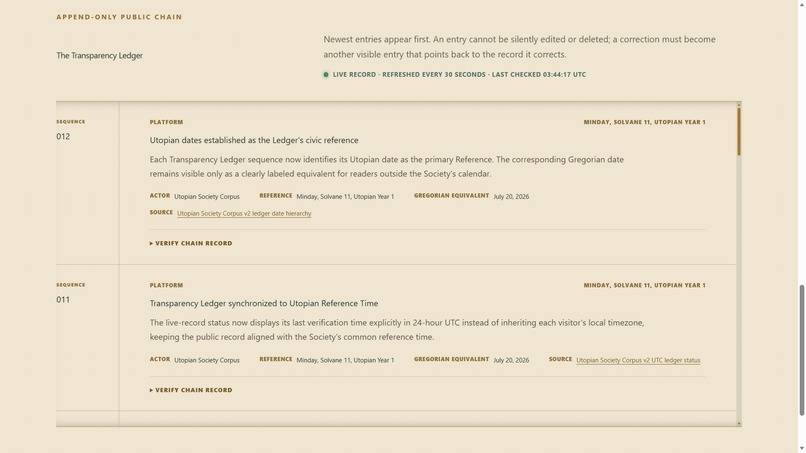
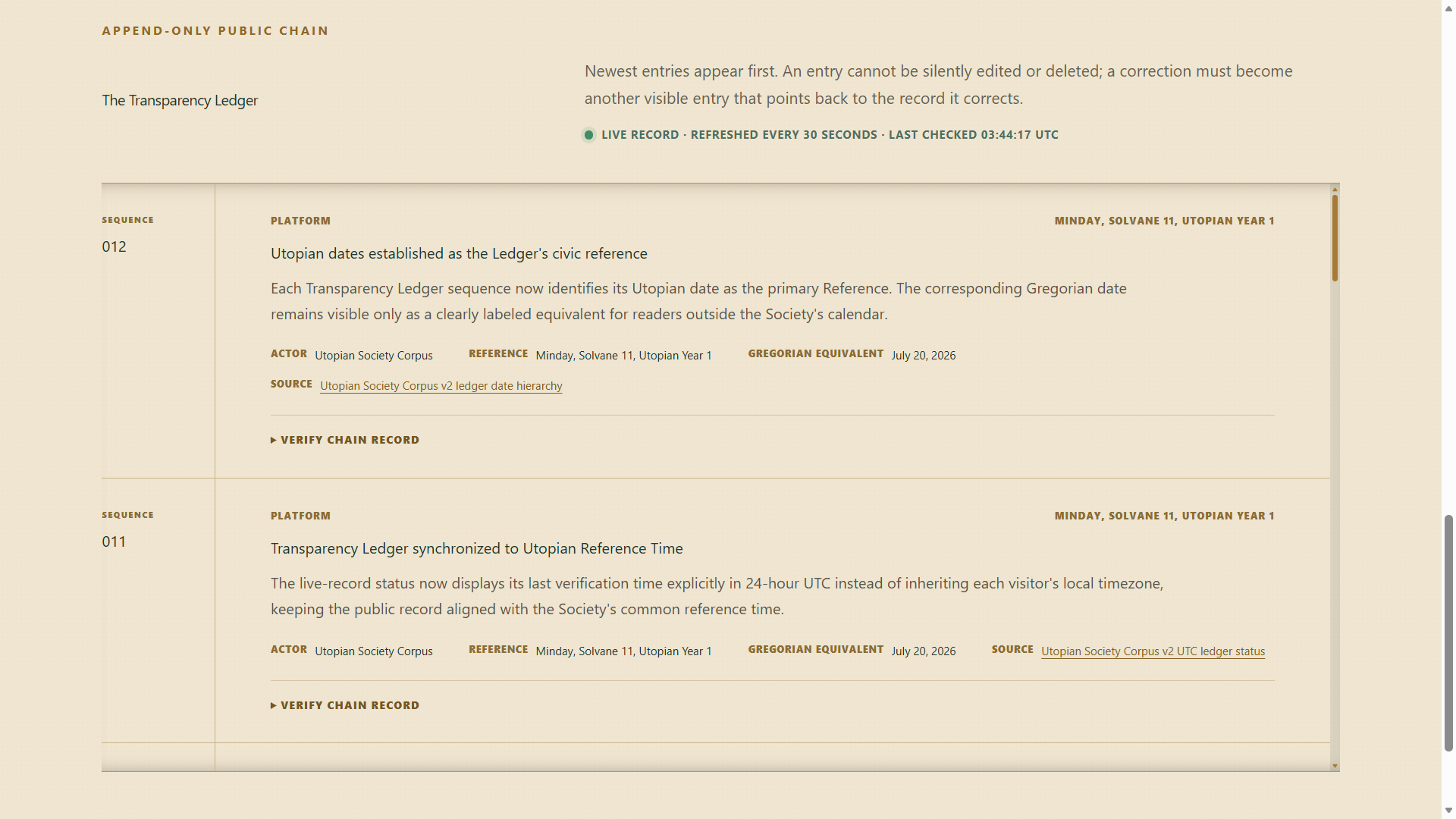
Transparency Ledger
-
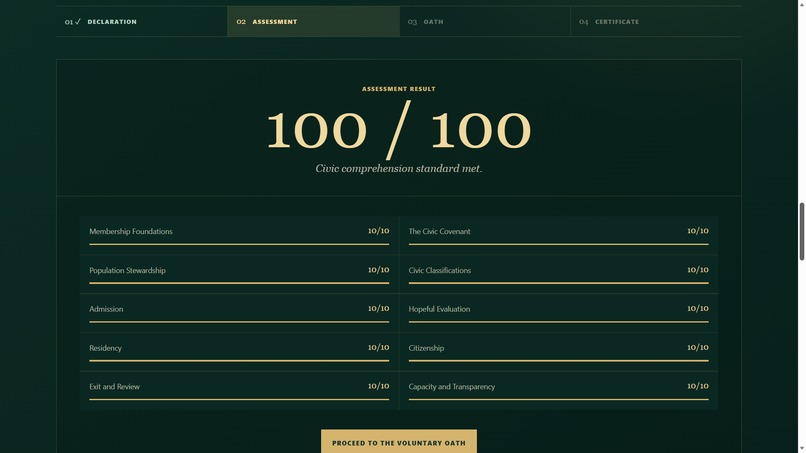
Assessment Results
-
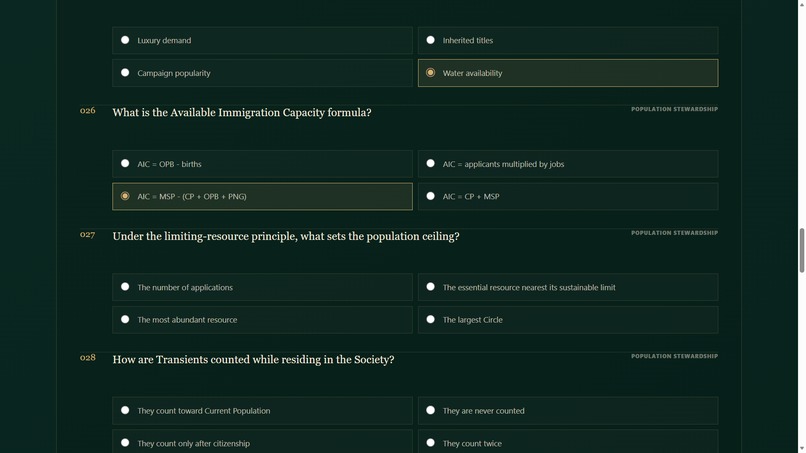
Exam preview
-
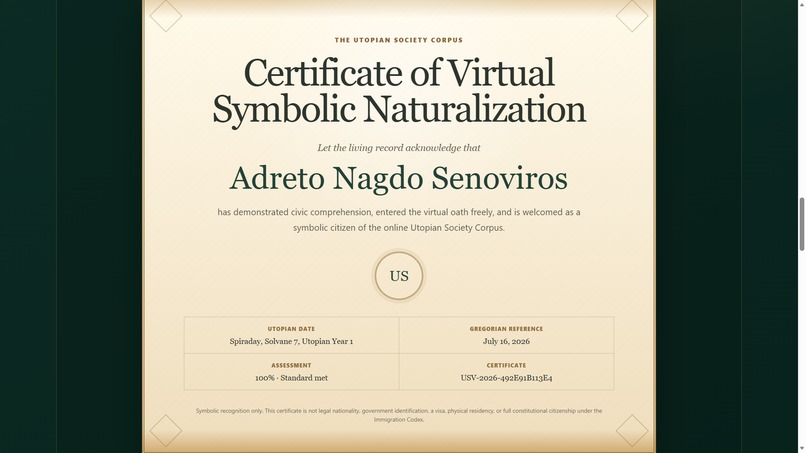
Certificate of Citizenship
-
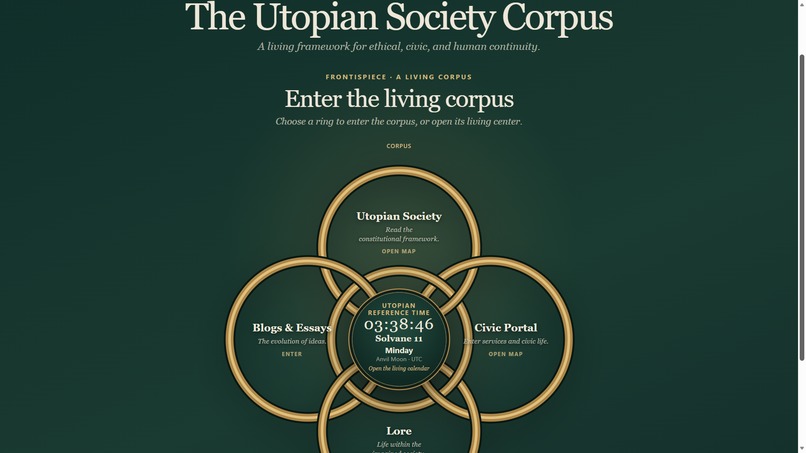
Frontispiece
-
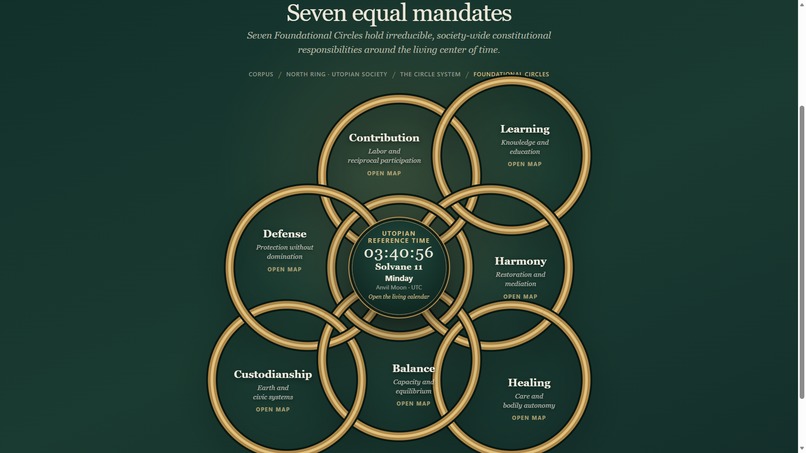
7 Circles
-
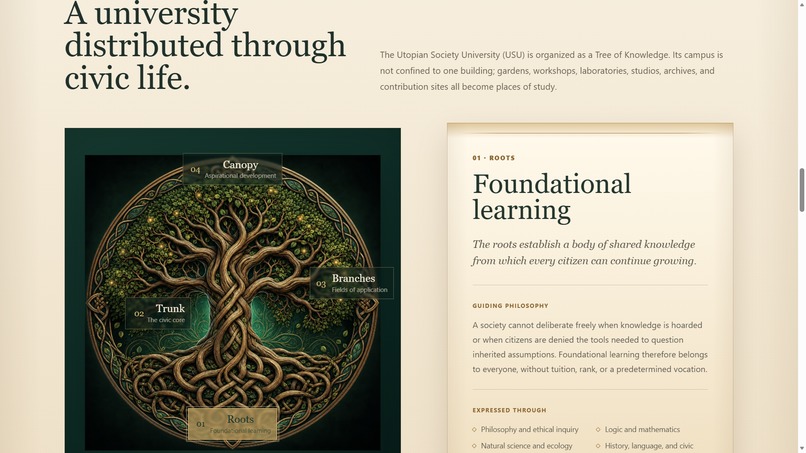
Learning Tree
Inspiration
The Utopian Society began in 2025 as a body of writing rather than a software project, inspired by what I saw as humanity in decline. I wanted to move beyond criticism and ask what a more ethical civilization would actually require. I developed its Constitution, Articles, Charters, Codices, essays, lore, and the novel Robyn’s Journey to explore what an ethical civilization might look like both institutionally and from within everyday life.
In early 2026, those works became a WordPress alpha website. It made the corpus publicly readable, but it remained primarily a collection of documents.
For OpenAI Build Week, I asked a different question:
What if this imagined society could become an explorable—and eventually functional—civic space?
What it does
The Utopian Society Civic Portal transforms a speculative constitutional corpus into a living digital civilization.
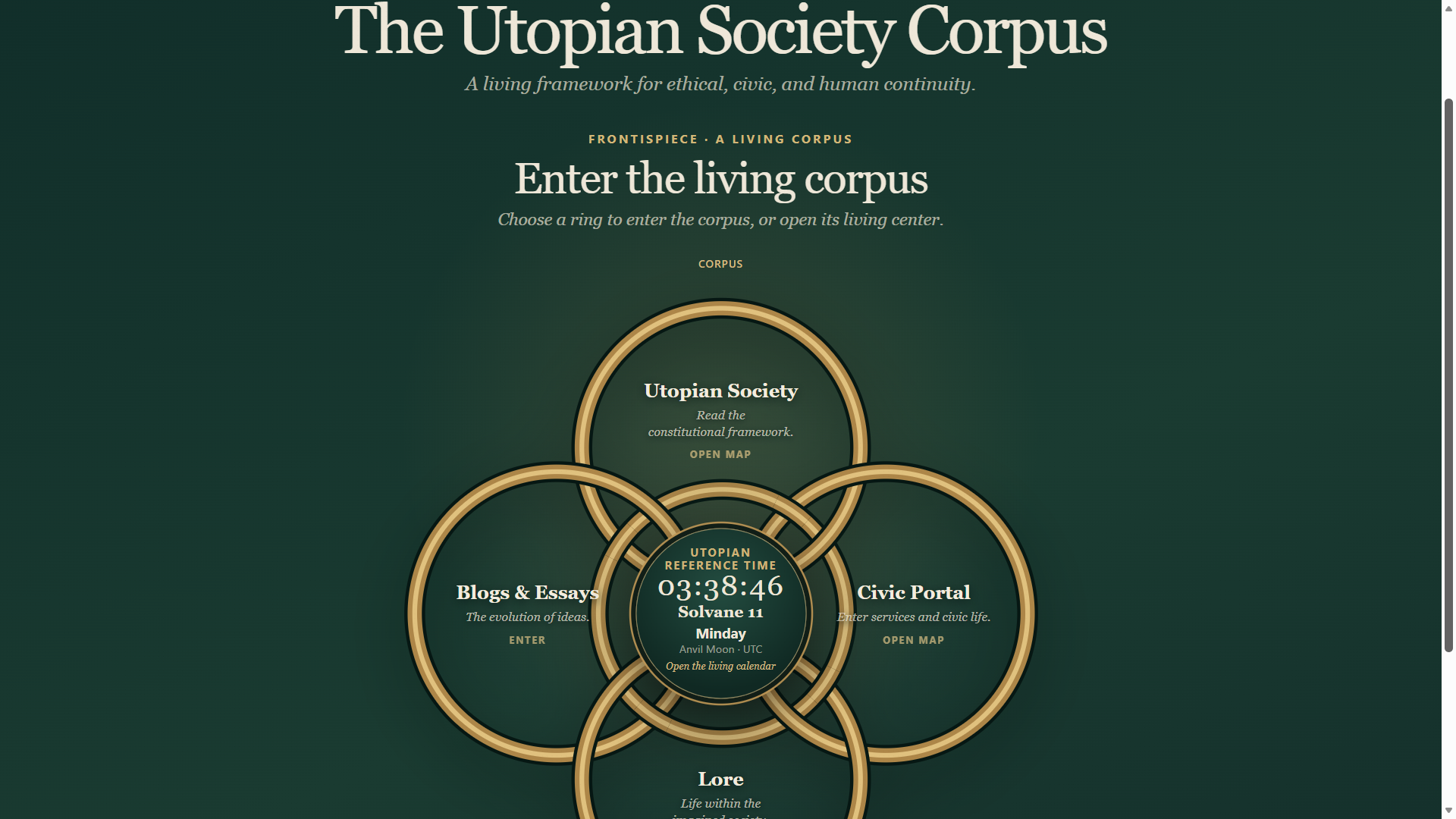
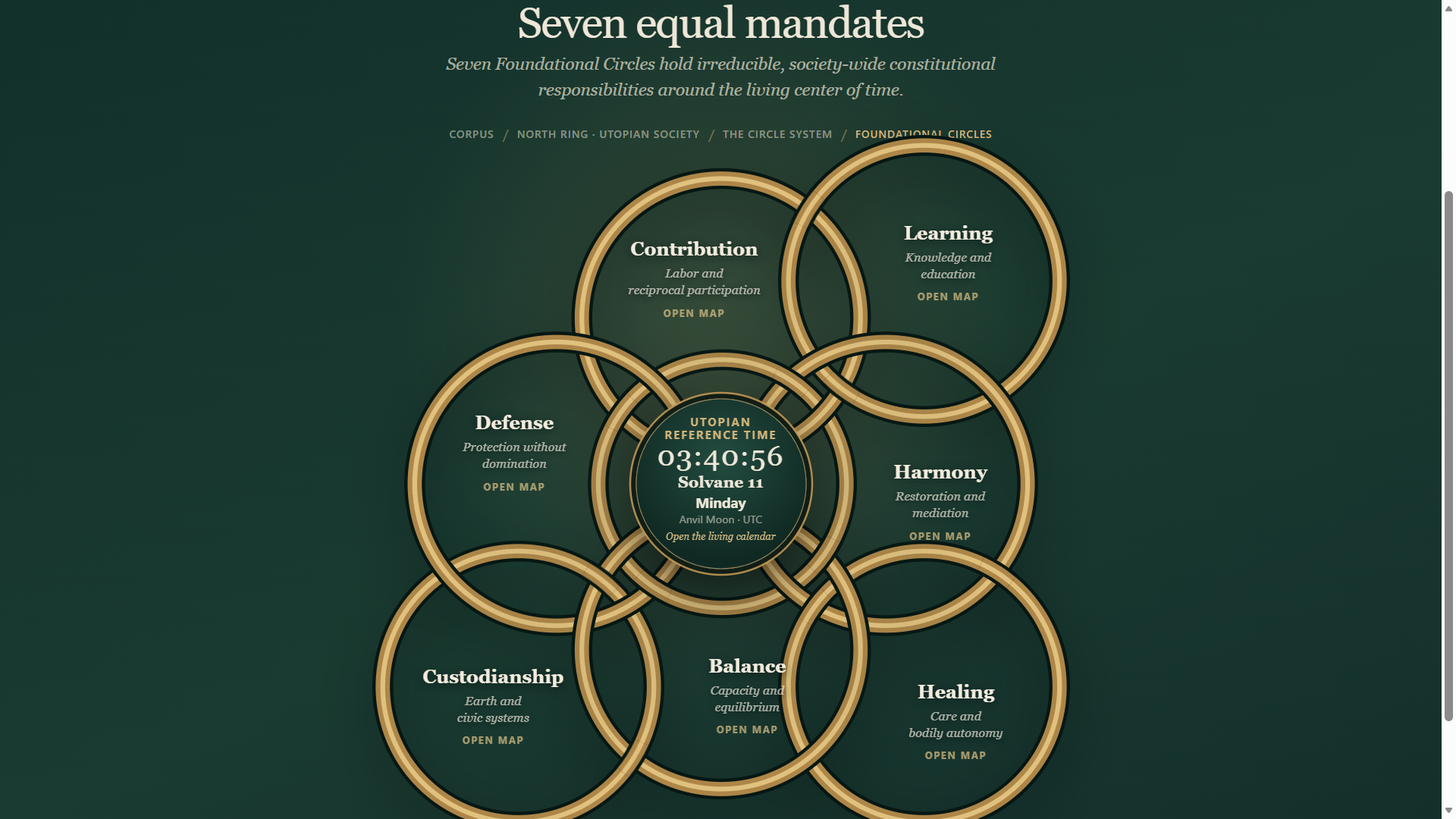
Visitors enter through an interactive Celtic frontispiece whose interlocking rings represent the Society’s major domains. From there they can explore:
- A seven-Circle constitutional governance system.
- A live Utopian Reference Time clock and thirteen-month calendar.
- The Constitution, Articles, Charters, Codices, blogs, and essays in a unified reading experience.
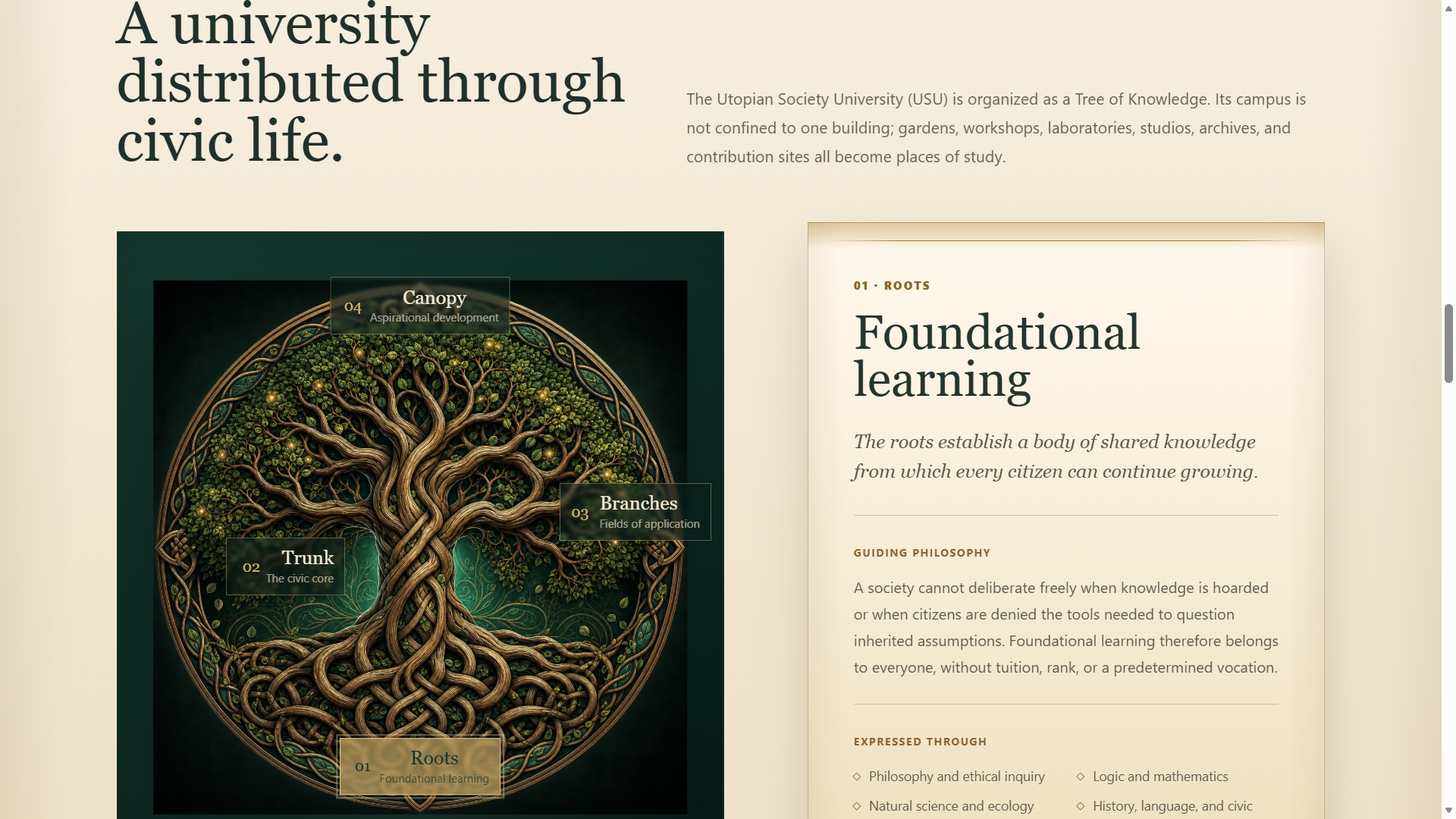
- Distinct civic interfaces for Learning, Healing, Immigration, and other public institutions.
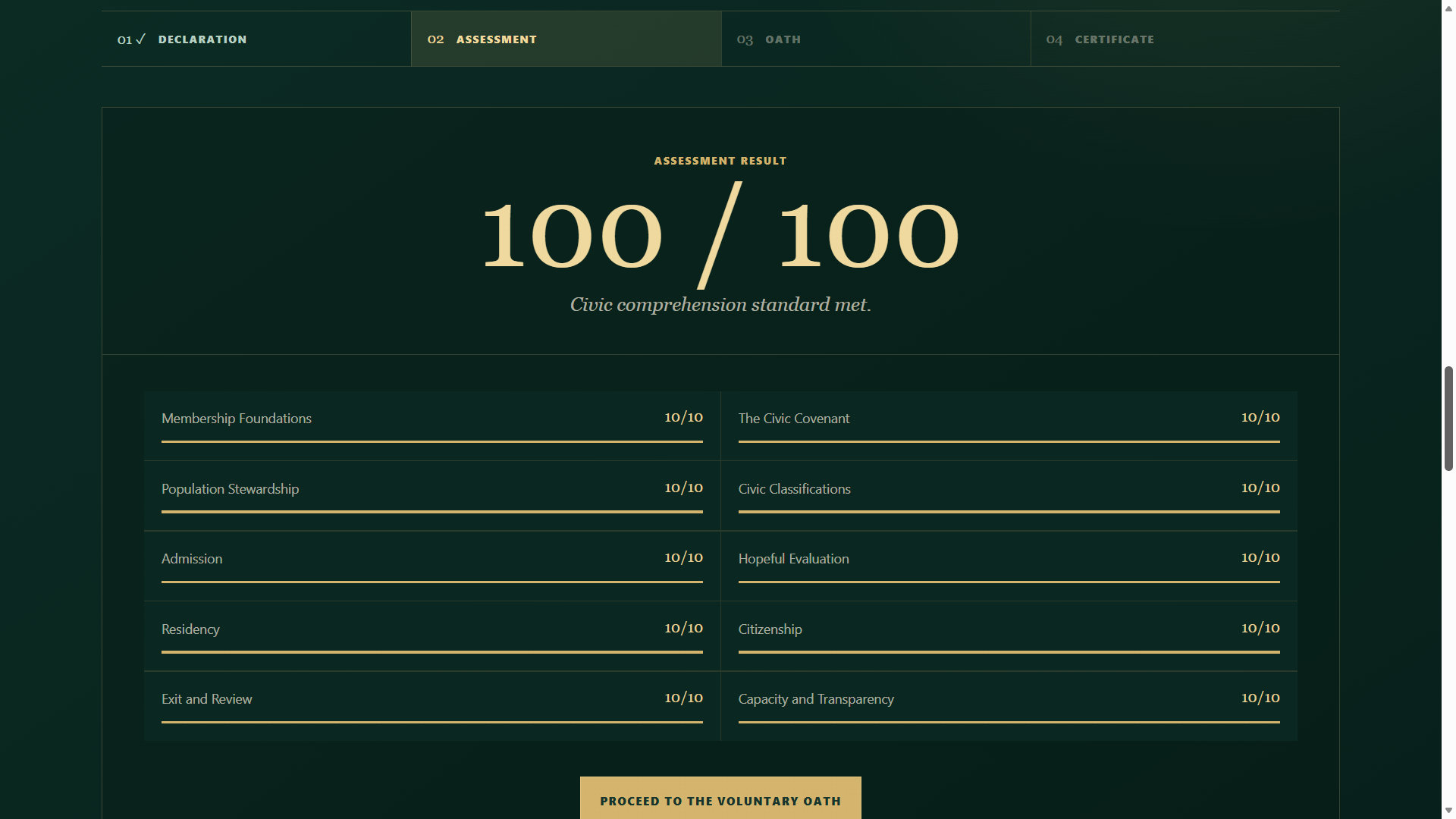
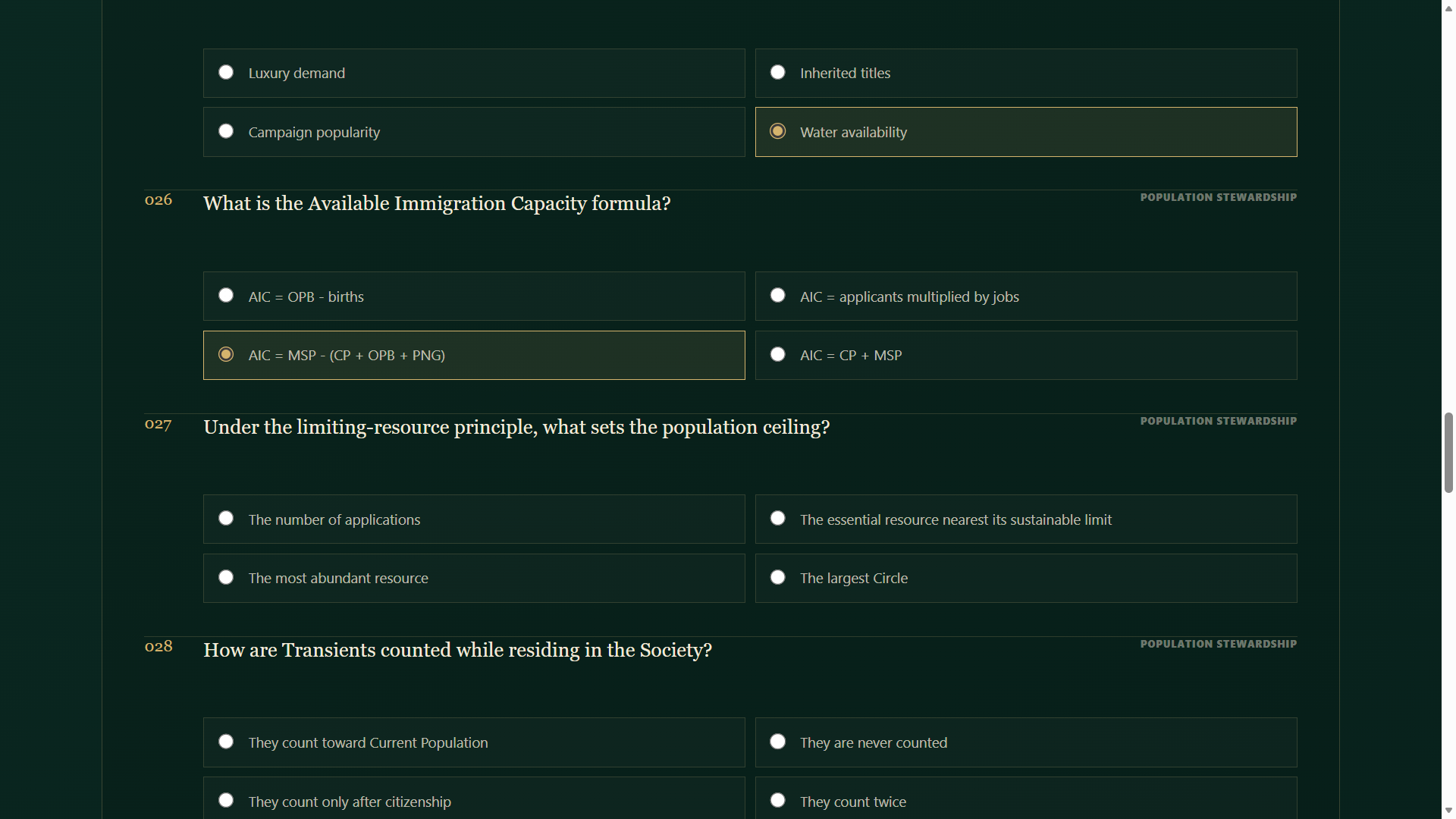
- A 100-question civic comprehension assessment.
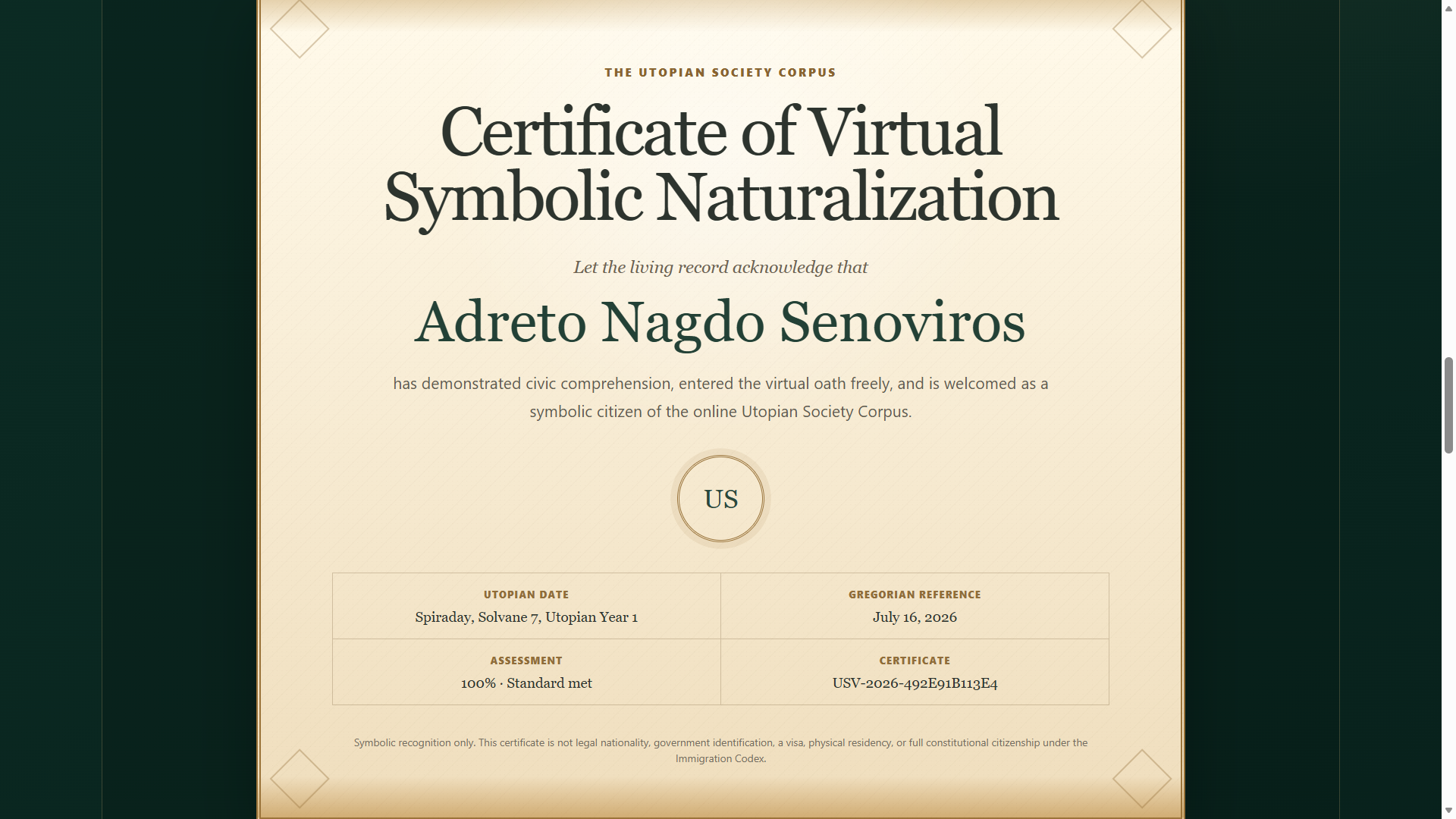
- A voluntary oath and automatically issued symbolic naturalization certificate.
- A public symbolic-citizen population record.
- A hash-linked Transparency Ledger recording civic events and changes to the platform.
- Early interfaces for proceedings, systemic review, stewardship, and public participation.
Some civic services remain clearly identified prototypes. The functioning core demonstrates how the corpus can evolve from literature into civic infrastructure without pretending that an experimental website is already a real government.
How I built it
OpenAI Codex served as my development, design, and continuity collaborator. Our work was highly iterative: I developed the corpus, philosophy, visionary direction and continuous critique with ChatGPT, while Codex helped analyze the documents, identify contradictions, develop the information architecture, write and revise code, test routes, and prepare production releases.
The public application uses Next.js, React, TypeScript, custom CSS, and interactive SVG. A Cloudflare Worker and D1 database support certificate issuance, the symbolic-citizen record, population reporting, and the Transparency Ledger.
The site also contains a custom UTC-based conversion engine for Utopian Reference Time. Existing WordPress documents and posts were imported into the new design so the original corpus could remain intact while gaining internal navigation and a consistent visual language.
What changed during Build Week
Before Build Week, the project was a WordPress alpha containing governance documents, essays, blog posts, and a simpler experimental clock.
During Build Week, it became a public beta with:
- A completely new Celtic visual identity.
- Interactive multi-level ring navigation.
- A reconciled seven-Circle constitutional topology.
- Civic landing pages designed for ordinary citizens rather than legal specialists.
- A working immigration assessment and certificate flow.
- Server-generated, uniqueness-checked certificate numbers.
- A persistent public citizen record and population counter.
- An automated, hash-linked Transparency Ledger.
- A responsive Utopian calendar.
- Imported and redesigned corpus and essay pages.
- Production deployment under the project’s existing domain.
Challenges
The most unusual challenge was making symbolism behave like software. The rings could not merely overlap; every intersection had to alternate over and under convincingly while remaining responsive, clickable, keyboard-accessible, and spacious enough for labels.
The governance texts also had to remain consistent with the interfaces built from them. Translating documents into software exposed unresolved questions about jurisdiction, authority, privacy, eligibility, restoration, and accountability. Implementation became a form of constitutional review.
Other challenges included converting Gregorian time into a coherent thirteen-month calendar, preserving long-form documents and mathematical material, and balancing radical public transparency with responsible handling of personal information.
Accomplishments
I am proud that the result no longer feels like a themed blog. It feels like an entrance into another civic framework.
I am especially proud that the portal does more than describe transparency: it practices it. The platform records its own significant changes in the same public ledger intended for future civic activity.
The project also demonstrated something I did not expect: building institutions in code can expose weaknesses in their governing language more effectively than reading those documents in isolation.
What I learned
AI collaboration is most valuable here not as automatic authorship, but as sustained interdisciplinary reasoning. Codex helped move repeatedly between constitutional language, software architecture, visual design, accessibility, databases, and deployment.
The process revealed that a civic system cannot be treated as separate pages. Every right, Circle, record, and procedure affects another part of the whole—much like the interlocking rings of the frontispiece.
What’s next
The next phase will introduce secure citizen accounts, consent and retention controls, authenticated civic submissions, fuller Circle services, public proceedings, review workflows, and stronger accessibility testing.
AI may eventually help citizens understand procedures and organize evidence, but it should not exercise unilateral civic authority. Human accountability, explainability, appeal, and consent will remain foundational.
The long-term goal is not simply to finish a website. It is to discover how much of an ethical civilization can be made legible, participatory, and accountable through software.
What’s next for The Utopian Society
The immediate work is to expand the beta into a secure civic platform: authenticated citizen accounts, consent and privacy controls, fuller Circle services, public proceedings, review pathways, and durable civic records.
The long-term aspiration is nationhood—a lawful, peaceful, and consent-based physical society governed through this constitutional structure. The Constitution, Circles, civic applications, calendar, Transparency Ledger, and public interfaces are being developed now so that the institutional architecture exists before it is ever asked to govern territory or daily communal life.
This beta does not claim to be a nation. It is an opportunity to design, test, criticize, and revise the civic operating system that a future nation would need—and to ensure that accountability is foundational rather than added after power already exists.
Built With
- api
- chatgpt
- cloudflare
- codex
- d1
- next.js
- react
- rest
- sites
- svg
- typescript
- vite
- wordpress
- workers
- wrangler

Log in or sign up for Devpost to join the conversation.