URL Shortener — Full Stack Web Application
Overview
This project is a full-stack URL shortening application designed to convert long URLs into short, shareable links. It features a modern React frontend, a secure Node.js backend, and a MongoDB database. The system ensures fast performance, scalability, and an intuitive user experience while demonstrating the core principles of full-stack web development.
Inspiration
Sharing lengthy URLs often looks unprofessional and cluttered. Inspired by popular platforms like Bitly and TinyURL, I created this project to understand how link-shortening systems work internally. The goal was to learn how frontend design, backend logic, and database management integrate to deliver a seamless web experience.
Key Features
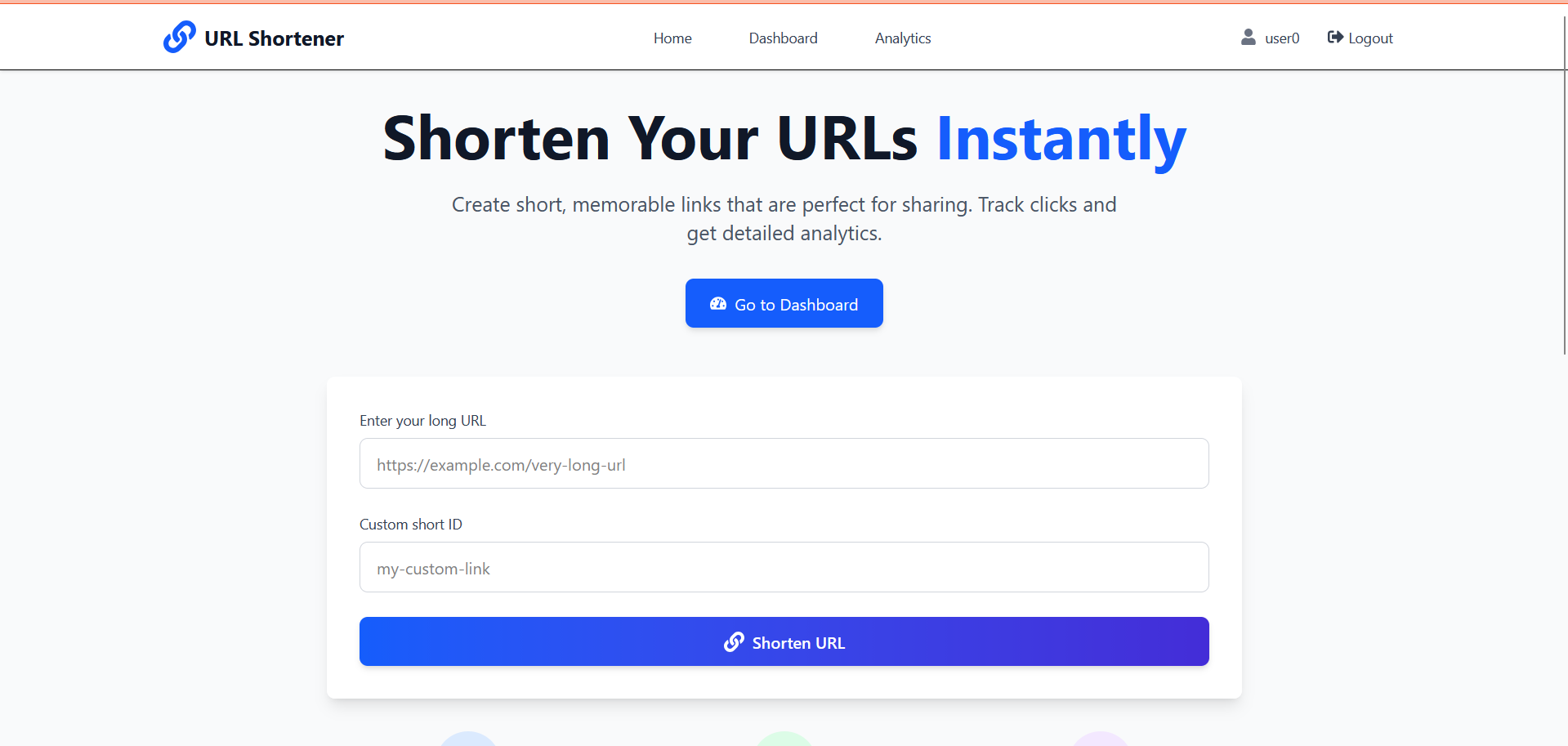
- Instant URL shortening with unique short codes
- Custom aliases for personalized short links
- User authentication and secure access using JWT
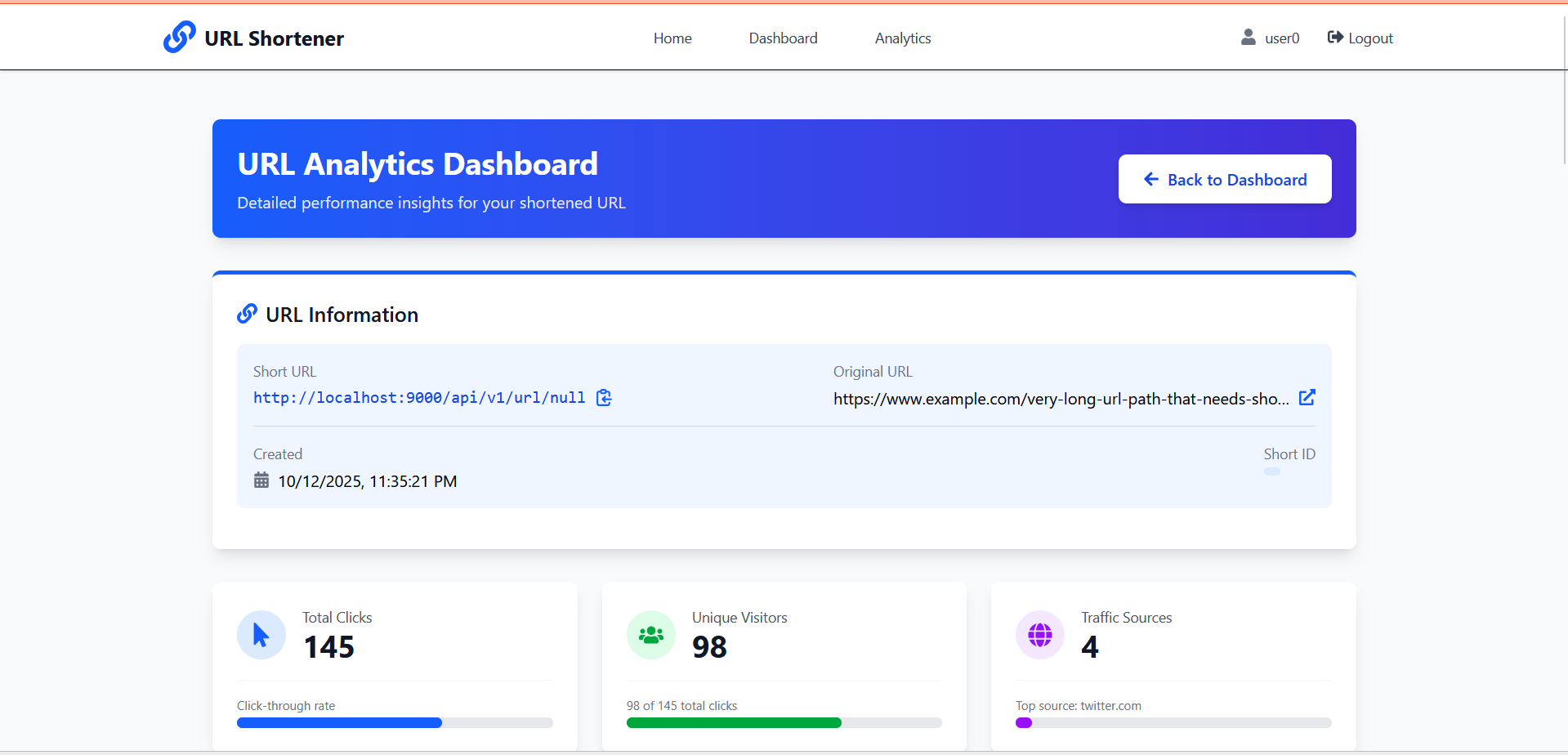
- Link analytics to track visits and usage
- Fully responsive design for mobile and desktop
- Public API for external integration
Technology Stack
- Frontend: React.js, Tailwind CSS, Axios, React Router
- Backend: Node.js, Express.js, MongoDB, Mongoose
- Security: JWT, bcrypt, Helmet.js, Express Rate Limit
- Tools: Postman, Git, Netlify, Render
Development Summary
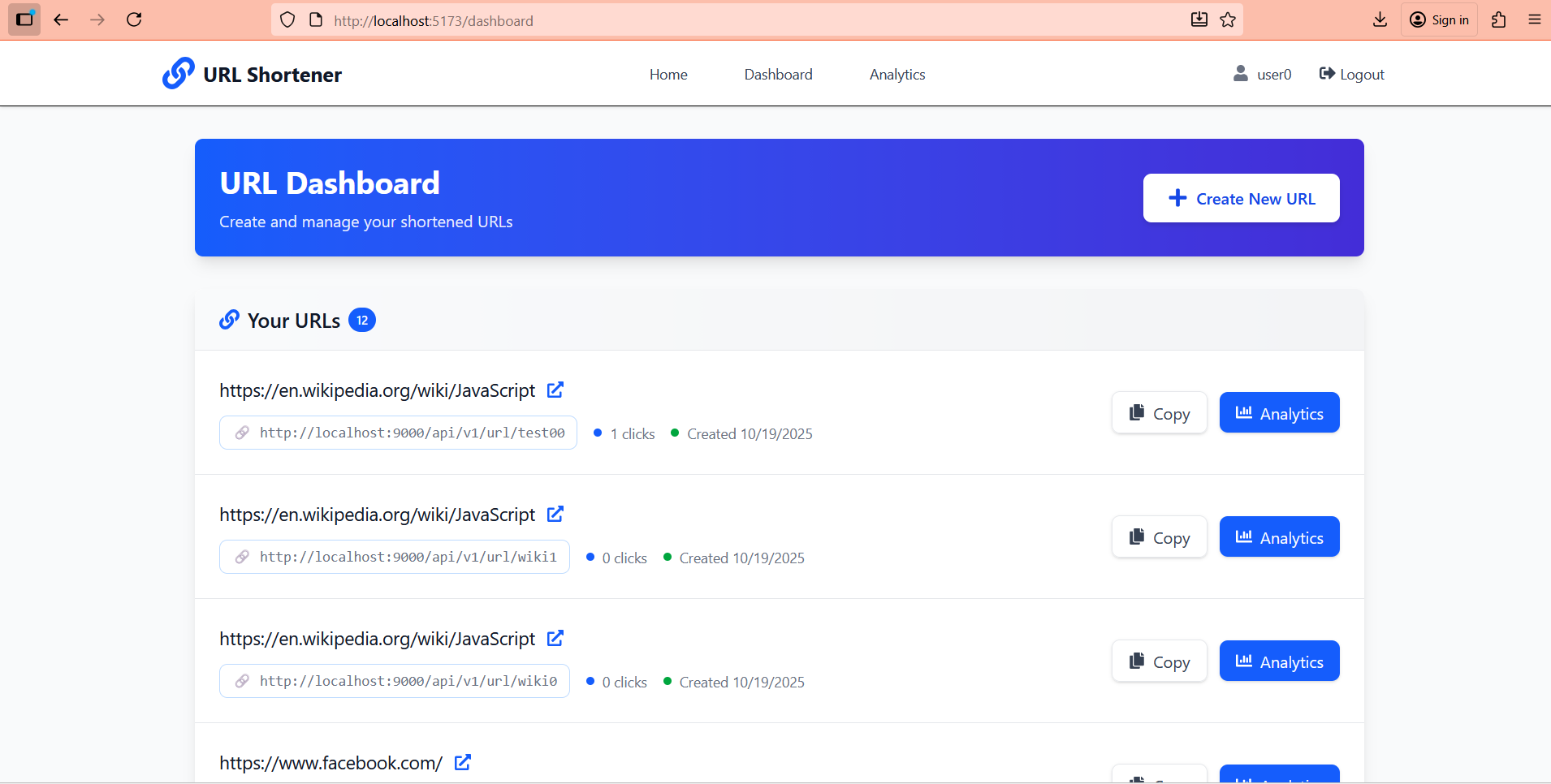
The application works by generating a unique short code for every URL entered by the user. The backend stores both the original and shortened URLs in MongoDB. When the short URL is accessed, the system redirects the user to the original link.
Base62 encoding logic is used to generate compact and unique short codes from database IDs, ensuring billions of unique combinations.
The frontend communicates with the backend through RESTful APIs. Axios handles requests, and the UI dynamically updates to display shortened links and analytics. Authentication is implemented using JSON Web Tokens to provide secure access to user dashboards.
Challenges
Key challenges included handling CORS issues, configuring MongoDB Atlas connections, and ensuring unique code generation. Deployment setup between the frontend and backend also required careful environment configuration.
Conclusion
This project strengthened my understanding of full-stack web development, API integration, and secure authentication. It was a practical learning experience in connecting frontend and backend systems while focusing on usability, security, and scalability.


Log in or sign up for Devpost to join the conversation.