-
-
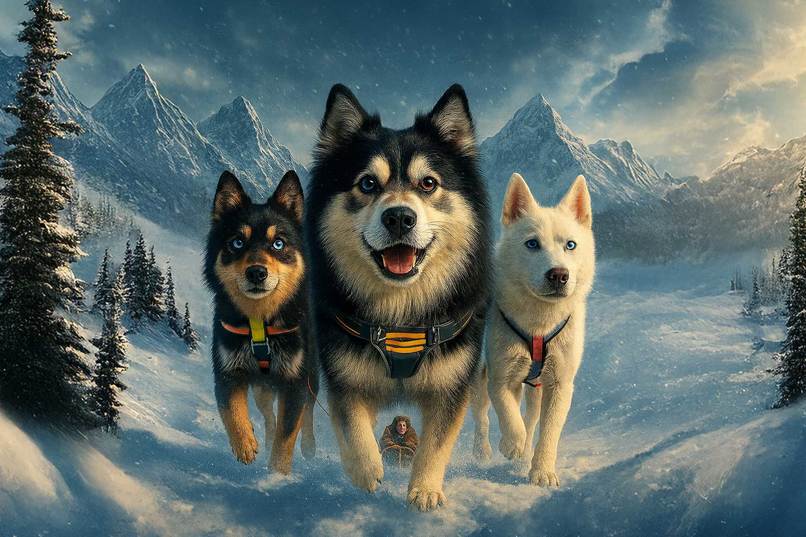
The UnderDogs Movie Cover
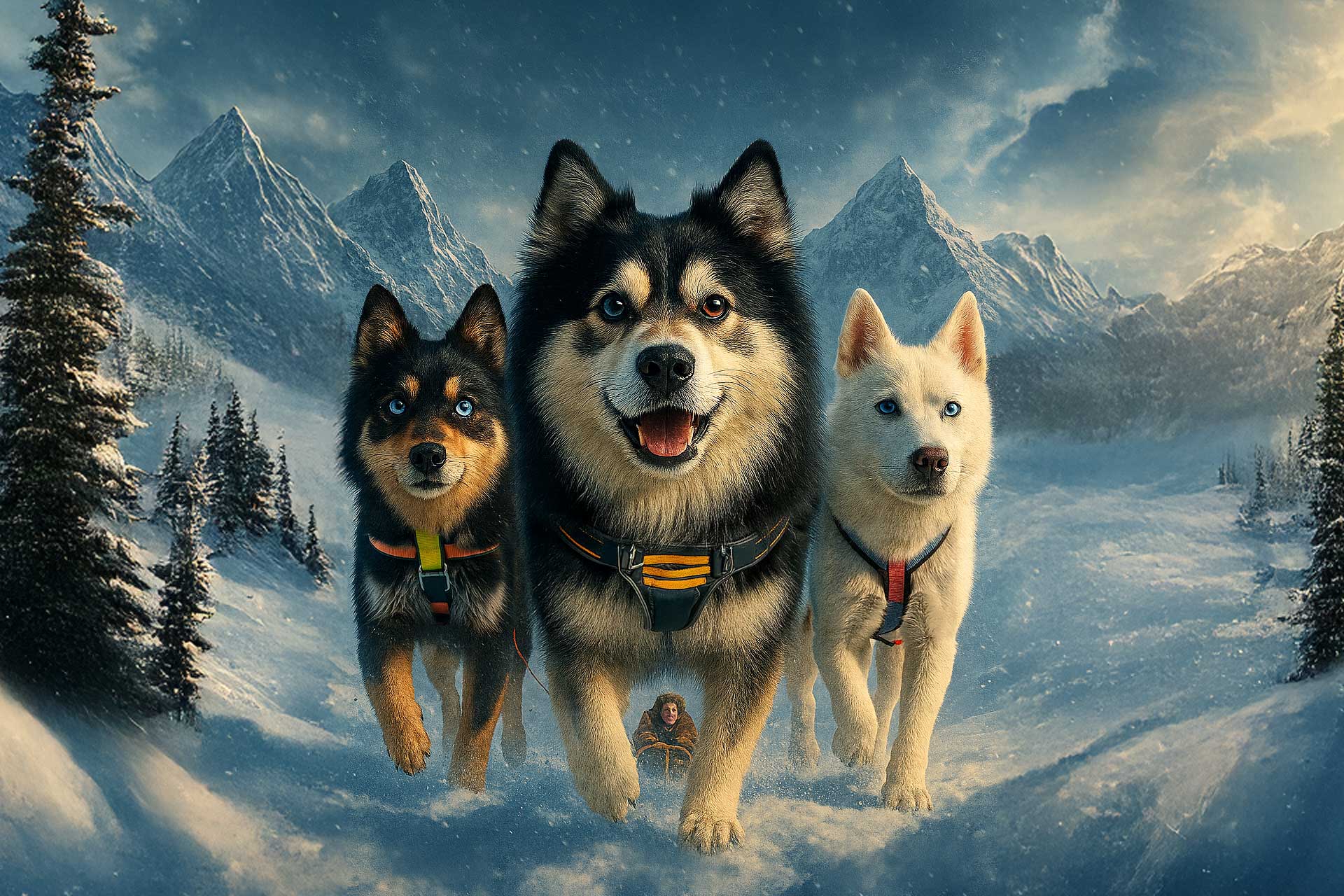
Inspiration
This whole film began with a single photo — my three Pomskies, Odin, Sofi, and Lotus — and an old picture of my younger self, who ultimately became the basis for Niko. He’s the kind of kid who hasn’t learned the word “no” yet.
I’ve always been drawn to sled-dog stories, especially the ones where the smallest, least-likely heroes end up carrying something huge on their backs. Growing up, films about Alaska left a deep impression on me: the landscape, the danger, the bond between mushers and their teams.
One day, watching these Pomskies tear across my apartment, the idea hit me:
What if a tiny team of Pomskies entered a legendary Alaskan race they weren’t built for? What if the bigger husky teams laughed at them for being small “half-breeds”? And what if a kid believed in them anyway?
That became the emotional center of The UnderDogs.
What it does
The UnderDogs is a short film about a boy and his three Pomskies attempting the Northern Lights Race — a brutal 500-mile sled-dog competition dominated by massive husky teams. It blends adventure, action, and survival with an emotional family story.
The film features:
Large-scale AI cinematics, a massive avalanche sequence, character-driven moments between Niko, his grandfather and his dogs, an Alaskan world built to feel alive, textured, and real.
While the tools are AI, the storytelling is human. The goal was to create an experience that feels like a real film with a consistent visual identity — not a patchwork of random models.
How we built it
I treated this like a full production pipeline, just augmented with AI tools.
Script + Storyboarding
I wrote the script myself and then broke it into JSON shot plans. This gave me tight control over: motion, framing, continuity, emotional beats.
Some improvisation helps me go from one scene to another, kind of like vibe-coding but for film.
Character & Dog Models
I used real photos of Odin, Sofi, and Lotus to maintain consistency. AI loves to “evolve” characters, so I had to lock down: fur patterns, eye colors, their sizes relative to Niko, personality traits in their posture. Lotus, the tiny white one, kept turning into a wolf — so that took extra work.
Environments
To recreate Alaska, I used:
RunwayML for dynamic action and avalanche shots. Veo 3 for wide tracking shots and aerials. Midjourney for stills and concept art. Suno for music, atmospheric tones, and heartbeat cues. ElevenLabs for narration and sound design elements. The avalanche sequence alone took dozens of attempts to get right.
Visual Style & Cinematics
Each AI model has its own “visual DNA,” so I unified the film with:
custom LUTs, color grading, snow atmospheric overlays, consistent lighting rules, framing templates
This created a semi-cohesive look across tools.
Sound & Atmosphere
ElevenLabs was used to create the narration and sound effects. I composed a melody on piano and fed it into Suno for orchestral builds. The soundscape includes: heartbeats, wind, avalanche bass, breathing, sled runner friction, again created with eleven labs.
I have 6 different audio tracks designed to feel physical and immersive.
Editing & Compositing
The entire film was stitched together in Premiere using real editing workflows — color grading, timing, motion, and transitions.
Challenges we ran into
Character Consistency
AI wanted to morph the dogs into wolves, huskies, foxes, or brand-new creatures. Keeping Odin’s heterochromia and Sofi’s blue eyes stable across scenes required constant reinforcement.
Avalanche Scale
Getting a massive avalanche to feel real was surprisingly complicated. I had to balance: realistic powder physics, scale, sun reflection, depth, debris behavior
It needed to feel huge but still readable on screen.
Emotional Subtlety
A lot of the film relies on emotion without dialogue — breath, eye movement, posture, silence. AI doesn’t “naturally” do subtle emotion, so each moment had to be planned.
Tool Mismatch
Every model produces its own look. Unifying them into one film required:
masking, blending modes, color stability, consistent camera language. Eventually the pieces aligned as close as I could get them.
Accomplishments that we're proud of
Creating a fully cohesive short film with an almost unified visual style across multiple AI tools.
Achieving believable avalanche physics and large-scale action. Eat your heart out Michael Bay.
Maintaining almost consistent designs for three dogs across multiple of shots.
Developing JSON-based shot structures that feel like real film direction.
Crafting emotional scenes that feel human, not “generated.”
Building a world that feels cinematic and lived-in.
Proving that small stories with small dogs can still feel epic.
What we learned
This project taught me more about filmmaking than I expected.
AI can assist with visuals, but the story still has to come from a human.
You need constraints, rules, and structure — otherwise the style drifts.
Subtle details (eyes, breath, frost, silence) carry more weight than spectacle.
Cohesion is everything — without it, the film falls apart.
I ended up “vibe-coding” the film — improvising scene by scene, then shaping it into something cohesive.
The more specific the direction, the stronger the output, but also a focus on probabilistic outcomes than deterministic ones helps carry the workflow faster.
It also reminded me why underdog stories matter.
What’s next for The UnderDogs
I’d like to take this further.
The dream is to raise a small budget, find sponsors, or run a crowdfunded campaign to fly Odin, Sofi, and Lotus to Alaska and film a live-action version.
The goal: A hybrid film that mixes real locations and real dogs with AI-enhanced cinematic scenes.
Future plans include:
practical sled footage shot on location
hybrid AI + real snow environments
extended avalanche and race sequences
expanding the story into a longer short or featurette
a behind-the-scenes “making of UnderDogs”
possibly entering film festivals beyond this competition
This started as an experiment. Now it feels like the beginning of something much bigger.
Built With
- adobe-creative-suite
- chatgpt
- elevenlabs
- midjourney
- runwayml
- suno
- veo3


Log in or sign up for Devpost to join the conversation.