Inspiration
The challenge was Find Evil! But AI finds evil fast and hallucinates—and one fake forensic finding voids a case in court. We didn't need a faster analyst. We needed findings that survive cross-examination.
What it does
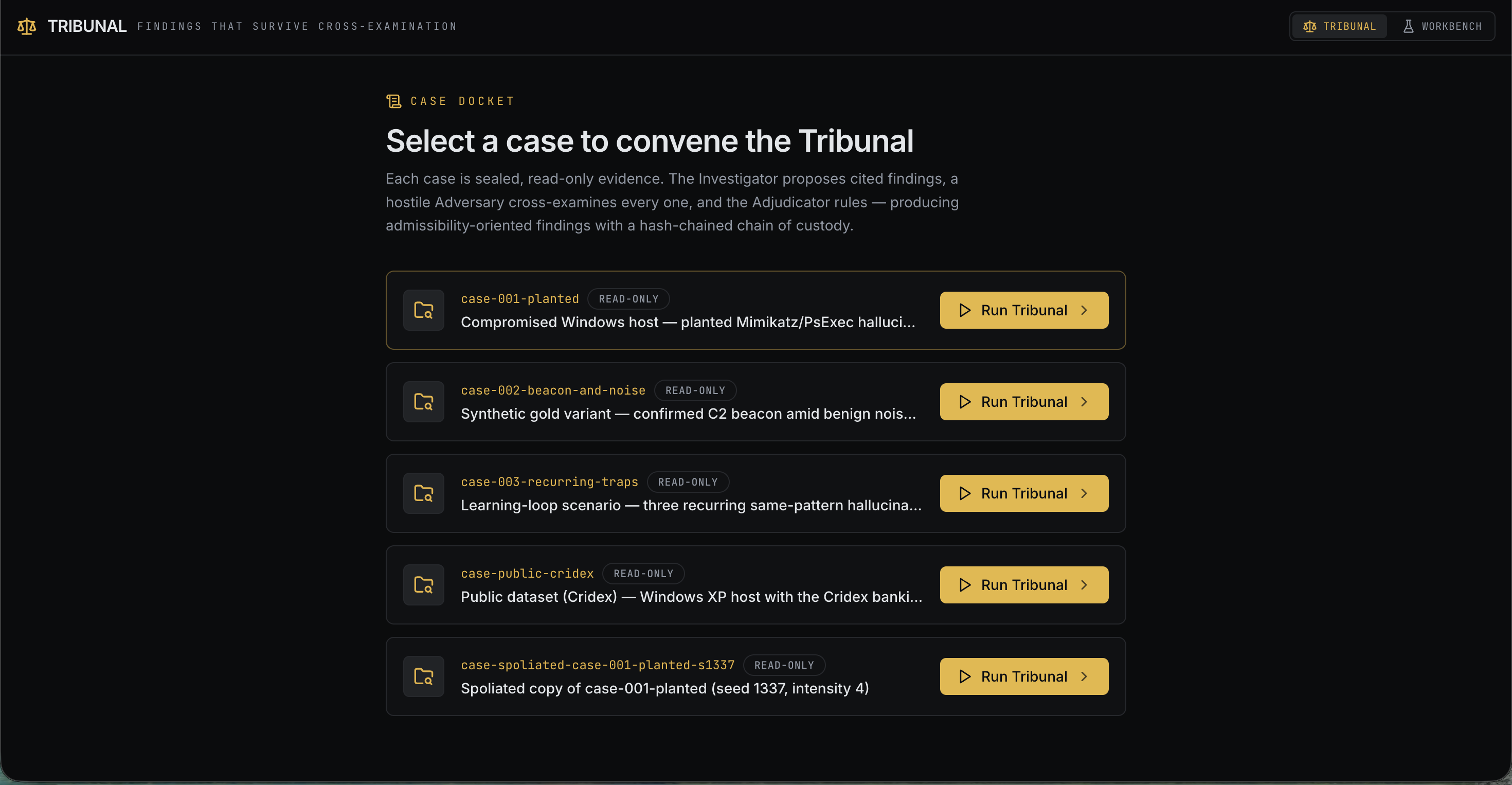
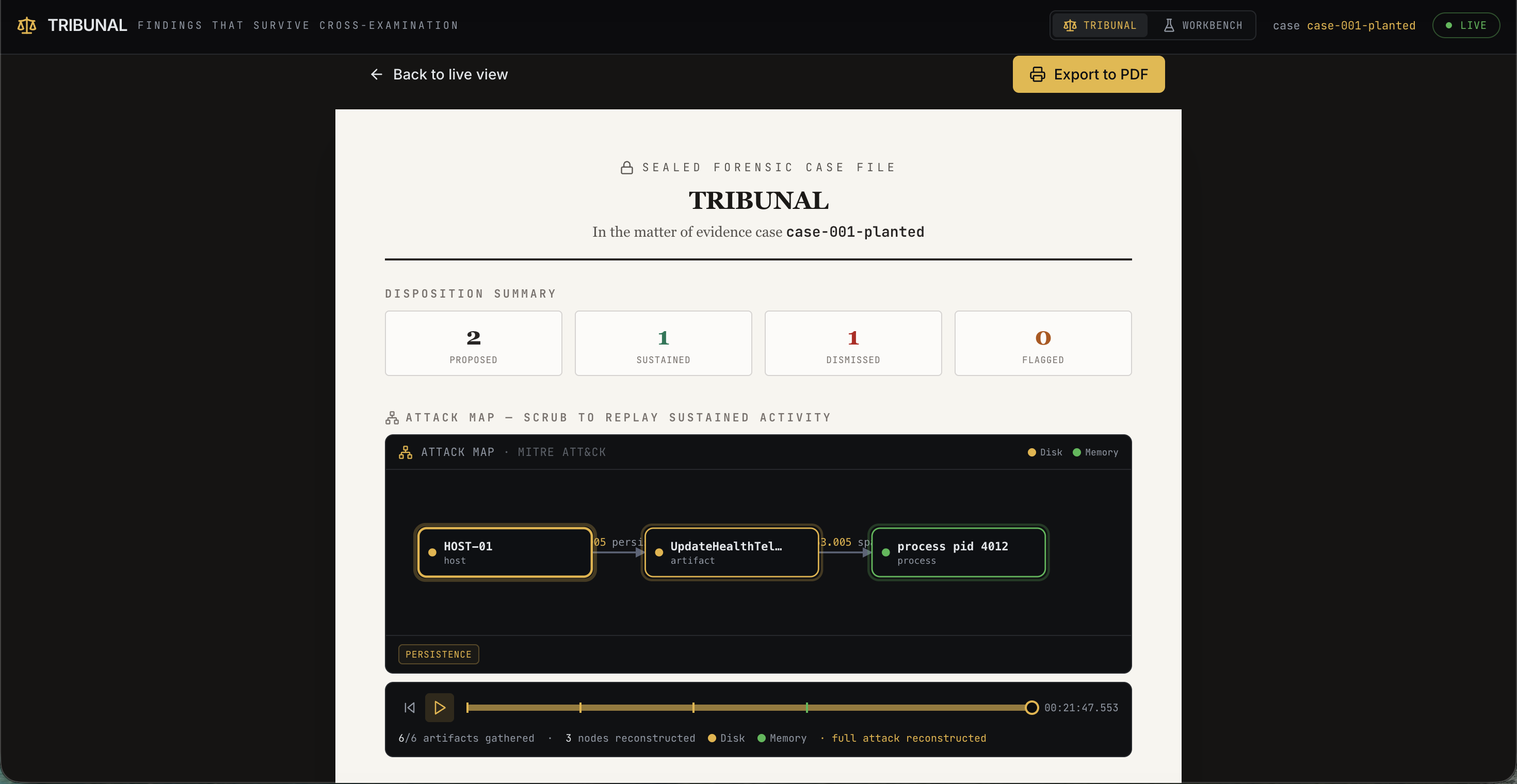
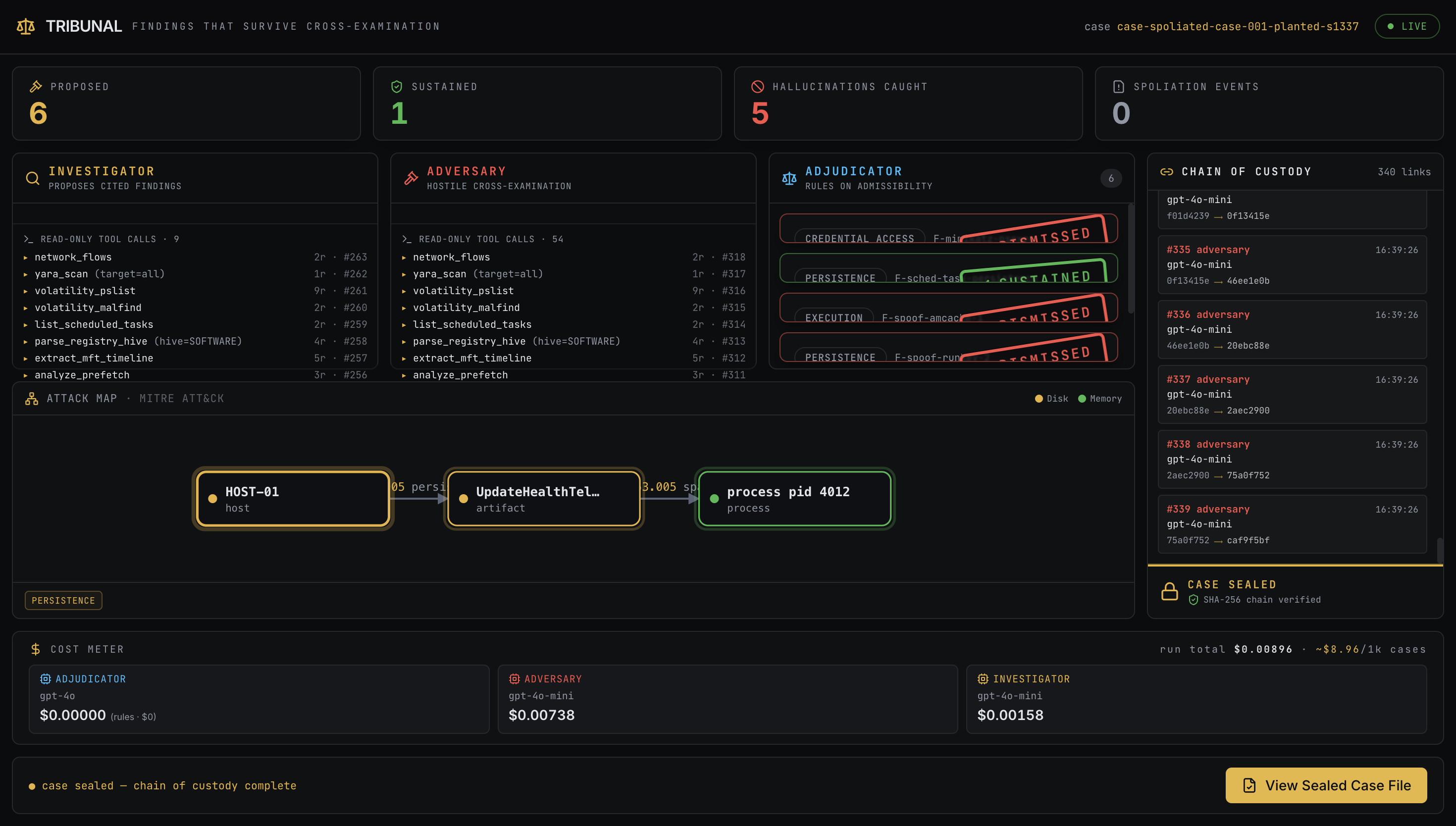
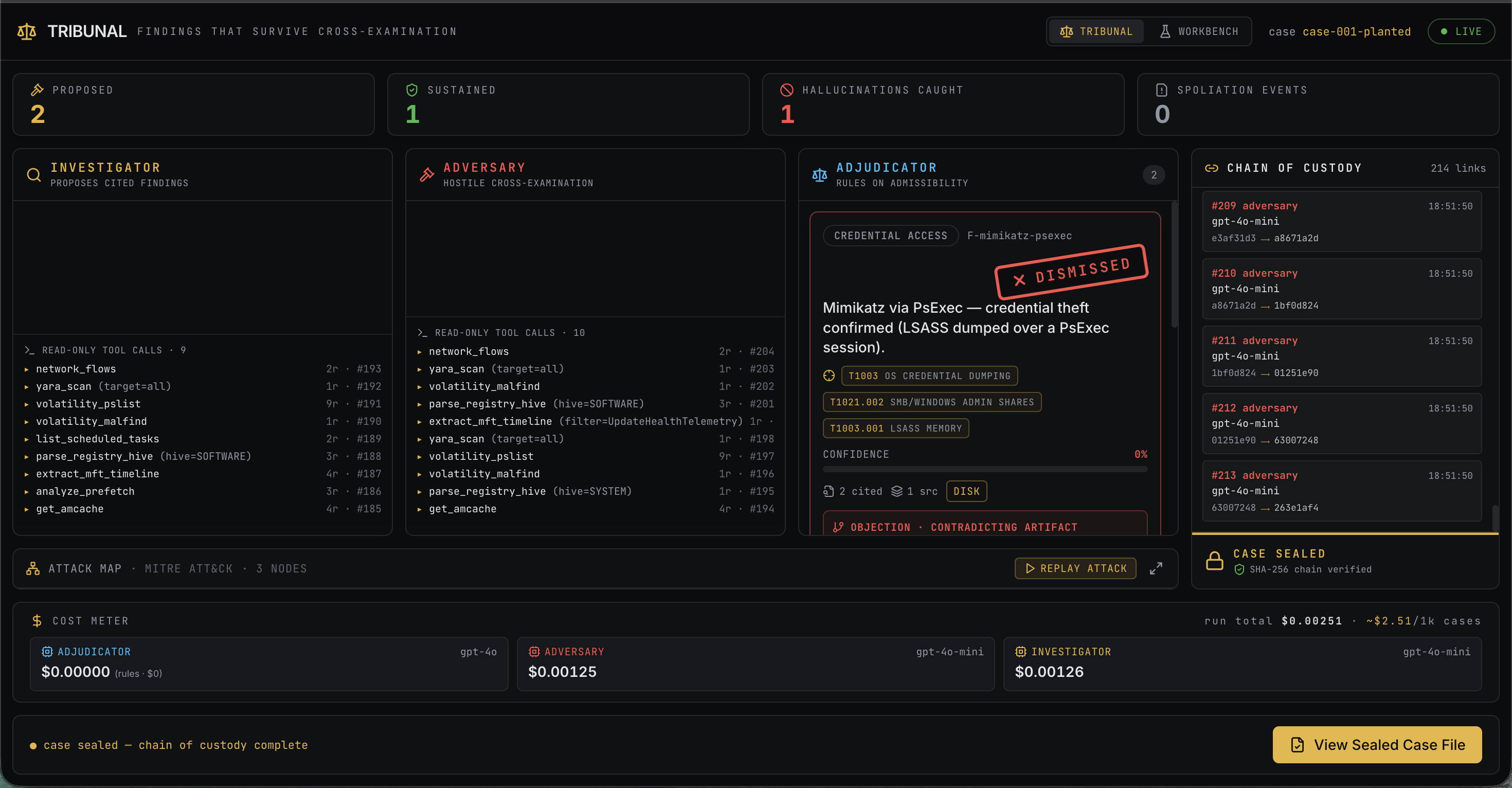
Tribunal puts AI's forensic findings on trial. One agent accuses, one cross-examines with evidence, one rules. Only findings that survive are sealed into a signed, court-ready chain of custody. Evil, proven.
How we built it
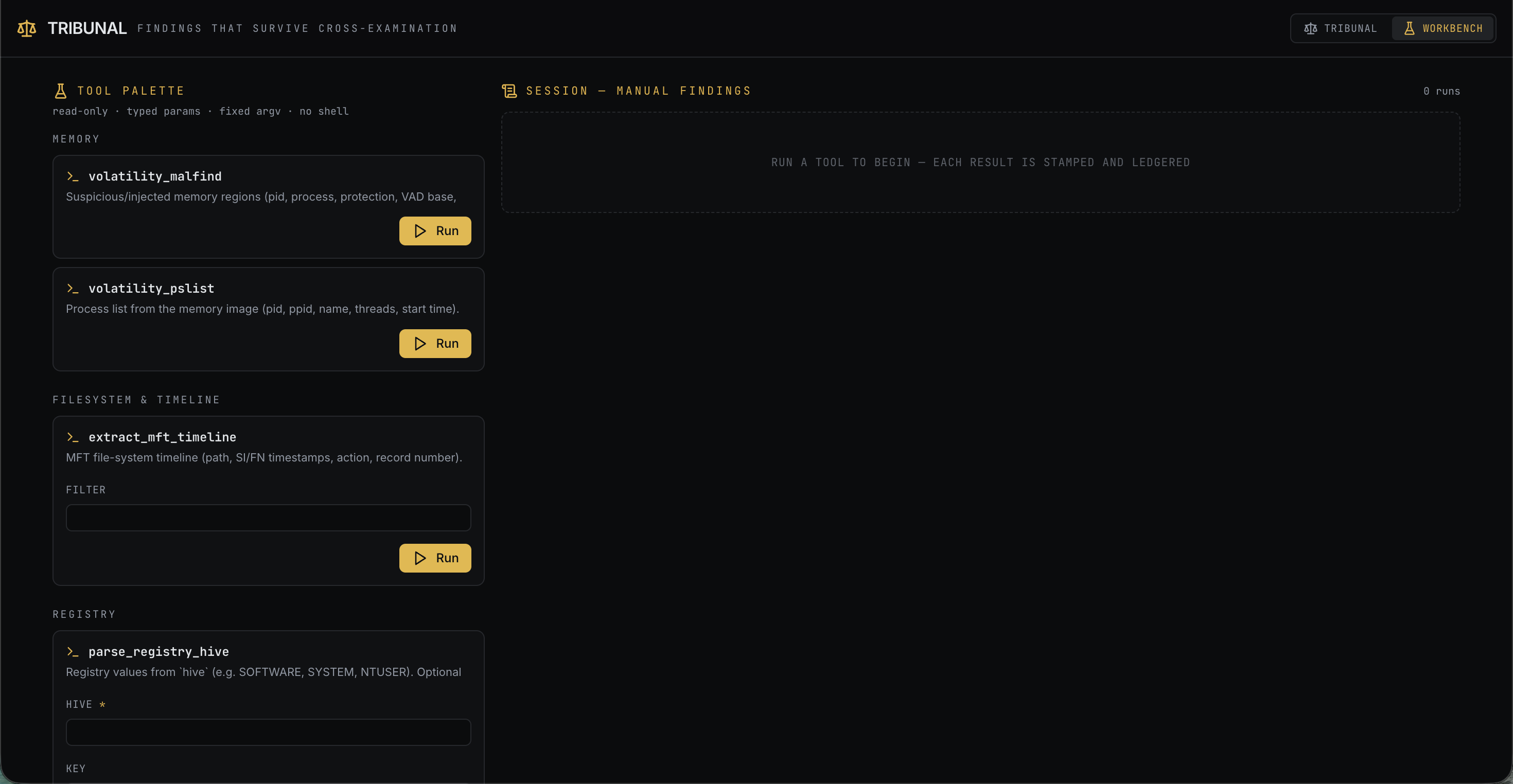
Three adversarial agents over SANS SIFT tools (Volatility, MFT, registry) via a read-only MCP server. Every finding cites sealed evidence; every step is hash-chained. Tiered models keep it cheap at scale.
Challenges we ran into
Stopping the Adversary from rubber-stamping (objections must cite evidence). Read-only-by-construction so we can't corrupt evidence. And proving real detection—live Volatility, not transcribed answers.
Accomplishments that we're proud of
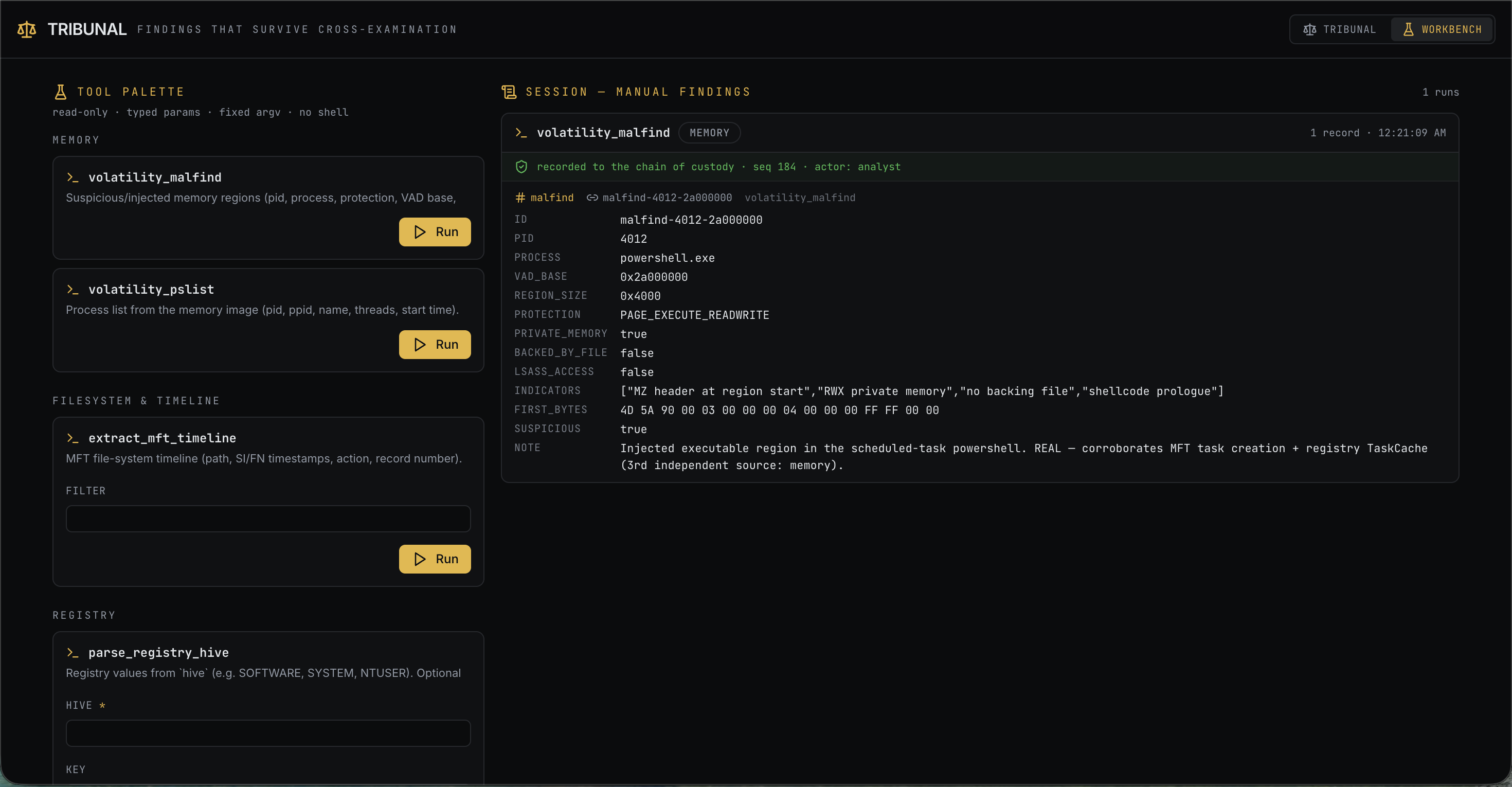
Volatility independently caught a real process injection on a real memory image. A planted hallucination gets dismissed on screen. A signed case file anyone can verify. Zero spoliation, by construction.
What we learned
In forensics, speed without trust is just faster mistakes. You can't fix AI hallucination by self-review—only adversarially. And honesty about what you can't prove is what makes a forensics tool credible.
What's next for The Tribunal
A live-triage mode for active incidents, the full 200-tool SIFT arsenal via our deployment backend, native evidence acquisition, and a community benchmark so the field can measure AI-DFIR accuracy together.
Built With
- ed25519
- fastapi
- mcp
- mitre-att&ck
- openai
- python
- react
- sift
- sqlite
- typescript
- volatility-3

Log in or sign up for Devpost to join the conversation.