-
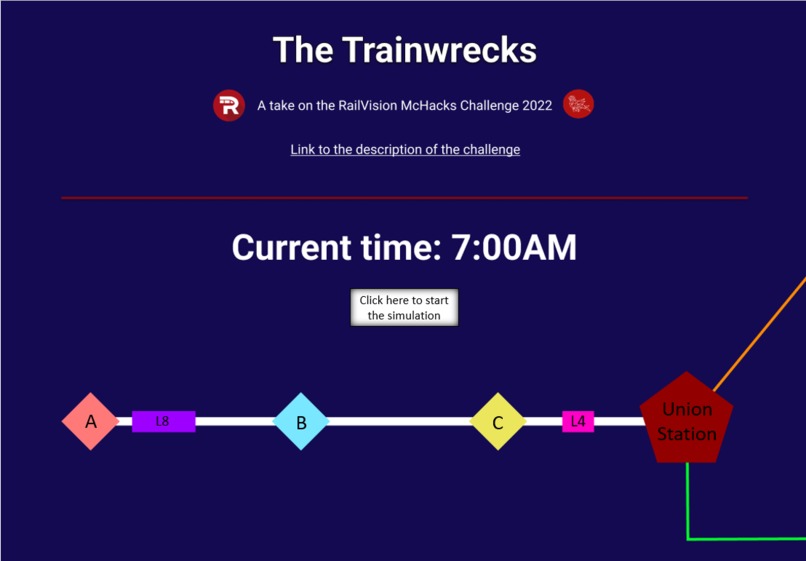
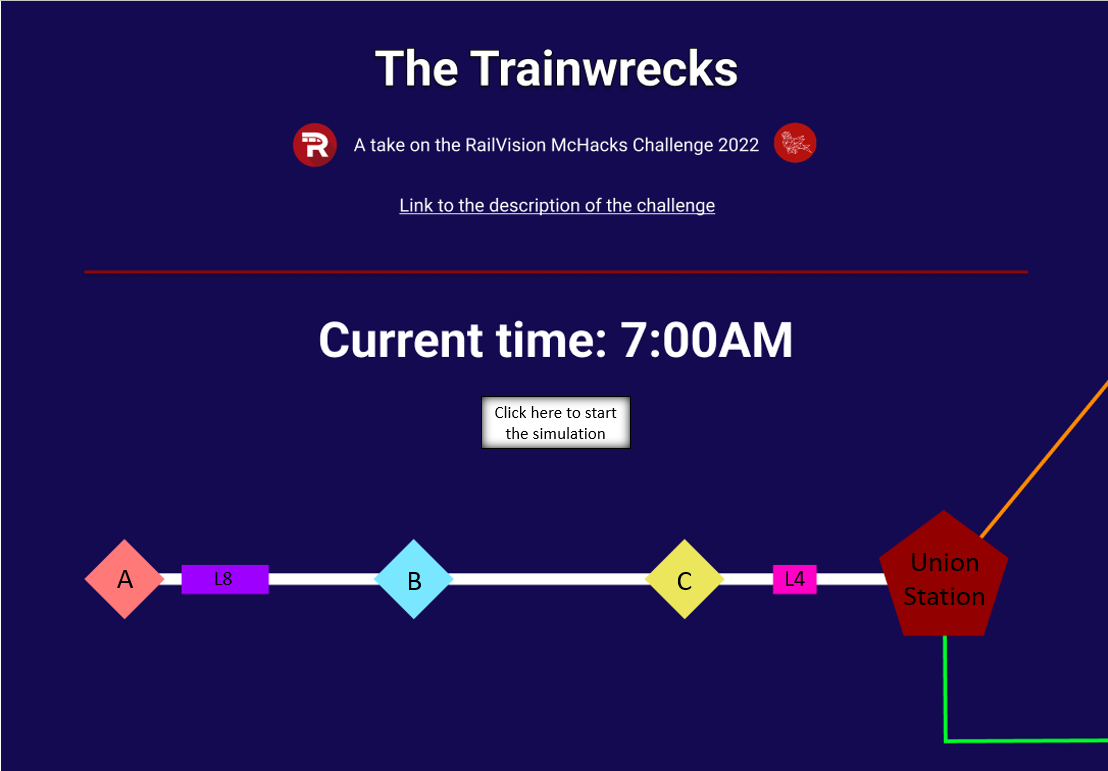
A look at how our visual representation would look like on a website
Inspiration
We were set on taking the RailVision McHacks challenge: it is something that is outside our comfort zone but that is still feasible for the entire team to do within the timeframe we have.
How we built it
The backend was built using Java, and if we had more time to work on it, the frontend would have used the typical HTML, CSS and Javascript languages for web development, plus the React.js framework.
Challenges we ran into
Since the team isn't very familiar with frontend development that requires animation, let alone being familiar with the React framework, our initial idea of building a website that showcases the trains moving between the stations with more animations from passengers was not feasible with the limited timeframe we had.
Accomplishments that we're proud of
We are proud that we have completed our first hackathon and that we've stuck it out until the very end despite the difficulty of the online setting. Even if we wished we had more time, we're also proud that we've managed to release an algorithm that works and have a visual representation that can show off our process!
What we learned
We learned more about Genetic and Greedy Algorithms that involve activity selection problem solving by doing more research online and learning concepts outside of the scope of the courses we took in previous semesters about these algorithms. We also learned a little more about the different frontend development tools that could have been used to tackle on the problem, such as React.js and Flutter, but also on how important UI design is to any users visiting a website, with the help of the workshop on Figma!
What's next for The Trainwrecks
We shall see if the algorithm can still be improved to decrease even further the average passenger wait time, then after the hackathon, we plan on finishing what we initially started: build an animated website that showcases the process of passengers and trains moving between stations!


Log in or sign up for Devpost to join the conversation.