-
-
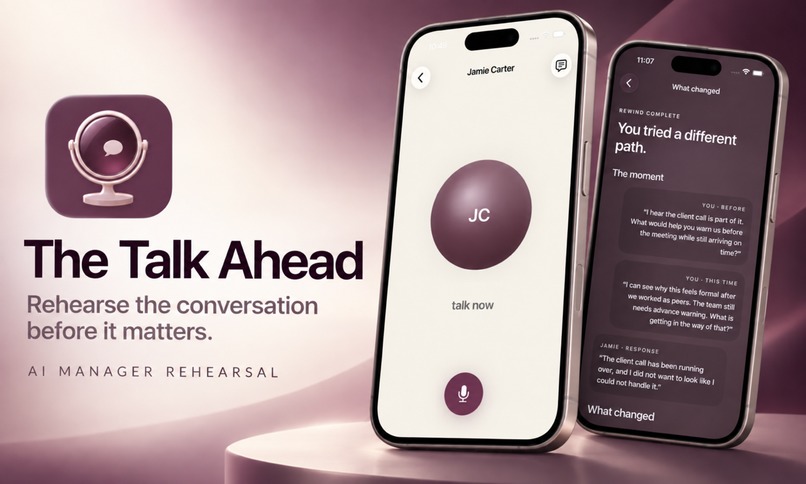
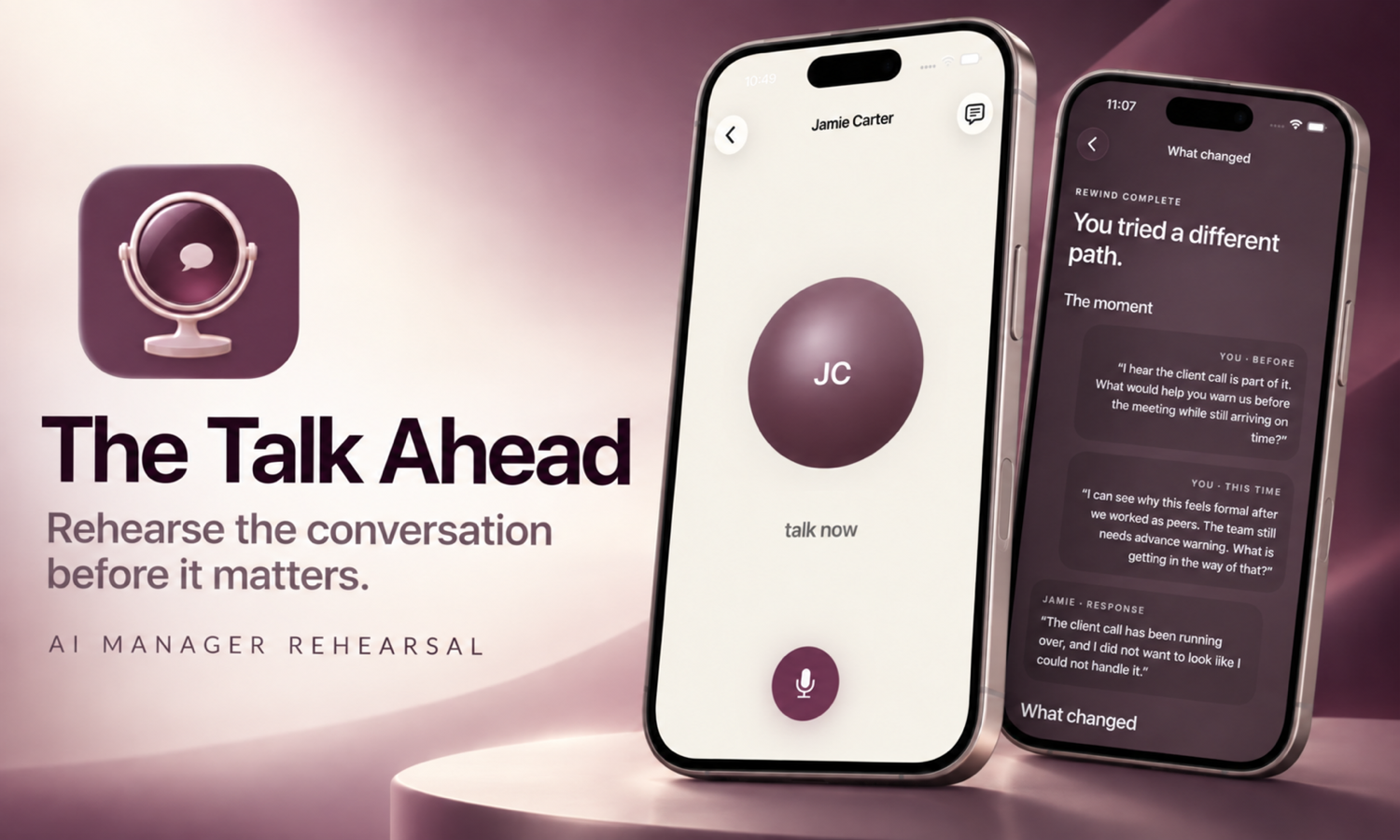
Hero
-

App Icon
-
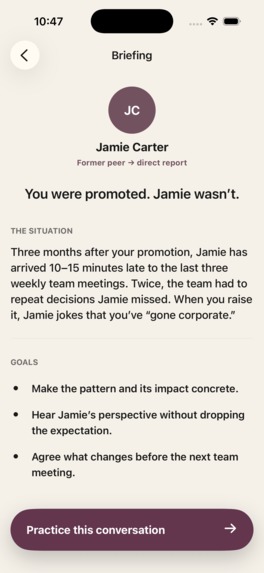
Scenario briefing
-
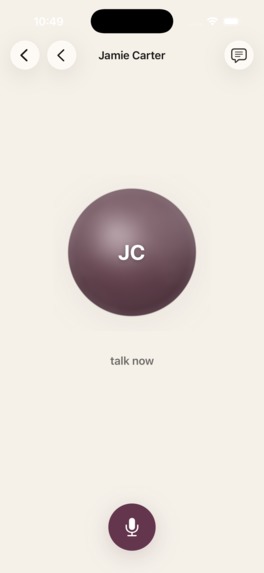
Live AI rehearsal
-
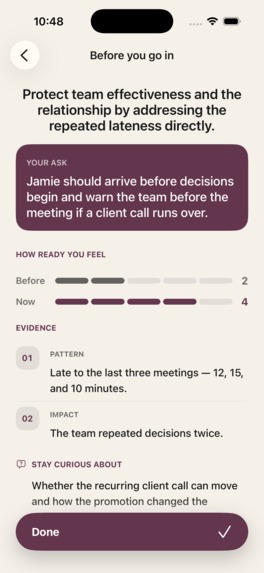
Real-world conversation plan
-
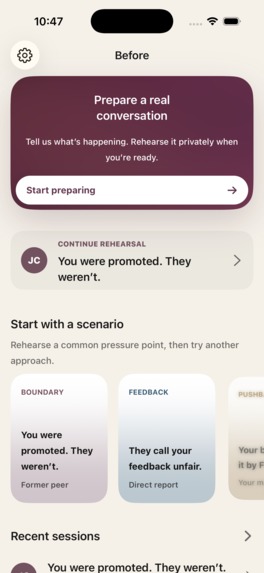
Home / product overview
-
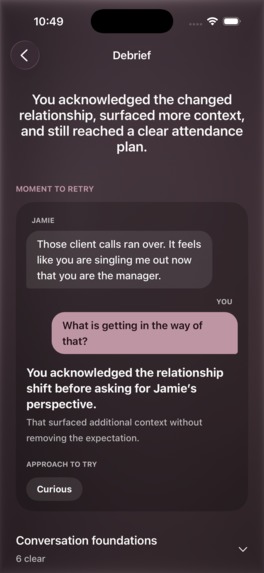
Personalized coaching
-
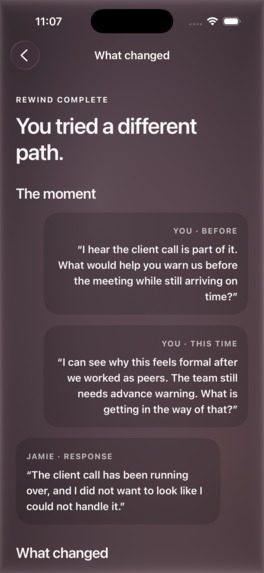
Rewind and branch comparison

Inspiration
I have never been a manager, but I know what it feels like to prepare for a high-stakes conversation without knowing how it will unfold. Through job applications, interviews, and other professional situations, I kept running into the same problem: you can prepare your points, read advice, or rehearse a script—but you cannot truly practise the human interaction.
Before generative AI, realistic practice was difficult to create. Another person had to role-play with you, and even then, the situation could feel artificial. I started wondering whether AI could provide a private space where someone could practise an uncomfortable conversation, encounter realistic resistance, learn from what they actually said, and try again.
That idea became The Talk Ahead.
The project became more personal when my dad tested it. He owns a taxi company and manages employees, and he told me how difficult it can be to communicate a problem professionally while still getting the message across. After using the app, he said it helped him keep his footing during the conversation. That captured exactly what I wanted to build—not a tool that writes the perfect script, but one that helps people remain clear and grounded when a real conversation becomes difficult.
What it does
The Talk Ahead is a private, voice-first rehearsal room for new managers preparing for difficult workplace conversations.
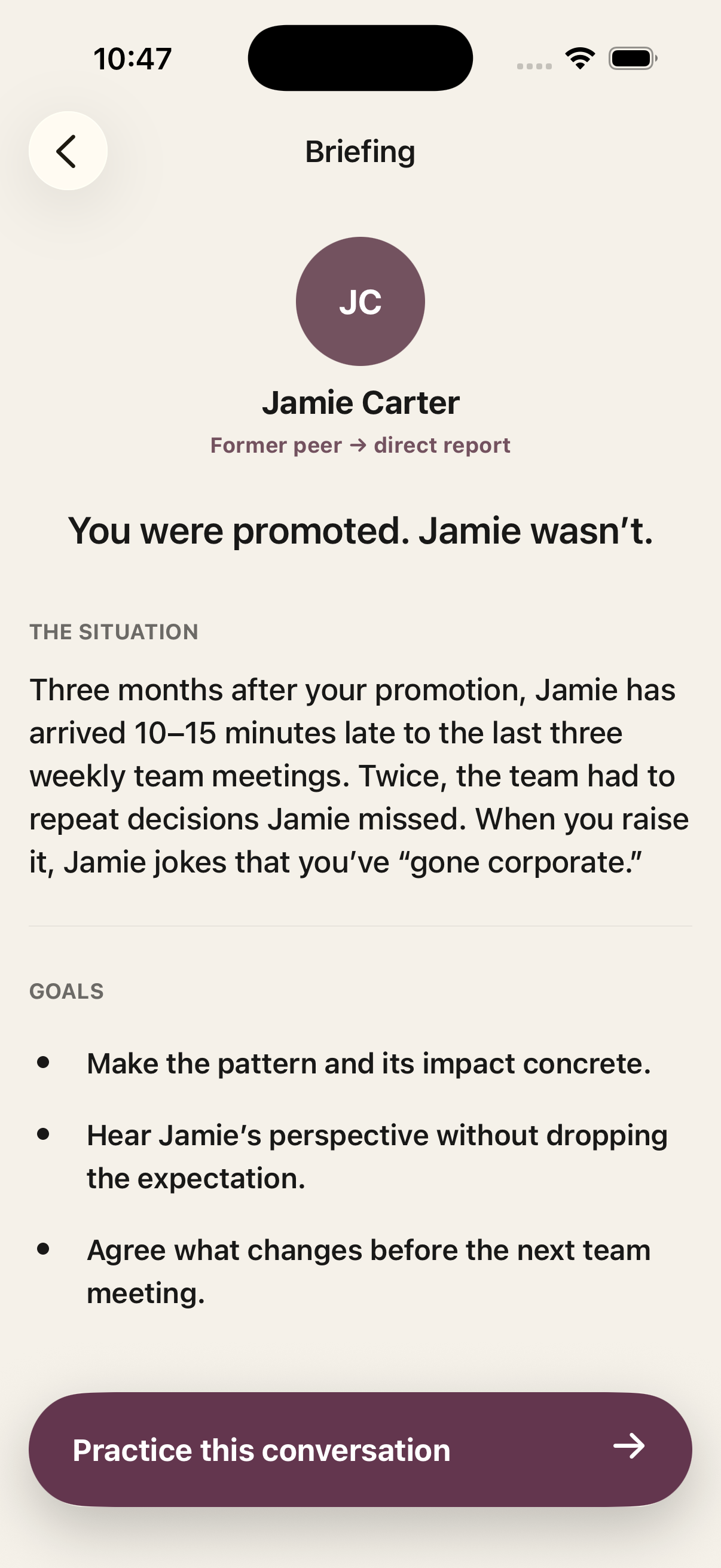
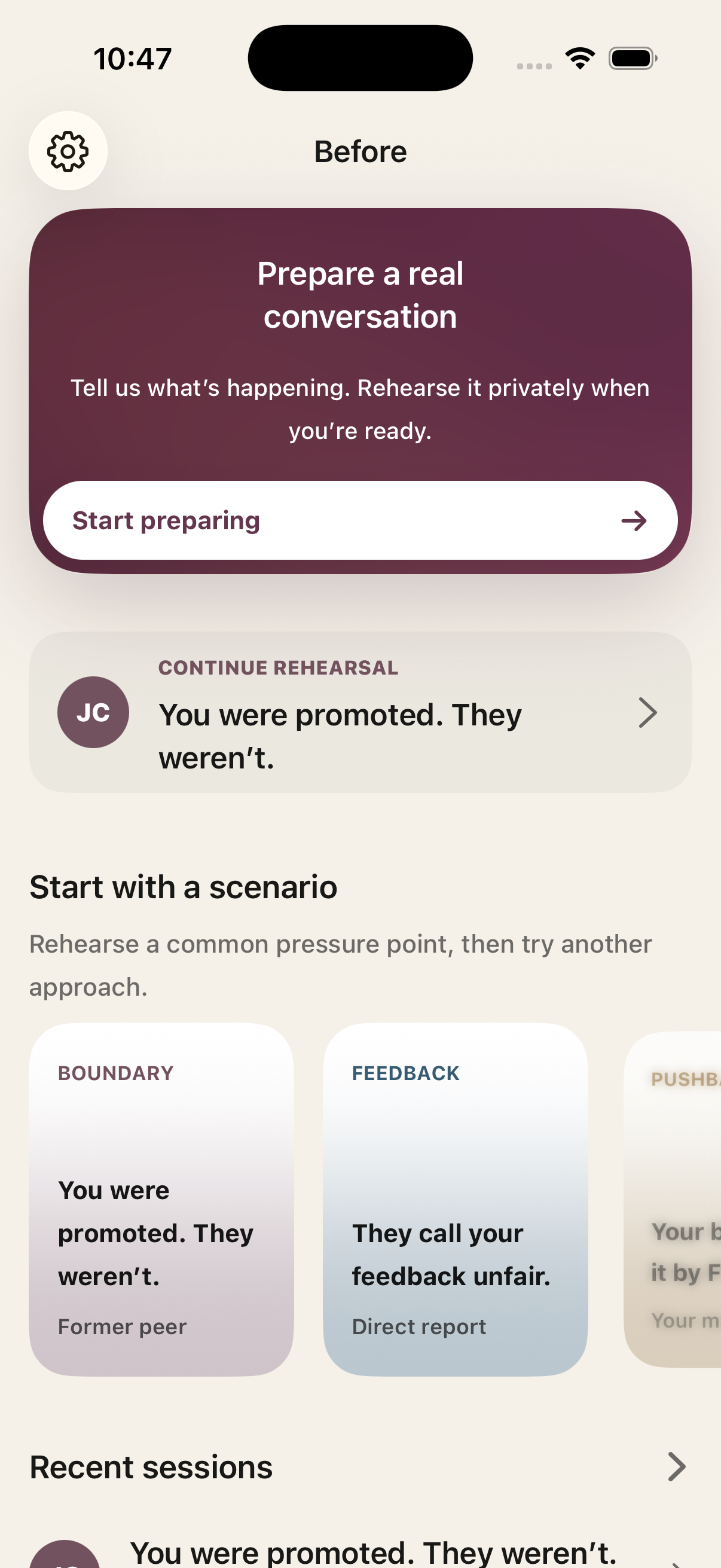
A manager can choose a realistic scenario—such as giving difficult feedback, setting a boundary, or pushing back on an unreasonable request—or describe a real conversation they need to have. Before starting, they rate how prepared they feel.
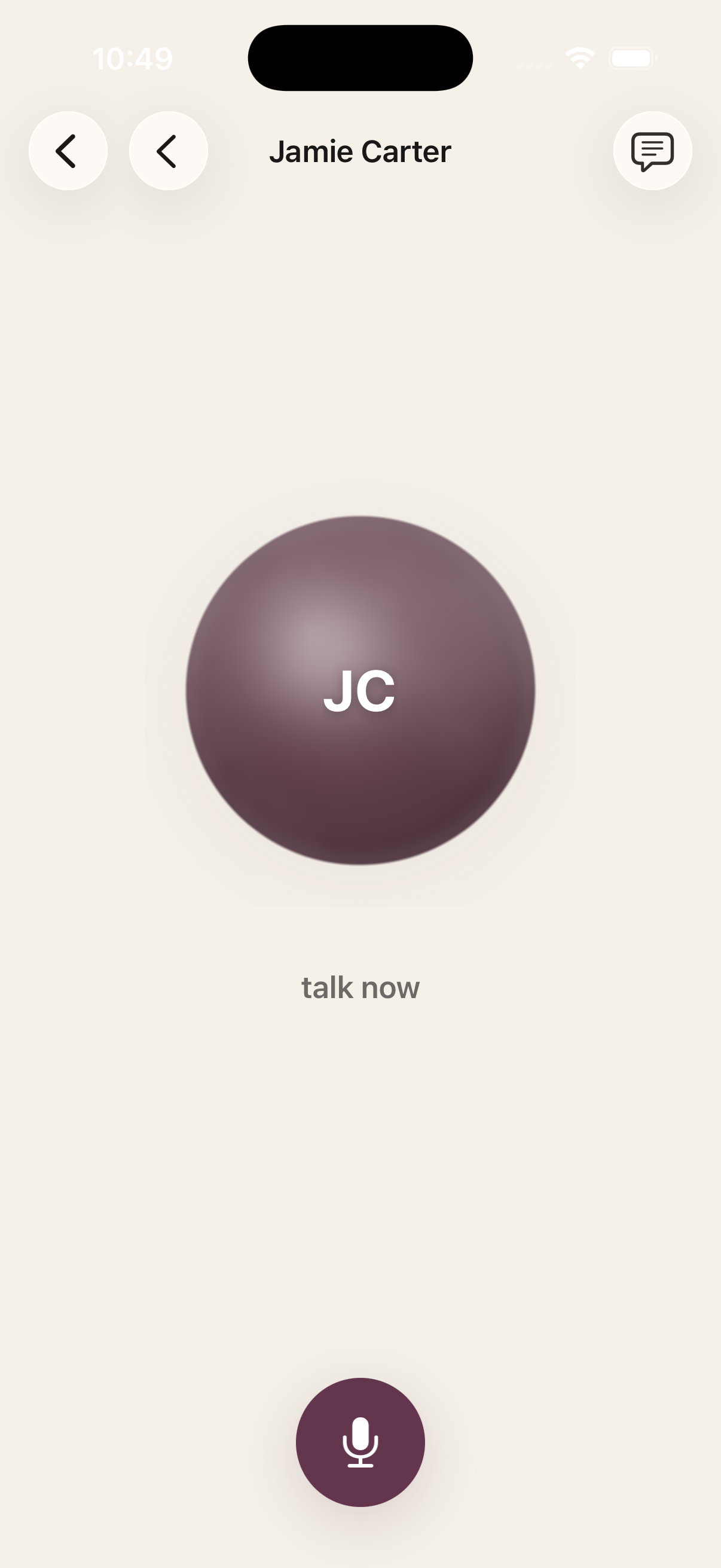
They then speak with an AI counterpart who responds based on the situation, the conversation so far, and an evolving emotional state. The counterpart can disagree, become defensive, reveal new context, or challenge the manager’s position.
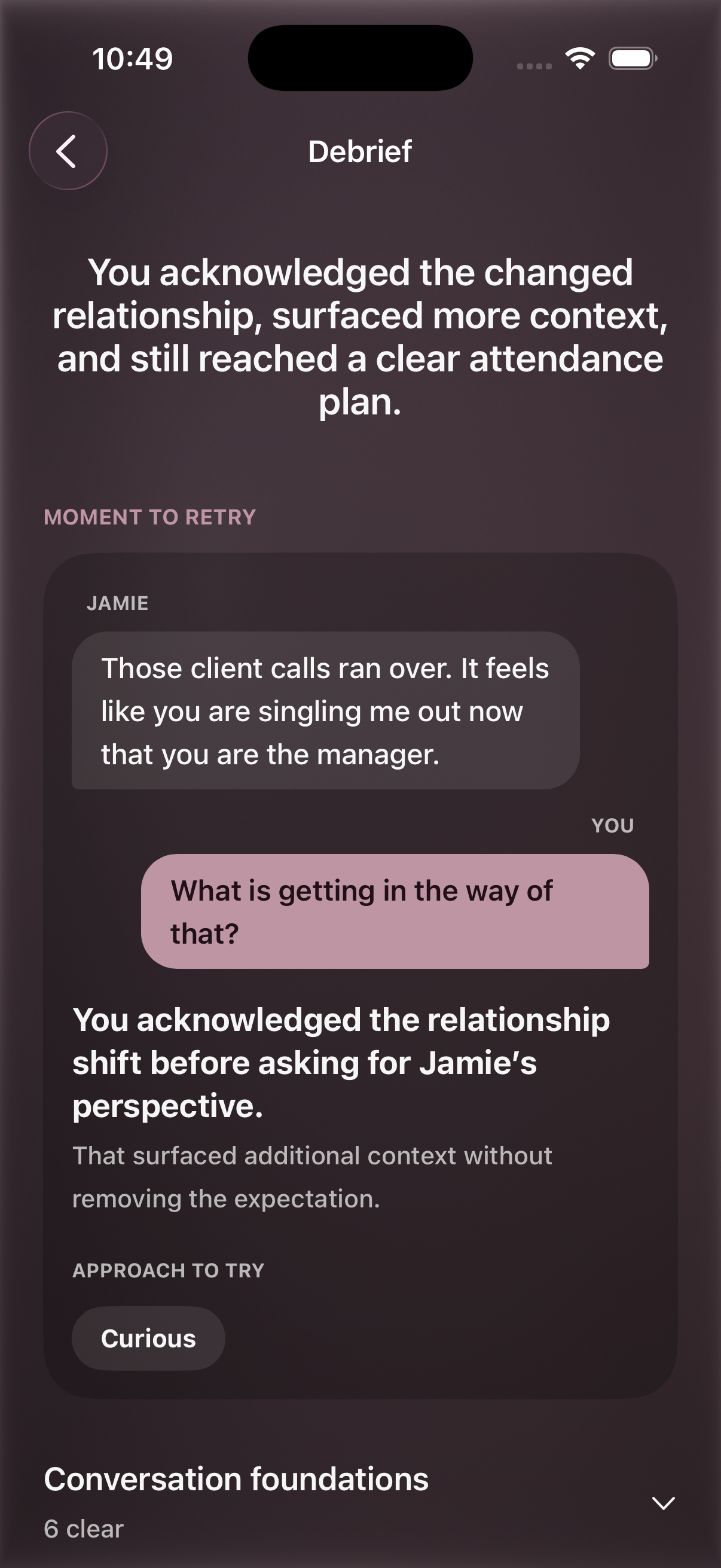
After the rehearsal, the app provides a focused debrief grounded in the manager’s exact words. It highlights whether they:
- made the issue specific;
- explained the purpose of the conversation;
- invited the other person’s perspective;
- held the necessary boundary;
- stayed clear under resistance;
- established a concrete next step.
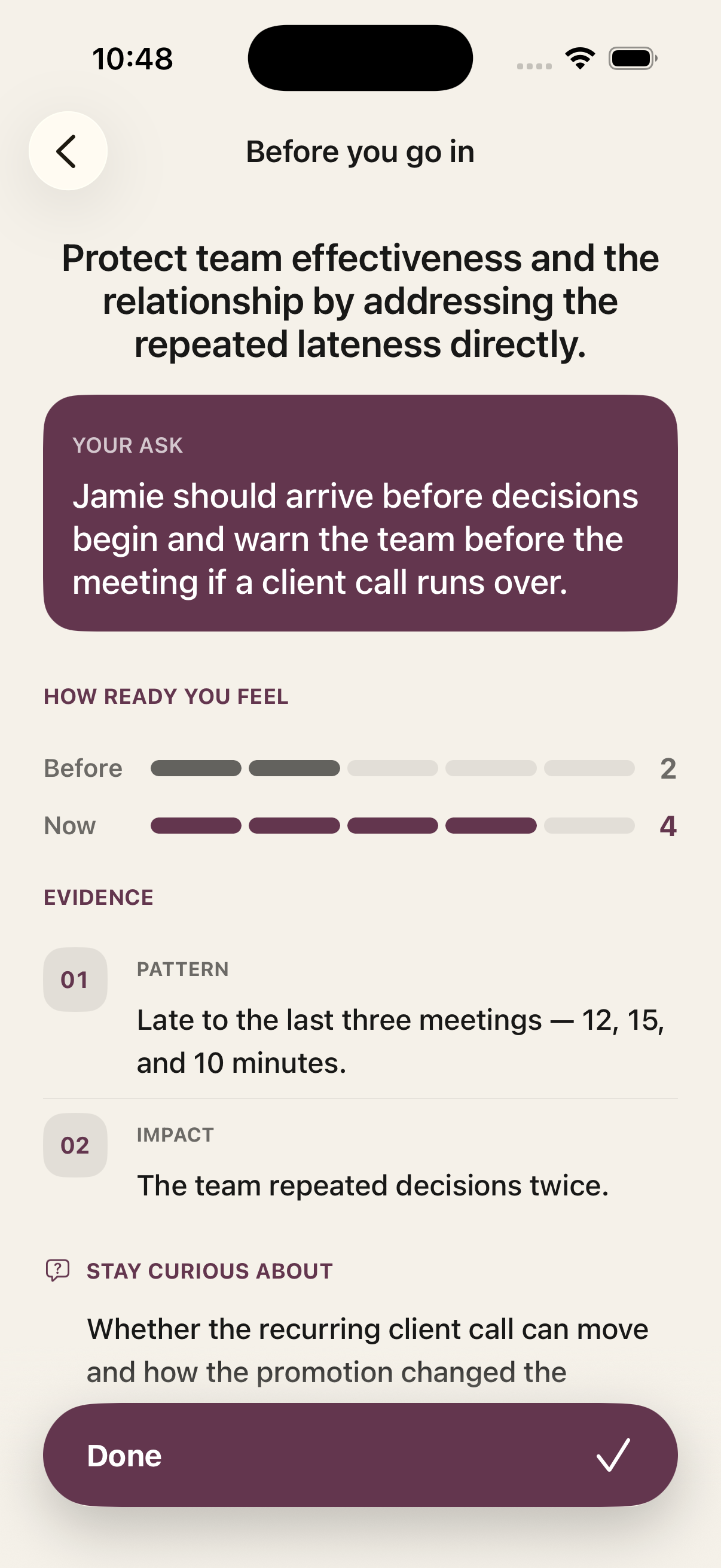
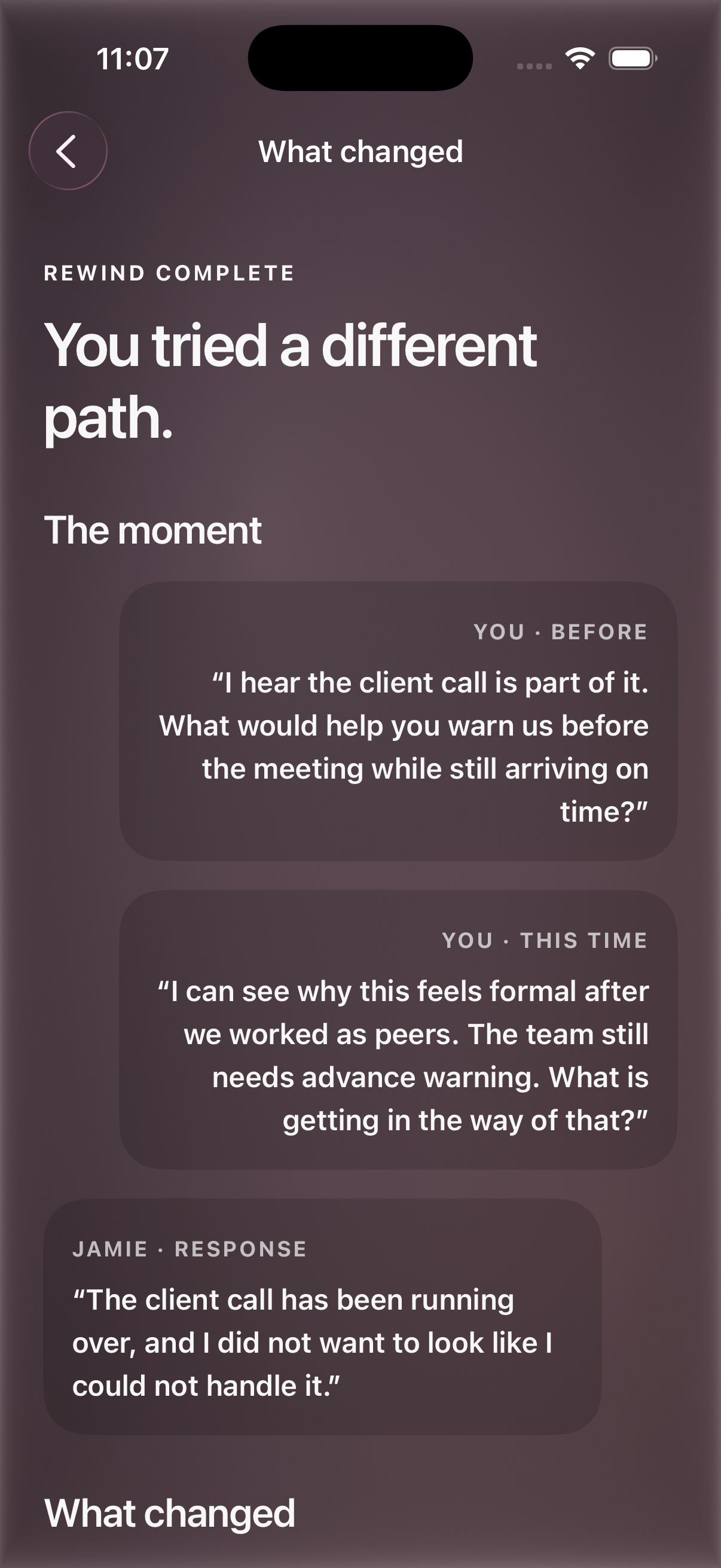
Instead of ending with generic advice, The Talk Ahead lets the user rewind a consequential moment, respond differently, and experience how the conversation changes. It then creates a concise Before you go in card and asks the manager to rate their readiness again.
How I built it
I built The Talk Ahead solo while studying programming at FH Hagenberg.
The mobile app is built with Expo and React Native. Rehearsals use voice transcription and generated speech to create a turn-based conversation that feels natural without becoming an uncontrolled chatbot.
One of the most important architectural decisions was separating the AI into two responsibilities:
- An actor plays the employee or stakeholder and advances the conversation.
- An evaluator reviews the completed rehearsal and produces structured feedback.
The language model does not own the entire simulation. The application maintains a structured conversation state containing the current phase, revealed facts, unresolved objections, expectations, next steps, and relationship signals. The model proposes what happens next, but the app validates and persists the transition.
Sessions, transcripts, simulation snapshots, feedback, and readiness ratings are stored locally with SQLite and Drizzle. TanStack Query manages remote AI operations and explicit retries, while RevenueCat handles subscriptions and entitlements.
Rewinds are stored as branches rather than edits to one mutable transcript. This preserves the original attempt and creates a new path from the exact moment the user wants to revisit. The app can therefore compare what the manager originally said, what they tried instead, and how the simulated outcome changed.
Challenges I ran into
The hardest problem was creating dialogue that felt realistic without allowing the AI to become random or inconsistent.
Human interactions are unique. The same sentence can produce a different response depending on timing, trust, prior context, or how much pressure the other person feels. A rigid script could never capture that, but completely open-ended generation could invent facts, ignore the scenario, or produce feedback that was not supported by the conversation.
I addressed this by combining authored scenarios, structured simulation state, strict response schemas, and validated transitions. The AI generates the language, while the application protects the facts and rules of the situation.
Rewind branching was another major challenge. A rewind cannot simply delete the rest of a chat. It needs to restore the exact state before a selected moment, preserve the original attempt, accept a replacement response, and generate a believable new branch. Building the session as a tree made that possible.
The unpredictability of AI also taught me that this kind of product must be pressure-tested extensively. A single successful demo is not enough when every conversation can take a different path.
Accomplishments that I’m proud of
I am especially proud that the feedback is tied to evidence. When the app discusses a meaningful moment, it cites words the manager actually used instead of inventing a generalized assessment.
I am also proud that feedback leads directly back into practice. The experience does not treat a debrief as the finish line. Users can immediately retry the moment that mattered and see the consequences of a different approach.
Most importantly, early testing showed that the idea can help someone with real management experience feel steadier before a difficult conversation.
What I learned
I learned that realistic AI products need more structure, not less. The best results came from giving the model a clear role and carefully controlling the surrounding state.
I also learned that confidence does not come from memorizing the perfect sentence. It comes from experiencing resistance, recovering from it, and discovering that you can still communicate clearly.
Building The Talk Ahead reinforced something simple: communication is a skill, and skills improve through practice.
What’s next
My next step is to bring The Talk Ahead to more new managers and run a focused marketing push around the conversations people most often avoid.
I also want to expand the scenario library, deepen the range of counterpart reactions, improve long-term progress insights, and continue testing how repeated rehearsal changes a manager’s readiness before the real conversation.
The goal remains the same: give new managers a private place to practise the conversation before the conversation.
Built With
- expo.io
- onesignal
- openai
- posthog
- react-native
- revenuecat
