-
-
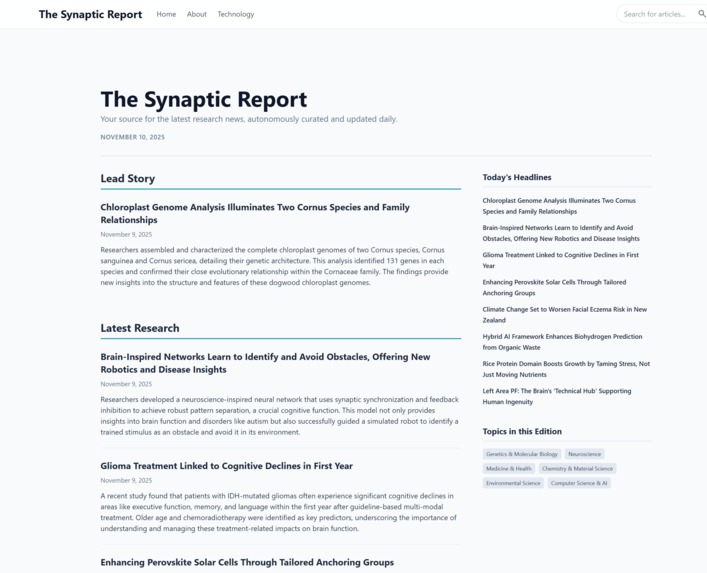
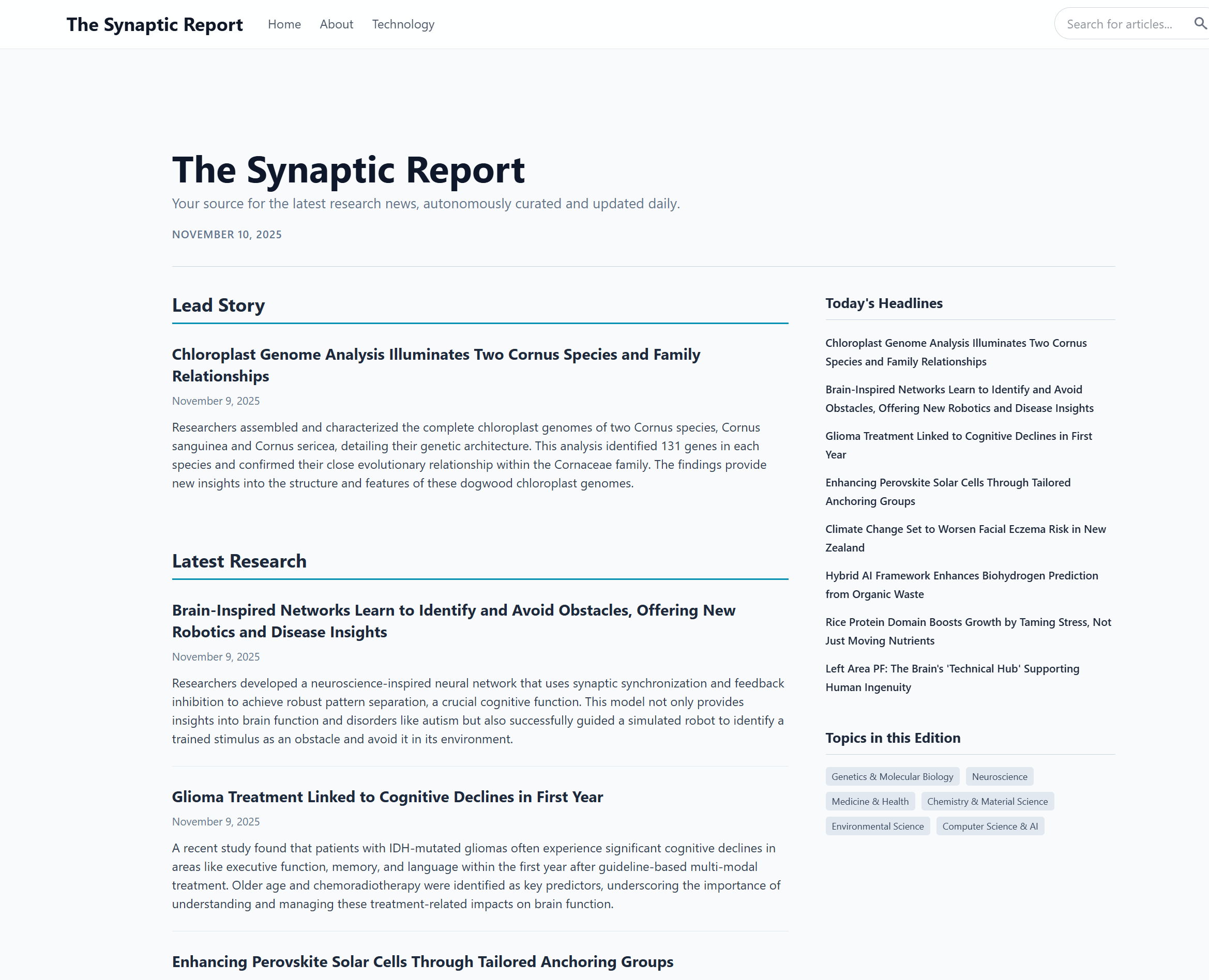
Home page fetching daily curated edition
-
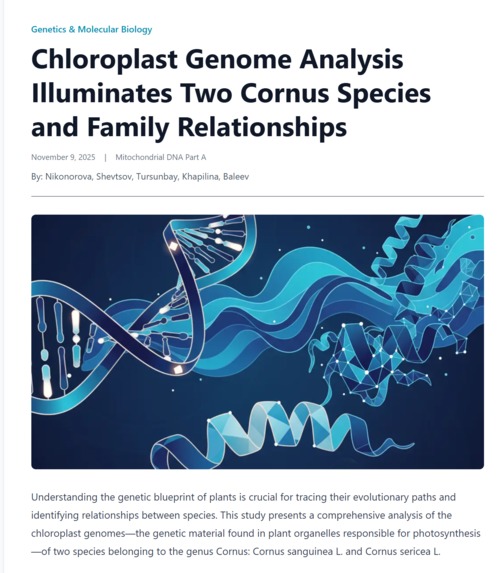
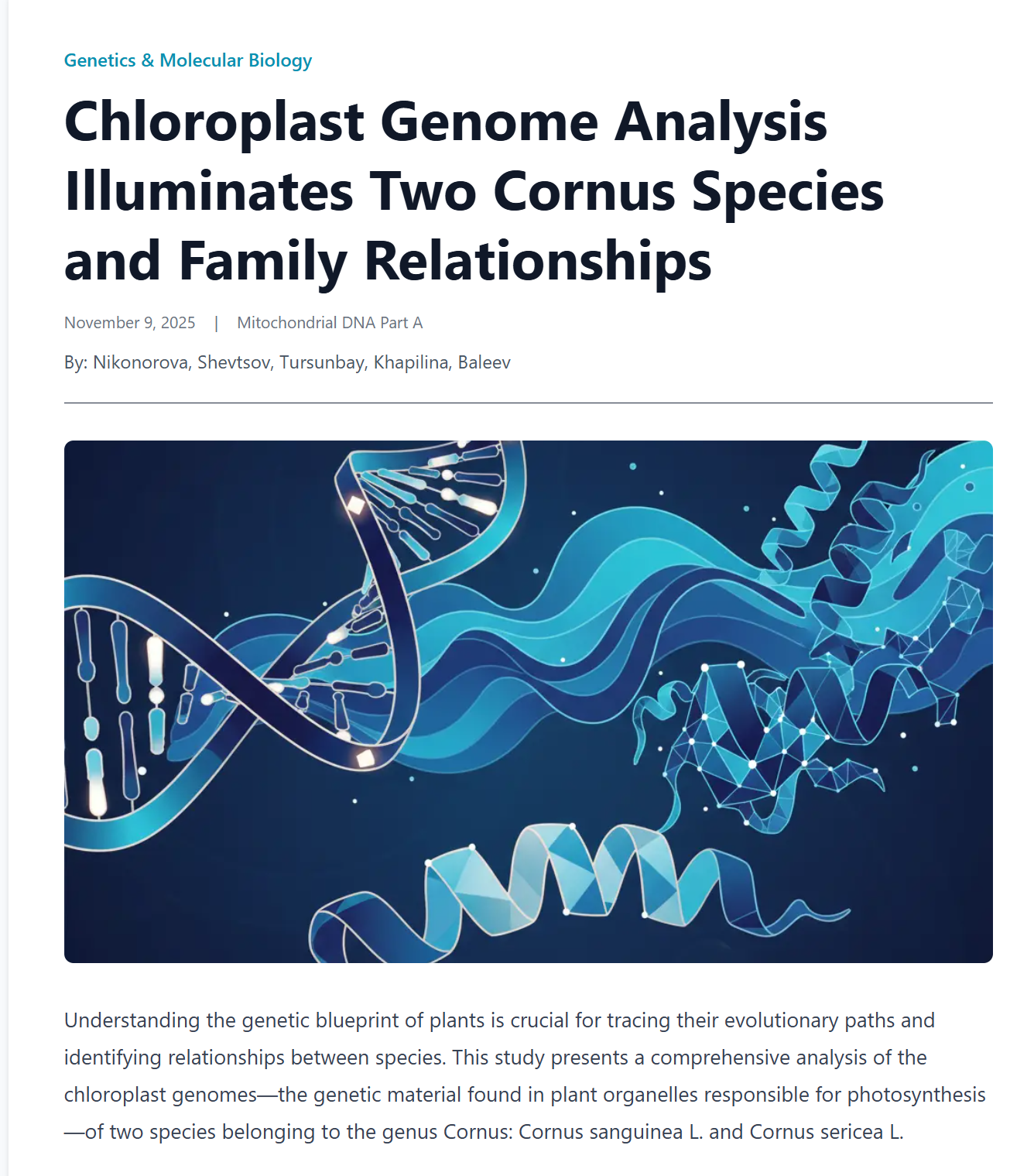
Generated article with Nano Banana cover image
The Synaptic Report
Inspiration
Scientific discoveries are made every day, yet much of this knowledge remains locked within dense academic papers that are difficult for non-experts to access.
We wanted to build an automated bridge between research and the public—something that makes science approachable, engaging, and reliable.
The Synaptic Report was born from that idea: a system that transforms newly published research into a daily, readable newspaper for anyone curious about the world.
What It Does
The Synaptic Report is an automated pipeline that curates and generates a daily scientific newspaper. Each day, the system performs a complete editorial workflow:
- Harvests: Connects to the Europe PMC API to discover newly published papers across scientific domains.
- Writes Articles: Uses Gemini 2.5 Flash to generate concise, accessible summaries of selected research papers.
- Curates a “Front Page”: An editorial agent highlights the most significant and interesting articles for the day’s edition.
- Generates a Cover Image: Employs Google’s Nano Banana model to produce a unique, magazine-style cover that reflects the day’s scientific themes.
The application also includes a hybrid search system that understands intent and meaning, not just keywords, helping readers easily find articles of interest.
How We Built It
Our system is a serverless, multi-model, agent-based architecture built on Google Cloud:
- Cloud Run: - Used for both front and backend hosting (Also attempted to use Gemma3 Ollama, however this wasn't reliable compared to Gemini 2.5)
Gemini 2.5 generation and classification Generates the full text of news articles from research abstracts and performs topic classification etc. (Gemma 3 using Cloud Run was attempted, but found not reliable with one GPU)
Vertex AI Platform & Gemini:
- Text-embedding005 creates vector embeddings for search.
- Gemini 2.5 Flash interprets user queries for high-accuracy retrieval.
- Text-embedding005 creates vector embeddings for search.
Nano Banana: Produces high-quality conceptual cover art for each daily edition.
Elasticsearch: Acts as our vector database and search engine, combining keyword and semantic (kNN) search for fast, relevant results.
Cloud Tasks: Orchestrates the asynchronous workflow—from harvesting and writing to verification and curation—ensuring resilience and scalability.
Firestore & Cloud Storage: Store completed editions and public cover images for instant retrieval and display.
Challenges
Maintaining factual accuracy was our biggest challenge. Large language models can occasionally generate incorrect information, so we built a self-correction pipeline within our WordsmithAgent. It prompts Gemma 3 to review and verify its own output against the original research text.
We also worked to design a useful, semantically aware search by combining Gecko embeddings with hybrid Elasticsearch queries. This greatly improved result relevance compared to keyword-only searches.
Accomplishments
- A Cohesive Multi-Model System: Integrated open-source (Gemma 3) and managed (Gemini, Gecko, Nano Banana) models, assigning each to the role it performs best.
- Hybrid Search at Scale: Implemented a production-ready system that blends semantic and traditional search methods for accurate discovery.
- Content Verification Loop: Established an automated “write-then-verify” process that supports factual reliability and editorial integrity.
What We Learned
Building The Synaptic Report taught us that creating a capable AI system is less about relying on a single powerful model and more about orchestrating multiple specialized components. We learned how to blend the flexibility of self-hosted models with the precision of managed AI services—and that trustworthy AI design begins with integrating verification and safety steps into the workflow itself.
What’s Next
We see The Synaptic Report as a strong foundation to build on. Our next steps include:
- Developing the Front-End: A clean, responsive Next.js interface to showcase daily editions and enable intuitive hybrid search.
- Enhancing Verification: Refining the self-correction logic to further reduce hallucinations and strengthen factual reliability.
- Adding Personalization: Allowing readers to subscribe to tailored newsletters based on preferred scientific topics.
- “Ask the Paper” Feature: Introducing an interactive chat that lets users question a paper directly, with responses grounded in its original text.
Built With
- adk
- cloudrun
- cloudtasks
- elasticsearch
- fastapi
- firestore
- gcp
- gemma3
- gsap
- nextjs
- pydantic
- python
- react
- secretmanager
- typescript
- vertexai

Log in or sign up for Devpost to join the conversation.