-
-
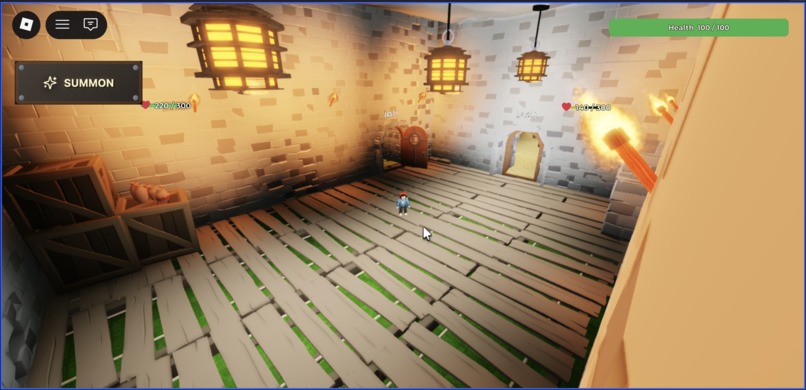
Lounge: Starting Point
-
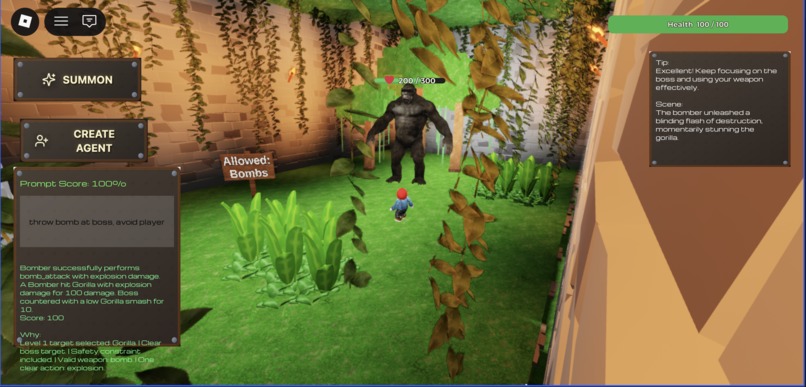
Level 1: Jaja Jungle
-
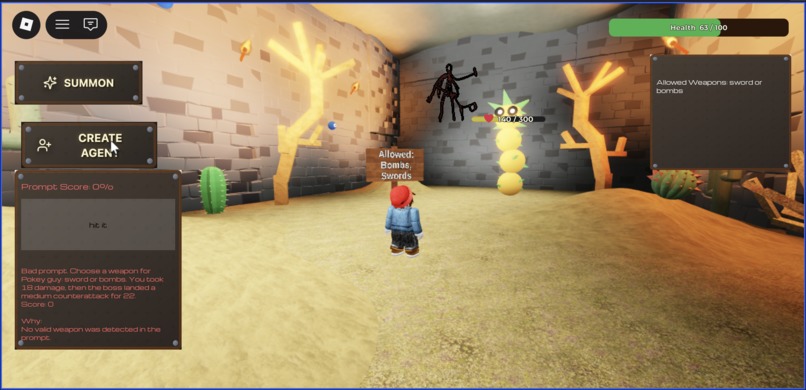
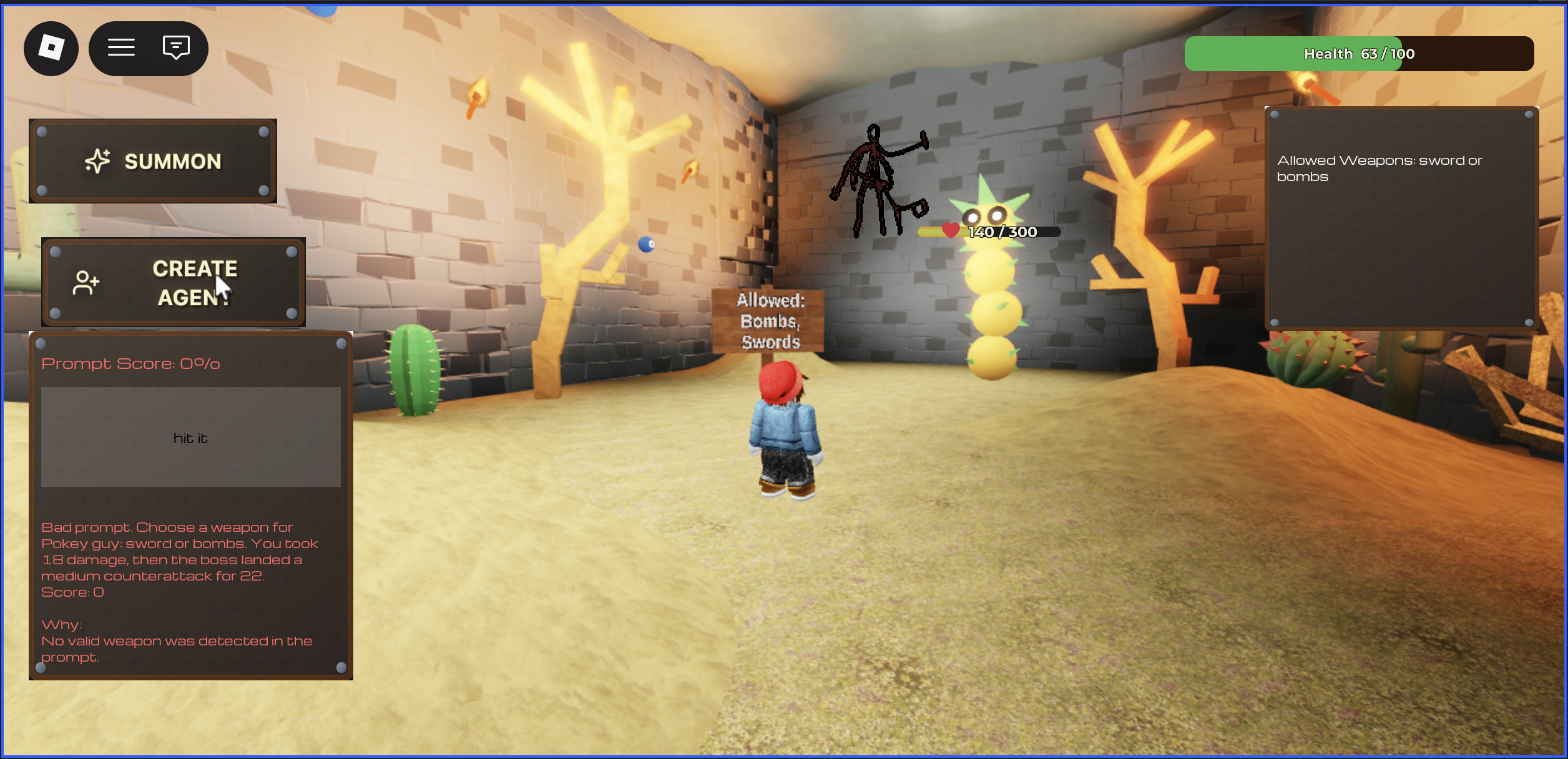
Level 2: Pokey's Desert
-
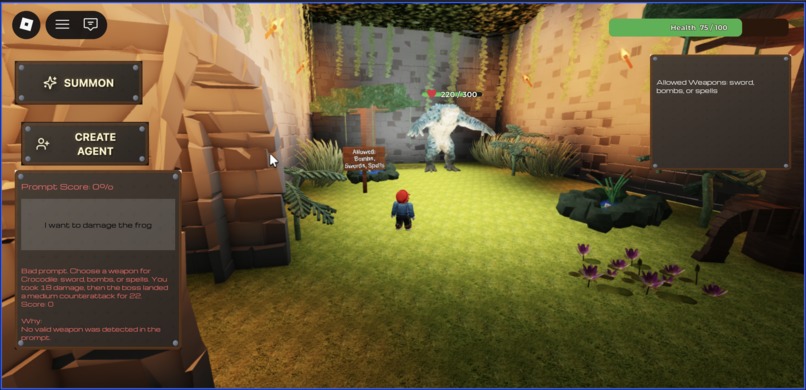
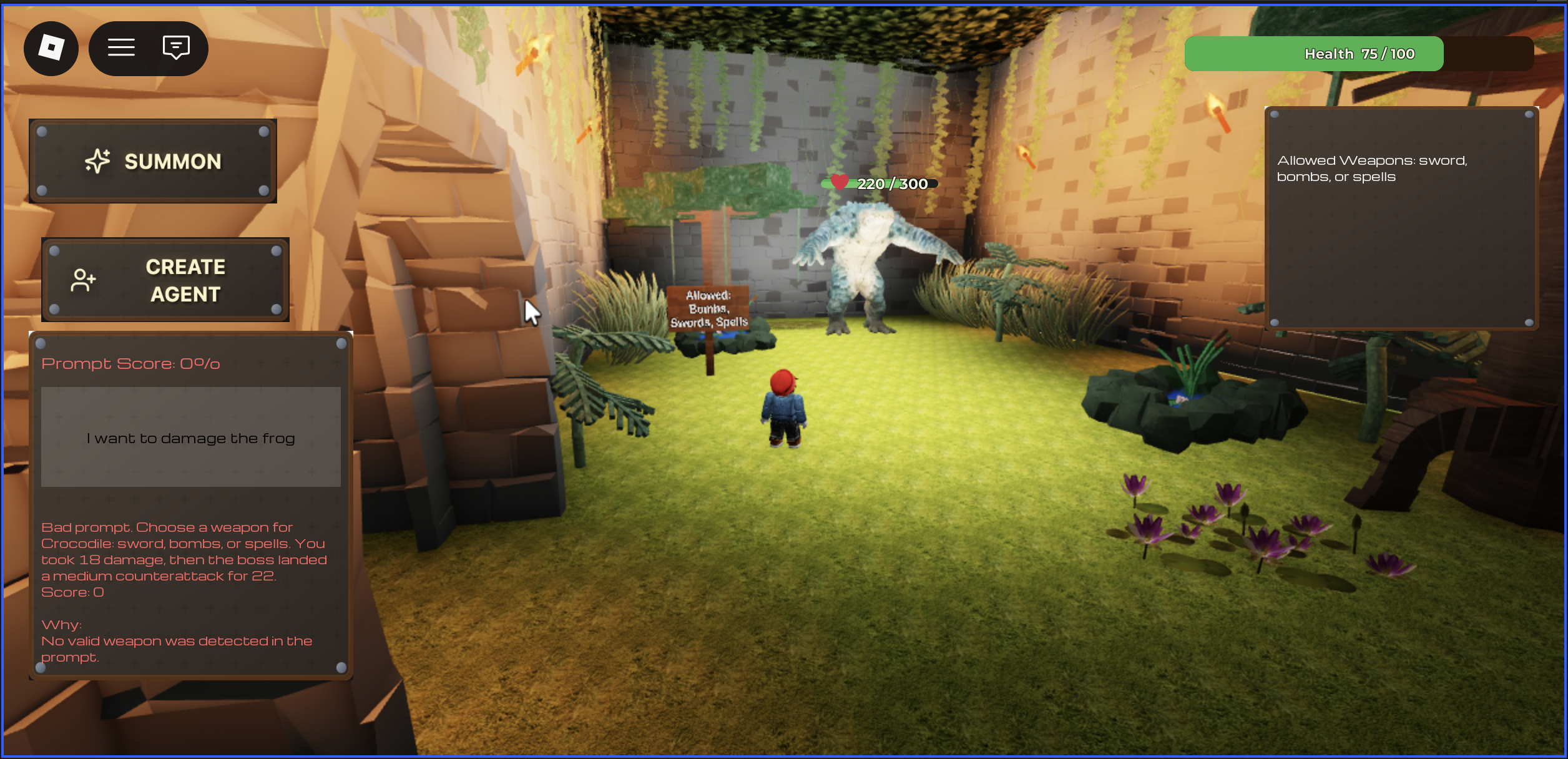
Level 3: Swampy Crocs
-
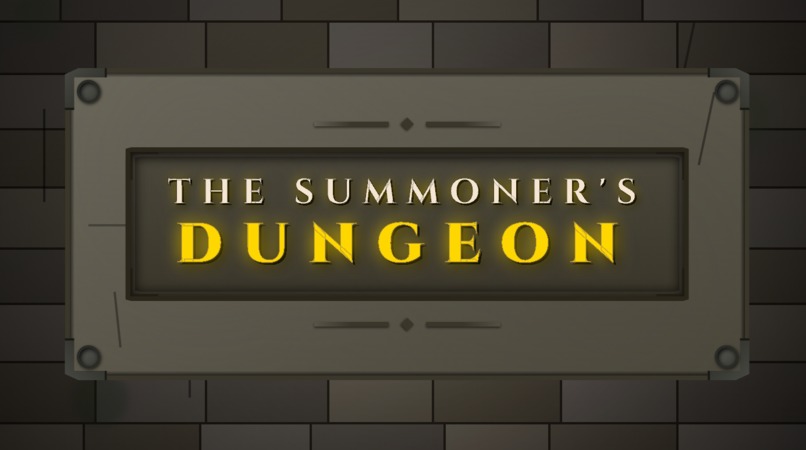
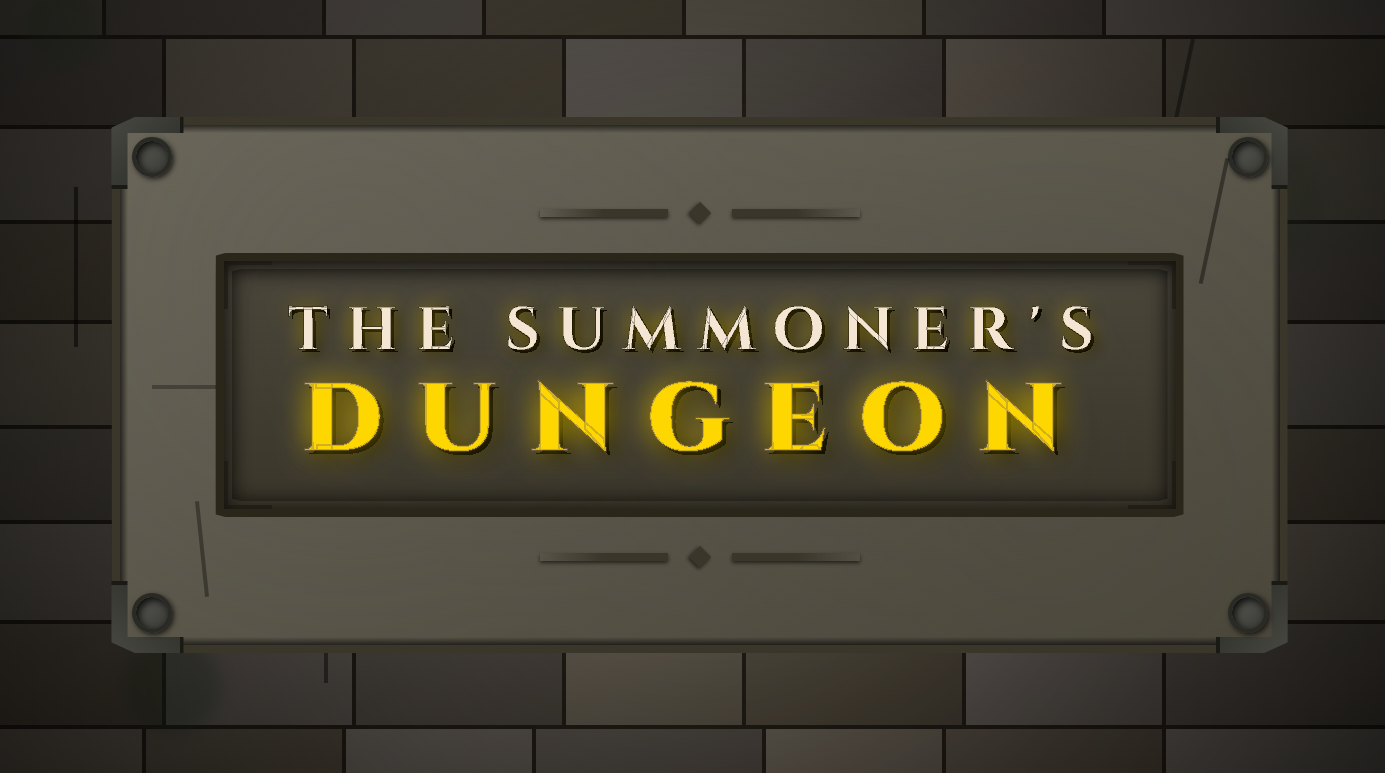
Figma Logo Design
-
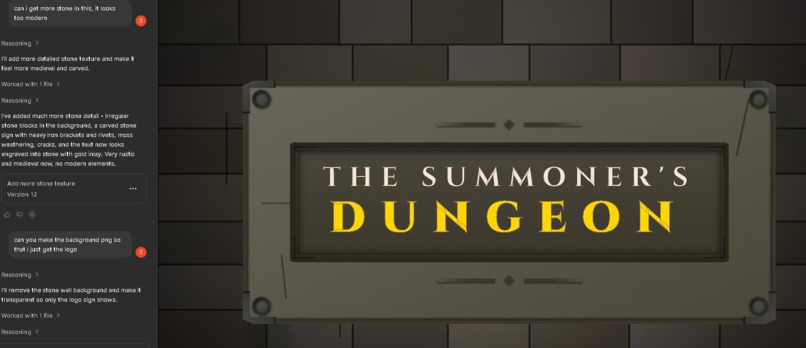
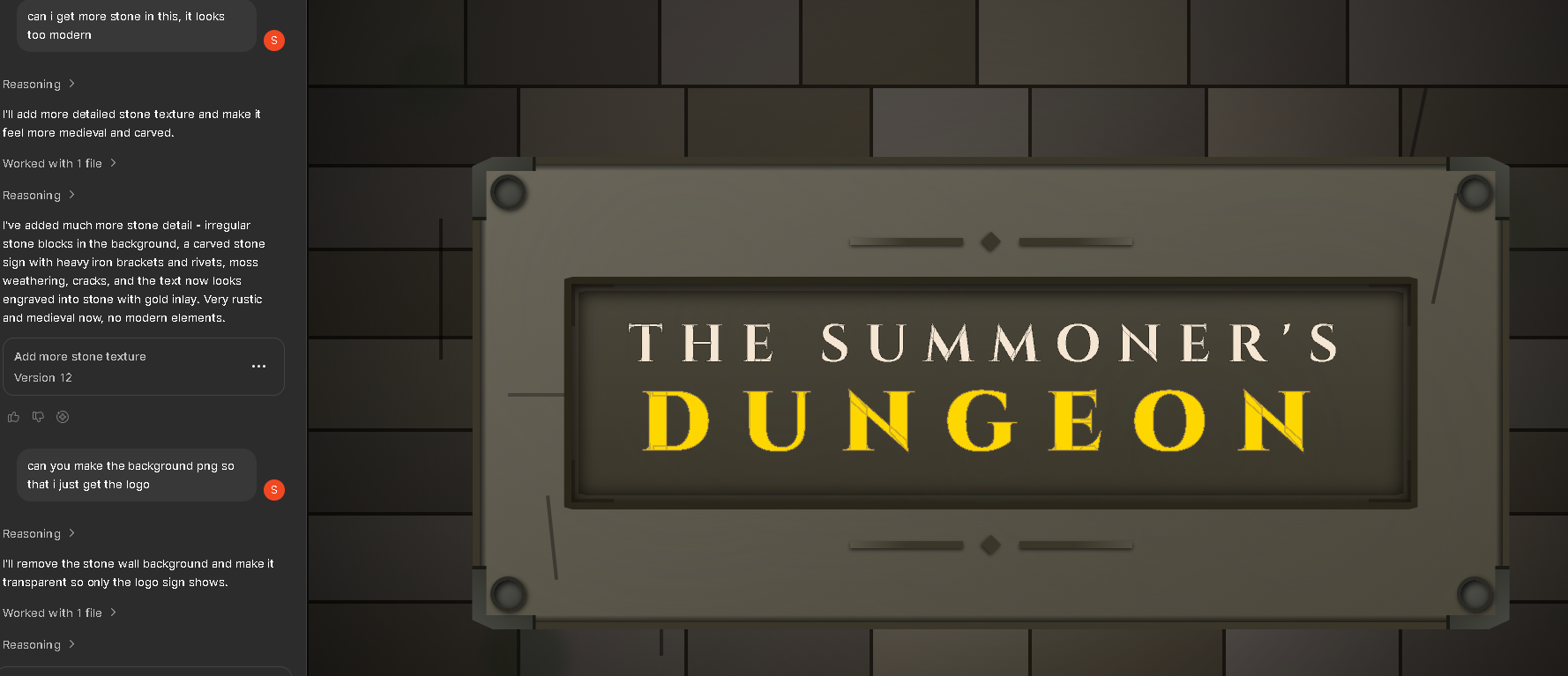
Figma Logo Design
Inspiration
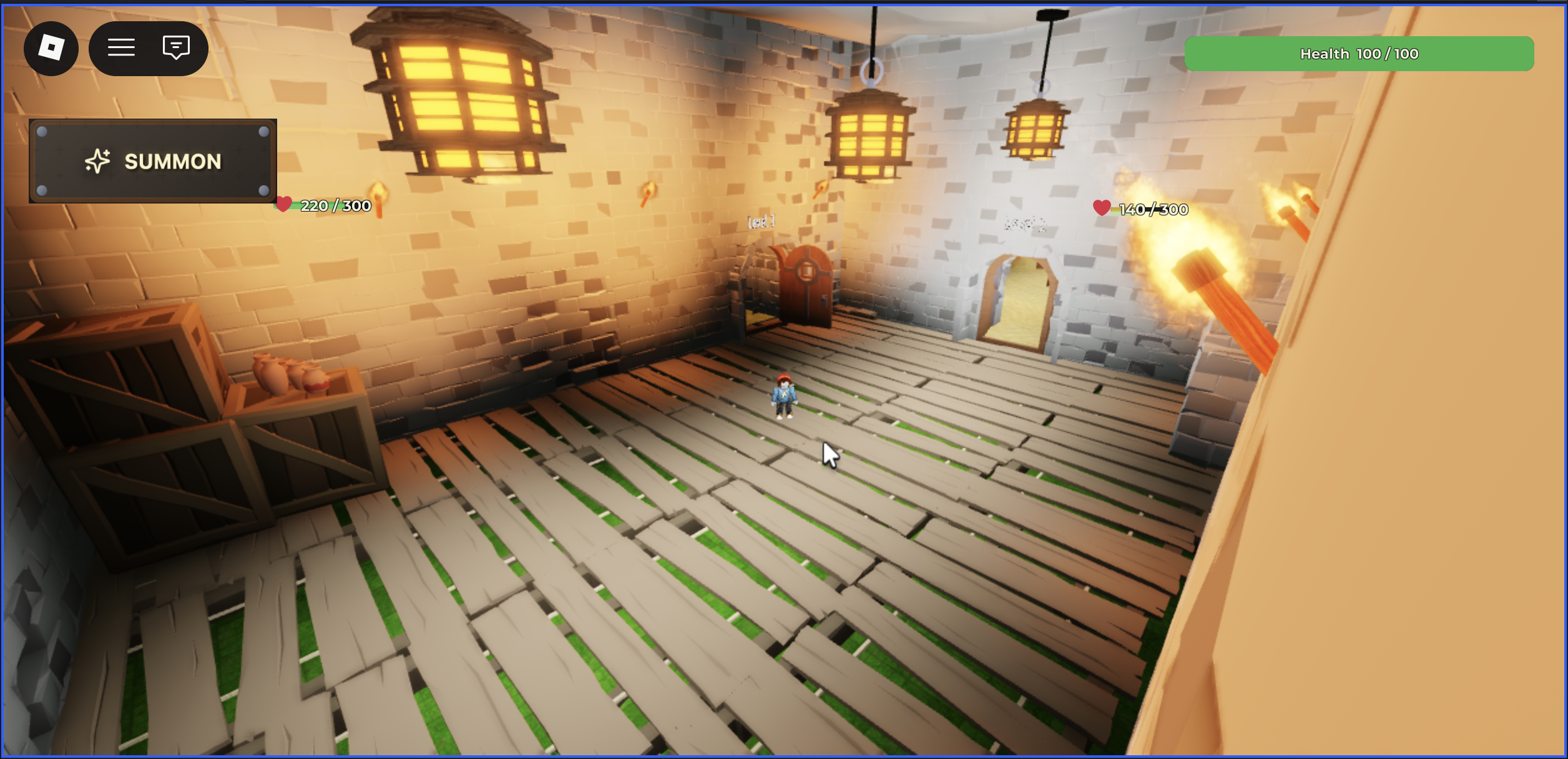
AI agents, prompt engineering, and AI fluency in this new era of tech has opened doors to making work frustration-free. As students thrown into this evolving world of what it means to build software, we help others get better at using these tools. Though only 2 out of 4 of us are huge Roblox nerds, we all strongly agreed that the most engaging way to learn is through games! Inspired by dungeon crawlers and DND, we merged the skill of creating useful agents, highlighting the consequences of bad prompts, AI hallucinations, and making AI work for you not create more technical debt.
What it does
Dungeon exploration game that
- allows player to summon new agents with just a click of a button
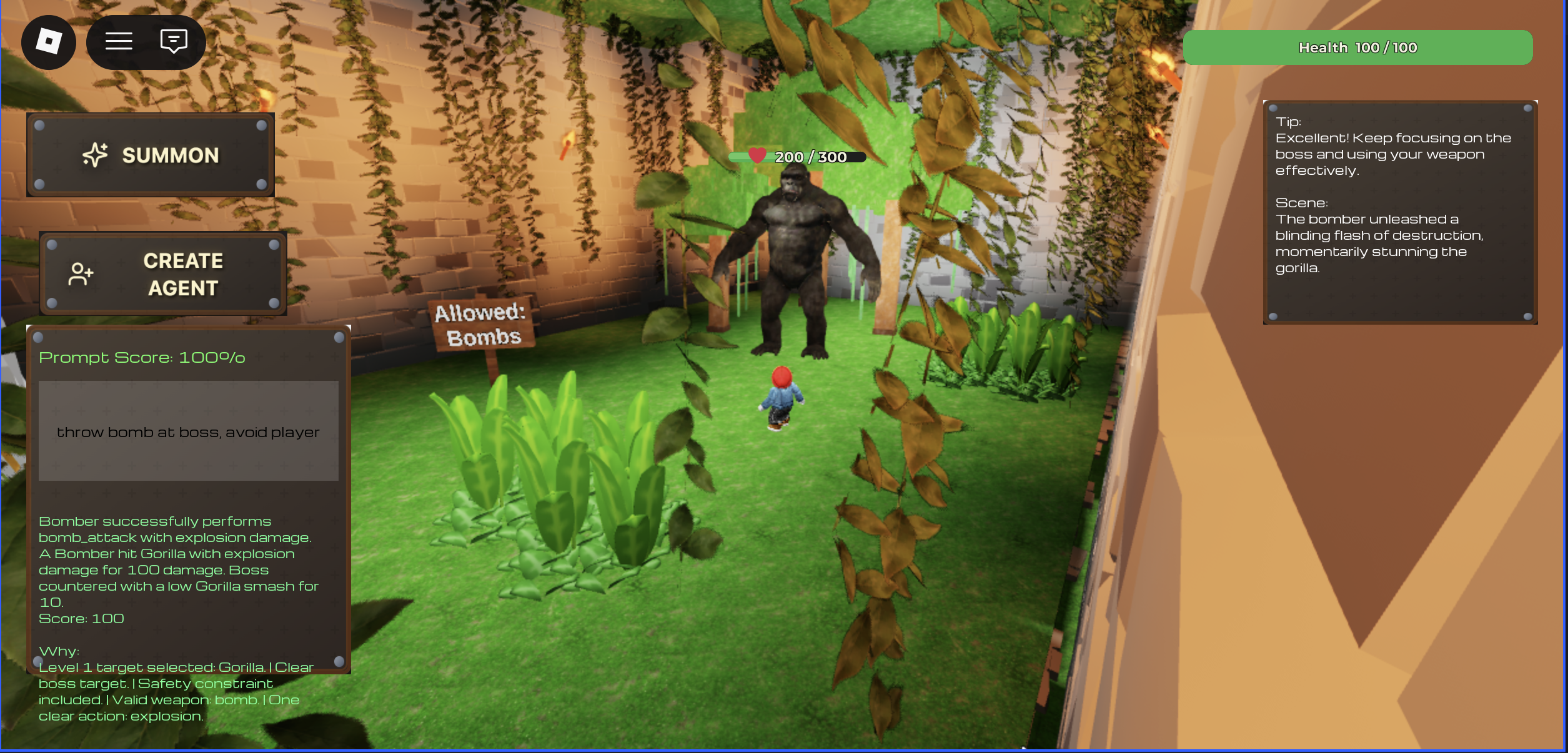
- players progress by defeating each level boss by summoning an agent through a prompt!
- if prompt == good, the attack will go through
- else, self-damage is inflicted
- as levels increase, the bosses get harder to defeat until all your past mistakes will come to haunt you!
How we built it
We connected a local Asus GX10 to Roblox to let player prompts actually drive what happens in the game. Instead of calling external APIs, we run a small language model (specialized gemma3:4b) locally with Ollama, so everything from feedback to boss reactions happens on-device.
On the backend, we use FastAPI to receive prompts from Roblox and process them. We use rule-based logic to score prompts and decide what kind of agent should be created. Then we layer in LLM-generated flavor like boss taunts and feedback on AI fluency to make the experience more interactive.
Roblox takes that structured response and turns it into gameplay: spawning agents, applying damage, and triggering effects. This creates a loop where what you type directly affects how the fight plays out. Additionally, Roblox Studio was used to design our levels and GUI to make an immersive experience. To create our GUI, we drafted buttons, signs, and our project control flow through Figma make.
Challenges we ran into
- Agreeing on a feasible idea matching our skillsets + interests. We each came into wanting to work on a wide spectrum of things: microcontrollers, agents, and roblox. We scrapped ideas until finally executing this 16 hrs into the hackathon (yikes!).
- We switched locations with 7 hours left and faced a major crisis: the GX10 bounced. Our model, backend, and Roblox Studio would not let us in until we had got back into the supercomputer. Unfortunately, we had no access to a monitor, keyboard, or ethernet cable. We had to quickly learn and adapt so we could proudly show our work this weekend. Like they say, "it takes a village to ssh into GX10." Thank you to
- our friend for walking to us at 1 am with a keyboard + HDMI cord
- front neighbors we talked to for the first time for their projector
- Apple charger for acting as Ethernet, providing wifi through personal hotspot ... TT
Accomplishments that we're proud of
- Though we struggled to agree on an idea first, we stayed committed to listening to each other's concerns openly and trusting each other's insights.
- We had NO knowledge/ experience on any of the 3 technologies we combined: Lua, Gx10, AI agents. This caused a lot of friction and worry that we were willing to overcome through shared ambition.
What we learned
- Gx10 / supercomputer use cases (privacy, latency, offline access, cost)
- different models, their sizes and speed
- Roblox scripting is not too bad
- do some research on how to use new tech before the hackathon
What's next for The Summoner's Dungeon
- more complex enemy logic --> making the enemies themselves agents, allowing for dynamic responses towards the player's input/ longer context retrieval.
- player upgrades = weapon / ability reward system for defeating enemies
- levels are created dynamically so the player can continue to explore, just like a regular dungeon crawler!
Built With
- asus
- figma
- gemma
- gx10
- llm
- lua
- ollama
- prompt
- roblox

Log in or sign up for Devpost to join the conversation.