-
-
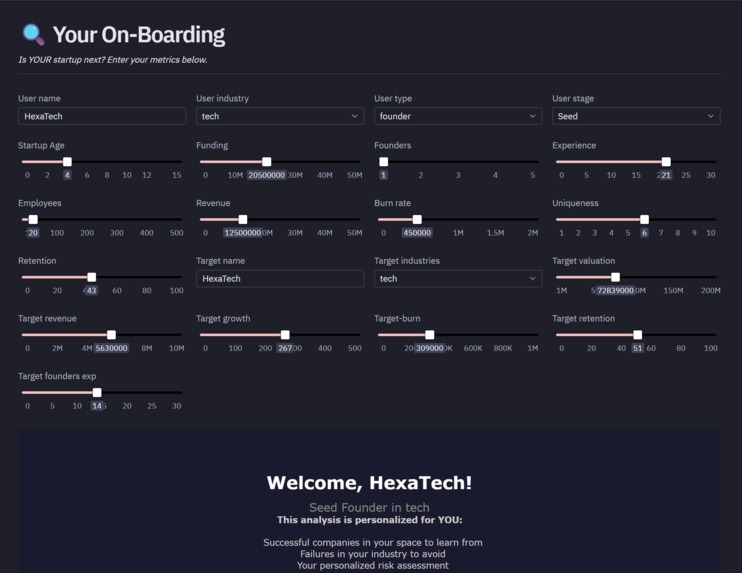
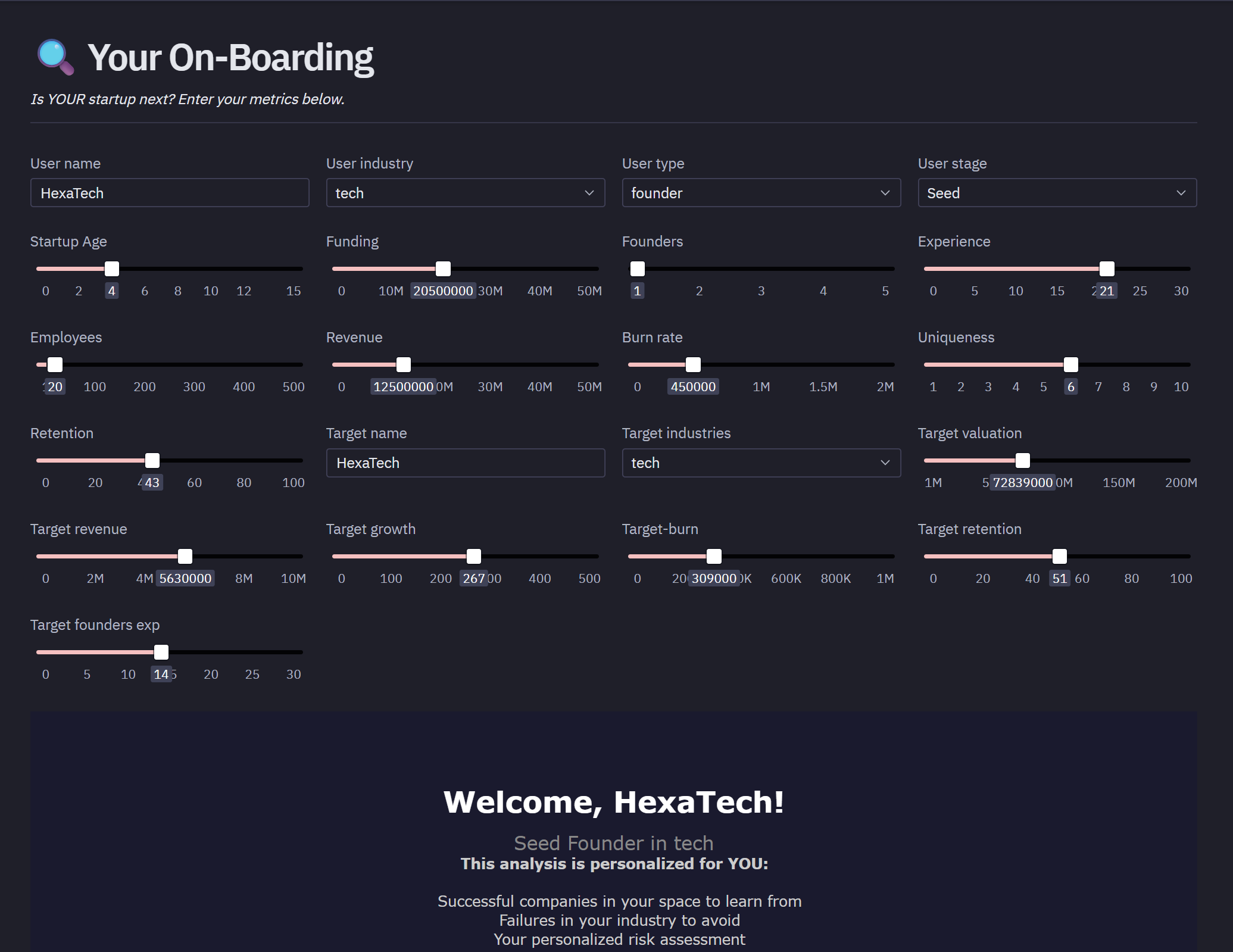
On-boarding for personalised analytics
-
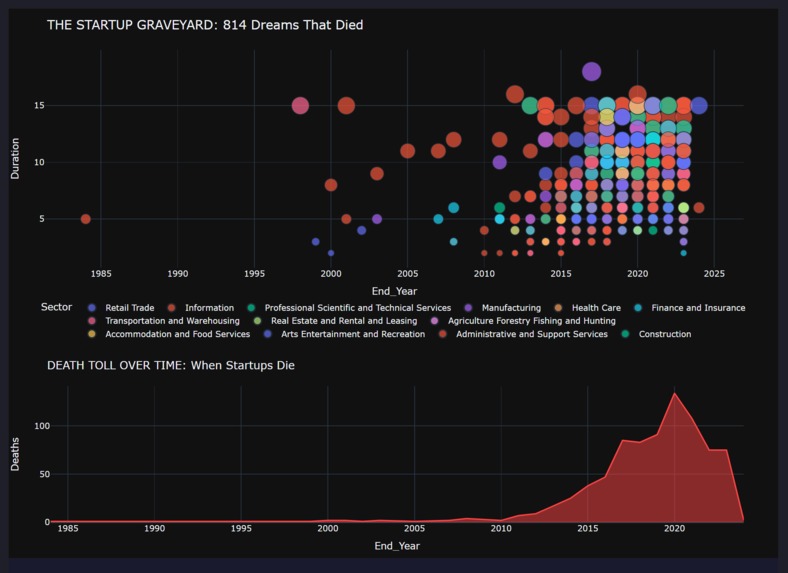
Core analytics
-
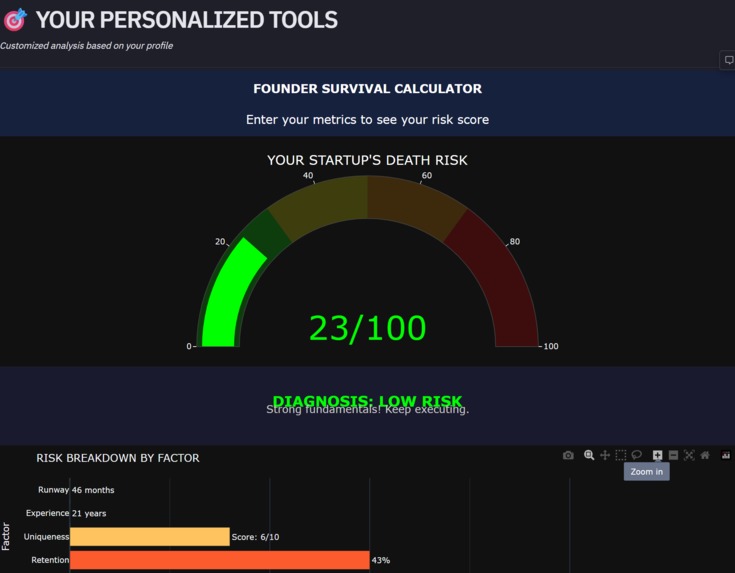
Risk Score
-
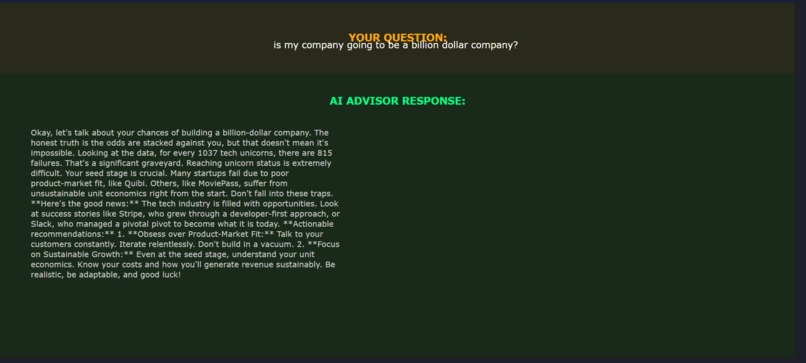
Personalised advice based on your details, failed and unicorn startups
-
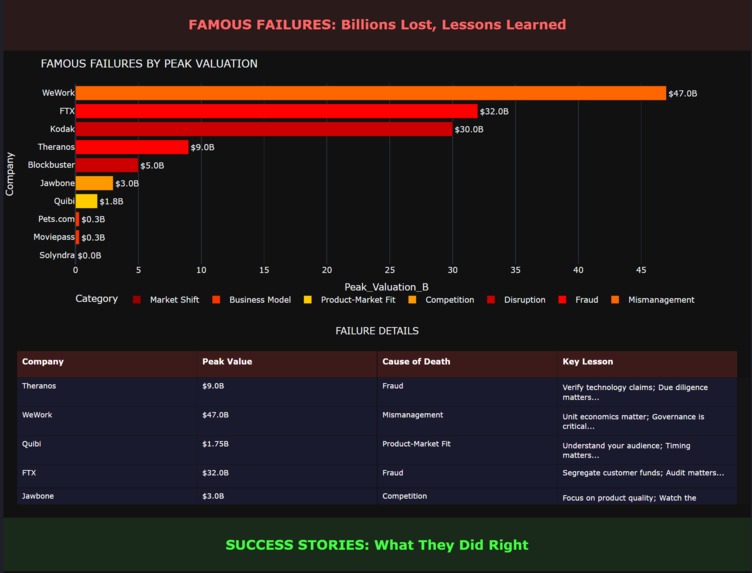
Key Lessons
-
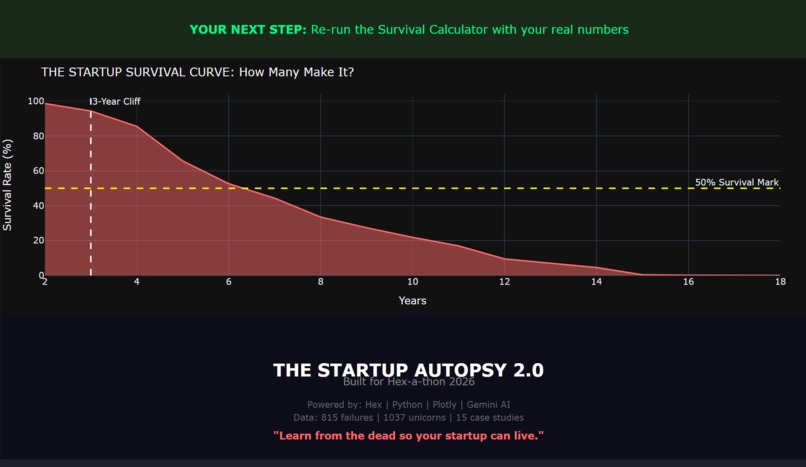
StartUp Survival curve


Inspiration
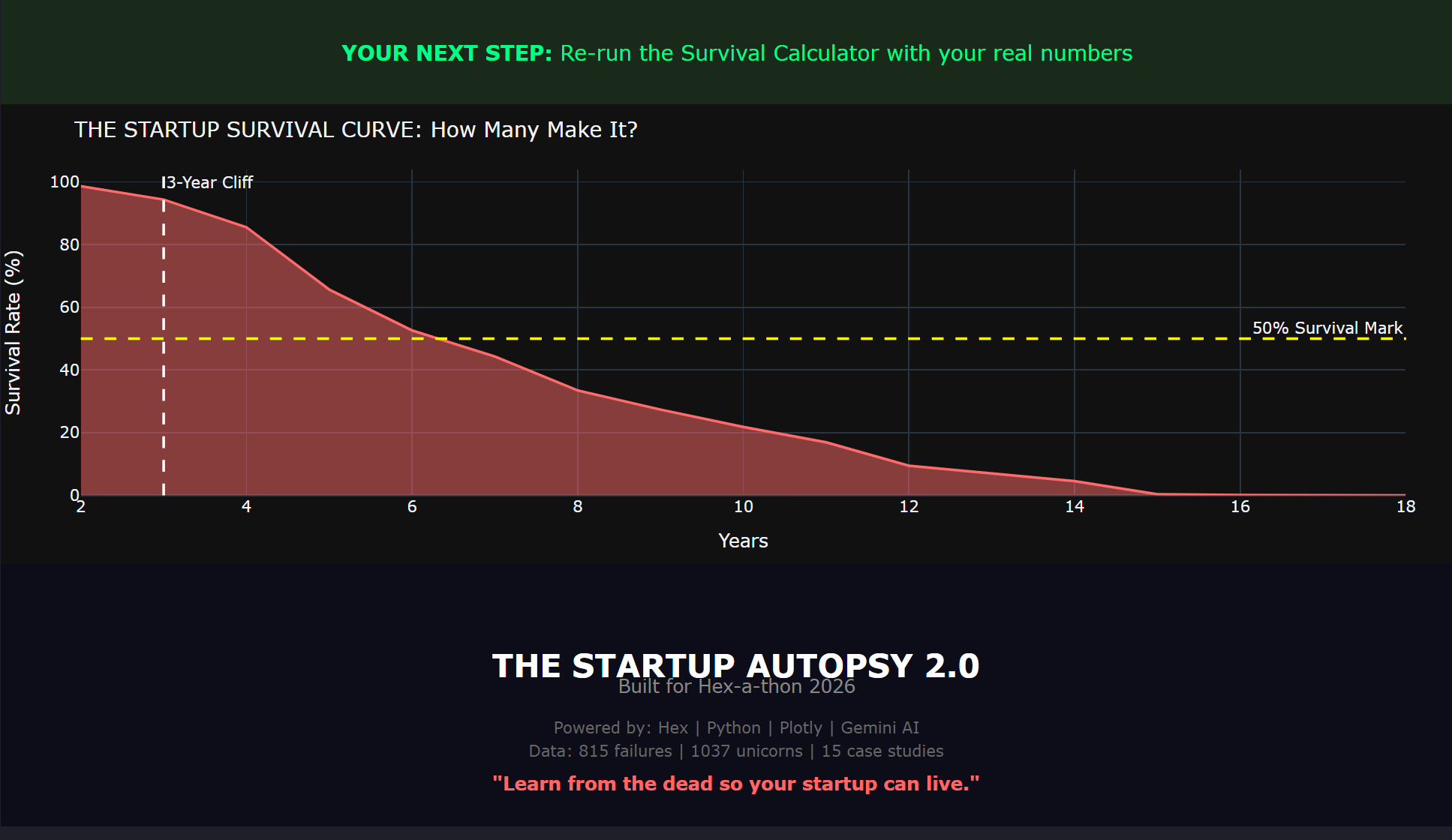
Every year, 90% of startups fail. Behind each failure is a founder who believed they were different, an investor who missed the red flags, and millions of dollars that vanished. We asked ourselves: What if we could learn from every startup death to help the next generation survive? The Startup Autopsy was born from a simple idea — treat startup failure like a medical examiner treats death. Analyze the causes, identify patterns, and create a survival guide for those still fighting.
What It Does
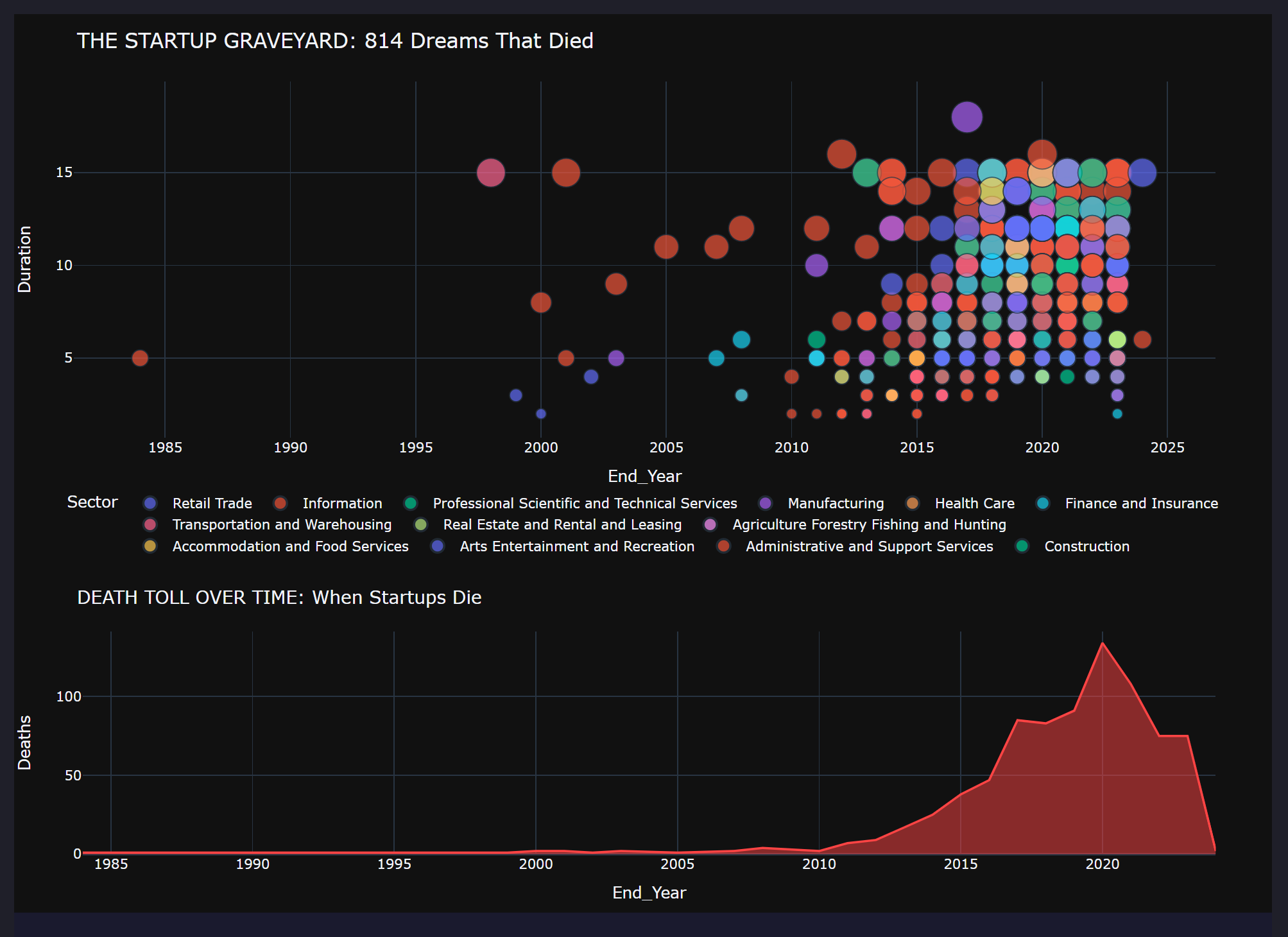
The Startup Autopsy is an AI-powered intelligence platform that analyzes 814 failed startups and 1,037 unicorns to deliver personalized insights.
For Founders:
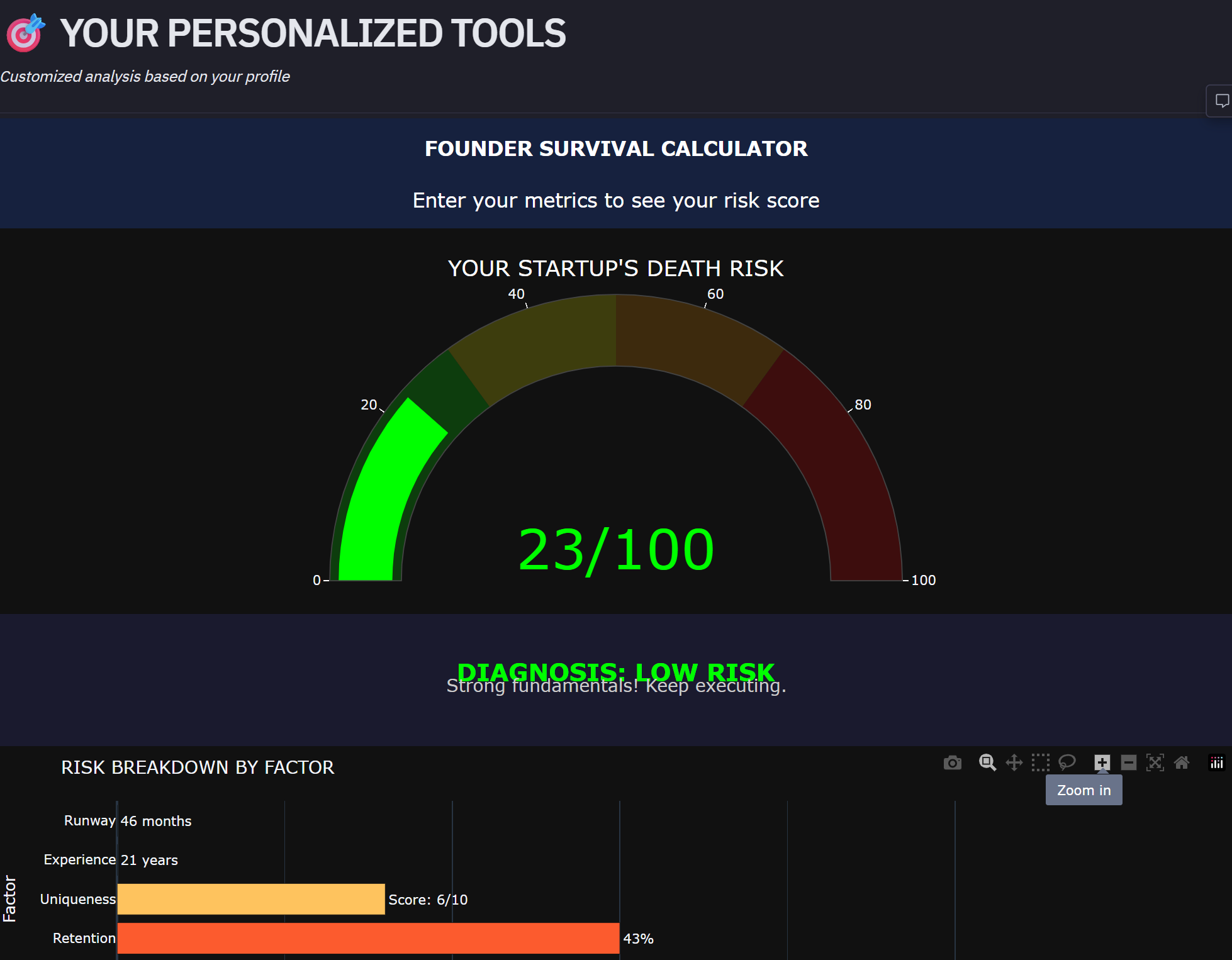
- Survival Calculator that scores your startup's death risk (0-100)
- Breakdown by factor: burn rate, retention, runway, team experience
- Actionable recommendations to improve survival chances
For Investors:
- Due Diligence Dashboard to evaluate any deal
- Automatic red flag and green flag detection
- Comparison to successful unicorns in the same industry
For Everyone:
- Gemini AI-powered advisor that answers any startup question
- Case studies of famous failures (Theranos, WeWork, FTX) and successes (Stripe, Airbnb)
- Interactive data visualizations telling the story of startup life and death
How We Built It
Platform: Hex — for interactive notebooks and published data apps
Data Pipeline:
- Sourced datasets from Kaggle (startup failures, unicorn companies)
- Cleaned and parsed 814 failure records with duration, sector, and timeline
- Processed 1,037 unicorn valuations across industries
- Manually curated 15 detailed case studies with lessons learned
Personalization Engine:
- Onboarding captures user type (Founder/Investor/Researcher), industry, and stage
- Every visualization, tool, and insight adapts based on profile
- Industry-specific filtering shows relevant failures and unicorns
Risk Scoring Model:
- Business-logic based calculation using 5 factors:
- Burn Rate Risk (0-25 points)
- Customer Retention Risk (0-25 points)
- Product Uniqueness Risk (0-20 points)
- Team Experience Risk (0-15 points)
- Runway Risk (0-15 points)
AI Integration:
- Google Gemini 1.5 Flash API for natural language advice
- Context includes all datasets + user profile
- Responses are personalized and backed by real data
Visualization:
- 15+ interactive Plotly charts
- Dark theme optimized for data storytelling
- Responsive design for different screen sizes
## Challenges We Faced
1. Data Quality Issues The prediction dataset had a critical flaw, all startups were labeled as "failed" (Startup_Status = 1), making ML classification useless. We pivoted to a business-logic risk scoring model that actually provides meaningful insights.
2. Making It Personal Generic dashboards are boring. We spent significant effort making every element adapt to the user's profile — from welcome messages to tool selection to AI responses.
3. Balancing Depth vs. Clarity With 814 failures and 1,037 unicorns, it's easy to overwhelm users. We focused on storytelling, guiding users from "the graveyard" through analysis to actionable tools.
4. AI Integration Getting Gemini to provide startup-specific, data-backed advice required careful prompt engineerig with full context about our datasets and the user's situation.
## What We Learned
- Personalization is the magic key — The same data becomes 10x more valuable when tailored to who's viewing it
- Data quality > Data quantity — We had to work around dataset limitations creatively
- Storytelling drives engagement — Charts alone don't inspire action; narrative does
- AI amplifies, not replaces — Gemini adds conversational depth to our structured analysis
## What's Next
- Add more real-time data sources (Crunchbase, PitchBook)
- Expand case study library with user submissions
- Build cohort analysis for batch company comparisons
- Create API for integration with other tools
"In the startup world, you're either paranoid or
you're dead."
Learn from the dead so your startup can live.


Log in or sign up for Devpost to join the conversation.