-
-
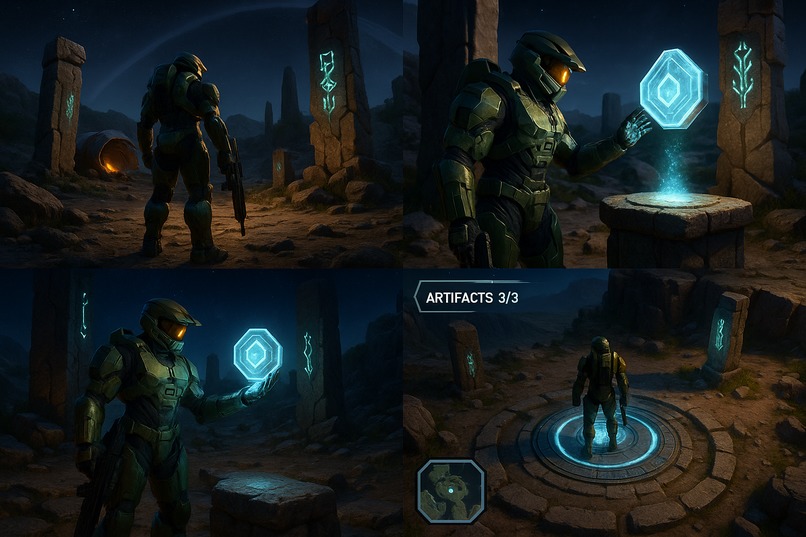
scenes
-
Inspiration
I’ve always been fascinated by the epic scale and mystery of Halo’s Forerunner mythology. When the Meta Horizon Creator Competition called for fresh, mobile‑friendly worlds, I saw an opportunity to merge two passions: Halo’s ancient‑alien lore and the cutting‑edge potential of AI‑driven creation. The idea of an AI‑forged Spartan retracing the galaxy’s lost history felt like the perfect way to showcase both narrative depth and technological innovation.
I was also inspired by my ongoing Cortana project—my ambition to build a “second‑brain” assistant that integrates every aspect of my life. This spurred me to experiment with multiple LLMs, each bringing its own strengths to the world‑building process.
What I Learned
- AI‑Assisted World‑Building: By leaning on different AI assistants, I discovered how varied their creative suggestions can be:
- OpenAI GPT‑4 (ChatGPT) for narrative structure and dialogue prompts
- Google Gemini for level layout and environmental detail ideas
- Anthropic Claude for refining challenge pacing and reward feedback loops
- Meta LLaMA‑based assistant for optimizing asset count and performance tips
- OpenAI GPT‑4 (ChatGPT) for narrative structure and dialogue prompts
- Horizon Worlds Desktop Editor: I learned that you don’t need a headset to build for Meta Horizon—everything from terrain to interactivity can be created on PC.
- Mobile Optimization: Balancing visual fidelity with performance taught me how to streamline assets (limiting object count, baking lighting) so the world runs smoothly on a phone.
- Rapid Prototyping Under Pressure: Working against the clock honed my ability to prioritize core gameplay loops—collect artifacts, unlock the final memory—and defer less‑critical polish.
How I Built It
- Account & Tools Setup
- Joined the Meta Horizon Creator Program and installed the Horizon Worlds Desktop Editor on Windows.
- Joined the Meta Horizon Creator Program and installed the Horizon Worlds Desktop Editor on Windows.
- Core Concept & Design
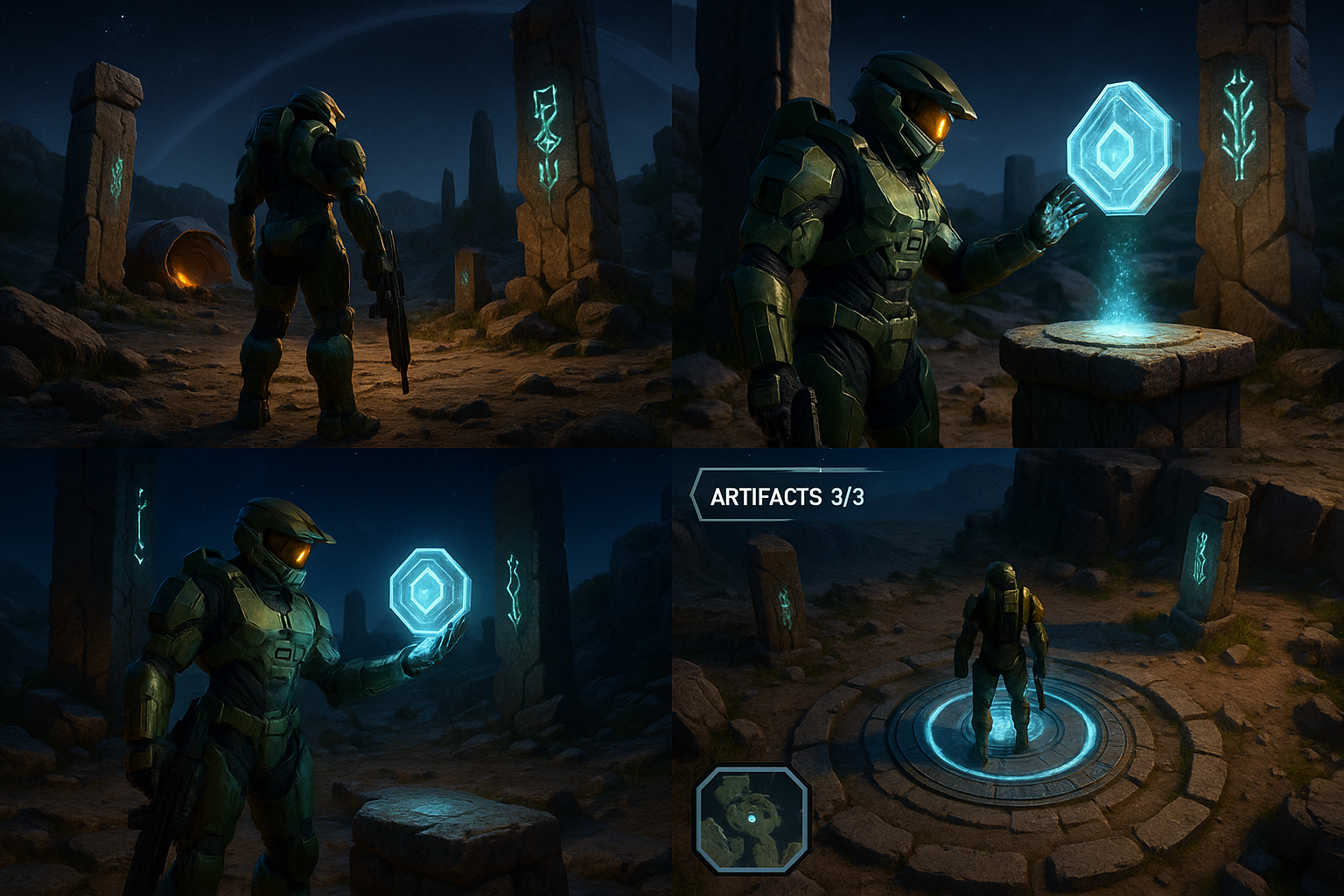
- Defined the narrative: an AI‑forged Spartan must recover three Forerunner artifacts to piece together the galaxy’s annihilation.
- Consulted:
- ChatGPT (OpenAI) for initial story beats
- Gemini (Google) to sketch out level geography
- Claude (Anthropic) to refine pacing and objectives
- LLaMA‑based assistant (Meta) to optimize asset usage
- ChatGPT (OpenAI) for initial story beats
- Selected Adventure as the genre.
- Defined the narrative: an AI‑forged Spartan must recover three Forerunner artifacts to piece together the galaxy’s annihilation.
- Environment & Props
- Created a desolate Forerunner outpost on an alien ring‑world: a cracked landing pod, hovering energy pillars, and a glowing teleporter pad.
- Used basic shapes (cubes, cylinders) and free assets for rapid layout.
- Created a desolate Forerunner outpost on an alien ring‑world: a cracked landing pod, hovering energy pillars, and a glowing teleporter pad.
- Gameplay & Scripting
- Placed three collectible artifacts around the map; each uses an AI‑generated TypeScript script that disappears on touch and increments a counter.
- Wrote “onCollect” logic to activate the teleporter when all artifacts are gathered.
- Placed three collectible artifacts around the map; each uses an AI‑generated TypeScript script that disappears on touch and increments a counter.
- Testing & Iteration
- Entered Play mode in the editor to ensure each artifact triggered correctly and the teleporter activated reliably.
- Checked performance metrics and trimmed excess geometry.
- Entered Play mode in the editor to ensure each artifact triggered correctly and the teleporter activated reliably.
- Publishing & Demo Video
- Published with Discoverable ON and Members‑Only OFF, grabbed the world URL.
- Recorded a 3‑minute mobile walkthrough, uploaded to YouTube, and linked it in our Devpost submission.
- Published with Discoverable ON and Members‑Only OFF, grabbed the world URL.
Challenges
- Time Crunch: With only hours before the deadline, I had to focus on a minimal viable experience (three artifacts + teleporter) rather than expansive levels.
- No VR Headset: Building entirely in desktop mode meant I couldn’t physically “feel” the scale—so I relied on camera tests and mobile play‑throughs to verify comfort and readability.
- Mobile Performance: Ensuring the world stayed under Horizon’s polygon and script‑count limits forced me to constantly optimize textures, mesh counts, and script complexity.
- Multi‑Model Coordination: Integrating suggestions from four different AI assistants required careful consolidation—sometimes their advice conflicted, so I had to choose the best fit for pacing, visuals, and performance.
By combining Halo’s rich lore, my Cortana‑inspired ambition, and a diverse suite of AI tools, this project demonstrates how modern LLMs can collaborate to accelerate world‑building—even under a tight deadline and without specialized hardware.

Log in or sign up for Devpost to join the conversation.