-
-
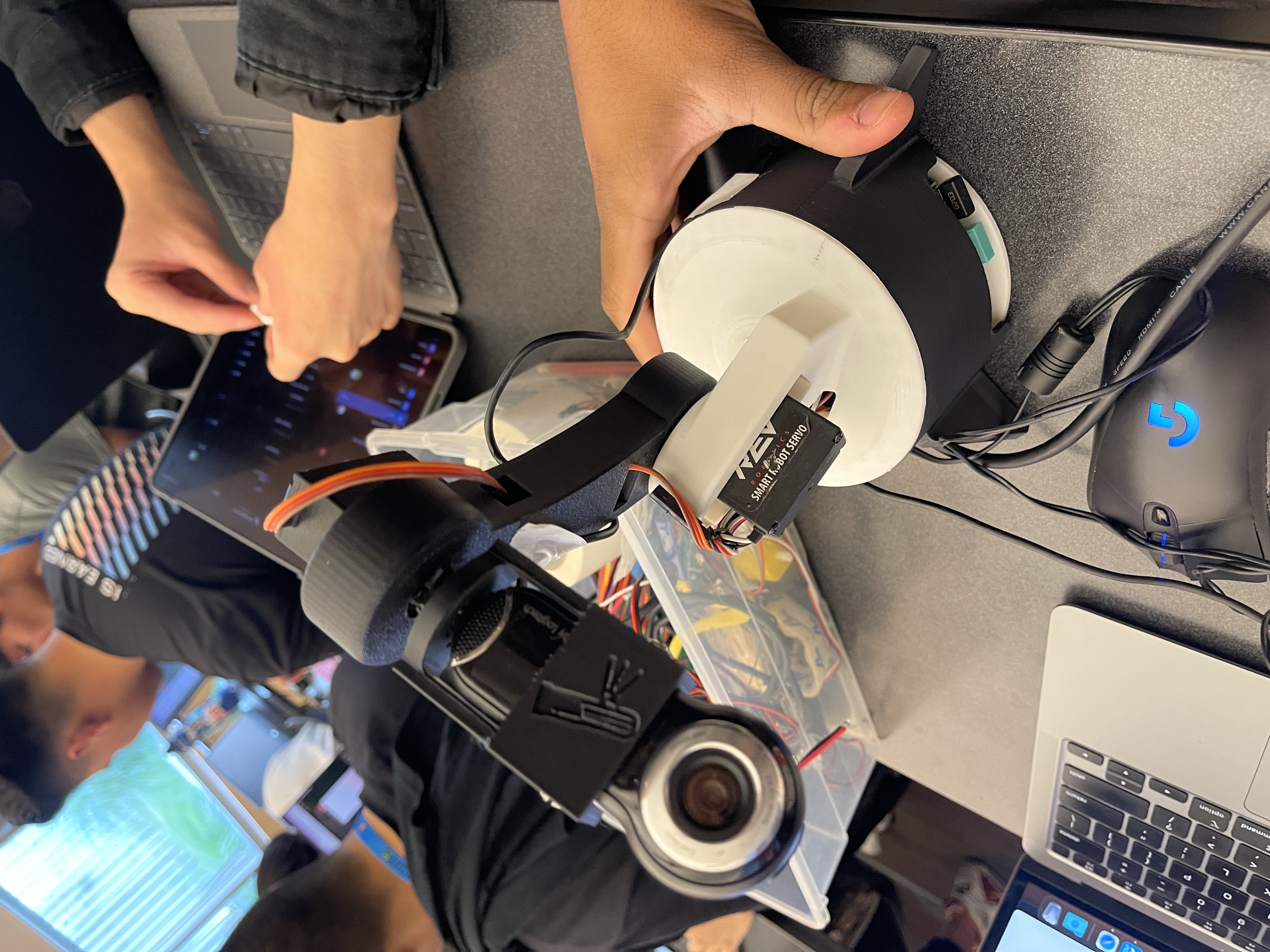
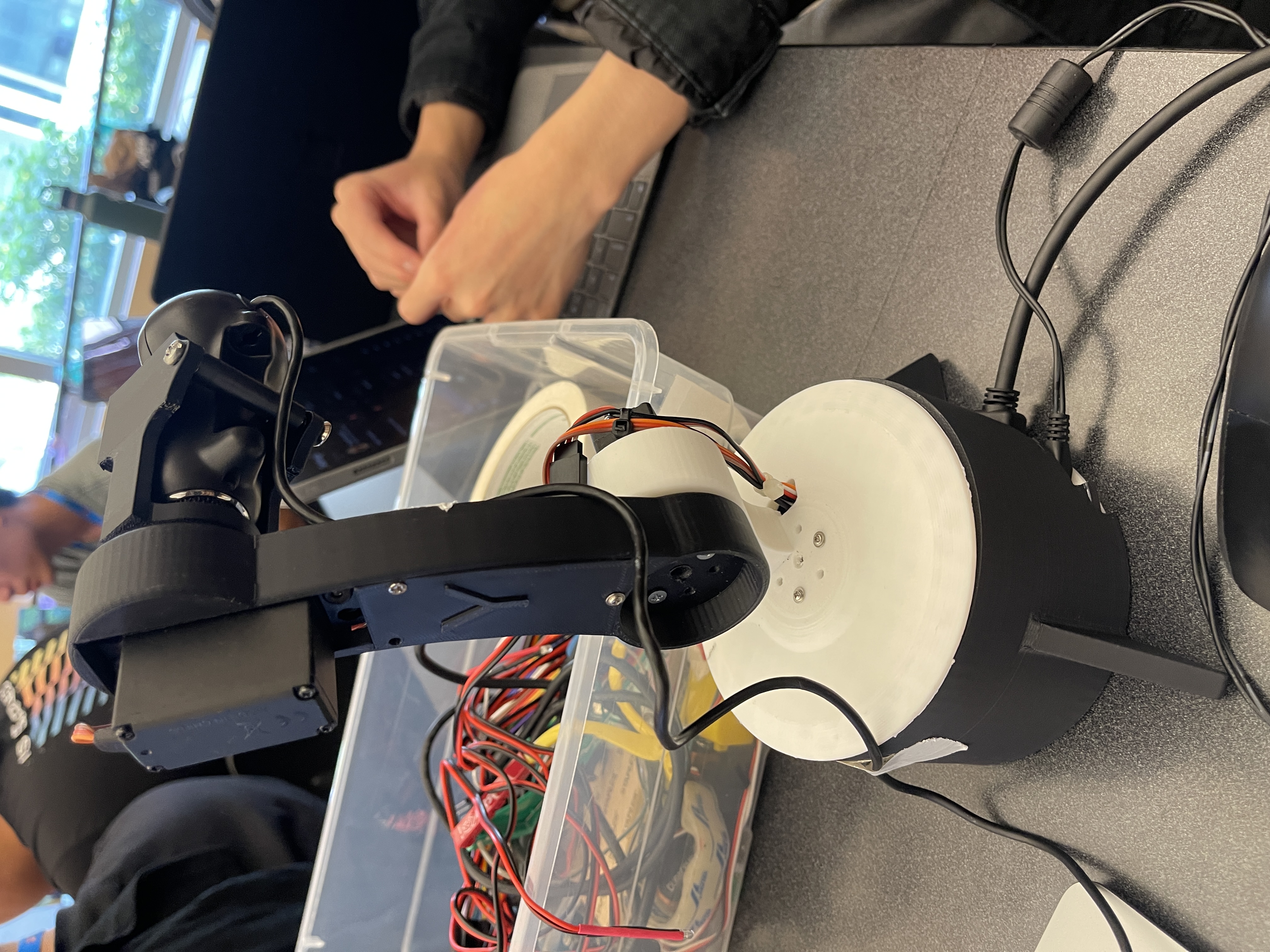
logo of space churro which is inscribed into our 3d printed model
-
-
Inspiration
Our fascination with the cosmos and the challenge of bringing it closer to people inspired Space Churro. Stargazing can be challenging for beginners who may find it hard to locate specific stars or planets without experience or equipment. We wanted to build a user-friendly tool that makes the night sky accessible, allowing anyone to point out celestial objects with ease and observe them.
What it does
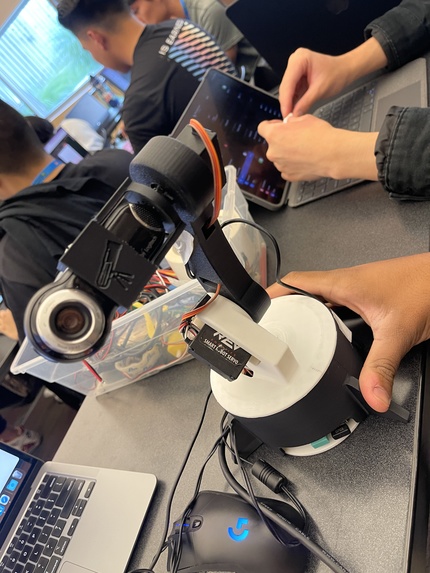
Space Churro is a smart lens that precisely calculates and points to any celestial object in the sky. Users can simply select an object on our web interface, and Space Churro will automatically rotate and show the exact position of that object in the sky. This allows even beginners to get photos of specific stars and planets in a way that has never been more accessible.
How we built it
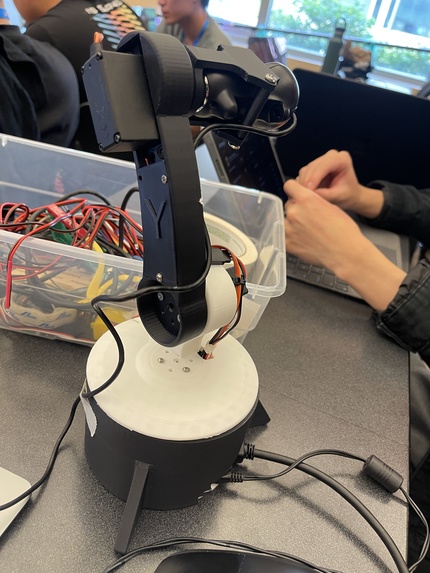
We built Space Churro using a combination of hardware and software: React.js powers the user-friendly web interface. Flask acts as the backend framework, enabling seamless communication between the interface and the device. Raspberry Pi drives the 3-axis robotic arm, equipped with servos controlled by Python and GPIO Zero to handle each movement. These were all custom designed, printed, and tested during the duration of the hackathon. We used Skyfield API to provide real-time celestial data, and we calculated the math to get exact result from user's real time location by their IP address. Which enables the device to adjust to the positions of stars and planets accurately. We also 3D printed parts many for our device.
Challenges we ran into
Integrating hardware and software components presented a unique set of challenges, including: Achieving precise movement for accurate pointing, which required manually fine-tuning the servos. Synchronizing celestial calculations with physical actions, especially as different objects have different apparent speeds and positions in the sky. Building an intuitive interface that connects seamlessly with the backend while maintaining low latency. We learned how to implement Flask in order to have our front end on the mac wirelessly send commands to our robotic telescope.
Accomplishments that we're proud of
We’re proud of creating a fully functional prototype that smoothly integrates hardware and software to bring astronomy closer to people in a tangible way. The accuracy of our pointing system, combined with the responsiveness of our web interface, is a big achievement, allowing users to experience real-time astronomical tracking.
What we learned
This project deepened our understanding of robotics, astronomy, and software-hardware integration. We learned to troubleshoot common issues in robotic movement and practiced optimizing code for real-time applications. Additionally, we became familiar with advanced API usage for astronomical calculations and gained insights into user interface design for hardware-based projects.
What's next for The Space Churro
Our next step is to enhance Space Churro’s capabilities by incorporating a predictive feature that shows the future positions of celestial bodies, making it ideal for tracking upcoming events like eclipses or planetary transits. We also plan to add voice recognition for an even more interactive user experience, allowing users to verbally request objects in the sky. To make Space Churro even more immersive, we plan to integrate Extended Reality (XR) capabilities, allowing users to view celestial data overlays directly through the lens. This XR integration would provide real-time information on each celestial object, such as names, distances, and unique facts, creating an educational, hands-on experience. Additionally, we’re working on adding larger, high-precision lenses for clearer visuals and increased accuracy in tracking. With these upgrades, Space Churro will transform from a stargazing assistant to an advanced tool for astronomical exploration and education.


Log in or sign up for Devpost to join the conversation.