Inspiration
What it does
How we built it## Inspiration
I wanted to create a stealth game that felt playful, strategic, and approachable instead of violent or intimidating. The idea came from combining the planning of a heist story with the progression and decision-making of a management game.
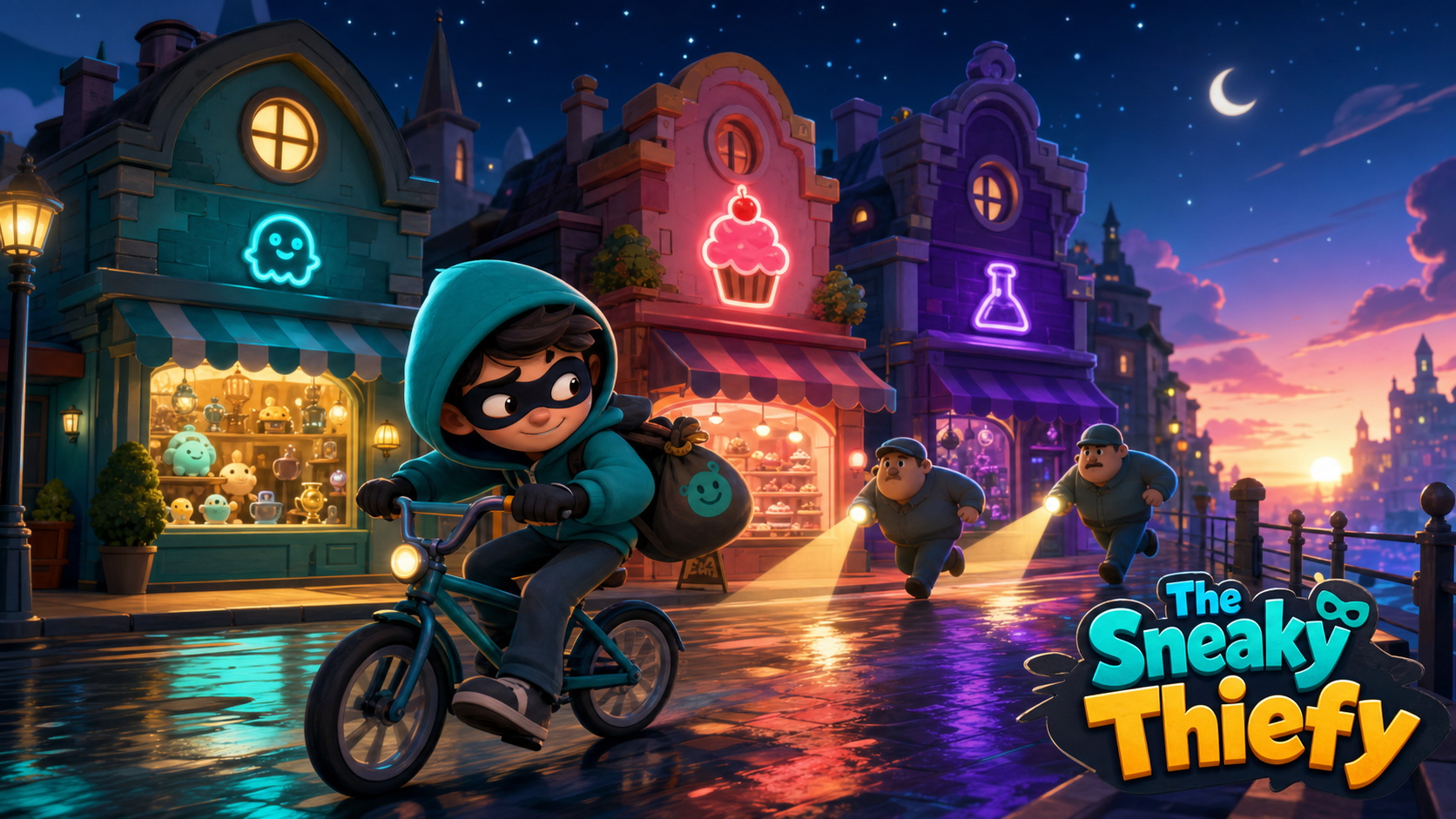
This became The Sneaky Thiefy, a colorful caper experience where players study stores during the day, choose their equipment, complete solo nighttime heists, and use their earnings to build an impressive hideout.
About the Project
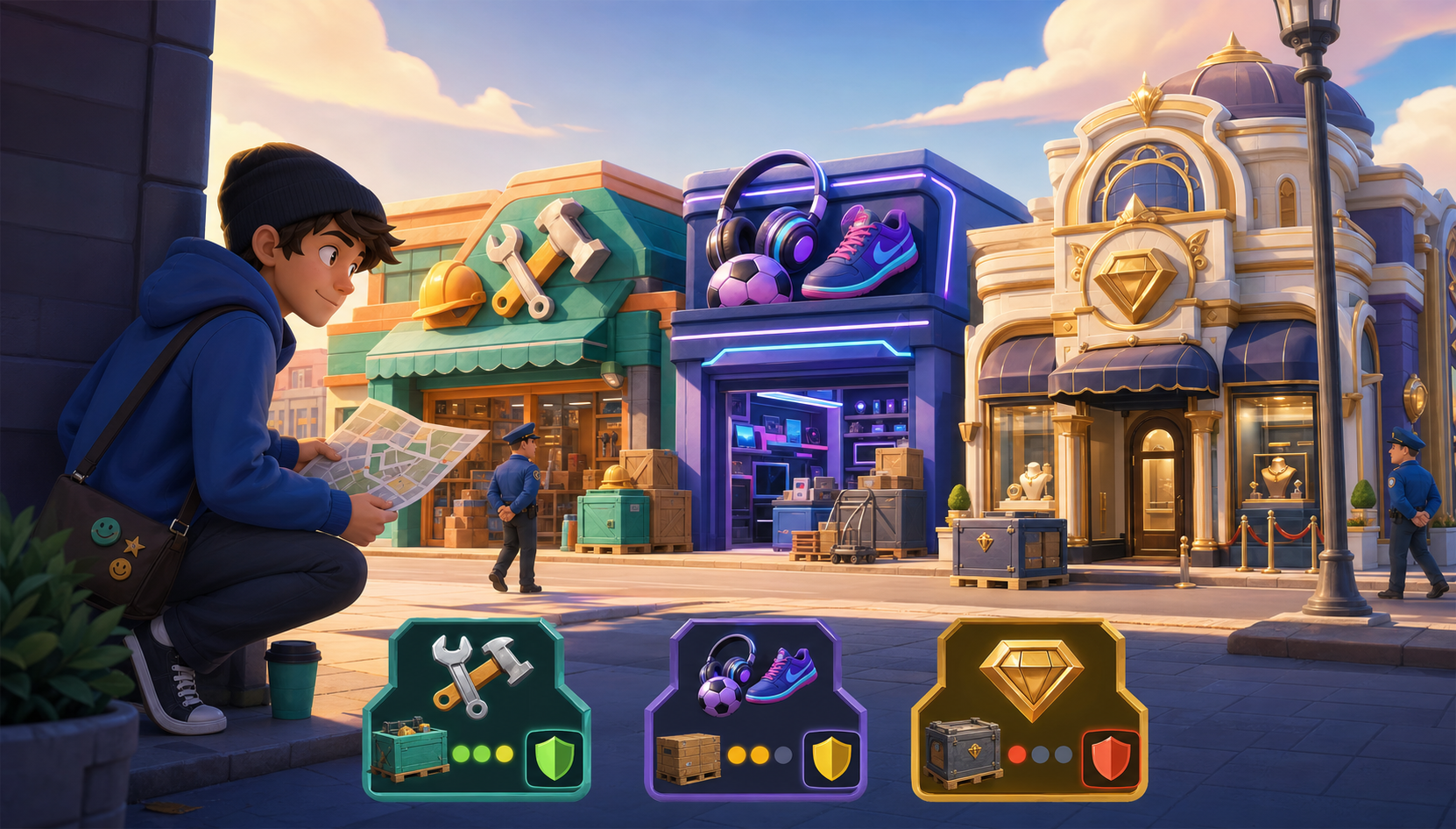
Each cycle begins during the daytime. Players investigate three stores with different security levels, shipment possibilities, and potential rewards:
- Cut-Rate Corner: Lower security and dependable starter loot.
- Flash & Dash: Moderate security and valuable equipment.
- The Gilded Grid: High security and prestigious luxury loot.
Players cannot learn everything before entering. They must decide how much time to spend gathering information and whether the available clues justify the risk.
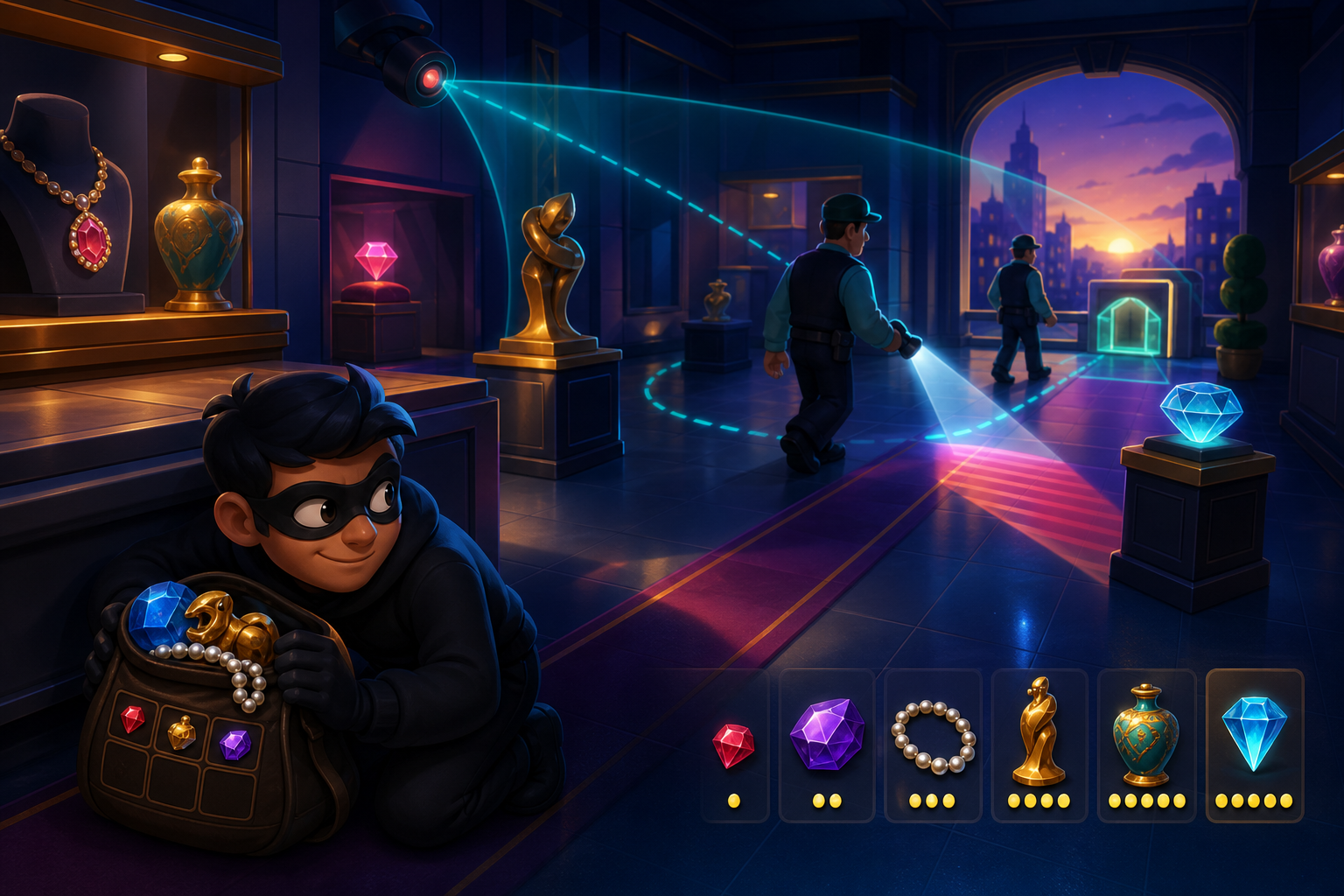
At night, players avoid guards, flashlight cones, cameras, and noisy surfaces. They can use distractions, hiding places, quiet shoes, and camera jammers. Bag space is limited, and larger items occupy more capacity. This forces players to choose between several small valuables or one risky, bulky prize.
Players must escape before dawn. Successful heists provide Cash and visible hideout upgrades. Failure removes carried loot, increases Heat, applies a capped fee, and shortens the following daytime planning period.
How I Built the Design
I started by defining the day-and-night structure:
- Case stores during the day.
- Compare security, shipments, and rewards.
- Select shoes, tools, vehicle, and bag capacity.
- Travel to the chosen store.
- Sneak inside and collect loot.
- Escape before dawn.
- Sell the loot and manage Heat.
- Upgrade the hideout and prepare for another attempt.
I designed the stores, stealth language, equipment progression, Heat system, vehicle choices, failure recovery, hideout growth, player journey, visual direction, and production schedule as one connected package.
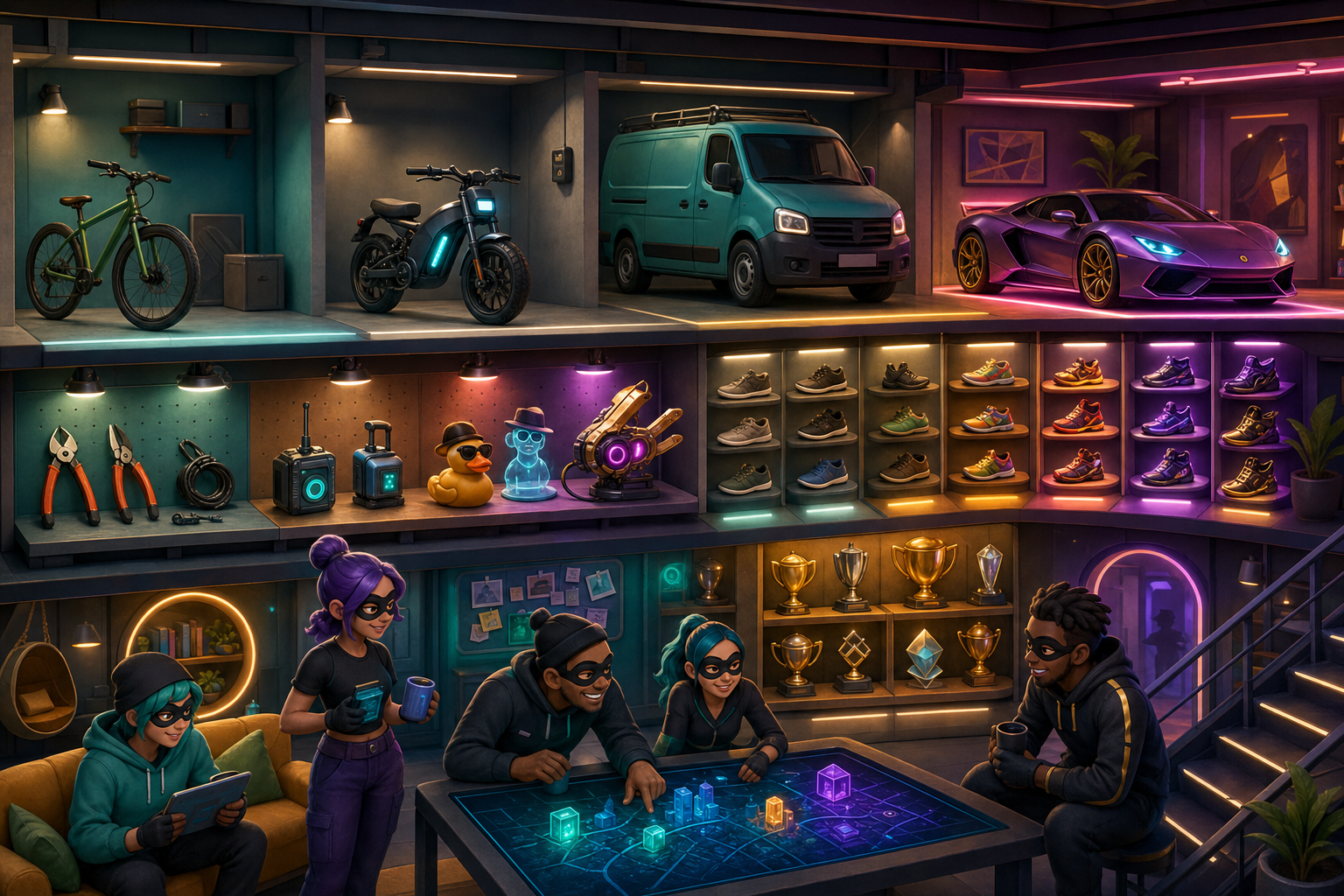
The experience supports a shared social hideout while keeping heist sessions isolated for each player. This allows players to display vehicles, shoes, tools, trophies, and upgrades without causing conflicts inside another player's heist.
Challenges
The greatest challenge was making failure meaningful without making it discouraging. Losing carried loot creates tension, but permanent progress is protected. Fees are capped, Heat can be reduced, and players can recover through quieter, lower-risk missions.
Another challenge was making store choice more interesting than simply selecting the location with the highest reward. Daily shipments, security conditions, travel time, Heat, bag capacity, and equipment requirements change the expected value of each store.
Mobile readability was also important. Security uses large flashlight cones, camera arcs, noise indicators, clear alerts, and simple interaction controls so players can understand why they were detected.
What I Learned
I learned that a strong heist game is built around preparation and consequences, not only sneaking. The daytime investigation, equipment choices, bag management, escape route, and Heat recovery make every heist part of a larger strategy.
I also learned that visible progression is especially powerful in a social experience. The hideout acts as a record of the player's decisions, displaying upgraded transportation, equipment, trophies, and preferred play style to other players.
Built With
- openai


Log in or sign up for Devpost to join the conversation.