Inspiration
Sleep is broken for millions. Between school, work, and stress, we found ourselves — and many friends — falling into irregular sleep schedules. Fixing it isn't easy. Existing apps either focus on tracking or meditation, but not on the core problem: shifting sleep schedules gradually and intelligently. We wanted to build a solution that does what no other app does well — help users move from any current sleep time to their ideal schedule, without shocking the body or causing burnout.
What it does
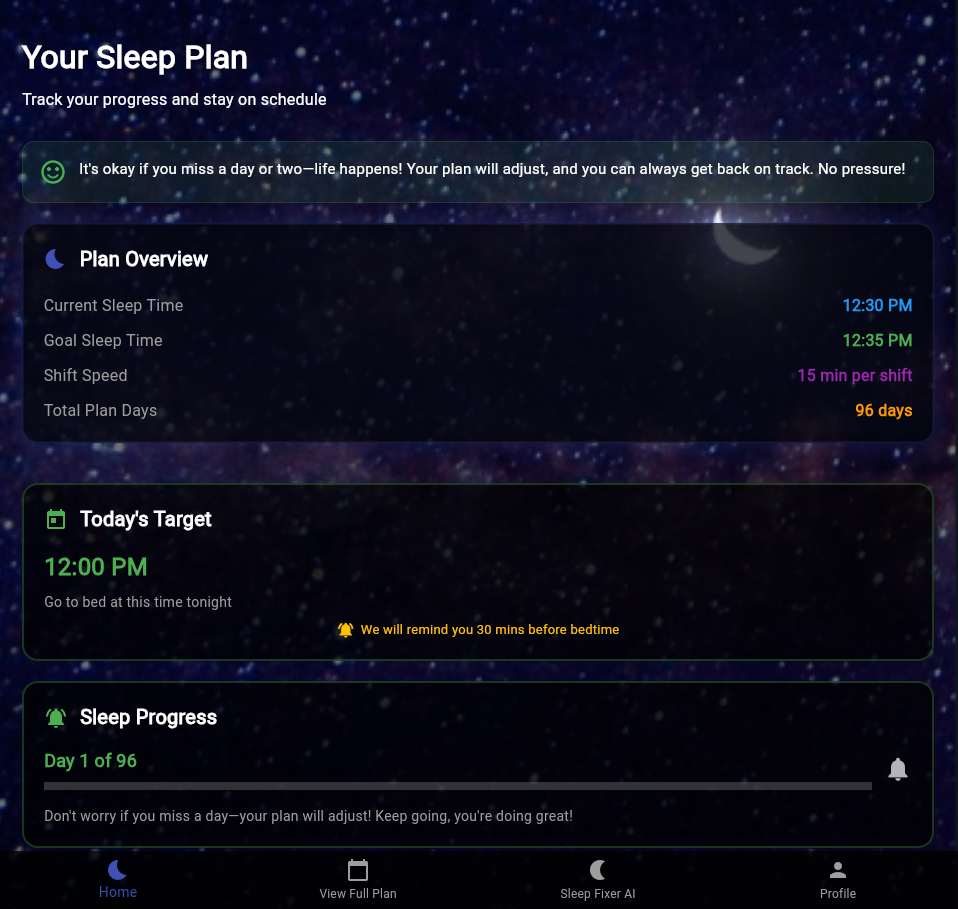
SleepCoach is an AI-powered sleep schedule optimizer that:
- Takes your current and goal sleep/wake times
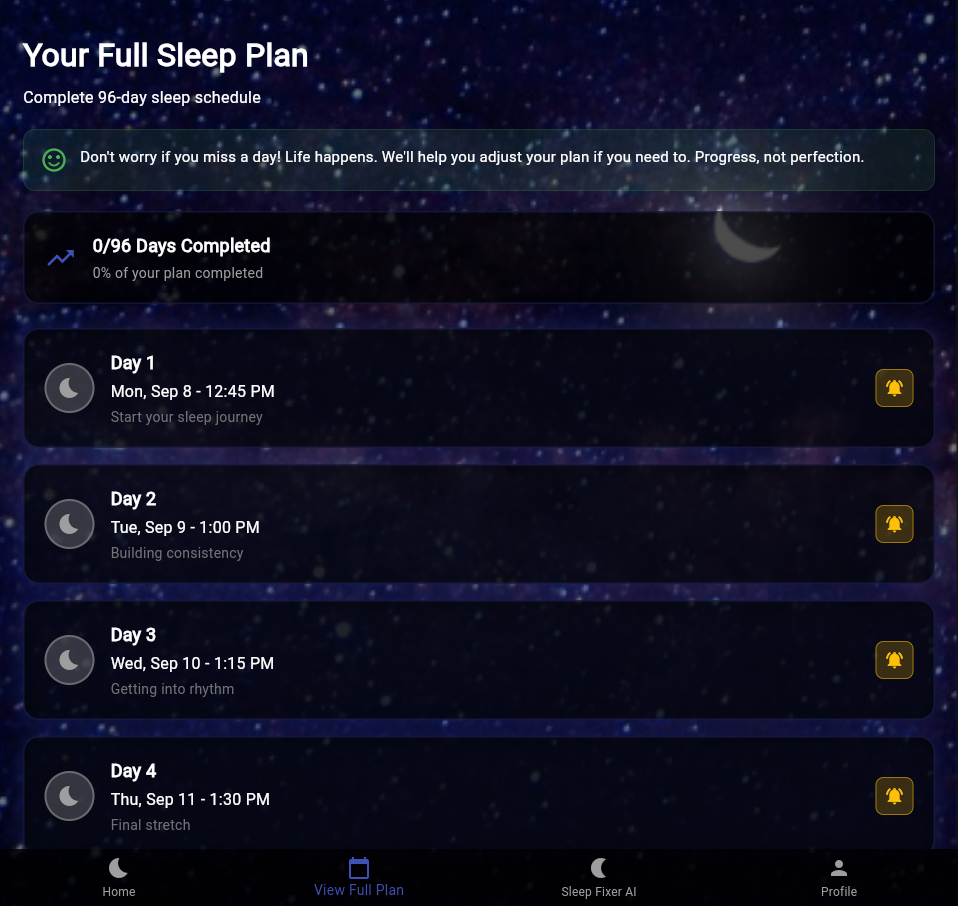
- Generates a daily, science-backed, customized, gradual adjustment plan
- Includes a solidification phase to lock in your new schedule
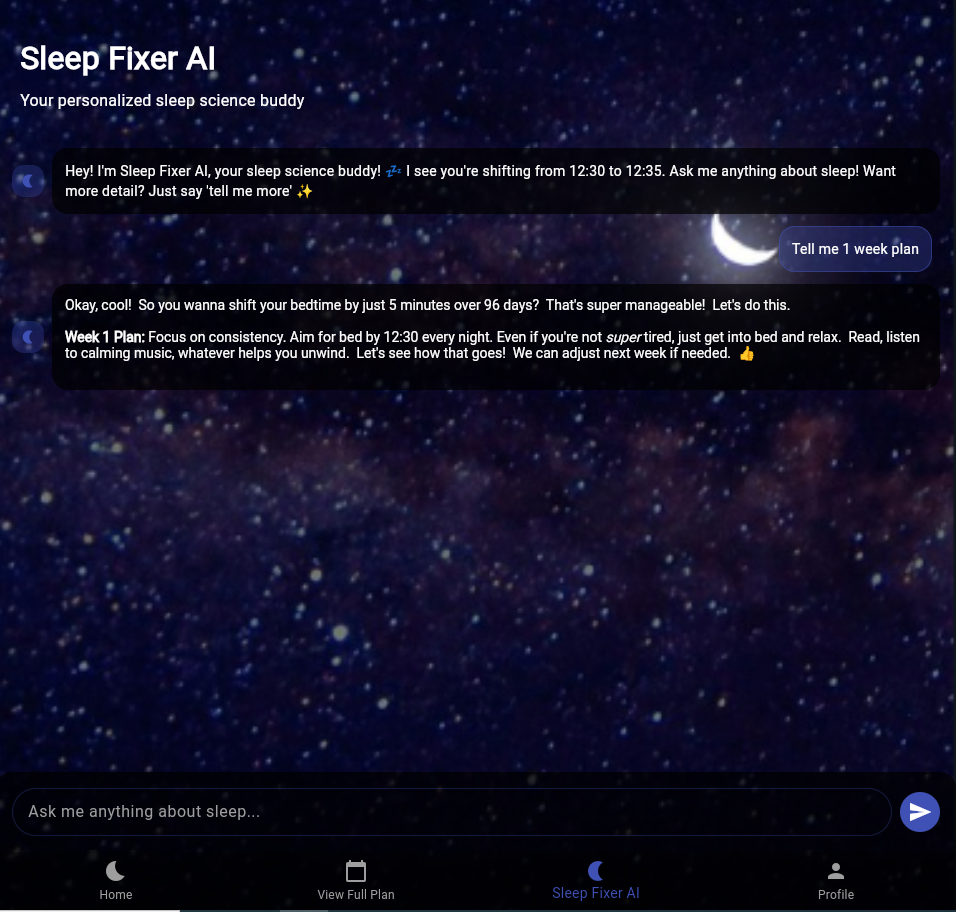
- Supports users with customized AI notifications
- Adapts to fixed wake-up constraints (like school)
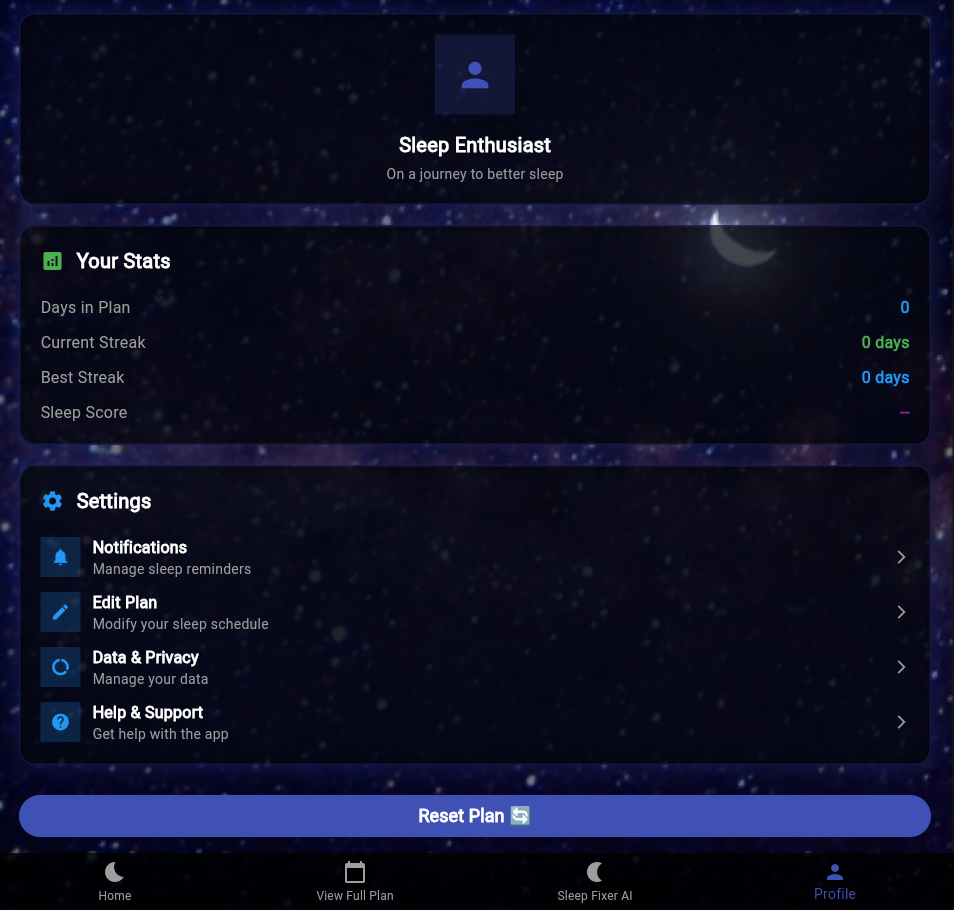
- Has gamification with experience points, levels, and stats
It’s not just a tracker, it’s a plan.
How we built it
To build SleepCoach, we engineered a cross-platform mobile solution using Flutter (Dart), allowing us to maintain a single codebase for iOS, Android, and the web while ensuring performance and design consistency via Material Design 3 components.
- Frontend: The app UI is written in Flutter with a declarative widget structure, utilizing state management patterns (Provider/ValueNotifier) for reactivity and modularity. We followed atomic design principles to keep components reusable and maintainable.
- Local Storage: We used Hive, a fast, lightweight NoSQL database optimized for Flutter, to persist user sleep data (e.g., daily sleep logs, shift plans) offline. SharedPreferences was used to store app settings and preferences, enabling quick access without serialization overhead.
- API Integration: We integrated Google Gemini API through Dart’s http package to power natural language generation for sleep coaching. Prompts are dynamically constructed based on user behavior, tone preferences, and current sleep trends.
- Device Integration: Using Device Info Plus, we detect device platforms and OS versions to customize platform-specific experiences. URL Launcher allows seamless deep linking to system-level settings like blue light filters.
- Sleep Plan Engine: Our custom-built algorithm computes gradual sleep/wake shifts based on principles from chronotherapy and circadian rhythm biology. The logic factors in:
- current vs. target wake/sleep time
- max shift per day (15–30 minutes)
- phase response curves
- fixed wake-up constraints vs. flexible schedules The algorithm outputs a day-by-day schedule with annotations, which is then contextualized by AI for user-facing clarity.
- AI Coach: The AI coach leverages Google Gemini's LLM API to translate raw sleep plan data and behavior insights into supportive, friendly feedback. Prompts are engineered to mimic a conversational, emotionally intelligent tone with adaptive language.
- Codebase: Managed via Git, hosted on GitHub, and developed using VS Code and Android Studio. CI/CD planned using GitHub Actions for automated testing and builds.
Challenges we ran into
- Some users have strict school/army wake times but flexible sleep times. We had to design the algorithm to support both effectively.
- There were errors in the math for the time calculations, which we had to find workarounds for.
- We wanted to add too many features, but staying focused on one problem helped.
Accomplishments that we're proud of
- Creating a fully working app that outputs real, science-informed daily plans.
- Solving a real, relevant problem for everyone.
- Designing an aesthetic and pleasant UI.
What we learned
- Sleep is deeply personal and requires personalized plans.
- Small consistent changes are more effective than aggressive resets.
- Quality over quantity; focus over features.
What's next for SleepCoach
- Launch on the Play Store and App Store.
- Add dynamic plan adjustments (for inevitable days when you can't follow the plan).
- Build a Reddit-style sleep community within the app.
- Integrate sleep tracking and sync with Google Fit / Apple Health.
- Partner with schools, governments, or health orgs to combat sleep debt at scale.

Log in or sign up for Devpost to join the conversation.