-
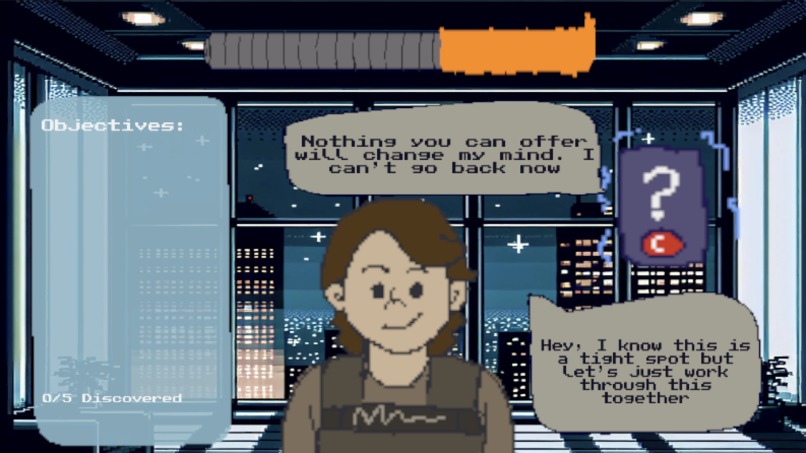
Things aren't looking great to start-
-
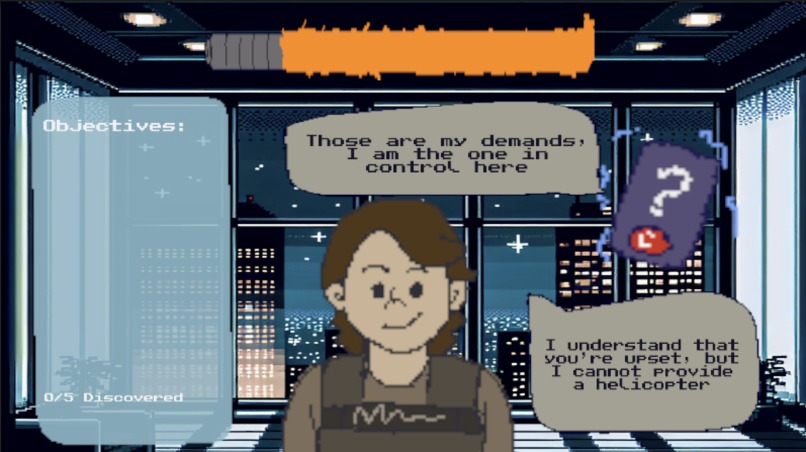
Time is running low!
Inspiration
We wanted to help hostage negotiators train for real life hostage situations by utilizing emotion and voice detecting AI to create realistic situations that the user can navigate by talking the situation down.
What it does
Users are given thirty seconds to talk down a suspect who is taking a location hostage. The suspect has secret objectives that the player needs to discover through talking to the suspect. How the suspect reacts will depend on the users words as well as emotions as Hume interprets both and decides how the suspect will react.
How we built it
We created a python backend to power the AI features of our unity game, specifically using Hume AI to power text to speech, emotion detection, and audio transcription. We also used context injection to modify the Hume responses according to our scoring algorithm that decided how well the user was doing.
Challenges we ran into
Integrating everything together proved to be a challenge, as some things didn't work with others well so we had to go back and modify code to work with other sections of the game.
Accomplishments that we're proud of
Being able to get Hume's emotion detection to work in parallel with the context injection was a great moment for us.
What we learned
Going into the project none of our team had very little experience with any of the tech used in our stack, so we all had to learn Unity, Hume, C#, and more, which was a fun experience for our team.
What's next for The Situation Room
We plan on adding more levels, more difficulty settings, and more detailed animations to the game next, to allow it to be even more useful for real-life training.

Log in or sign up for Devpost to join the conversation.