-
-
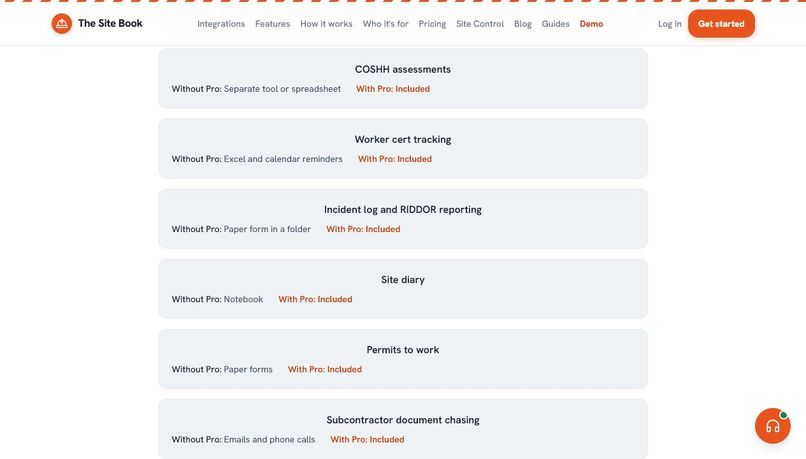
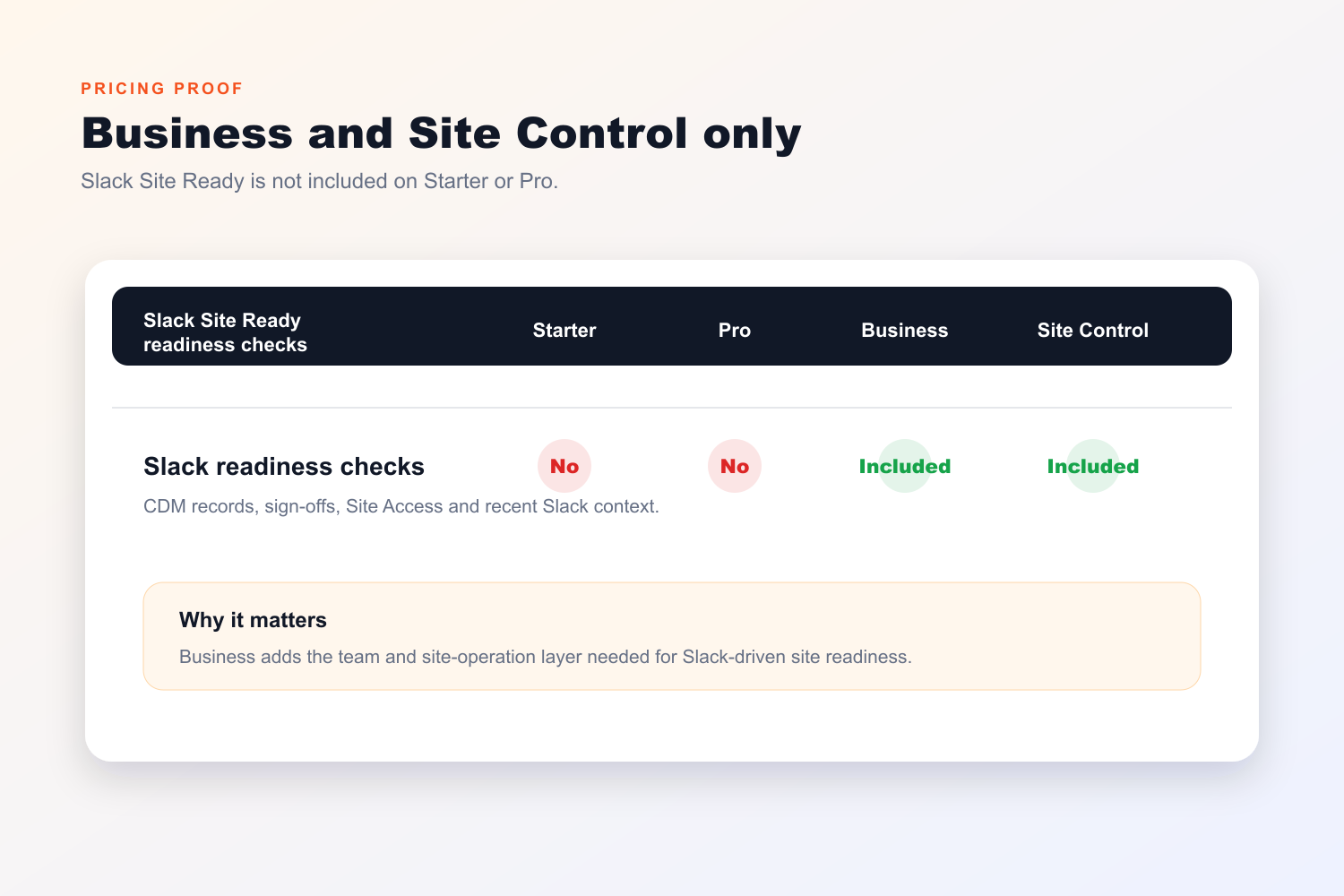
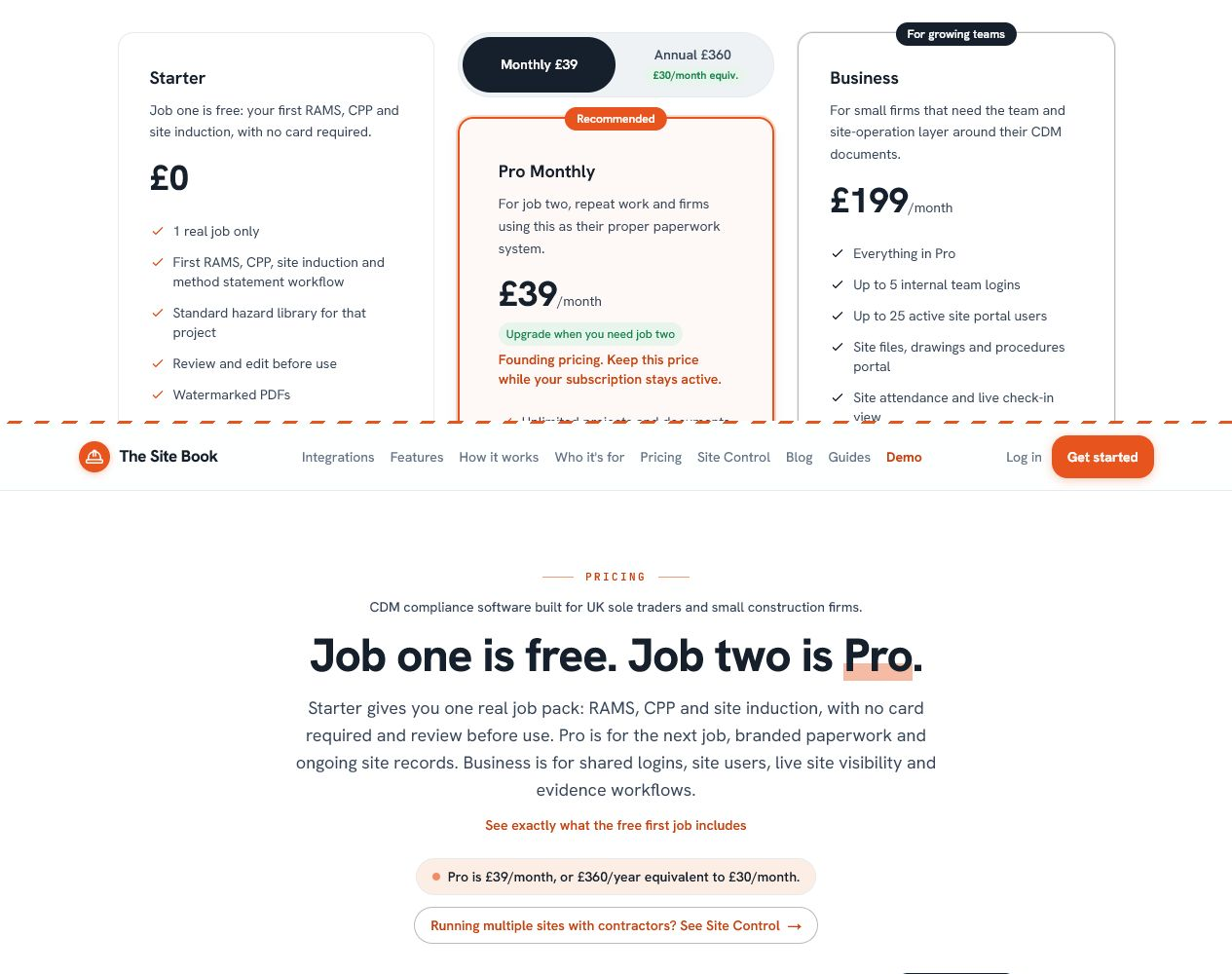
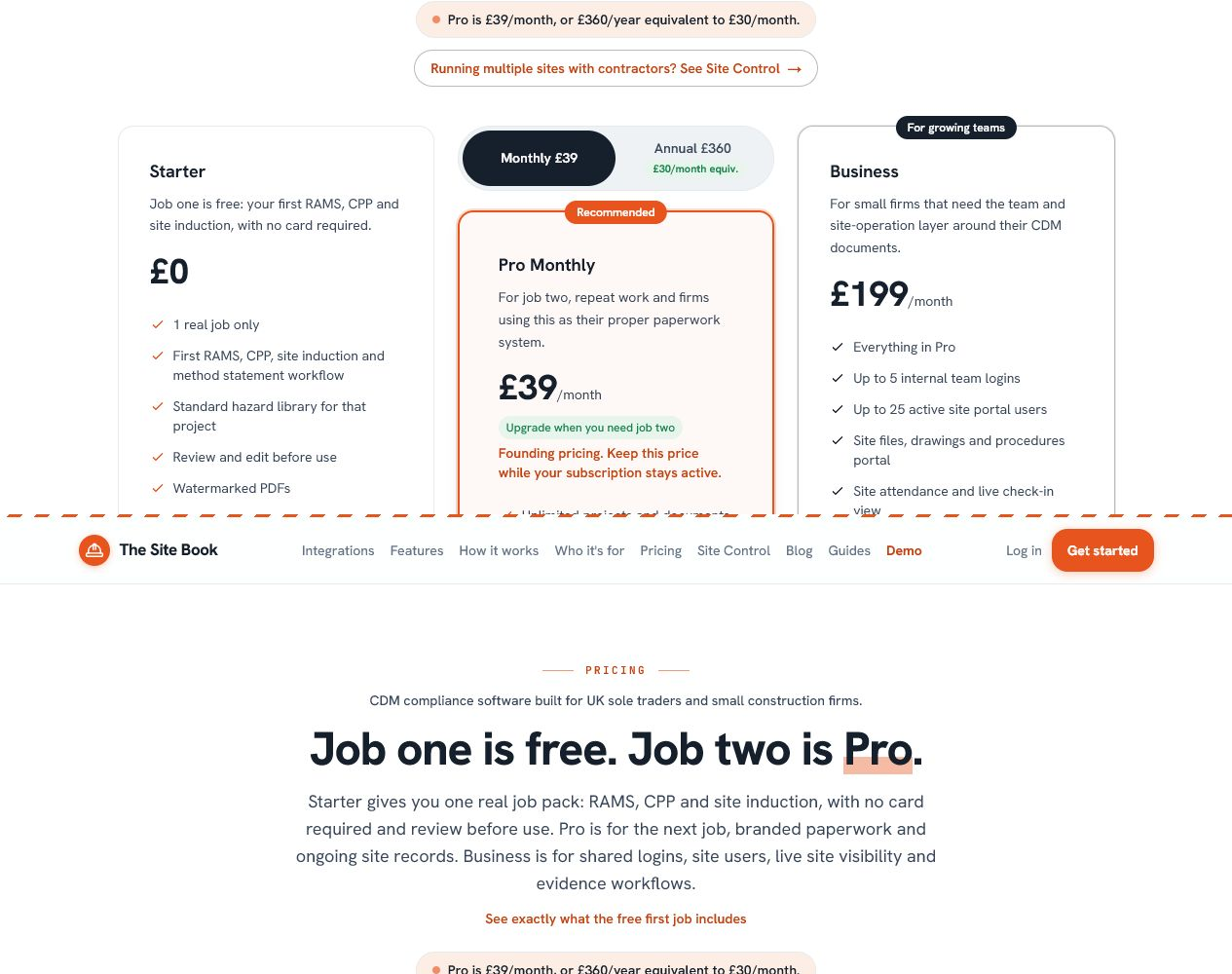
Pricing comparison proof: Slack Site Ready is restricted to Business and Site Control plans.
-
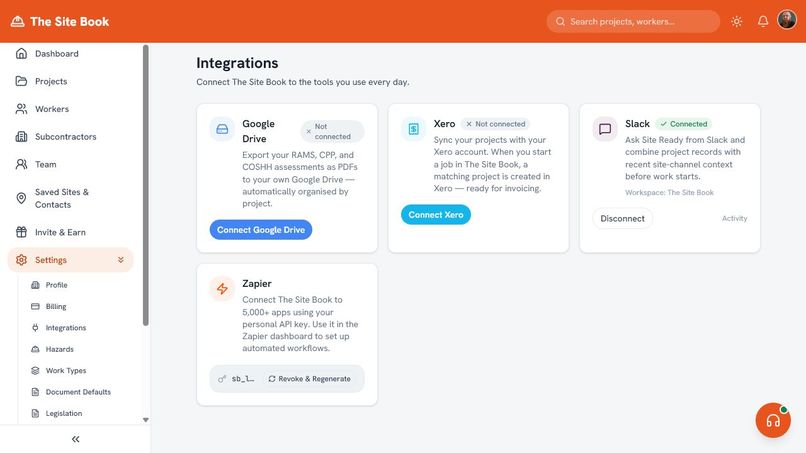
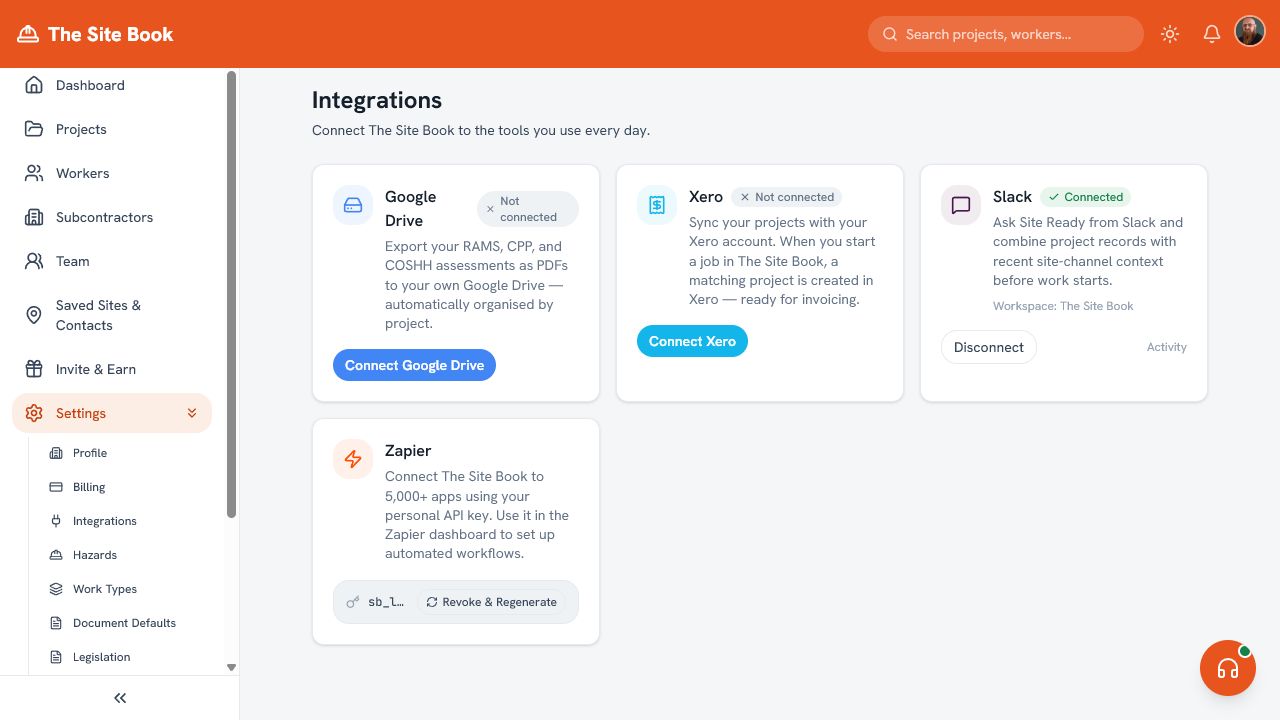
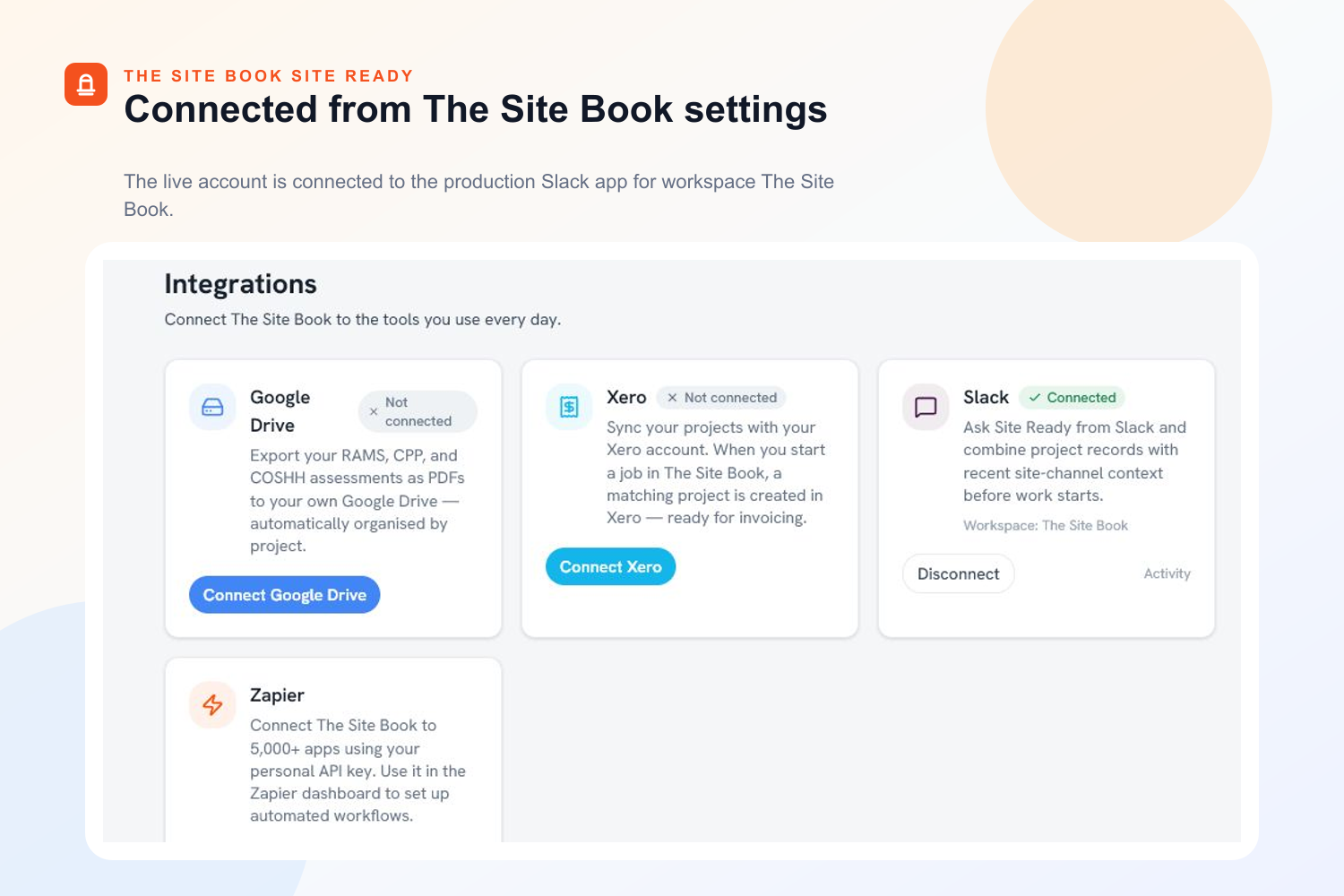
Connected Slack integration in The Site Book settings, ready for Site Ready workspace access.
-
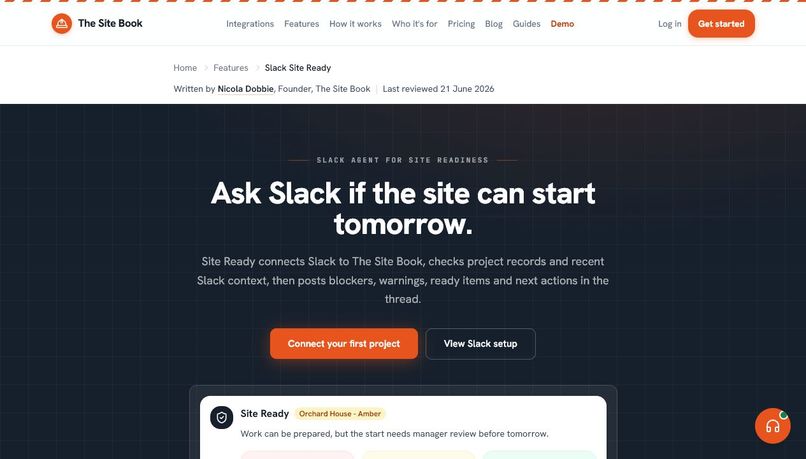
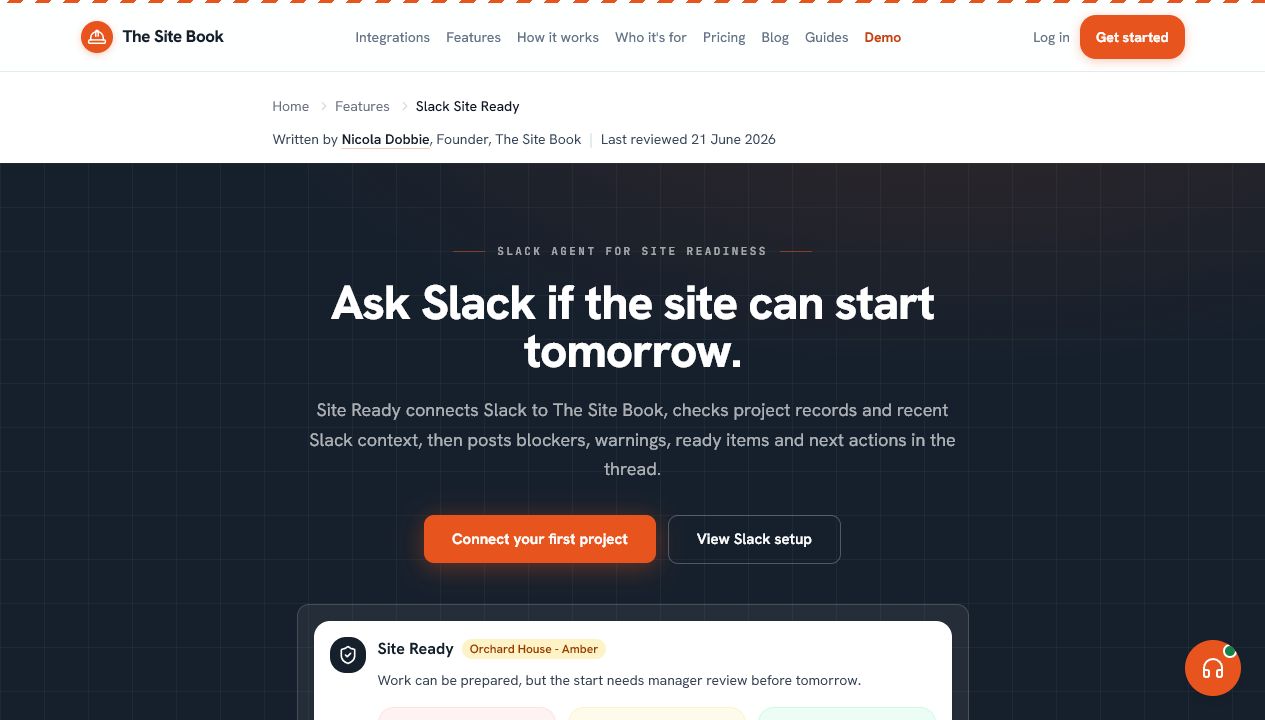
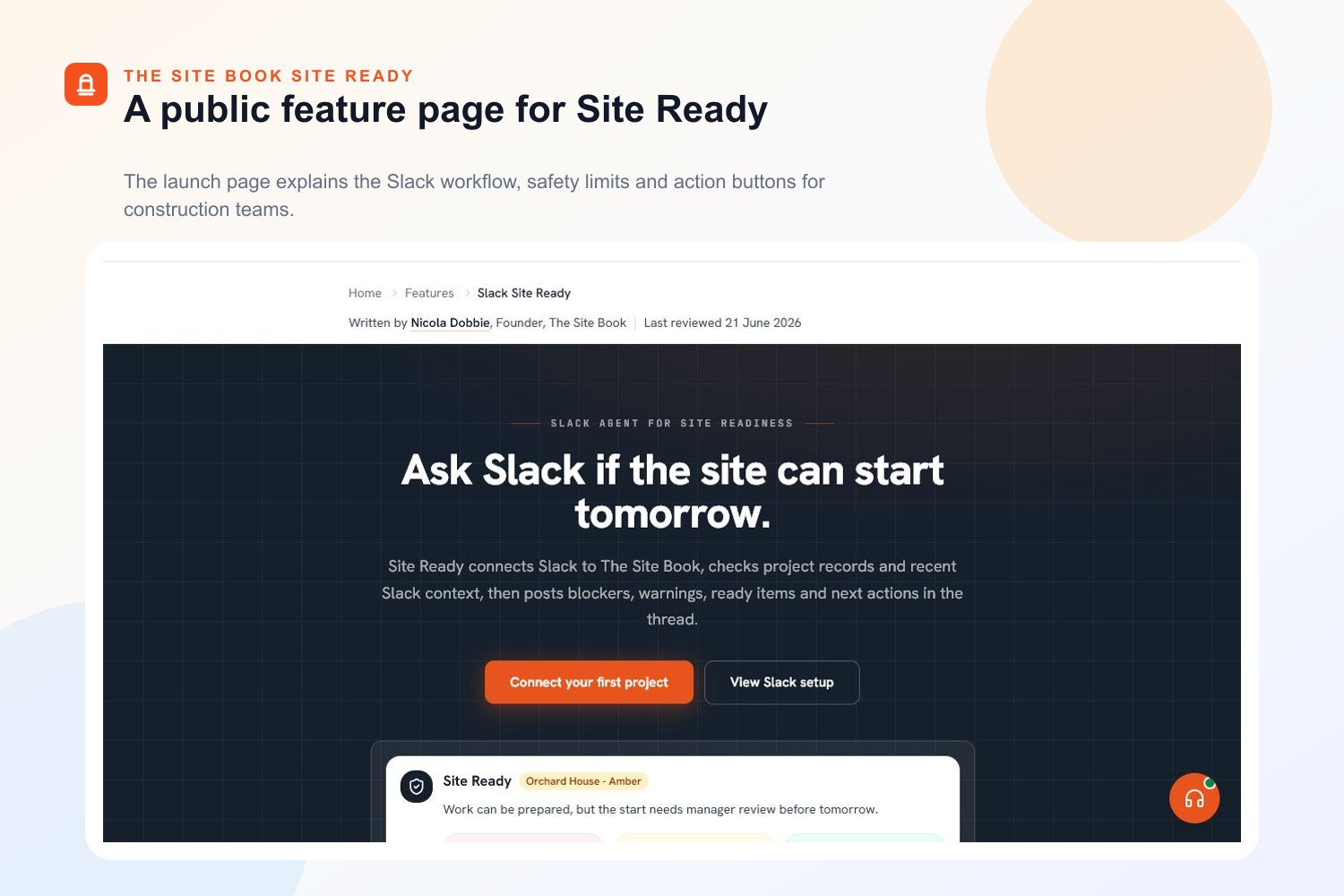
Public Site Ready feature page: ask Slack if a construction site can start tomorrow.
-
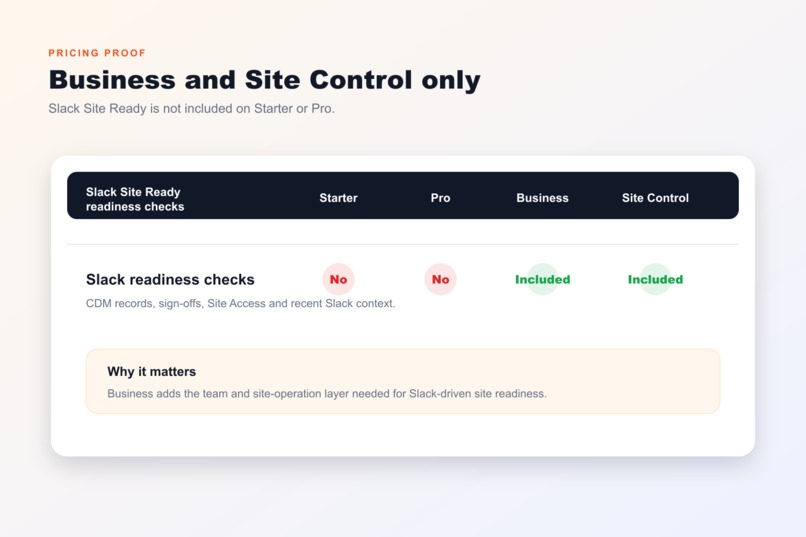
Business and Site Control entitlement view, showing Slack Site Ready as a higher-plan feature.
-
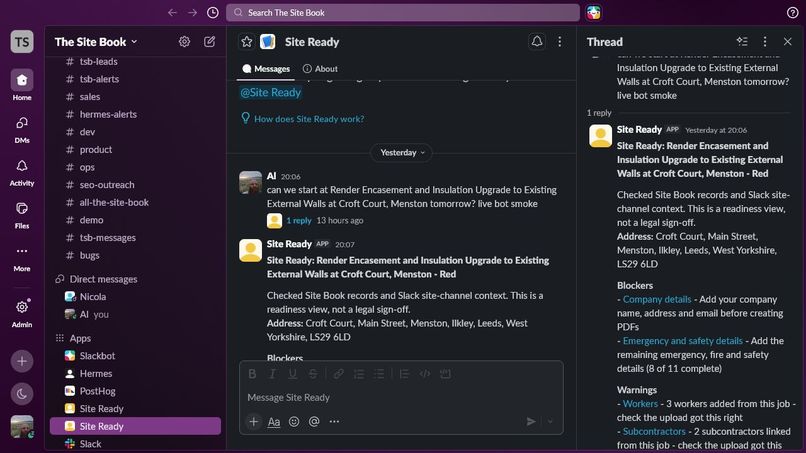
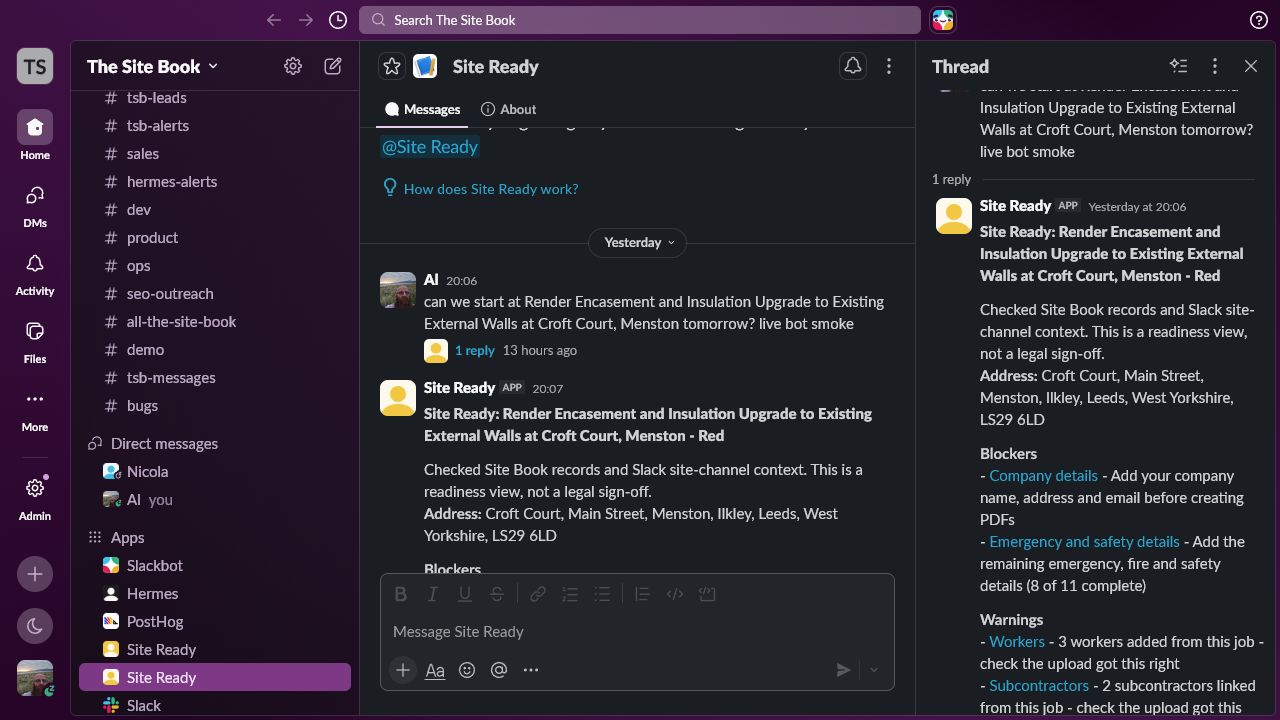
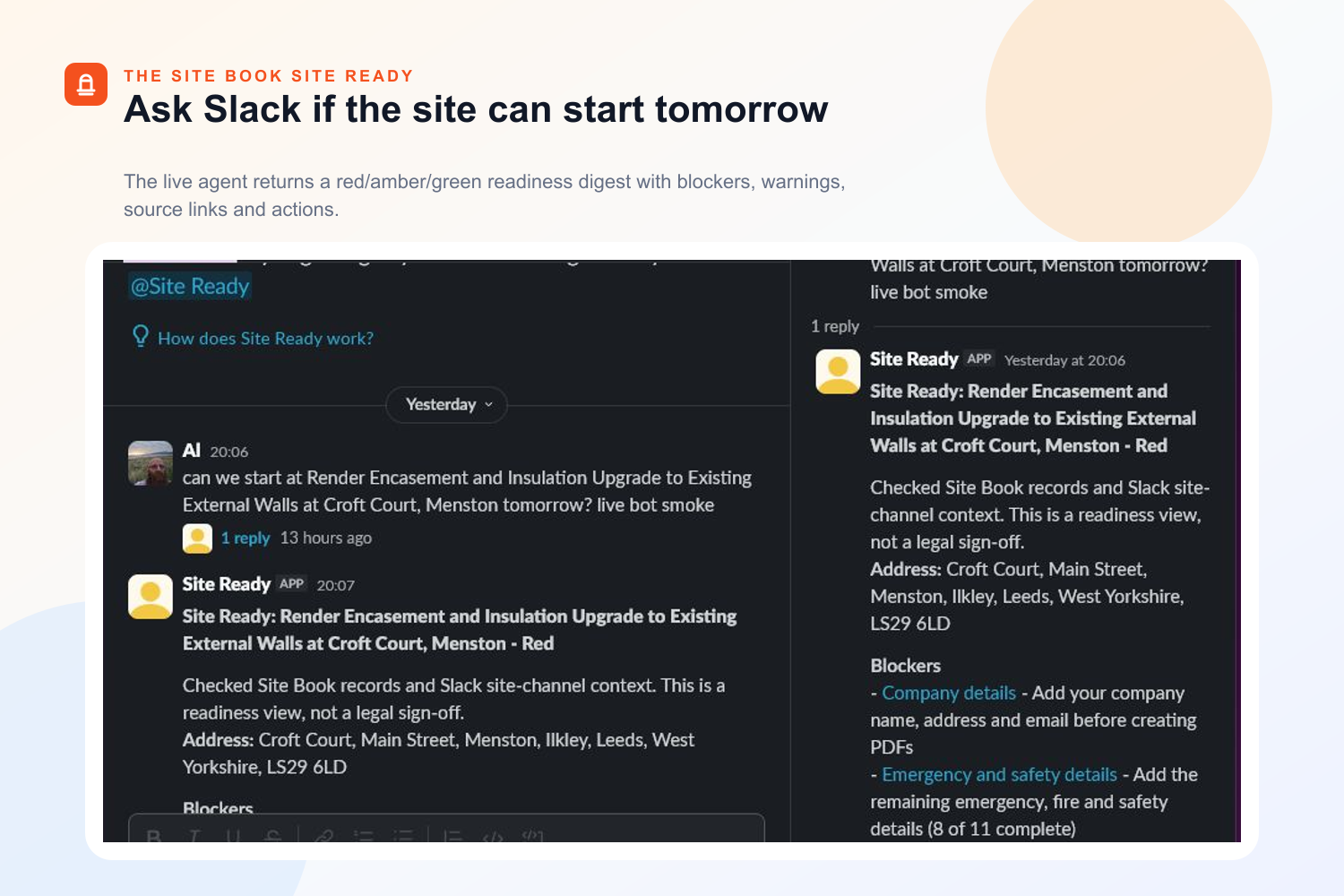
Live Slack demo: Site Ready returns blockers, warnings, source links and next actions in-thread.
-
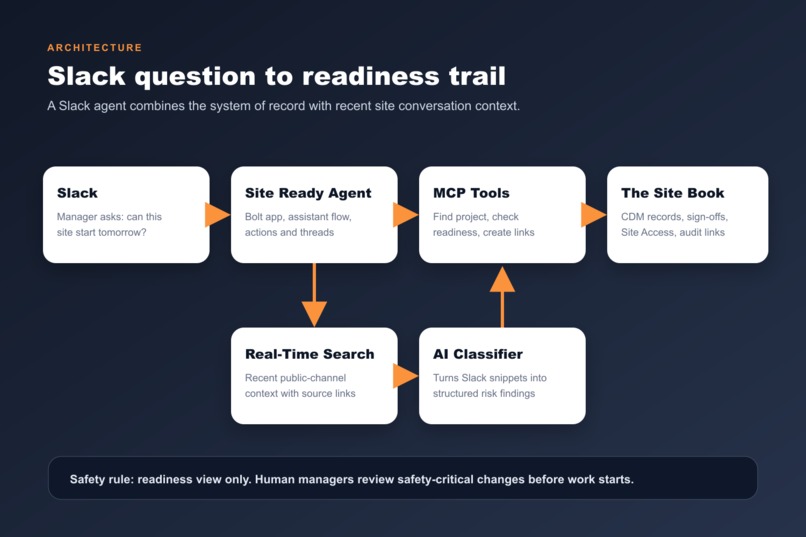
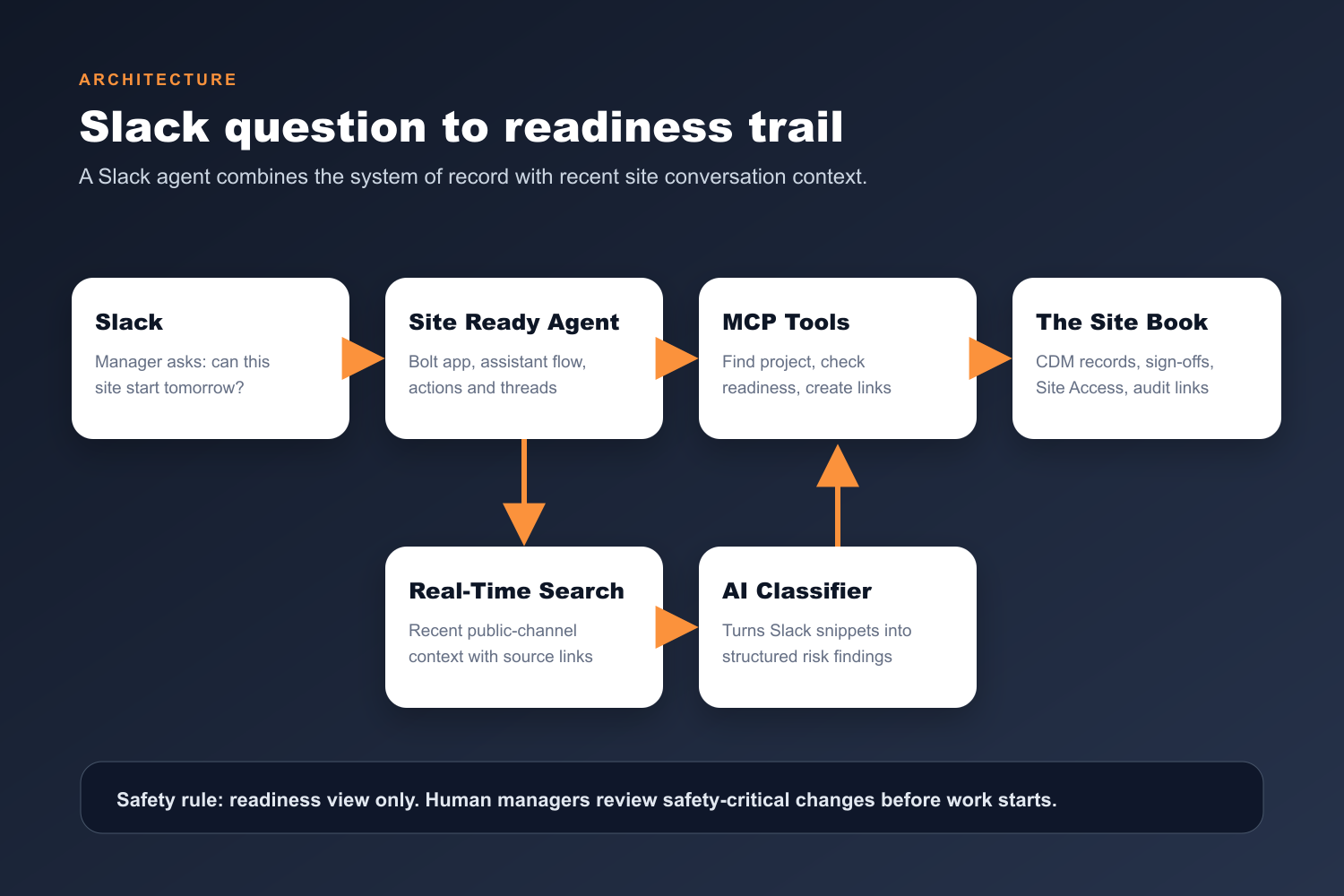
Architecture: Slack prompt, RTS, MCP tools, Site Book records and AI findings become a readiness trail.
-
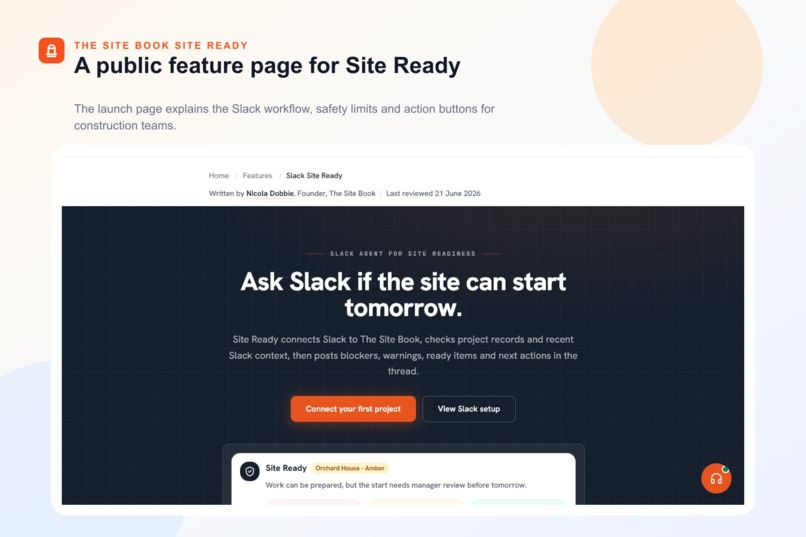
Launch page screenshot showing the Site Ready product positioning and Slack-first workflow.
-
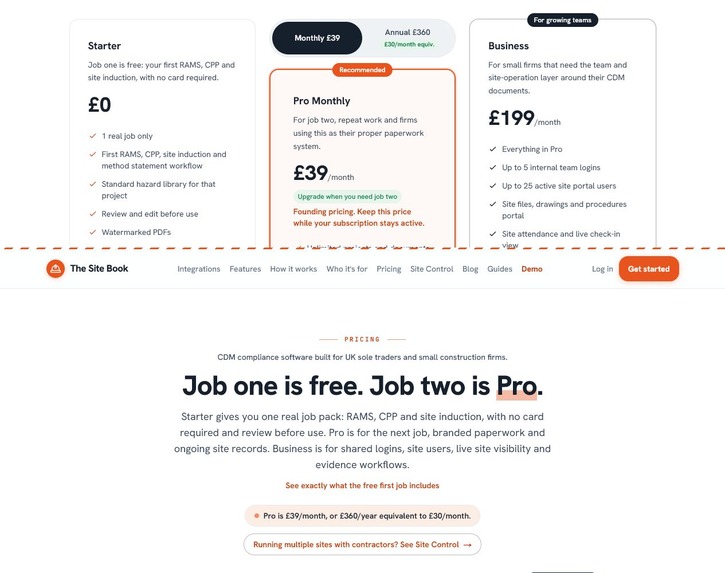
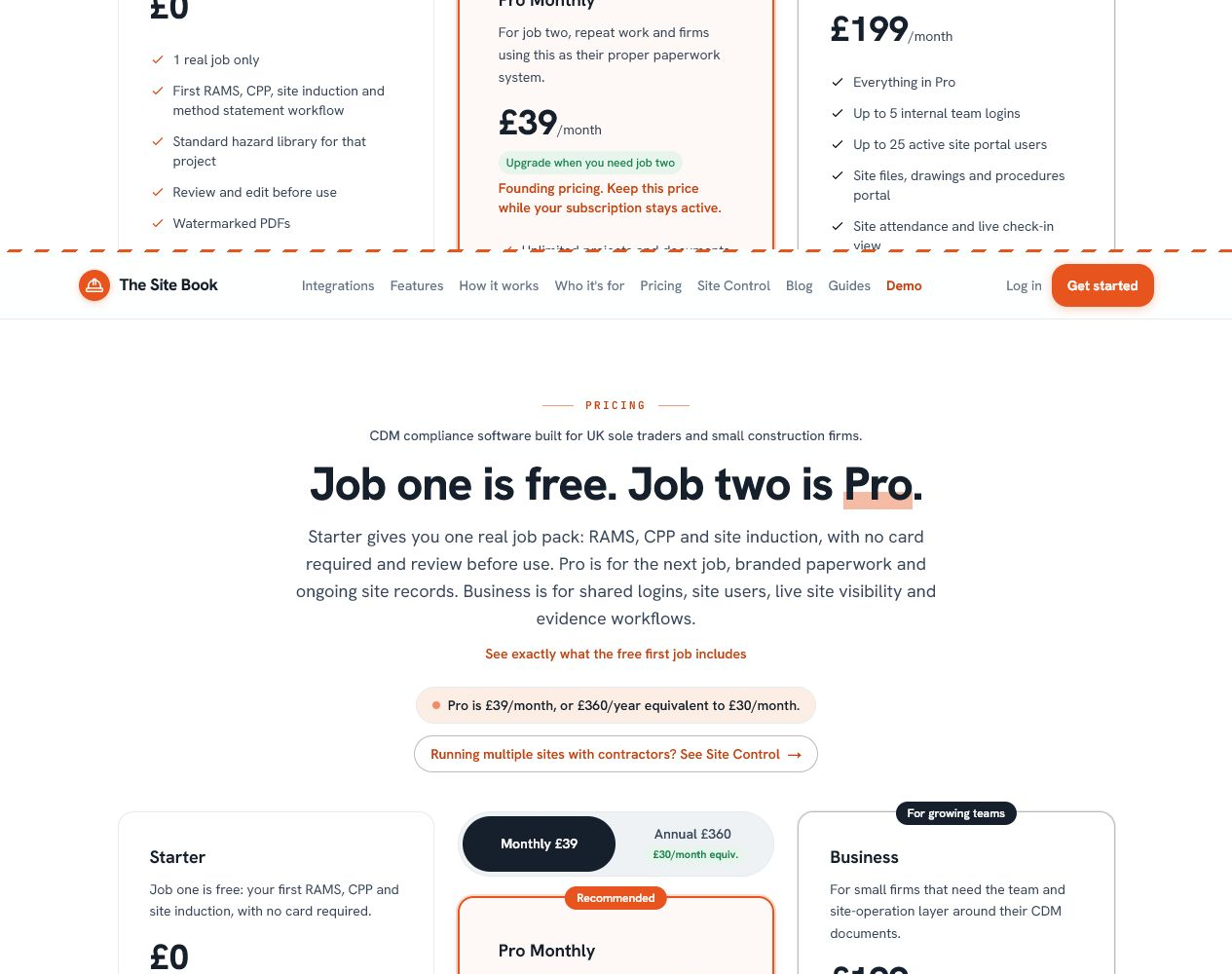
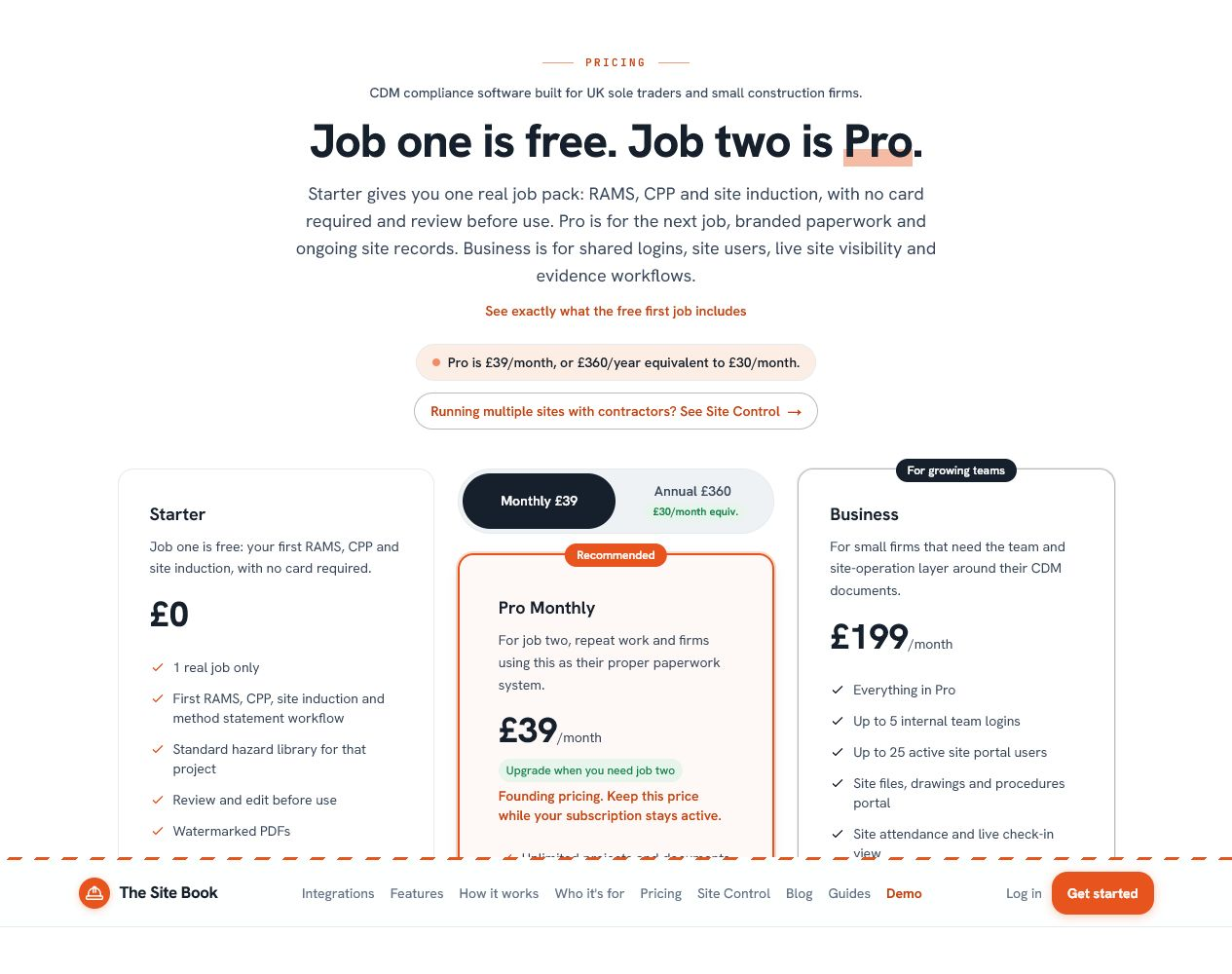
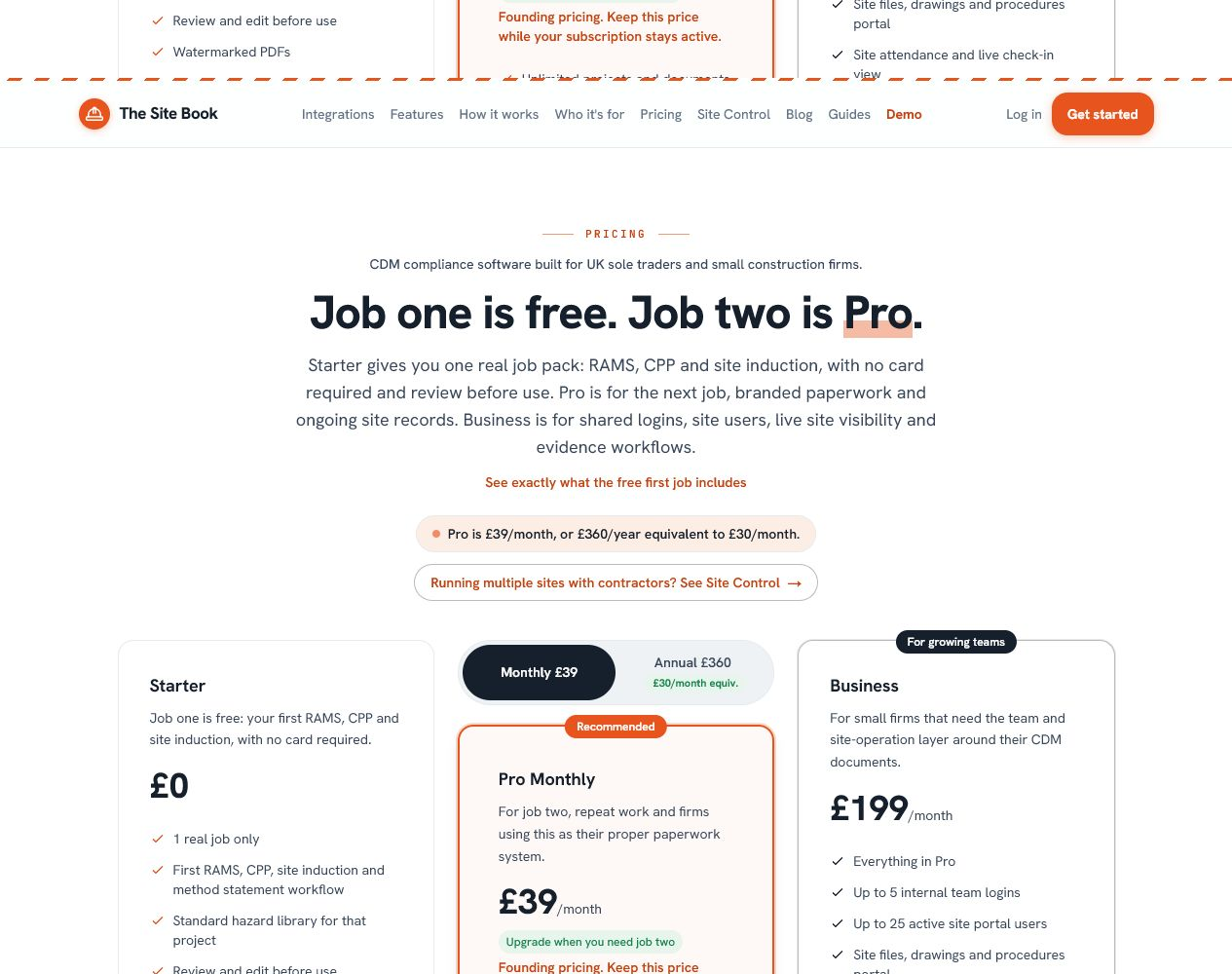
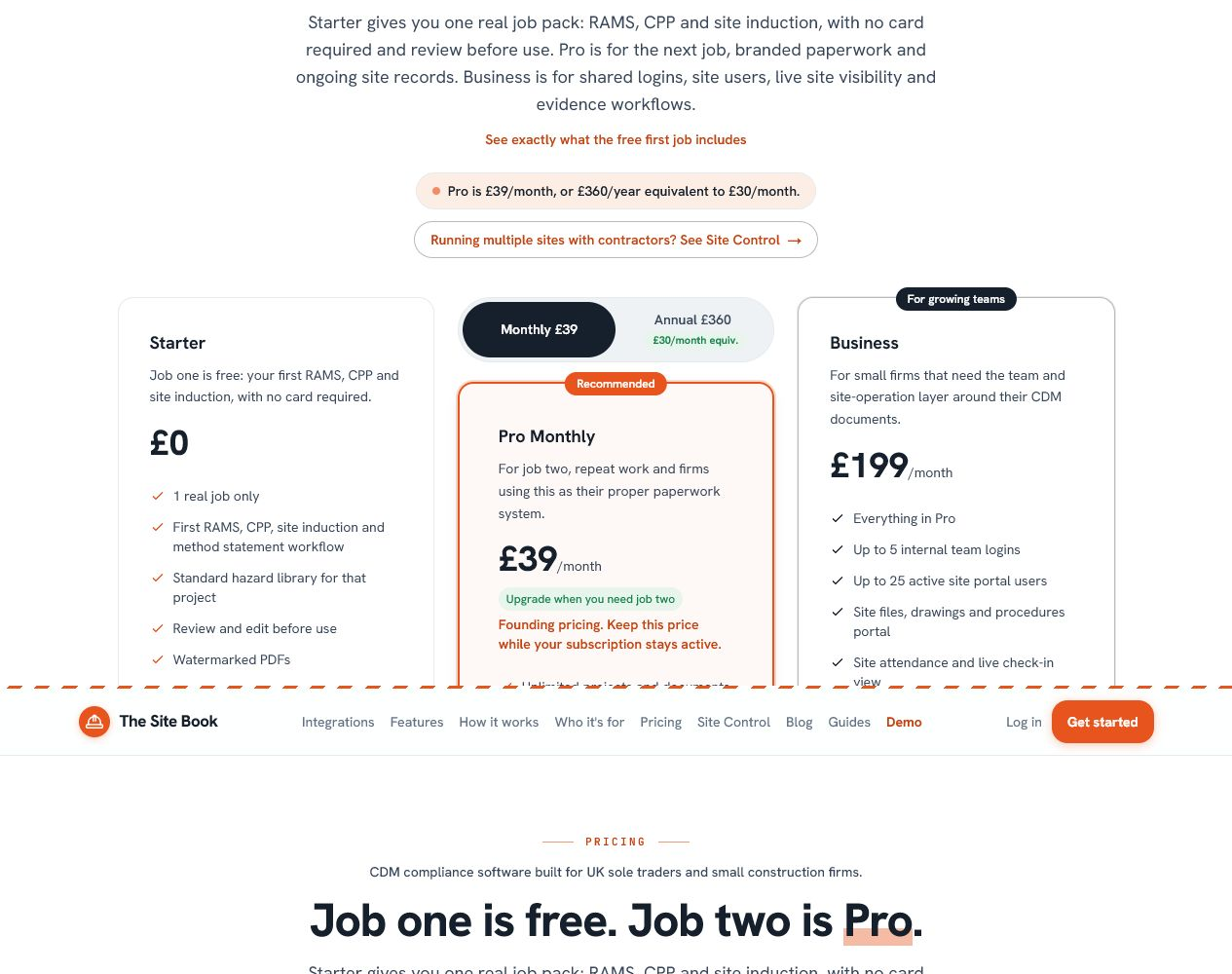
Pricing page view showing Site Ready alongside the Business and Site Control plan structure.
-
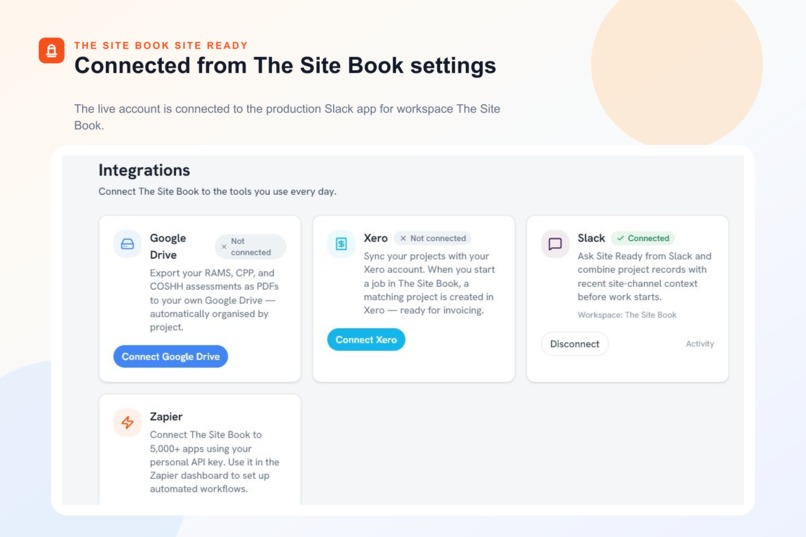
Site Book integrations settings with the production Slack app connected to the account.
-
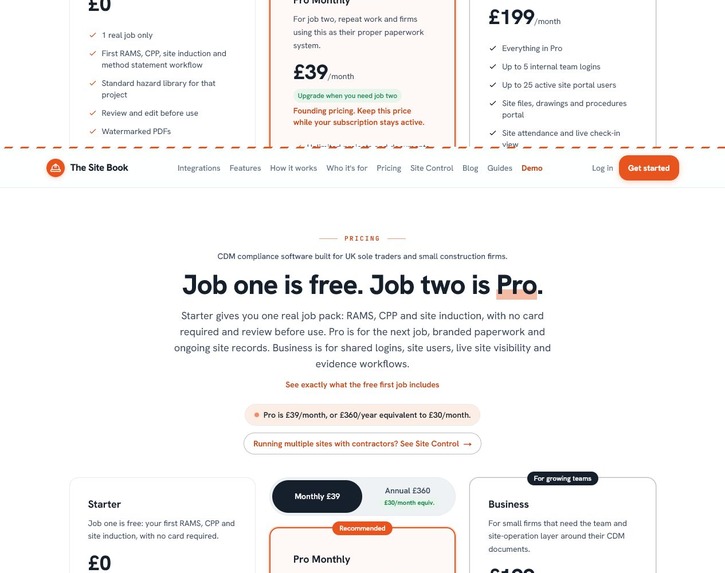
Pricing table crop showing plan positioning and where Slack Site Ready appears in the comparison.
-
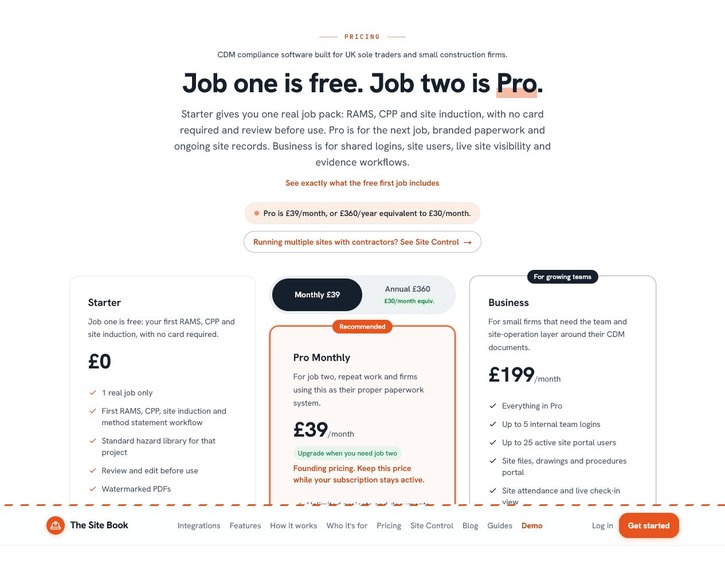
Pricing page desktop capture proving the Business and Site Control entitlement presentation.
-
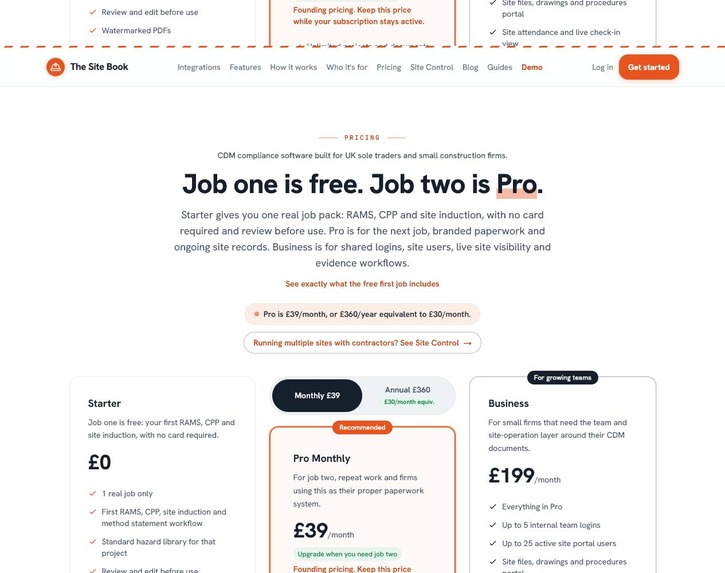
Full pricing page capture with Site Ready visible in the paid-plan comparison area.
-
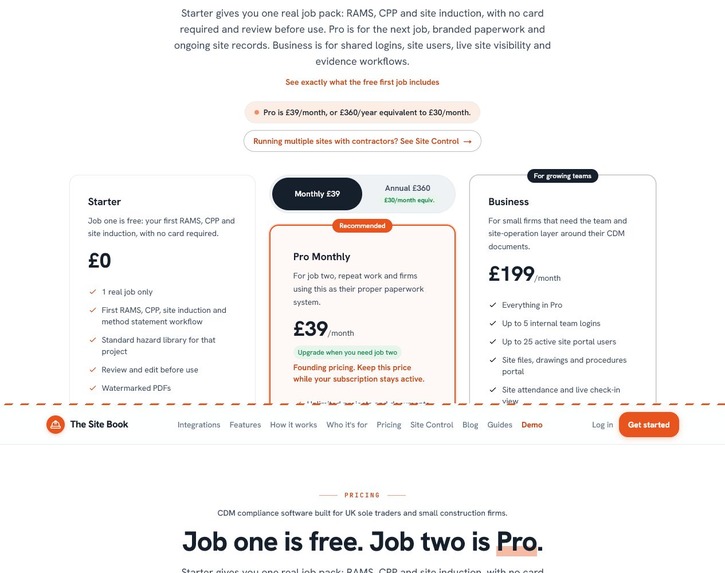
Pricing comparison proof that Starter and Pro are not the target plans for Slack Site Ready.
-
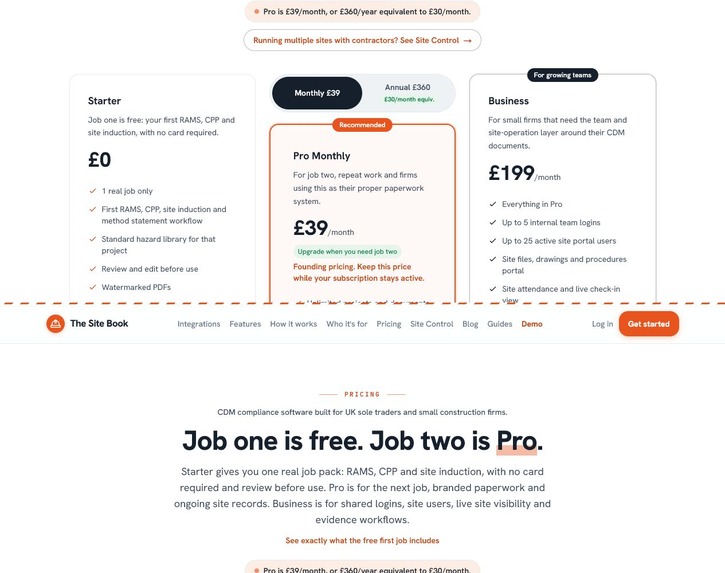
Additional pricing-page crop used to verify the feature appears under the correct plans.
-
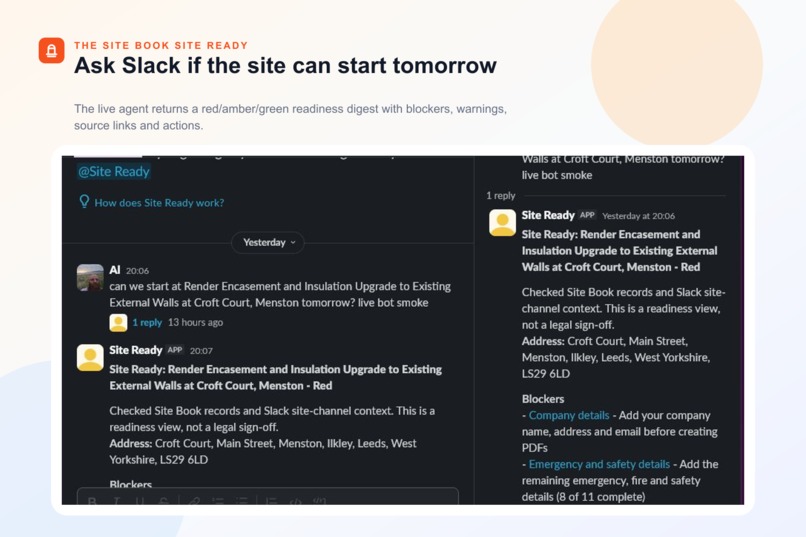
Final Slack demo screenshot: ask the site-start question and receive an evidence-led answer.
-

Pricing page lower crop showing plan tiers and Site Ready placement for launch review.

Inspiration
Construction teams do not usually fail because nobody cared about compliance. They fail because the answer lives across folders, sign-off links, RAMS PDFs, access records and the Slack channel where the foreman mentioned a late change. The question before a job starts is simple: can this site start work tomorrow?
Site Ready brings that question into Slack. A manager can ask @Site Ready can we start at Orchard House tomorrow? and get an evidence-led readiness digest instead of chasing documents manually.
What it does
Site Ready connects Slack to The Site Book, our CDM compliance platform for UK construction. The agent finds the relevant project, checks Site Book records, searches recent Slack context with Real-Time Search, classifies site-specific risks, and returns a green/amber/red readiness view with blockers, warnings, source links and next actions.
It can:
- resolve a construction project from a Slack prompt;
- check RAMS, CPP, site induction, emergency plan, sign-off, Site Access and credential readiness;
- use Slack Real-Time Search to surface recent channel context;
- classify Slack context into structured findings without storing raw Slack messages;
- create sign-off reminder links and audit-pack/share links;
- record manager decisions back to the audit trail.
The agent never claims a site is legally safe. It reports readiness based on available records and routes safety-critical changes to human review.
How we built it
We built a separate Node 22 TypeScript Slack app using Bolt for JavaScript in HTTP mode, connected to the existing Site Book app through internal APIs protected by a shared service token. The Site Book side reuses existing readiness logic, account scoping, encrypted integration tokens and plan gates for Business and Site Control accounts.
Slack provides the agent surface, app mentions, buttons, modals, OAuth and Real-Time Search. MCP tools expose Site Book actions such as finding projects, checking readiness, extracting Slack risk findings, creating audit links and recording decisions. AI classification runs through The Site Book's existing JSON provider wrapper so output stays structured and raw Slack message bodies are not stored.
Challenges
The hardest part was making the demo useful without overselling safety. Construction compliance is high-stakes, so the agent has to be decisive about records while staying clear that a competent human owns the final call. We also had to separate staging and live Slack apps, wire OAuth and app credentials safely across DigitalOcean, keep the feature limited to the right paid plans, and make Slack context useful without retaining raw messages.
What we learned
Slack agents are strongest when they do more than chat. The winning pattern is Slack as the place where work starts, MCP tools as the action layer, product records as the source of truth, and AI as a classifier that turns messy context into reviewable evidence.
What's next
Next we would add richer private-channel controls, scheduled morning readiness digests, deeper Site Access workflows, and Marketplace-ready onboarding for construction firms that already use Slack to run site operations.
Built With
- ai-json-classification
- bolt-for-javascript
- clerk
- digitalocean-app-platform
- next.js
- node.js-22
- postgresql
- prisma
- slack-agent-builder
- slack-mcp
- slack-real-time-search-api
- typescript

Log in or sign up for Devpost to join the conversation.