-
-
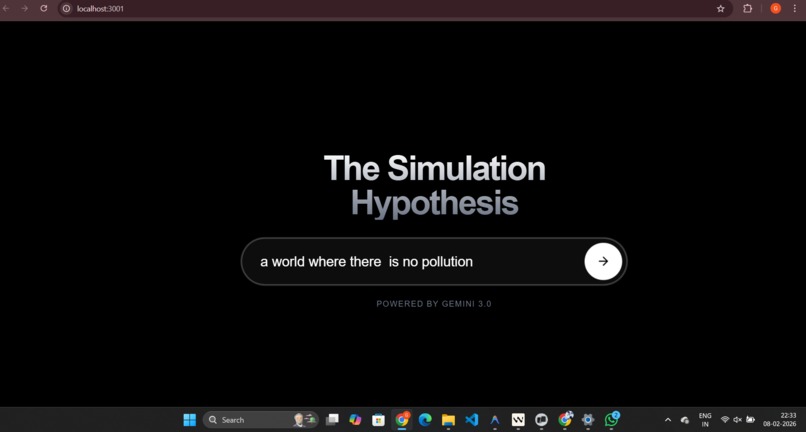
starting page
-
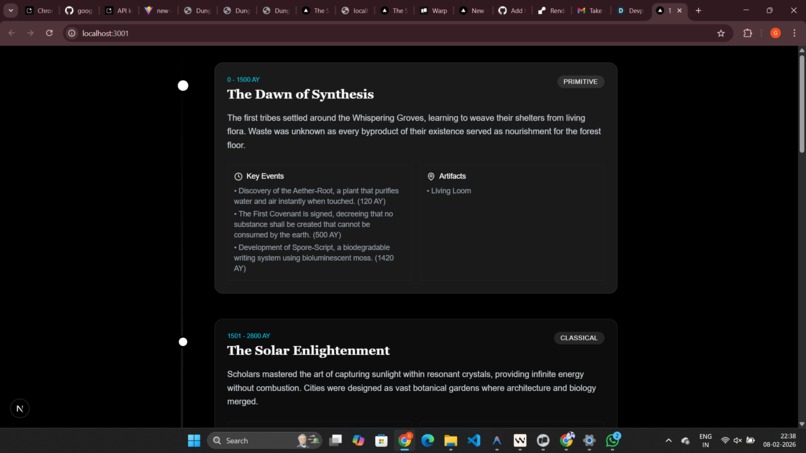
how it gives result
Inspiration The project was inspired by the Simulation Hypothesis—the idea that our entire reality might be a computer-generated model. We wanted to flip the script: instead of wondering if we are in a simulation, what if we could create one? We were inspired by the "long context" and reasoning capabilities of Gemini 3, which allow it to maintain deep, consistent lore across thousands of years of fictional history.
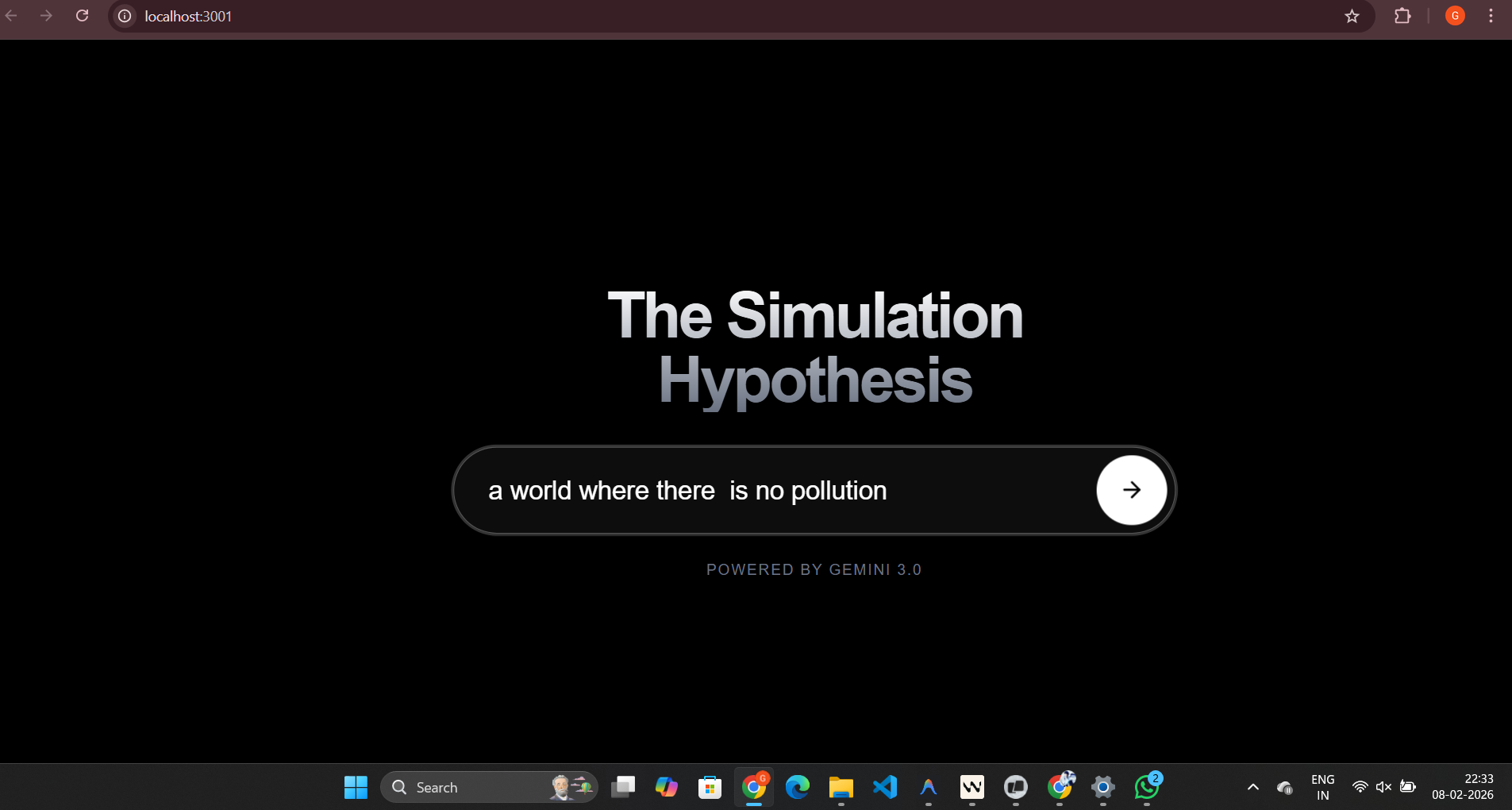
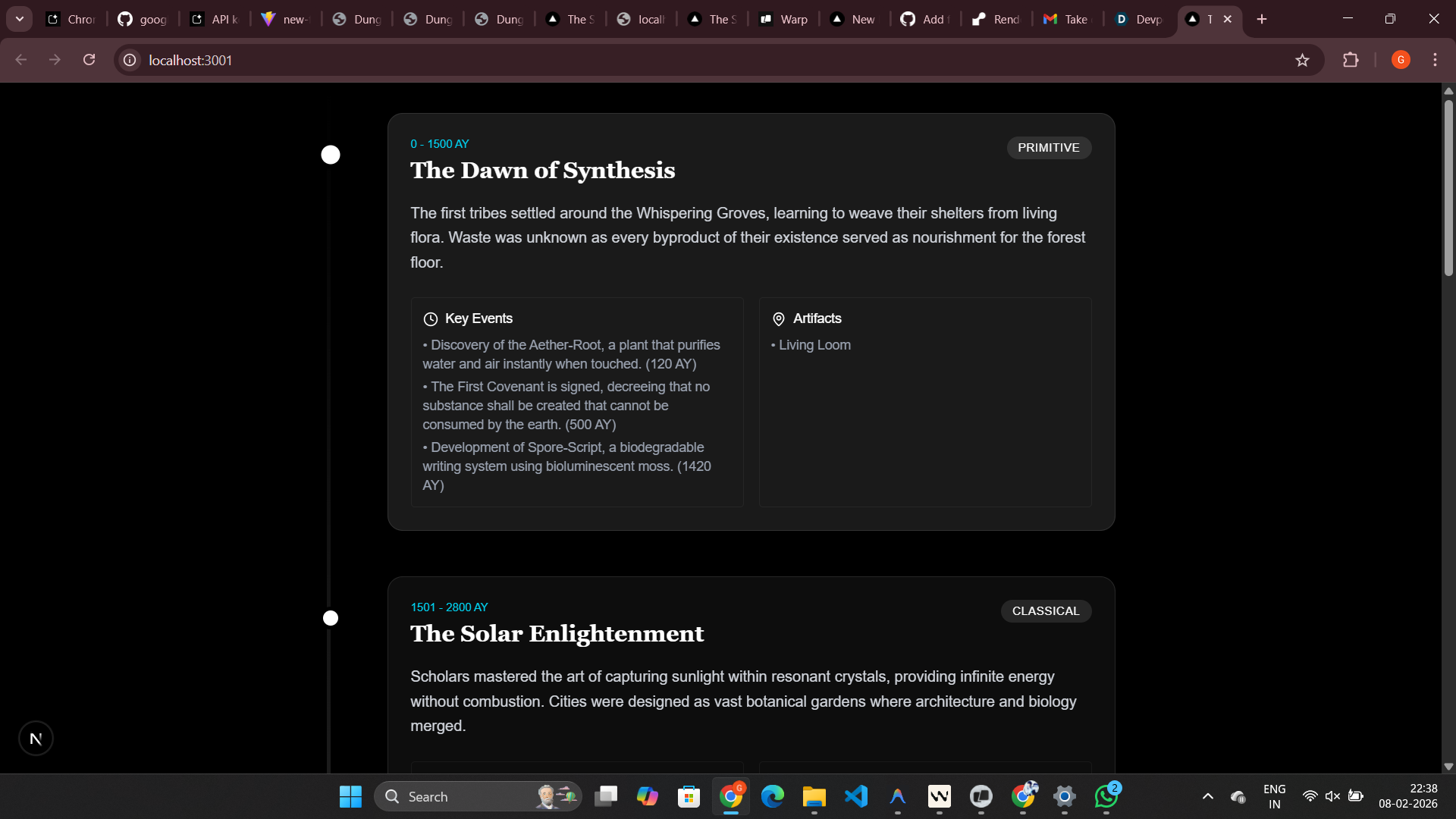
What it does The Simulation Hypothesis is a "Civilization Tamagotchi" powered by Gemini 3. A user provides a single "Genesis Prompt" (e.g., "A world where plants are the dominant sentient species"), and the engine instantly halluncinates a 1,000-year timeline. It generates distinct Eras, key historical events, cultural themes, and "Artifacts" from that reality, presenting them in a cinematic, scrollable interface.
How we built it Intelligence: Built using the bleeding-edge Gemini 3 Flash model via the Google Generative AI SDK, utilizing JSON Mode for reliable structured data generation. Frontend: Developed with Next.js 16 (App Router) and Tailwind CSS for a sleek, dark-mode aesthetic. State Management: Used Zustand to manage the "Timeline Store," allowing for smooth, reactive updates as history is generated. Animations: Leveraged Framer Motion for high-end micro-animations and entrance transitions that sell the "Simulation" feel. Challenges we ran into The biggest challenge was Consistency Over Time. In early versions, the "Future" era would often forget the biological or technological traits established in the "Ancient" era. We solved this by engineering a recursive system prompt that forces Gemini to treat each era as a logical evolution of the previous one, ensuring a cohesive "Universal Lore." We also navigated complexities with local binary bindings during the build process, which we optimized for production.
Accomplishments that we're proud of We are incredibly proud of the UI/UX. Most AI projects are just chatbots. We built a visual experience. The smooth transition from the "Quantum Foam" loading state to the unfolding timeline feels magical. Additionally, achieving perfect JSON schema enforcement from the AI—even for wildly abstract user prompts—was a significant technical win.
What we learned We learned that Gemini 3's high-speed reasoning is a game-changer for procedural world-building. We moved away from experimental models to the stable Gemini 3 Flash, discovering that low latency is crucial for maintaining the "flow" of a generative experience. We also deepened our knowledge of Next.js production builds and environment variable management in public deployments.
What's next for The-Simulation-Hypothesis The current version is just the "Big Bang." Next, we plan to implement:
Citizen Chat: The ability to click on any era and "summon" an AI inhabitant from that time to interview them about their life. Artifact Visualization: Integrating Nano Banana (Gemini 3 Image) to generate photorealistic images of the artifacts described in the timeline. Simulation Branching: Letting users "intervene" at a specific historical event to see how the timeline would branch into a different future.
Built With
- 16.1.6
- 19.2.3
- 4
- clsx
- css
- dom
- eslint
- framer
- google-generative-ai
- google/generative-ai)
- javascript/typescript
- lucide
- merge
- motion
- next.js
- node.js
- react
- tailwind
- turbopack)
- typescript
- with
- zustand

Log in or sign up for Devpost to join the conversation.