Inspiration
I've been passionate about video games for as long as I can remember. I started playing when I was around four or five years old, beginning with the Atari, then the NES, the Super Nintendo, and eventually PC gaming. Growing up surrounded by games sparked a lifelong fascination with how they worked behind the scenes.
One of the moments that left the biggest impression on me was seeing the graphics in Black & White. At the time, it felt unbelievable and made me wonder how games could create worlds that felt so alive.
More recently, projects like Dark Souls II with its Path Tracing mod inspired me to take on what felt like an impossible challenge: bringing full Path Tracing to The Sims 2 using AI-generated code. The entire project has been built alongside GPT through Codex, turning what started as an experiment into something much bigger than I ever imagined.
What it does
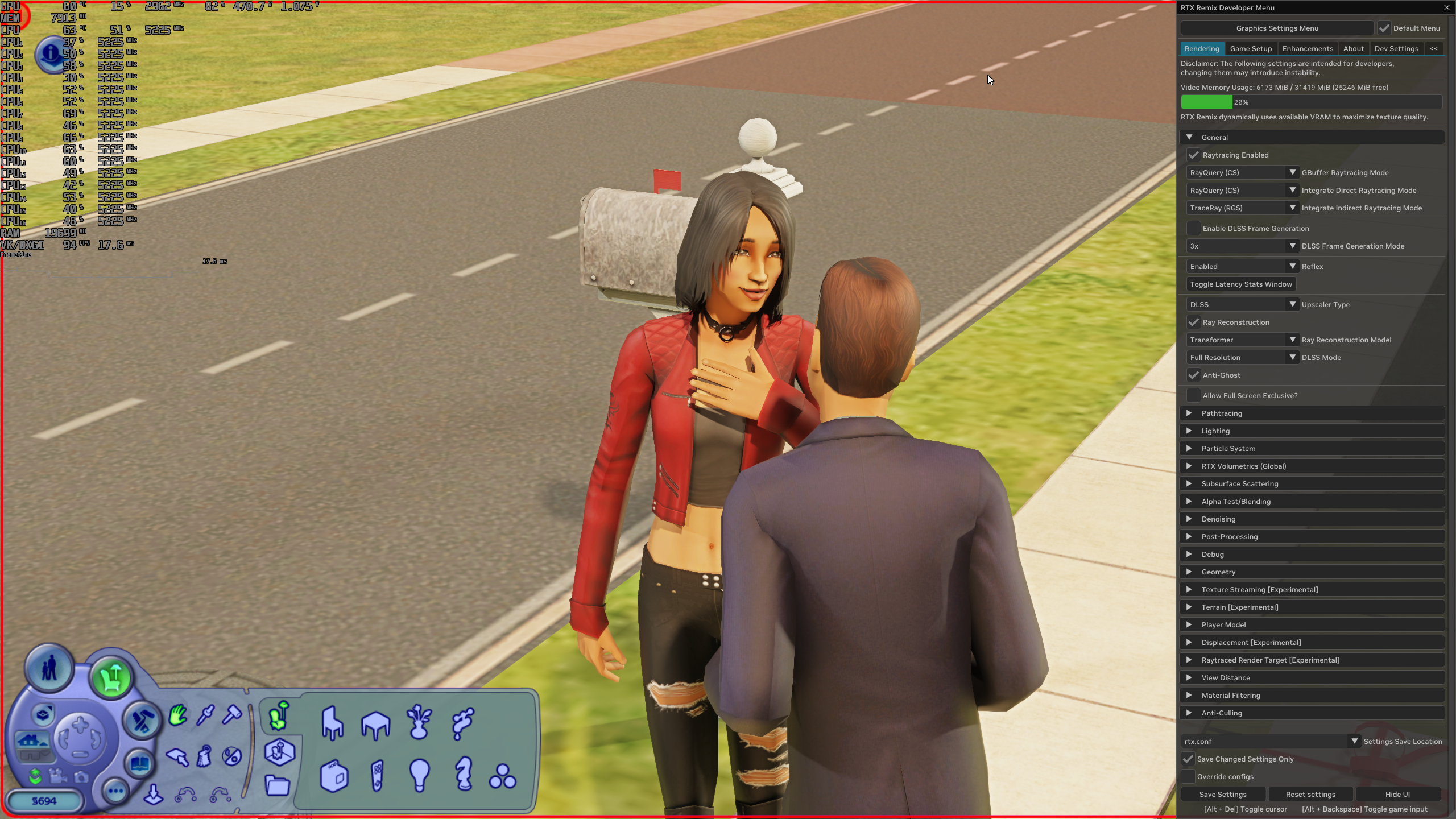
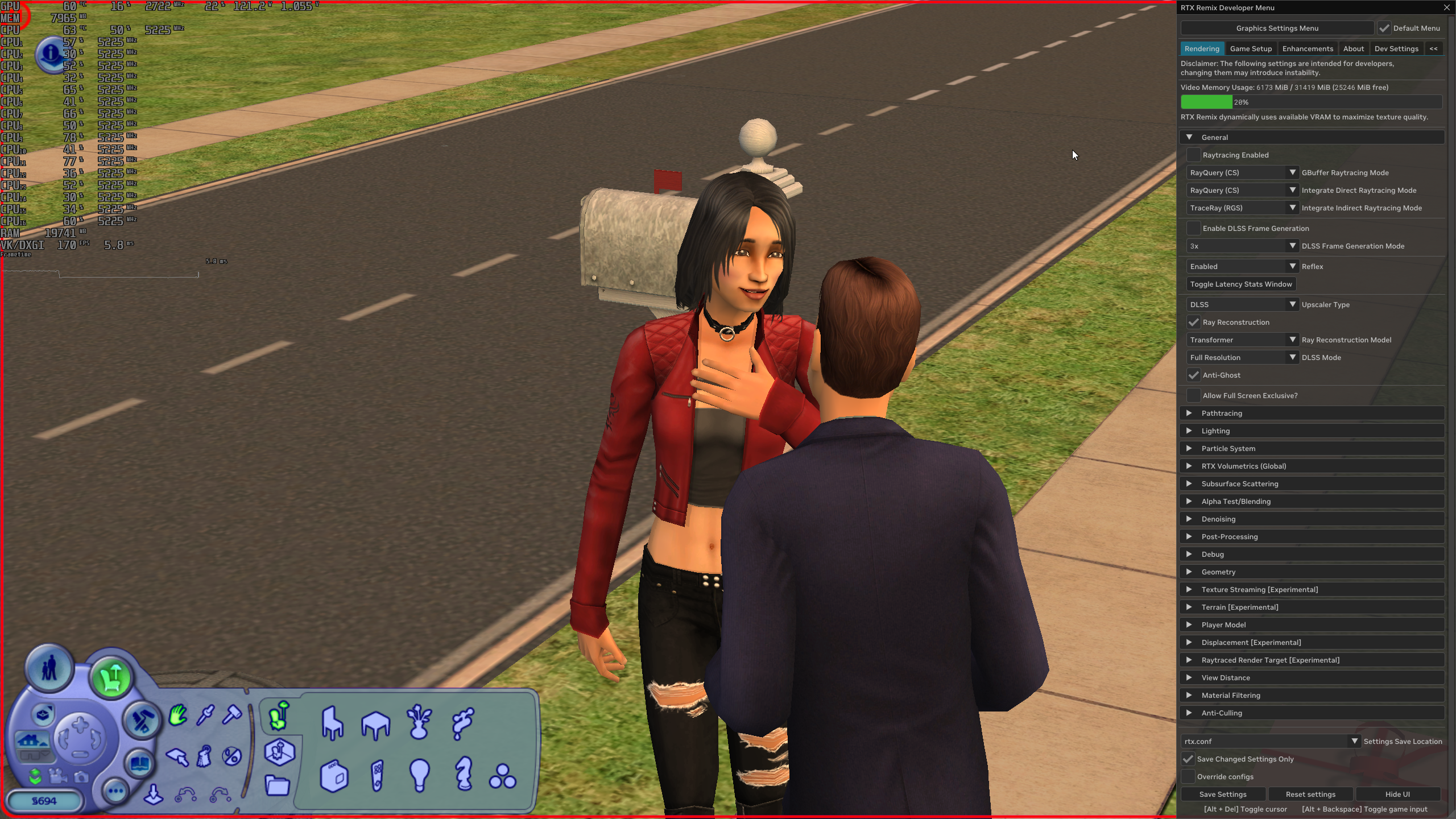
The project brings real-time Path Tracing to The Sims 2 using DXVK Remix as its foundation. While it originally started from the Remix baseline, the codebase has evolved so much that most of it is now completely custom-built specifically for The Sims 2.
The goal isn't simply to make the game compatible with Path Tracing, but to faithfully render the game's unique graphics while preserving gameplay and stability.
How we built it
The entire project was developed in collaboration with AI. I worked alongside GPT through Codex to reverse engineer the game's rendering pipeline, understand how The Sims 2 interacts with Direct3D, and progressively replace or extend parts of DXVK Remix until the game became fully functional.
Development involved a constant cycle of debugging, reverse engineering, testing, and refining. Every solved problem uncovered another one, gradually transforming the original codebase into a heavily customized renderer built specifically for this game.
Although I don't consider myself a professional programmer, years of working with computers helped me understand the technical problems well enough to collaborate effectively with AI. Together, we were able to solve challenges that I wouldn't have been able to tackle alone.
Challenges we ran into
There were countless challenges throughout development.
The very first milestone was simply getting the game to launch. Out of the box, DXVK Remix crashes immediately when loading The Sims 2. Solving that startup crash alone took roughly two weeks of investigation and debugging.
Once the game finally launched, even more difficult problems appeared. Character rendering was especially challenging, particularly the game's vertex processing. Sims would stretch, deform, or completely break their skeletons because the engine handled vertices in unusual ways that weren't compatible with the rendering pipeline.
Loading neighborhoods, entering lots, rendering houses, objects, Sims, and preventing crashes at every stage became an ongoing process. Every fix seemed to reveal another hidden issue waiting underneath.
Accomplishments that we're proud of
Getting the game to launch without crashing was a huge milestone by itself. As far as I know, nobody had successfully reached that point with Path Tracing enabled in The Sims 2.
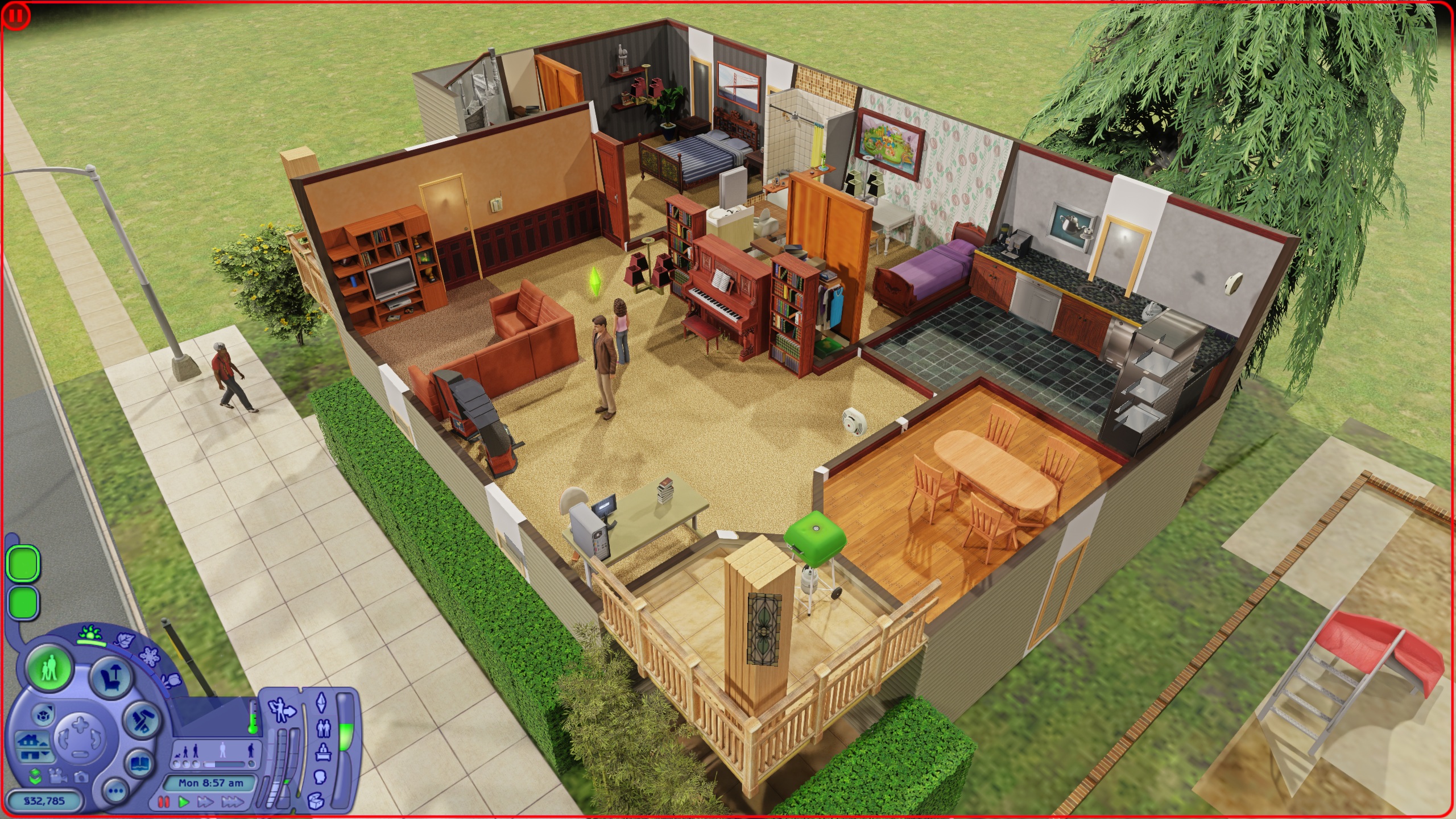
From there, I was able to render entire neighborhoods, load residential lots, display fully constructed houses, objects, and Sims while progressively eliminating crash after crash throughout the game's loading process.
Beyond the technical achievements, I'm especially proud that this project exists at all.
I'm not a professional software engineer, but I've spent my entire life around computers. Thanks to GPT and Codex, I was able to build something I never thought would be within my reach. AI gave me the opportunity to tackle an incredibly ambitious graphics project and turn it into reality.
What we learned
This project taught me an incredible amount about how games work internally through reverse engineering.
I also learned how effective AI-assisted software development can be when the workflow is well organized. Over time, I built a development system where I can switch between different AI agents or even entirely new conversations without losing momentum. Documentation, project structure, and context management make it possible to continue development almost seamlessly.
Perhaps the biggest lesson is that AI has fundamentally changed what's possible for independent creators. Thanks to everything I learned during this project, I now feel capable of building many more applications that previously would have been far beyond my skill level.
What's next for The Sims 2 Path Tracing
The next goal is to release the project publicly.
I want the experience to feel polished before that happens. Graphics programming is a constant balancing act—fixing one rendering bug often exposes two more waiting underneath—so progress can sometimes be slower than I'd like.
That said, development has accelerated dramatically with GPT-5.6, allowing me to solve problems much faster than before.
I'm excited to keep pushing the project forward, and I truly believe that one day The Sims 2 will be able to shine with beautiful, fully path-traced graphics while preserving the charm that made it such a timeless game.
Built With
- c++
- glsl
- hlsl
- javascript
- python
- slang

Log in or sign up for Devpost to join the conversation.