Inspiration
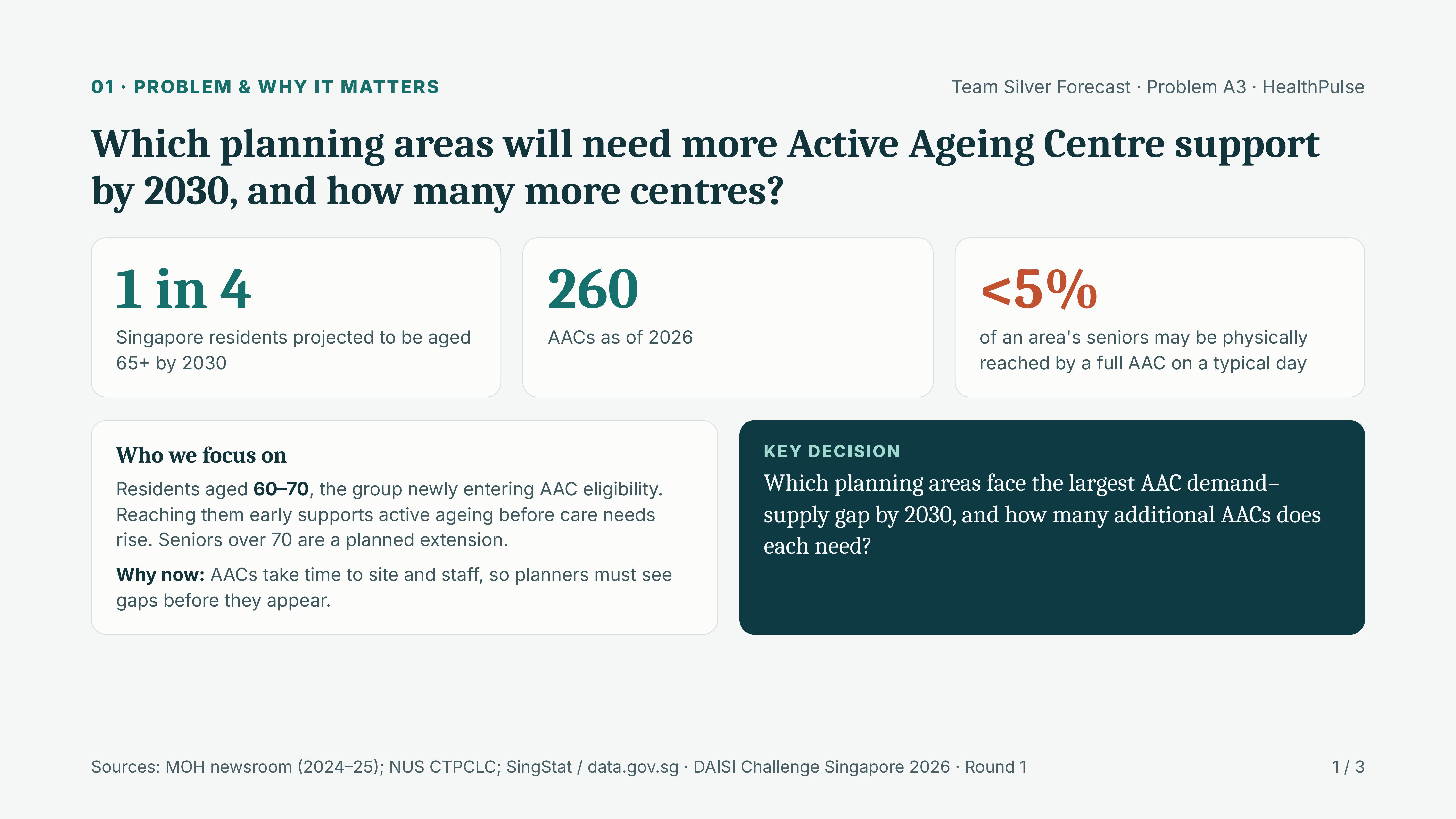
Singapore is ageing rapidly, but ageing is more than simply growing older. Many seniors face loneliness, social isolation, mobility challenges, and difficulties with daily activities. Active Ageing Centres (AACs) can provide social connection, preventive health programmes and community support, but these services need to be located where seniors actually need them. The Silver Forecast was inspired by a simple question: Can we anticipate where elderly needs will grow before gaps in support appear?
What it does
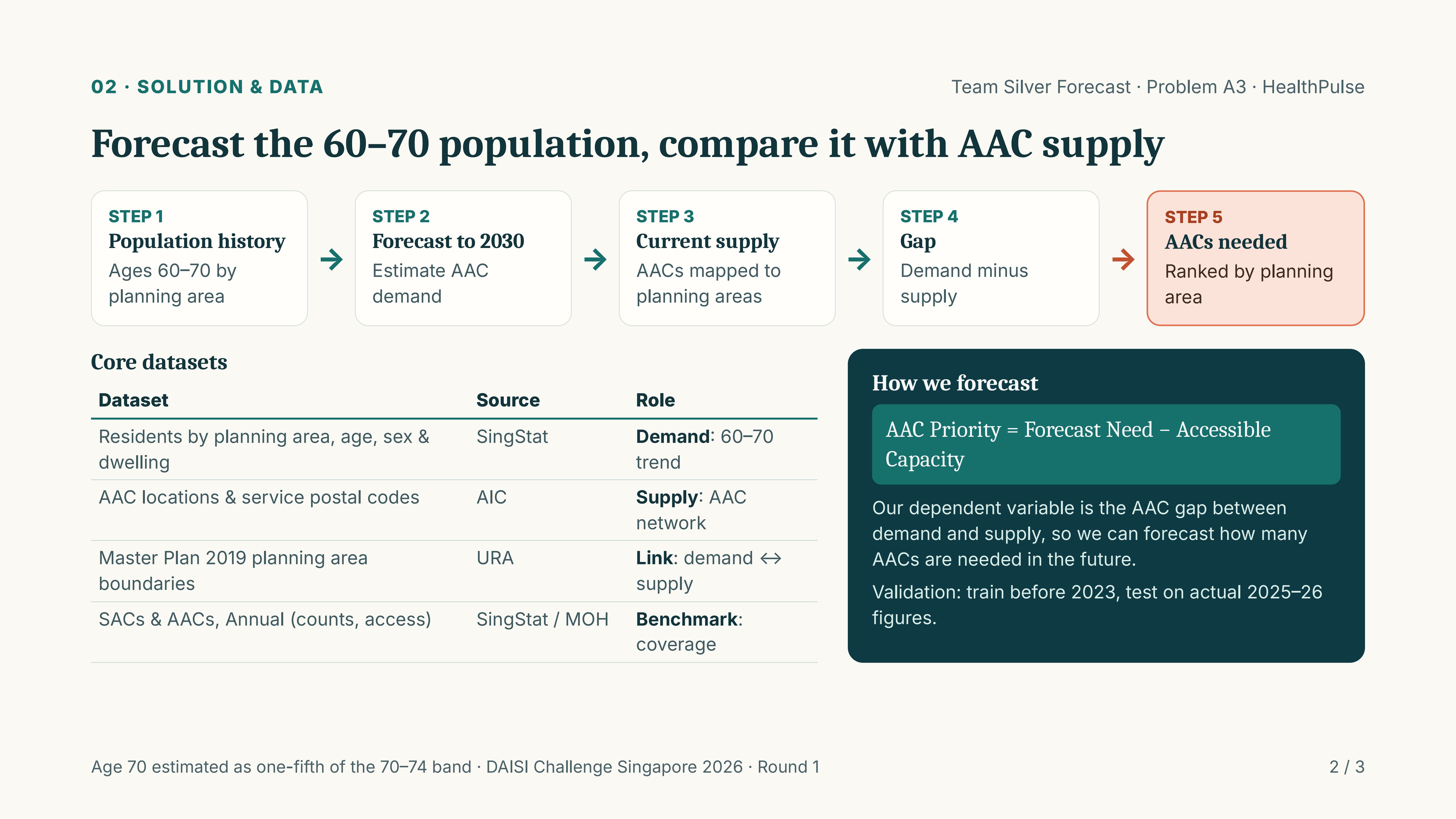
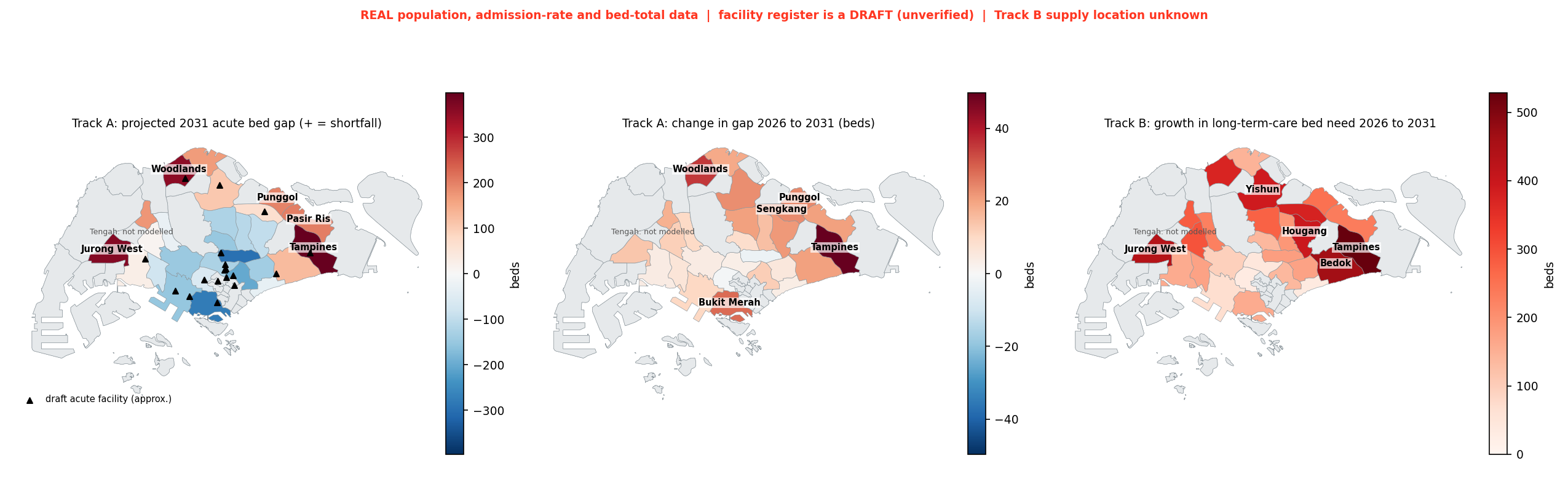
The Silver Forecast is a data-driven planning tool that identifies areas where future demand for Active Ageing Centres may exceed existing support. It combines factors such as elderly population, age, sex, living arrangements, elderly clusters, and existing AAC locations. The model forecasts how elderly populations may change over the next five years and produces a demand–supply gap and priority score, allowing planners to identify potentially underserved neighbourhoods.
How I built it
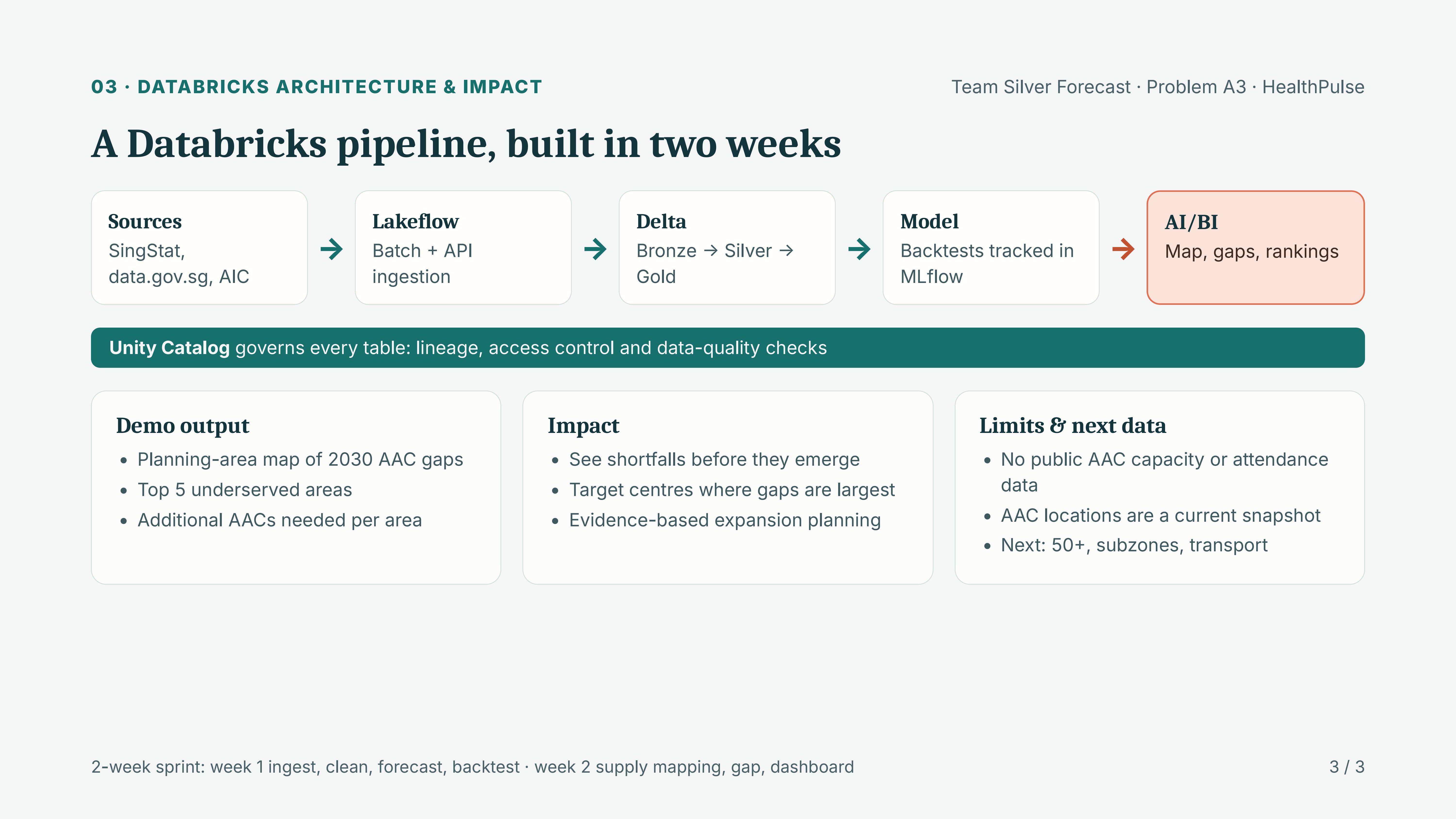
We built a pipeline combining publicly available Singapore demographic, healthcare and geospatial datasets. We first forecast the elderly population by area and demographic group. We then construct a vulnerability/need measure incorporating factors such as living alone and family living conditions Existing AAC locations and capacity are incorporated through a spatial accessibility model, allowing us to compare projected need against accessible supply: AAC Gap = Forecast Need - Accessible AAC Supply The results are presented through an interactive map highlighting areas that may require additional AAC resources.
Challenges I ran into
The biggest challenge was that AAC demand cannot be observed directly from population data. Having more seniors does not necessarily mean an area requires proportionally more AAC capacity. Seniors differ significantly in independence, social support and functional needs. Another challenge was combining datasets reported at different geographical and temporal levels. We therefore had to move beyond simply counting seniors and think carefully about how vulnerability, accessibility and existing capacity should contribute to estimated need.
Accomplishments that I'm proud of
We are proud that The Silver Forecast goes beyond being a demographic dashboard. Instead of only showing where seniors live today, it attempts to answer the more useful policy question: Where could gaps in elderly community support emerge next? By combining forecasting, vulnerability indicators and geospatial accessibility, we created an interpretable framework that can translate demographic data into actionable infrastructure priorities.
What I learned
One of our biggest learnings was that ageing is multidimensional. Population size alone does not capture the needs of an elderly community. Living arrangements, social isolation and access to nearby services can be equally important. We also learned that for public-policy applications, interpretability matters as much as predictive accuracy. Policymakers should be able to understand why an area is identified as high priority rather than simply receiving a prediction from a black-box model.
What's next for The silver forcast
The next step is to improve the model with richer data on actual AAC utilisation, programme participation, loneliness/social isolation, healthcare utilisation and neighbourhood accessibility. This would allow us to validate whether our estimated need translates into real-world AAC demand. We also want to introduce scenario modelling so planners can ask questions such as “What happens if the population ages faster than expected?” or “Where should the next AAC be located to reach the greatest number of underserved seniors?” Ultimately, we envision The Silver Forecast as an early-warning and planning tool that helps Singapore build community support before seniors need it most.
Built With
- forecast.io
- machine
- python

Log in or sign up for Devpost to join the conversation.