-
The Impact Vessel
-
Inside Holding Cylinder
Inspiration
We were inspired by the different theoretical applications we could implicate from our MECHENG classes including fluid mechanics, thermodynamics, and vibrations. We tried to find a way to include different mechanisms to decrease the chance of failure.
What it does
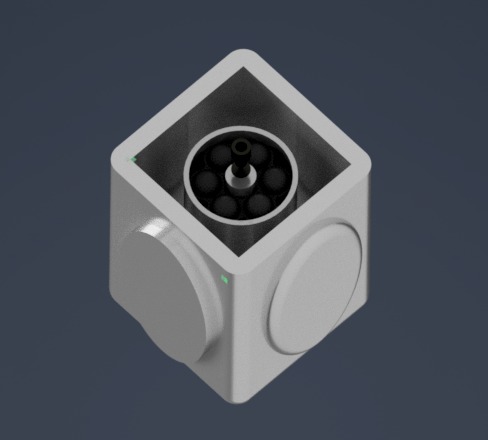
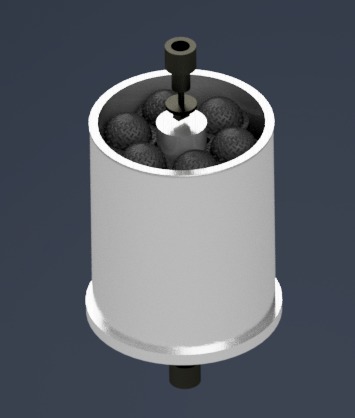
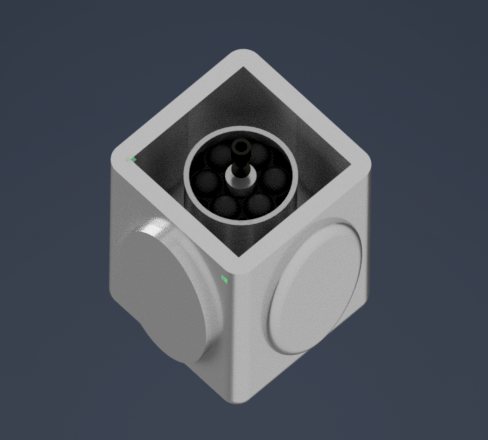
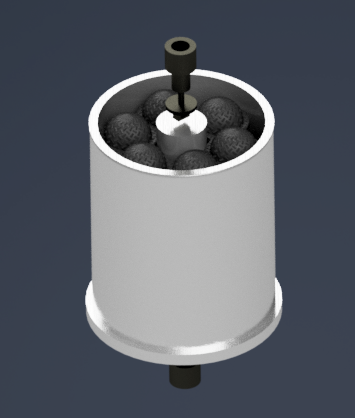
Our device protects the test sample from different types of impact including gravitational impact during freefall motion and impact upon collision. We have a secure holding cylinder that keeps the test sample safe from any contamination from the fluid in the holding container. We have two shock absorbers at either end of the holding cylinder to absorb the energy from the motion of the pod. Then, we have a very viscous fluid (gel-like) surrounding the cylinder filled up in the holding container. We also have airbags on the outside that deploy when they reach a certain pressure.
How we built it
We combined three different pieces including the holding cylinder that is screwed shut to secure the test samples. Then we attach the shock absorbers using secure latching mechanisms straight onto the holding cylinder. We place the fluid straight in the holding container and fasten the lid using bolts. The outer airbags are added to the sides of the box.
Challenges we ran into
Environmental impact such as passing through the atmosphere was one of our challenges since we needed to consider temperatures and pressures nearing the end of the flight. We also were struggling to find an appropriate fastening device on the inside of the container as well as to fasten the lid onto the pod.
Accomplishments that we're proud of
We are proud of our out of the box thinking (get it?). We thought of many different backups to make sure that the sample is safely retrieved. The final design is very neat and easily understandable which helps the adaptability of the design and its manufacturability.
What we learned
We learned how to take all our different theoretical knowledge from different courses to implement them in a practical application. We used vibration absorption knowledge to think of the shock absorption system, our fluids knowledge to slow down the object in the container, and thermodynamics to assess the impact and temperature heights. We also learned how to work together as a team and properly use each of our strength to produce a final design.
What's next for The Impact Vessel
We think that this design can be used in many different applications involved in space exploration and bringing different discoveries back to Earth. We could expand the pod to include multiple test samples as well by reconfiguring the shape but still using our main ideas.
Built With
- autocad
- inventor

Log in or sign up for Devpost to join the conversation.