-
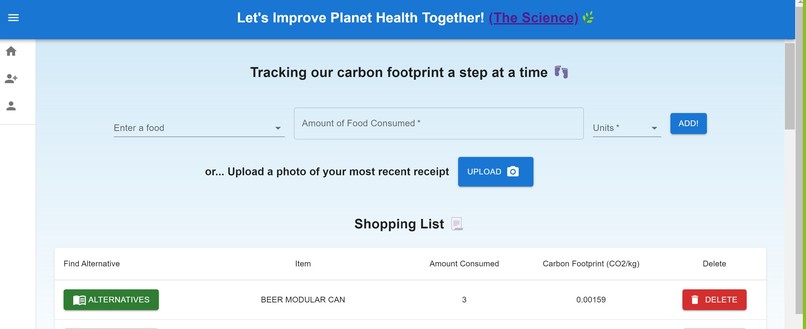
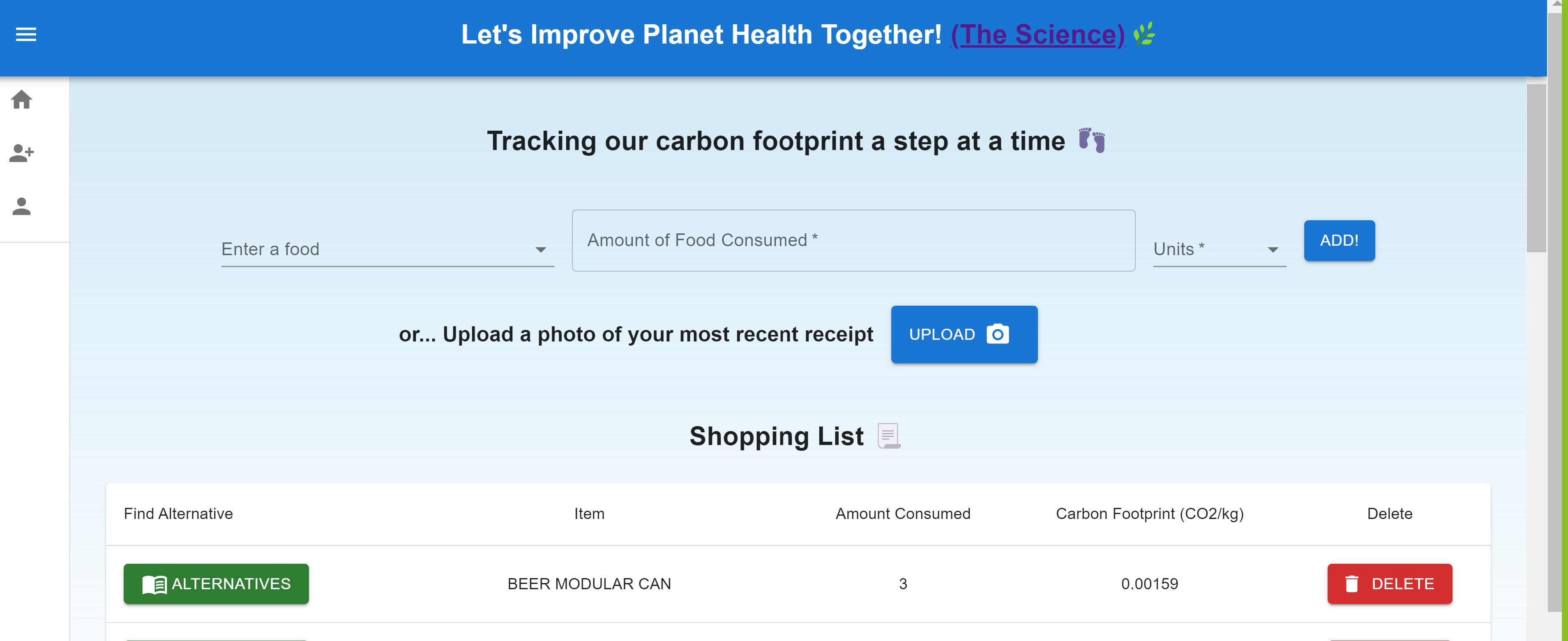
Home Screen
-
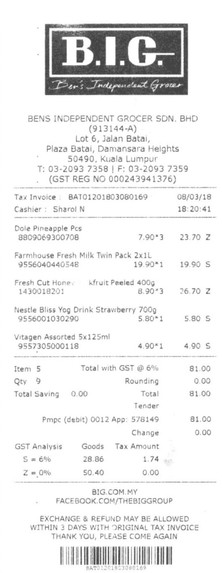
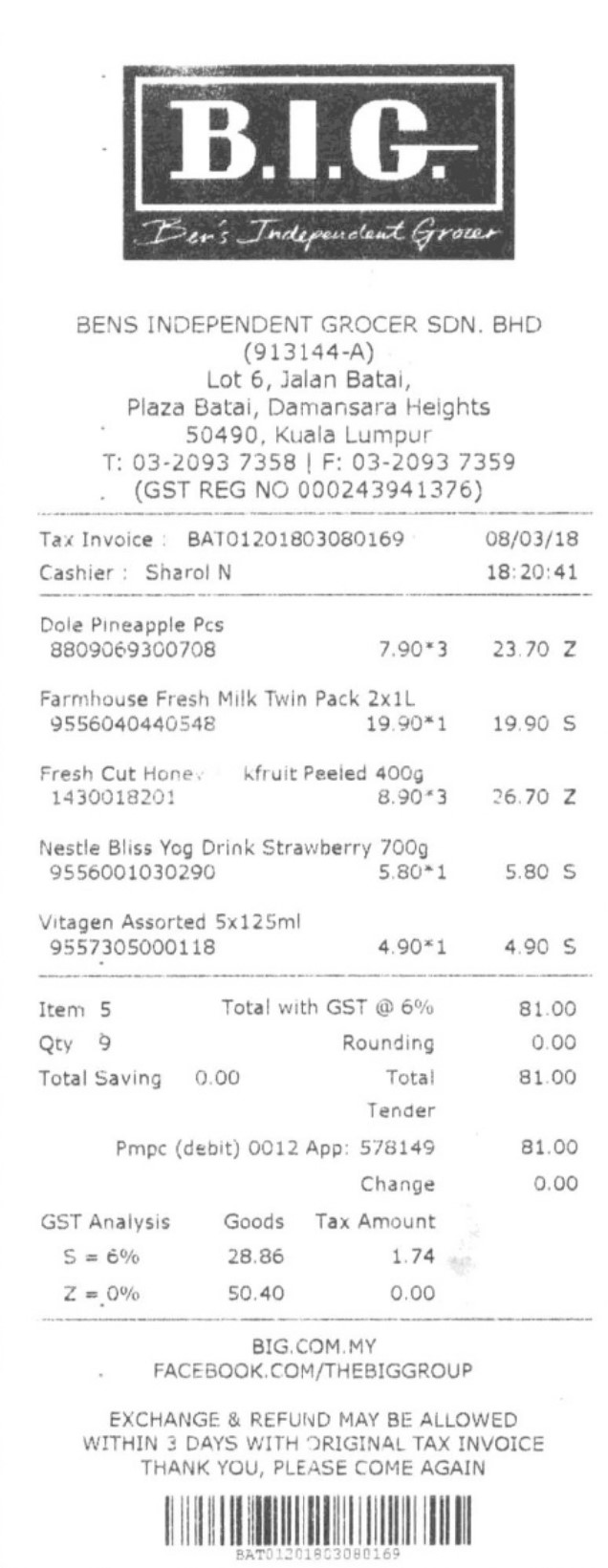
Receipt used for Demo
-
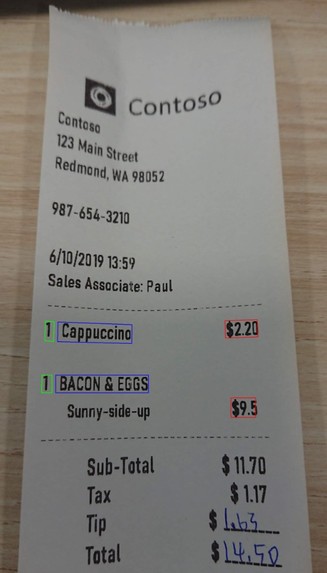
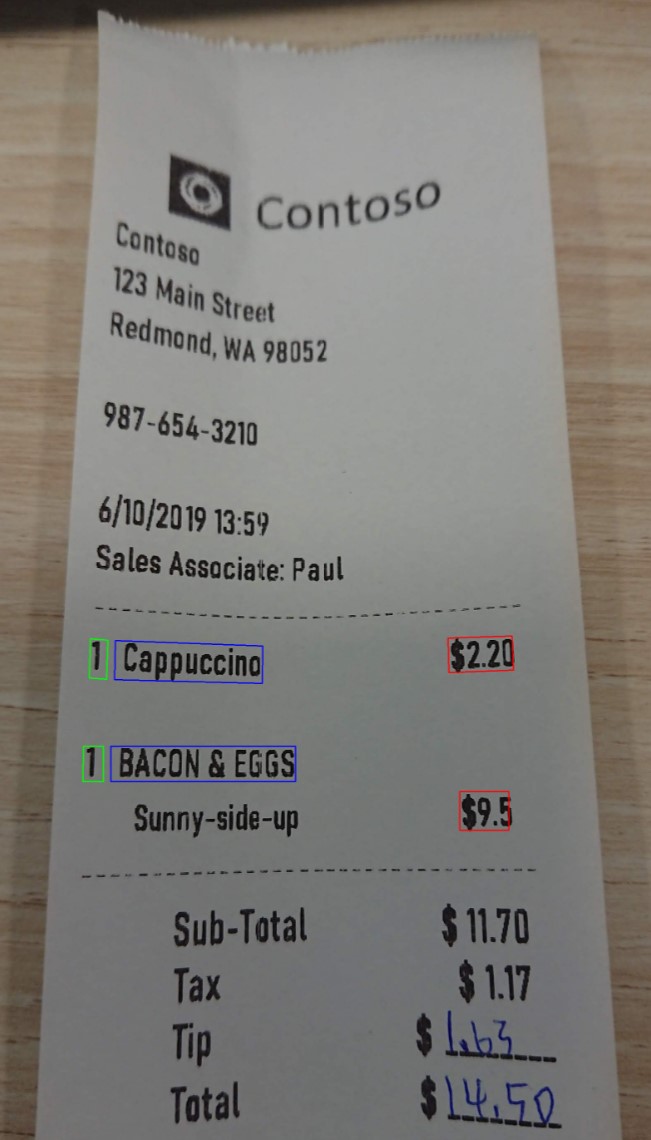
Bounding Boxes for CV recognition
-
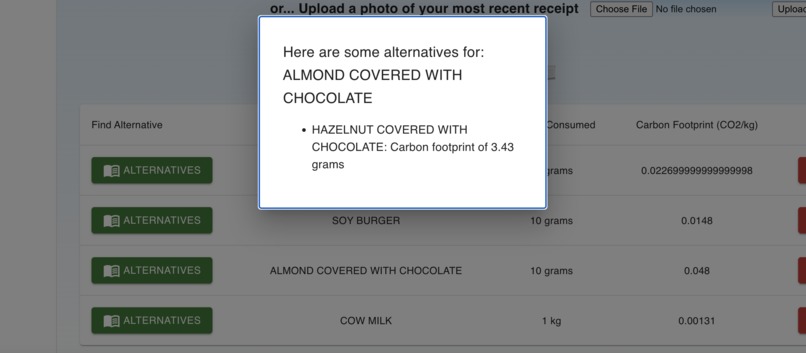
Inspiration
Of all the mammals on Earth, only 4% are wild; the remaining 96% are livestock and humans. For birds only 30% are wild, the rest being chickens and poultry (Bar-On et al., 2018).
Food, Agriculture, and Land Use directly account for 24% of greenhouse gas sources, more than Transportation (14%), Industry (21%), and on par with Electricity Production (25%) (IPCC, 2014).Food accounts for up to 37% of the global greenhouse emissions and 70% of water withdrawals when taking into account all phases of production and distribution (IPCC, 2019).
A global transition towards more sustainable food will be among the most important strategies to reduce human impact on planetary resources. Many people want to do their part to reduce emissions, but they do not know where to start. Here we present the most accurate and up to date database on food carbon footprints to provide knowledge and tools that can support turning ideas into action.
What it does
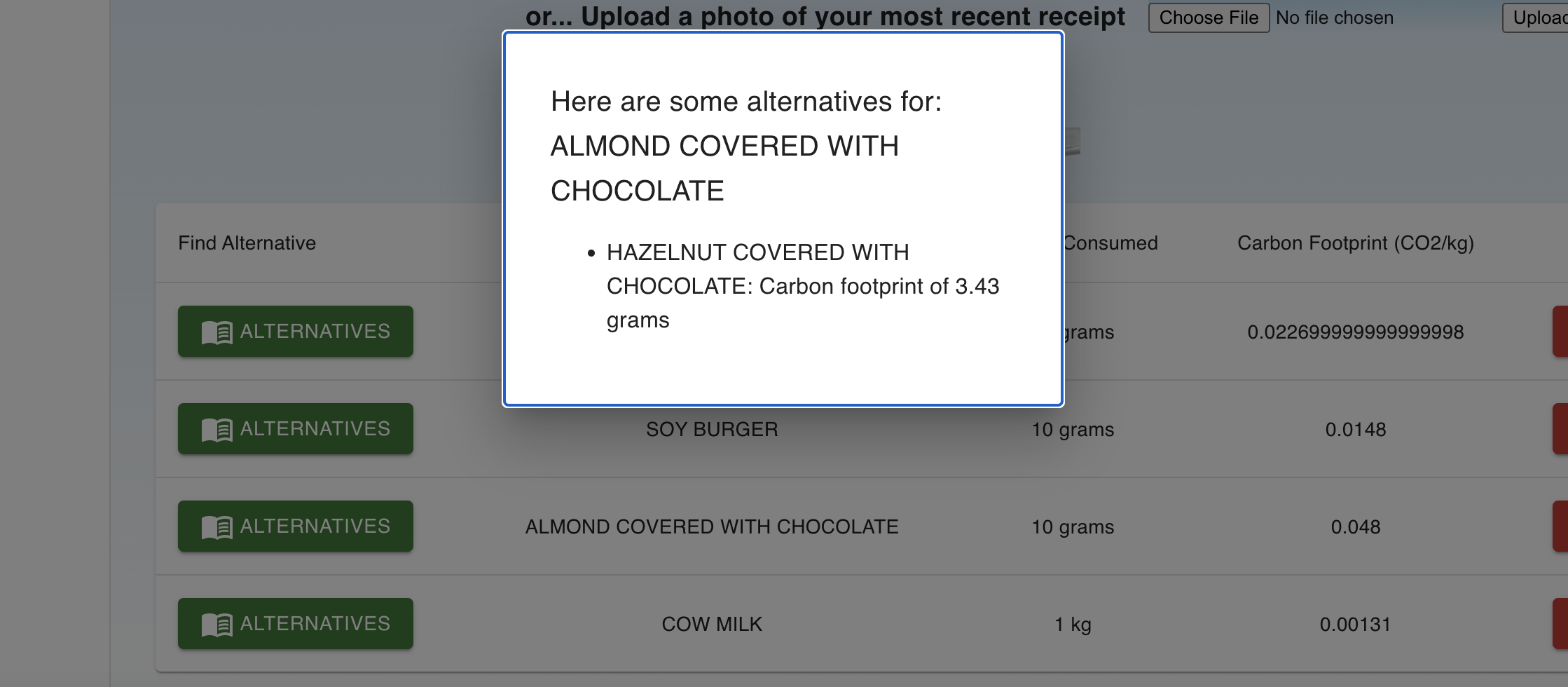
Our app informs users about their carbon footprint based on the food products that are bought from stores. Using a revolutionary dataset from Nature scientific data built using 3349 carbon footprint values extrapolated from 841 publications, we calculated the carbon footprint of specific foods based on the quantity consumed and type of food. The application takes in user input to create a shopping list with grocery items. This can be done through manual photo upload or by adding each item to a shopping list. The application automatically tries to look for similar replacement items in a person's shopping list that has a lower carbon footprint.
How we built it
This project was built using the MERN Stack, with a splash of computer vision using OpenCV and Microsoft Azure Machine Learning and D3 for visualization. The frontend components were built using Material UI. A MongoDB database was used to store shopping lists and client data. D3, a Javascript visualization library was used to create the graph of carbon footprints per food for exploration.
Challenges we ran into
One of the biggest challenges we ran into was trying to upload an image to be stored into a URL using React. This step was crucial to the development of our project since the use case of scanning receipts for grocery and food items relied heavily on image input and processing. We thought of different ways to try to diagnose and tackle the problem such as uploading the image onto a free image hosting service, reading the image into an array of bytes (metadata was lost), and asking a mentor for help.
Additionally, we believe that coming up with an idea that we were all passionate about was the hardest part. Brainstorming did not come easy to us since most of us did not know each other prior to the hackathon. Our entire team knew that we wanted to do something sustainability-related. We cycled through many ideas before settling on this one. We struggled with narrowing down our priorities since we had so many ideas to branch out upon. Some of the ideas that we wanted to implement (but couldn't get to) are listed in the last section of the README below.
Accomplishments that we're proud of
We're proud of all we've done so far, from all the time spent on brainstorming to coming up with a prototype for demonstration. Our team is particularly proud of how we were able to combine our steeply different skills to create an application. Our UI was designed by a team member who has never worked on UI in the past. Deploying and running the CV algorithm was also one of the most time-consuming and messy tasks, but we are still glad that our hard work was able to be showcased.
What we learned
There's no doubt that each of us has learned a lot from this project. Breaking it down individually, Mei: I learned how to build and design the webpage using Material UI, along with using React to integrate GET and POST requests from the frontend to the backend.
What's next for The Secret 37%
The first next step is to make our features work flawlessly. We had a difficult time integrating D3 with react. In addition, we want to make sure that the computer vision for converting receipts into carbon footprints works is reliable. We would also like to add more NLP so that the algorithm automatically finds the closest match for any food item (e.g. user types in Special K, the algorithm match cornflakes, the closest match in our database). As another next step, we would like the user to be able to track their monthly emissions from food by compiling all receipts/shopping lists. Finally, we would like to make this an integrated phone app as well.



Log in or sign up for Devpost to join the conversation.