Inspiration
We kept coming back to one uncomfortable fact: the knowledge to help a patient often already exists somewhere in the world , it just isn't reaching the clinic that needs it in time. A nurse at a rural clinic can face a rash, a mole, or a set of symptoms she's never seen before, with no specialist to call and no way to afford one. Meanwhile, retired doctors, doctors between jobs, and junior doctors wanting more case experience have spare hours and nowhere to put them. That mismatch , unused expertise on one side, unmet need on the other , is what we wanted to fix. We also noticed that informal versions of this already happen quietly, through a phone call to an old colleague or a WhatsApp message, but none of it is recorded, checked for quality, or able to grow. We wanted to build the structure underneath that instinct.
What it does
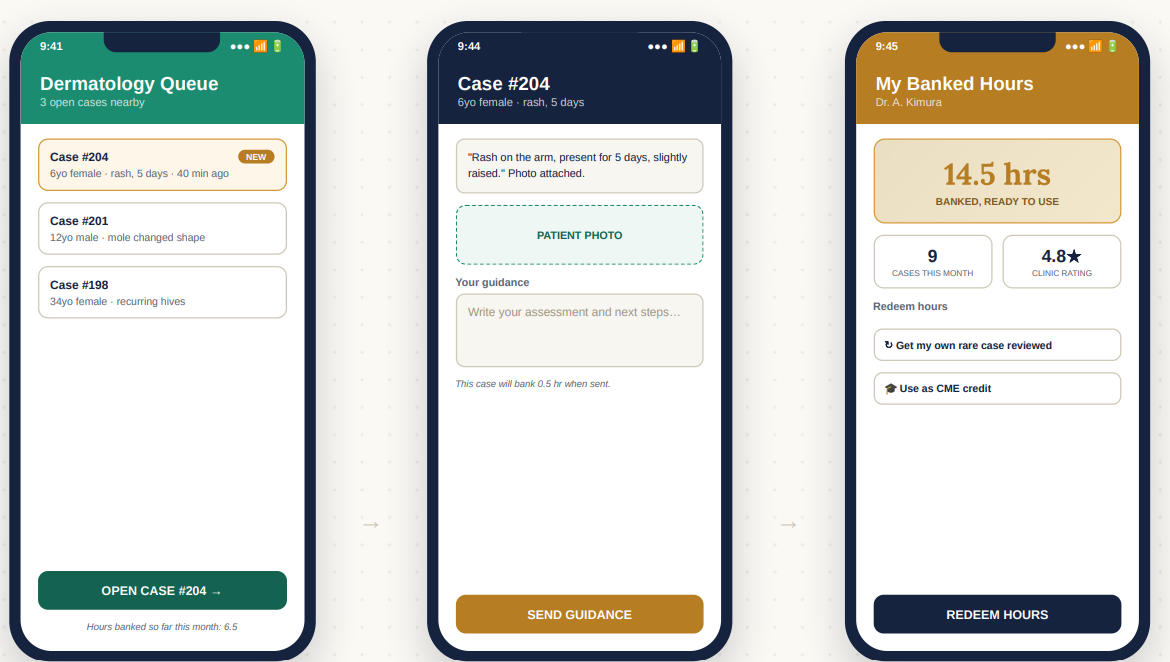
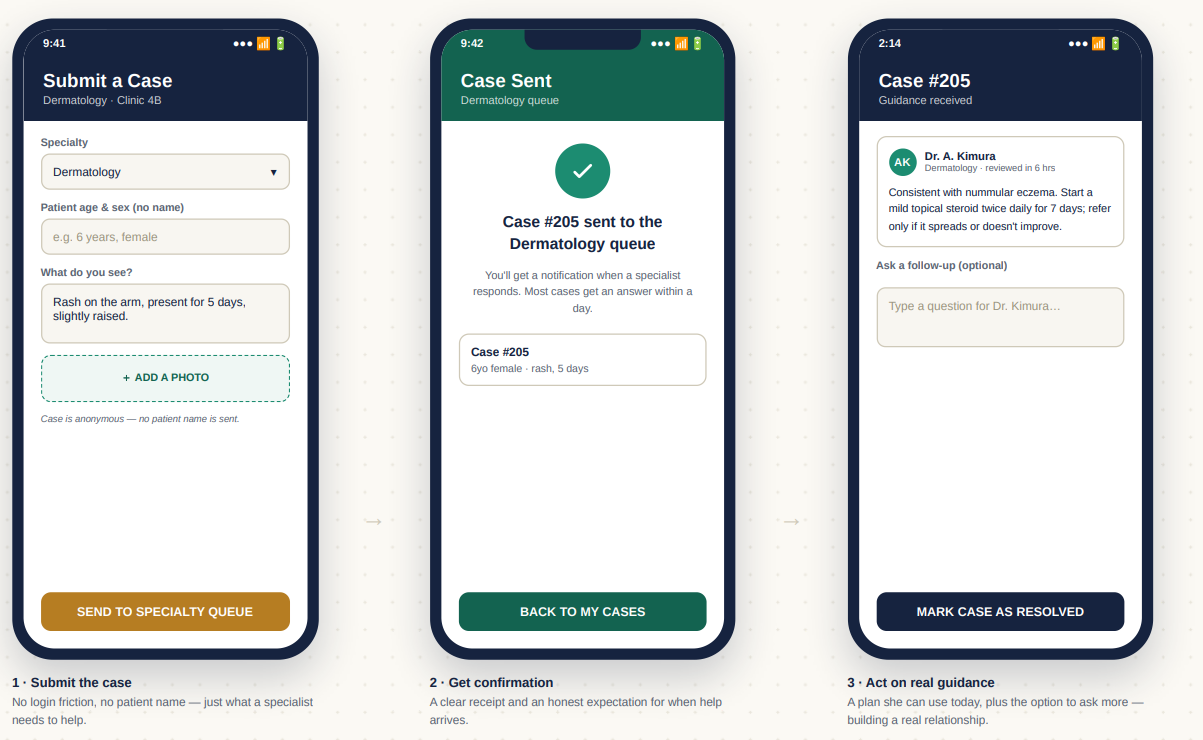
The Second Opinion Network lets a health worker send a hard case anonymized, with a short history and a photo , into a specialty queue. A specialist with spare time picks it up, reviews it, and sends back guidance, all asynchronously so it works even on a slow connection. Instead of being paid in cash, the specialist earns banked hours, which they can redeem later: to have their own rare case reviewed by a peer, to count toward CME/training credit, or to direct toward equipment funding at a clinic of their choice. Every case is saved, so it becomes part of a growing library other health workers can learn from, and clinics can build an ongoing relationship with the same specialist over time.
How we built it
We started from the problem, not the interface mapping out who's affected (patients, health workers, and underused specialists) before designing anything. From there we built the case-and-time-bank flow as the backbone of the system, then worked out the two sides of the product: the health worker's experience of submitting a case and getting guidance, and the specialist's experience of browsing a queue, answering a case, and banking the hour. We designed the full concept as a set of screens and a system diagram to make the flow tangible anonymized case submission, a specialty queue, a response view, and a banked-hours dashboard and used that to stress-test whether the idea actually held together end to end, not just as a headline pitch.
Challenges we ran into
The hardest part wasn't the technologyit was designing an exchange that doesn't rely on money without falling apart. We had to think carefully about trust: how do you let doctors join without a paid contract while still keeping out unqualified people? Our answer was to route sign-ups through trusted partners like medical associations rather than open registration. We also had to be honest about legal exposure an unpaid "second opinion" can't be positioned as a full diagnosis, so that boundary had to be built into the product and its terms from the start, not bolted on later. And we had to design for the reality of the clinics we're trying to serve: weak or intermittent internet, which meant committing to a simple, async, text-and-small-photos experience instead of anything that assumes live video.
Accomplishments that we're proud of
We're proud that this isn't just a slogan it's a full loop, worked through end to end: submission, queueing, response, logging, and redemption, with a real answer for what happens to the hour a specialist spends helping. We're also proud of the currency itself. Banking time instead of charging money removes both of the barriers that usually kill this kind of idea at once cost, which shuts out poor clinics, and contracts, which shut out doctors who only have a little time to give. And we like that the model compounds: every case answered adds to a shared library, so the network gets more valuable the longer it runs, instead of resetting with each interaction
What we learned
We learned that the real innovation here isn't the app it's the exchange mechanism underneath it. Once we accepted that time could function as a currency the same way peer-to-peer lending unlocked unused savings, a lot of the rest of the design fell into place. We also learned how much a good idea depends on naming its own risks honestly: taking legal risk, credentialing, and answer quality seriously early made the concept feel far more real and fundable than treating it as a purely feel-good idea.
What's next for The Second Opinion Network
The plan is to start small on purpose: one specialty that works well with photos (like dermatology), one region, and one medical association as a launch partner to bring in the first trusted specialists. From there, we'd add specialties and regions, introduce regular quality checks on cases and responses, and set clear rules for how banked hours can be spent. Longer term, we want to partner with a health ministry or large health charity to get banked hours formally recognized as training credit — and build out the pieces we didn't have time for here: a clickable prototype, a short demo video, and a one-page partnership pitch for medical associations.
Built With
- figm
- word

Log in or sign up for Devpost to join the conversation.