-
The Screwderia
-
Final Product
-
Final Product


Inspiration
Inspired by the Scuderia Ferrari.
What it does
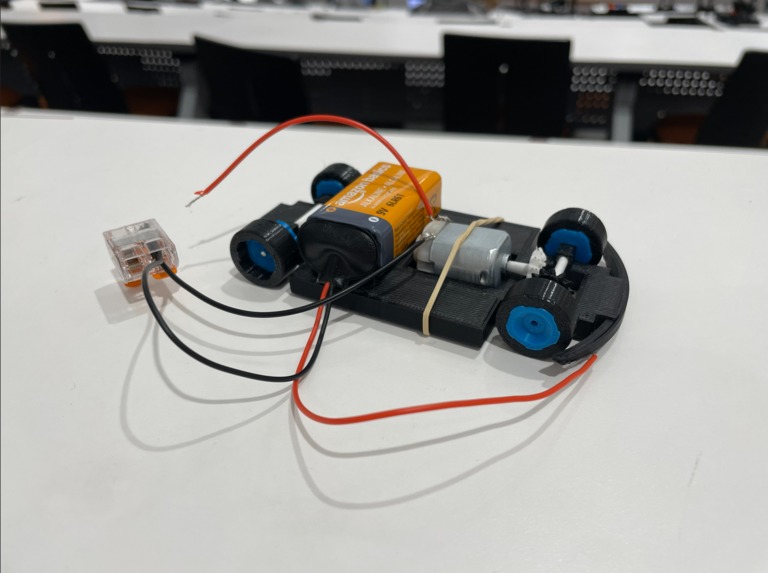
Battery operated race car, which travels through a race track.
How we built it
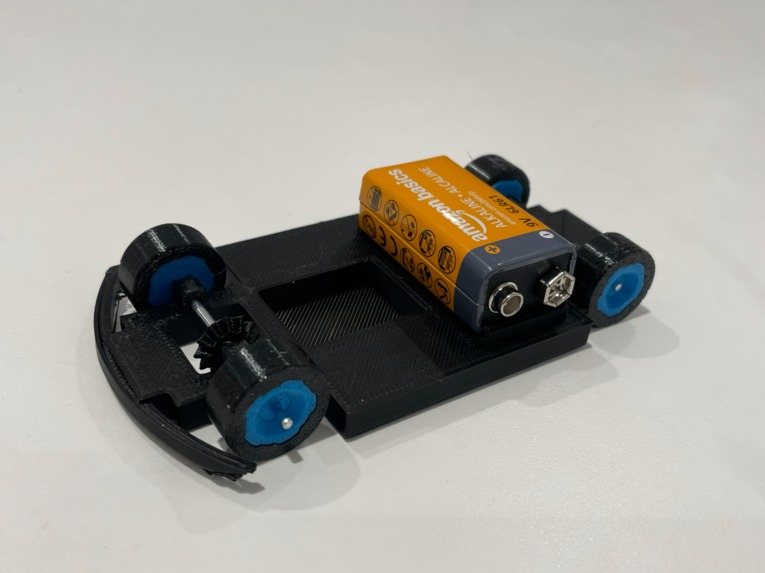
Using the autodesk inventor, 3D printed the frames, gears, and chassis to create the working race car. The battery charges the motor which uses bevel gears to start the car.
Challenges we ran into
Tolerance level for the holes and axle did not give a good fit for pieces which led to the need to reprint the entire chassis. When using the motor the wires were inefficiently connected and needed to be soldered again.
Accomplishments that we're proud of
Building a fully functioning battery operated race car which uses the least amount of materials needed and works efficiently, while still looking the part of a race car.
What we learned
Adaptability is key, learning when to change designs due to flaws in the system, finding the best fit solution to creating a working prototype from various iterations.
What's next for The Screwderia
Creating a customizable design which allows users to interact with the design, whether that be 3D printing their own frames, or using the template frame provided, and customizing the race car to their desire. Adding wheels to the bumper to reduce the friction on the track. Create a better housing for the motor and wago. Testing PLA infills. Adding a mechanism to the frame so it can connect to the base. Add a piece to the bevel gears to hold it in place.
Built With
- autodesk
- axles
- battery
- caliber
- motor
- wheel
- whu
- wire

Log in or sign up for Devpost to join the conversation.