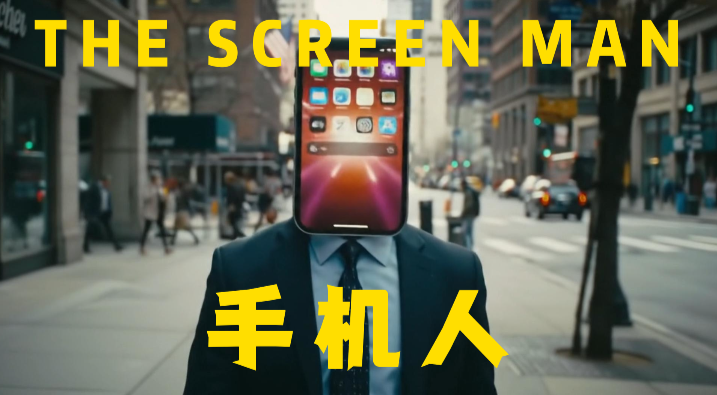
Inspiration
The core inspiration stems from the ubiquitous over-reliance on mobile phones in daily life: we swipe through screens during meals, stare at them during commutes, and scroll late into the night before sleep—often ignoring real-world interactions, natural moments, or even our own physical tiredness. This isn’t about criticizing technology itself, but capturing the quiet disconnection: how we’ve unknowingly let phones become the “center” of our lives, trading genuine conversations with family for social media likes, and swapping the warmth of sunlight for the cold glow of a screen. The goal was to turn this universal, relatable struggle into a visual story—all built entirely through AI, to mirror the very tech that fuels this dependency.
What it does
As an AI-generated short, it uses fully virtual visuals to follow a protagonist’s typical day, framing their phone dependency as a subtle, everyday trap. It doesn’t lecture—it shows the blur between virtual obsession and real-life emptiness, prompting viewers to reflect on their own phone habits.
How we built it
Pre-Production (AI-Powered Planning): First, we used AI tools (e.g., ChatGPT for data synthesis) to analyze surveys on phone usage, identifying high-resonance moments We then used AI storyboarding tools (MidJourney, Stable Diffusion with storyboard prompts) to draft 20+ frames, locking in visual language
Challenges we ran into
Three main hurdles stood out during production:
First, poor consistency across workflows. Since we relied on multiple AI tools. We spent extra time adjusting prompts, but the mismatch still delayed progress. Second, tight timelines.This compressed schedule meant we had to cut back on test runs—early AI-generated character expressions weren’t fully refined, and we had to make on-the-fly decisions to avoid missing the deadline.
Accomplishments that we're proud of
The coolest part by far was how AI quickly brought the story I envisioned to life. Before using AI, I worried it would take months to translate the “everyday phone dependency” I had in mind into visuals. With AI, the process was surprisingly fast: I could sketch a rough idea , and get a polished scene within hours. Even small, nuanced details—like the way the phone’s light flickered on the protagonist’s face—matched exactly what I’d imagined. Being able to turn a mental story into a visual piece so quickly felt incredibly cool; it made the creative process feel fluid and rewarding.
What we learned
Most importantly, AI gave me enormous freedom to express my ideas. Unlike traditional live-action filming—where I’d be limited by factors like finding the right location, hiring actors, or adjusting lighting for hours—AI let me experiment without constraints. If I wanted to tweak the protagonist’s mood (e.g., make their frustration more subtle when scrolling), I just adjusted the AI prompt instead of re-shooting. If I wanted to add a new scene (like the protagonist pausing to glance at a street musician while walking and scrolling), I didn’t need to scout a location or coordinate schedules—I generated it with AI in minutes. This freedom meant I could focus entirely on what I wanted to say (about phone dependency and real connection) instead of how to work around logistical limits. AI turned my creative vision from something I had to compromise on into something I could fully, freely express.
What's next for The Screen Man
“Phone Dependency Across Lifestyles” Series: We’ll expand to focus on different groups: A student: AI-generated scenes of them toggling between online classes and social media, missing deadlines because of endless scrolling. A senior: Following an older protagonist who uses phones to “stay connected” with kids—but ends up scrolling alone all day, forgetting to call them. Each episode will reuse our AI workflow but tweak details (e.g., a teen’s neon-lit bedroom vs. a senior’s cozy living room) to feel distinct. Add “Small Hope” Moments: Future episodes will move beyond “showing the problem” to “showing tiny fixes”: e.g., an AI-generated scene where the student puts their phone in another room and finds joy in drawing, or the senior’s grandkid visiting and teaching them to use the phone for video calls (not just scrolling). These moments will keep the series reflective but hopeful. Interactive AI Extensions: We’ll launch a companion AI tool: users input their phone habits (e.g., “I scroll 2 hours before bed”), and the AI generates a 10-second “mini-scene” of their routine—personalizing the series’ message and encouraging action (e.g., the AI adds a prompt: “What if you swapped 10 minutes of scrolling for reading?”).
Built With
- ai
