-
-
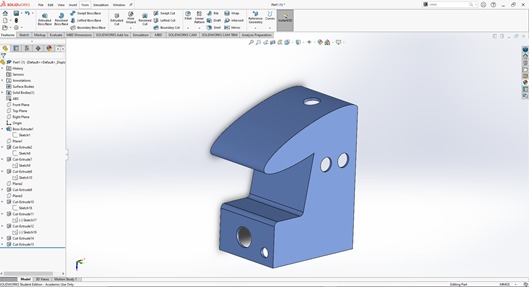
Solidworks Model
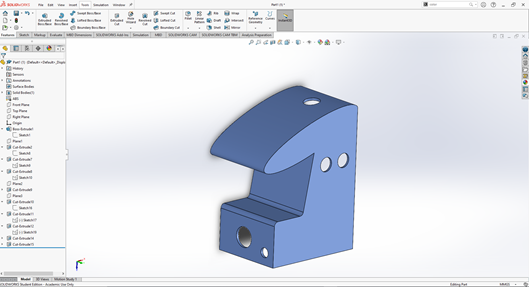
Inspiration
The inspiration for our project came from, first and foremost, the global situation – namely, the COVID-19 pandemic. These days, most people need to be washing their hands as quickly and as often as possible, and they need to be reminded to do so. Making sure that supplies of hand sanitizer do not run out quickly, given this increased quantity of users, is therefore of paramount importance. Thus, our idea here was born.
What it does
This project is an amalgam of two sectors. Primarily, it functions as an ordinary automatic hand-sanitizing machine: once a user’s hands are detected in the vicinity of the machine, a small quantity of hand sanitizer lands on their hands. However, it also functions as an automatically refillable one: once a weight sensor detects that there is little hand sanitizer, a pre-inserted bottle can automatically refill the dispenser. Finally, this machine serves as a reminder machine: if someone walks past without using the dispenser, a small tone rings out, and the person is reminded to sanitize their hands.
How we built it
This project was built in three sectors: modelling, programming, and prototyping. We first began with models in Solidworks, to ensure that the mechanical components of the prototype would work, as well as TinkerCad, to ensure that the electrical components of the prototype would not cause problems. We then moved on to programming, through TinkerCad. Finally, with the help of one team member’s 3D Printer, we printed the model and used an Arduino Uno, breadboard, and wiring to construct the rough prototype.
Challenges we ran into
As usual, the challenges that we ran into were primarily related to the fact that we could not instantly access materials. Normally, we could simply walk to a store, or walk to a student shop, and access materials there; however, for evident reasons, that is not an option this year. Another challenge we ran into was parsing which equipment, precisely, to use: to use a basic example, we needed to make sure that not only did we use a transistor, but rather the correct transistor.
Accomplishments that we’re proud of
We are proud that we managed to use a 3D printer for the first time, meaning that we could have a very compact project that would be relatively easy to print.
What we learned
We made ourselves more familiar with Github, and each of its properties. With some of us having experience in only using software in a hackathon, we also learned how to run and come as far as possible in a hackathon that combined software and hardware. Finally, we further reinforced our abilities to use multiple disparate sensors to accomplish one central task.
What’s next for this
In the future, we will attempt to make this more responsive to a user’s touch. For example, currently, our alarm rings indiscriminately whenever a person walks past. It could be possible, one day, to use a more advanced camera that relies on facial recognition to determine whether someone has already used the machine, and could therefore walk past, for the purpose of conserving resources. We could also experiment with using some sort of Bluetooth to notify a principal that sanitizer quantities are running low, and to add a new bottle to the dispenser.

Log in or sign up for Devpost to join the conversation.