-
-
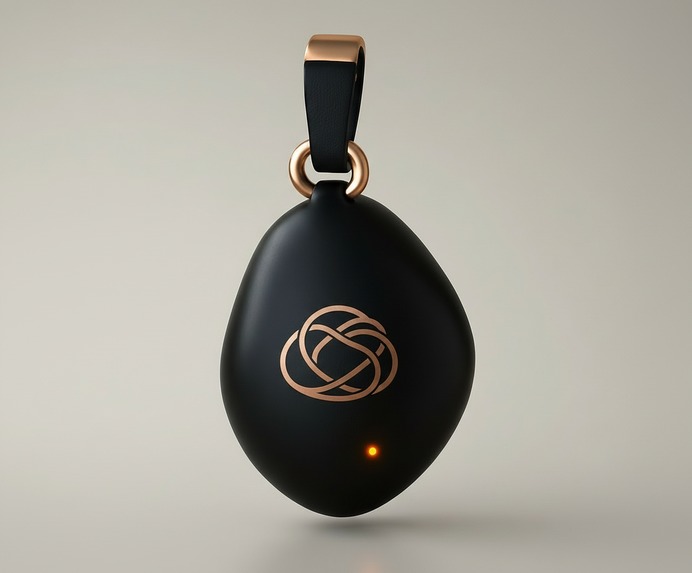
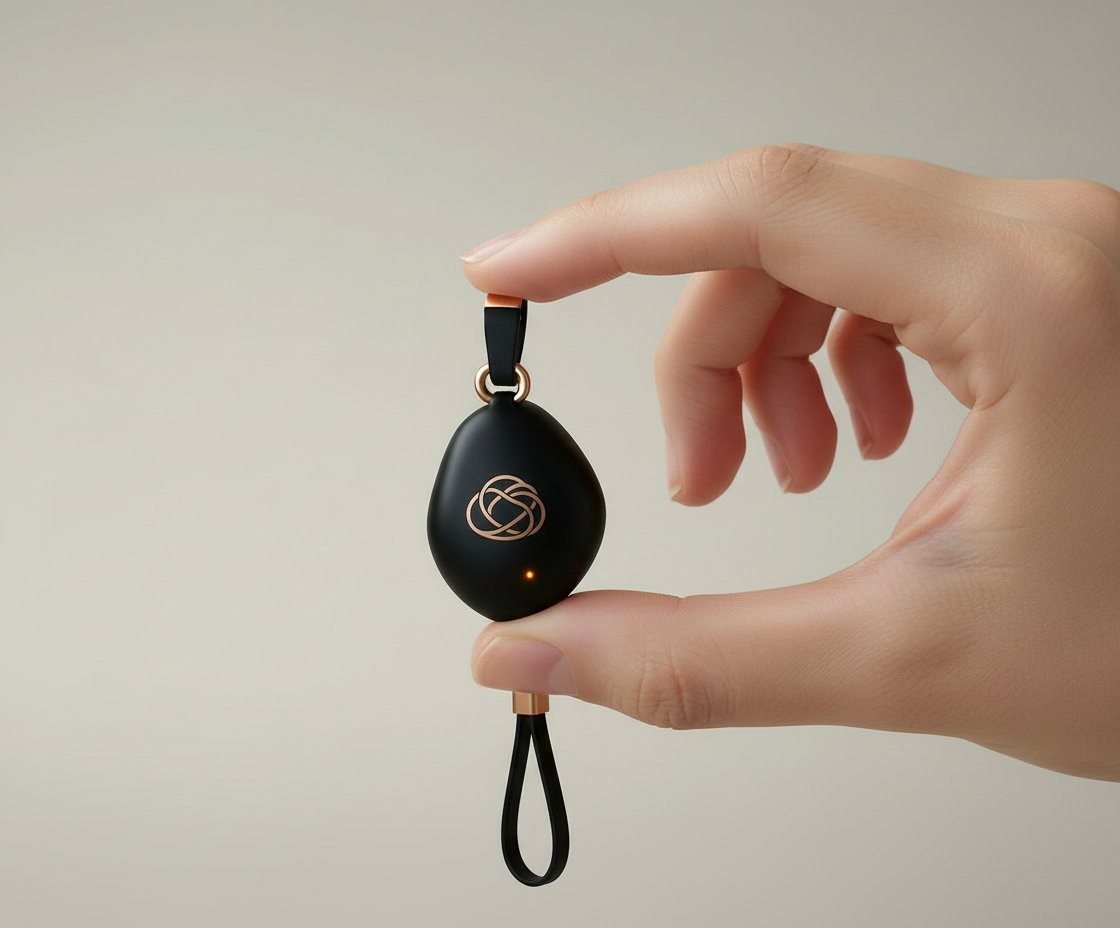
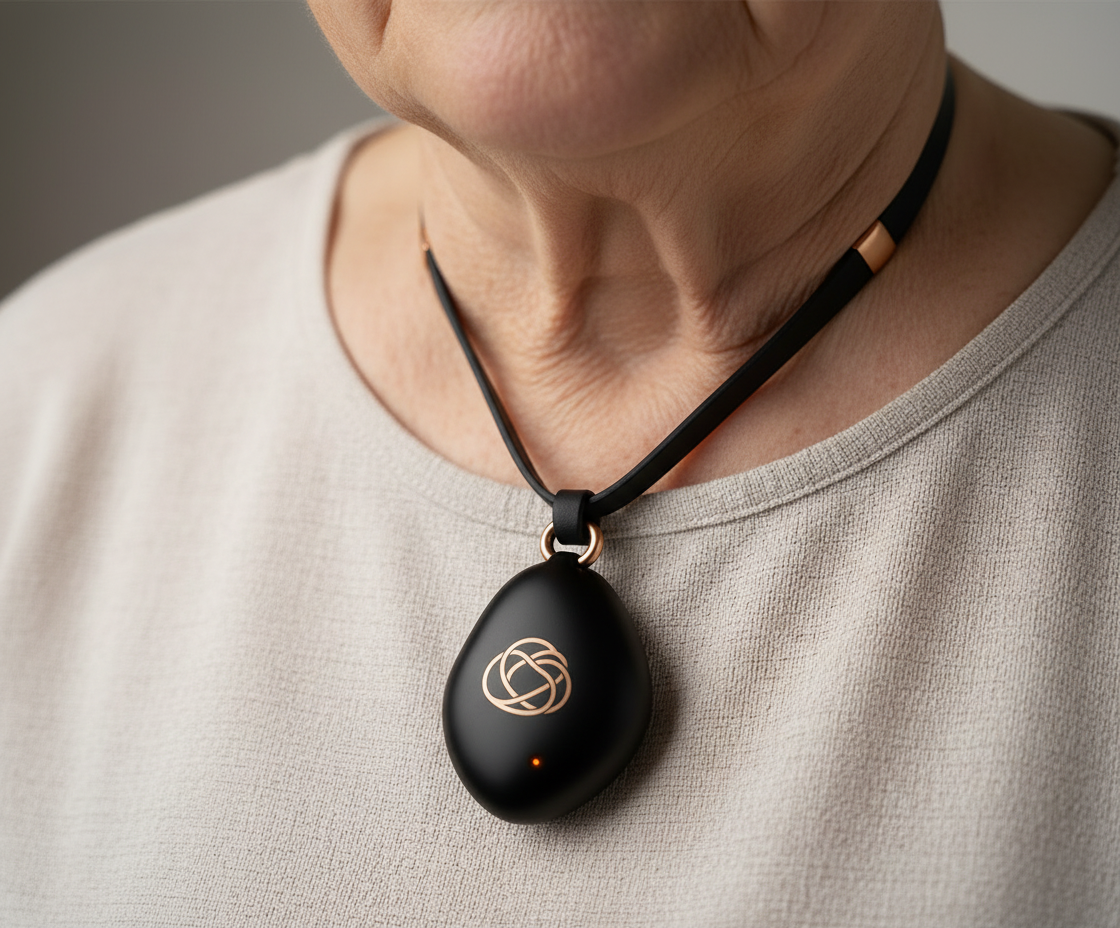
The Salience Stone Prototype
-
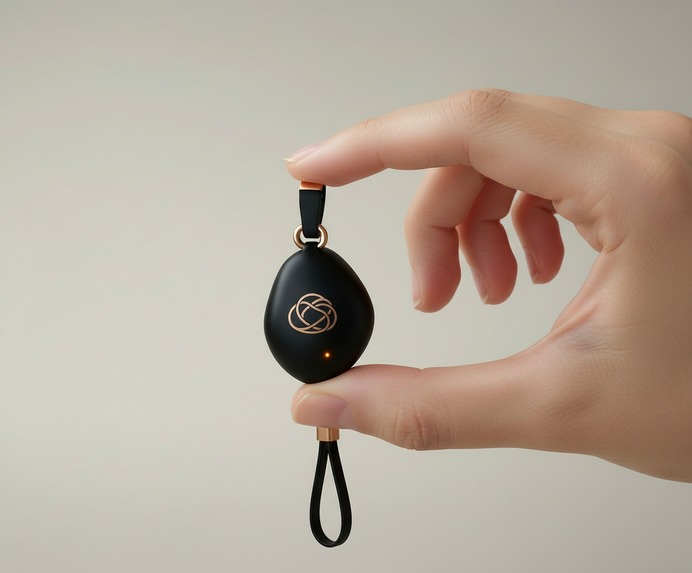
Device held in hand
-
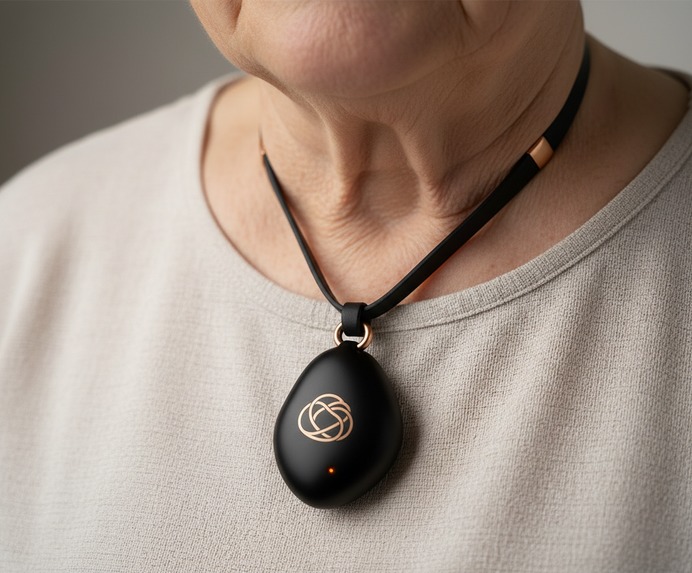
Device around the neck
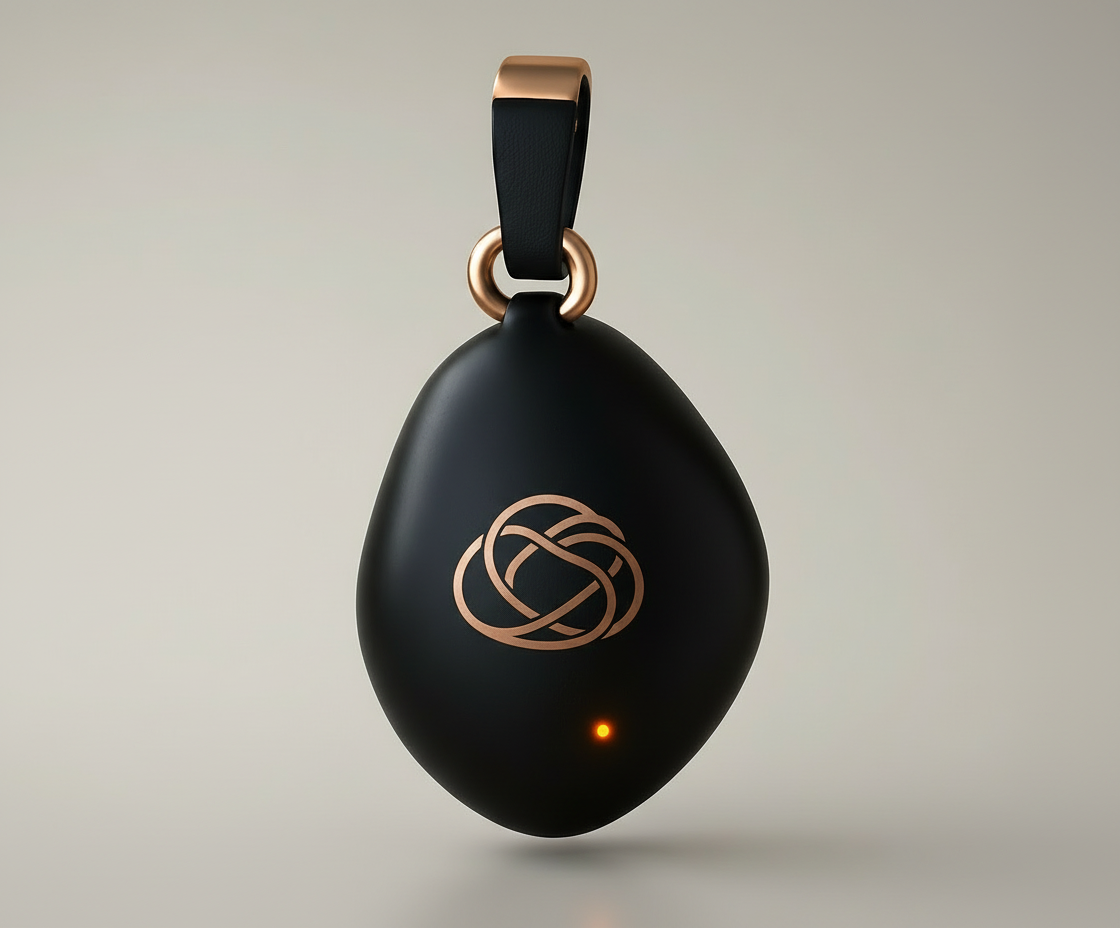
Inspiration
The inspiration for The Salience Stone came from a profound intersection of neuroscience, speculative design, and human grief. We were tasked with a challenge: to design a tool that tracks, measures, or visualizes an intangible aspect of the human sensory experience.
While exploring this, we were deeply moved by the work of neuroscientist Dr. Tara Swart, who discussed how humans possess up to 34 distinct senses, how trauma is stored physically in the body, and the "art of noticing" (neuroaesthetics). She also touched upon the theory that the human brain might act as a "radio receiver" for external consciousness. We wanted to build an "aetheric antenna" that validates the invisible "vibes," synchronicities, and heavy emotional atmospheres that grieving or disconnected individuals feel but cannot logically prove.
What it does
The Salience Stone is a screenless, pocket-sized smart-stone that detects invisible "resonance waves"—the hypothetical frequencies of collective consciousness and synchronicity. It translates these abstract environmental atmospheres into measurable physical states using two biological pathways:
- Thermoception (Temperature shifts): The stone warms up when detecting a synchronicity wave (nudging the user to notice beauty) and actively cools down to counteract chaotic "stress waves" in tense environments.
- Mechanoreception (Deep pressure and vibration): It uses tactile feedback, such as a sharp tingle for creative flow states, or a slow, grounding pulse to soothe the user.
At the end of the day, to prevent screen fatigue, the stone rests in a copper induction "Resonance Basin," which projects the day's captured wave frequencies onto the ceiling as a slow-moving, cymatic light map for peaceful reflection.
Challenges we ran into
Our biggest challenge was information overload. When users are dealing with profound grief or sensory overwhelm, the last thing they need is a glowing screen, a push notification, or a line graph telling them they are stressed. Stripping away the graphical user interface entirely and relying solely on a purely tactile interface with a strict "signal-to-noise" threshold was incredibly difficult to map out conceptually.
What we learned
We learned that the future of wellness technology doesn't have to be a dashboard. Through this project, we discovered the power of promoting the "art of noticing," and how technology can be used not to distract us from our environment, but to gently push us back into active connection. We learned that for vulnerable populations, tactile and ambient interfaces offer a much safer, more empathetic user experience than traditional screens.
Built With
- figma
- gemini


Log in or sign up for Devpost to join the conversation.