-

-
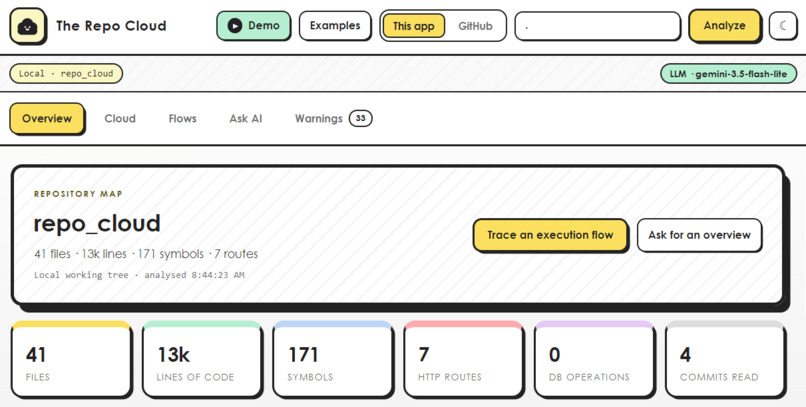
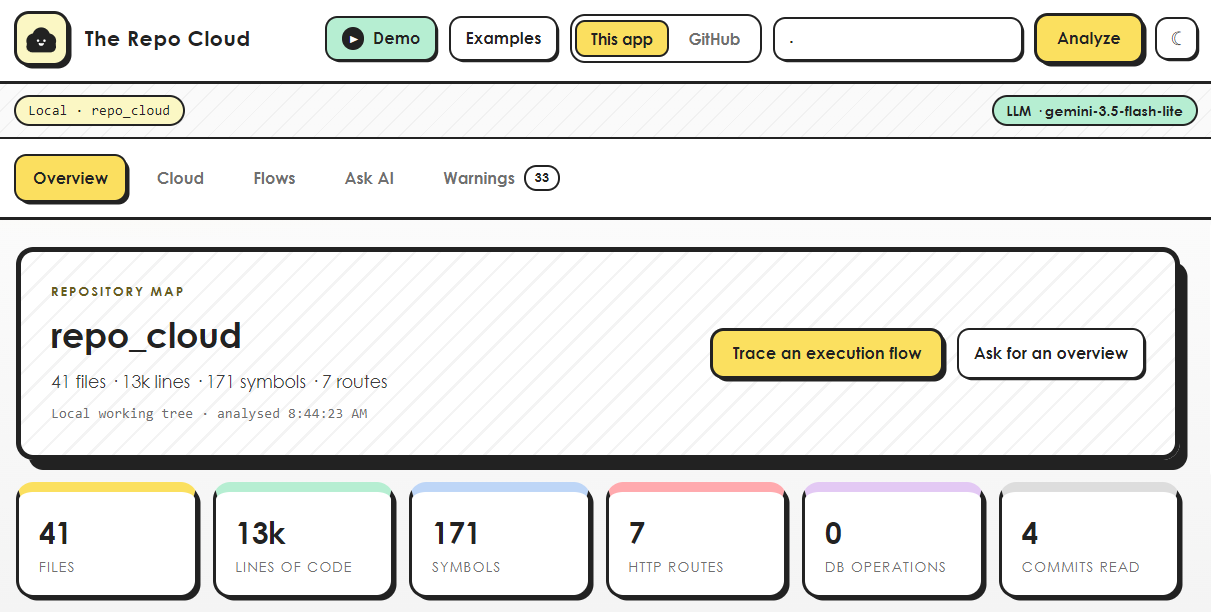
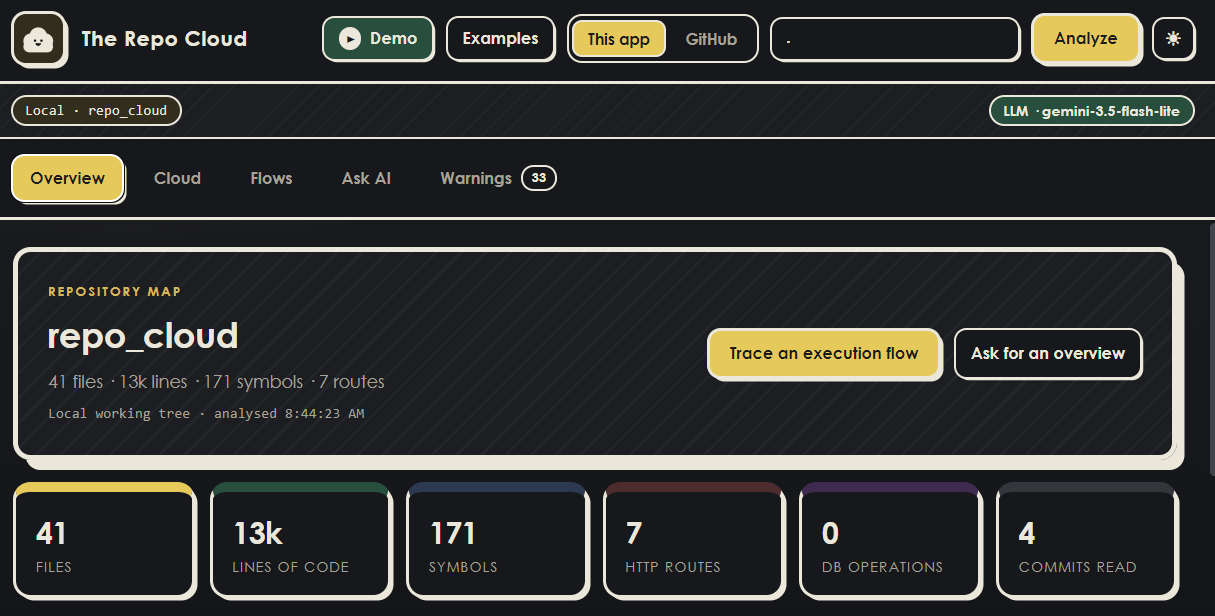
Starting UI showing the overview of an example repository
-
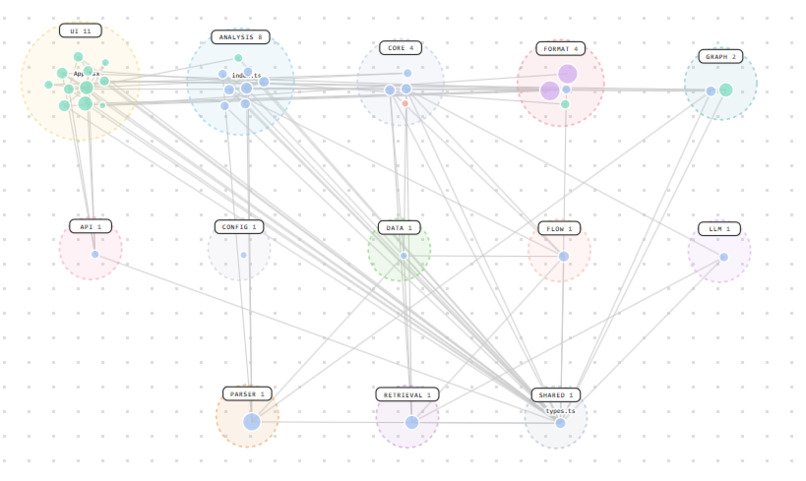
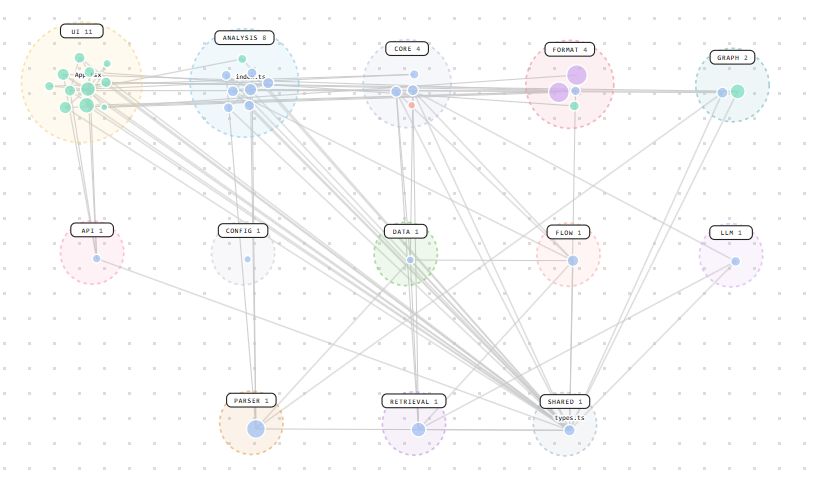
Nodal relation cloud, demonstrating the connections different repository files and grouping them together by purpose
-
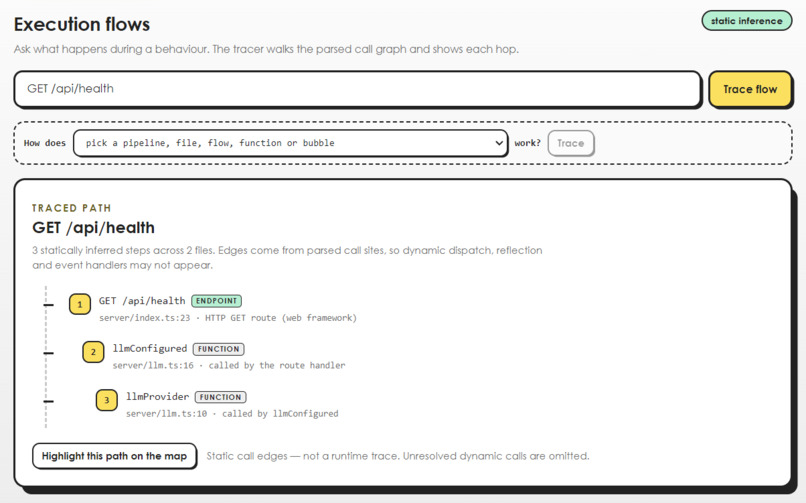
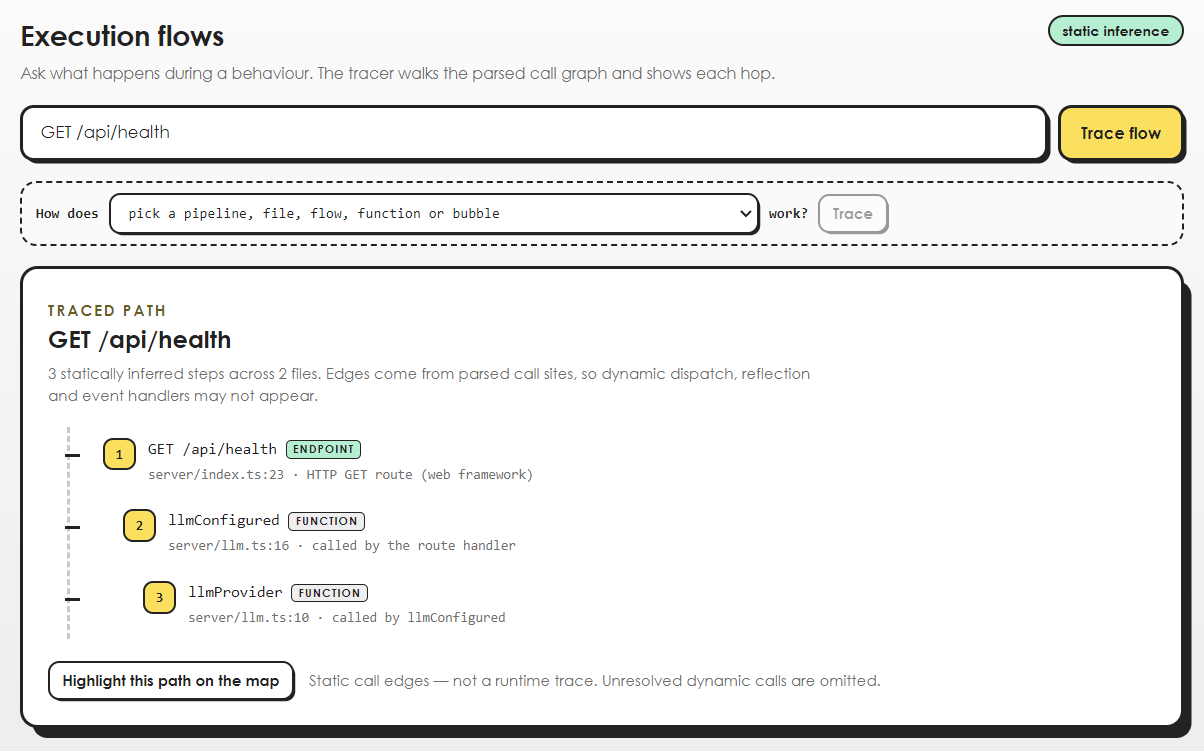
UI for displaying execution flows
-
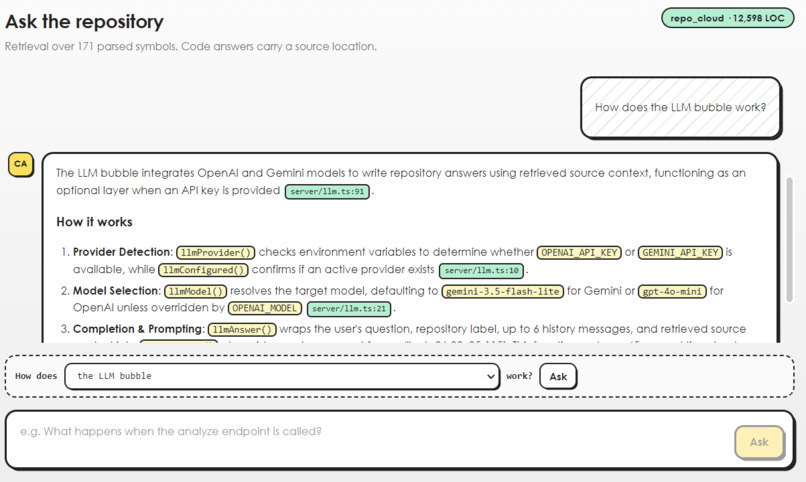
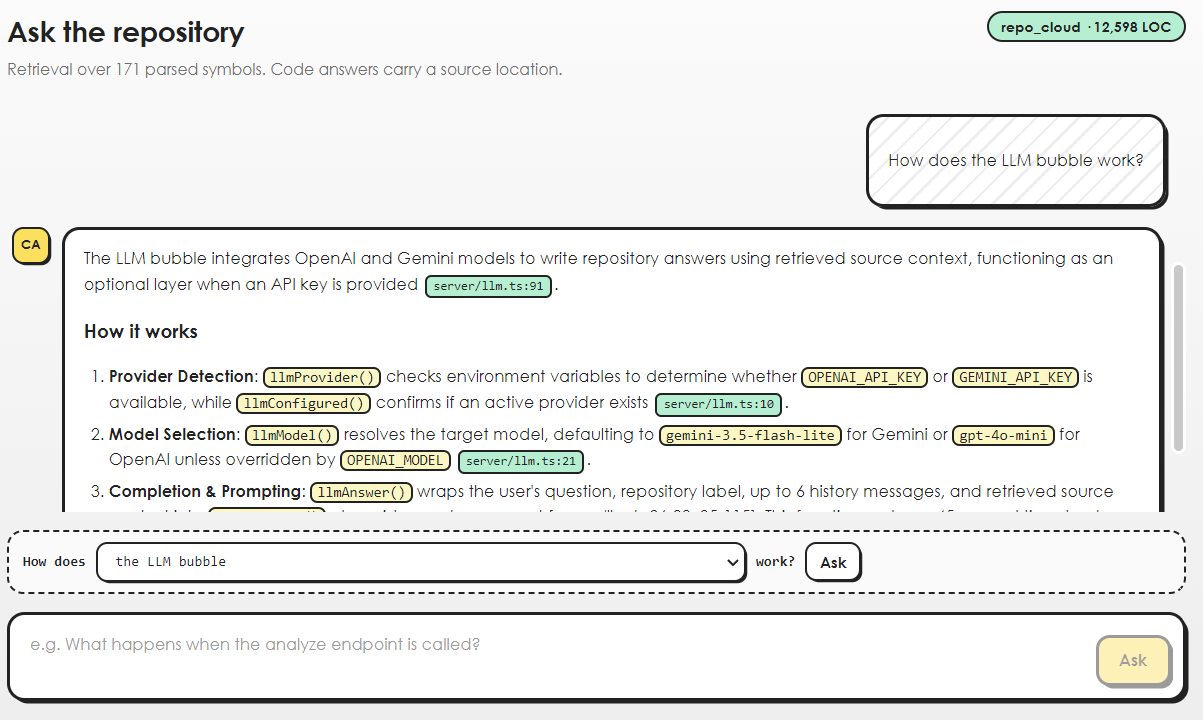
Interface for prompting the custom analysis LLM
-
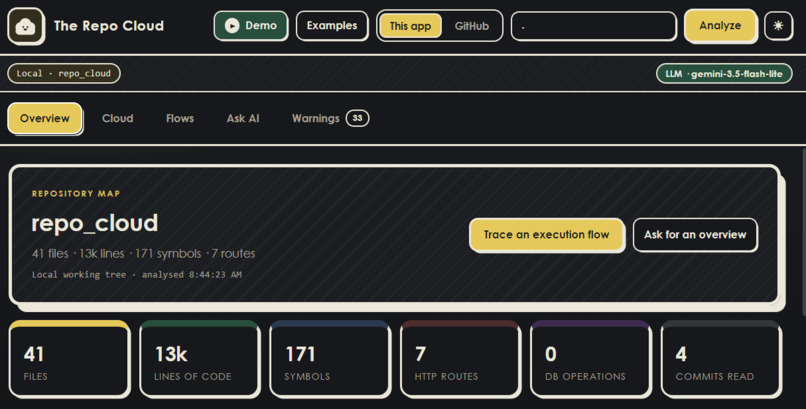
Night mode

Inspiration
Joining a new repository means hundreds of files and no clear entry point. Existing tools show folder trees or offer a chat box; they don’t show what the system is made of, how it connects, or what a change could affect. I built a map instead of a file tree, using the hackathon’s In the Clouds theme.
What it does
The Repo Cloud analyzes a local folder or public GitHub repo, at the latest revision or a recent commit. It parses files, symbols, imports, routes, and SQL operations into:
Cloud: an interactive SVG map that groups files by purpose, not folders, with clickable source inspection.
Ask AI: plain-language answers with clickable file:line citations. Works without an API key; optional LLM support.
Flows: traces a route or function through its inferred call graph.
Blast radius: shows affected callers, endpoints, and tests.
Warnings: flags long functions, god files, cycles, unused symbols, and high fan-out.
Git archaeology: commit history, churn, and loadable commit snapshots.
It includes six one-click examples, a guided demo, and runs with no API key.
How we built it
React 18 + Vite + TypeScript frontend; Hono on Node. The map uses a custom SVG force layout. The parser uses regex and brace/indent matching instead of tree-sitter, with import resolution, Tarjan cycle detection, and call-edge inference. Answers come from retrieval and synthesis, with citations validated against the analyzed file set. The optional LLM only sees retrieved source and falls back to the deterministic engine. I verified with tsc, npm run build, and local/GitHub smoke tests.
Challenges I ran into
Static analysis without a compiler or type checker is messy: import aliases, dynamic dispatch, reflection, dependency injection, and callbacks are easy to miss. Keeping the graph readable was another challenge. We also had to prevent hallucinated citations and handle slow LLM responses, which led to the deterministic fallback. GitHub rate limits and the remote-file cap added constraints.
Accomplishments that I'm proud of
A working end-to-end MVP that analyzes itself and real repositories. The purpose-bubble map, cited Q&A, flow tracing, blast radius, commit snapshots, and zero-key mode all work together. I also kept the limitations honest in the UI and README.
What I learned
Understanding code is a graph and retrieval problem. Explainability changes the product: requiring a real file and line makes the system more honest. Constraints like skipping tree-sitter forced clearer claims about what the parser can and cannot see.
What's next for The Repo Cloud
Persist analyses as a knowledge graph, add tree-sitter or LSP support, make impact analysis diff-aware for pull requests, and add runtime traces through OpenTelemetry. Longer term: shareable team maps, deployment, and IDE integration.

