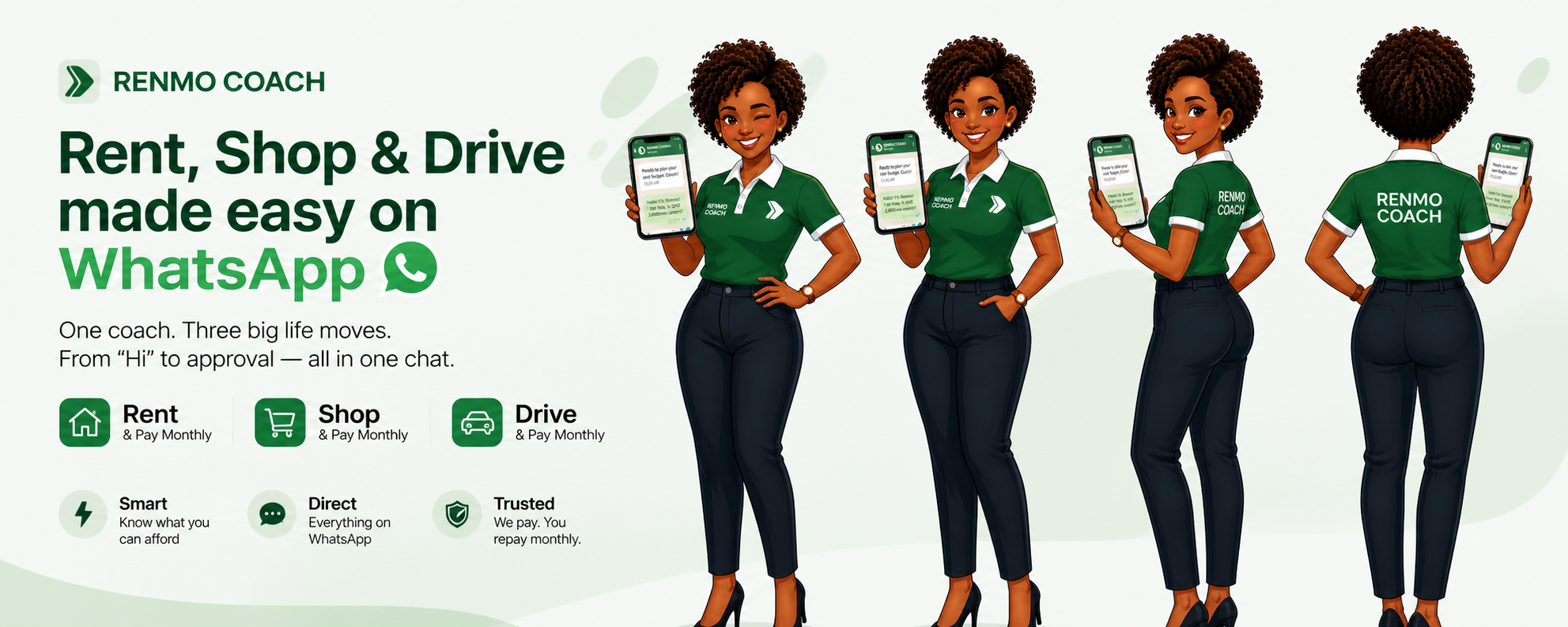
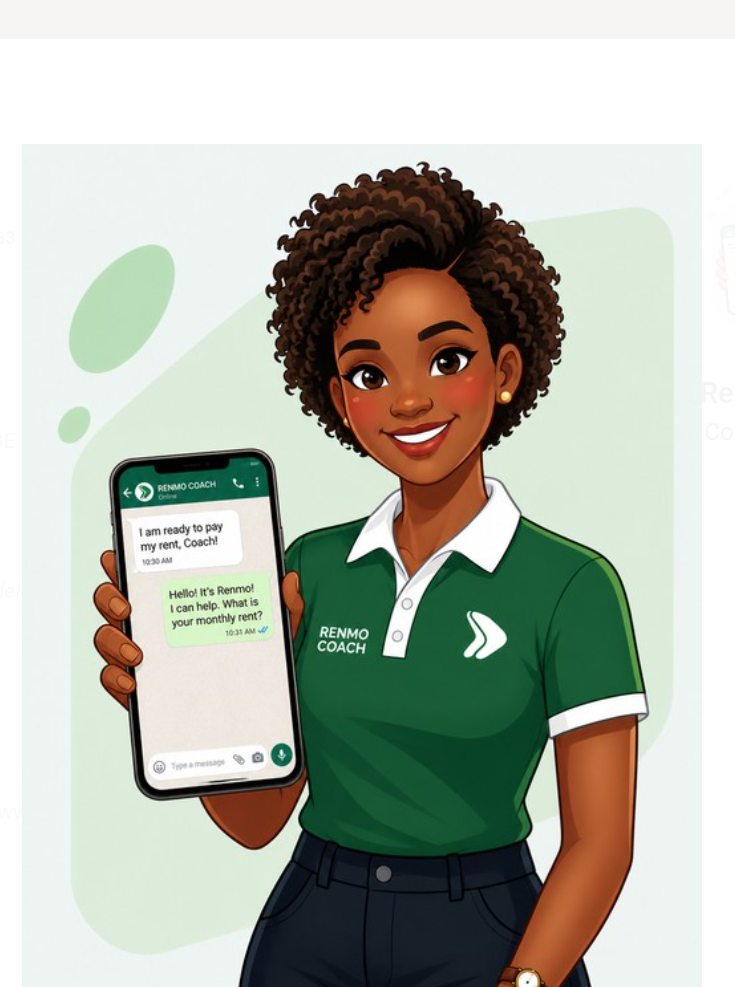
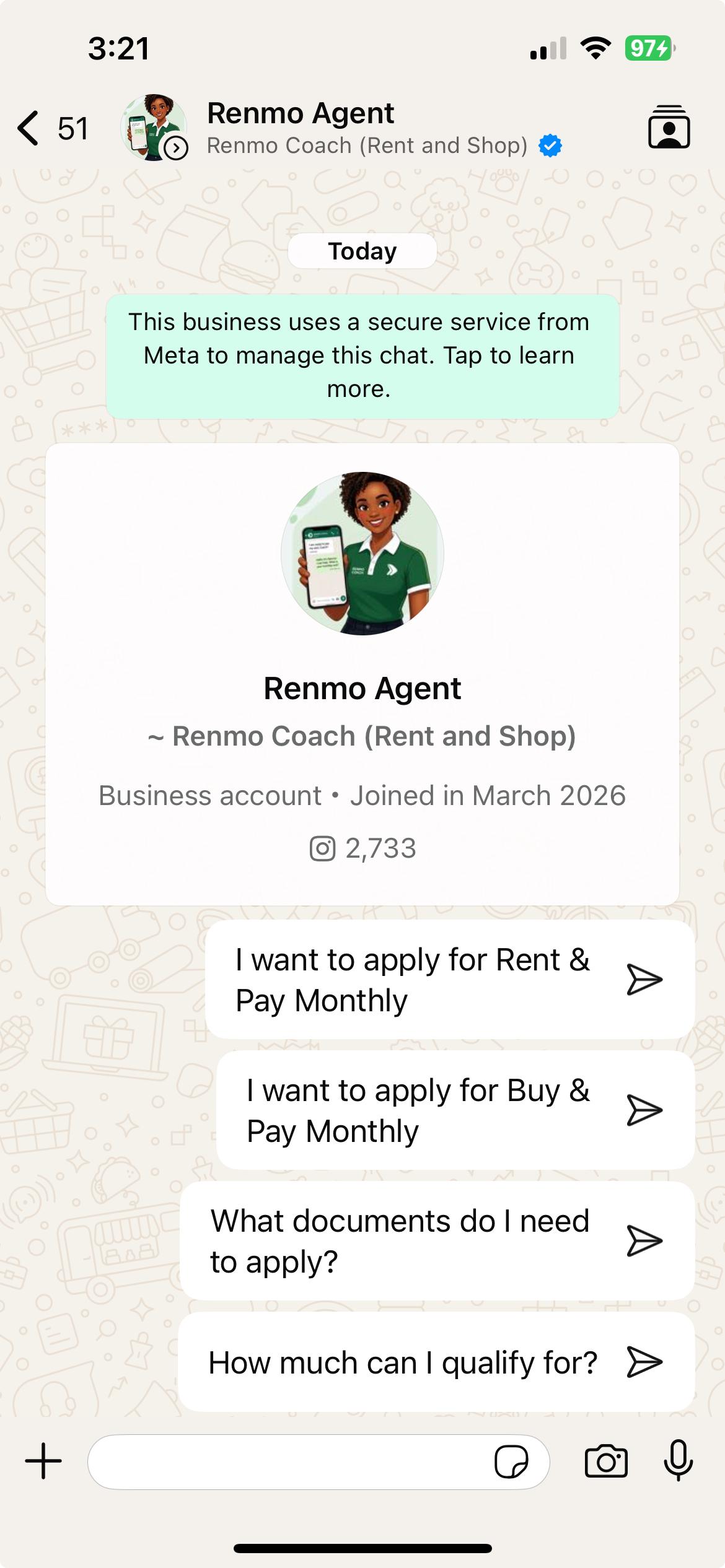
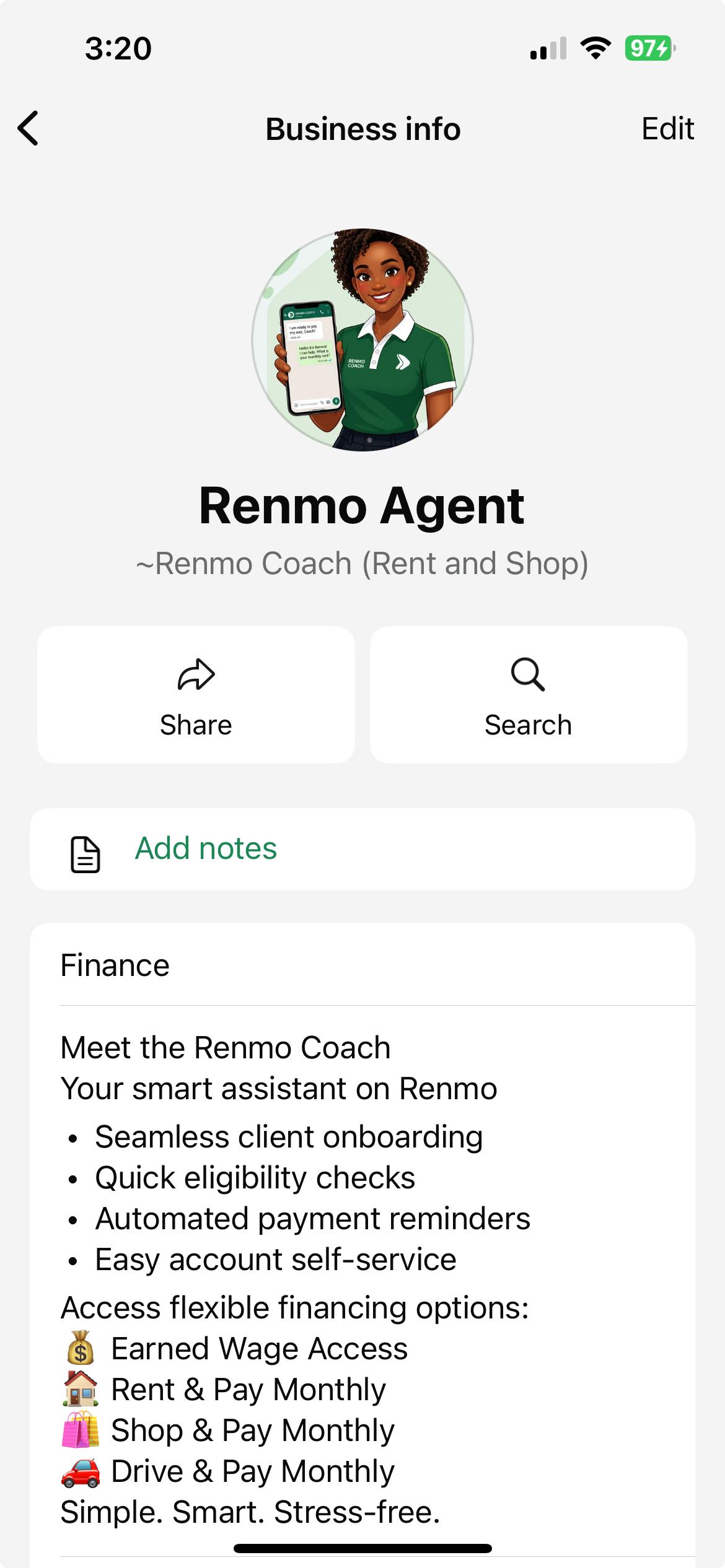
Inspiration In Ghana, income arrives monthly—but rent is often demanded far in advance. That mismatch can keep a working person from securing a home even when they can comfortably afford the monthly cost. The problem is not always a lack of income. It is a lack of timing, accessible financing, and guidance through a process that can involve confusing requirements, financial statements, repeated follow-ups, and long waits. Traditional rent-financing operations are also expensive to run. Every application requires customer education, document collection, income verification, affordability assessment, status updates, and repayment support. When people must perform every step manually, serving more renters means adding more staff and cost. That makes smaller transactions and underserved customers increasingly difficult to support. We built The Renter’s Coach to change that equation. Our vision is an AI-native service that helps a renter move from “Can I afford this home?” to a responsible rent plan through a familiar WhatsApp conversation. Instead of asking people to understand financial jargon or navigate a complicated portal, The Renter’s Coach meets them where they already are, explains each step clearly, and helps them complete it. Our goal is not simply to approve more financing. It is to help more people access suitable homes through commitments they understand and can afford.
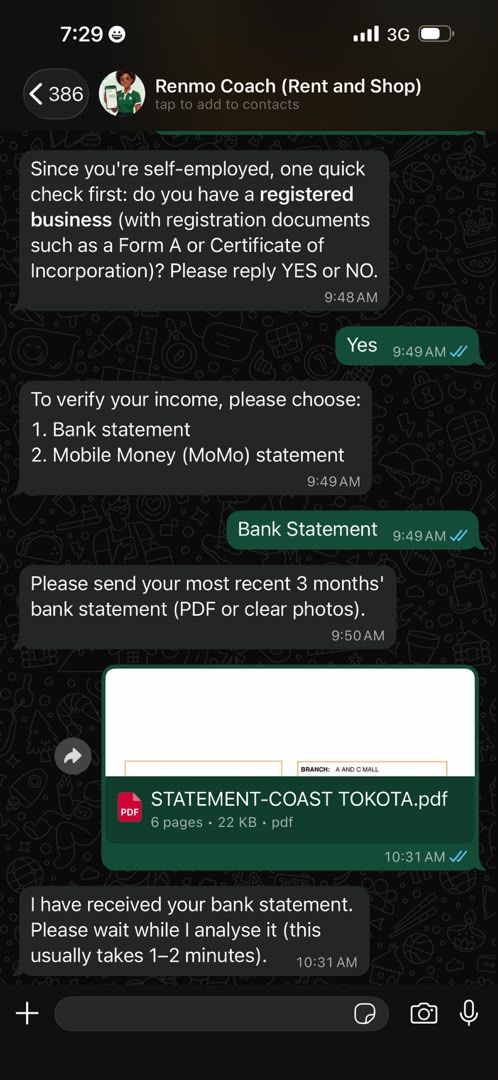
What it does The Renter’s Coach is a 24/7 AI agent for responsible access to rent financing. A renter can begin on WhatsApp, ask questions in natural language, receive an affordability estimate, and progress through onboarding one step at a time. The Coach identifies what the renter wants to accomplish, retrieves the current application state, collects missing information, and resumes an interrupted journey without asking the customer to start again. When a renter submits bank or mobile-money statements, Gemini analyzes the documents and returns structured facts such as: Monthly income patterns Recurring deposits Existing financial obligations Income consistency Account-holder and document details Missing, conflicting, or suspicious information Those facts are passed to a deterministic rules engine that performs affordability calculations and applies predefined eligibility controls. Gemini understands the documents; the rules engine enforces policy. Clear cases can progress through approved workflows, while ambiguous, incomplete, or higher-risk cases are escalated to a person. The Coach also supports renters after financing begins. It explains payment schedules, retrieves account information, sends reminders, helps resolve routine issues, and routes disputes or exceptional circumstances to the operations team. When a customer qualifies, the landlord is paid directly on the renter’s behalf. The renter then makes transparent monthly repayments. No unrestricted cash is handed to the customer. The result is more than a chatbot. It is an operating agent that helps deliver a real financial service.
How we built it We built The Renter’s Coach as an AI-native layer connected to real customer channels, business rules, and production workflows. Gemini is the intelligence layer. We use Gemini for conversational understanding, contextual guidance, workflow selection, and multimodal financial-document extraction. Bank and mobile-money statements are submitted to the Gemini API, which returns structured JSON under a defined schema rather than an unrestricted narrative. A deterministic engine is the decision-control layer. Financial calculations, affordability limits, dates, thresholds, and eligibility gates are implemented in code. This creates a deliberate separation between what an LLM does well—understanding language and unstructured documents—and what must remain predictable and auditable. Production APIs are the execution layer. The agent can retrieve customer and application state, record verified information, advance permitted workflow stages, provide application updates, and support repayment accounts. Each action is bounded by tool permissions and business policy. WhatsApp is the access layer. Customers can use a channel they already understand without installing another application or visiting a branch. The conversational journey asks one clear question at a time, reducing cognitive load and abandonment. Humans are the accountability layer. Staff define policies, supervise performance, review exceptions, handle disputes, and intervene in ambiguous or high-risk cases. The system is designed to fail safely: if evidence is incomplete or automation cannot proceed confidently, the application is routed for review. We can demonstrate live operation through Gemini usage records, structured document outputs, agent execution logs, backend API activity, application-state changes, customer conversations, and human-escalation records.
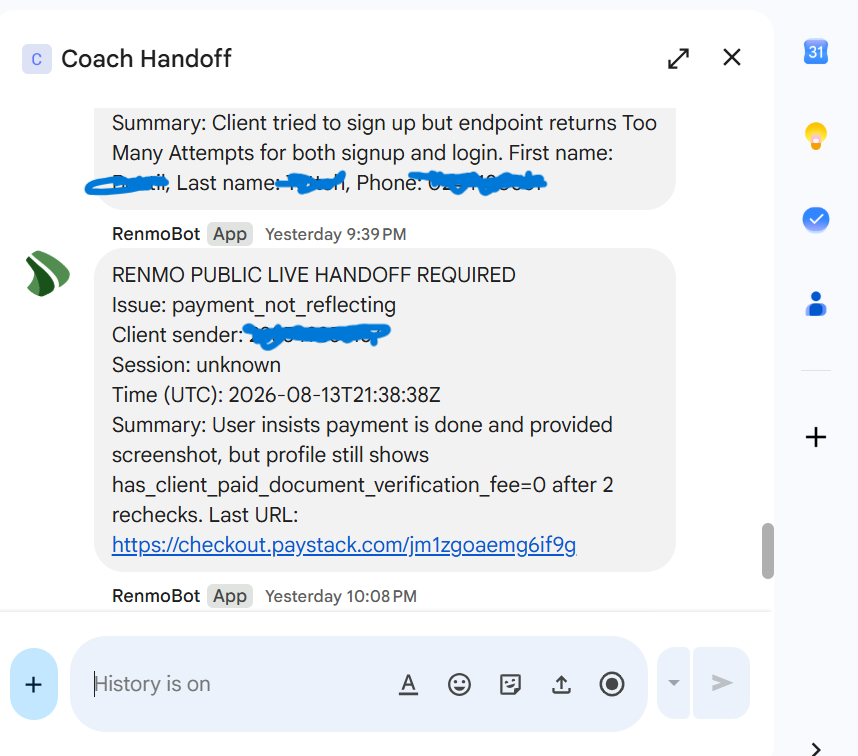
Challenges we ran into The hardest challenge was not making AI sound intelligent. It was making AI dependable enough to participate in a consequential financial workflow. Financial statements arrive in different formats, qualities, currencies, layouts, and reporting periods. A model can extract useful information while still making subtle errors in arithmetic, dates, or classifications. We addressed this by constraining Gemini to structured fact extraction and moving calculations and policy decisions into a shared deterministic engine. A second challenge was continuity. Real customers do not complete financing applications in a single perfect session. They pause, return later, change channels, upload the wrong document, or ask unrelated questions midway through a process. We built the Coach to read the renter’s current state and continue from the correct step instead of restarting the journey. We also had to balance automation with customer protection. Fully manual operations limit scale, but unrestricted automation can create unacceptable financial risk. We designed explicit escalation paths for inconsistent income, incomplete documents, identity mismatches, suspected fraud, disputes, and policy exceptions. Finally, production messaging introduced challenges that demos rarely reveal: message delivery, duplicate events, authentication, retries, API failures, conversation routing, privacy, and reliable human handoff. Solving these issues was essential because impact requires a service that works for real people, not only under ideal demonstration conditions. Accomplishments that we're proud of We are proud that The Renter’s Coach moved beyond an FAQ bot into an agent capable of performing real operational work. The system can guide a renter from initial enquiry through prequalification, document collection, income analysis, application progression, and repayment support. It can understand unstructured customer messages, analyze financial documents with Gemini, invoke approved backend tools, and preserve context across a multi-stage journey. We are particularly proud of the safety architecture. Gemini does not invent affordability policy or make opaque, unrestricted credit decisions. Its structured findings are evaluated by deterministic rules, and uncertain cases are escalated to humans. This gives us the flexibility of AI without surrendering consistency or accountability. We also created one shared statement-analysis approach for customer and administrative workflows. This reduces decision drift and helps ensure that the same evidence is treated consistently regardless of how it enters the system. Most importantly, we built around a meaningful measure of success: not the number of AI conversations, but the number of renters who obtain a suitable home through an affordable plan and remain current through completion.
What we learned We learned that the greatest value of AI in financial access is not better copywriting. It is lower coordination cost. Much of the expense in serving a renter comes from hundreds of small actions: explaining requirements, collecting information, checking documents, following up, updating records, answering status questions, and identifying exceptions. AI can perform or coordinate many of these actions continuously, allowing a small team to serve more people while focusing human attention where judgment matters most. We also learned that trustworthy AI systems require clear boundaries. LLMs are powerful at interpreting messy human communication and complex documents, but financial calculations and policy thresholds should remain deterministic, testable, and visible. Another lesson was that accessibility depends on product design as much as model capability. A technically advanced system still fails if it overwhelms customers. Asking one question at a time, using plain language, preserving progress, and operating through WhatsApp can be as important as the underlying model. Finally, we learned that responsible access and business viability reinforce each other. Better affordability screening protects renters and portfolio health. Faster processing improves customer experience and conversion. Lower servicing costs make it possible to reach customers who would otherwise be too expensive to support.
What’s next for The Renter’s Coach Our next priority is to prove impact with real customer cohorts and transparent evidence. We will measure the full journey from first conversation to prequalification, completed application, landlord payment, and repayment completion. We will compare AI-assisted and manual operations using application-completion rate, decision time, staff effort, cost per financed renter, customer satisfaction, repayment performance, and escalation accuracy. We will deepen partnerships with landlords, property managers, employers, and housing platforms. These partnerships can reduce customer-acquisition costs, give landlords access to financially assessed renters, and help more working people find homes without being blocked by advance-rent requirements. We will also improve multilingual and voice-based access so that customers are not excluded by literacy, language, disability, or comfort with formal financial terminology. As the evidence base grows, we will refine fraud detection, proactive repayment support, and personalized—but policy-controlled—guidance. Over five years, our ambition is to make The Renter’s Coach a trusted infrastructure layer for rent access in Ghana and, eventually, other African markets with the same mismatch between monthly incomes and advance-rent demands. The future we are building is straightforward: earning enough to pay rent monthly should be enough to give someone a fair path to a home. The Renter’s Coach uses Gemini to make that path faster, clearer, safer, and economically scalable.
Built With
- agents
- gemini
- javascript
- messenger
- openclaw
- python
- typescript

Log in or sign up for Devpost to join the conversation.