-
-
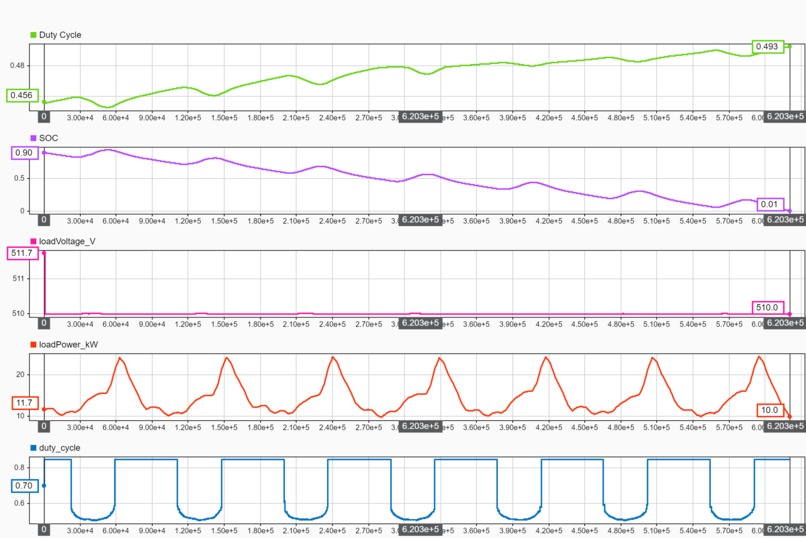
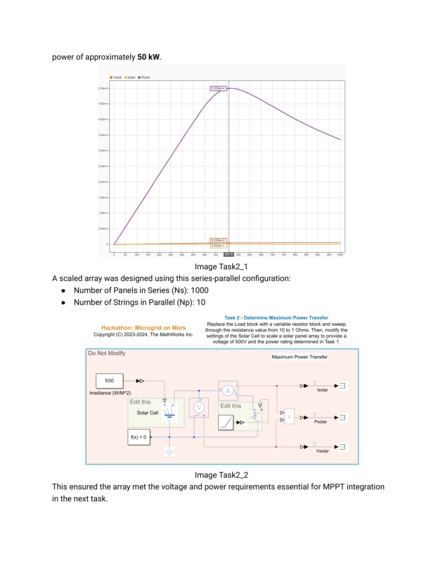
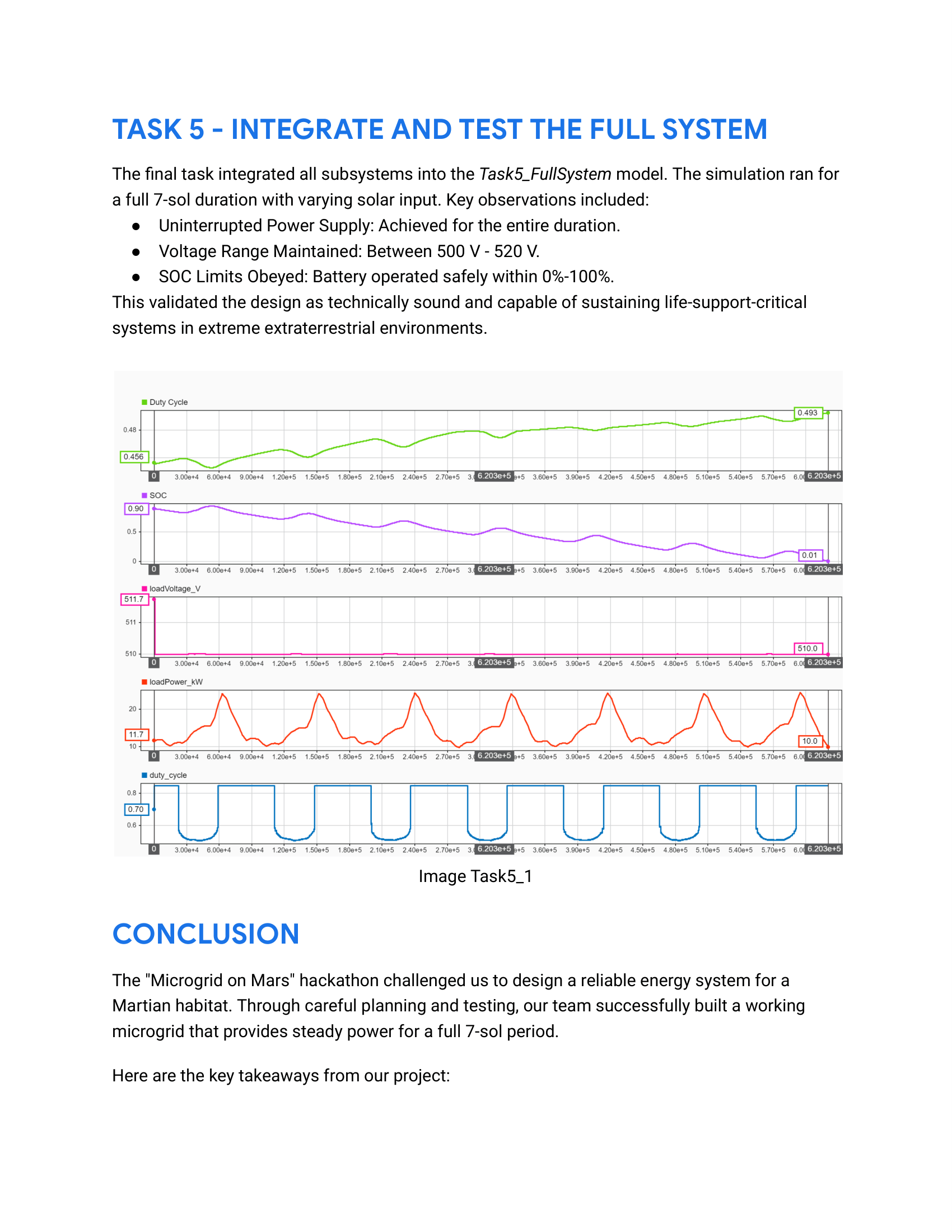
Task 5 plot
-
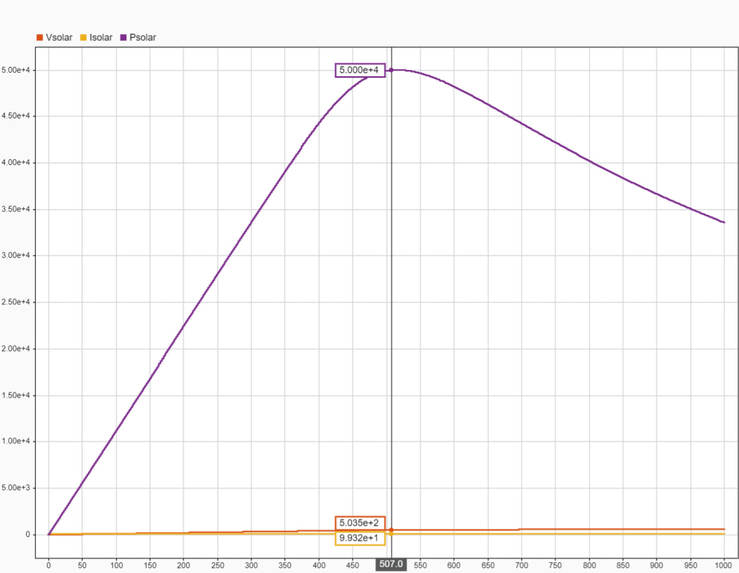
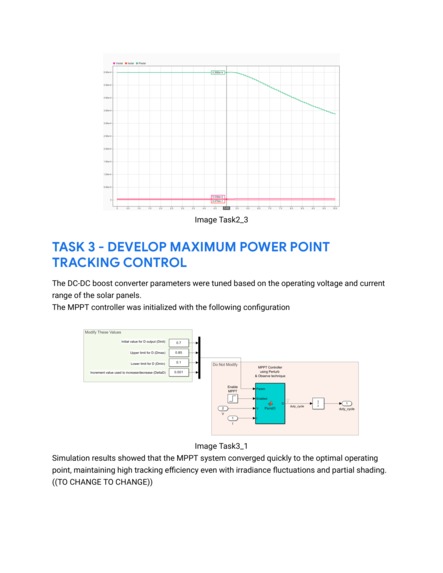
Task 2 plot
-
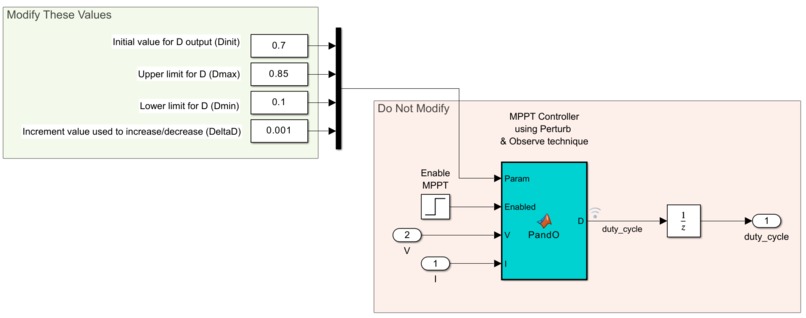
Task 4 schematic
-
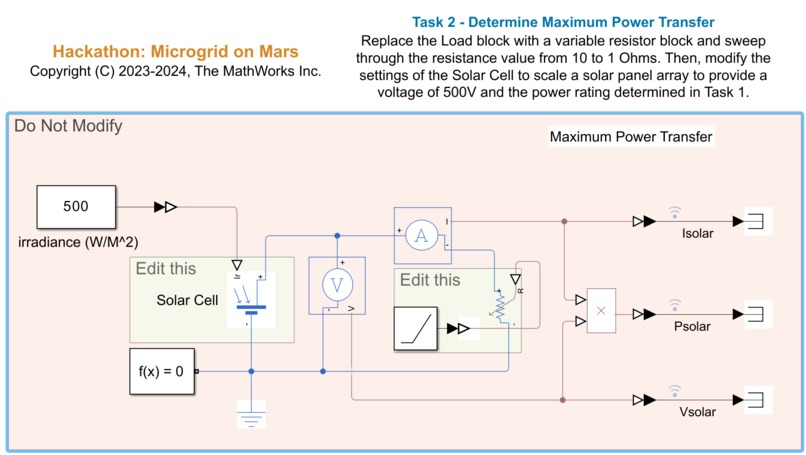
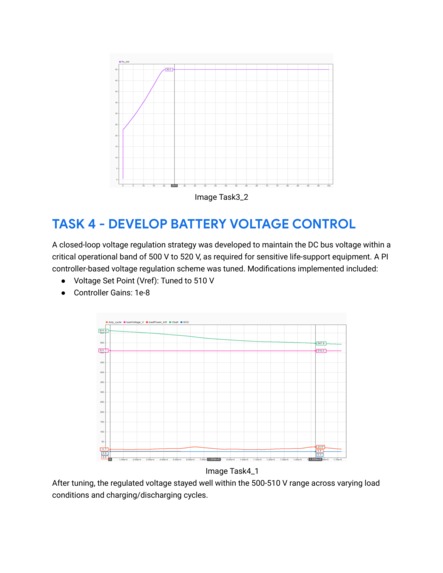
Task 3 schematic
-
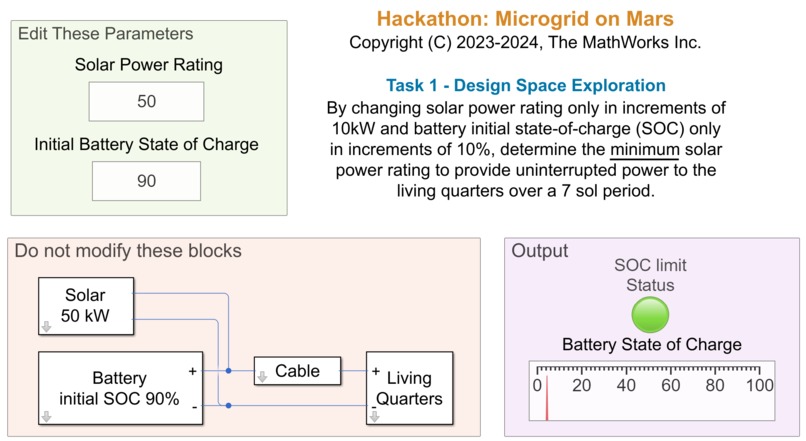
Task 1 schematic
-
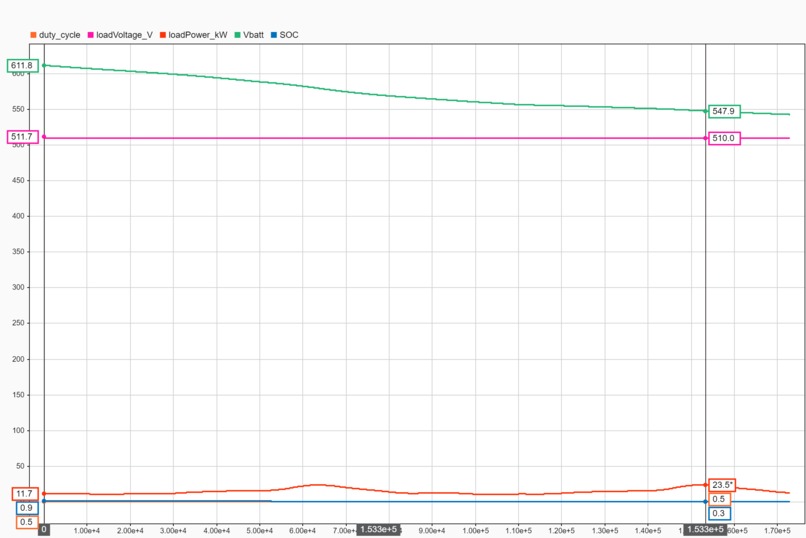
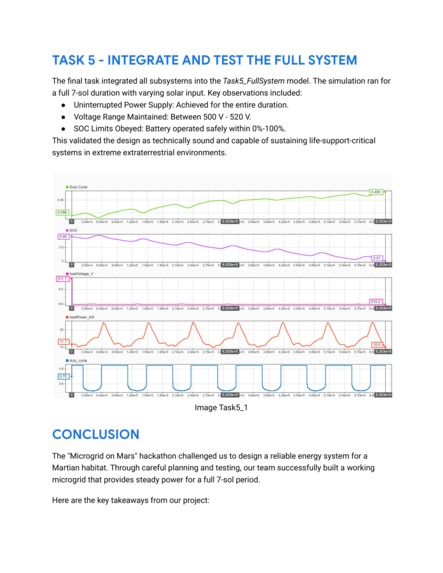
Task 4 plot
-
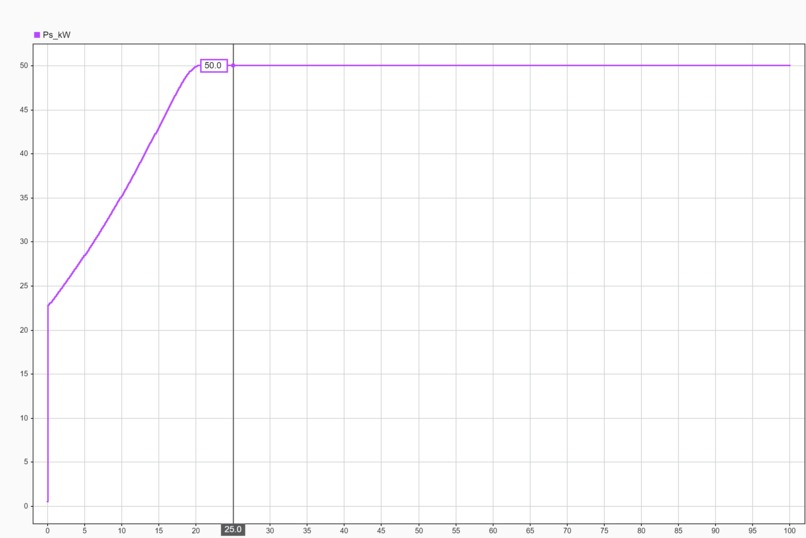
Task 3 plot
-
Page 1
-
Page 2
-
Page 3
-
Page 4
-
Page 5
-
Page 6
Inspiration
Keeping people alive on Mars means you need power and there's no grid out there, no backup generator you can call. We wanted to see if we could actually design a working microgrid that survives a full week on Mars using just solar and batteries.
What it does
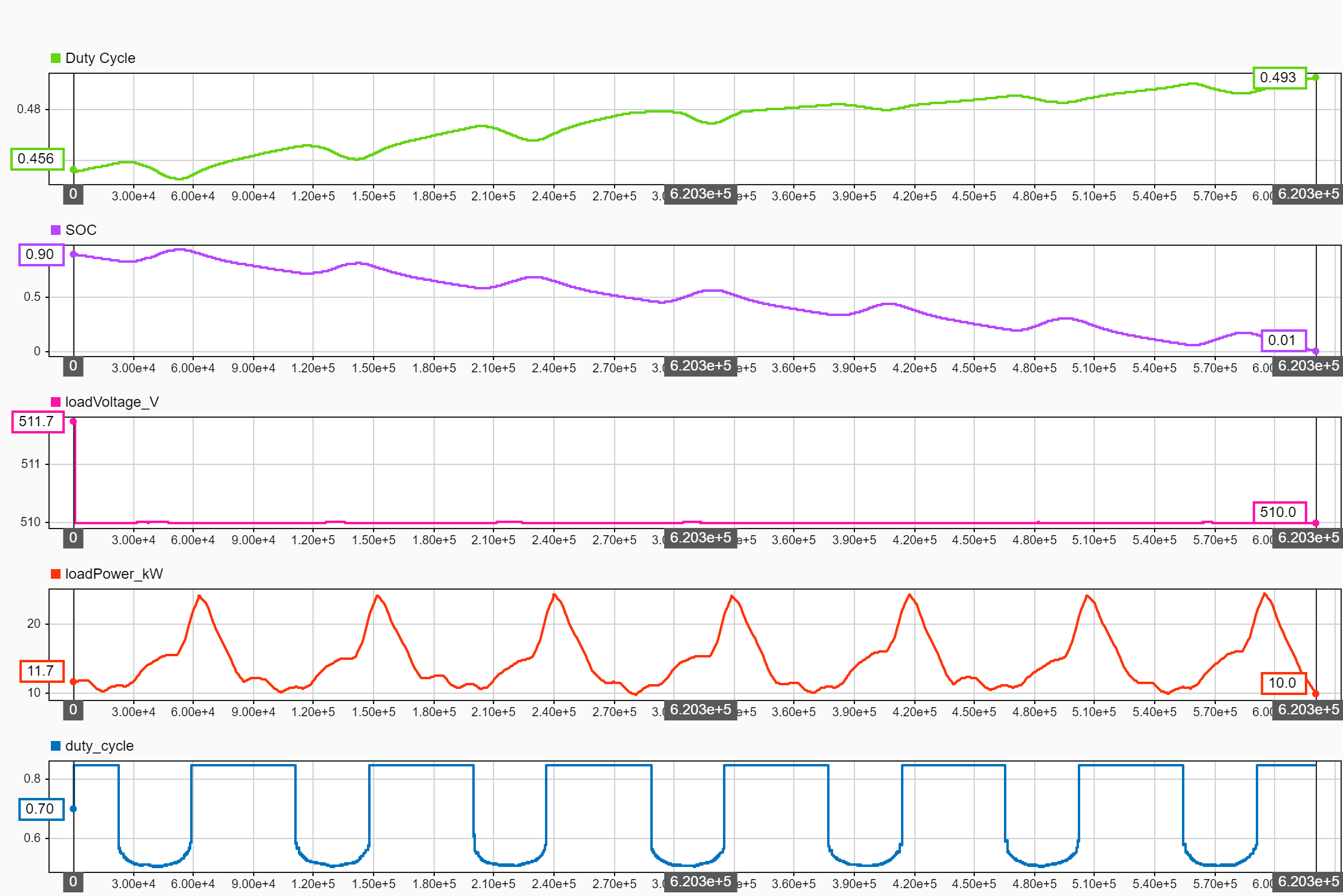
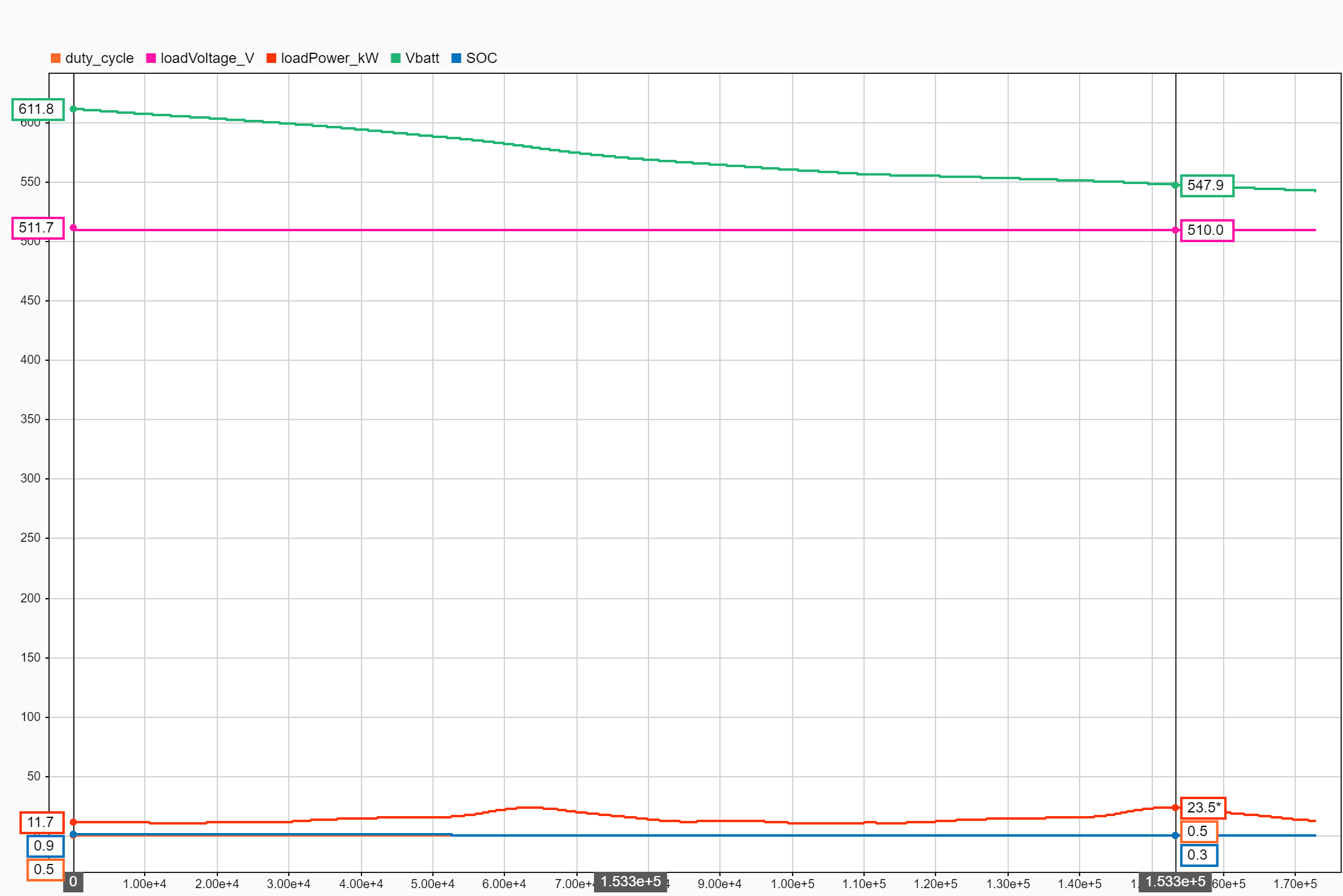
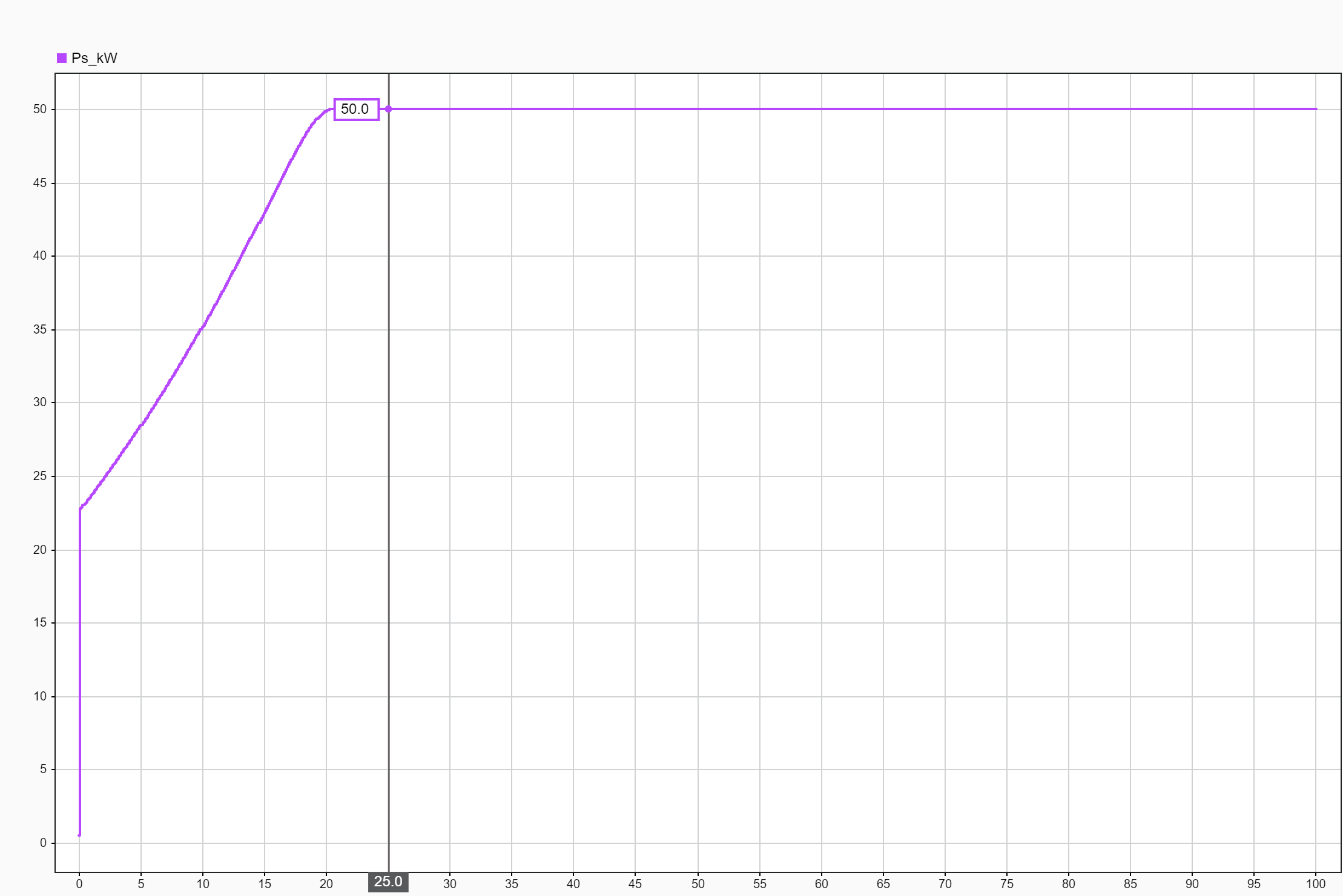
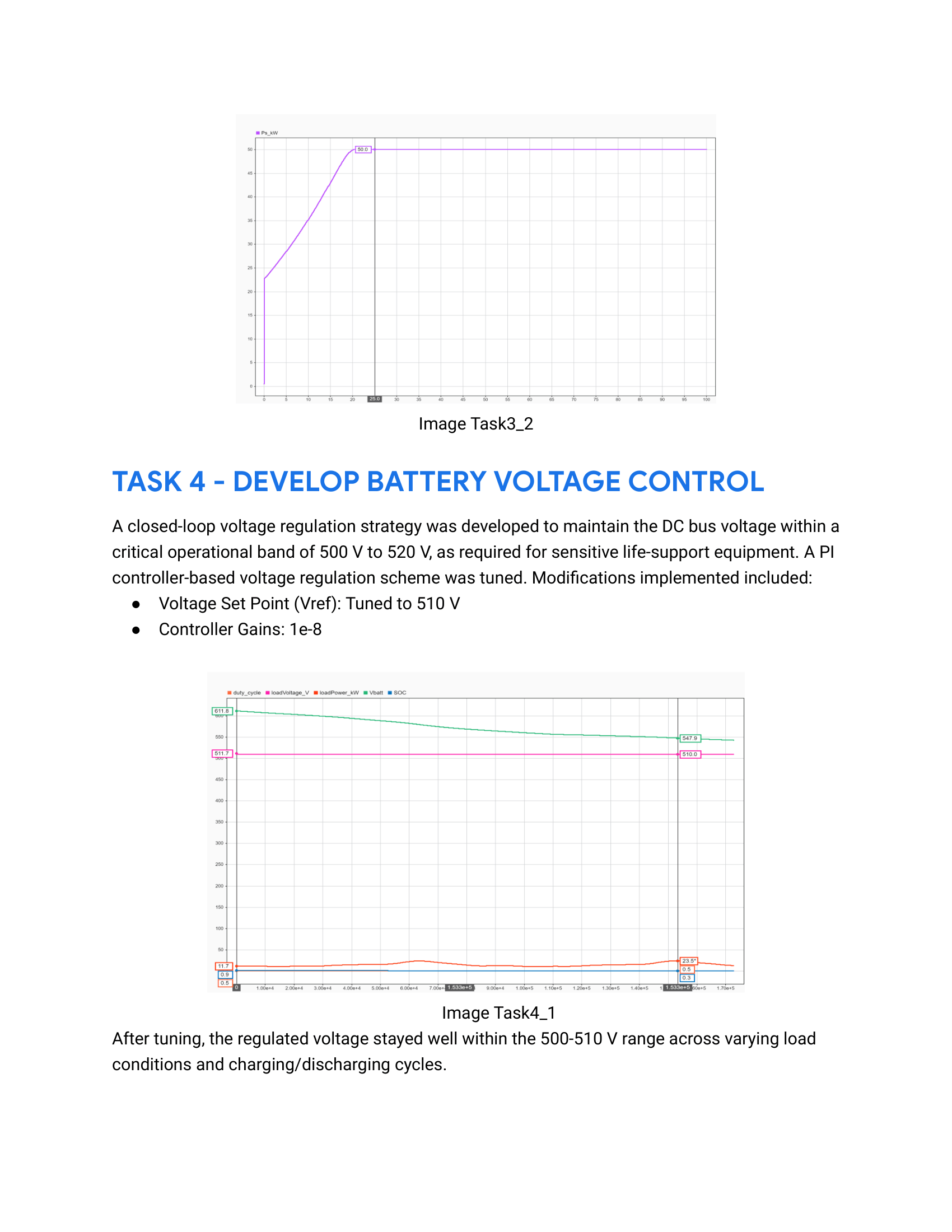
It powers a Martian habitat for 7 sols straight. A 50 kW solar array charges the batteries during the day, MPPT squeezes out as much power as possible from the panels, and a PI controller keeps the DC bus voltage locked between 500-520 V so the life-support stuff doesn't fry. The battery stays within safe charge limits the whole time.
How we built it
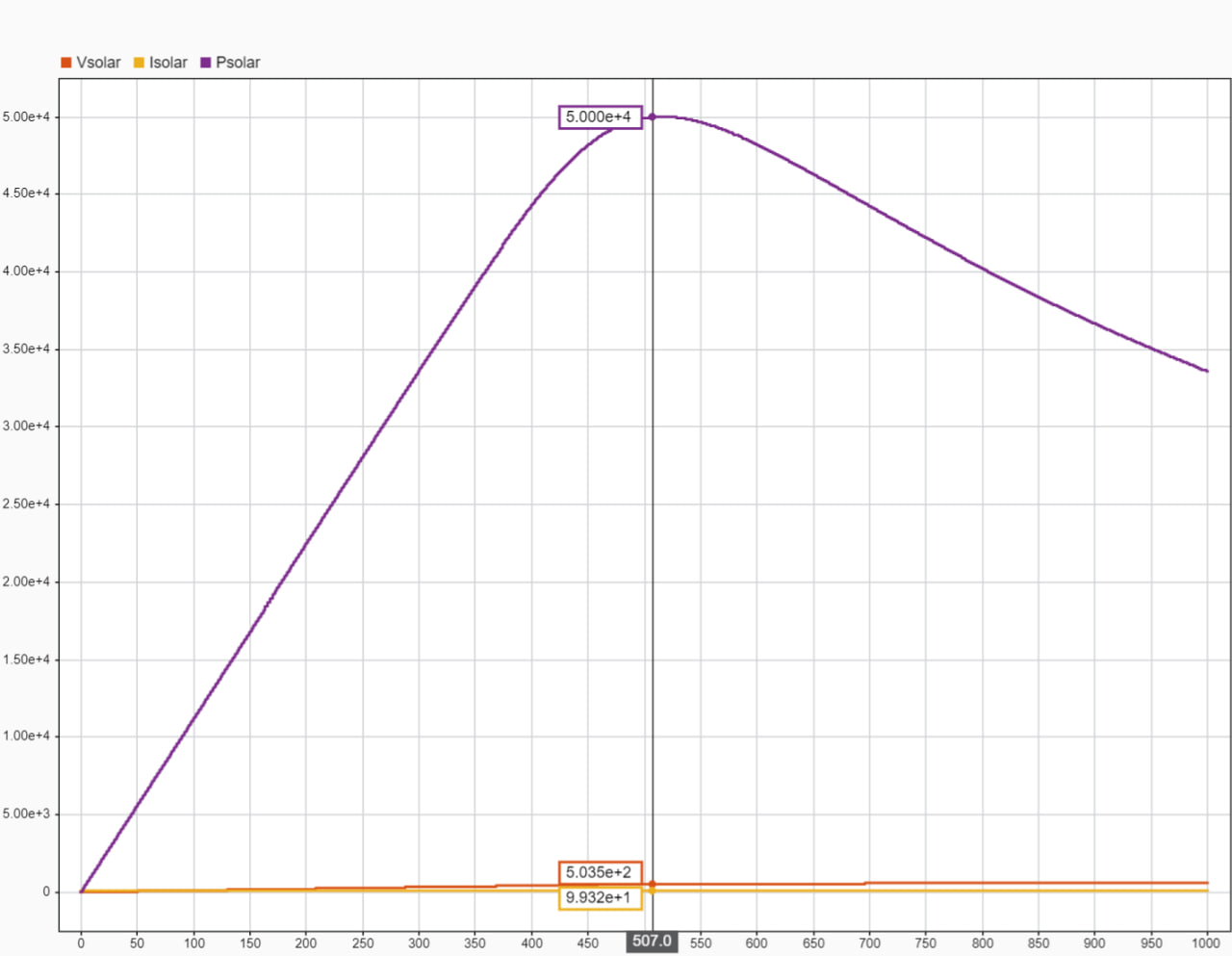
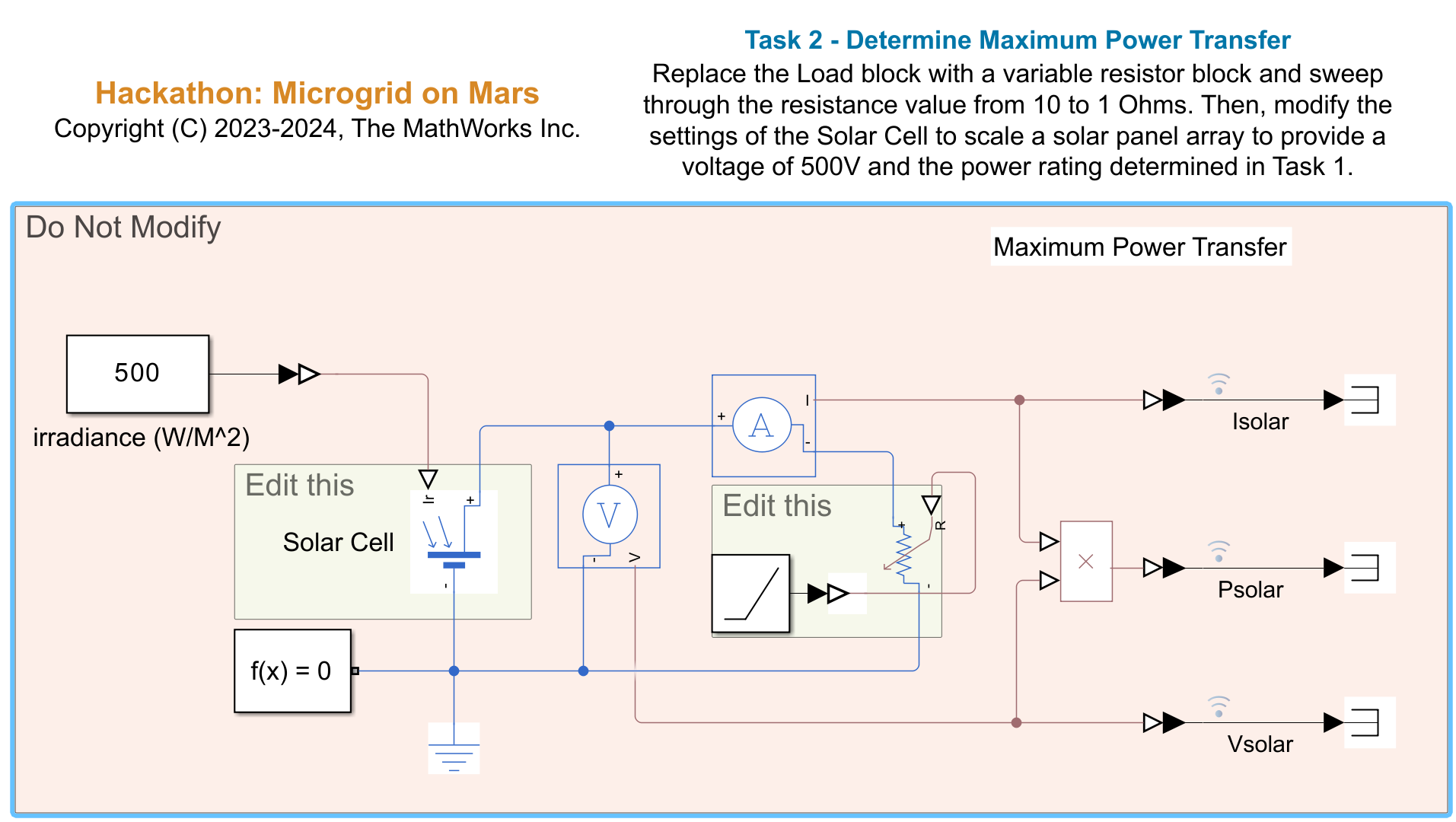
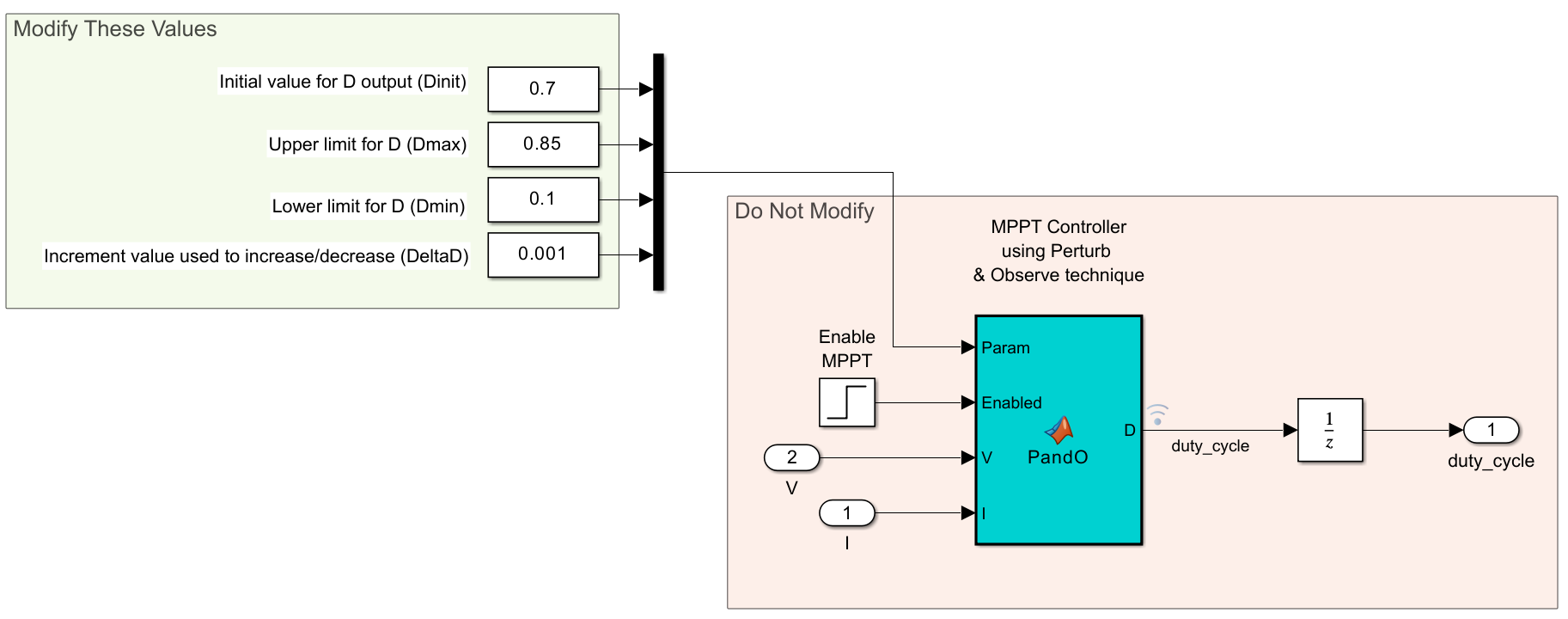
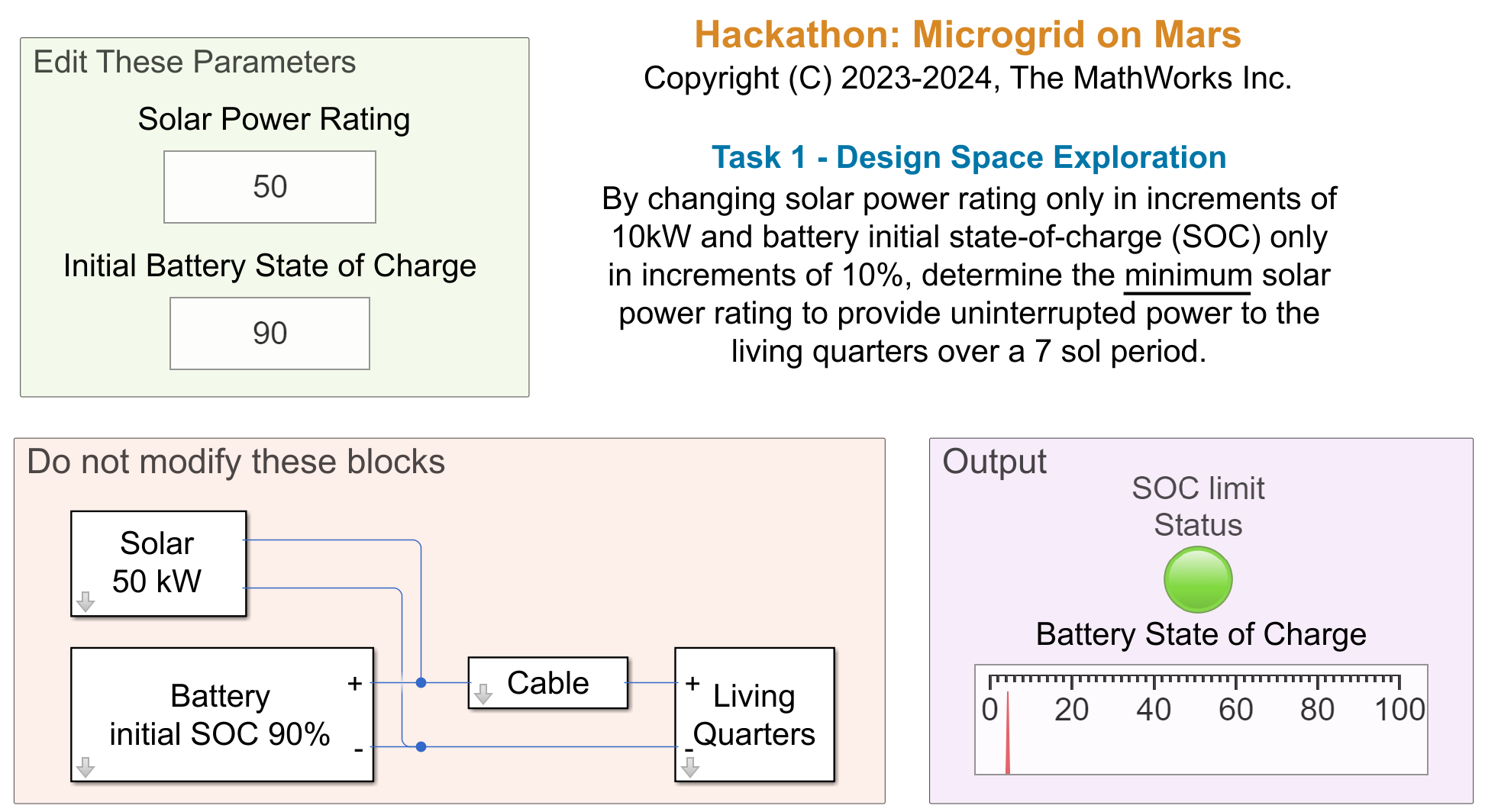
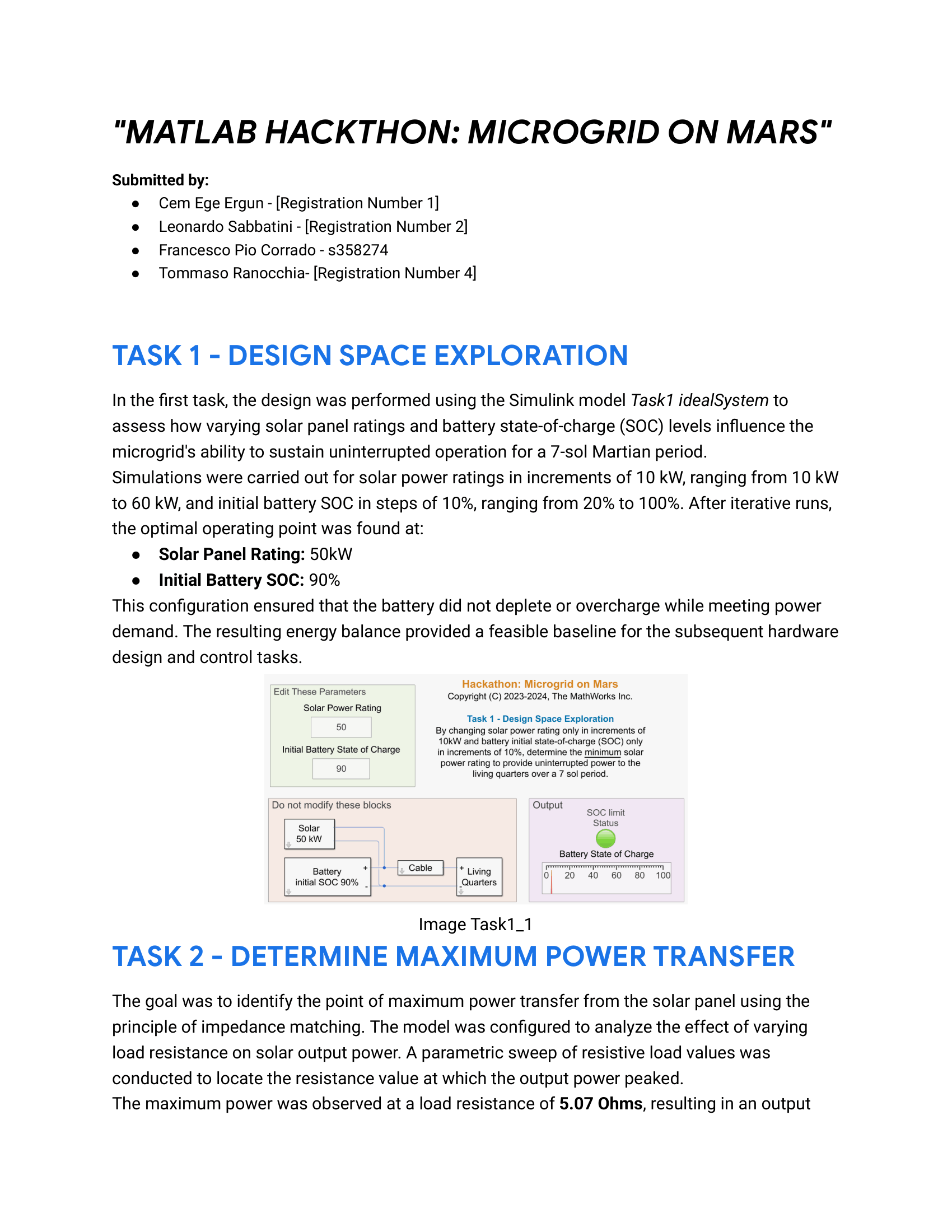
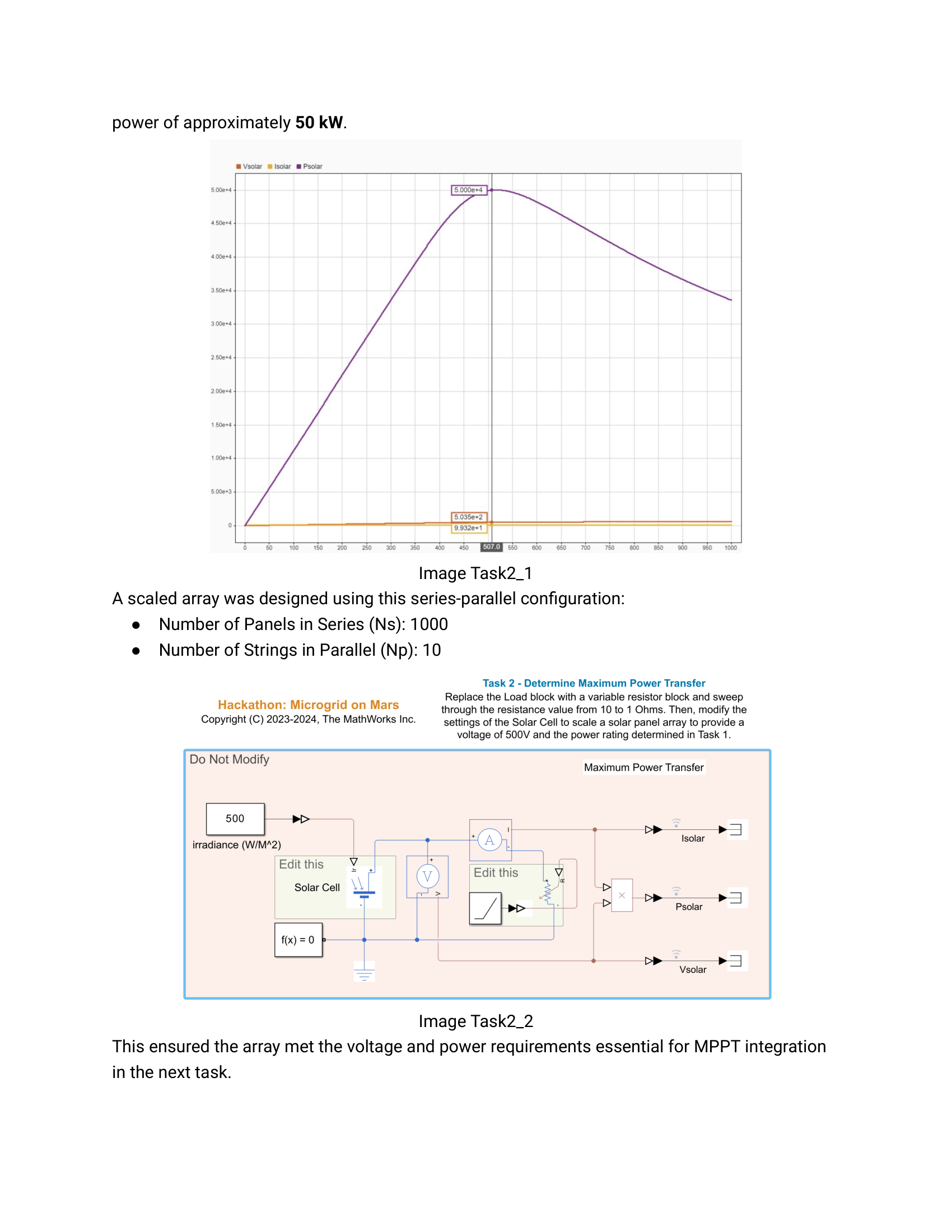
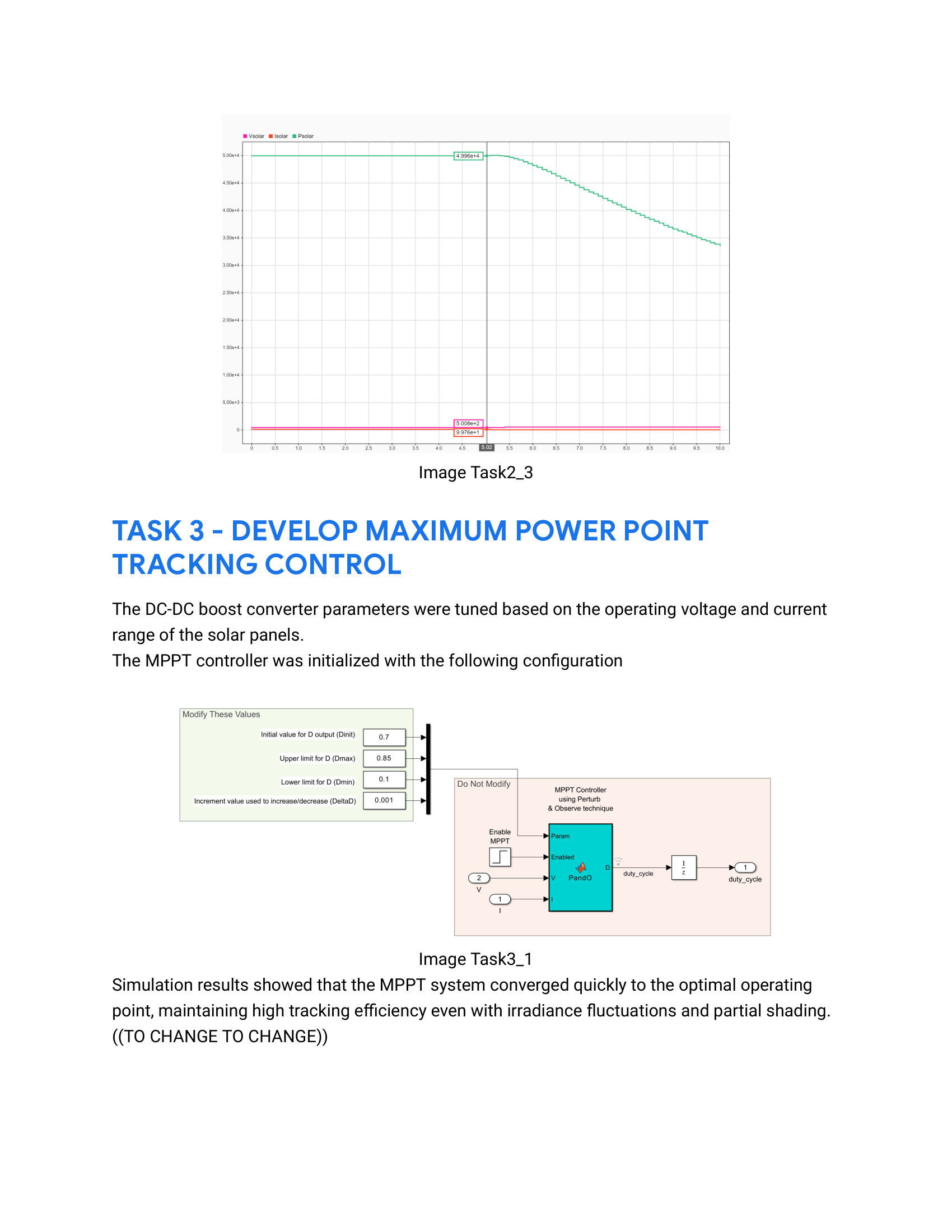
Everything was done in MATLAB/Simulink. First we swept through different solar panel sizes and battery SOC levels to find the sweet spot (50 kW, 90% initial SOC). Then we did impedance matching to find the optimal load resistance (5.07 Ohms) and scaled the array to 1000 series × 10 parallel. After that we set up the MPPT with Perturb & Observe and tuned a PI voltage controller. Last step was plugging everything together into one big model and running the full 7-sol simulation.
Challenges we ran into
The controller tuning was painful. Tiny changes in the gains would make the whole thing respond not correctly. Making Task 2 and 3 work together was probably the biggest wall, the two tasks were really dependent on each other and finding the perfect value tuning was the hardest part. And when we integrated all the subsystems things broke in ways we didn't expect, so there was a lot of debugging.
Accomplishments that we're proud of
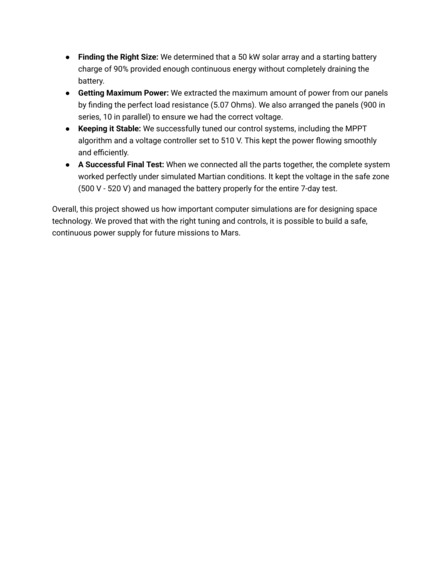
The full system actually worked 7 sols, zero interruptions. Voltage stayed in the safe zone the entire time and the battery behaved. We got the maximum power transfer right at 5.07 Ohms which matched the theory perfectly.
What we learned
Honestly we learned how much tuning matters. The theory is one thing but getting the gains right in simulation is a whole different game. We also got way more comfortable with Simulink and power electronics modeling, and understanding how MPPT and voltage regulation actually work in practice.
What's next for The Real RoboTO
We want to develop an algorithm that auto-tunes the controller gains instead of doing it manually. Beyond that, adding fault handling for things like dust-covered or damaged panels would make the system more realistic. Using real Mars irradiance data from NASA missions is also on the list to make the simulation more legit.
Built With
- matlab
- simscape
- simulink


Log in or sign up for Devpost to join the conversation.