Inspiration
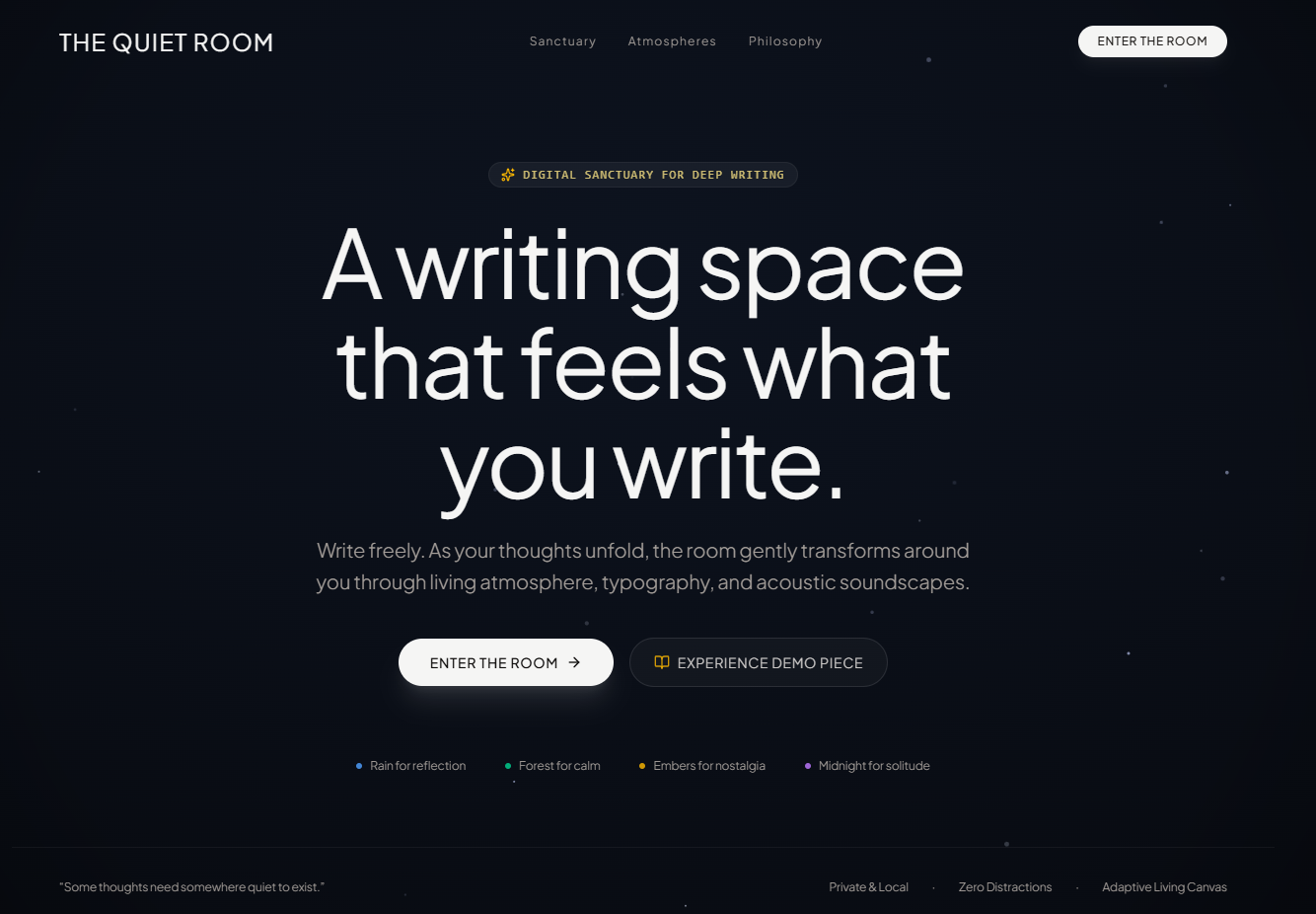
Traditional writing apps often feel like empty pages or cluttered productivity dashboards. We wanted to create something different—a space where writing feels personal, immersive, and emotionally connected. This inspired us to build The Quiet Room, a digital sanctuary where the atmosphere responds to the emotions expressed through your words.
What it does
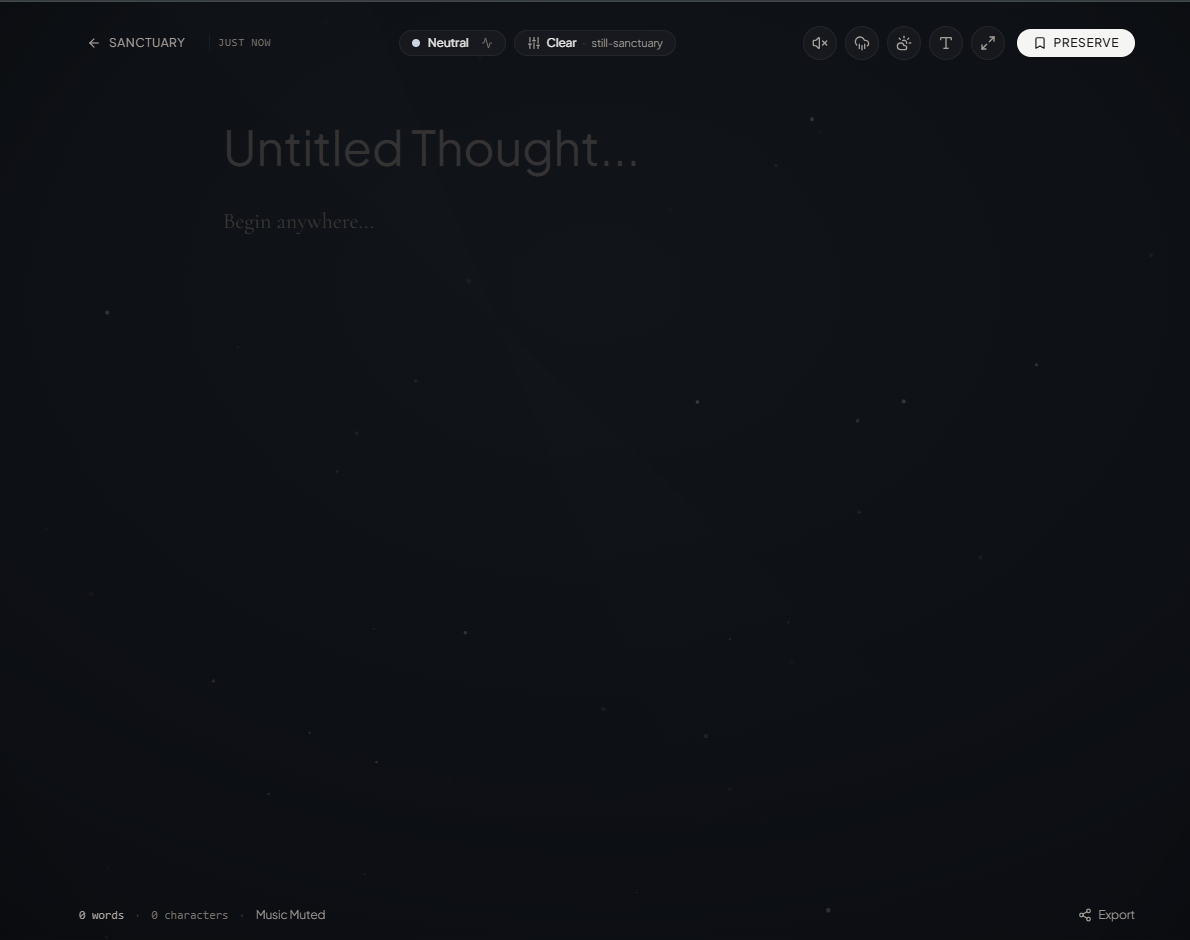
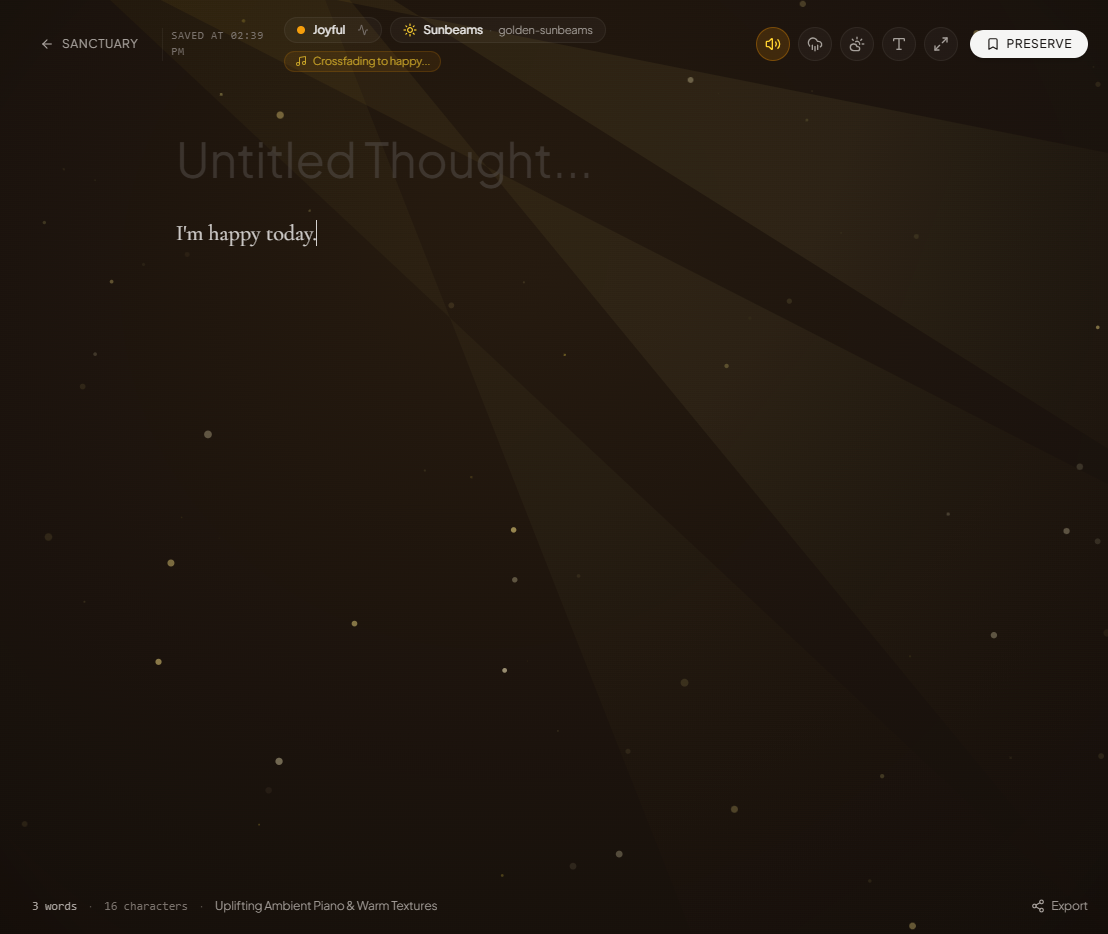
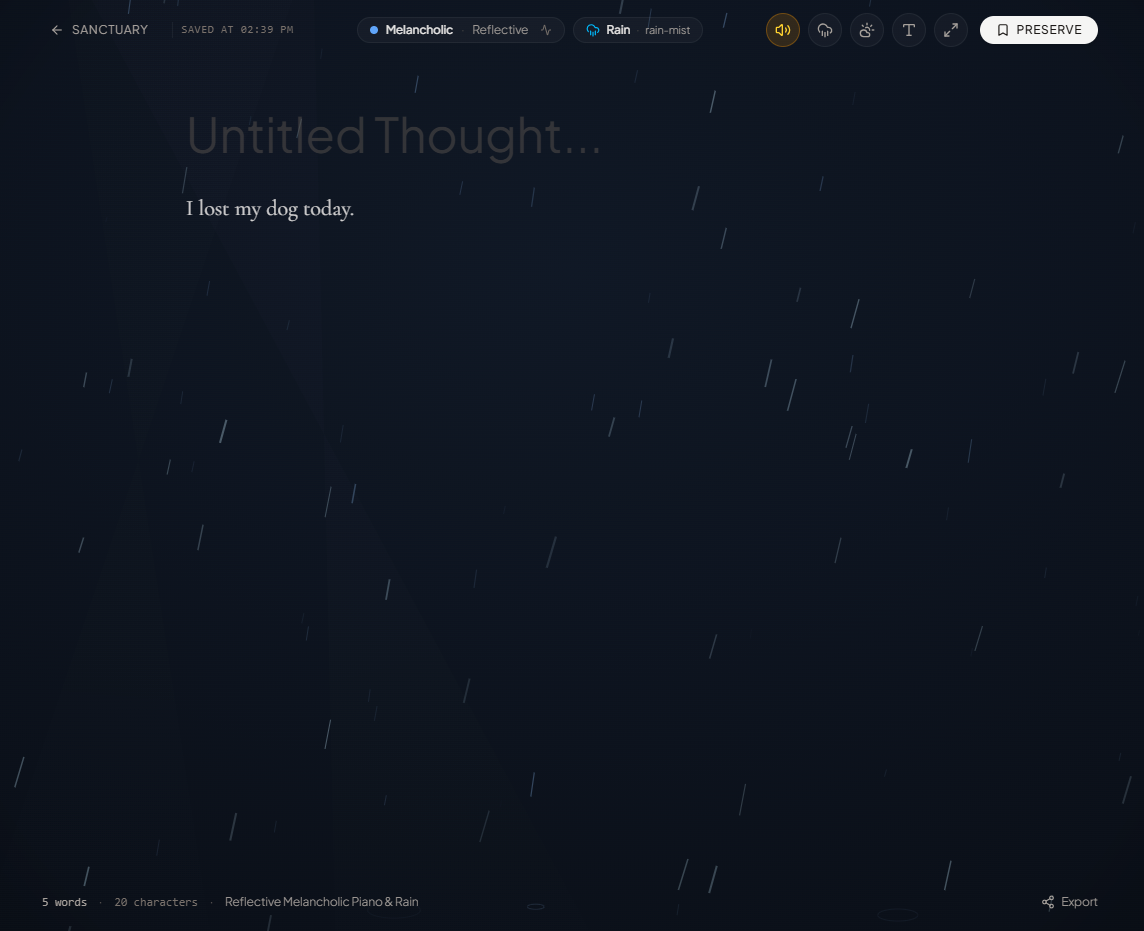
The Quiet Room is a mood-responsive writing sanctuary that transforms the writing experience through dynamic backgrounds and adaptive music. As users write, the application analyzes the emotional tone and context of their text and adapts the visual atmosphere and soundscape to match the detected mood.
It offers a distraction-free writing editor, smooth background and audio transitions, music controls, and a peaceful environment for journaling, poetry, storytelling, and self-expression.
How we built it
We built The Quiet Room with a focus on immersive UI/UX, real-time interaction, and simplicity. The frontend provides a minimal writing interface, while the mood-analysis system interprets the user's text to identify its emotional tone. The detected mood is connected to a background engine and an audio engine that coordinate visual changes and mood-appropriate music.
We designed the experience around smooth transitions, readable typography, responsive layouts, and minimal distractions. Our goal was to make the atmosphere feel alive without taking attention away from the writing itself.
Challenges we ran into
One of our biggest challenges was synchronizing the background changes with the music when the detected mood changed. Audio playback introduced additional complexity, including smooth crossfading, browser autoplay restrictions, loading delays, and preventing multiple tracks from playing simultaneously.
We also had to balance visual creativity with readability and performance. The atmosphere needed to feel immersive without distracting users from their writing. We approached these challenges by separating mood detection, background transitions, and audio playback into distinct responsibilities.
Accomplishments that we're proud of
We are proud of turning a simple writing editor into an immersive, mood-responsive experience. Instead of treating writing as just text on a screen, The Quiet Room connects words with visual atmosphere and sound.
We are especially proud of our minimal design, mood-based environments, and the idea that a user's writing can shape the space around them. We built the project around a simple principle: the environment should support the writer, never compete with them.
What we learned
We learned that building an engaging experience involves more than creating an attractive interface. Real-time mood analysis, audio playback, state synchronization, smooth transitions, and browser compatibility all require careful implementation.
We also learned the importance of separating application components, handling asynchronous events, testing edge cases, and prioritizing usability over unnecessary features. Most importantly, we learned how thoughtful design can transform an ordinary digital tool into a more personal experience.
What's next for The Quiet Room
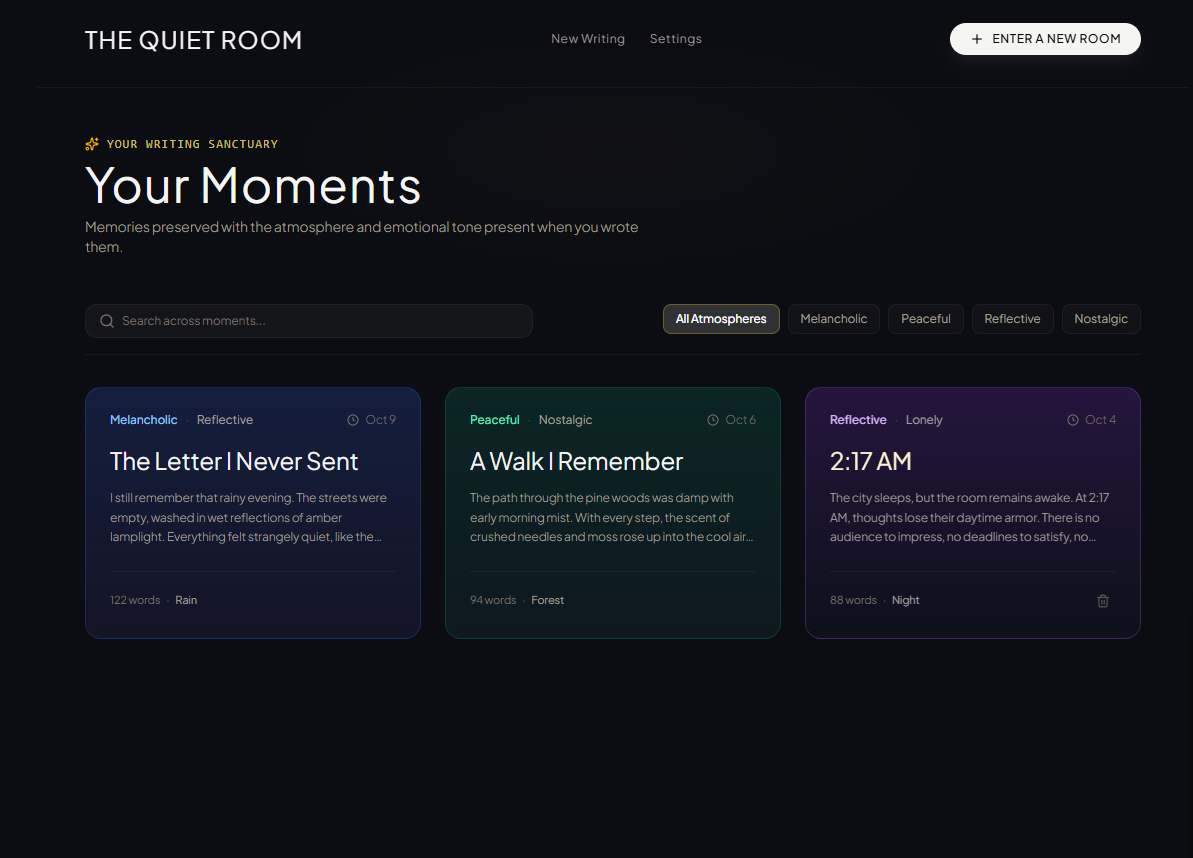
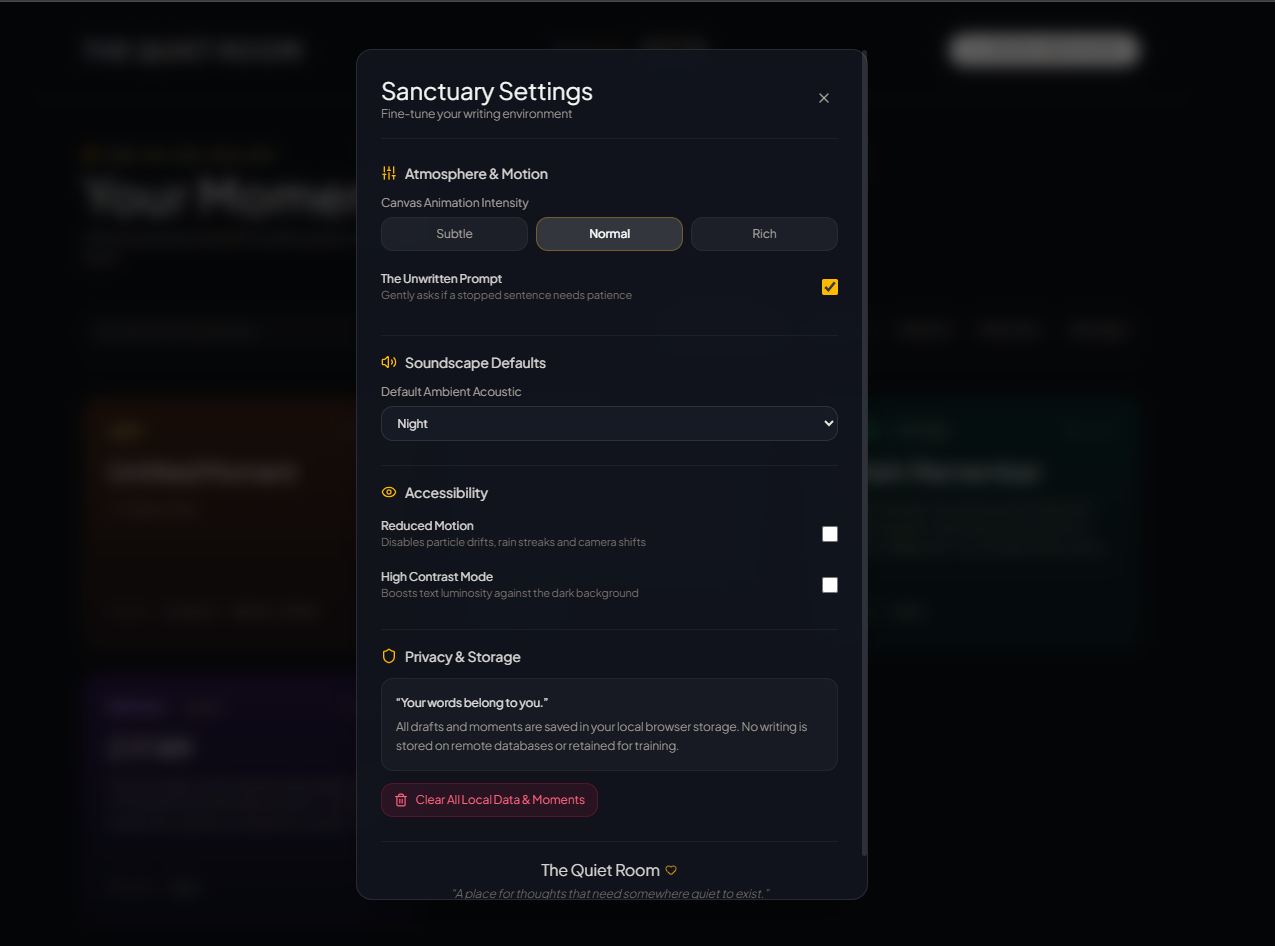
Our next steps are to improve mood detection and contextual understanding, make audio transitions more natural, and expand the library of original ambient soundscapes. We also plan to enhance writing persistence, introduce richer saved writing experiences through Moments, and improve offline support and accessibility.
In the future, we want The Quiet Room to become a personalized creative sanctuary where every writer can find an atmosphere that helps them express themselves freely.
Our vision: A writing space that feels what you write.


Log in or sign up for Devpost to join the conversation.