-
Page 1
-
Page 2
-
Page 3
-
Page 4
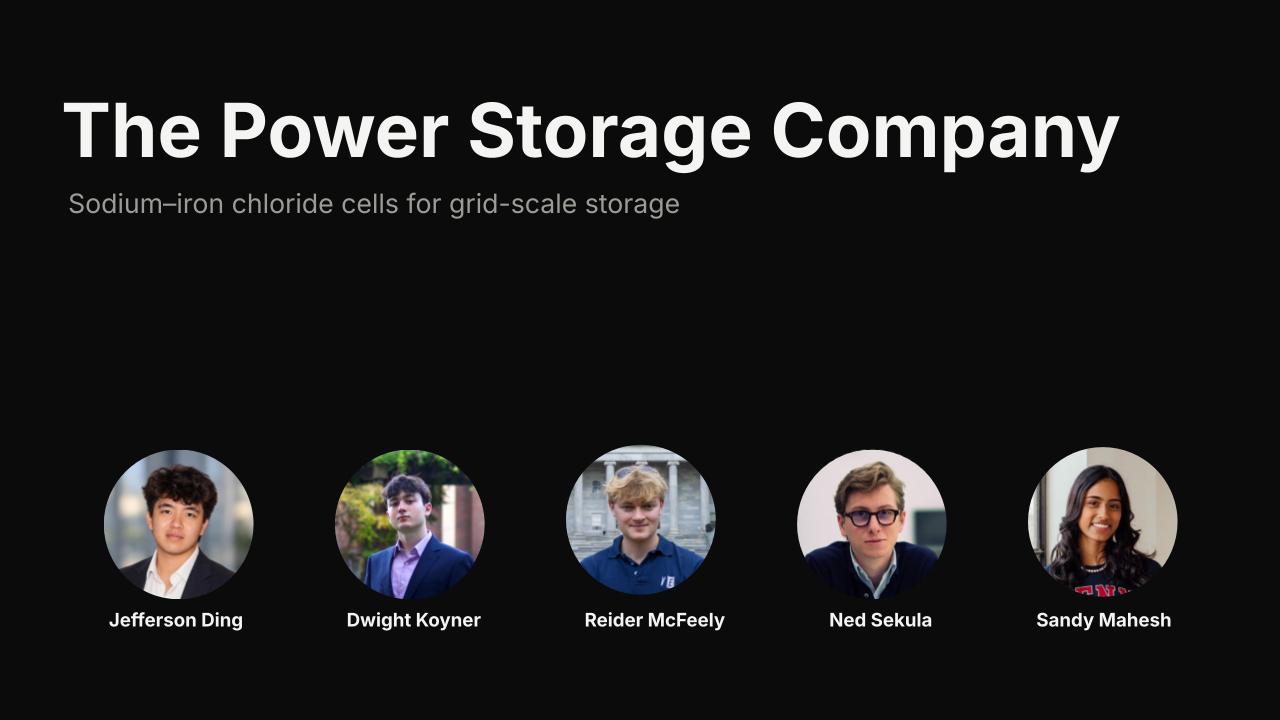
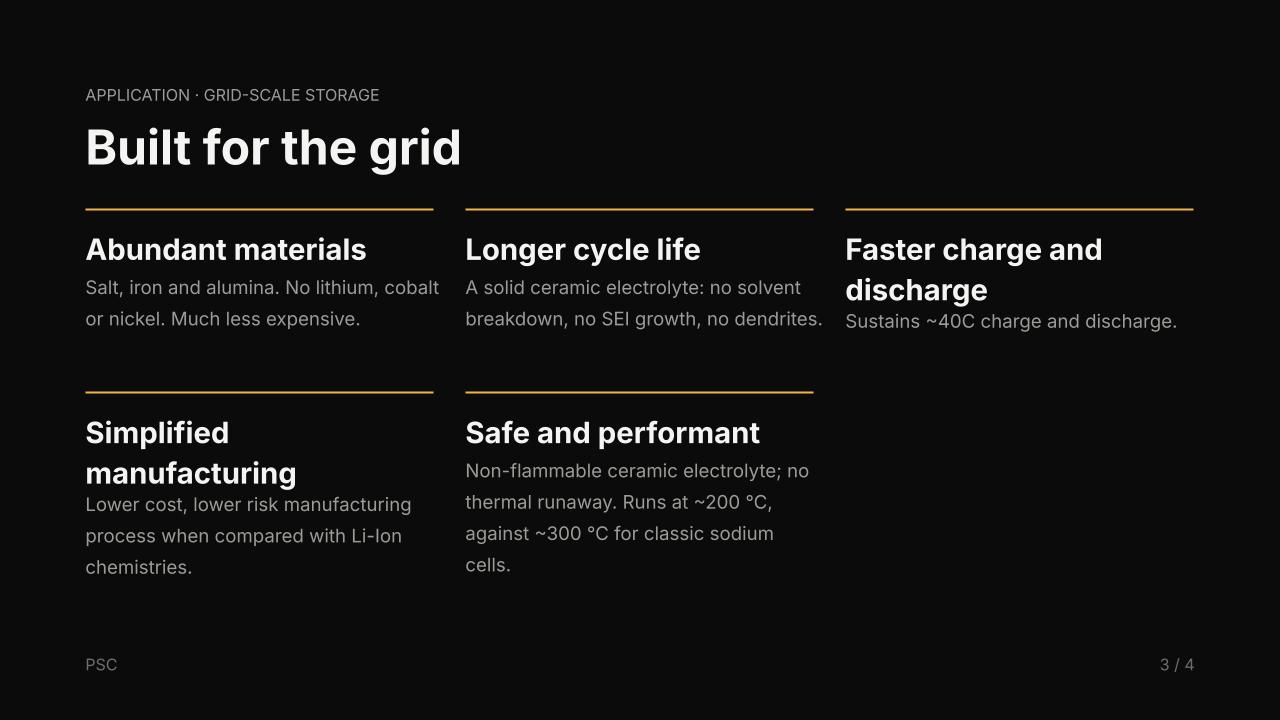
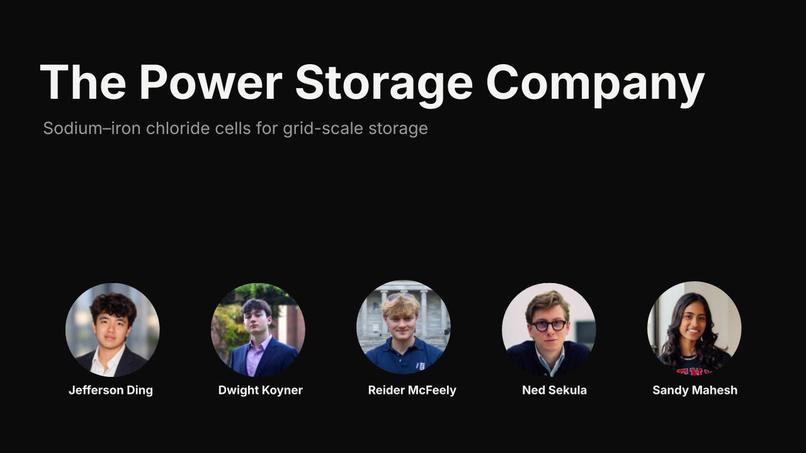
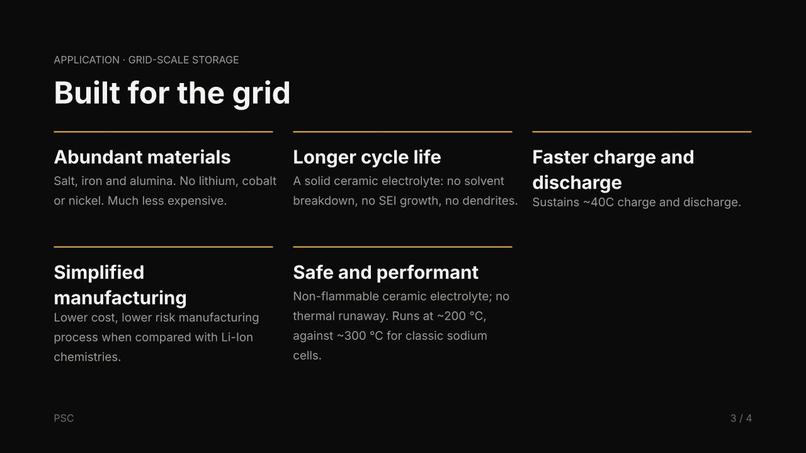
We are developing sodium–iron chloride cells for grid-scale storage, built from abundant salt, iron, and a ceramic electrolyte and designed to run at around 200 °C, well below classic sodium cells. The target market is data centers, who will value our product for the below reasons:
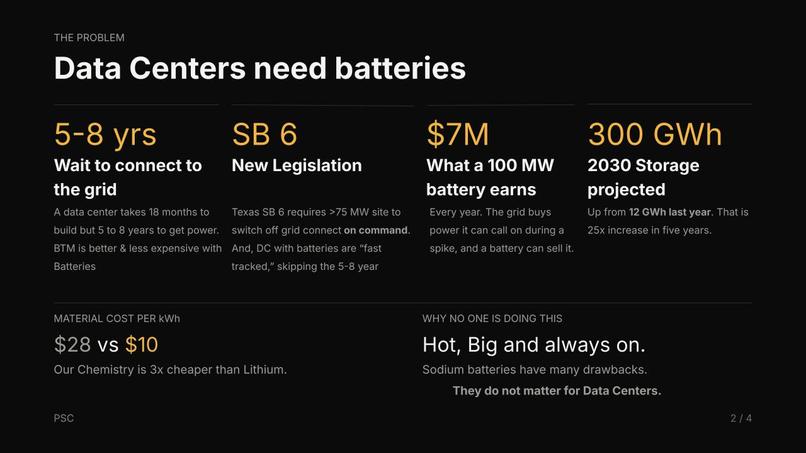
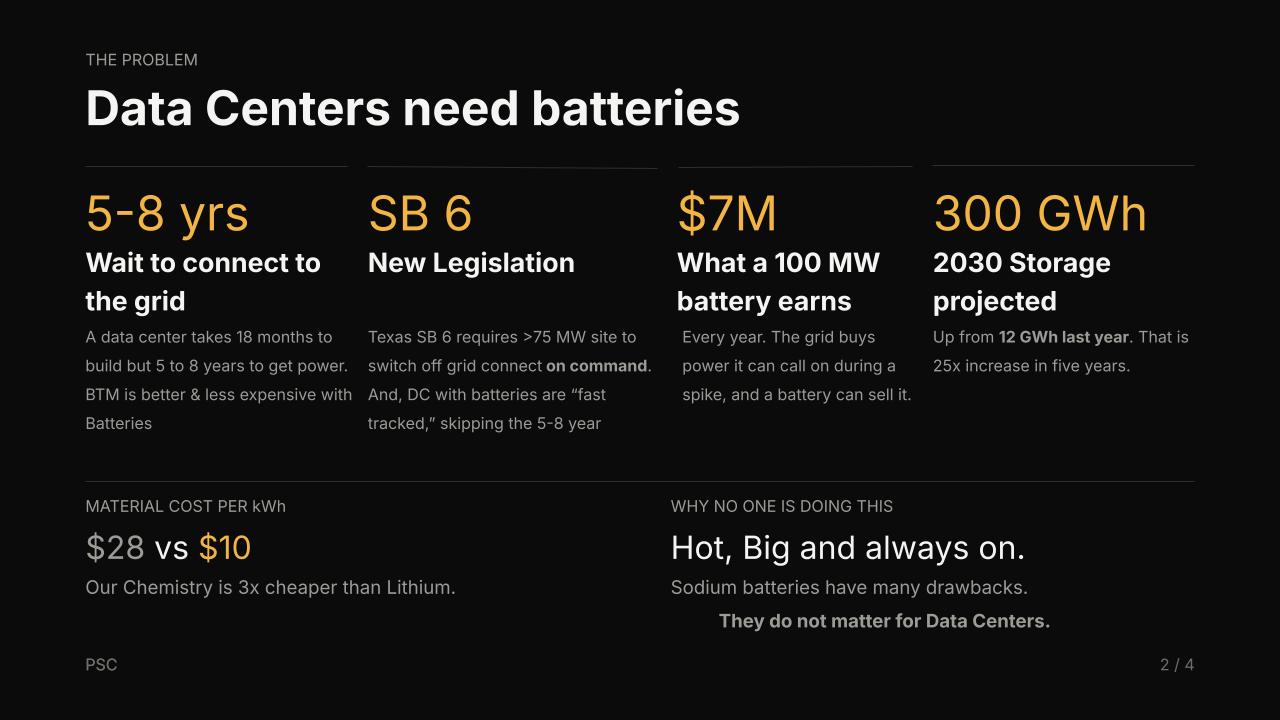
Data centers need power faster than the grid can deliver: a data center takes 18 months to build but 5 to 8 years to connect to the grid, and new rules like Texas SB 6 fast-track sites that bring their own batteries.
Our chemistry is dramatically cheaper: PSC's cells use salt, iron, and alumina instead of lithium, cobalt, or nickel, putting material costs around $10 per kWh versus $28 for lithium-ion.
Sodium's usual drawbacks don't matter for this customer: sodium cells run hot, are bulky, and need to stay on, but a stationary, always-on data center doesn't care about weight or size, and it gains a non-flammable battery with no thermal runaway.
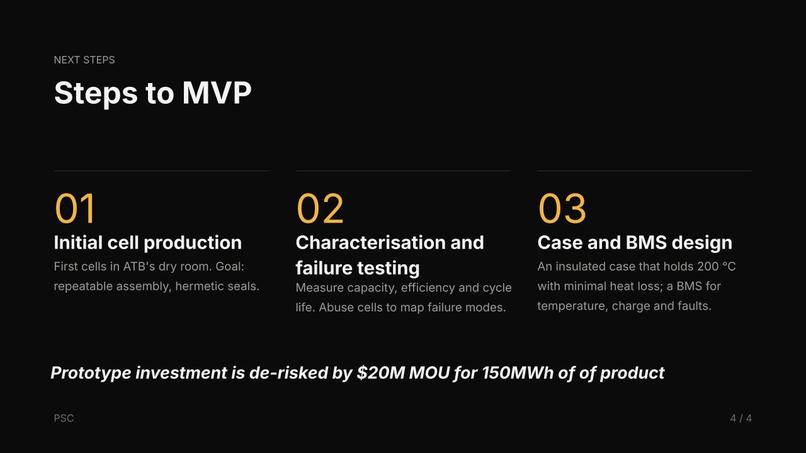
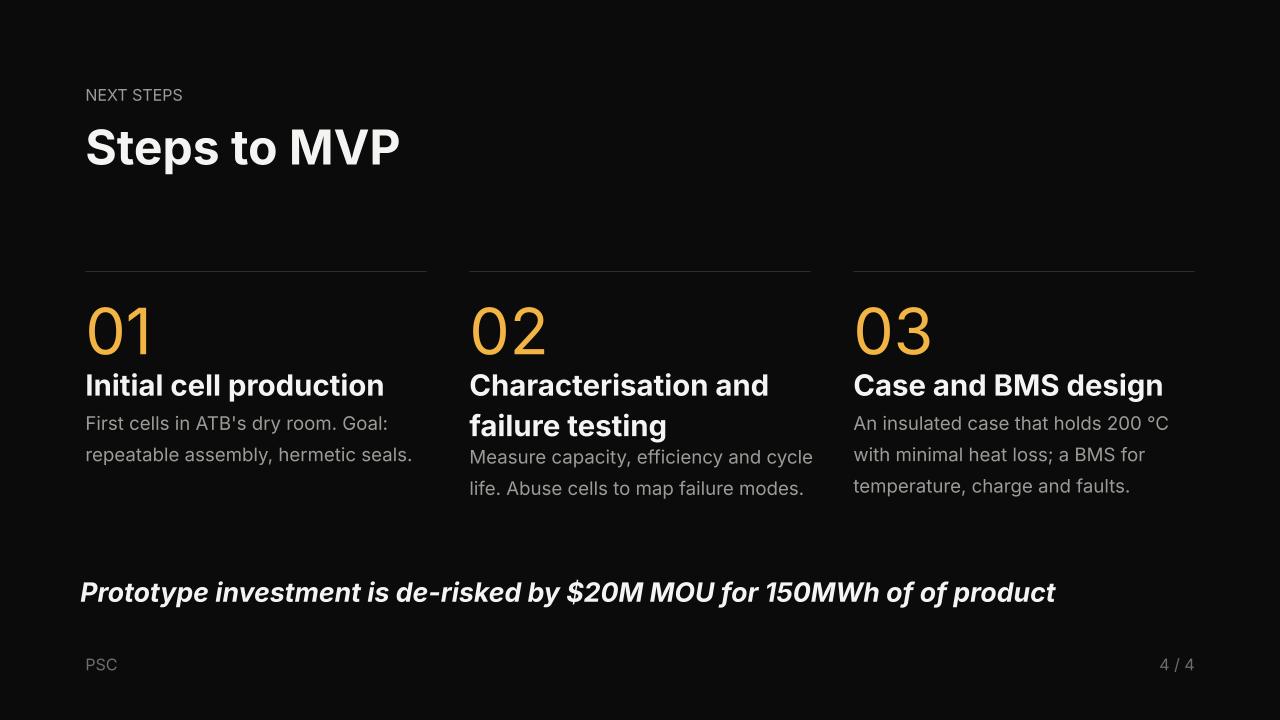
Our path to a minimum viable product runs through three steps: producing our first cells in ATB's dry room, testing them for capacity, cycle life, and failure modes, and designing an insulated case and battery management system, all de-risked by a $20M MOU for 150 MWh of product.
Built With
- claude

Log in or sign up for Devpost to join the conversation.