

The Perfect Reunion
Inspiration
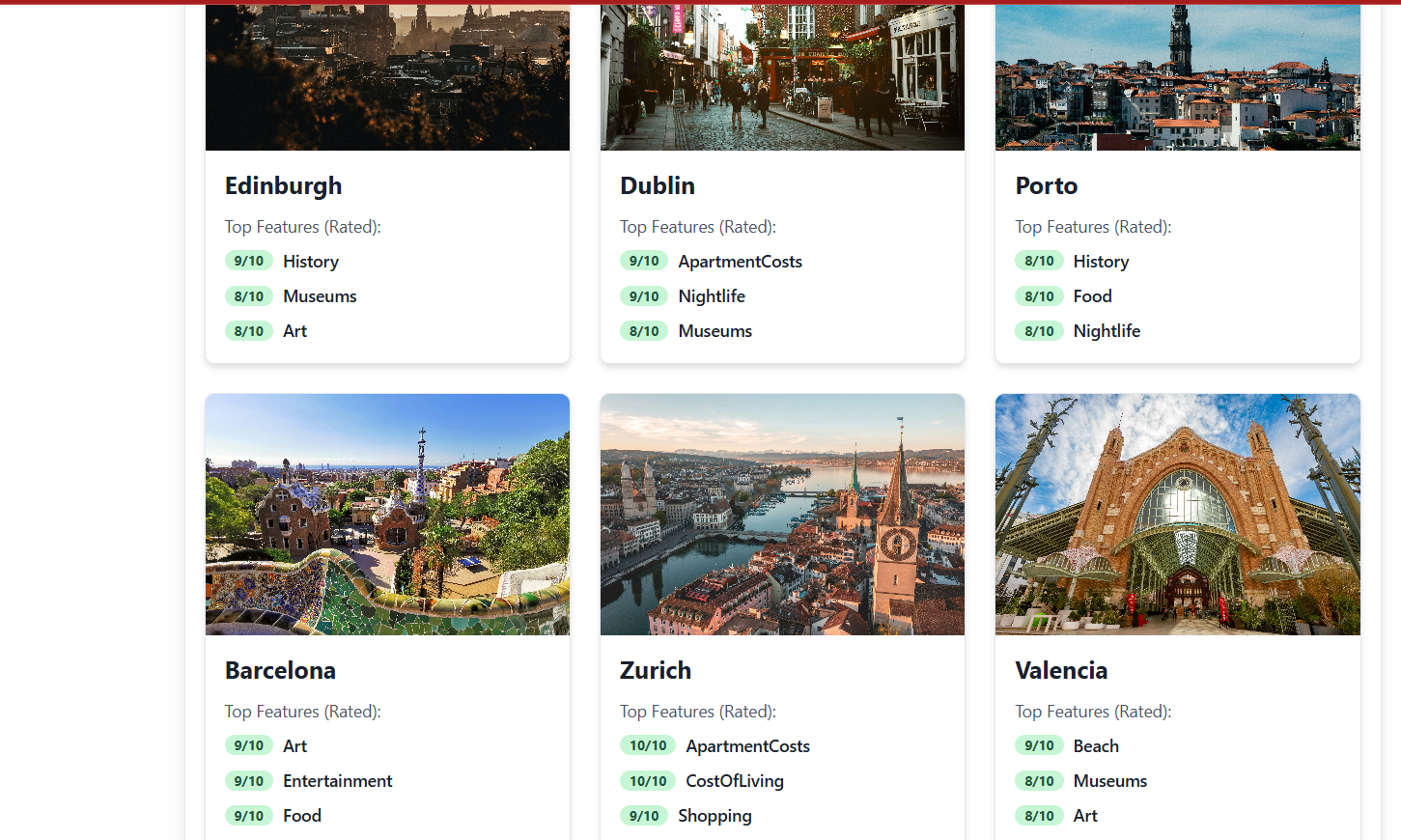
The idea for "The Perfect Reunion" came from the universal challenge of planning group trips. Coordinating travel with friends often involves endless back-and-forth messages, conflicting preferences, and difficulty finding a destination that truly satisfies everyone. We wanted to simplify this process, making group travel planning collaborative and enjoyable. The goal was to create a tool that helps friends discover destinations they'll collectively love, based on shared interests and priorities, taking the stress out of finding that "perfect reunion" spot.
What I Learned
This project was a great learning experience, particularly in:
- Full-Stack Development: Integrating a Python (FastAPI) backend with a React/TypeScript frontend provided hands-on experience with building a complete web application.
- Database Design & ORM: Designing the SQLite schema and using SQLAlchemy for data modeling and interaction reinforced database fundamentals.
- API Design: Creating a RESTful API to handle communication between the frontend and backend, including authentication and data retrieval.
- Recommendation Systems: Implementing a basic content-based recommendation algorithm using cosine similarity to match group preferences with city features.
- Data Simulation: Learning techniques to generate realistic-looking data for development and testing when real-world data or external APIs are not available.
- Frontend State Management: Utilizing React Context API for managing user authentication state across the application.
- Troubleshooting & Debugging: Overcoming various challenges, from dependency conflicts (
npm install --legacy-peer-depsbecame a good friend!) to database integrity errors and environment-specific execution issues.
How I Built It
- Conceptualization & Planning: Defined the core problem and sketched out the initial features: user profiles based on preferences, city data, group formation, recommendation logic, and a voting mechanism.
- Technology Stack Selection: Chose Python/FastAPI for the backend due to its speed and ease of use, SQLite for a simple database solution suitable for a hackathon, and initially Vue.js for the frontend. Later switched to React/TypeScript with Material UI for a more modern UI/UX and type safety.
- Backend Development:
- Set up the FastAPI project structure.
- Defined the database schema and created
create_db.py. - Implemented data generation scripts (
generate_data.py,generate_data_flights_groups.py) to populate the database with simulated cities, users, groups, flights, and votes. - Developed SQLAlchemy models corresponding to the database tables.
- Built API endpoints for user authentication (registration, login), city swiping, user preference updates, group management (creation, joining, viewing), flight searching, and voting.
- Implemented helper functions for password hashing, JWT authentication, database sessions, and the core recommendation logic (calculating user vectors, group vectors, and city similarities).
- Created an initialization script (
init_db.py) to set up and populate the database.
- Frontend Development:
- Set up the React/TypeScript project using Create React App.
- Installed necessary dependencies (MUI, Axios, React Router).
- Defined TypeScript types (
types/index.ts) to match the backend API models. - Created an API service (
services/api.ts) to interact with the backend endpoints. - Implemented an
AuthContextfor managing login state. - Built reusable components (
CityCard,SwipeableCity,Navbar). - Developed pages for different views (
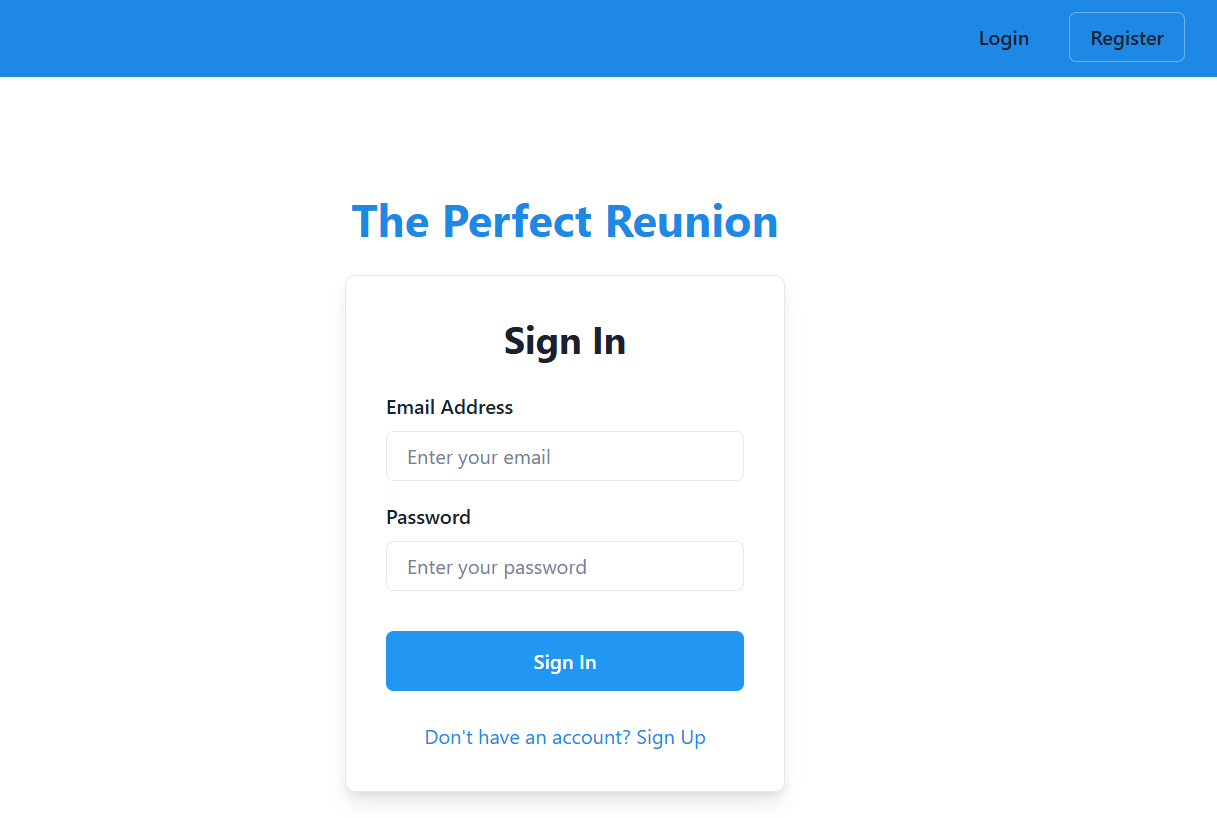
Login,Register,Onboarding,Dashboard,Groups,GroupDetail). - Set up client-side routing using React Router.
- Styled components using Material UI.
- Integration & Testing: Connected the frontend to the backend API, tested user flows (registration, login, swiping, group interactions), and debugged issues across the stack.
Challenges Faced
- Frontend Dependency Issues: Encountered several dependency conflicts, particularly with React versions and Material UI, requiring troubleshooting and the use of
--legacy-peer-deps. - Data Generation Complexity: Generating realistic and interconnected data (especially user votes reflecting preferences and flights matching criteria) required careful scripting and debugging, particularly handling potential database constraint violations.
- Environment Differences: Running Python scripts sometimes behaved differently depending on the terminal environment or Python interpreter used, necessitating specific commands (like using
pyon Windows). - Scope Management: Balancing the desired features with the time constraints of a hackathon meant focusing on core functionality.
- Debugging Across Stacks: Identifying whether bugs originated in the frontend, backend, API communication, or database required systematic testing and logging.
- UI Refinement: While basic functionality is in place, achieving a polished and fully responsive UI with libraries like Material UI takes significant time.
Overall, "The Perfect Reunion" was a challenging but rewarding project that brought together various aspects of web development to solve a common real-world problem.

Log in or sign up for Devpost to join the conversation.