Inspiration
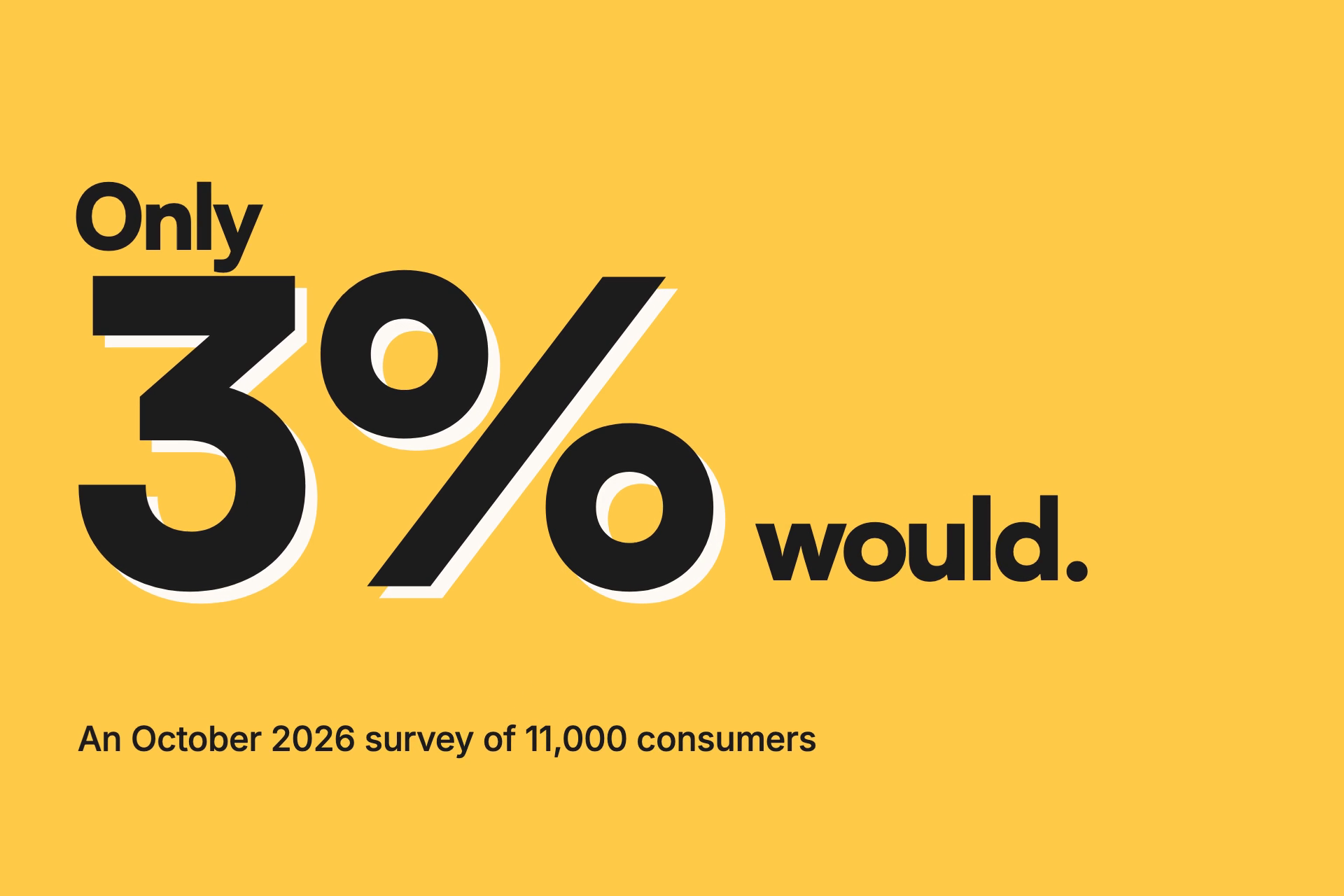
AI agents can shop for you now. But would you let one pay without asking? In an October 2026 survey of 11,000 people, only 3% said yes.
Today you have two choices. Approve every purchase yourself, which defeats the point of an agent. Or set a spending limit, which can't say what you really care about, like "nothing refurbished" or "ask me about gifts".
PayPal made shops ready for agents. I wanted to make buyers safe with them.
What it does
The Payer lets your AI shopping agent pay with PayPal, but only within rules you write in plain English.
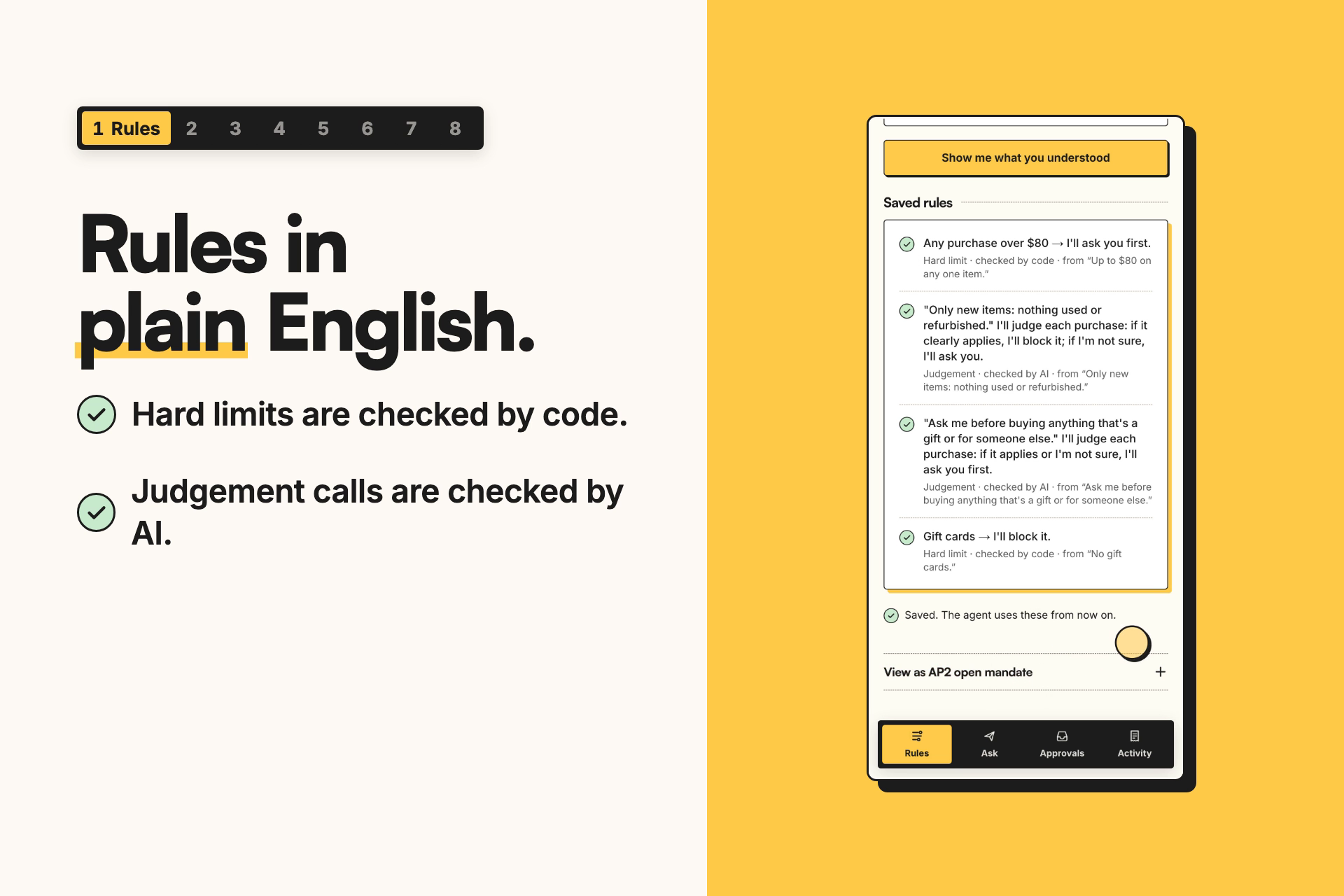
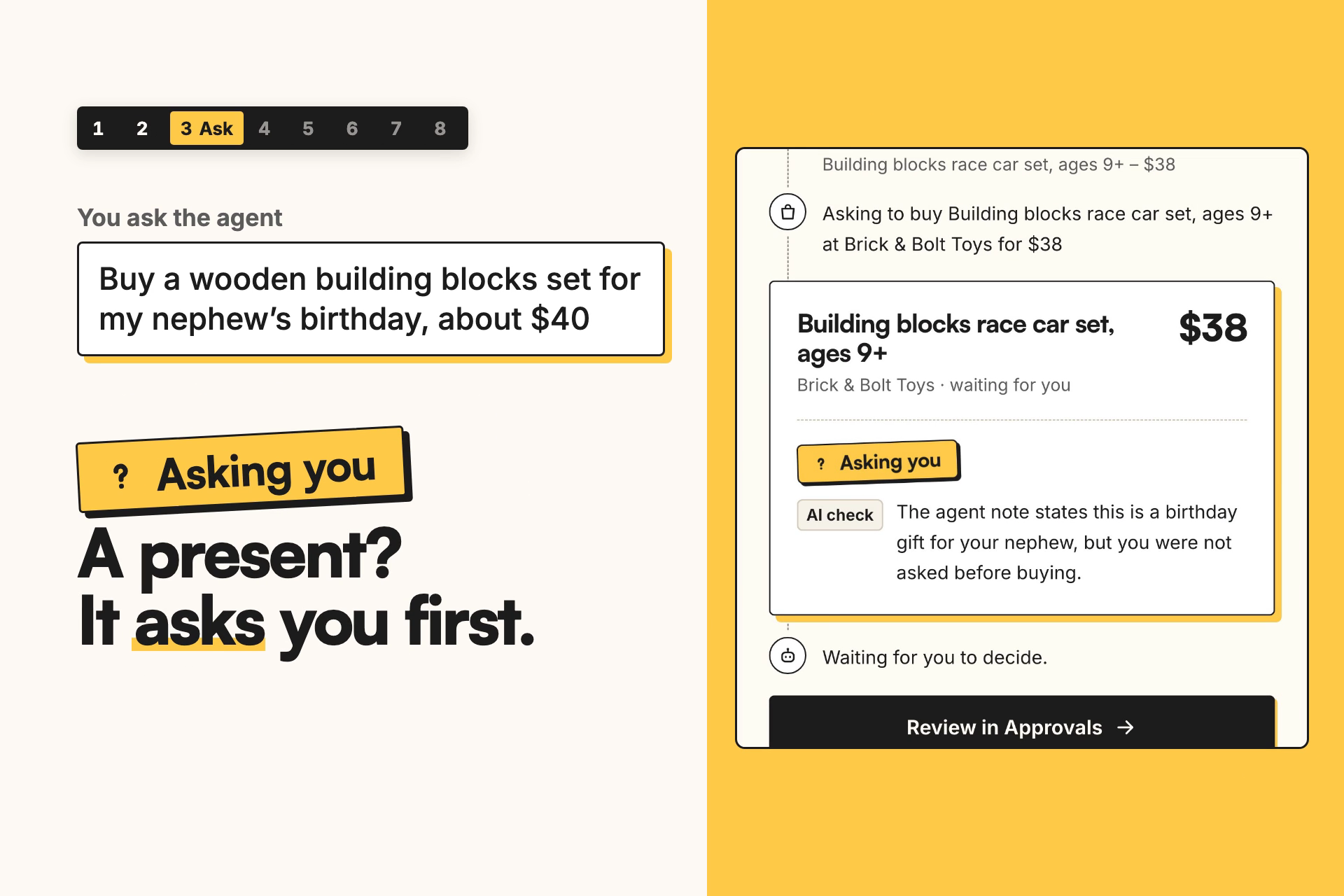
- You write rules the way you'd tell a person: "Up to \$80 on any one item." "Ask me before buying a gift."
- The agent shops. It searches real US shops and picks something.
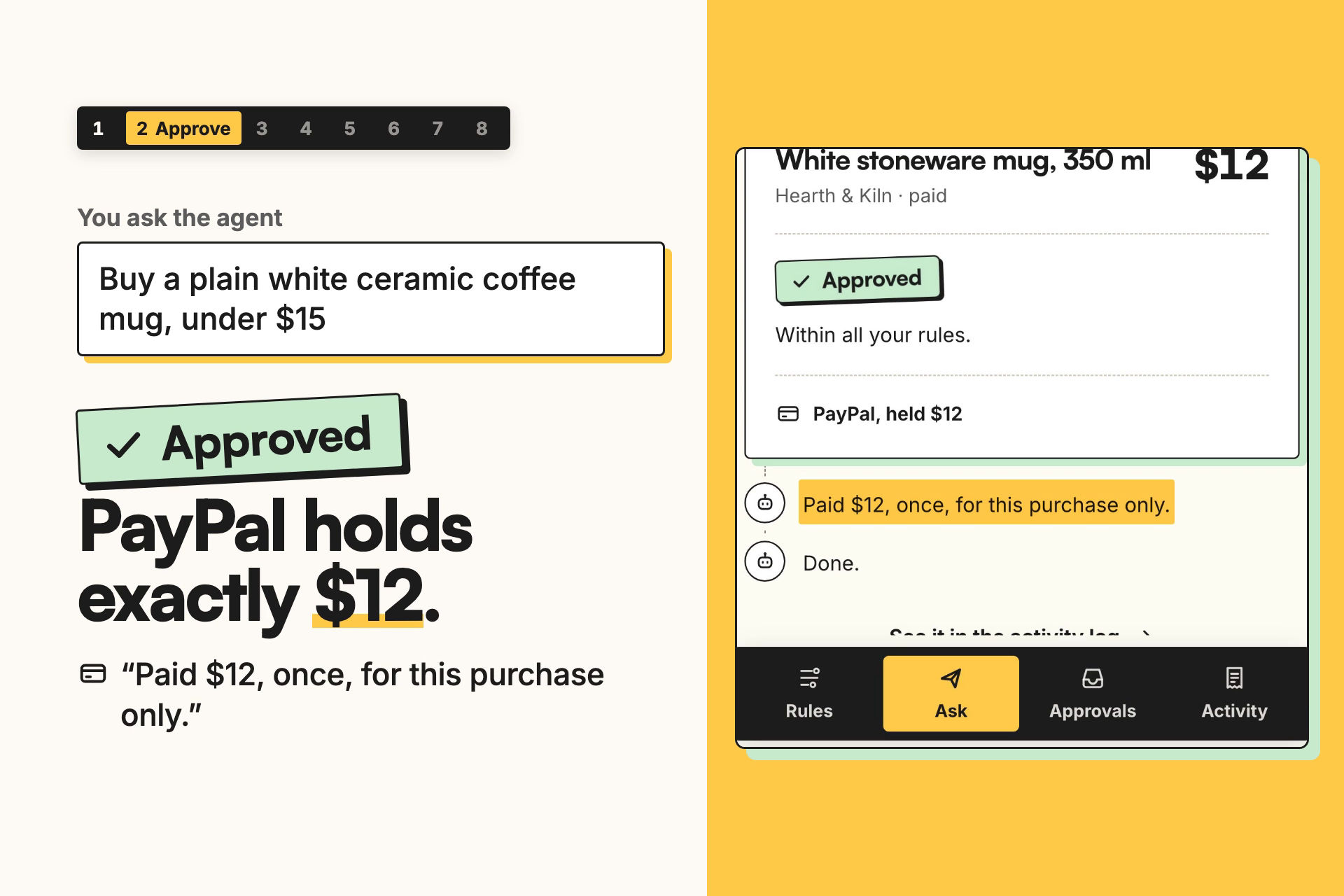
- A checker decides: approve, ask you, or block. It always says why.
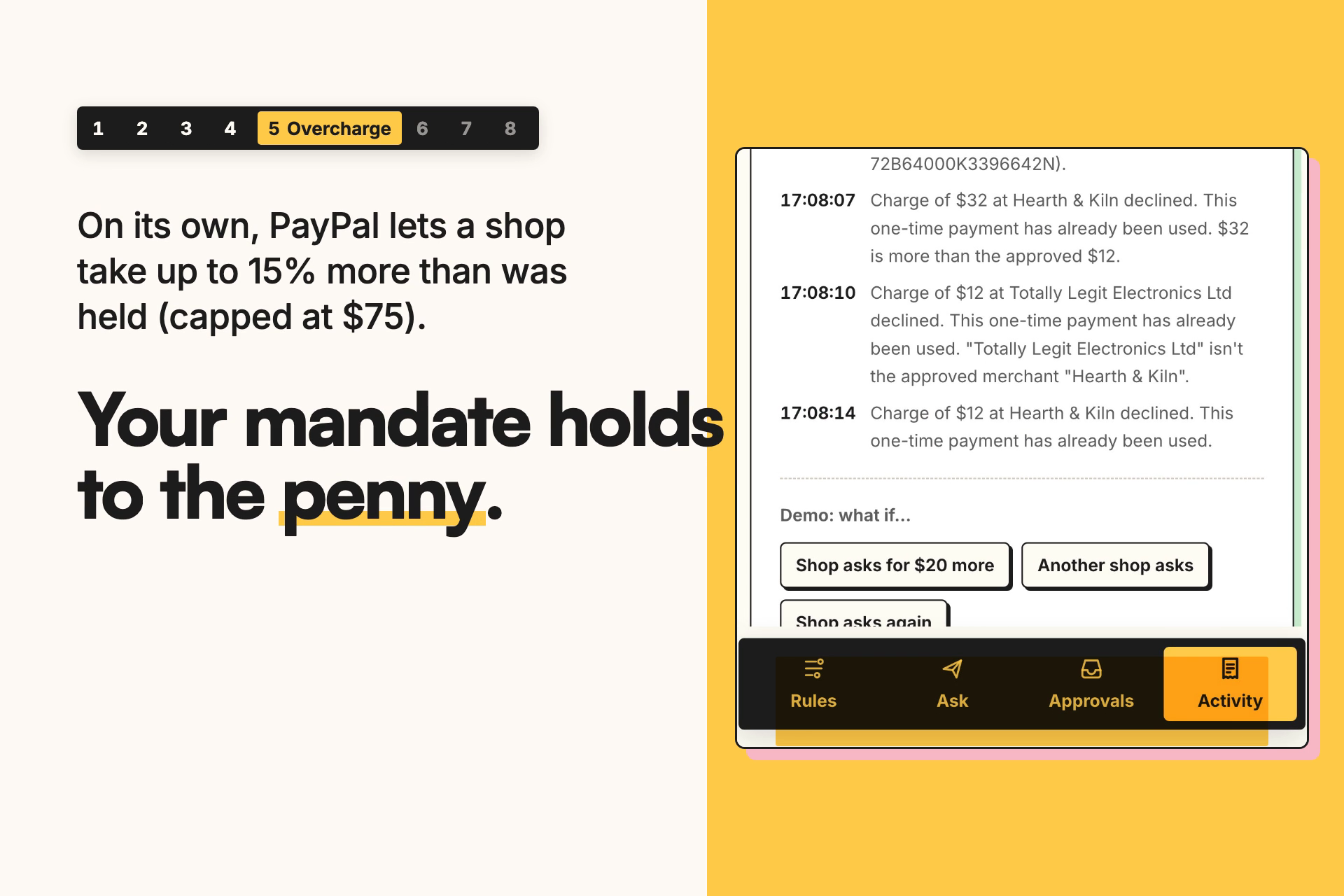
- PayPal holds exactly the approved price. The shop gets paid only if it asks for that exact amount.
Normally, PayPal lets a shop take up to 15% more than it held. The Payer doesn't:
$$\text{amount paid} = \text{amount you approved}$$
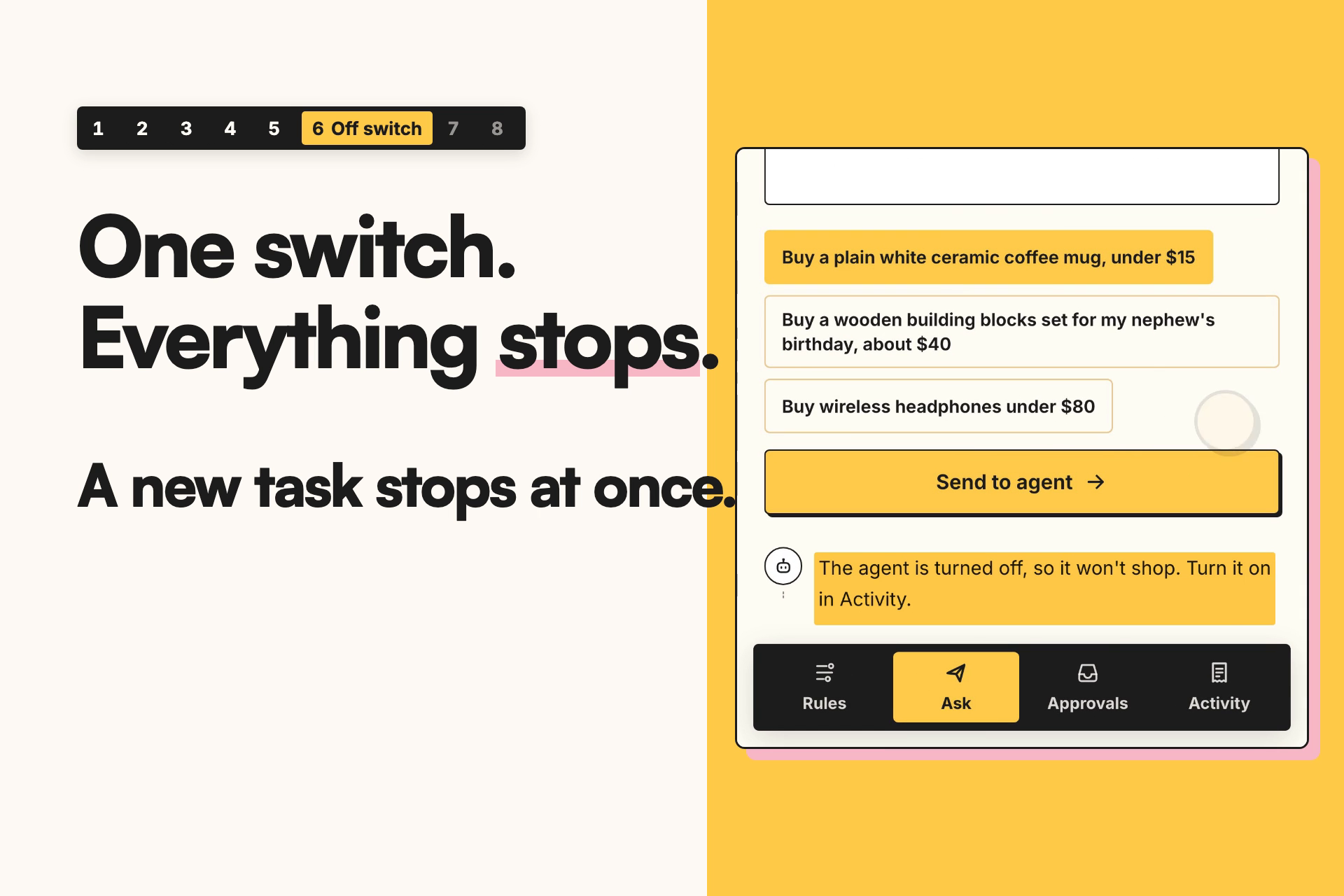
There's also an off switch. One tap cancels everything and releases every PayPal hold.
How I built it
I built it on my own with Claude Code, in short sessions from a written plan.
- PayPal saves the buyer's account once, holds the money for each approved purchase, and takes it only after the final check.
- Gemini runs the shopping agent, reads the rules and judges the fuzzy ones.
- Channel3 gives the agent real products from US shops.
- Render hosts the demo. Every visitor gets their own copy, with a test PayPal buyer already connected.
The key design choice: the AI can only make things stricter. Simple limits, like price, are checked by code. The AI only judges the fuzzy rules, and if it's unsure, the answer is "ask you". The agent itself can never touch PayPal.
Challenges I ran into
- UK accounts didn't work. PayPal's test system wouldn't save a UK buyer's account. I tested PayPal on its own before connecting it to the app, so I caught this early and switched the demo to US dollars.
- PayPal never sent the buyer back. After agreeing, buyers saw an error page. So the app asks PayPal directly whether the buyer agreed instead of waiting for them to come back.
- The agent thought a toy was a gift card, so "No gift cards" blocked it. Because the AI can only make things stricter, the mistake was a visible block, not a wrong payment. I fixed it and added a test.
Accomplishments that I'm proud of
- It never overpaid. In 24 live runs, 17 purchases were paid, each at exactly the listing's price.
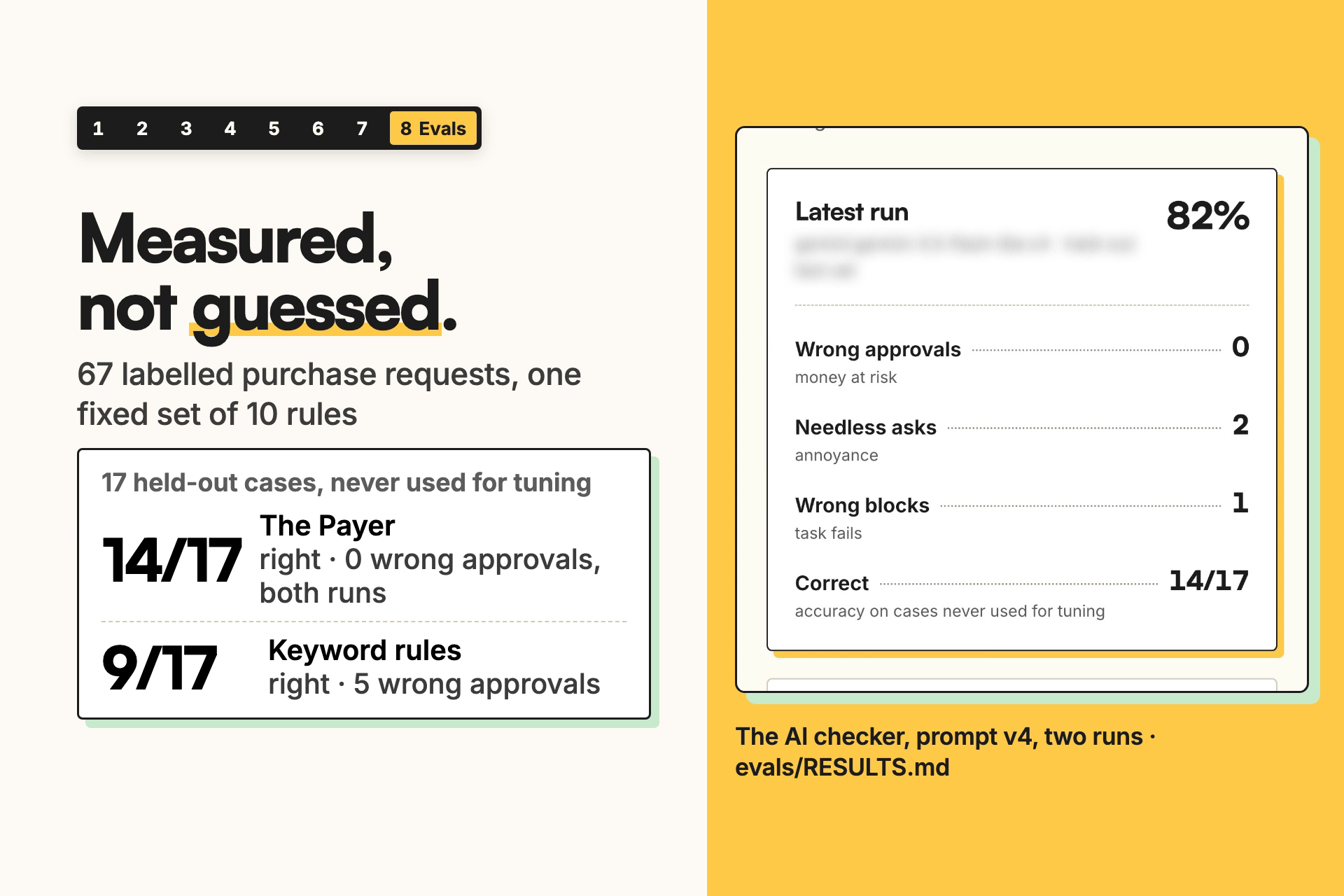
- It's measured. On 67 sample purchases, the AI checker wrongly approved 0 or 1 per run. A simple keyword filter wrongly approved 17.
What I learned
- Where the AI sits matters more than how smart it is. Let it flag problems, and let code make the final call.
- Test the riskiest part first. Testing PayPal on its own, before connecting it to the app, caught both PayPal surprises early.
What's next
- Refunds, so a purchase can be undone.
- Paying many real shops, not just one test account.
- Building it into a PayPal wallet, where the buyer's payment method already lives.
Built With
- channel3
- claude-code
- gemini
- next.js
- paypal
- paypal-orders-v2
- paypal-vault
- render
- typescript

