-
-
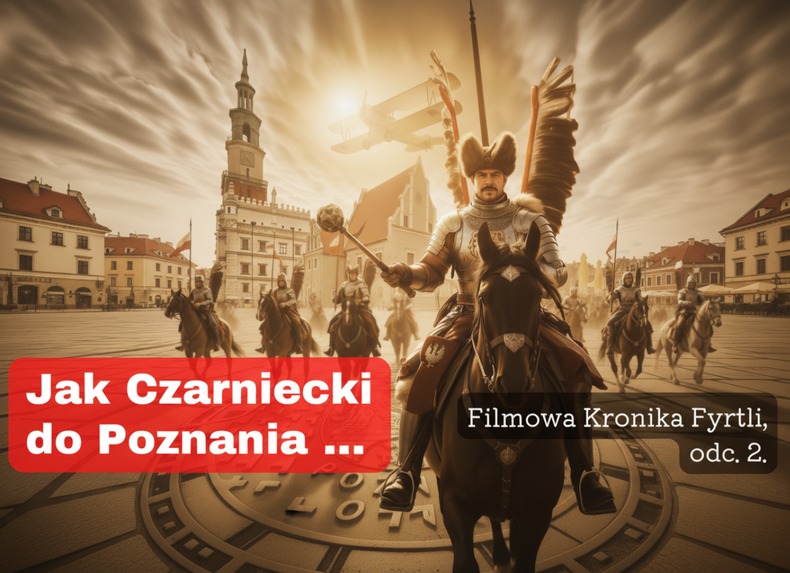
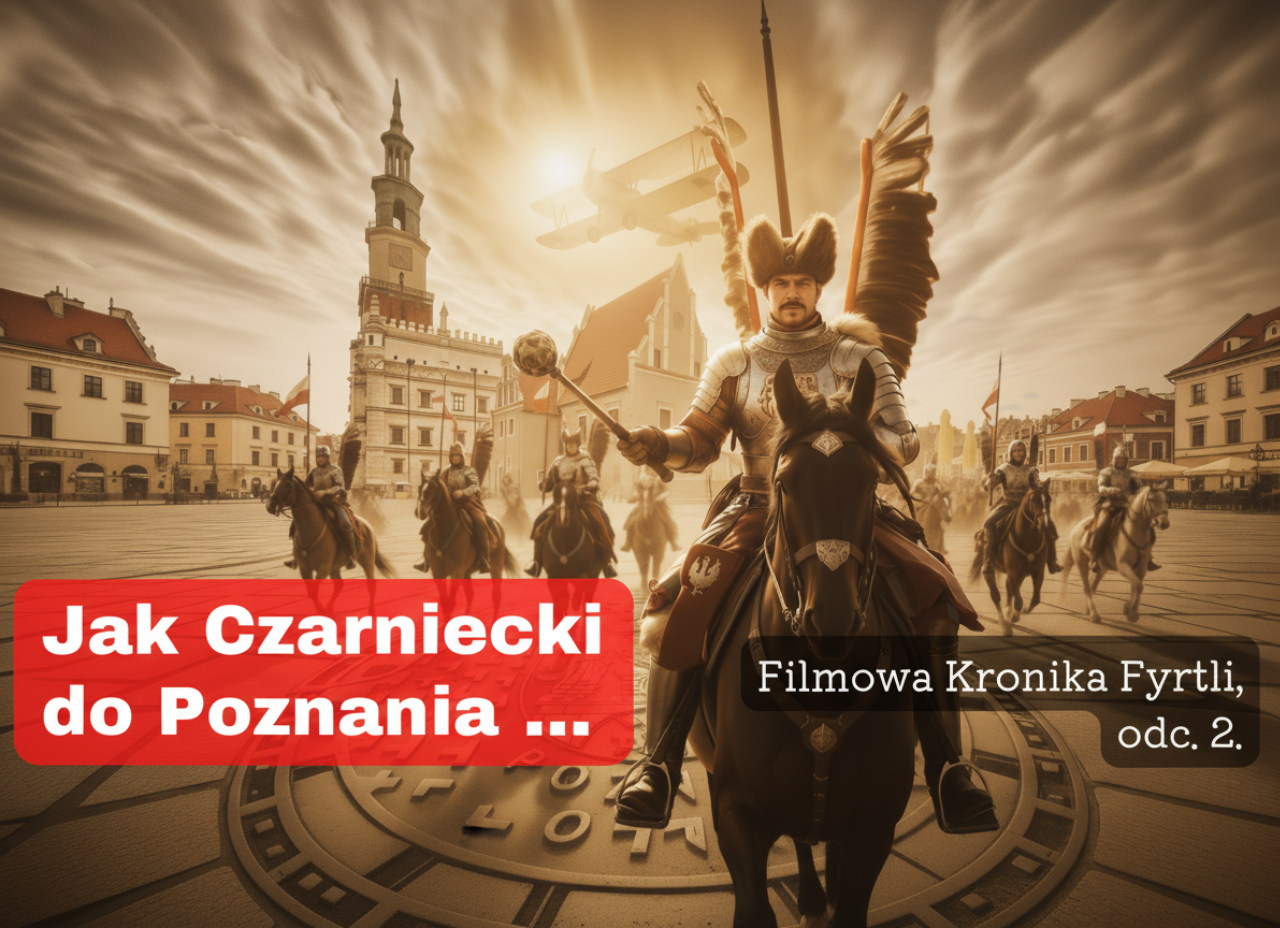
FIlmowa Kronika Fyrtli
Inspiration
This project began with a 48-hour deadline to script a film about the patrons and coat of arms of Poznań. Research quickly revealed a much broader story about the city — and revived a personal promise I once made to my grandmother.
This episode is likely the first short AI-supported docu-fiction about a real Polish city. It blends real people (local entrepreneurs and, in selected episodes, stage actor Michał Grudziński) with AI-generated imagery to create a hybrid cinematic form.
It is the second episode of the Film Chronicle of the Fyrtli — a series documenting local identity across Poland. AI made it possible to tell these stories visually in a way that was previously unreachable for independent creators.
What it does
The film tells Poznań’s story through its symbols — the patrons Peter and Paul, the coat of arms, architecture, and historical events.
It combines real footage, interviews, narration, and AI-generated scenes into a compact, educational, and cinematic form that is easy to understand and visually engaging.
How we built it
Human work: script, directing, production, editing, post-production, music.
AI workflow:
- Text & prompting: ChatGPT (Wena), Claude, Gemini Pro
- Voices: ElevenLabs
- Keyframes: Midjourney, Nano Banana + JSON, Runway (Gen-4 Image)
- Footage: Kling Studio, VEO 3.1 + JSON, RunwayML (Gen-4 Video, Aleph)
- Lip sync: lipsync.studio, Runway
- Upscaling: Topaz AI
Editing & post-production: CineStudio & DesignStudio (MotionVFX)
Pipeline:
[ \text{idea} \rightarrow \text{logline} \rightarrow \text{synopsis} \rightarrow \text{outline} \rightarrow \text{script} \rightarrow \text{prompts} \rightarrow \text{storyboards} \rightarrow \text{generative footage} \rightarrow \text{editing} ]
Challenges we ran into
Maintaining consistent character appearance across many shots remains the biggest technical challenge — subtle changes in style or proportions accumulate in longer films.
A major creative challenge was merging film-school storytelling principles with an AI-driven workflow in a practical, repeatable way.
Combining multiple narrative modes (dialogue, voice-over, music-only sequences, text segments) into one cohesive rhythm required many iterations.
Another challenge was learning the cinematic language itself: conscious camera movement, working with light, and shaping the relationship between foreground and background — elements that demand a different approach when combined with AI.
Accomplishments that we're proud of
- Creating one of the first AI-supported docu-fiction films about a real Polish city.
- Designing a fully hybrid workflow that merges film craft and AI.
- Building a scalable production system for future episodes.
- Successfully blending real footage, narration, history, and AI into one coherent film.
What we learned
This episode deepened my understanding of Poznań’s patrons, coat of arms, and key historical events.
I learned to structure and condense complex content into clear cinematic storytelling.
I gained practical experience in emotional voice tagging, custom ChatGPT agents, Kling Studio, VEO 3.1, JSON workflows, and Runway-based production.
The key insight: a disciplined hybrid workflow makes AI a powerful tool for high-quality, scalable filmmaking.
What's next for The Patrons of Poznań – Documentary on Symbols and History
Next steps: new episodes of the Film Chronicle of the Fyrtli.
Currently in production: Kiekrz, Gniezno, Międzyrzecz.
Long term: developing several dozen episodes to build a modern cinematic archive of local Polish stories.
Built With
- banana
- chatgpt
- cinestudio
- claude
- elevenlabs
- gemini
- kling
- lipsync.studio
- midjourney
- motionvfx
- nano
- runwayml
- studio
- topaz
- veo

Log in or sign up for Devpost to join the conversation.