-
-
Brainstorm
-
Brainstorm
-
First Iteration
-
Second Iteration


The Other Clock
About the Project
Inspiration
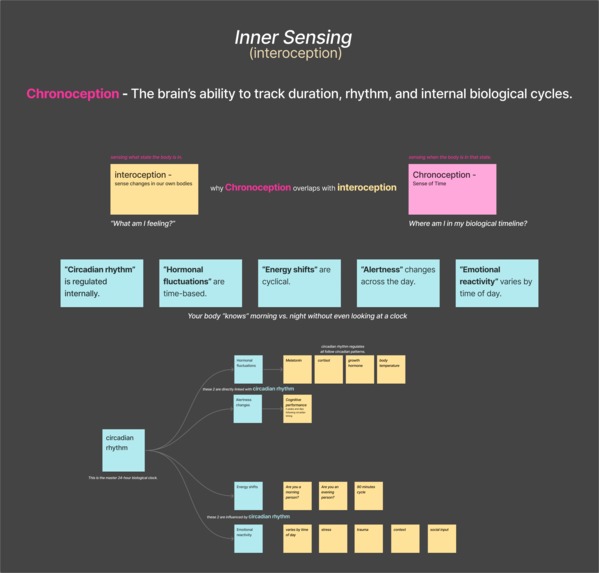
We built our lives around a 24-hour clock — linear, equal, mechanical.
But human cognition is not linear.
At certain hours we feel sharp and focused.
At others we feel slow, foggy, or mentally depleted.
Yet we continue to schedule our most demanding work according to the wall clock, not our biological state.
The Other Clock was inspired by this invisible mismatch between mechanical time and biological time.
What if time wasn’t measured in hours — but in capacity?
What if your internal rhythm was visible?
What This Project Explores
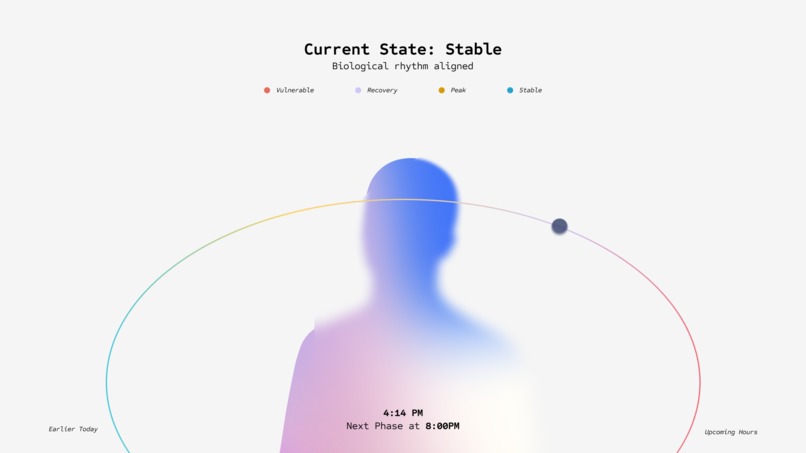
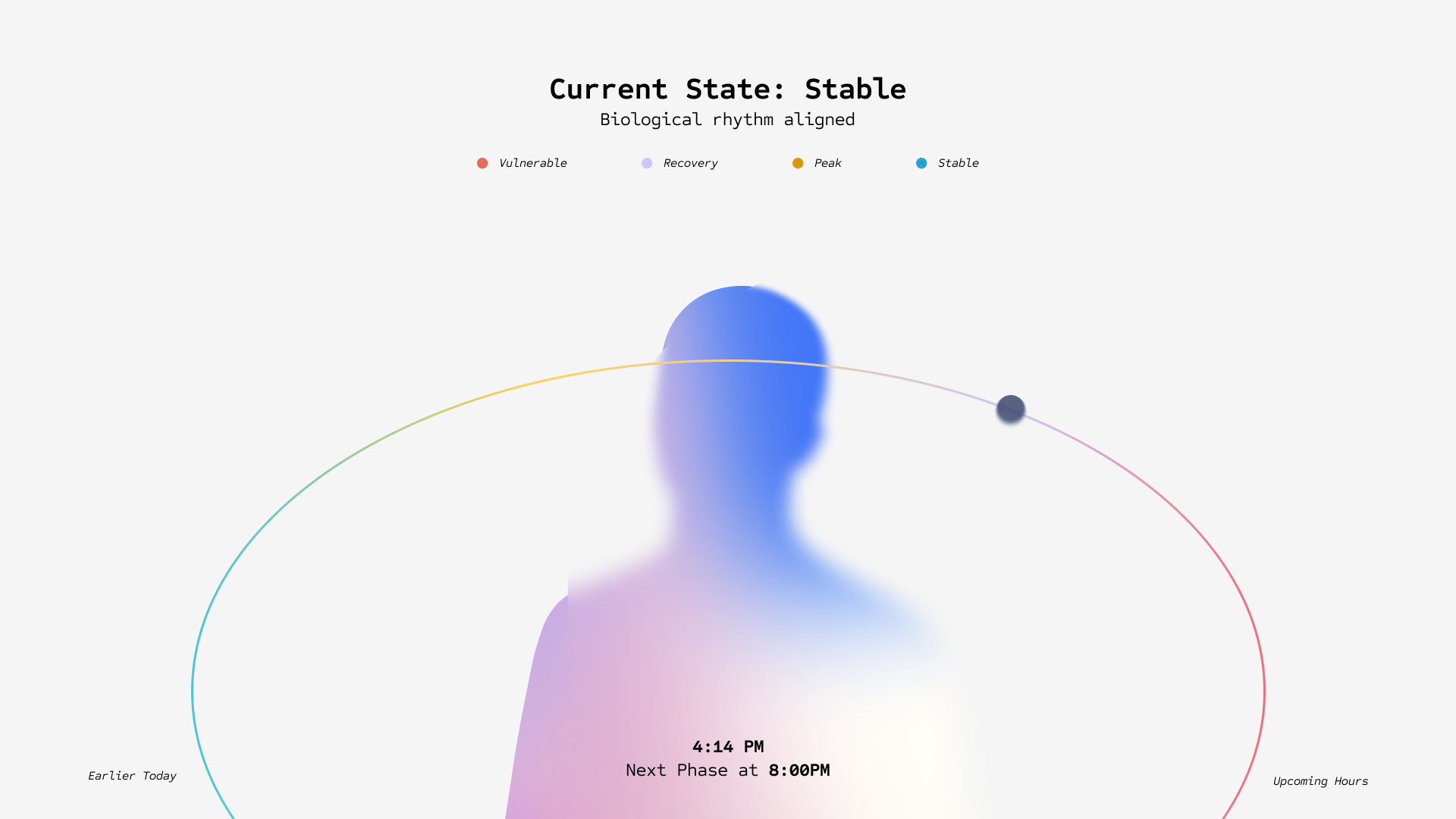
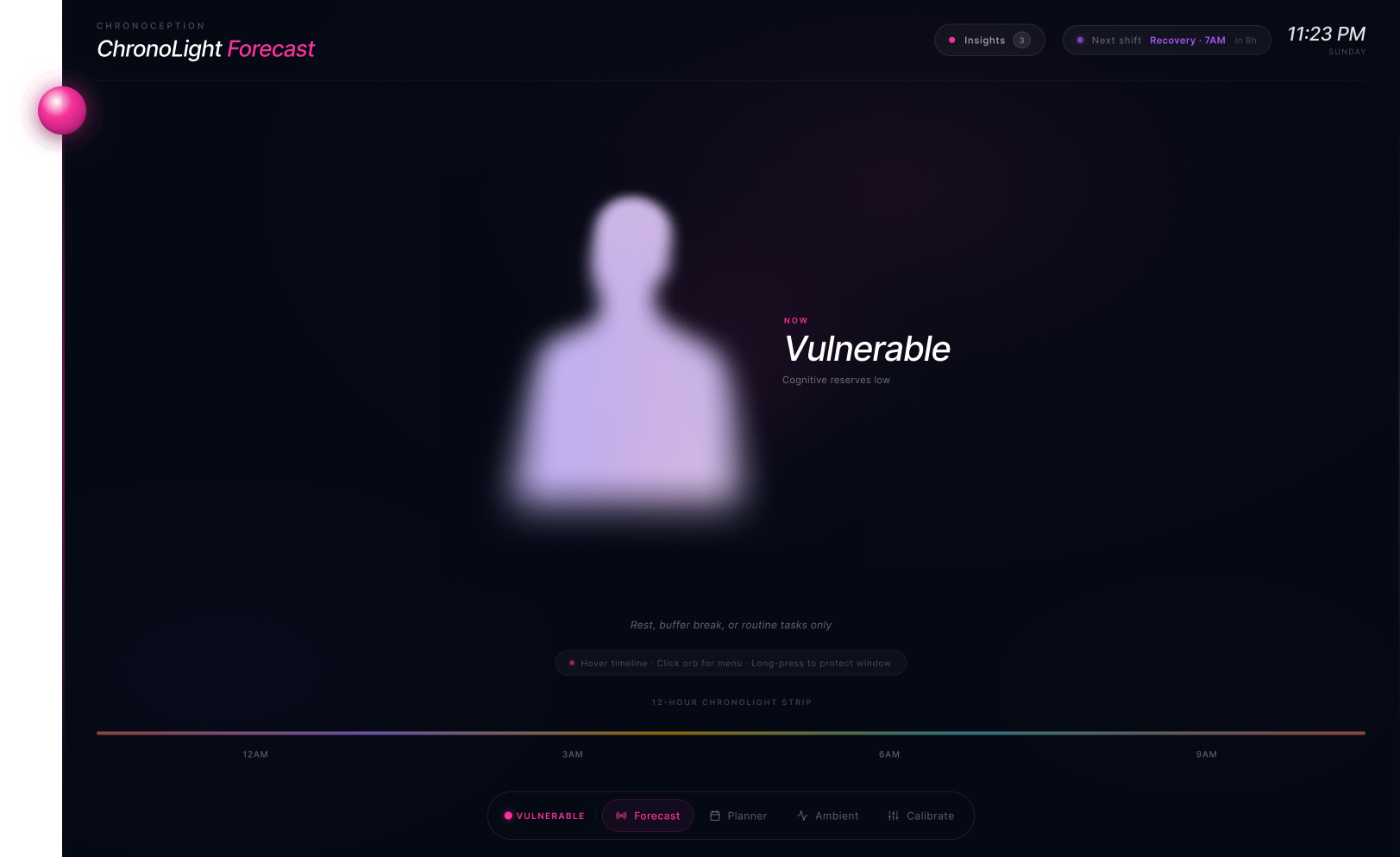
The Other Clock is a visual interface that represents your biological energy cycle as a color-based clock.
Instead of showing only time of day, it shows cognitive state:
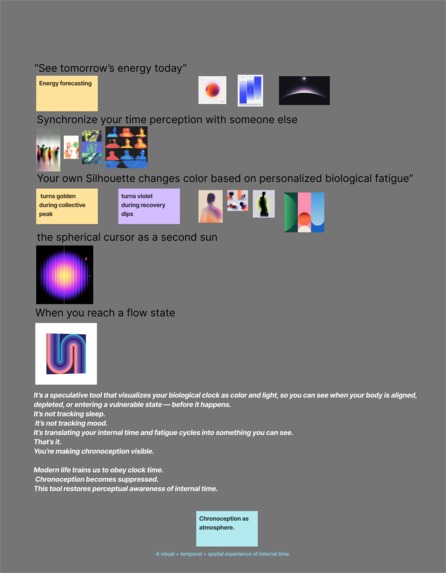
- Golden — Peak productivity
- Blue — Stable clarity
- Violet — Recovery dip
- Red — Vulnerable / depletion
Rather than assuming productivity equals time spent, the project reframes performance as:
your output depends on where you are in your biological rhythm, how much fatigue you’re carrying, and whether you’ve properly recovered.
The clock becomes a map of capacity, not just hours.
Who It’s For
Cognitively intensive working professionals with flexible schedules, for example:
- Designers
- Engineers
- Researchers
- Strategists
- Knowledge workers
People whose output depends on clarity, decision-making, and deep thinking — not just attendance.
They can already see time.
They cannot see cognitive timing.
This tool makes that visible.
How It Works
The interface replaces the traditional 24-hour clock with an 18-segment conscious cycle, removing sleep hours from the visual emphasis.
A circular gradient represents the natural rise and fall of cognitive energy throughout the day.
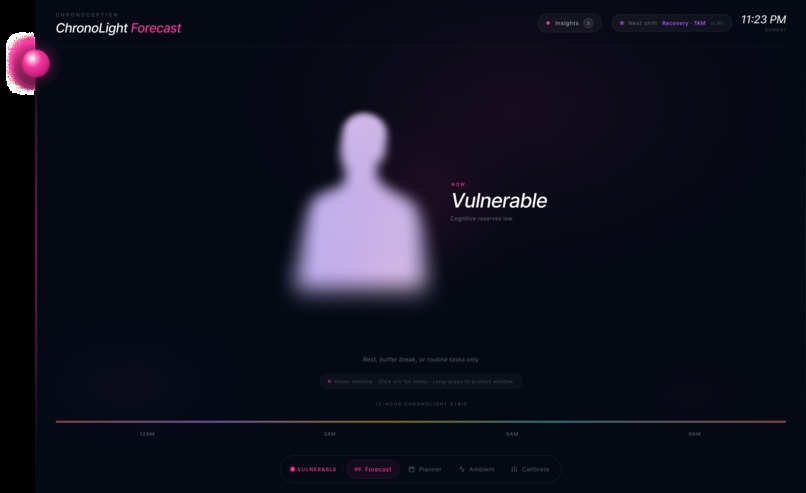
A movable spherical cursor — the “Second Sun” — allows users to explore:
- Current internal hour
- Forecasted energy states
- Tomorrow’s predicted dips and peaks
The system conceptually:
- Collects lightweight behavioral inputs
- Models fatigue accumulation and circadian rhythm shifts
- Forecasts next-day energy patterns
- Surfaces insights only when relevant
It is not a sleep tracker.
It is not a mood tracker.
It is a chronoception tool — translating internal time into visible light.
What We Learned
Through researching circadian science and cognitive fatigue, we learned that:
- Most burnout is mistimed effort, not lack of discipline
- Energy fluctuates predictably
- Alignment reduces strain
When high-load tasks align with peak capacity:
- Mental strain decreases
- Clarity increases
- Recovery becomes intentional
What Challenges Did We Face?
- Avoiding information overload
- Translating biological complexity into intuitive visuals
- Designing something supportive, not prescriptive
- Making it feel like a clock, not a medical dashboard
The biggest challenge was reframing productivity.
This project is not about doing more.
It is about working in rhythm.
Built With
- canva
- chatgpt
- figma
- figmamake
- youtube


Log in or sign up for Devpost to join the conversation.