-
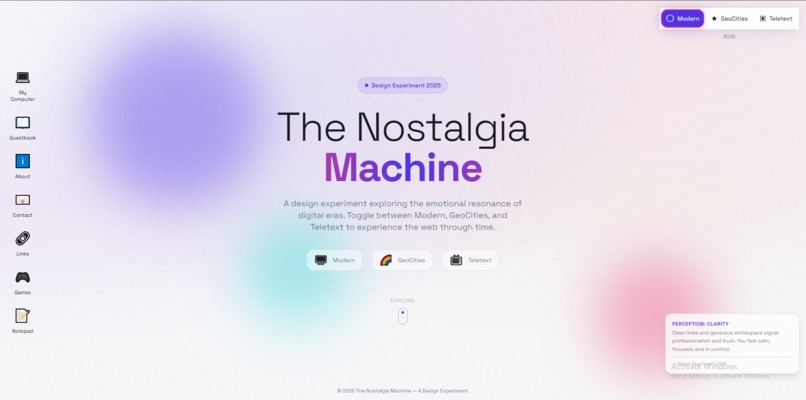
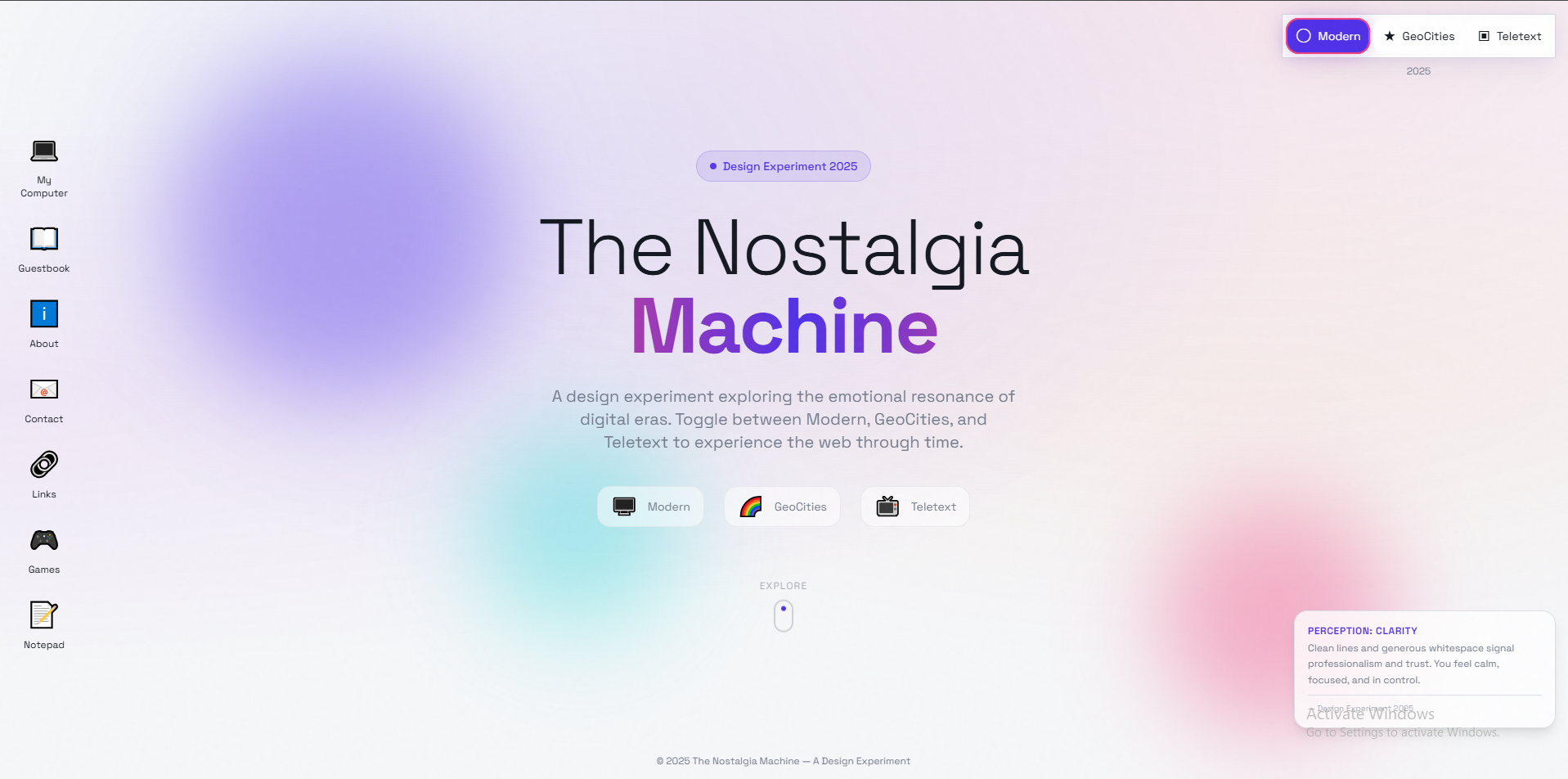
A clean modern interface using desktop metaphors and soft interactions to evoke clarity, calm, and trust in a contemporary digital experienc
-
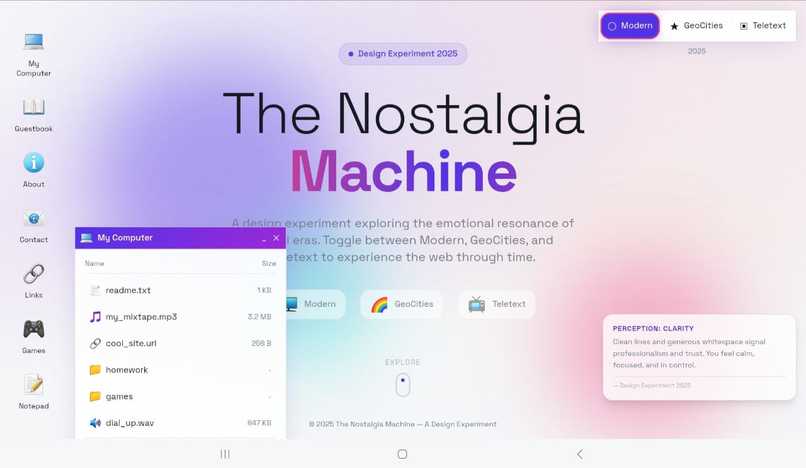
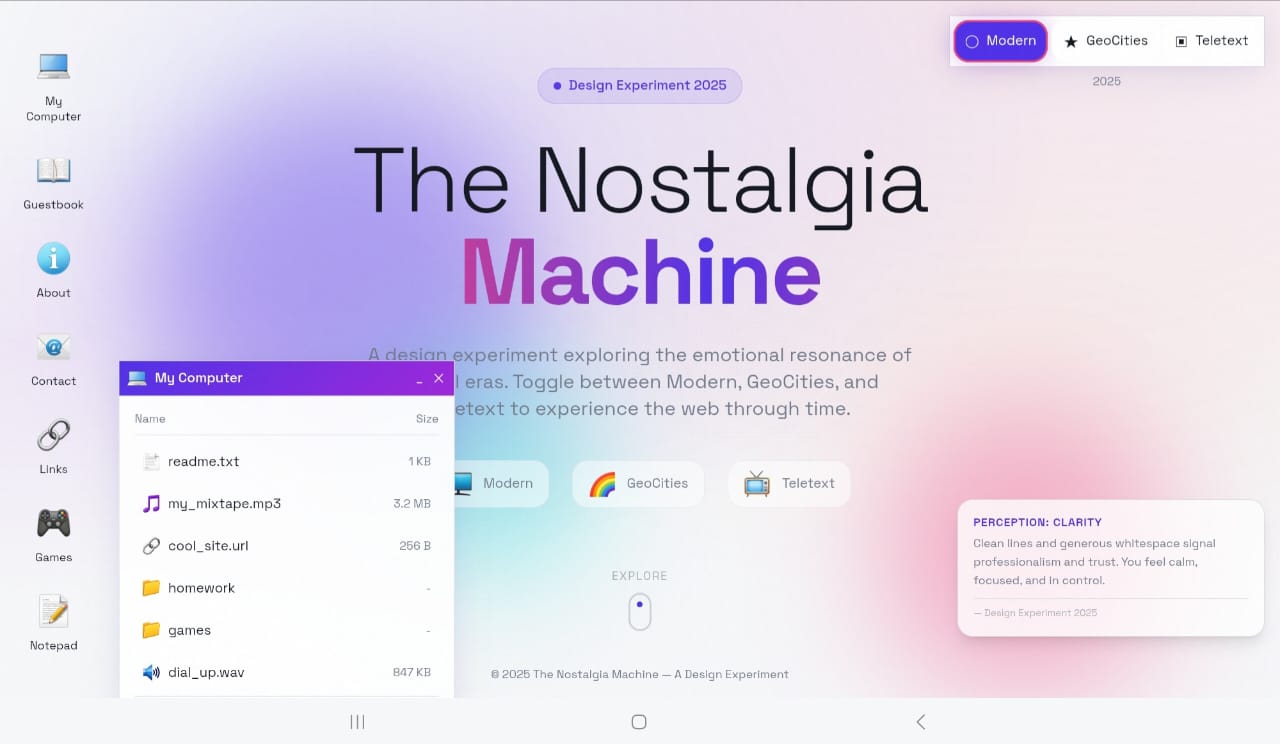
A modern desktop metaphor that reimagines files and folders as interactive UI elements instead of real storage.
-
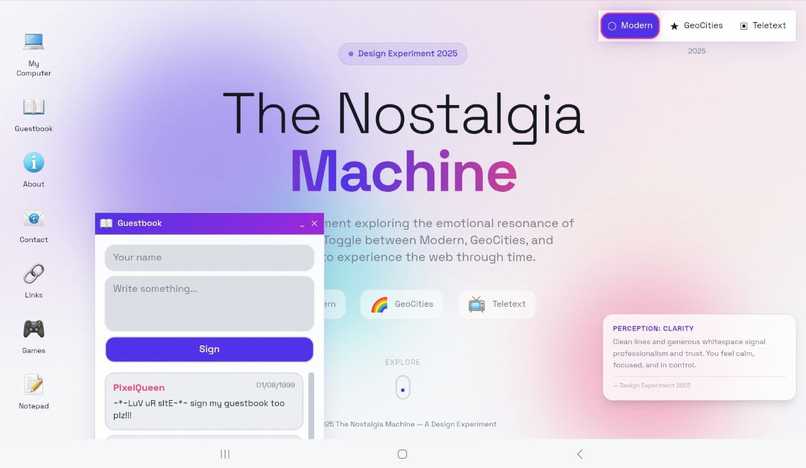
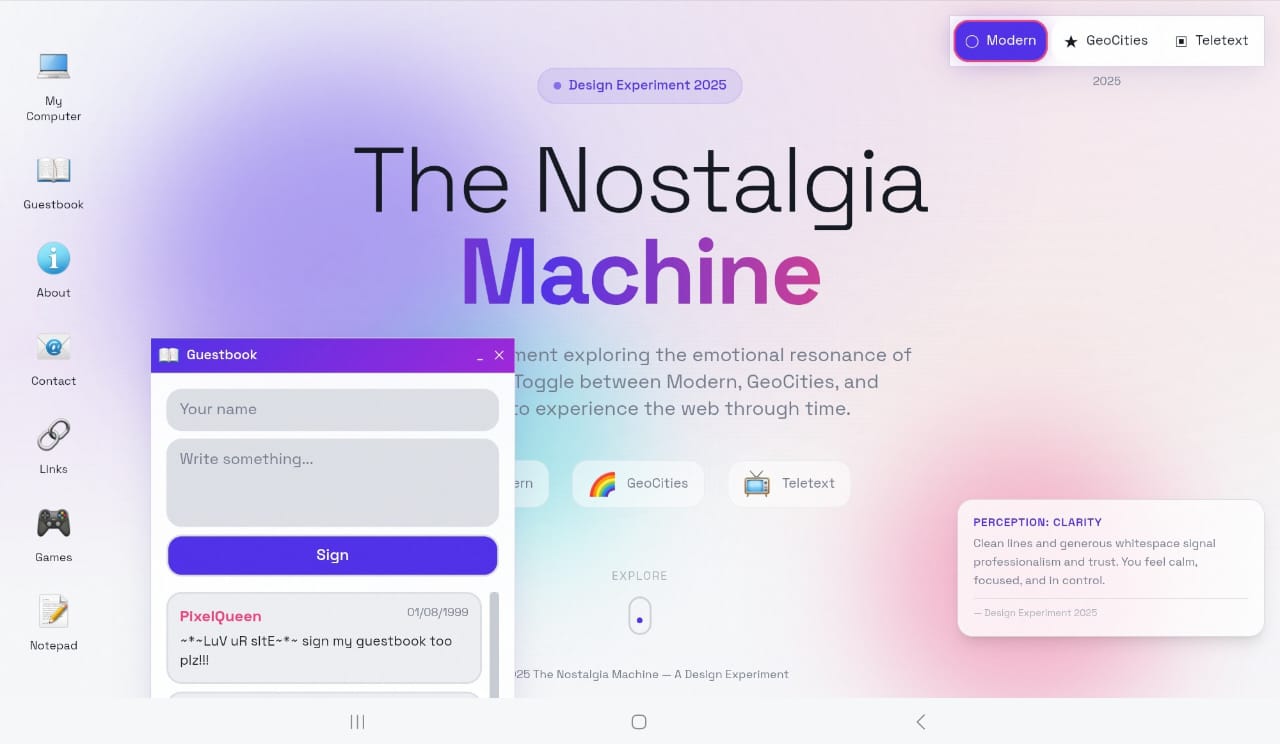
A soft, modern guestbook where visitors can leave thoughts—echoing early web culture in a clean 2025 interface.
-
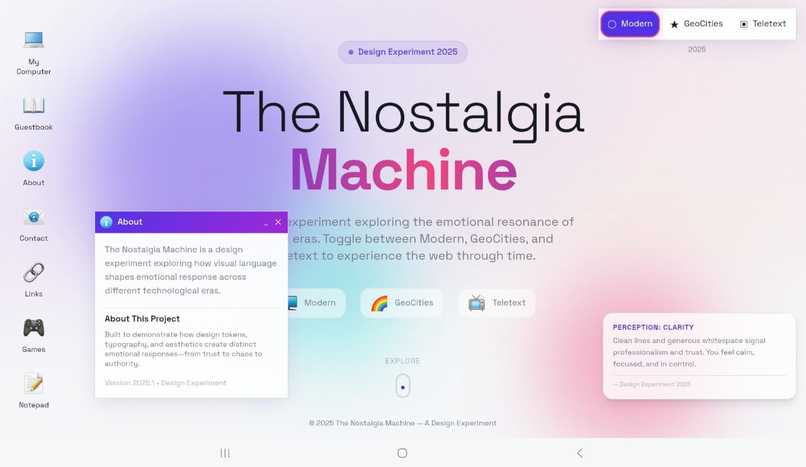
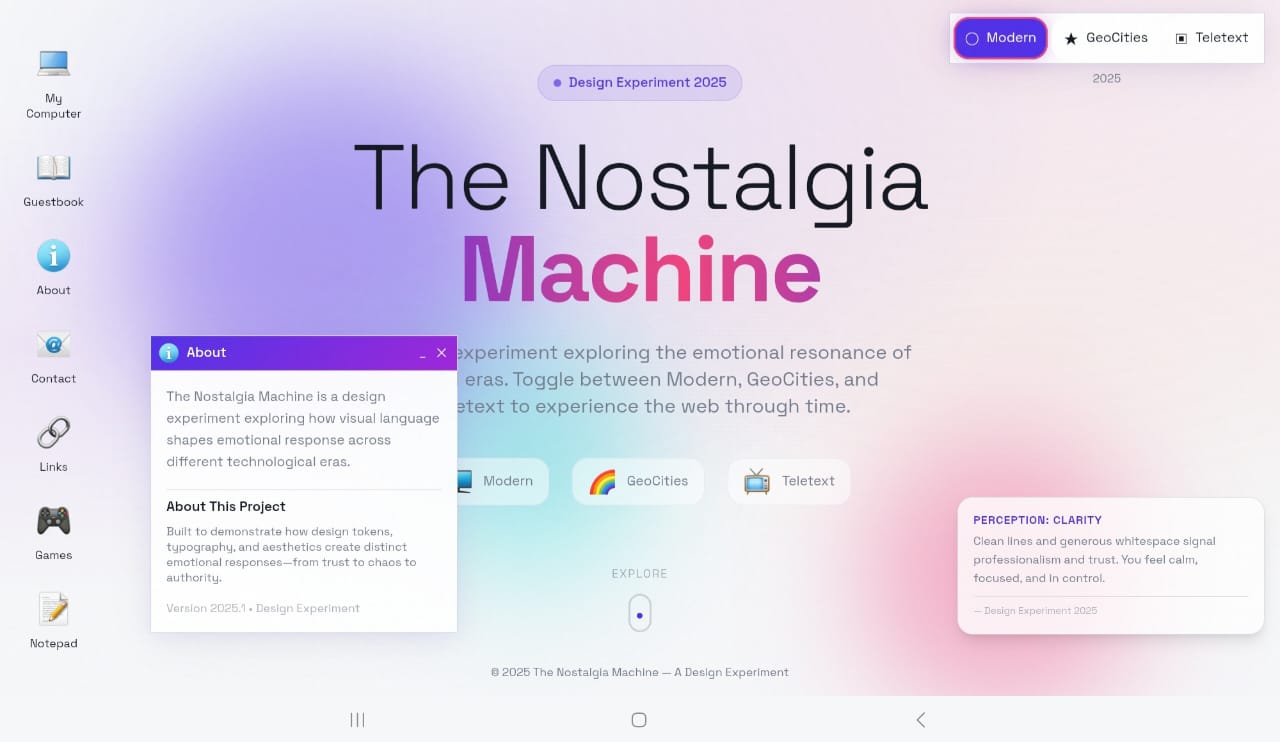
Explains the idea behind The Nostalgia Machine and how visual design influences emotional perception across eras.
-
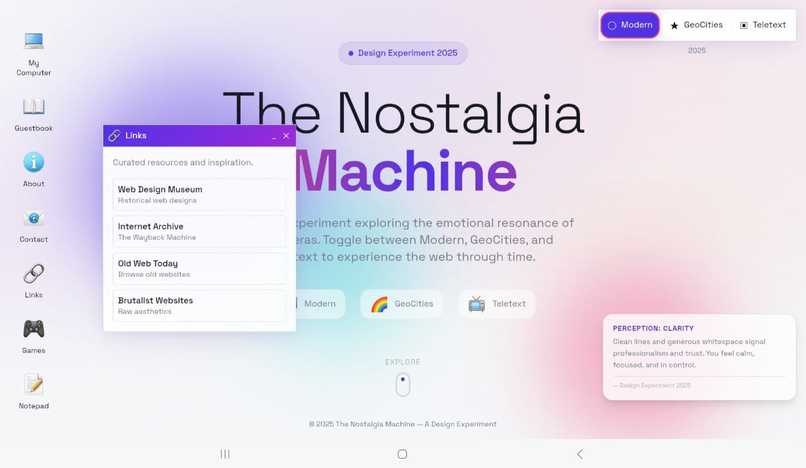
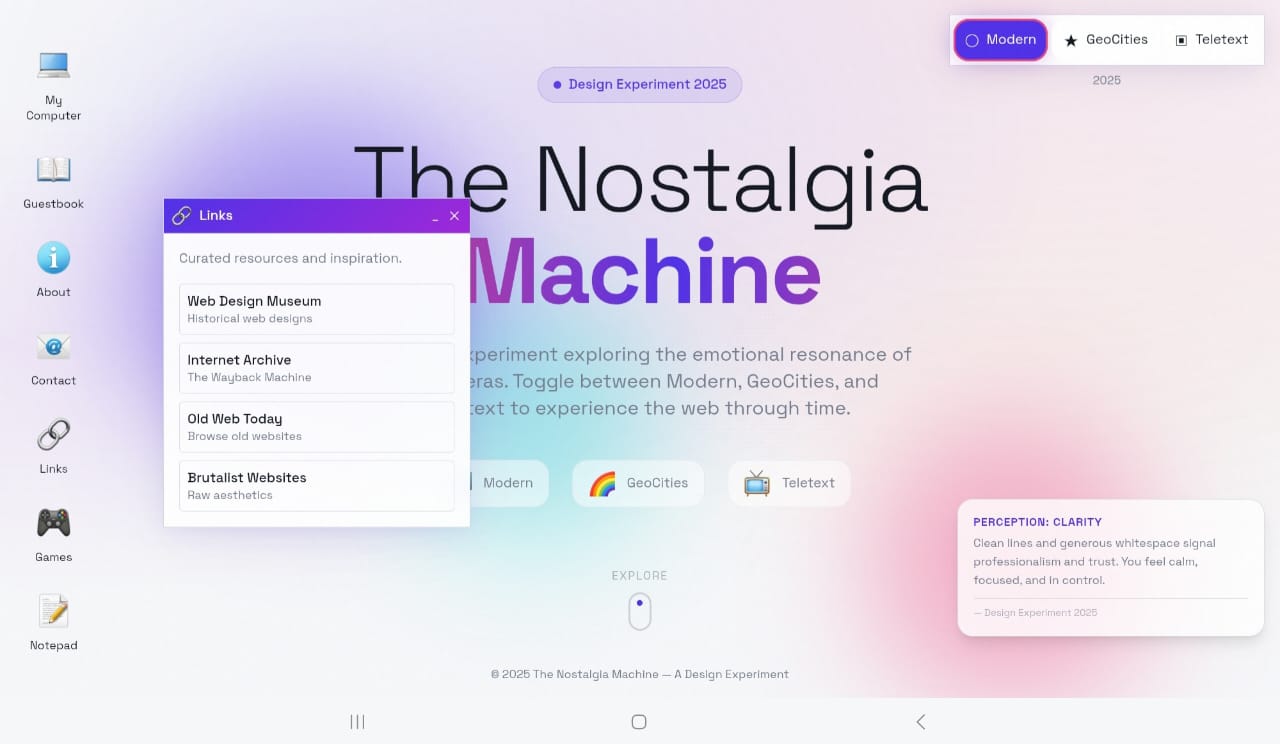
Curated links to web history and inspiration sources that shaped retro and experimental digital design.
-
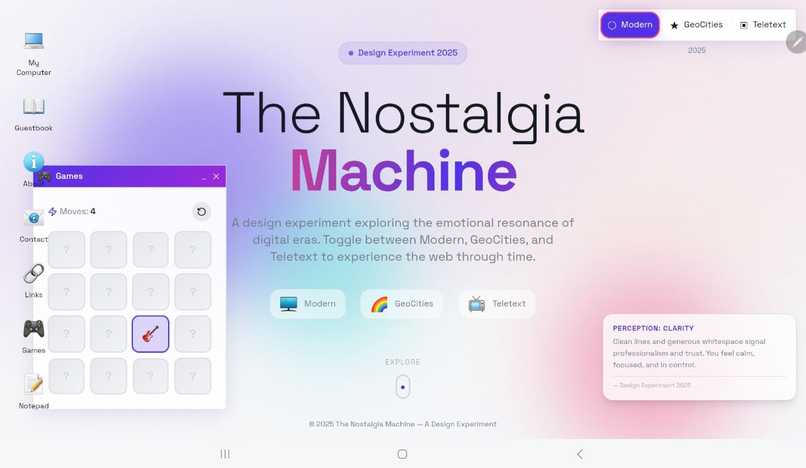
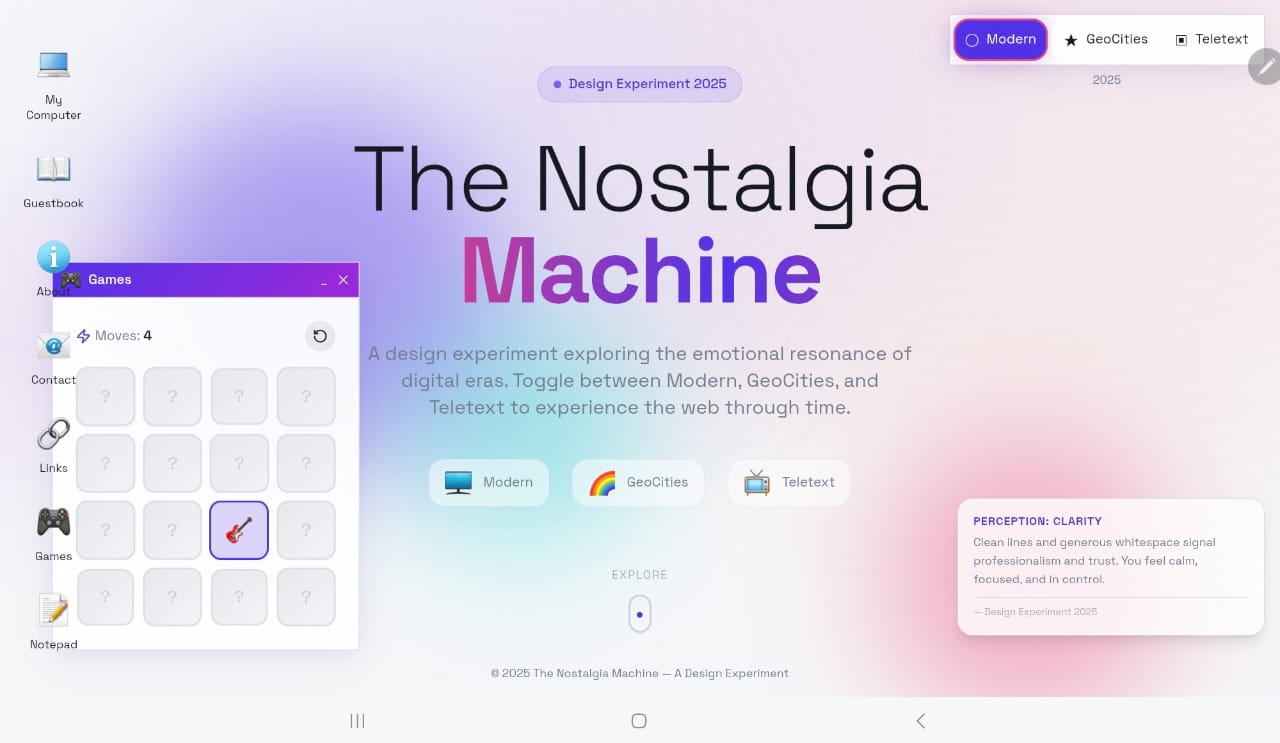
A playful mini-interaction inspired by casual desktop games, reinforcing nostalgia through light interaction.
-
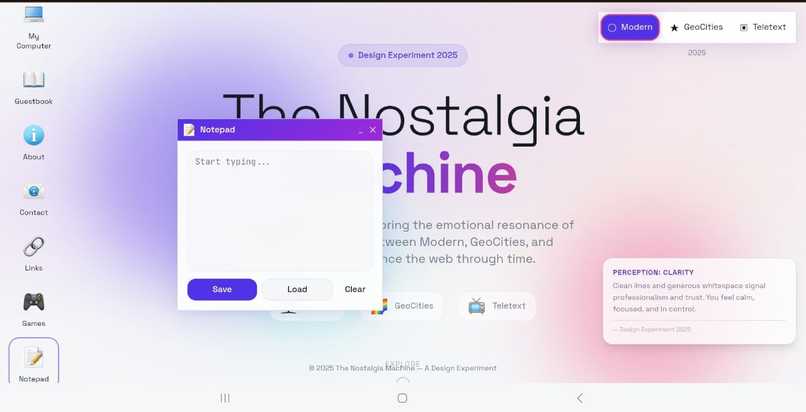
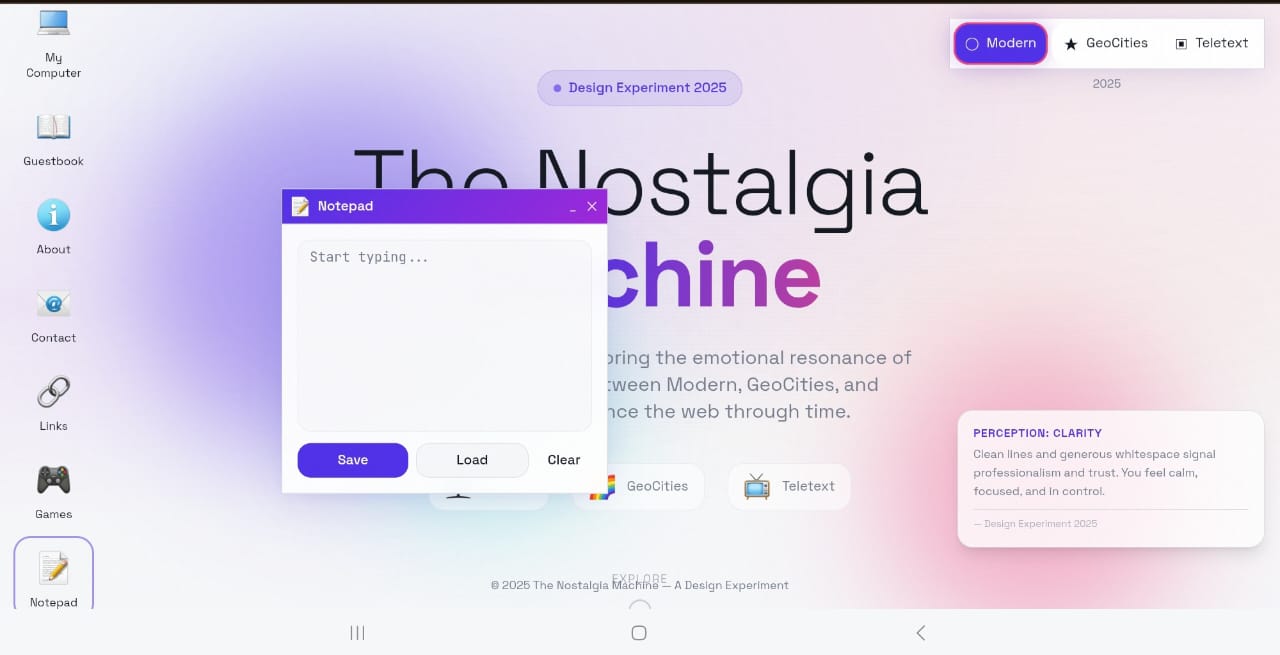
A minimal writing space inspired by classic notepad apps, redesigned with modern typography and softness.
-
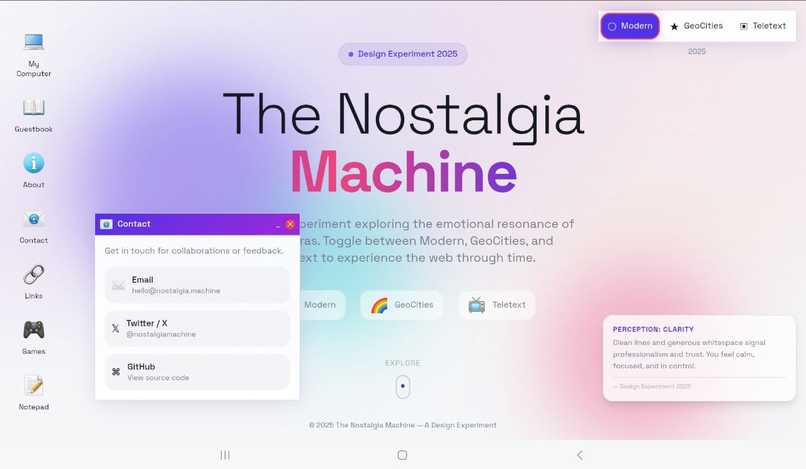
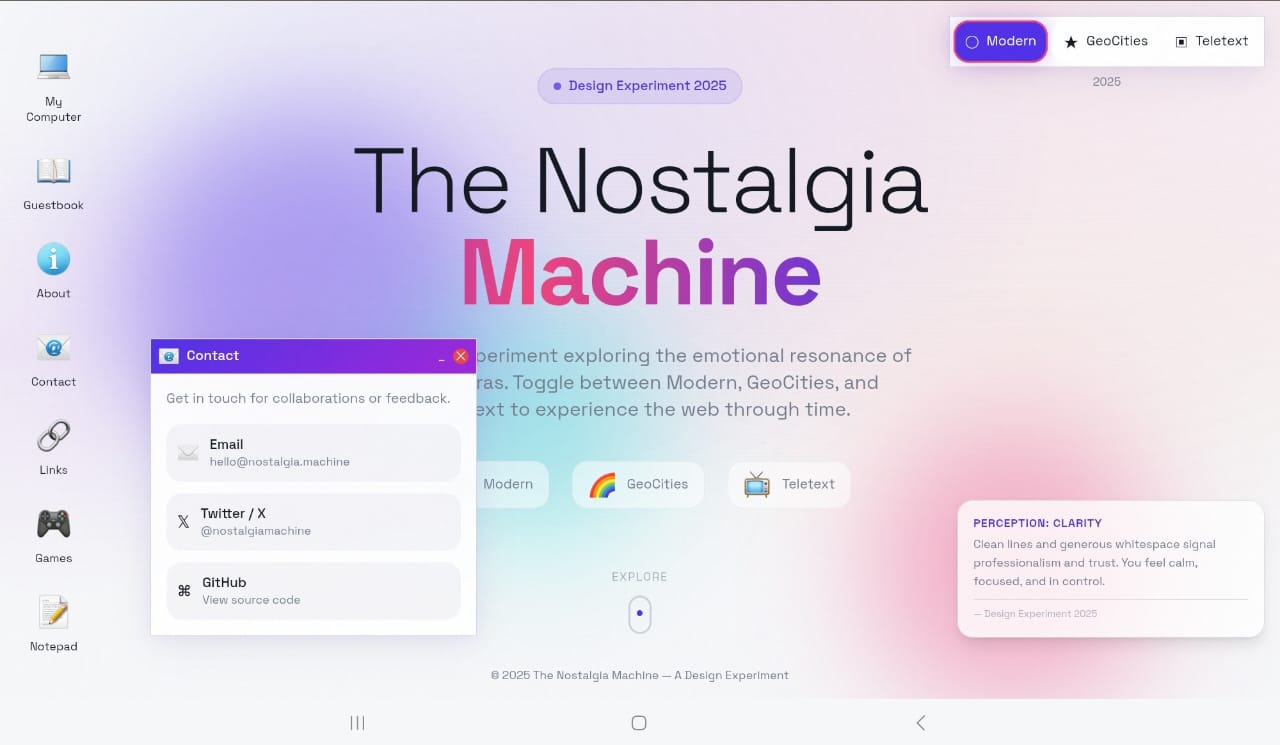
A simple contact window for feedback and collaboration, designed as part of the desktop-style interface.
-
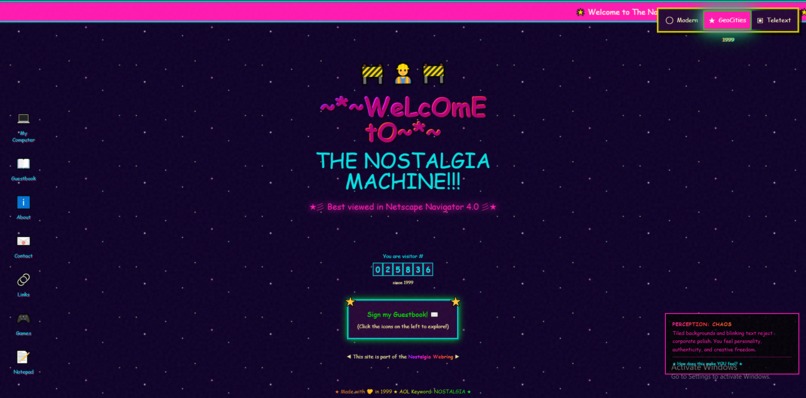
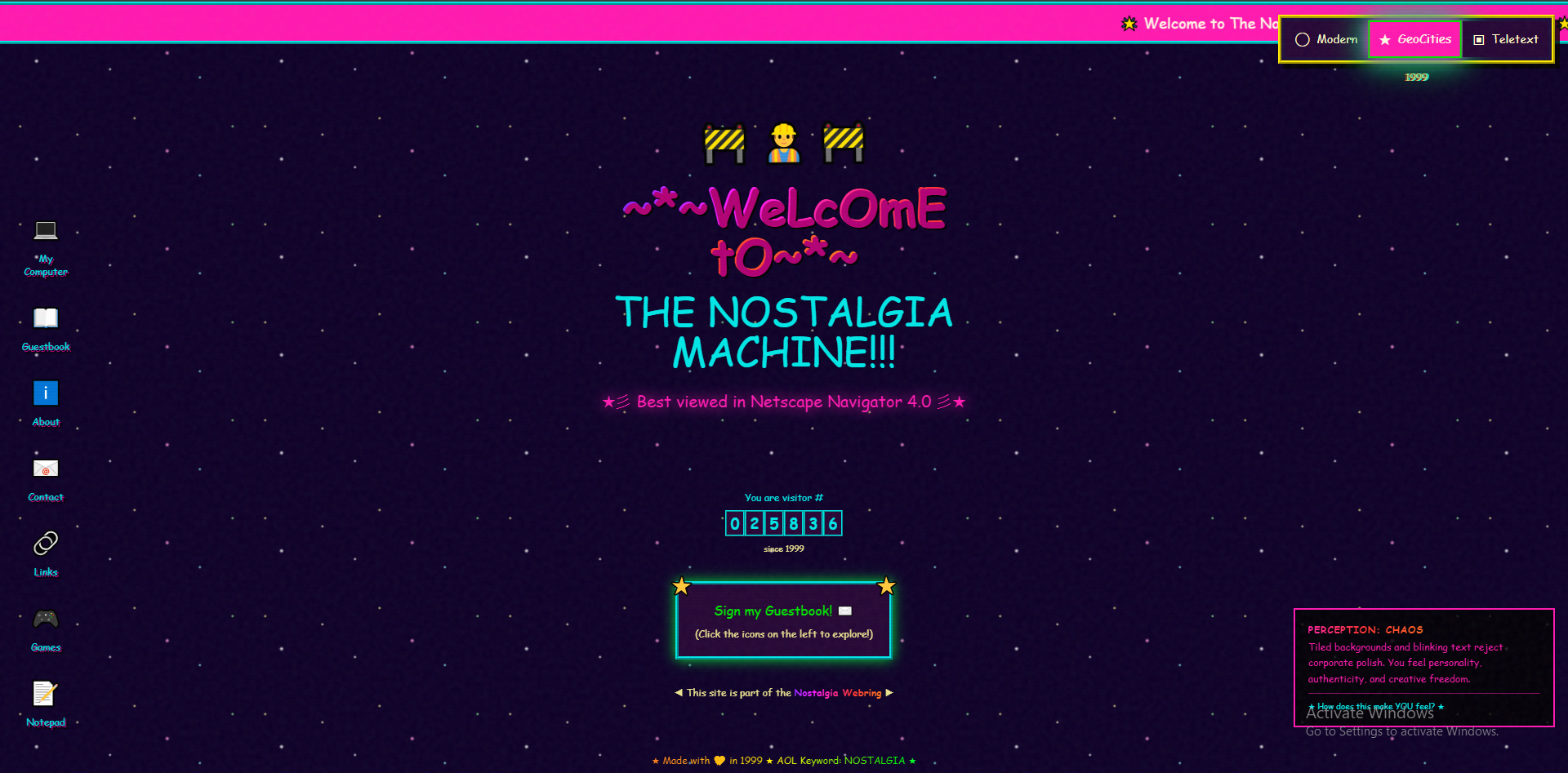
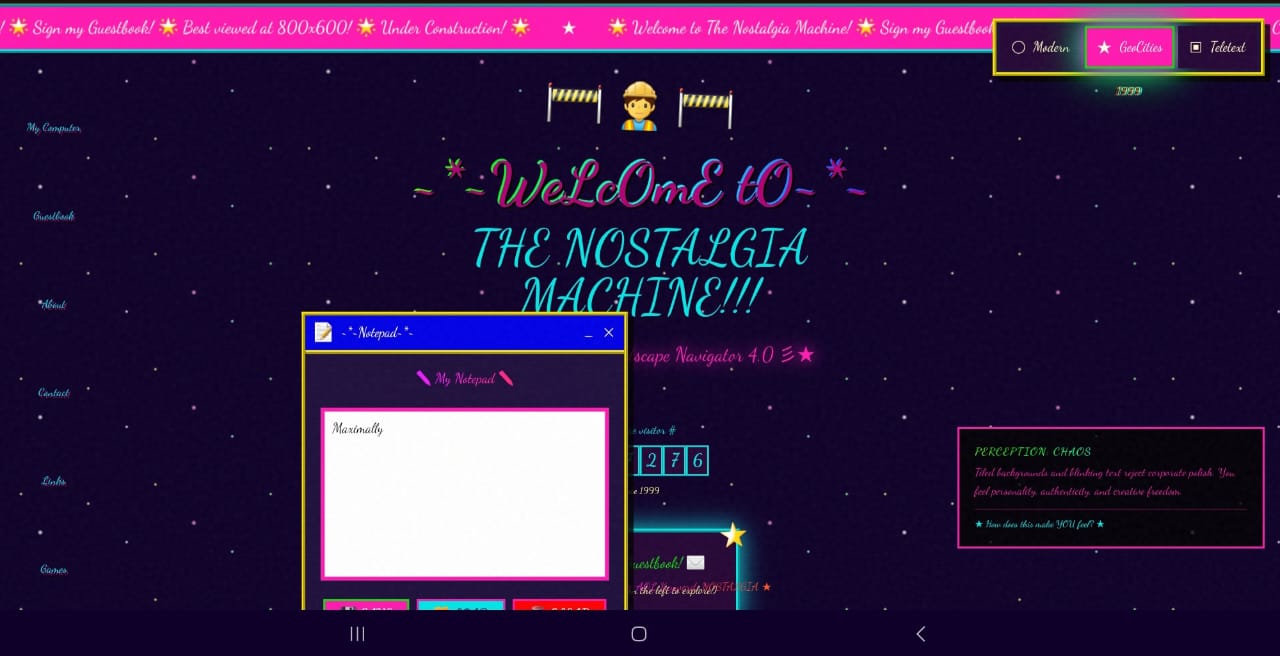
A chaotic, colorful GeoCities-style interface celebrating early web creativity, personality, and the joy of building without rules.
-
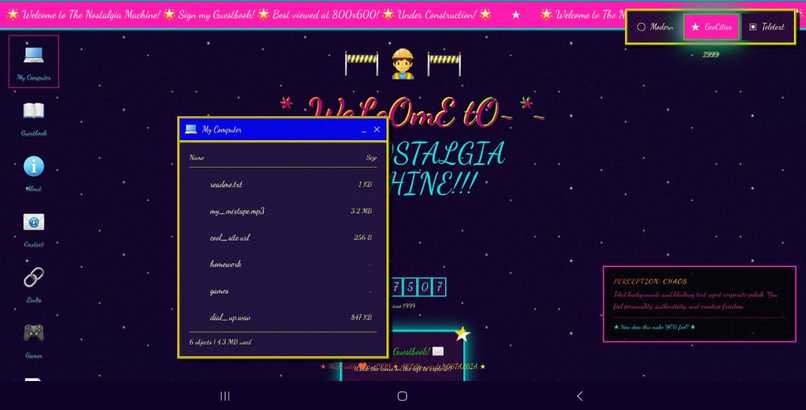
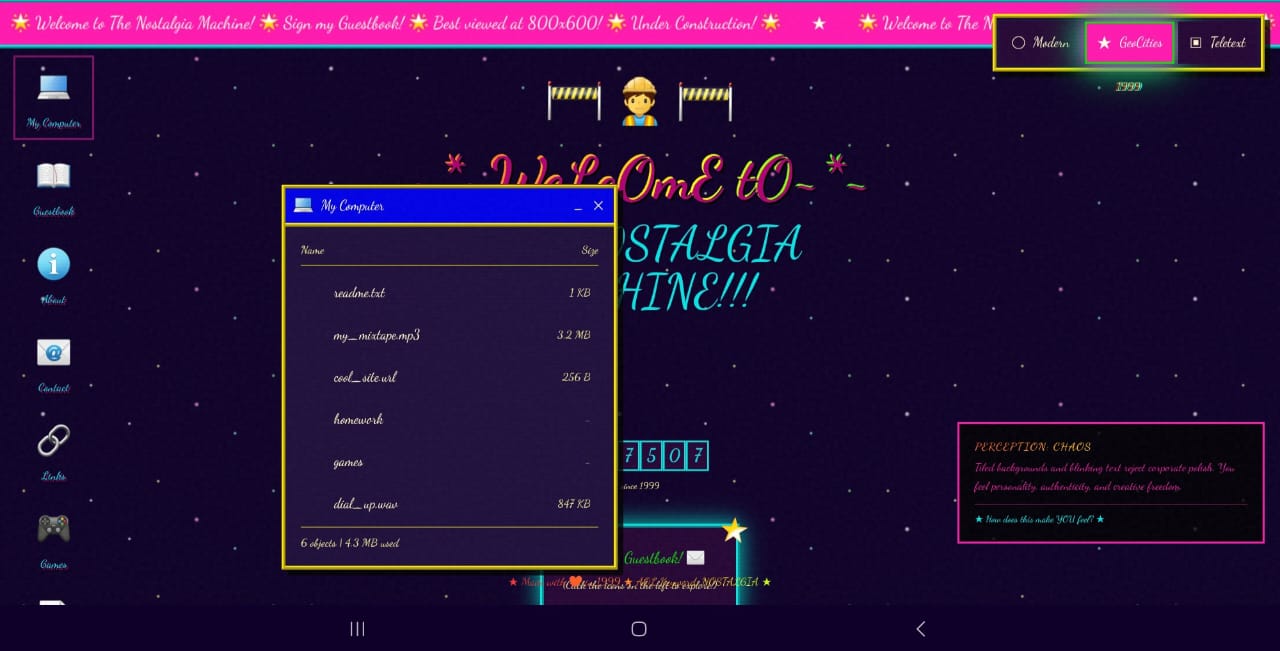
A retro file explorer mimicking early homepages where files felt personal, messy, and proudly homemade.
-
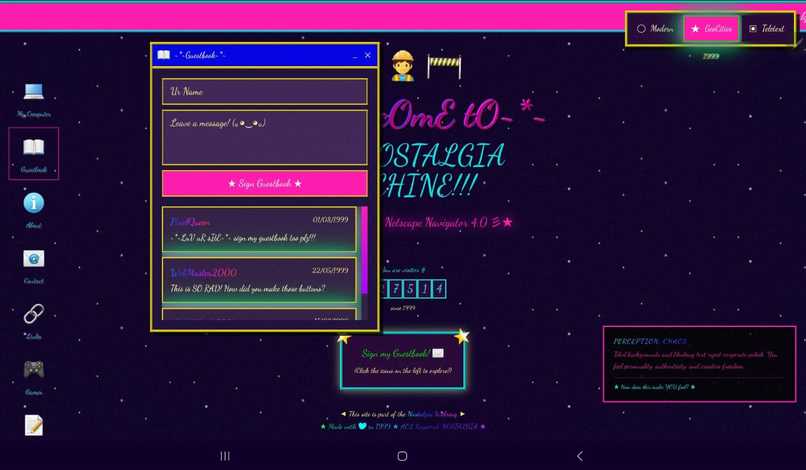
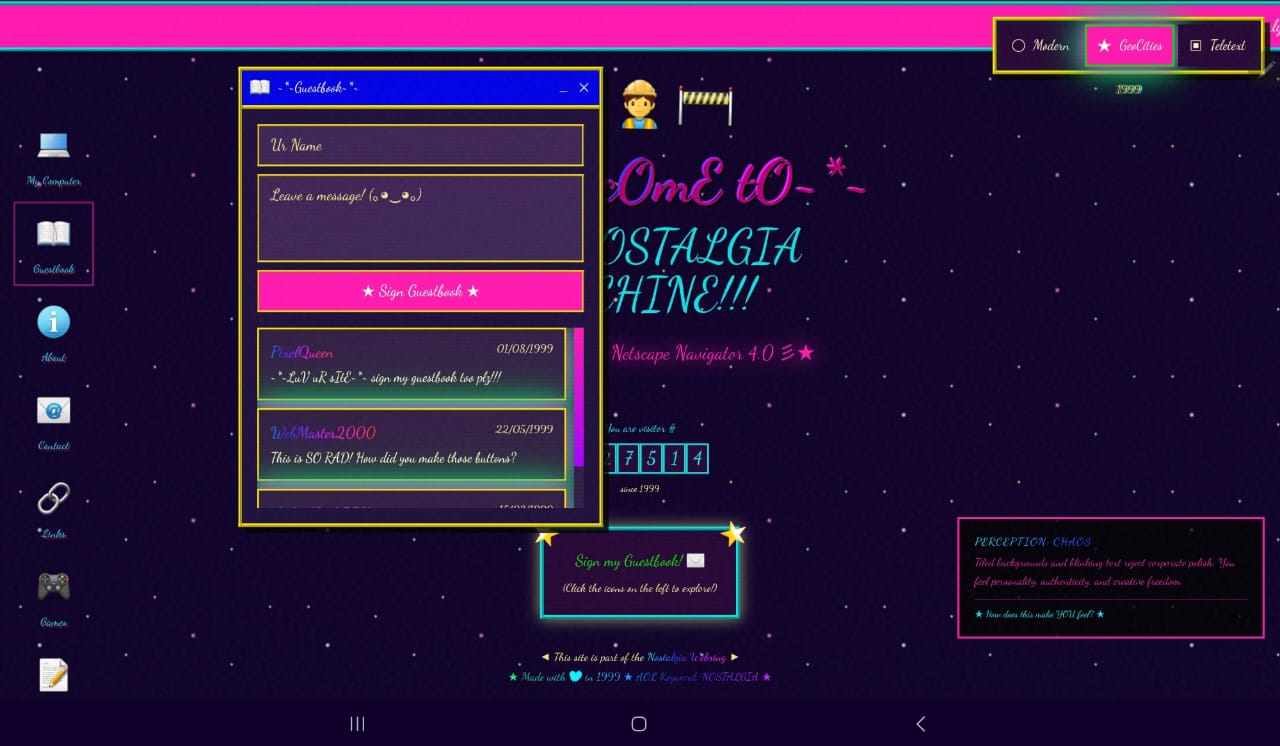
A traditional GeoCities guestbook where visitors leave messages, recreating early online community interaction.
-
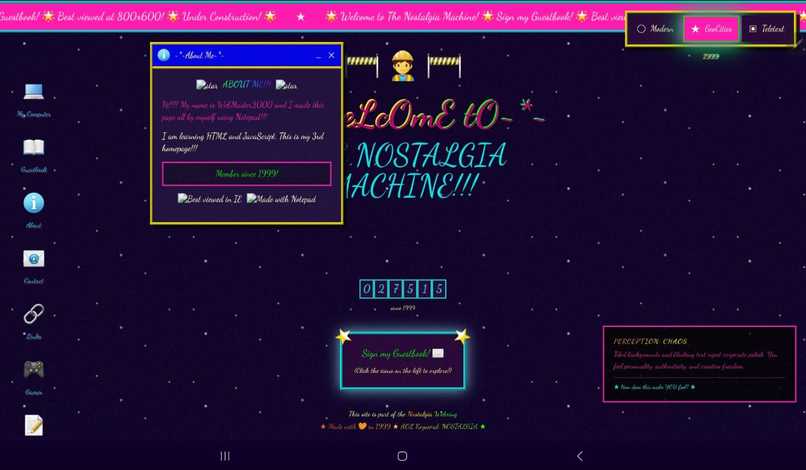
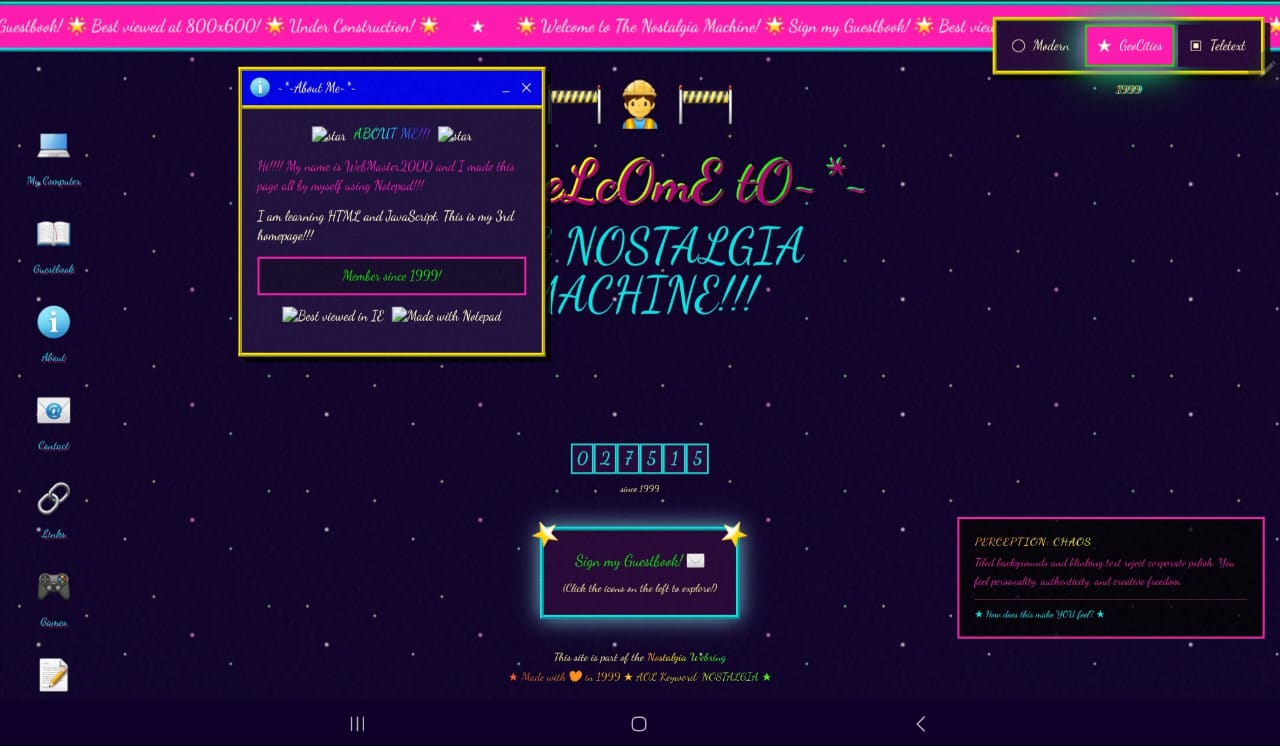
A personal “About Me” page inspired by GeoCities culture, filled with personality, self-expression, and early web charm.
-
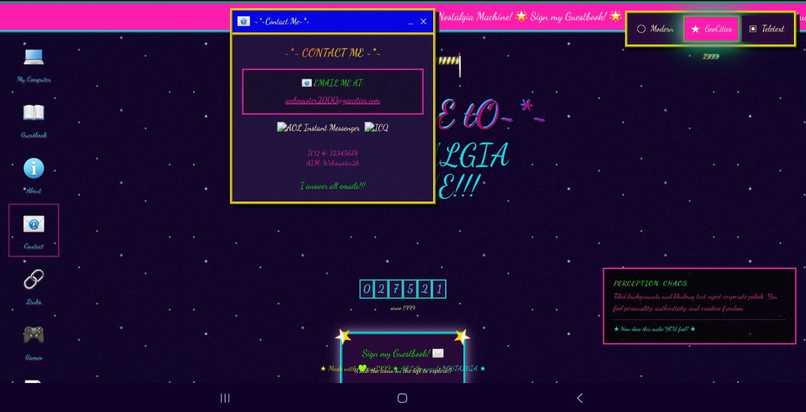
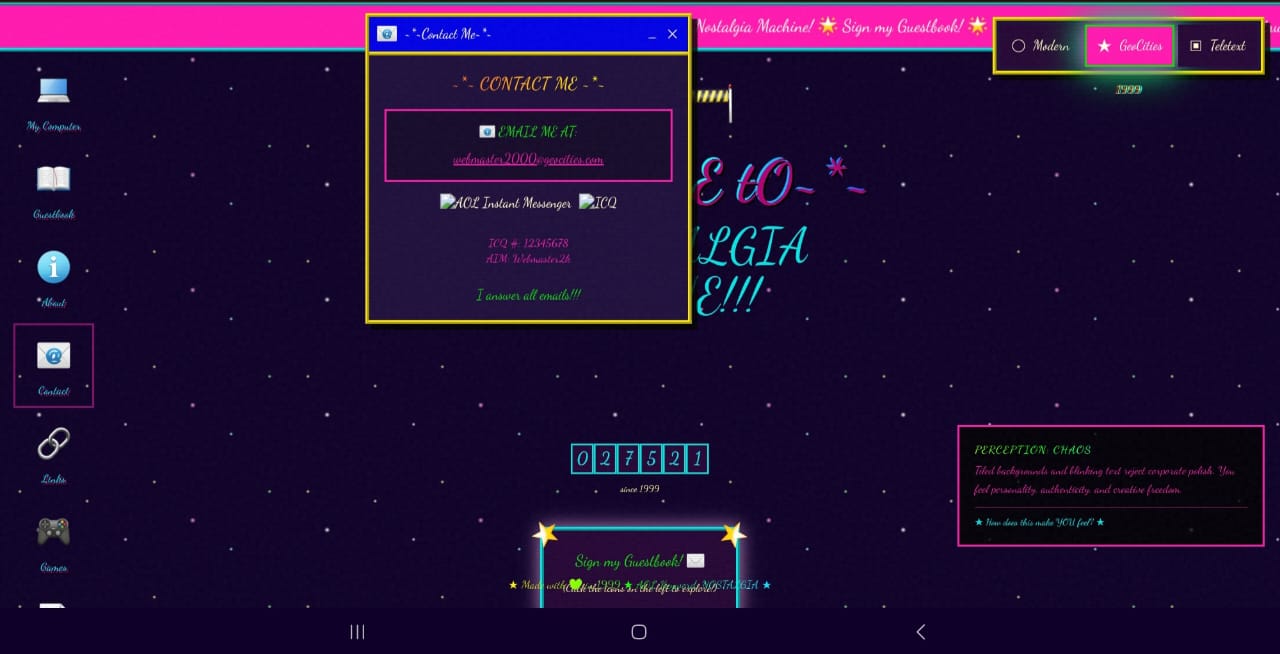
A nostalgic contact page inspired by email IDs and instant messengers from the early internet era.
-
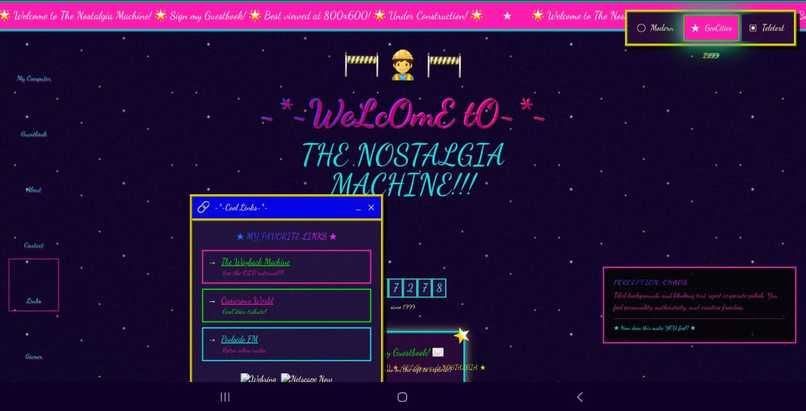
A classic “Cool Links” section connecting favorite websites, echoing how early users curated the web manually.
-
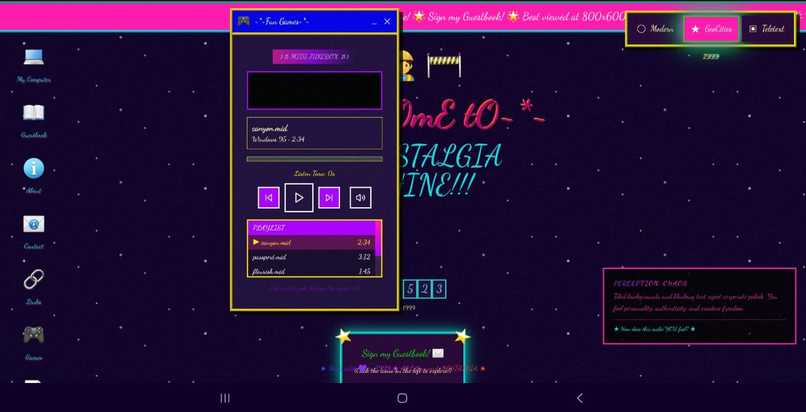
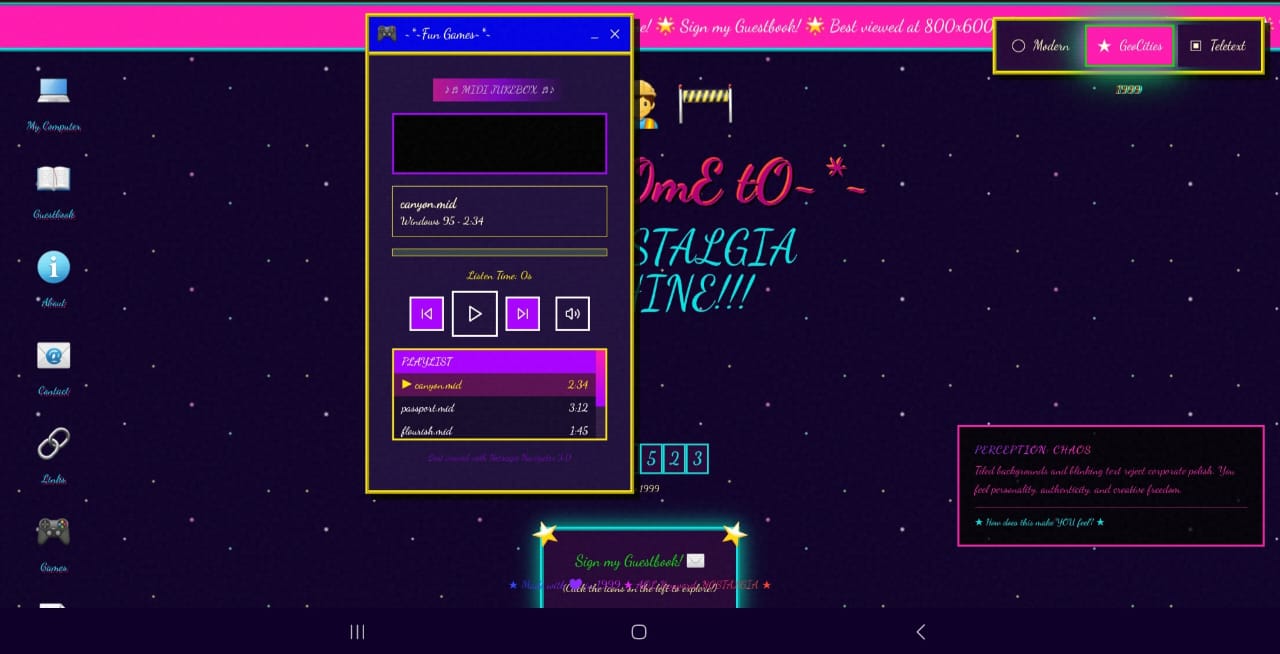
A retro fun section featuring games or MIDI-style music, reflecting how early sites mixed fun with identity.
-
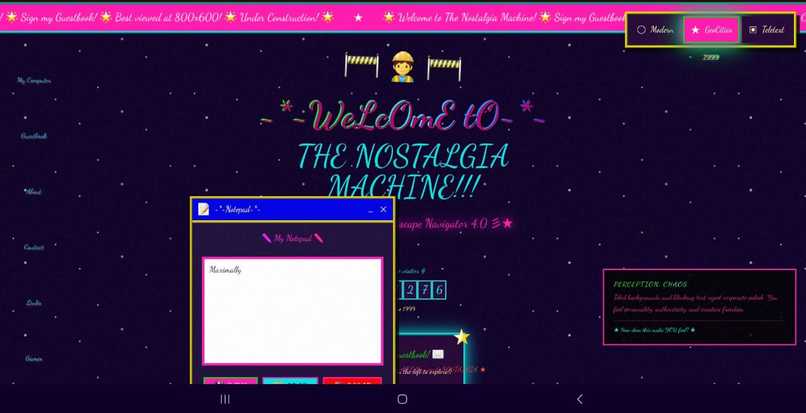
A playful notepad-style page inspired by handwritten notes and DIY web edits made directly in Notepad.
-
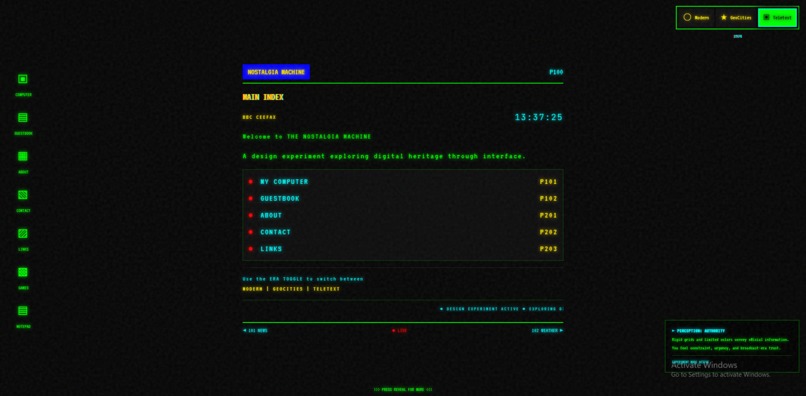
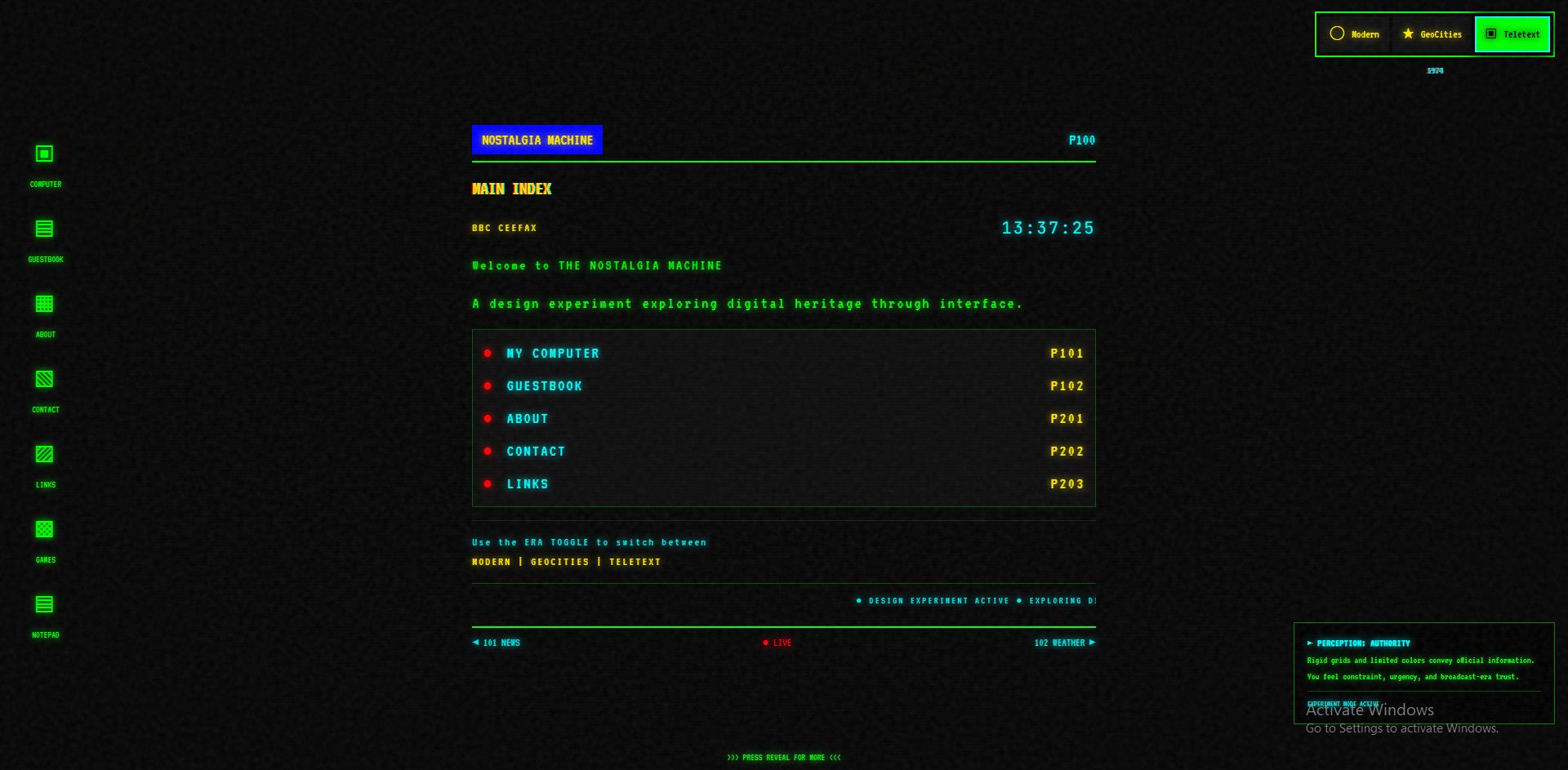
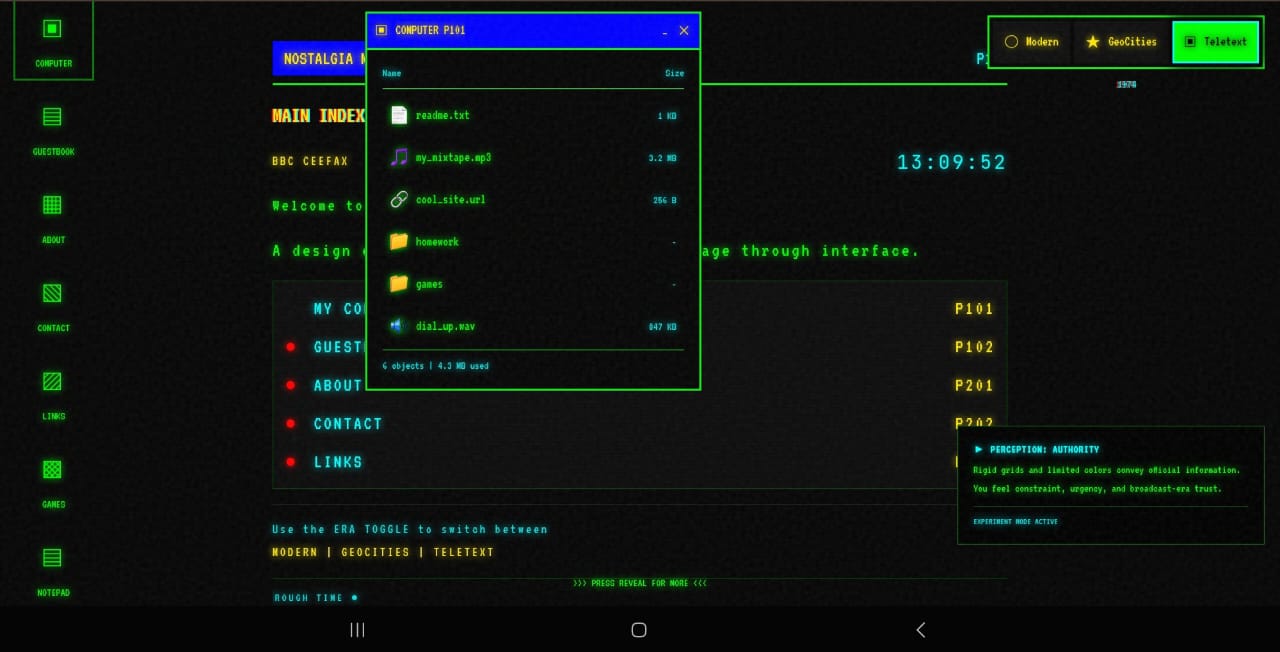
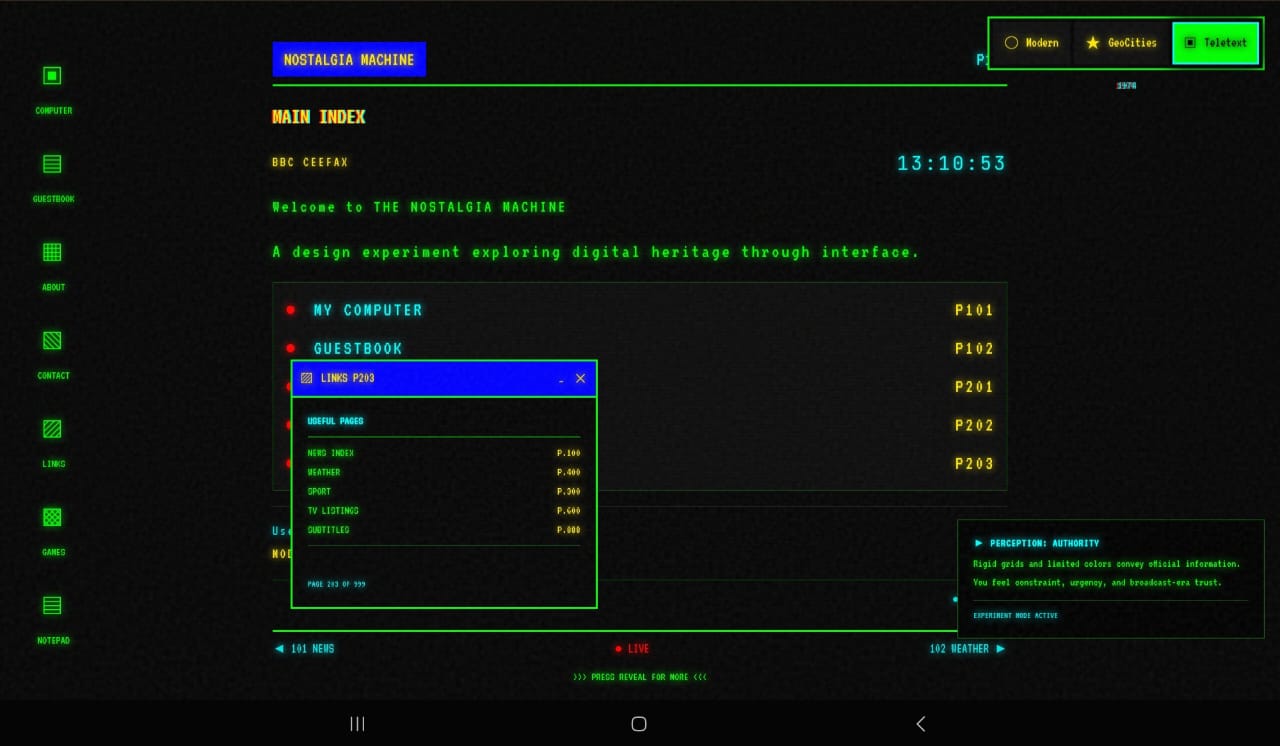
A Ceefax-style index page using rigid grids and limited colors to recreate broadcast-era information design.
-
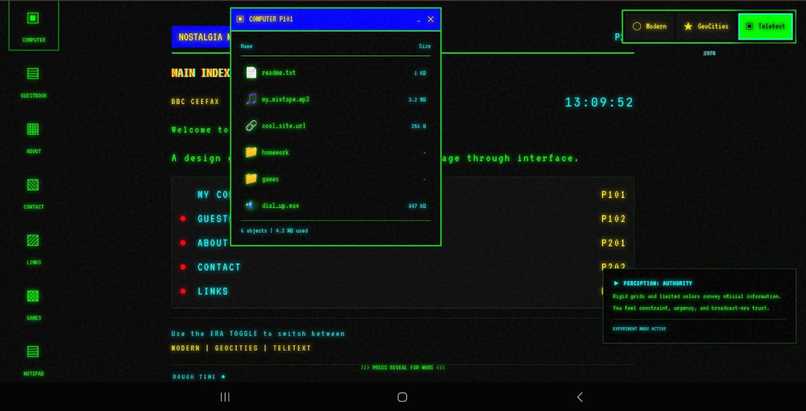
A symbolic file list rendered as Teletext pages, showing how early systems represented data through text alone.
-
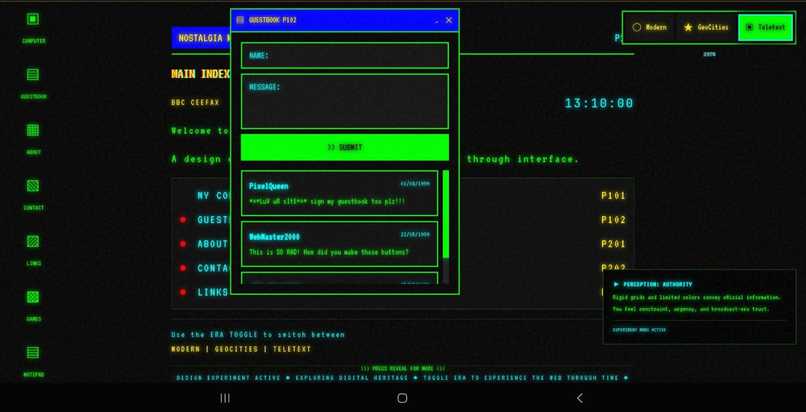
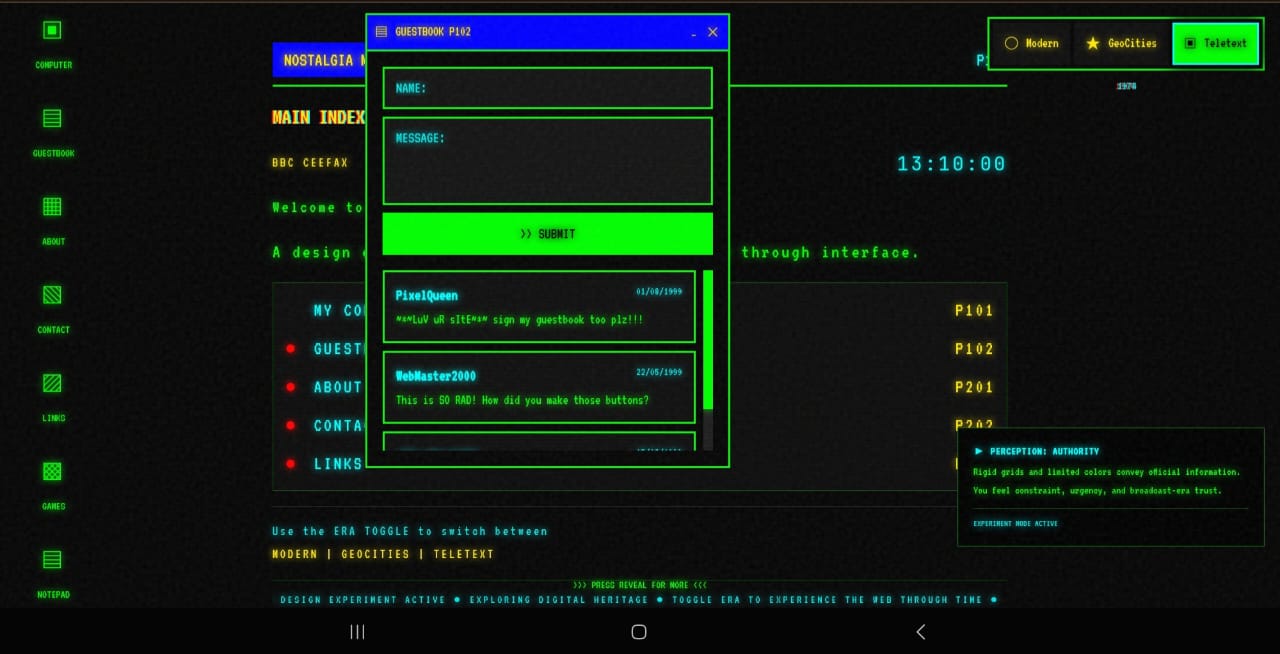
A form-based guestbook inspired by broadcast feedback pages, where interaction feels official and constrained.
-
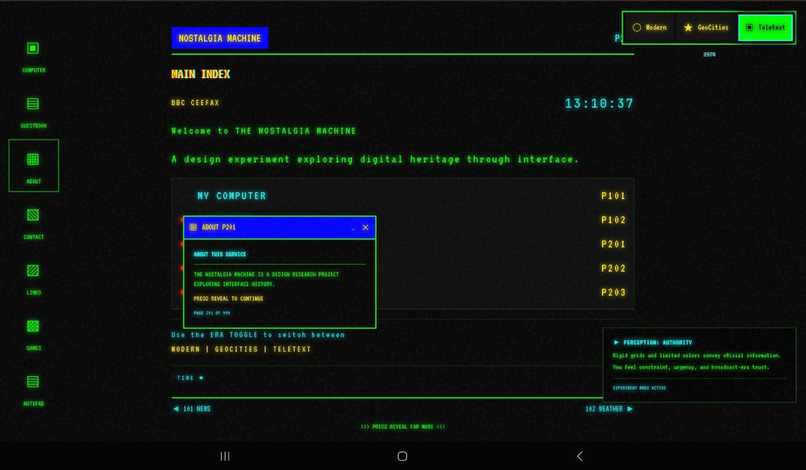
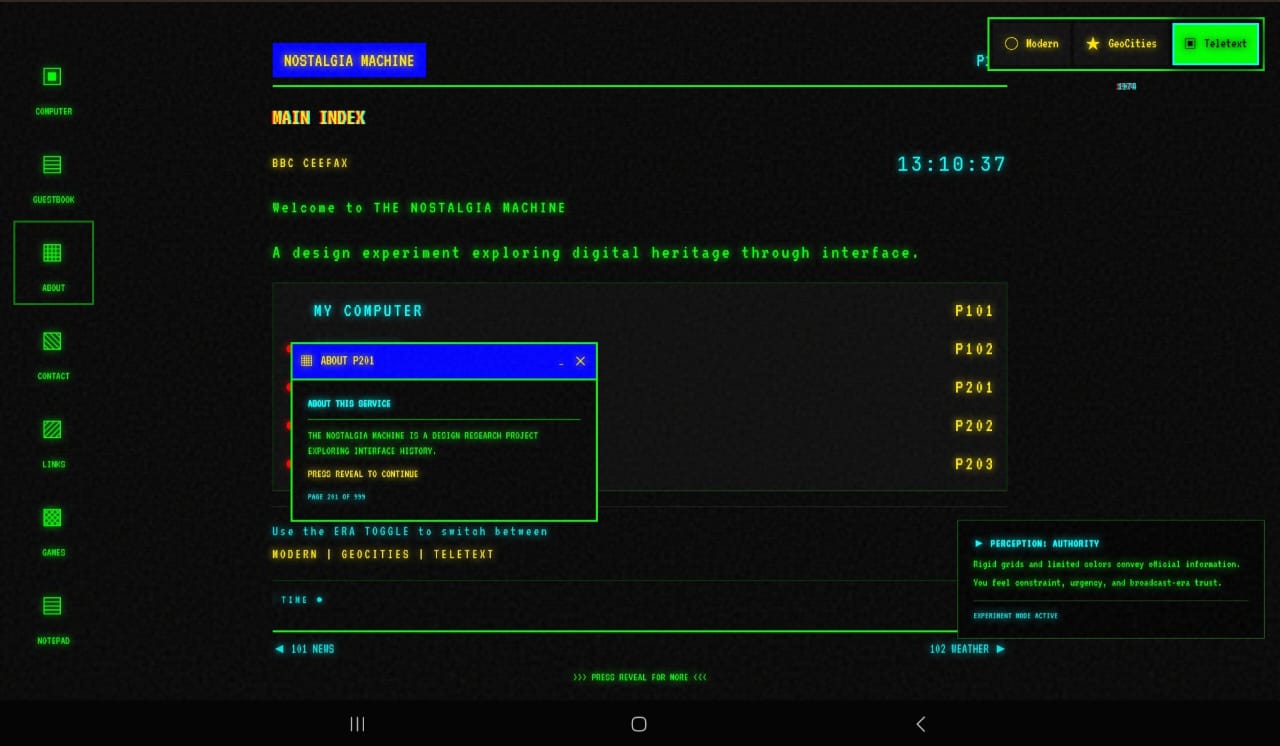
A text-first explanation presented in Teletext format, emphasizing authority, clarity, and structured information flow.
-
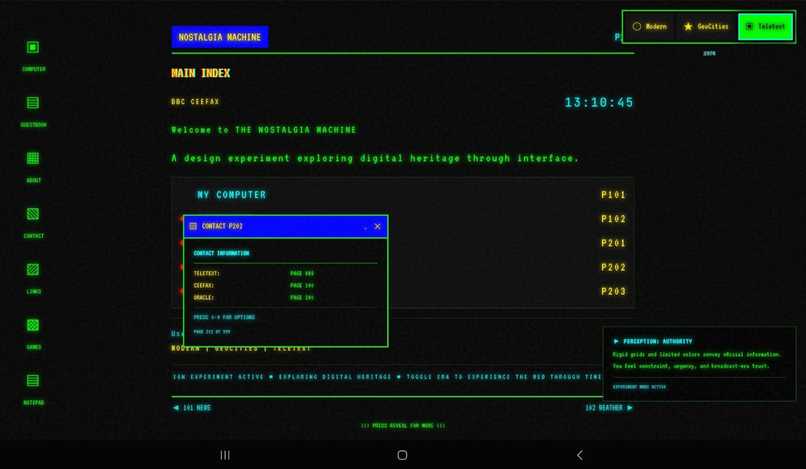
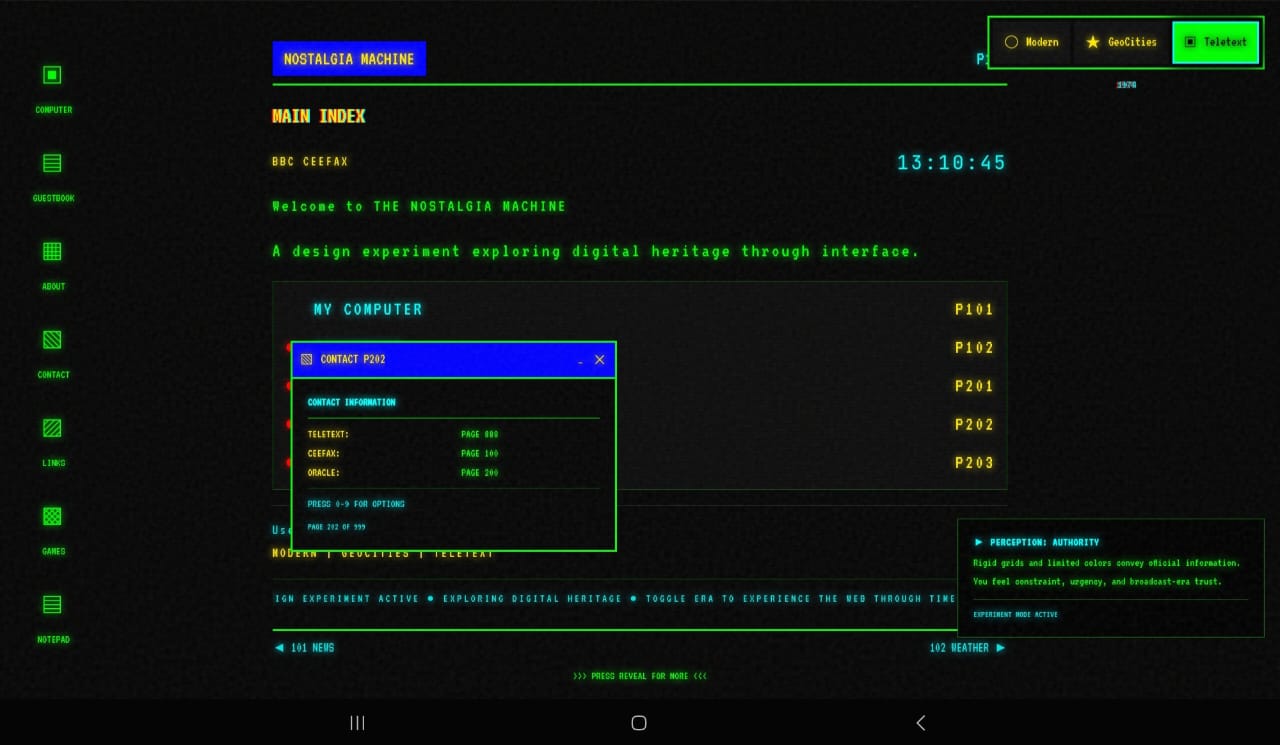
A contact page presented as indexed service pages, mirroring how users accessed help in broadcast-era systems.
-
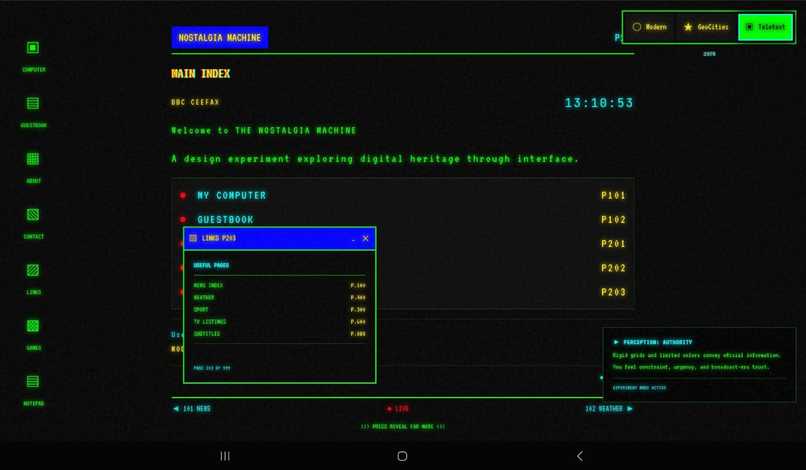
A directory-style links page modeled after Teletext navigation, prioritizing hierarchy and page numbers.
-
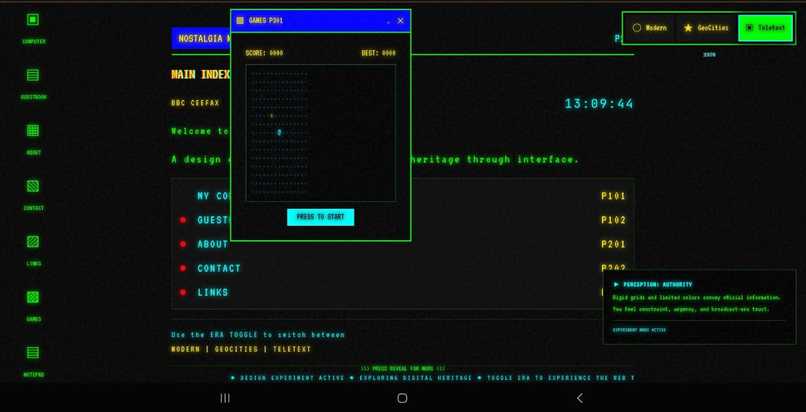
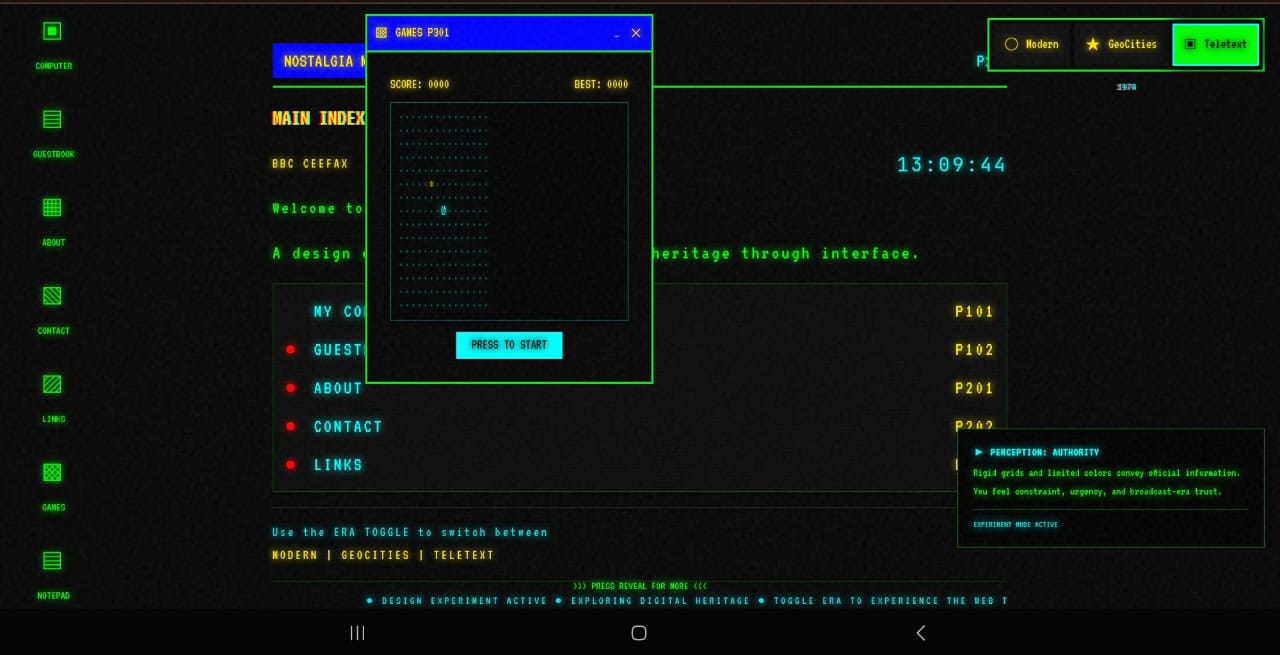
A simple text-based game reflecting early interactive experiments within strict technological limitations.
-
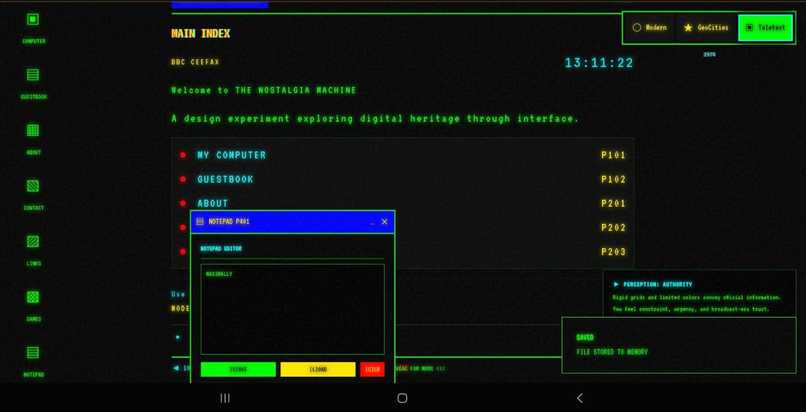
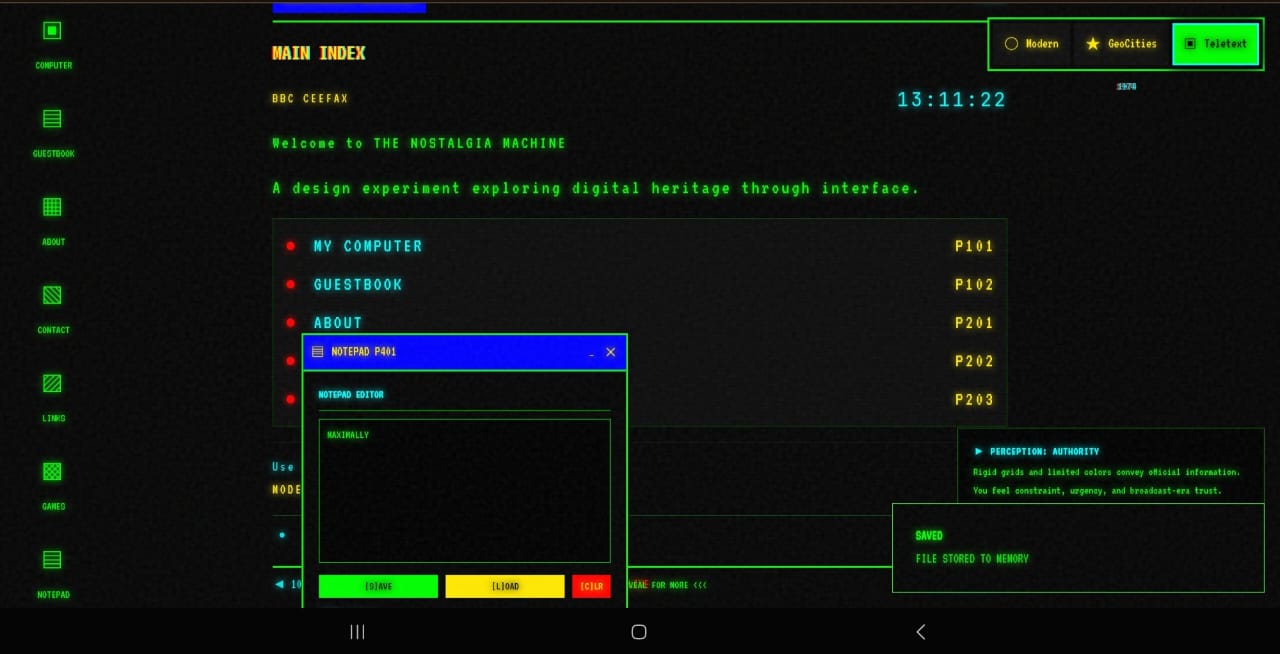
A minimal text editor inspired by Teletext input systems, focusing on function over expression.

Inspiration
This project was inspired by reflecting on how the internet has evolved over time. While modern interfaces feel polished and efficiency-driven, early web experiences felt playful, imperfect, and personal. I wanted to explore that emotional contrast through design.
What it does
The Nostalgia Machine is an interactive web experience that lets users switch between modern, retro, and terminal-style interfaces to explore how visual design influences nostalgia and curiosity.
How we built it
The project was built as a lightweight front-end experiment using basic web technologies. Different modes were created by altering typography, layout, and interaction patterns.
Challenges we ran into
Balancing experimentation with usability was a challenge. Maintaining visual consistency while keeping each style distinct required careful design decisions.
Accomplishments that we're proud of
Creating multiple distinct yet connected visual experiences that clearly convey different internet eras.
What we learned
This project reinforced how strongly design alone can shape emotion, memory, and user perception.
What's next for The Nostalgia Machine
Expanding with more eras and deeper interactive elements.
Built With
- css
- html
- javascript
- lovableai


Log in or sign up for Devpost to join the conversation.