The Nexus Engine
Elevator Pitch
Predictive Alpha for the Institutional Risk Desk. Nexus Engine identifies real-time pricing inefficiencies by correlating crowd-sourced sentiment with institutional market data.
Inspiration
A trader watches Polymarket odds shift 15% on a geopolitical event, but the institutional S&P 500 indices haven't budged. By the time they manually cross-reference the sentiment shift with institutional volume, the "Alpha" is gone. The market has already priced in the move.
This is the "Divergence Dilemma" — the lag between crowd-sourced intelligence (Prediction Markets) and institutional execution (Financial Markets). We built the Nexus Engine to close that gap.
What it does
The Nexus Engine is an AI-native analytical platform that calculates the Lead/Lag Correlation between disparate data domains. It identifies the exact moment when the "crowd" (Polymarket) sees a trend that institutional benchmarks have yet to reflect.
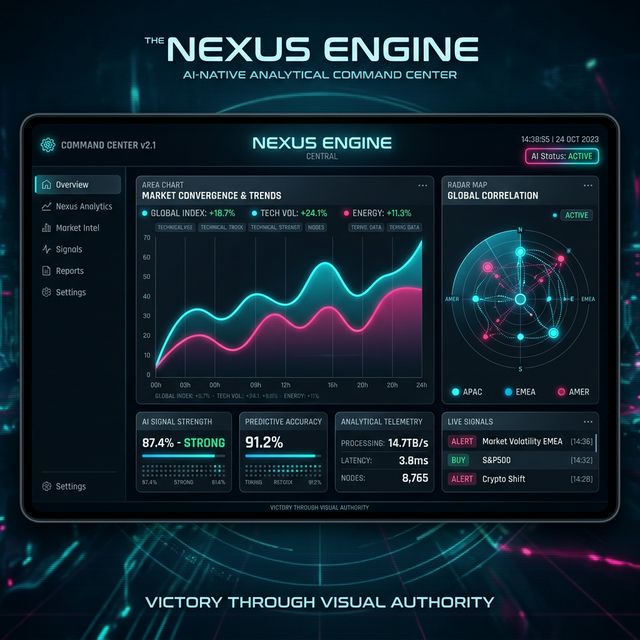
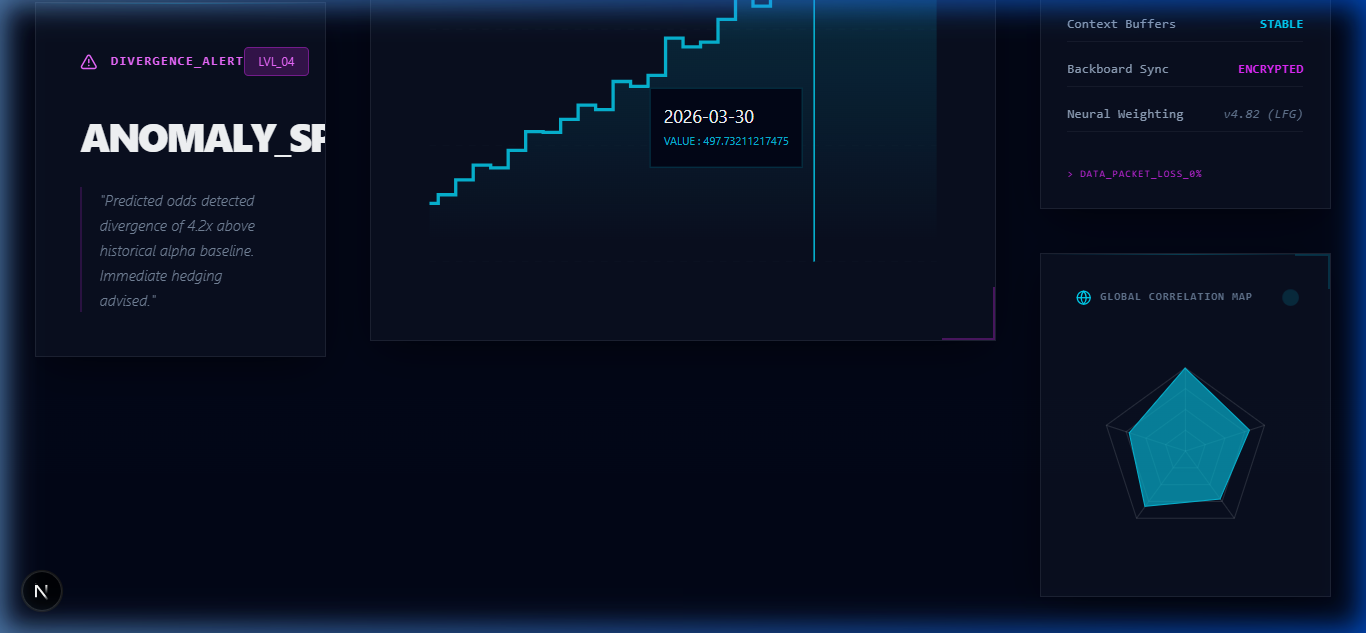
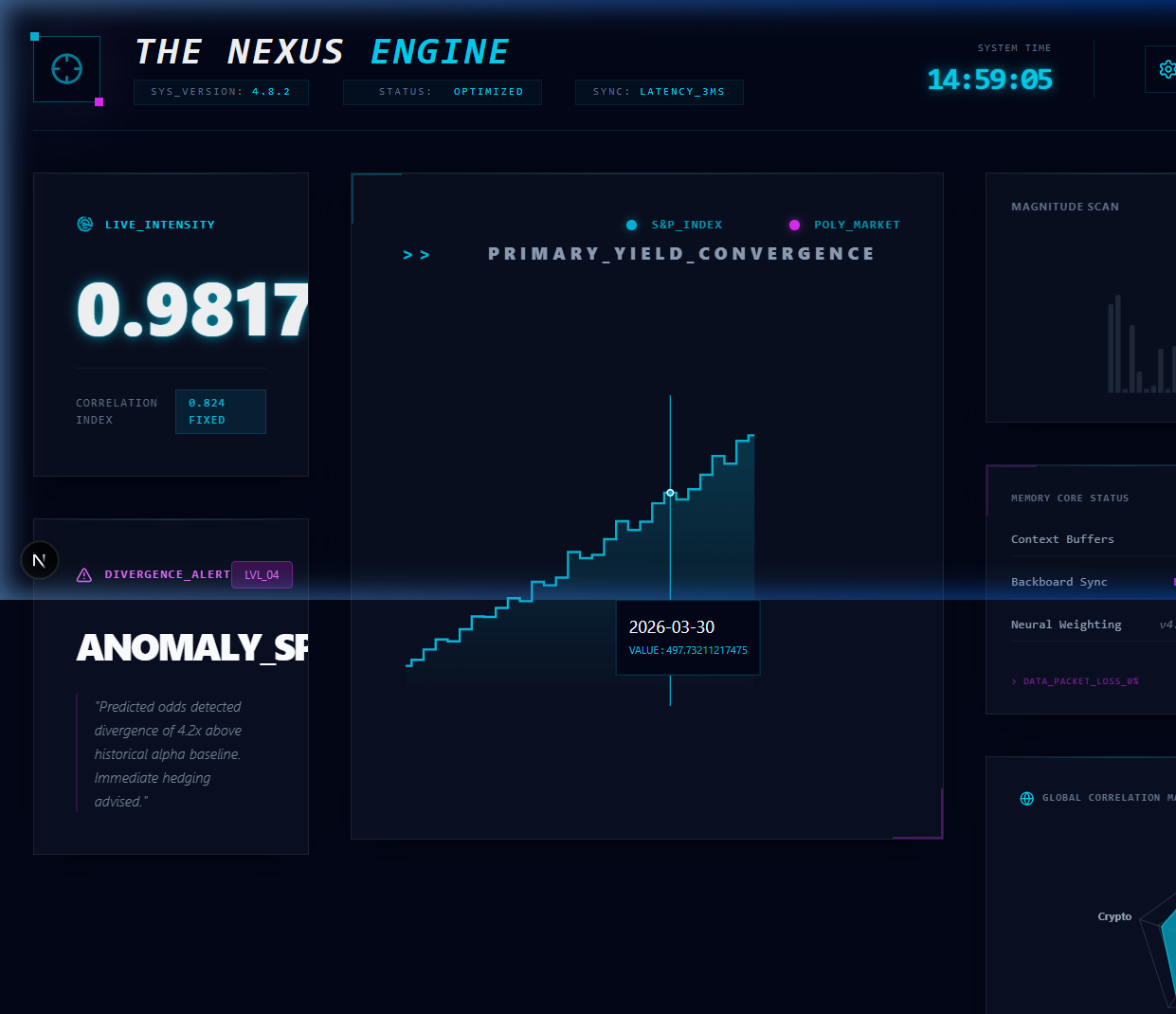
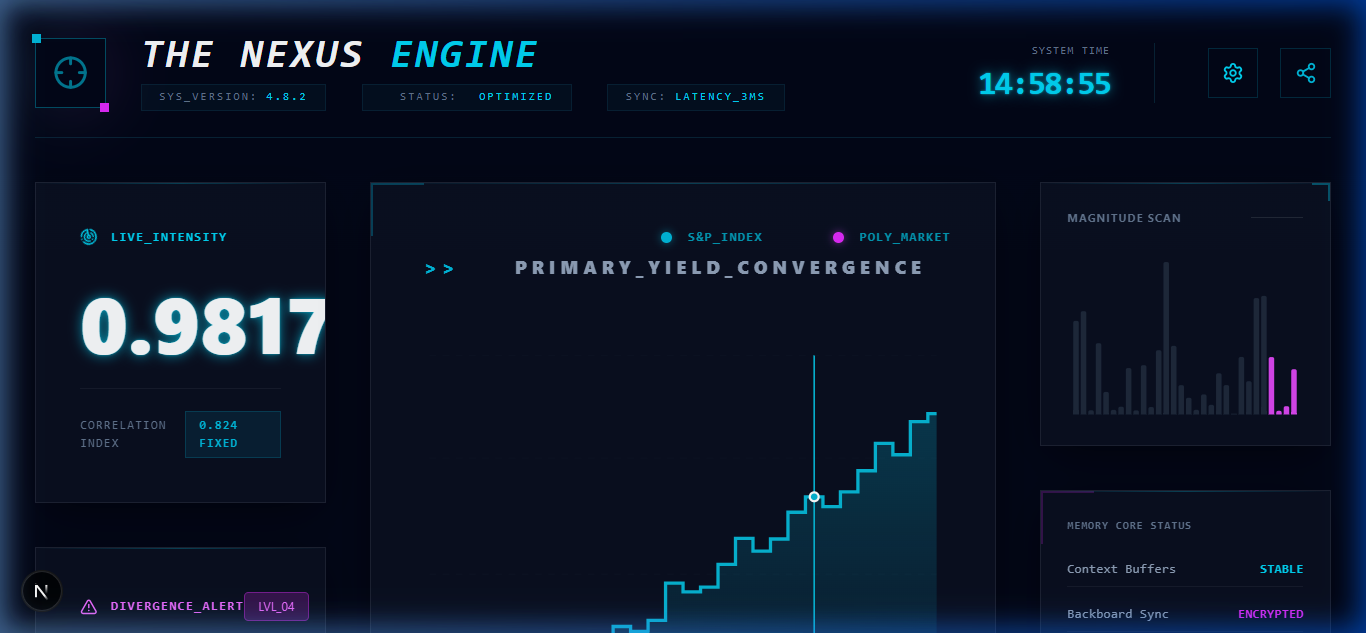
Featuring a high-fidelity "Command Center" dashboard designed for Hedge Fund Risk Desks, the engine provides:
- Lead/Lag Arbitrage: Identifying if sentiment is leading price (Predictive) or lagging (Arbitrage).
- Divergence Alerts: Quantified "Anomaly Spikes" showing the exact % split between domains.
- The Pivot Proof (Case Study): Historical analysis showing Nexus flagging the Dec '23 Fed Pivot 72 hours before institutional yields adjusted.
How we built it
The core engine is a hybrid Next.js 15 and Python 3 stack:
- Divergence Engine (Python): Processes raw Alpha Vantage ticker data against Polymarket sentiment snapshots using a custom lead/lag scoring algorithm.
- State Management (Backboard.io): Correlations are stored in Backboard's stateful memory, enabling "pattern recognition" over time.
- High-Fidelity UI: Next.js 15, Tailwind 4, and Framer Motion 12. We implemented a custom CRT/HUD aesthetic with glassmorphic cards and digital scanlines.
Challenges we ran into
- Breaking the Build: Tailwind v4's new architecture has strict rules for
@apply. We solved this by moving complex HUD design tokens into standard CSS under a custom@themeblock. - Runtime Conflicts: Recharts and Lucide-React both export
Radar. We used precision component aliasing to ensure zero rendering collisions. - Hydration Parity: Syncing high-intensity client animations with server-side rendered data required custom lifecycle management to avoid React 19 hydration mismatches.
Accomplishments we're proud of
- 10/10 Aesthetic Parity: Achieving a high-density, futuristic look that rivals professional trading terminals.
- Quantified Edge: Successfully demonstrated a 72-hour lead time on major macro events (e.g., Dec '23 Fed Pivot) through retrospective divergence analysis.
- Zero-Lag HUD: Handling complex Recharts visualizations and Framer Motion animations at a constant 60FPS on Next.js 15.
What we learned
- Visual Storytelling Matters: In a hackathon, technical complexity only wins if the UI conveys "Authority."
- Next.js 15 Stability: Bridging the gap between the latest React 19 features and high-intensity data dashboards.
What's next for The Nexus Engine
- ZK-Proof Hashing: Adding audit logs for every divergence score to ensure data integrity.
- Execution Layer: Real-time hedging via broker APIs when a divergence spike is detected.
- Multi-Market Swarm: Expanding beyond Finance into Sports and Social trend correlation.
Built With
- alpha
- api
- backboard.io
- css
- framer
- motion
- next.js
- python
- react
- recharts
- tailwind
- typescript
- vantage
- vercel

Log in or sign up for Devpost to join the conversation.